50 résultats
200874907Ann Arbor MI: University of Michigan Center for Radiative Shock Hydrodynamics CRASH 2008. Presumed First Edition of this CD. CD. Very good. This disc approximately 4.5 inches in diameter has 12 pdf files including PDT Scaling Dimensional Reduction Experiment & Hyades Models Design and other topics including input from students. The Center for Radiative Shock Hydrodynamics CRASH is advancing predictive science in the area of radiation hydrodynamics RH via a unified multi-prong approach. To substantially improve the ability to do predictive simulations of high - energy - density and astrophysical flows Center researchers are: Developing a software framework for RH to serve as a testbed for development verification and validation of RH modeling elements. Developing a system for hierarchically validating the software framework. Extending an existing experimental effort centered on radiative shocks to obtain data and quantify uncertainties in the experiments. Simulating these experiments and quantifying the accuracy of the simulations. Establishing a doctoral program for Predictive Science and Engineering. The CRASH team comprised of researchers from the University of Michigan and Texas A&M University are experts in: Numerical methods for fluids plasmas and radiation transport; Uncertainty quantification and propagation; High - energy - density physics experiments and theory; Applied mathematics; Software engineering and computer science; Parallelization of radiation transport algorithms. The potential impacts of the project include NNSA lab use of advanced methods in radiation hydrodynamic simulations and methods for uncertainty quantification developed in the Center and the hiring by the laboratories of people trained in predictive radiation hydrodynamics through the Center. University of Michigan, Center for Radiative Shock Hydrodynamics (CRASH) unknown
198453609New York: Sidney Janis 1984. First edition. Very good plus. Scarce catalogue of this early joint exhibition by graffiti artists Crash and Daze at the Sidney Janis gallery in New York. Artists and frequent co-exhibitors Daze and Crash were both born in New York City in the early 1960s and both began building a style and a reputation in their teens in the late '70s first meeting in 1977. In October 1980 Crash curated the first major graffiti show Graffiti Art Success for America at Fashion Moda in the South Bronx; Daze was first featured in a gallery space in 1981 in the Beyond Words exhibition alongside Jean-Michel Basquiat and Keith Haring. Crash's own portraits of Basquiat and Haring are among the nine pieces illustrated in this catalogue selected from the 18 and 19 works in each artist's exhibition checklist. 11'' x 8.5''. Original saddle-stapled black and white wrappers. 9 black and white plates. 8 pages. Light edgewear and rubbing to wrappers. (Sidney Janis) unknown

30433Milan: Gabriele Mazzotta 1984. Near fine in near fine dust jackets; matching slipcase with very light soiling to the gray cloth else near fine. Uncommon in the deluxe edition. Deluxe Edition. Quarto. Two hardcover volumes in matching slipcase. Published to accompany an influential group show of American graffiti artists that traveled through Italy this monograph features essays from curator Francesca Alinovi and gallerist Tony Shafrazi printed in both Italian and English a hip hop glossary and mostly-color reproductions of works from the likes of A One Jean-Michel Basquiat Crash Futura 2000 Richard Hambleton Keith Haring Jenny Holzer & Lady Pink and Lee Quiñones along with artist bios. This deluxe hardcover edition features a second volume—Quattordio Graffiti edited by Italian art critic Tommaso Trini—reproducing newspaper coverage from the exhibition's stops through Bologna Milan and Rome and documenting works produced by Delta 2 Ero Phase 2 and Rammellzee during their artist residencies at the sponsoring IVI paint factory in the Piedmontese village of Quattordio. Text in Italian for this second volume. Milan: Gabriele Mazzotta unknown
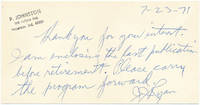
24444Auto safety pioneer long before Ralph Nader popularized the topic in "Unsafe at Any Speed" this University of Minnesota mechanical engineering professor 1931-63 patented the first retractable safety seat belt in 1963 and the "black box" flight recorder in 1960; he also improved hydraulic bumpers dashboards and collapsible steering columns. ANS 1p heavy stock 6¼" X 3¼" n.p. 1971 July 23. Near fine. Penned boldly in blue ballpoint. Nice note thanking an admirer and "enclosing the last publication before retirement." Closes off with a true crusader's salutation: "Please carry the program forward." A quite uncommon autograph. unknown
1999Q-0738803464Xlibris Corp 1999-05-03. Paperback. New. New. In shrink wrap. Looks like an interesting title! Xlibris, Corp paperback
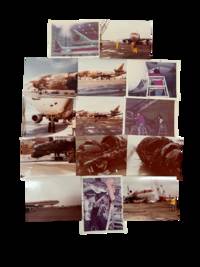
1978233051978. Continental Airlines Flight 603 disaster photographs documenting the burned wreckage and structural damage of the DC 10 runway overrun at Los Angeles International Airport on March 1 1978 one of the most consequential American aviation accidents of the late 1970s and a major catalyst for changes in tire safety standards rejected takeoff procedures and aircraft evacuation systems. Flight 603 a Continental Airlines DC 10 10 scheduled from Los Angeles to Honolulu attempted to abort takeoff after multiple tire failures near decision speed on a wet runway; the aircraft overran runway 6R at LAX the left main landing gear collapsed beyond the pavement fuel tanks ruptured and a major fire engulfed the underside and left side of the aircraft during evacuation. The NTSB recorded 2 deaths and 28 serious injuries in its formal report while later accounts place the eventual death toll at 4 after additional passengers later died from injuries sustained in the crash.<br /> Photo archive of 14 color snapshot photographs each approximately 3.5" x 4.5" Los Angeles International Airport California March 1978. The photographs show Continental Airlines McDonnell Douglas DC 10 10 N68045 after the accident resting heavily fire damaged on the runway and adjacent overrun area. Multiple images focus closely on the burned underside of the fuselage where large sections of aluminum skin have been completely burned away exposing the aircraft's internal rib structure wiring insulation and lower cabin framework. Other views show extensive scorching along the left side of the aircraft blackened and partially melted fuselage panels around the wing root and landing gear area collapsed structural sections beneath the passenger cabin and debris scattered across the wet runway surface. Several photographs widen outward to show emergency and recovery operations surrounding the aircraft including personnel service vehicles cranes and towing equipment positioned around the destroyed DC 10. One image records the full profile of the aircraft from a distance emphasizing the scale of the burn damage extending across much of the fuselage exterior. Together the photographs document not merely the existence of the accident but the specific physical consequences of the runway overrun and post crash fire: ruptured lower fuselage sections exposed aircraft structure burned cabin undersides and the recovery environment at LAX immediately after the disaster. <br /> Flight 603 became an important case study in late twentieth century aviation safety because the accident linked tire failure runway conditions aircraft stopping performance and evacuation survivability within the emerging era of mass deregulated air travel. The NTSB investigation led to recommendations intended to "significantly reduce the incidence of tire failures during takeoffs and rejected takeoffs" while later FAA and industry reforms addressed tire testing standards takeoff performance calculations and the durability and fire resistance of emergency evacuation slides. These photographs preserve the material evidence behind those institutional and engineering changes documenting the burned airframe and structural destruction that transformed Flight 603 into a major reference point in modern commercial aviation safety history. Minor wear from handling. Overall very good condition. unknown
19981708140531010Madacy Records 1998-11-03. DVD. Like New. DVD plays perfectly & the case looks good. Madacy Records unknown
19981708140531043Madacy Records 1998-11-03. DVD. Like New. DVD plays perfectly & the case looks good. Madacy Records unknown
260518008Audio CD. Used: Very Good. 5x5x0. Very good condition. From a private collection. Comes from non smoking home. unknown
0793535611.Gpaperback. Good. Access codes and supplements are not guaranteed with used items. May be an ex-library book. paperback
B9781304102744Hardback. New. hardcover
45158386like new. unknown
1304102742.Ghardcover. Good. Access codes and supplements are not guaranteed with used items. May be an ex-library book. hardcover
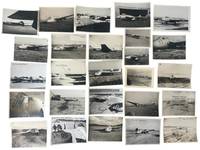
1957233541957. De Havilland Vampire jet photographs documenting French Air Force training accident inspection and air base control at Meknès Morocco in the years immediately following Moroccan independence with direct evidence of how Base École 708 recorded aircraft damage runway incidents and jet operations within the shrinking French military presence in North Africa. French military personnel are identifiable not through portraiture but through the administrative system embedded in the material itself: repeated verso stamps reading Section Photo 21/708 Meknès dated from 1957 to 1959 and technical annotations that turn the group into an official working record rather than informal aviation imagery. The historical force of the archive lies in that function. Meknès served as a major French fighter training center the de Havilland Vampire formed part of its early jet instruction program and the base remained active until its dissolution in 1961 placing these photographs within the last phase of French air force operations in Morocco after France recognized Moroccan independence in 1956.<br /> <br /> Photo archive of approximately 27 silver gelatin photographs approximately 4.5 x 3.5 inches each Meknès Morocco 1957 to 1959. The images center on multiple de Havilland Vampire aircraft marked with large fuselage letters including TT UA RD RG RE and UM photographed from the nose wing cockpit tail and runway line in a methodical sequence. Several prints isolate impact evidence and structural damage: one close view marks "traces de frottement" on a crushed nose section another labels "cockpit avion abordeur / plan gauche avion abordé" and others identify "vue générale" "vue 3/4 arrière" and "axe de la bande" showing that the planes were being recorded for inspection orientation and incident analysis. Additional photographs show grounded jets in grass beside the field aircraft parked on the tarmac in rows hangar exteriors and broad runway views with service vehicles nearby. The versos carry dated Meknès section stamps penciled numbering and occasional reference notes from French military photographic and cinematographic services preserving the bureaucratic chain by which the images were produced filed and cross referenced.<br /> <br /> The archive belongs to the first generation of French jet aviation in North Africa. The Vampire was among the earliest jet fighters used by the French Air Force and Meknès was one of the key training sites where pilots moved into jet instruction before the school later shifted to newer aircraft and eventually left Morocco. In that setting aircraft photography was not decorative; it was part of the operational machinery of flight training maintenance and accident inquiry. These prints preserve that machinery at the moment when French colonial authority in Morocco had formally ended but French bases and training institutions still operated on Moroccan soil linking jet modernization to decolonization and military retrenchment. Written notes and official stamps throughout; light handling wear from use otherwise well preserved. Overall good condition. unknown
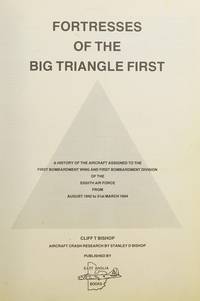
198690439Elsenham Bishops Stortford England: East Anglia Books 1986. First Edition and presumed first printing. Hardcover. Very good/Very good. The format is approximately 8.5 inches by 12 inches. 320 pages. Explanation of Terminology. Illustrations. Map. Tables/Tabular Data. Technical Data. Selected Bibliography. Research Sources. Index. Illustrated dust jacket. The dust jacket has minor wear and soiling. Slight corner bumps. Cliff Bishop is a Structures Design Engineer and the proprietor of East Anglia Books which specialized in U.S.A.F. and World War Two history. He served in the Royal Air Force in the 1950's. He had been personally involved in the dismantling and rebuilding of B-17 aircraft one for the Imperial War Museum. He researched the information for this work over a ten year period. His brother Stanley specialized in air crash investigating and research on missing aircrews. VIII Bomber Command of the United States Army Air Forces was established early in 1942. The first combat operations began in July with first heavy bomber operations in August. Its bomber units were deployed in the UK chiefly around East Anglia. From June 1943 it was the daylight bombing part of the Combined Bomber Offensive against Germany. It was redesignated as Eighth Air Force on 22 February 1944. The Eighth Army Air Force 8 AAF was a United States Army Air Forces combat air force in the European theater of World War II 1939/41–1945 engaging in operations primarily in the Northern Europe area of responsibility; carrying out strategic bombing of enemy targets in France the Low Countries and Germany; and engaging in air-to-air fighter combat against enemy aircraft until the German capitulation in May 1945. The 1st Bombardment Wing was initially formed in France in 1918 during World War I as a command and control organization for the Pursuit Groups of the First Army Air Service. It was re-established in the United States as the first wing formed in the reorganized United States Army Air Service created in August 1919 to control three groups patrolling the border with Mexico after revolution broke out there. As the 1st Wing the unit was one of the original wings of the GHQ Air Force on 1 March 1935. During World War II it was one of the primary B-17 Flying Fortress heavy strategic bombardment wings of VIII Bomber Command and later Eighth Air Force. It was inactivated on 7 November 1945. After the Pearl Harbor Attack initially supervised Heavy Bomber Operational Training at Tucson AAF. Re-designated as 1st Bombardment Wing and reassigned to VIII Bomber Command and deployed to England July–August 1942. In England mission was command and control of B-17 Flying Fortress bombardment groups stationed in East Anglia receiving operational orders from VIII BC headquarters and mobilizing subordinate groups for strategic bombardment attacks on enemy targets in Occupied Europe. Operated primarily from RAF Bassingbourn Cambridgeshire. Served in combat in the European Theater of Operations ETO from August 1942 until 25 April 1945 receiving a Distinguished Unit Citation DUC for an attack on aircraft factories in Germany on 11 January 1944. Returned to the United States in August 1945. Almost all the bomber and fighter groups and squadrons in Cambridgeshire were commanded by the First Bomber Wing in Brampton renamed the First Bomber Division and finally renamed in 1944 the First Air Division. By the war’s end the 8th Air Force was spread over 112 airfields across East Anglia flying B-17 and B-24 heavy bombers B-26 Marauder medium bombers P-38 Lightning P-47 Thunderbolt and P-51 Mustang fighters as well as Spitfires and Mosquito bombers provided by the RAF. Throughout the war the 8th Air Force dropped 700000 tons of bombs on Germany and occupied Europe flew 600000 bomber and fighter sorties and destroyed over 15000 enemy aircraft by air-to-air engagements ground strafing or by bomber crew engagement. 35000 men and women would serve with the 8th Air Force during the war with many thousands never returning home. Much of that enormous effort was planned and executed from the Grange in Brampton. East Anglia Books hardcover
20081351120810025Sbme Special Mkts 2008-04-29. Audio CD. Very Good. CD plays perfectly & the case looks good. Sbme Special Mkts unknown
1936319519.Ghardcover. Good. Access codes and supplements are not guaranteed with used items. May be an ex-library book. hardcover
6009286-nnew. unknown
6009286like new. unknown
1979428-nnew. unknown
1979428like new. unknown
2006Q-0316017345Little Brown Books for Young Readers 2006-06-21. Hardcover. New. In shrink wrap. Looks like an interesting title! Little, Brown Books for Young Readers hardcover
20061-0316017345Little Brown & Co 2006. SAL. New. 64 pages. 9.00x12.00x0.25 inches. Little Brown & Co unknown
0205140912.Ghardcover. Good. Access codes and supplements are not guaranteed with used items. May be an ex-library book. hardcover
19802090502113702442Not Available 1980. Soft Cover. Fine. The book is in fine condition. Not Available paperback