667 résultats
2002359012002. Federal Trade Commission Decisions. United States Federal Trade Commission. Washington: U.S. Government Printing Office 2001. Volume 126 July 1 1998 to December 1 1998. Cloth. New. $75. Contains opinions of the Commission in cases involving restraint of trade and unfair competition. unknown books
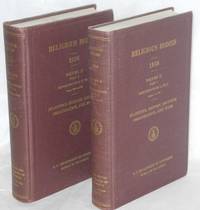
1941118542Washington: GPO 1941. Two volumes parts 1 and 2 statistics history doctrine organization and work. Part I: Denominations A to J; Part 2: Denominations K to Z xiv xiv 1695p. very good. With material on ethnic churches including African American denominations of all sorts utoian religions and more. GPO unknown books
1943TB22103Washington DC: Government Printing Office 1943. First Edition. First printing Good in stapled heavy paper covers with a stapled and braided cord binding. The corners of the covers are heavily worn creased and chipped and show mild dampness staining. The title page shows a column of numbers in ink and a number of the pages in the body of the text have folded corners. Nevertheless all pages are present. A small quarto containing 82 pages of text illustrated with line drawings and cartoons. Government Printing Office unknown books
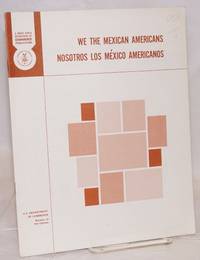
197010302Washington: U.S. Government Printing Office 1970. 16p. 8.5x11 inches bilingual texts in Spanish and English profusely illustrated with b&w photos maps and tables very good booklet in stapled wraps. U.S. Government Printing Office unknown books
1928000350Washington: Government Printing Office 1928. Soft cover. Near Fine. First edition; staple- bound 6" x 9 1/4"; pp. 1-14; original brick-red printed wraps; minor crease to upper corner else fine; illustrated with b & w photographs. The pamphlet is geared towards consumers rather than manufactures and distributors and it explains the advantages of grading lumber for better utilization of wood as well as better merchandising. Washington: Government Printing Office paperback books
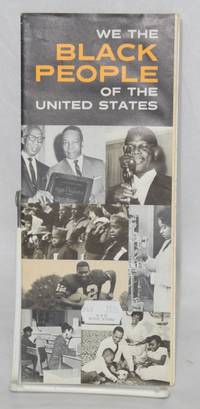
1968133934Washington: GPO 1968. Eight-panel illus. brochure printed both sides. GPO unknown books
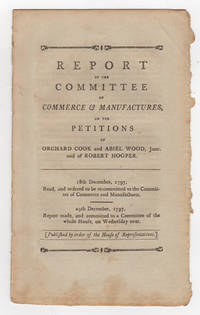
179743741Philadelphia: Printed by William Ross 1797. First edition. Removed. Very good mostly unopened uncut untrimmed copy minor browning at lower edge. 3 226-232 2 pp. 8vo. Evans dated it both 1797 and 1798. two petitions both concerning a waving of taxes on spirits the Orchard Cook and Abiel Wood case claiming the ship was wrecked on an island and the cost of recovering the cargo exceeded the cost of the mechandise and that their insurance had lapsed. In the second case Hooper claimed he was lax in filing papers for re-shipping a cargo overseas. Wisely both were declined as the committee felt the government is not in the business of insuring that a business is successful and well run. Ah to return to those days. Orchard Cook 1763-1819 and Abiel Wood 1772-1834 had a better idea. They both became U.S. Representatives from Massachusetts. OCLC locates eight copies. Evans 33015. Evans 34753. ESTCW15017. [Printed by William Ross] unknown books
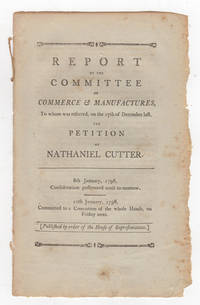
179843744Philadelphia 1798. First edition. Removed. A very good copy lightly soiled and edge worn. 4 pp. 8vo. Nathaniel Cutter wanted relief from being re-taxed on goods that left Massachusetts where he had paid tax and then returned to the same port with the same goods because he was harrassed by the British and French and turned away in the Dominican Republic. The committee wisely wrote: "Your Committee however cannot find any good reason for relieving him against consequences of a risque which every exporter ought to calculate for himself." Cutter would continue to take risks suppling the French in Saint-Domingue and a claim was allowed him in 1803 by the American Commission in Paris for unpaid costs by the French See Greg H. Williams: The French Assault on American Shipping 1793-1813: A History p. 154. Evans 34754. ESTCW25464. unknown books
181737608Washington D.C.: Printed by William A. Davis 1817. First edition. Removed. A very good copy with War Department Library stamp on title light foxing. 4 pp. 8vo. Shaw & Shoemaker 42693. [Printed by William A. Davis] unknown books
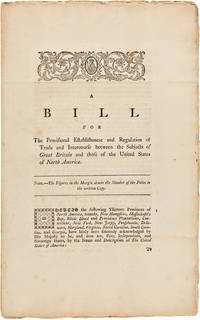
1788WRCAM47396London 1788. Paginations given below. Folio. Four of the titles string-tied as issued. First title lightly foxed and toned. Very good. In a half morocco and marbled boards box spine gilt. An interesting assemblage of British legislation from the period immediately following the Revolutionary War documenting British efforts to allow only very limited trade with the newly independent United States. British trade policy during this period is an excellent example of a foreign power taking advantage of the weak structure of the American Articles of Confederation which made it difficult for the thirteen states to act in concert and out of a any position of strength through unity. <br> <br> By 1783 the United States had formal trade relations with only two nations: France secured through the 1778 Treaty of Amity and Commerce; and the Netherlands via a Commercial Treaty negotiated by John Adams in 1782. Before the Revolution British merchants had relied heavily on exports sent to the British colonies in North America which greatly outweighed goods imported to Britain from the colonies. After the war the British government was reluctant to sign a formal commercial treaty with the United States. The states at the time were operating under the relatively weak structure of the Articles of Confederation and the British felt that they could secure the benefits of trade with the American states without making any treaty concessions. <br> <br> Britain opted instead for a series of acts that established limited trade with the United States and between the United States and Canada and the British colonies in the West Indies. The first of these laws was passed in 1783 and the evolution of that law is reflected in the first three items below. In all these British laws severely circumscribed American trade with England and with English colonies though they did allow some markets for American exports and did facilitate the flow of much needed imports into the United States. In 1784 British exports to the United States were valued at more than £3.5 million while American exports to England were less than one-fifth of that sum. The United States and Great Britain would not sign a formal trade treaty until the Jay Treaty which was approved in 1795 and which gave the United States limited trading rights in the British West Indies. <br> <br> The first second third and fifth titles below were printed in very small numbers for the use of members of Parliament during debate and action on the bills. Known as "slip bills" they are a snapshot of the legislation as it proceeded through the legislative process. The first and fifth titles contain blank spaces in the text where dates and tariff rates would be filled in later and all four of the slip bills have printed docketing on the final page. The first and fifth items also contain a printed note before the text of the bill reading "the figures in the margin denote the Number of the Folios in the written copy" which indicates just how early in the legislative process these bills were printed. <br> <br> The four bills and one act included in this group are: <br> <br> 1 A BILL FOR THE PROVISIONAL ESTABLISHMENT AND REGULATION OF TRADE AND INTERCOURSE BETWEEN THE SUBJECTS OF GREAT BRITAIN AND THOSE OF THE UNITED STATES OF NORTH AMERICA caption title. London. 1783. 31pp. This bill gives the United States the same trading status as other independent sovereign states but restricts American exports to Great Britain only to those goods that are "the growth produce or manufacture of the said United States." It thus forbad the "triangular" trade in which American merchants liked to engage while not imposing the same restriction on British exporters. ESTC locates only five copies. ESTC N32490. BELL G578 ref. <br> <br> 2 A BILL AS AMENDED IN THE COMMITTEE FOR THE PROVISIONAL ESTABLISHMENT AND REGULATION OF TRADE AND INTERCOURSE BETWEEN THE SUBJECTS OF GREAT BRITAIN AND THOSE OF THE UNITED STATES OF NORTH AMERICA caption title. London. 1783. 51pp. This bill expands on and further defines the previous bill clearly spelling out the limitations on American trade with England while imposing no such restrictions on English merchants and in fact making every provision to facilitate British exports to America. ESTC locates six copies. ESTC N32061. <br> <br> 3 A BILL AS AMENDED IN THE COMMITTEE TO WHOM THE SAME WAS RE-COMMITTED FOR THE PROVISIONAL ESTABLISHMENT AND REGULATION OF TRADE AND INTERCOURSE BETWEEN THE SUBJECTS OF GREAT BRITAIN AND THOSE OF THE UNITED STATES OF NORTH AMERICA caption title. London. 1783. 51pp. As with the previous two versions of this bill the language here explains that it would be "highly expedient" to have a trade treaty with the United States but until that point England would make due with legislation regulating Anglo- American commerce. The same restrictive language regarding exports from America is carried over. ESTC locates only five copies. ESTC N32016. <br> <br> 4 AN ACT TO EXTEND THE POWERS OF AN ACT.FOR GIVING HIS MAJESTY CERTAIN POWERS FOR THE BETTER CARRYING ON TRADE AND COMMERCE BETWEEN THE SUBJECTS OF HIS MAJESTY'S DOMINIONS AND THE INHABITANTS OF THE UNITED STATES OF AMERICA TO THE TRADE AND COMMERCE OF THIS KINGDOM WITH THE BRITISH COLONIES AND PLANTATIONS IN AMERICA.caption title. London: Printed by Charles Eyre and William Strahan 1784. 2715-716pp. This law specifically relates to British exports of iron hemp and sail cloth from the Baltic states to the United States. ESTC locates only three copies. ESTC N58431. BELL G585. <br> <br> 5 A BILL FOR REGULATING THE TRADE BETWEEN THE SUBJECTS OF HIS MAJESTY'S COLONIES AND PLANTATIONS IN NORTH AMERICA AND IN THE WEST INDIA ISLANDS AND THE COUNTRIES BELONGING TO THE UNITED STATES OF AMERICA; AND BETWEEN HIS MAJESTY'S SAID SUBJECTS AND THE FOREIGN ISLANDS IN THE WEST INDIES caption title. London. 1788. 91pp. This bill essentially prohibits American trade with Britain's colonies in the West Indies and prohibits American exports to Canada as well. The sole exemption is with regard to salt from the Turks Islands a product the English wanted to encourage. The bill allows American ships to receive salt on the islands. It also limits exports from the West Indies to America on such goods as sugar molasses coffee etc. to British ships only. ESTC locates only four copies. ESTC T201245. RAGATZ p.95. BELL G618 ref. <br> <br> An important group of rare working drafts of British legislation. hardcover books
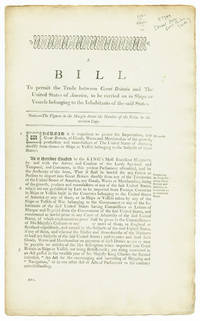
1809WRCAM47399London 1809. 1pp. on a folded folio sheet with printed docketing on the fourth page. Folio. Lightly tanned around the edges. Near fine. Rare printing of a British Parliamentary "slip bill" seeking to reestablish trade between Great Britain and the United States a few years before the outbreak of the War of 1812 and in the midst of great tension between the two nations. This bill was considered by Parliament in the spring of 1809 in the wake of President Jefferson's rescinding the Embargo Act and following the negotiations between U.S. Secretary of State Robert Smith and British envoy David Erskine which created a glimmer of hope that Anglo- American relations might be repaired after a period of great stress and turmoil. In March 1809 Jefferson signed the Non- Intercourse Act which rescinded the Embargo of 1807 and held out the promise of resuming trade with England and France if either of those nations ended its commercial restrictions toward the United States. The Erskine-Smith negotiations of April held out the promise of improved relations and in May the Parliament considered the present bill which permitted trade between Great Britain and the United States to be carried on in American ships. Unfortunately Prime Minister Canning disavowed the Erskine-Smith Agreement in late May and Anglo-American relations continued to deteriorate culminating in outright warfare in 1812. <br> <br> Slip bills are printed during the legislative process in small numbers for the use of legislators and staff. They are ephemeral items and their survival is rare. A printed note before the text of the bill reads "the figures in the margin denote the Number of the Folios in the written copy" which indicates just how early in the legislative process these bills were printed. OCLC locates only a single copy at the University of Massachusetts. OCLC 49887290. unknown books
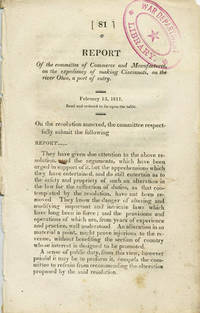
1854WRCAM38220Washington 1854. 42pp. including statistical tables. String-tied gathered signatures. A few fox marks on the first leaves else near fine. Untrimmed. A rare and lengthy report on a proposed treaty between the United States and Great Britain to drop the duty on Canadian coal imported to the United States. The authors of the report claim that importing coal and iron from Canada would free up American labor and capital to concentrate on other industries. This report presents a thorough statistical analysis of the issues involved. Then as now the free trade argument had many detractors but the authors of this paper favor dropping the coal duties. The United States and Great Britain signed a fisheries treaty in 1854 but a provision on dropping the duties on coal was not included. OCLC locates only three copies of this rare report. OCLC 63011174 24462167. unknown books
1995366661995. United Nations Commission on International Trade Law. Yearbook. Volume XXV: 1994. New York: United Nations 1995. v 446 pp. Printed wrappers light shelfwear. $35. unknown books
199222747Geneva Switzerland: United Nations 1992. 35 pages v page listing of Multilateral environmental agreements with trade protection vi pages of useful reference sources; illustrated with some tables and charts; "The present document is being sent to the United Nations Conference on Environment and Development at the invitation of the GATT Council of Representatives.as a contribution from the GATT secretariat.General Agreement on Tariffs and Trade."; marked "Advance Copy"; from the introductory material: ".objective is o provide an initial analysis of these and other interactions between trade and the environment especially as they affect the multilateral trading system.overview of the main issues and a summary of the principal conclusions.which trade policy actions are permitted by GATT rules and which are not. .issues which arise when environmental effects are wholly domestic and international trade."; plain white paper printed stapled wrap covers; light wear staple residue; in very good condition. First Edition. Soft Cover. Very Good. United Nations Paperback books
199622749Geneva Switzerland: United Nations 1996. iii 34 pages; from the abstract: "Environmental policy instruments for controlling agricultural nonpoint source pollution are reviewed and criteria for evaluating environmental policy instruments in agriculture are examined.Mineral balance calculations and corresponding nutrient utilization rates showed that nutrient losses from animal husbandry farms exceed those of cereal farms. Cost efficiency was used as the criterion for evaluating two economic instruments for abating nitrogen leakages from cereal farms: a fertilizer tax and an effluent tax based on mineral balances."; with two pages of references used and a list of the UNCTAD discussion papers date authors & titles; green printed paper stapled covers; light wear; rubber stamp of UNDP Maseru on cover and title page; in very good condition. . First Edition. Soft Cover. Very Good. United Nations Paperback books
193096806Washington: American Tree Association 1930. 48p. 6x9 inches poem foreword illustrations very good in original stapled pictorial green wraps. Illustrated guidebook to California forestry. American Tree Association unknown books
194870554sWashington D. C.: United States Government Printing Office 1948. Quarto tan cloth hardcover xxix 414 pp. Coast and harbor charts maps. Very Good with light soiling and edgewear to covers. Content Headings: General Navigation Information; Local General Information; Routes and Sailing Directions; Chesapeake Bay Entranc;e Cape Henry to Cape Lookout; Cape Lookout to Cape Fear; Cape Fear to Charleston Harbor; Charleston Harbor to Savannah River; Savannah River to St. Johns River; St. Johns River; St. Johns Rver to Miami; Miami to Dry Tortugas; Appendix. United States Government Printing Office, 1948. hardcover books
19155070baIWashington D.C: Government Printing Office 1915. Book. Very good- condition. Hardcover. American Indians; 285p.; 29.7cm; maroon cloth rubbed; front inner hinge cracked; maps diagrams listed p. 5; 1 folded map; owner marks. Government Printing Office Hardcover books
194375648Washington 1943. Paperback. Good. iv 5p. Stapled Wrapper. 27cm. Cover soiled. <br/><br/> paperback books
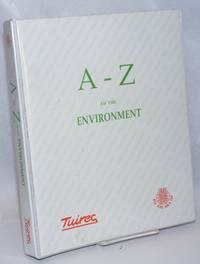
1995243317Ferney Voltaire France / Oxford: Public Services International / TUIREG 1995. Unpaginated loose leaves standard size printed recto only on good-quality alkaline paperstock bound in a four-ring snap-open plastic binder measuring12x10 inches. At least one hundred printed pages. Plastic has picked up slight dust-soil paper is immaculate a very good copy. How to address general disregard of environment by state and corporate bodies i.e. people's health and safety while adjusting for local situations. Public Services International / TUIREG unknown books
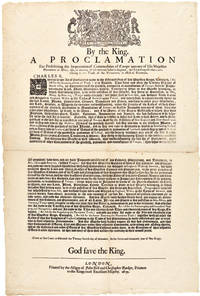
1675WRCAM45901London: Printed by the Assigns of John Bill and Christopher Barker 1675. Broadside 22 x 14 1/2 inches printed on two sheets. Old fold lines. Repaired with tissue on verso along vertical fold. A few other small tears or tissue repairs. Very good. A rare broadside announcing the decree of the English government that all foreign goods destined for British colonies must first pass through England a policy of mercantilism later termed the "triangle trade." "This program permitted the profits from colonial trade and commerce to center in England promoted British shipping and enabled the British government to support itself by taxing this trade as it flowed through England" - DAH. <br> <br> The English government began its mercantilist policies under the Commonwealth government in a series of "navigation acts" which regulated English trade. The first Navigation Act passed in 1651 targeted Dutch commerce. It stipulated that only English ships could carry freight into English territories and that if a ship was not English it could only carry goods from the country from whence it hailed i.e. Dutch ships could only import Dutch goods etc. Acts passed in 1660 and 1663 under the Restoration government of Charles II isolated trade even further mandating that British colonial goods only be imported to England and forbidding English trade on anything other than English vessels. This policy of trade which was continued for the next two hundred years marked the ascent of British colonial mercantilism and planted the seeds of discontent which resulted in the American Revolution one hundred years later. <br> <br> The present proclamation is an enforcement of the Navigation Act of 1663 An Act for the Encouragement of Trade under which "no commodities of the growth production or manufacture of Europe shall be imported into any land island plantation colony territory or place to his Majesty belonging." In other words all European trade to the American and East Indian colonies of the English had to pass through English ports en route. As the law is being disobeyed to the detriment of trade and tax revenue the proclamation extends power for enforcement to the officials of the realm. It states: <br> <br> "whereas his Majesty is well informed that notwithstanding the said Act of Parliament great quantities of other commodities.have been and are daily imported into several of his colonies plantations and territories in Asia Africa and America.and that his Majesties subjects of some of his colonies and plantations have not onely sic supplied themselves with such commodities not shipped in England.but have conveyed them by land and water to other of his Majesties colonies and plantations to the great prejudice of his Majesties customs and of the trade and navigation of this kingdom." <br> <br> An important proclamation which illustrates the difficulty in maintaining and enforcing the laws central to the first British Empire. ESTC R25339. WING C3378. GOLDSMITHS' 2112. STEELE I:3619. KRESS S1421. DAH III p.374. Printed by the Assigns of John Bill and Christopher Barker unknown books
19203344<p>A fine copy of a rare trade catalogue issued by the Trenton Potteries Company. Decorative wrappers bound in dos-a-dos style tied with two silk twists one olive green one ochre. "Bathrooms of Character" has 40 pages beautifully illustrated with plans for creating a stylish bathroom. The cover design features a background in olive green squares outlined in white suggesting tiles with title letters in a raised white Arts and Crafts font. Embellishments of "tiles" with soft ochre stylized irises and foliage complete the handsome composition. The pamplet's counterpart "Porcelain Fixtures For Kitchen and Laundry" has 31 pages also nicely illustrated. Its cover design is identical to that of the bathroom pamphlet reversing the use of colors with ochre squares outlined in white and the iris designs executed in olive green. The text presents a wide array of superior qualities of the products including "Your Maid Will Find Cleaning Easy". It attests to shared contemporary frustrations "Every woman has had experience with the "servant problem". Dimensions and prices are included. This is the sixth edition of a booklet that was updated beginning circa 1914. Advertisements for the brochures were carried by some of the most prestigious periodicals of the day including House Beautiful Country Life and The Fra. Very scarce indeed particularly in fine condition and retaining the original postal envelope addressed in this case to "Gladys Drinkwater 1124 St. Vincent Street Utica N.Y." The envelope has a pencil date of 10/21/21 as well as the original three cent purple George Washington stamp canceled.</p> Trenton Pottery Co. paperback books
186928703Trenton N.J.: Printed at the True American Office 1869. 3.75" x 5.5". Original printed gold-colored wrappers stitched. 11 1 blank pp. Light wrapper wear Very Good.<br/>OCLC 55187463 1- Rutgers as of 3/12. Printed at the True American Office unknown books
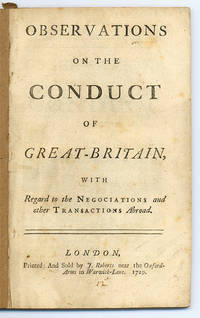
1729658131729. London: printed and sold by J. Roberts 1729. London: printed and sold by J. Roberts 1729. English Trade in the West Indies Trade. Great Britain. Amhurst Nicholas 1697-1742 Attributed. Observations on the Conduct of Great-Britain With Regard to the Negociations and Other Transactions Abroad. London: Printed: And Sold by J. Roberts 1729. 61 1 pp. Octavo 7-3/4" x 4-1/2". Stab-stitched pamphlet in later plain wrappers. Light rubbing minor wear to spine ends and corners light soiling to title page and verso of final leaf. Light toning to text light foxing to a few leaves. A nice copy. $100. First edition. Attributed in some sources to Nicholas Amhurst this pamphlet defends Sir Robert Walpole then chancellor of the exchequer against accusations of neglecting England's West Indian commerce to the advantage of Spain. It describes English expeditions to counter Spanish influence and in the interest of fairness lists English ships taken by Spain since the Treaty of Hanover 1725. English Short-Title Catalogue T41776. unknown books
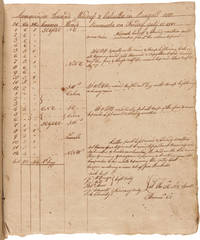
1796WRCAM54712Mostly at sea from New York with stops in Calcutta Saint Helena Ascension Island and Cornwall England 1796. 246pp. Square folio. Original crude burlap covers stab-sewn with thick string. A bit toned and foxed occasional ink or tobacco burns. Very good. A remarkable artifact of early American naval commerce containing the sailing directions and shipboard activities of the "Ship Washington of Philadelphia" which sailed from New York to Calcutta rounding the southern tip of Africa and visiting Saint Helena and Ascension Island before crashing on the rocks at Cornwall England on the way to Hamburg Germany. The log contains a navigational ledger with locations headings wind and weather remarks along with occasional sick lists names of men "unfit for duty" those put on light duty temperatures and other information. The remarks are quite detailed and specific regarding shipboard work and activity. <br> <br> The captain of this final voyage of the ship WASHINGTON was Samuel Hubbart but the identity of the sailor who kept this log is unknown. The ship departed New York on July 4 1795 and reached Calcutta on August 31. Without the need for recording navigational data while in port the log's author switches from the ledger-style format and writes longer more-detailed daily entries describing the crew's activities. The crewmen mentioned include pilots boatswains carpenters coopers caulkers sailmakers and others. Most of the entries pertain to the maintenance of the ship while anchored in the bay. Numerous mentions are made of crew on board fixing various equipment including types and amounts of supplies. A few entries note the employment of Indian "Cooleys" on board the ship making various repairs. An interesting incident of September 17 bears relating: <br> <br> "Hearing a noise upon the main Deck Mr. Naylor went to see what was the matter - upon engaging found Abraham Moor had struck Thomas Williams the Cook as Moor said for wanting to trouble a girl which Moor had on board - Mr. Naylor told him he should not ill use that man for he had every reason to believe it to be false what he alledged against the Cook. Moor said he did not come here to be jawd by a black Man.S." <br> <br> After swearing he would "never go home" on the WASHINGTON Moor literally jumped ship just after this confrontation and hid on another ship before being found and brought back to the WASHINGTON "in irons." <br> <br> In early November a few entries mention the ship receiving a supply of sugar taking on "Three Burr Load of Sugar" on November 7 and two more "Burr Load" two days later. Subsequent entries detail the loading of several "Burr Load of Bales" and "one hundred bags of ginger." <br> <br> Over the course of the ship's time at Calcutta the author mentions encounters with at least four other American ships: the GANGES the HAMILTON the MAJOR PINKNEY of Charleston and the "American Ship Camilla of New York arriv'd here from London." <br> <br> By early February the WASHINGTON left Calcutta for the voyage to Hamburg spelled variously here as "Hamborough" and "Hamburgh" though the ship would never make it to Germany. On March 15 and again on April 6 the recordist notes an inventory of the ship's water supply. By March 23 the ship reaches a point "prependicular on Cape Lagulas Bank" the southernmost point of Africa. About a week later the punishment of a drunken sailor is reported: <br> <br> "Joseph Gonrabbysp who has for some time past been addicted to Drunkeness and no person on board having given him any liquor he was discovered this morning to have taken from the Ships stores about half a Gallon of rum and from his being frequently very drunk there is no doubt of his having been Guilty of the same offence before for which Capt. Hubbart is necessitated to order his Boatswain to flog him. Accordingly mustered all hands aft and give him one and a half dozen lashes." <br> <br> On April 16 the WASHINGTON arrived at the remote island of Saint Helena in the South Atlantic Ocean sending "the Boat on shore with an Officer to the Governor for permission to Anchor." Here the WASHINGTON restocked supplies including water potatoes & other vegetables rice and bread before embarking for Ascension Island which they reached on April 25. The author remarks on the "number of remarkable rocks like pyramids" and "a low point of black Rocks with a fine white sandy beach back of it" witnessed at Ascension Island. The WASHINGTON spent one night at Ascension where a group of men went ashore in order to "spend the Night in Catching Turtle in the different Bays." The crewmen caught twelve turtles and brought them aboard ship before continuing their journey. <br> <br> While heading north to Europe the WASHINGTON was boarded on May 17 by the "Quebec British Frigate Cap J Cook in Company with the Carnatic 74 Rear Admr Powel with a convoy of 21 sail of Transports & Gun boats with 10000 Troops on board bound for Martinico Martinique." On June 7 they again encounter another ship "a Spaniard from some port in South America bound for Cadiz out 3 months & 10 days - we cannot understand rightly what port she was from." <br> <br> Then on June 18 disaster struck the WASHINGTON as it ran aground at the Lizard Rocks off Cornwall England. The log book records the ship's demise: <br> <br> "The weather still very thick and hazy. At 9PM hearing the Surf break on shore took in all the studding sails Braced the Yards sharp and hauled to the Southward finding ourselves in amongst the Rocks off the Lizard have all aback and endeavored to get her out from among them but the Flood tide making very strong drove the Ship so hard upon the Rocks that with every endeavour we found it impracticable to get her off she having settled on them & the strength of the tide Thumping her very hard upon the Rocks sounded the Pump and found she made water very fast. Fired several Guns as a signal of Distress which brought several boats off from the Shore to our assistance." <br> <br> For the next couple of weeks the crew of the WASHINGTON participated in "discharging the cargo" from the ship so that it is not "plundered by the natives" sending everything to Falmouth "where the Goods are deposited under the protection of a Custom house Yaught." The log book mentions one crewman of the WASHINGTON "threatening revenge on Captain Hubbart." Another crewman is put "under a Guard of Soldiers" after selling off some of the muslin stored in the bales rescued from the wreck. Here the ship's log ends along with the career of the Ship WASHINGTON. <br> <br> A unique record of the last voyage of an early American trading vessel with insight into late 18th-century navigational methods and the commercial interests of Federal-era America. unknown books