667 résultats
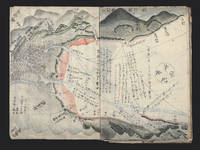
5611"Hishu" today Saga Prefecture: 1841-45. A very rare Japanese manuscript sea chart of the sea routes from Saga Prefecture a major trading area in the west to Osaka through the Inland Sea which is more than 400 km. long and includes in excess of 3000 islands. The Inland Sea one of the main trade routes for the Japanese in the Edo period has numerous areas of turbulence and navigating through the numerous islands and rocky outcroppings presented enormous problems in the era before modern navigation systems. In the early 1840s the central government in Edo ordered each fiefdom to prepare maps of coastal routes to facilitate trade and shipping. Our manuscript was prepared by Tsugihei Miyachi a high level sea pilot "mite kako" in the Saga Prefecture shipping office as an employee of the Nabeshima Clan. The map were it to be unbound is about 11340 mm. long about 37 feet depicting Saga in the west to Osaka in the east. It is finely drawn in black ink heightened with wash in green purple blue grey and red. Five of the openings have folding extension sections pasted onto the lower margins of the leaves. Blue lines depict safe sailing routes for smaller ships. The map depicts in very great detail areas of turbulence there are famous whirlpools in the Inland Sea numerous islands rock formations and landscapes for orientation anchorages harbors and fishing areas. Each section of the map has been annotated by the compiler with notes on distances characteristics of rivers landmarks for navigation tidal activities the route to Nagasaki etc. The first map opening depicts Saga and the final opening Osaka. The sea chart is prepared with considerable local knowledge of castles and temples. A series of notable castles each is labeled with name of the lord assets etc. are depicted along the shores and Miyachi describes harbors for anchoring and to get fresh water. The routes are drawn from a "bird's-eye view" perspective with lovely vistas of mountains and islands and villages and towns. The two leaves of manuscript text at the beginning in the style of a dedicatory letter to the fiefdom lord describes the compiler's efforts over a five-year period to prepare the map. He writes that it is based on his own personal experiences as a sea pilot. He states that purple denotes routes he has taken red denotes shallows blue lines denote the routes for large ships grey for land and green for mountains and forests. The eleven pages of text at the end provide details on prevailing weather patterns and how to prepare for inclement weather how to navigate by landmarks and the stars wind and tidal patterns and the history of the preparation of this map "it took me five years of daily observation to prepare this work". He provides a list of his voyages to different cities on this route. On the final page the author states that three copies were made: the first for the fiefdom lord the second for a cabinet member and the third for Miyachi's divisional chief. A modern scholar has laid-in a note describing this sea chart as one of those three. Japanese sea charts are rare survivals and we know of no other similar example outside of Japan. ❧ The sea pilot Miyachi's log books are preserved in the Nabeshima clan's archives see the Saga kenritsu toshokan database. unknown books
1838List601Most Latin America 1838. Mostly Latin America 1809 - 1838. Over 150 pieces comprising over 280 pages .5 linear feet. The Massachusetts merchant Captain Eliphalet Smith Jr. 1780-1838 was a merchant trading primarily in Latin America during the Revolutionary Period. Described by the Chilean historian Diego Barros Arana as "an unscrupulous adventurer who saw in the countries struggling for independence nothing more than a field for his speculations" Smith bore witness to many seminal events in the continent's political history. These letters offer first-hand accounts of such events as the Sieges of Cadiz and Montevideo Admiral William Brown's victories in the Argentinian Independence War the Peruvian silver trade Simon Bolivar's arrival in Guayaquil and the battles of Real Felipe Fortress. <br /> <br /> Smith's business correspondence from the period sheds light on the pro-Regency networks active in the Americas during the period as his loyalties - like most merchants - were based on the Spanish Armada's control of trade. The tensions between Smith and the nascent Chilean government came to a head when goods from Smith's ship the Brig Macedonian were seized by Lord Cochrane Vice Admiral of the Chilean Squadron in two separate incidents in 1818 and 1821. The ensuing legal disputes would cast a long shadow over relations between the United States and Chile until the cases were resolved by international tribunal. The collection includes several original documents relating to the episodes including Smith's recollections of the events and several letters to investors describing the confiscated goods. <br /> <br /> Smith's efforts and their tacit support by the U.S. government make him a key figure in early relations between the United States and the new Latin American regimes. In 1822 an agent of the United States State Department acknowledged that "the Brigs Canton and Macedonian were for more than three years constantly violating blockades neutral and belligerent rights and supplying the royalists and flew the Spanish flag." Likewise historian Patricia Marks writes that Smith had business connections with Spanish merchants in Peru and refers to a quote from Viceroy to Peru JoaquÃn de la Pezuela: "Smith and the Macedonian became anathemas to the patriots. San MartÃn is reputed to have said that he did more damage to the cause of liberty than any other man." Historian Joseph Byrne Lockey points out that Smith's actions had greater implications regarding the perception of the United States in revolutionary-era Latin America: "The conduct of Captain Smith supported in so far as it was legal by the government at Washington contributed together with other incidents of a similar sort not a little to the dimming of the earlier impression of the Patriots that the United States would be in the struggle their friend and ally." <br /> <br /> The collection here consists of 153 documents from Smith's estate including letters received by Smith mercantile inventories and holograph copies of letters sent by Smith during the period. Correspondents include Smith's contacts in Latin America and his creditors in the United States. As a collection the documents relay scarce firsthand accounts of several seminal political events and map an extensive network of mercantile contacts and inventories. They are worthy of further research by scholars of the political history of Latin America and Spain and of early United States / Latin American relations as well as scholars of trade between China and Latin America. <br /> <br /> Overall the collection presents an uncommon opportunity to acquire primary source material from Latin America's Revolutionary Period. We find records from the Macedonian and Smith in the Forbes family collection at Harvard as well as some later documents relating to Smith's claims at the University of Virginia Special Collections. We find no publicly held examples of Smith's personal correspondence or papers prior to 1820. A full write-up and inventory is available in our PDF catalog. unknown books
177097Birmingham or Sheffield 1770. Oblong folio. 390 x 220 mm. 15 1/4 x 8 3/4 inches. Vellum spine over decorative blue paper wrappers paper label with title in Italian on upper board and ink title in Italian on spine. Paper stock toned with age a few leaves with staining in the margin otherwise in good condition. Silversmith model book containing 80 full-page engravings of candles sticks and holders candelabra pitchers plates salt and pepper shakers serving utensils silverware and other household pieces. Each image is beautifully and careful engraved with rich detail and ornamentation. Each includes a printed product number as well as one in ink with a different item number and a price. Although there is no title-page or signatures of engravers this large sales catalogue appears to be English as some of the engravings have English words of explanation engraved in the text. The binding is definitely Italian and the paper label is in an Italian hand. The watermark is a "fleur de lis" pattern suggesting an international company manufacturing the silver. There were only a few English companies with the capacity to export at this time including silver works in Sheffield and Birmingham both of which by 1770's had established networks of dealers selling their wares across the continent. This catalogue with specific Italian connections is very unusual and suggests the scope of the business had reached export capacity by the third quarter of the century. The most important Italian silver makers at this time were Giardini of Rome and Venuti of Naples. unknown books
17944016Leeds 1794. Large 4to 308 x 240 mm. 12 leaves text comprising 3 printed titles each with a 6-page description of the items in the catalogue in German French and English and 45 engraved plates of which one folding containing 186 designs numbered 1-152 with an additional 34 numbered and lettered designs for "tea-ware" tea- and coffee-ware in the French and English descriptions. Paper watermarked with a fleur-de-lys and shield with capital letters L V G below Lubertus van Gerrevink. Some light scattered foxing and offsetting plate 20 with closed tear to top margin just entering plate area without loss folding plate 26 torn across and repaired. Modern retrospective calf gilt edges red-stained extremities very lightly rubbed. Provenance: contemporary notes in Portuguese on the blank verso of the last plate; Duncan Grant Warrand loosely inserted ex-libris; Martin Woolf Orskey bookseller 1925-2018 signature at end with purchase date 1972. A multi-lingual catalogue of pottery produced by Hartley Greens and Co. for the use of traveling salesmen. Founded circa 1756 at Hunslet south of Leeds the company gained a reputation for its elegant cream-colored earthenware in the classical style known as creamware a type of earthenware made from white Cornish clay combined with a translucent glaze to produce a characteristic pale cream color. Hartley Greens and Co. so dominated the market that their products came to be referred to as Leedsware or Leeds pottery. Although some of the pieces in this catalogue are for display or special use Leeds pottery was generally a more everyday pottery than that of Wedgewood their principal rival and hence its survival rate is low. The earlier pieces before around 1775 were furthermore unmarked making attribution uncertain thus rendering the firm's printed catalogues all the more important. The present catalogue was "one of the earliest pattern books published in England by pottery manufacturers for the use of their travellers with illustrations of all the articles produced by the firm" Solon. It shows the creamware as issued from the studios before jobbers and importers added colored glazes. Shown are terrines sauce boats salts jugs egg cups covered terrines and bowls cake plates cruet stands candlesticks urns tea services and a remarkable tulip vase among other useful objects of the table many with ornaments some in the characteristic openwork or perforated style. All 186 designs are numbered and identified in the accompanying plate lists. The variety is impressive. Copies of the Leeds catalogues were often cut up by jobbers who relied on the illustrations to transmit orders accurately rather than trusting to written descriptions of the forms. Their consequent rarity makes the publishing history of the catalogues difficult to unravel. The earliest catalogue appeared in 1783 with the text in English only and 41 plates. The Danish National Library has a copy with the text in English and French and the English title dated 1786. Another copy of the present 1794 edition is held by the V&A but it has only 41 plates. Meanwhile there are also copies of a 1794 edition at Yale and RISD with the English text only but with 71 plates. The plates were reissued in 1795 and 1814 or 1815 these undated issues are identified by the watermarked dates of the paper they are printed on. Most of the variously dated copies seem to be reissues of the same plates. Most of the variously dated copies seem to be reissues of the same plates. A comparison of this copy to the Winterthur copy from 1814 which is digitized shows that the same plates were used with the addition of an engraved oval label " Leeds Pottery" on each plate up to and including plate 38 a compotier from which emerges a large cross after which the designs diverge. The editions or issues after 1795 do not have the very useful text with gives the name function and size of each piece: "As the price lists and the general title had been printed independently from the plates and not in sufficient quality to accompany the sets of engravings these late copies are generally found without the title and the printed description of the objects. These price lists now very rare were printed in English French German and Spanish. As the prices were subject to constant revision prices are added with pen and ink" Solon. Our copy is unpriced. Altogether OCLC locates fewer than a dozen copies some incomplete of various issues or editions of the Leeds pottery catalogue. Cf. M.-L. Solon Ceramic Literature 1910 p. 196. unknown books
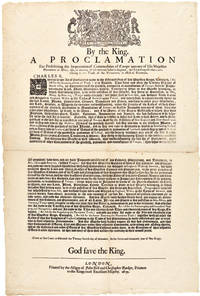
1675WRCAM45901London: Printed by the Assigns of John Bill and Christopher Barker 1675. Broadside 22 x 14 1/2 inches printed on two sheets. Old fold lines. Repaired with tissue on verso along vertical fold. A few other small tears or tissue repairs. Very good. A rare broadside announcing the decree of the English government that all foreign goods destined for British colonies must first pass through England a policy of mercantilism later termed the "triangle trade." "This program permitted the profits from colonial trade and commerce to center in England promoted British shipping and enabled the British government to support itself by taxing this trade as it flowed through England" - DAH. <br> <br> The English government began its mercantilist policies under the Commonwealth government in a series of "navigation acts" which regulated English trade. The first Navigation Act passed in 1651 targeted Dutch commerce. It stipulated that only English ships could carry freight into English territories and that if a ship was not English it could only carry goods from the country from whence it hailed i.e. Dutch ships could only import Dutch goods etc. Acts passed in 1660 and 1663 under the Restoration government of Charles II isolated trade even further mandating that British colonial goods only be imported to England and forbidding English trade on anything other than English vessels. This policy of trade which was continued for the next two hundred years marked the ascent of British colonial mercantilism and planted the seeds of discontent which resulted in the American Revolution one hundred years later. <br> <br> The present proclamation is an enforcement of the Navigation Act of 1663 An Act for the Encouragement of Trade under which "no commodities of the growth production or manufacture of Europe shall be imported into any land island plantation colony territory or place to his Majesty belonging." In other words all European trade to the American and East Indian colonies of the English had to pass through English ports en route. As the law is being disobeyed to the detriment of trade and tax revenue the proclamation extends power for enforcement to the officials of the realm. It states: <br> <br> "whereas his Majesty is well informed that notwithstanding the said Act of Parliament great quantities of other commodities.have been and are daily imported into several of his colonies plantations and territories in Asia Africa and America.and that his Majesties subjects of some of his colonies and plantations have not onely sic supplied themselves with such commodities not shipped in England.but have conveyed them by land and water to other of his Majesties colonies and plantations to the great prejudice of his Majesties customs and of the trade and navigation of this kingdom." <br> <br> An important proclamation which illustrates the difficulty in maintaining and enforcing the laws central to the first British Empire. ESTC R25339. WING C3378. GOLDSMITHS' 2112. STEELE I:3619. KRESS S1421. DAH III p.374. Printed by the Assigns of John Bill and Christopher Barker unknown books
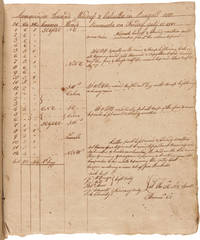
1796WRCAM54712Mostly at sea from New York with stops in Calcutta Saint Helena Ascension Island and Cornwall England 1796. 246pp. Square folio. Original crude burlap covers stab-sewn with thick string. A bit toned and foxed occasional ink or tobacco burns. Very good. A remarkable artifact of early American naval commerce containing the sailing directions and shipboard activities of the "Ship Washington of Philadelphia" which sailed from New York to Calcutta rounding the southern tip of Africa and visiting Saint Helena and Ascension Island before crashing on the rocks at Cornwall England on the way to Hamburg Germany. The log contains a navigational ledger with locations headings wind and weather remarks along with occasional sick lists names of men "unfit for duty" those put on light duty temperatures and other information. The remarks are quite detailed and specific regarding shipboard work and activity. <br> <br> The captain of this final voyage of the ship WASHINGTON was Samuel Hubbart but the identity of the sailor who kept this log is unknown. The ship departed New York on July 4 1795 and reached Calcutta on August 31. Without the need for recording navigational data while in port the log's author switches from the ledger-style format and writes longer more-detailed daily entries describing the crew's activities. The crewmen mentioned include pilots boatswains carpenters coopers caulkers sailmakers and others. Most of the entries pertain to the maintenance of the ship while anchored in the bay. Numerous mentions are made of crew on board fixing various equipment including types and amounts of supplies. A few entries note the employment of Indian "Cooleys" on board the ship making various repairs. An interesting incident of September 17 bears relating: <br> <br> "Hearing a noise upon the main Deck Mr. Naylor went to see what was the matter - upon engaging found Abraham Moor had struck Thomas Williams the Cook as Moor said for wanting to trouble a girl which Moor had on board - Mr. Naylor told him he should not ill use that man for he had every reason to believe it to be false what he alledged against the Cook. Moor said he did not come here to be jawd by a black Man.S." <br> <br> After swearing he would "never go home" on the WASHINGTON Moor literally jumped ship just after this confrontation and hid on another ship before being found and brought back to the WASHINGTON "in irons." <br> <br> In early November a few entries mention the ship receiving a supply of sugar taking on "Three Burr Load of Sugar" on November 7 and two more "Burr Load" two days later. Subsequent entries detail the loading of several "Burr Load of Bales" and "one hundred bags of ginger." <br> <br> Over the course of the ship's time at Calcutta the author mentions encounters with at least four other American ships: the GANGES the HAMILTON the MAJOR PINKNEY of Charleston and the "American Ship Camilla of New York arriv'd here from London." <br> <br> By early February the WASHINGTON left Calcutta for the voyage to Hamburg spelled variously here as "Hamborough" and "Hamburgh" though the ship would never make it to Germany. On March 15 and again on April 6 the recordist notes an inventory of the ship's water supply. By March 23 the ship reaches a point "prependicular on Cape Lagulas Bank" the southernmost point of Africa. About a week later the punishment of a drunken sailor is reported: <br> <br> "Joseph Gonrabbysp who has for some time past been addicted to Drunkeness and no person on board having given him any liquor he was discovered this morning to have taken from the Ships stores about half a Gallon of rum and from his being frequently very drunk there is no doubt of his having been Guilty of the same offence before for which Capt. Hubbart is necessitated to order his Boatswain to flog him. Accordingly mustered all hands aft and give him one and a half dozen lashes." <br> <br> On April 16 the WASHINGTON arrived at the remote island of Saint Helena in the South Atlantic Ocean sending "the Boat on shore with an Officer to the Governor for permission to Anchor." Here the WASHINGTON restocked supplies including water potatoes & other vegetables rice and bread before embarking for Ascension Island which they reached on April 25. The author remarks on the "number of remarkable rocks like pyramids" and "a low point of black Rocks with a fine white sandy beach back of it" witnessed at Ascension Island. The WASHINGTON spent one night at Ascension where a group of men went ashore in order to "spend the Night in Catching Turtle in the different Bays." The crewmen caught twelve turtles and brought them aboard ship before continuing their journey. <br> <br> While heading north to Europe the WASHINGTON was boarded on May 17 by the "Quebec British Frigate Cap J Cook in Company with the Carnatic 74 Rear Admr Powel with a convoy of 21 sail of Transports & Gun boats with 10000 Troops on board bound for Martinico Martinique." On June 7 they again encounter another ship "a Spaniard from some port in South America bound for Cadiz out 3 months & 10 days - we cannot understand rightly what port she was from." <br> <br> Then on June 18 disaster struck the WASHINGTON as it ran aground at the Lizard Rocks off Cornwall England. The log book records the ship's demise: <br> <br> "The weather still very thick and hazy. At 9PM hearing the Surf break on shore took in all the studding sails Braced the Yards sharp and hauled to the Southward finding ourselves in amongst the Rocks off the Lizard have all aback and endeavored to get her out from among them but the Flood tide making very strong drove the Ship so hard upon the Rocks that with every endeavour we found it impracticable to get her off she having settled on them & the strength of the tide Thumping her very hard upon the Rocks sounded the Pump and found she made water very fast. Fired several Guns as a signal of Distress which brought several boats off from the Shore to our assistance." <br> <br> For the next couple of weeks the crew of the WASHINGTON participated in "discharging the cargo" from the ship so that it is not "plundered by the natives" sending everything to Falmouth "where the Goods are deposited under the protection of a Custom house Yaught." The log book mentions one crewman of the WASHINGTON "threatening revenge on Captain Hubbart." Another crewman is put "under a Guard of Soldiers" after selling off some of the muslin stored in the bales rescued from the wreck. Here the ship's log ends along with the career of the Ship WASHINGTON. <br> <br> A unique record of the last voyage of an early American trading vessel with insight into late 18th-century navigational methods and the commercial interests of Federal-era America. unknown books
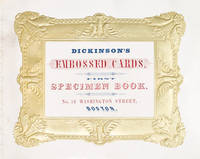
1842232013Boston: Samuel N. Dickinson 1842. Printed title in blue and red within an embossed gilt ornamental frame one printed "Notice" from the publisher dated June 1842 49 specimens of embossed cards many tinted some printed all mounted to stiff card stock; and 7 sheets of "Embossed Specimens of Printed Billets" sewn to a stiff printed card. Oblong 4to. Bound in an album of contemporary half calf and marbled paper boards with red leather label on upper cover stamped in gilt "Dickinson's Embossed Cards" calf shows much deterioration and corrosion although the sewing is still intact 28 specimen cards have been removed and are no longer present some minor soiling and foxing but generally vey clean and sound internally custom morocco backed folding box. Printed title in blue and red within an embossed gilt ornamental frame one printed "Notice" from the publisher dated June 1842 49 specimens of embossed cards many tinted some printed all mounted to stiff card stock; and 7 sheets of "Embossed Specimens of Printed Billets" sewn to a stiff printed card. Oblong 4to. Christian Gobrecht's Copy. With a very interesting presentation note from a previous Philadelphia owner Alfred Darrach dated 1928 affixed to the front pastedown identifying the original owner his grandfather as Christian Gobrecht 1785-1844 artist engraver embosser inventor engraver to the U.S. Mint and from 1840-1844 the 4th United States Engraver of the Mint where he was responsible for the creation of several new models and designs including the famous Seated Liberty design which appeared on a variety of American coins from 1836 through 1890. <br/>Gobrecht designed many notable medals coins and dies during his career but he also "invented a speaking doll and later a camera lucida. He also produced engravings for calico printers and dies for bookbinders. He engraved the brass dies for embossing the Morocco covers of the Boston Token from 1831 - 1836 as well as the eagle cover of the Philadelphia Token. Among the medals he engraved were the Charles Willson Peale medal the Franklin Institute medal etc ." - DAB.<br/>A remarkable specimen album in and of itself all the more so for having belonged to one of America's most important engravers. We cannot say for sure but it is entirely likely that if Gobrecht himself did not design many of the dies for this embosser he may have used the album for his own work and possibly removed the cards which are no longer present. Samuel N. Dickinson unknown books
191498381914. Presentation album promoting the work of the pioneering printing firm including unpaginated 16 pp. introductory text printed in blue black silver and white within elaborately ornamented borders and 12 mounted samples of work by the firm including publicity brochures advertisements pamphlets stationery and other items most in striking colors compositions and formats with descriptions on decorative tissue guards. Folio. Orig. ornamental cloth front cover a bit warped. Berlin n.d. circa 1914. A spectacular publication reflecting the firm's originality creativity and great attention to detail presenting striking designs for publicity material epitomizing later manifestations of Jugendstil aesthetics. hardcover books
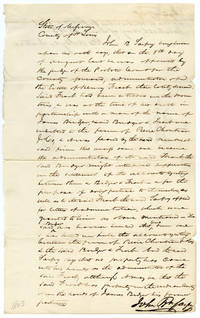
1843WRCAM42012St. Louis 1843. 1p. docketed on verso. Folio. Old fold lines; some separation at folds a few repaired with older archival tape. Quite clean and bright. Good. A remarkable window into the business dealings of famed mountain man Jim Bridger this signed manuscript affidavit of John P. Sarpy testifies to his actions on behalf of the estate of fellow fur trader Henry Fraeb who was killed by Indians in the Rocky Mountains. Sarpy who was a partner in the major firm of Pierre Chouteau & Co. had worked closely with Fraeb and knew him well. In his affidavit he writes about the Chouteau Company's concerns about Jim Bridger Fraeb's partner at the time of his demise and the difficulty of getting Bridger to pay his debts. Dated at St. Louis Sarpy's affidavit states: <br> <br> ".on the 8th day of August last he was appointed.administrator of the estate of Henry Fraeb then lately deceased. Said Fraeb had been a trader in the mountains & was at the time of his death in partnership with a man of the name of James Bridger & said Bridger & Fraeb were indebted to the firm of Pierre Chouteau Jr. & Co. & it was feared by the members of said firm that unless some one became the administrator of the said Fraeb the said Bridger might interpose difficulties in the settlement of the accounts existing between them & Bridger & Fraeb. & for the purpose of doing justice to themselves as well as to the said Fraeb the said Sarpy applied for letters of administration which were granted to him as above mentioned. The said Bridger has however since this time been here & has settled in full the accounts existing between the firm of Pierre Chouteau Jr. & Co. & the said Bridger & Fraeb. And the said Sarpy says that no property has come into his hands as the administrator of the said Fraeb although it may be that the said Fraeb has property in the mountain country or in the hands of James Bridger his former partner." <br> <br> Though he may have been one of the greatest and most beloved mountain men of all time Jim Bridger was not the best debt in the world nor did Pierre Chouteau & Co. forget business. unknown books
184324188St. Louis 1843. 1pp. docketed on verso. Folio. Old fold lines; some separation at folds a few repaired with older archival tape. Quite clean and bright. Good. Jim Bridger's bad debts.<br/> <br/>A remarkable window into the business dealings of famed mountain man Jim Bridger this signed manuscript affidavit of John P. Sarpy testifies to his actions on behalf of the estate of fellow fur trader Henry Fraeb who was killed by Indians in the Rocky Mountains. Sarpy who was a partner in the major firm Pierre Chouteau &. Co. had worked closely with Fraeb and knew him well. In his affidavit he writes about the Chouteau Company's concerns about Jim Bridger Fraeb's partner at the time of his demise and the difficulty of getting Bridger to pay his debts. Dated at St. Louis Sarpy's affidavit says that "on the 8th day of August last he was appointed.administrator of the estate of Henry Fraeb then lately deceased. Said Fraeb had been a trader in the mountains & was at the time of his death in partnership with a man of the name of James Bridger & said Bridger & Fraeb were indebted to the firm of Pierre Chouteau Jr. & Co. & it was feared by the members of said firm that unless some one became the administrator of the said Fraeb the said Bridger might interpose difficulties in the settlement of the accounts existing between them & Bridger & Fraeb. & for the purpose of doing justice to themselves as well as to the said Fraeb the said Sarpy applied for letters of administration which were granted to him as above mentioned. The said Bridger has however since this time been here & has settled in full the accounts existing between the firm of Pierre Chouteau Jr. & Co. & the said Bridger & Fraeb. And the said Sarpy says that no property has come into his hands as the administrator of the said Fraeb although it may be that the said Fraeb has property in the mountain country or in the hands of James Bridger his former partner." Though he may have been one of the greatest and most beloved mountain men of all time Jim Bridger was not the best debt in the world nor did Pierre Chouteau & Co. forget business. unknown books
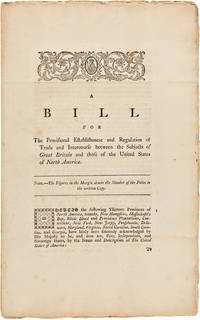
1788WRCAM47396London 1788. Paginations given below. Folio. Four of the titles string-tied as issued. First title lightly foxed and toned. Very good. In a half morocco and marbled boards box spine gilt. An interesting assemblage of British legislation from the period immediately following the Revolutionary War documenting British efforts to allow only very limited trade with the newly independent United States. British trade policy during this period is an excellent example of a foreign power taking advantage of the weak structure of the American Articles of Confederation which made it difficult for the thirteen states to act in concert and out of a any position of strength through unity. <br> <br> By 1783 the United States had formal trade relations with only two nations: France secured through the 1778 Treaty of Amity and Commerce; and the Netherlands via a Commercial Treaty negotiated by John Adams in 1782. Before the Revolution British merchants had relied heavily on exports sent to the British colonies in North America which greatly outweighed goods imported to Britain from the colonies. After the war the British government was reluctant to sign a formal commercial treaty with the United States. The states at the time were operating under the relatively weak structure of the Articles of Confederation and the British felt that they could secure the benefits of trade with the American states without making any treaty concessions. <br> <br> Britain opted instead for a series of acts that established limited trade with the United States and between the United States and Canada and the British colonies in the West Indies. The first of these laws was passed in 1783 and the evolution of that law is reflected in the first three items below. In all these British laws severely circumscribed American trade with England and with English colonies though they did allow some markets for American exports and did facilitate the flow of much needed imports into the United States. In 1784 British exports to the United States were valued at more than £3.5 million while American exports to England were less than one-fifth of that sum. The United States and Great Britain would not sign a formal trade treaty until the Jay Treaty which was approved in 1795 and which gave the United States limited trading rights in the British West Indies. <br> <br> The first second third and fifth titles below were printed in very small numbers for the use of members of Parliament during debate and action on the bills. Known as "slip bills" they are a snapshot of the legislation as it proceeded through the legislative process. The first and fifth titles contain blank spaces in the text where dates and tariff rates would be filled in later and all four of the slip bills have printed docketing on the final page. The first and fifth items also contain a printed note before the text of the bill reading "the figures in the margin denote the Number of the Folios in the written copy" which indicates just how early in the legislative process these bills were printed. <br> <br> The four bills and one act included in this group are: <br> <br> 1 A BILL FOR THE PROVISIONAL ESTABLISHMENT AND REGULATION OF TRADE AND INTERCOURSE BETWEEN THE SUBJECTS OF GREAT BRITAIN AND THOSE OF THE UNITED STATES OF NORTH AMERICA caption title. London. 1783. 31pp. This bill gives the United States the same trading status as other independent sovereign states but restricts American exports to Great Britain only to those goods that are "the growth produce or manufacture of the said United States." It thus forbad the "triangular" trade in which American merchants liked to engage while not imposing the same restriction on British exporters. ESTC locates only five copies. ESTC N32490. BELL G578 ref. <br> <br> 2 A BILL AS AMENDED IN THE COMMITTEE FOR THE PROVISIONAL ESTABLISHMENT AND REGULATION OF TRADE AND INTERCOURSE BETWEEN THE SUBJECTS OF GREAT BRITAIN AND THOSE OF THE UNITED STATES OF NORTH AMERICA caption title. London. 1783. 51pp. This bill expands on and further defines the previous bill clearly spelling out the limitations on American trade with England while imposing no such restrictions on English merchants and in fact making every provision to facilitate British exports to America. ESTC locates six copies. ESTC N32061. <br> <br> 3 A BILL AS AMENDED IN THE COMMITTEE TO WHOM THE SAME WAS RE-COMMITTED FOR THE PROVISIONAL ESTABLISHMENT AND REGULATION OF TRADE AND INTERCOURSE BETWEEN THE SUBJECTS OF GREAT BRITAIN AND THOSE OF THE UNITED STATES OF NORTH AMERICA caption title. London. 1783. 51pp. As with the previous two versions of this bill the language here explains that it would be "highly expedient" to have a trade treaty with the United States but until that point England would make due with legislation regulating Anglo- American commerce. The same restrictive language regarding exports from America is carried over. ESTC locates only five copies. ESTC N32016. <br> <br> 4 AN ACT TO EXTEND THE POWERS OF AN ACT.FOR GIVING HIS MAJESTY CERTAIN POWERS FOR THE BETTER CARRYING ON TRADE AND COMMERCE BETWEEN THE SUBJECTS OF HIS MAJESTY'S DOMINIONS AND THE INHABITANTS OF THE UNITED STATES OF AMERICA TO THE TRADE AND COMMERCE OF THIS KINGDOM WITH THE BRITISH COLONIES AND PLANTATIONS IN AMERICA.caption title. London: Printed by Charles Eyre and William Strahan 1784. 2715-716pp. This law specifically relates to British exports of iron hemp and sail cloth from the Baltic states to the United States. ESTC locates only three copies. ESTC N58431. BELL G585. <br> <br> 5 A BILL FOR REGULATING THE TRADE BETWEEN THE SUBJECTS OF HIS MAJESTY'S COLONIES AND PLANTATIONS IN NORTH AMERICA AND IN THE WEST INDIA ISLANDS AND THE COUNTRIES BELONGING TO THE UNITED STATES OF AMERICA; AND BETWEEN HIS MAJESTY'S SAID SUBJECTS AND THE FOREIGN ISLANDS IN THE WEST INDIES caption title. London. 1788. 91pp. This bill essentially prohibits American trade with Britain's colonies in the West Indies and prohibits American exports to Canada as well. The sole exemption is with regard to salt from the Turks Islands a product the English wanted to encourage. The bill allows American ships to receive salt on the islands. It also limits exports from the West Indies to America on such goods as sugar molasses coffee etc. to British ships only. ESTC locates only four copies. ESTC T201245. RAGATZ p.95. BELL G618 ref. <br> <br> An important group of rare working drafts of British legislation. hardcover books
1870WRCAM55334Osage Mission Ks 1870. Hand-drawn and hand-painted watercolor sign on a 14 x 18 3/4-inch sheet of cardstock. Pencil sketch for the same sign on the verso. Small chips at lower corners some light soiling. Very good. A remarkable and very attractive handmade sign for D.B. Gregory's livery stable in Osage Mission Kansas. Undated the style of the sign suggests a date of the 1870s. The center of the sign shows a lovely illustration in profile of a horse pulling a single-rider four-wheeled carriage along a dirt road. The text above the illustration reads "D.B. Gregory & Co." and below: "Livery & Sale Stables / Best Stock / Horse & Buggies / Main Bet. County & Neosho Strs. / Osage Mission Kan." The lettering is in black with blue and purple shadowing and "Osage Mission Kan." is drawn in a very ornate style. The entire sign is decorated with purple watercolor ornamentation. On the verso is a pencil sketch of the horse and the lower half of the carriage likely a preliminary sketch for the finished illustration. <br> <br> David B. Gregory born in 1846 in Iowa established his livery business with his brother in Osage Mission now St. Paul Neosho County Kansas by the early 1870s. An advertisement in the March 23 1873 issue of the OSAGE MISSION TRANSCRIPT describes Gregory's livery as having a "fine and well selected stock of horses and carriages.the best matched teams for style and speed in the city. Saddle horses for ladies and gents a specialty that defy competition." Settlers came to the region around Osage Mission in the 1840s following the founding of nearby Fort Scott in 1842. Osage Mission itself was founded in 1847 by Father John Schoenmakers as a mission to local Indian tribes and then grew into a town in its own right serving as a trading post and gateway for commerce and westward exploration. By the late 1860s it had grown to nearly 900 people with a hotel boarding house saloon stables general store hardware store and blacksmith. <br> <br> A rare significant and informative survival from the American frontier. unknown books
18052612Leipzig: E. Z. Steinacker 1805. 3 parts small oblong 4to 178 x 219 mm. 20; 18; "19" recte 20 pp. Each part with half-title only titles supplied on the wrappers. 12 plates of oval hand-colored tinted aquatints by Geissler. Occasional light foxing to text. Publisher's original pale green printed wrappers some wear and creasing sewing loose in part 1.Only Edition a high spot of nineteenth-century German book illustration a fine copy in the rare original wrappers. In impressionistic prose an anonymous author delivers a dozen diverting vignettes of salesmen and their customers at the annual Leipzig trade fair weaving stories around Geissler's masterly hand-colored aquatints. This delightful suite was issued in parts published to coincide with the two 1804 Leipzig fairs at Easter and Michaelmas and the 1805 Easter fair. Together Geissler's aquatints and the text portray fortunetellers a peep show and its barker performing jugglers and musicians Russian dancers Transylvanian and Greek merchants in their native dress shoemakers Jewish clothing vendors processions of horses for sale horse traders and peddlers and fraudsters of every ilk. One of the oldest trade fairs in Europe by the eighteenth century the Leipzig fair had become the main venue for trade with Eastern Europe a perfect artistic subject for Geissler who had spent most of his twenties traveling through Russia and the Ukraine.Geissler's first subject part 1 Scene 1 is a second-hand bookseller. Surrounded by trunks of dusty books and pictures this poorly dressed oddball is a master of patter. His efforts to sell two popular 17th-century prayerbooks Arndt's Paradies-Gärtlein and Michael Cubach's Gebetbuch to a couple of wary customers is rendered verbatim. Other than the fact that the books are recommended for their usefulness the tactics of persuasion have not changed in two centuries. Meanwhile in the background two street urchins "two sons of the Vorstadt poorer outlying areas of town from the Order of the Barefoot" steal a defective copy of a red-bound issue of the Taschenbuch "wishing to return it to precisely the place mentioned in the title" i.e. their pockets. A poor book collector arrives; he is granted credit. This inimitable scene is completed by two more characters a French emigré hoping to find a "La Fontainesque novel" for a few pennies and a poet for hire shown from the back in the aquatint whose tragi-comic portraits are gleaned from their clothing hairstyles and gestures as rendered by Geissler.Equally astute and moving are the portraits of Russians and Eastern Europeans who appear in five scenes. In the final chapter in part 2 the anonymous author - an "unnamed Leipzig man of letters a friend of Geissler's who worked for a Modemagazin fashion magazine probably Baumgartner's" Wustmann p. 23 - quotes Geissler's own description of the wild Russian dancing and singing of the last night of the fair in a moving paean to Slavic soulfullness sharply contrasted with Germanic stiffness.The son of a Leipzig goldsmith and mineral dealer Geissler had trained at the Art Academy there but his major influence was the illustrator Johann Salomo Richter from whom he learned the taste for hand-colored aquatint portraits of the common people and genre scenes of everyday life. Geissler spent 1790 to 1798 in Russia serving as the expedition artist with the German scientist Peter Simon Pallas on his travels in the Caucasus and southern Russia. On his return to Leipzig Geissler published the Pallas works as well as his own illustrated accounts of Russian customs and costumes. Creatively gifted Geissler was also skilled at marketing his works. He established close relations with Leipzig publishers for whom he produced numerous children's books. The present "Scenes from the Leipzig Fair" was his most important publication during the period between his return from Russia and the Napoleonic wars. He later produced illustrated reportages of the Battle of the Nations Völkerschlacht in Leipzig and individual war images for newspapers almanacs and even peep shows. In the US OCLC locates copies at Brown Rice University and University of Wisconsin. Lipperheide 828 DfG 5; G. Wustmann C. G. H. Geissler der Zeichner der Völkerschlacht Leipzig 1912 pp. 23-24 and 115 note 24;; Rümann Die illustrierten deutschen Bücher des 19. Jahrhunderts 1926 504; Thieme Becker 13:351-2. E. Z. Steinacker unknown books
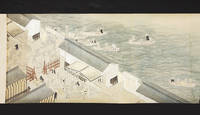
5736Japan: late Edo. Until the late 17th century the Chinese had been permitted to move in Japan quite freely for trading purposes. But in 1689 due to the rise of smuggling activities the Chinese were restricted like the Dutch to a compound on the eastern tip of Nagasaki - called the "Tojin yashiki" "Chinamen's mansions" - surrounded by a moat and walls with gates which could be locked from the outside. Inside were housed on average 2000 Chinese merchants and sailors along with interpreters inspectors and staff. This scroll depicts two large Chinese ships just off Nagasaki surrounded by a number of smaller transport and supply ships. It is clear that these smaller ships are Japanese based on the clothes the crewmen are wearing. The numerous Japanese government officials are dressed in black robes; they are inspecting the arriving goods sugar raw silk and finished fabrics along with antiques. The final section of the scroll depicts a portion of Tojin yashiki. We see the arriving transport ships warehouses government workers inspecting the arriving goods laborers carrying goods etc. This scroll - based on a scroll at the City Museum of Kobe entitled "Nagasaki tokan koeki zukan" - is unfinished in several ways: it has not been fully colored and it is clearly incomplete at the end. Nevertheless this is a marvelous record of the early trading days in Japan with the outside world. Minor worming carefully repaired otherwise in fine condition. hardcover books
193019955Leicester UK: Cascelloid ca. 1930s. Very good . Oblong 4to. album. Blue leather-covered boards. Contains 29 color photographs all 9" by 6.5" approx. mounted on rectos one each of light-gray cardboard leaves. About very good plus overall. Moderate rubbing and edgewear to boards. Several pages display mild soiling and offsetting from photos. Prints just a bit yellowed but remain sharp vivid and clean. <br/><br/>Beautifully-produced trade catalogue from the Cascelloid "Palitoy" company displaying a wide range of baby dolls and other toys. Several uncomfortable designs of black children with pitch-dark skin date this catalogue at roughly the 1930s when the Cascelloid company was dubbed the "House of Constant Progress" by the industry press for its material innovations with the plastics Bexoid and Plastex. One page features a celluoid model by the noted designer Mary Lucie Attwell a doll named "Diddums." The catalogue also displays the company's offerings of animal dolls die-cast trucks pool toys golf and ping-pong sets rattles pinwheels and more. Needless to say color photography was not the norm at this time and this catalogue comprises a beautiful set of vivid and sharp photographic prints. A truly exceptional example unlike anything we've seen: simultaneously surreal and nostalgic. [Cascelloid] hardcover books
17745521Marseille 1774. No Binding. Very Good. Folio - over 12 - 15" tall. Two folio bifolia 43.1 x 27.7 cm each with letterpress text woodcuts and manuscript text on the first leaf. Retaining deckle edge on all sides folded and annotated as typical of such documents one of the documents a bit weak at the folds otherwise very well preserved. Two rare folio-size maritime insurance policies from 1770s Marseille relating to mercantile voyages to France's American colonies in the Caribbean and valuable witnesses to the more practical bureaucratic aspects of maritime trade in late 18th-century France. Each document is illustrated with the three large woodcut seals of the city and carries in letterpress the standard legal formulas particular to Marseille as well as extensive manuscript notes and signatures completing the policy. The earlier of the two policies signed in May of 1774 relates to the vessel La Gentille likely the frigate later recorded as having taken part in the 1780 Battle of Martinique a stalemate between the French and British navies during the American War of Independence. The second policy signed on 3 November 1777 concerns the Bon Pasteur a ship under the command of captain Pierre Antoine Massier. Historical records show that this policy was nearly redeemed: Returning from Martinique in late December the Bon Pasteur was fired upon by the British frigate Westmoreland off the coast of Cabo de Gata in Spain boarded by six men each armed with a brace of pistols and a saber and Captain Massier roughly handled. The English suspected that the Bon Pasteur was not carrying goods from Martinique but from New England tobacco rice which would have been in violation of the protectionist economic policies common in both the French and British colonies in the Americas. After several sailors aboard the Bon Pasteur were thoroughly questioned the ship was sent on its way and its insurers in Marseille breathed a sigh of relief. OCLC does not locate any institutional copies of Marseille policies of this sort. B.-M. Emerigon and P. S. Boulay-Paty Traité des assurances et de contrats à la grosse vol. 1 pp. 54-5; Bulletin de la Socété archéologique historique et artistique vol. 3 pp. 277-8; Observations sur le Mémoire justificatif de la cour de Londres 1780 pp. 12-3. books
18721427091872. TRADE CATALOGUE -- NURSERYMAN'S GUIDE. DEWEY D.M. Nurseryman's Specimen Book of American Horticulture and Floriculture Fruits and Flowers Ornamental Trees Shrubs Roses &c. D.M. Dewey's American fruit & flower plates colored from nature 2300 varieties. With a chromolithographic title page and 56 stencillled plates of fruits flowers and 9 chromolithographic plates plates of fruits flowers and trees. 8vo. 220 x 140 mm bound in contemporary morocco rebacked. Rochester N.Y.: D.M. Dewey n.d. ca. 1872. An early American trade catalogue of Fruit Flowers Trees and Nursery stock issued according to the Smithsonian Library "ca. 1872" by the firm of D.M. Dewey Rochester N.Y. Many of the plates have captions giving name of variety of plant and brief information on main characteristics and growing season. The Smithsonian copy contains only 24 plates compared to the 40 in the above copy. "Nurserymen's plates were an American innovation. They were made by various methods the most distinctive being painted in watercolors. In design and coloring these plates were more akin to folk painting than to the commercial art of their time" Charles von Ravenswaay "Drawn and Colored from Nature" in Antiques Magazine March 1983 pp. 594-599. Some minor wear overall in excellent condition. See Raphael. An Oak Spring Pomona Nos 63 to 66. unknown books
028941Detailed manuscript archive pertaining to this vessel owned by Ichabod Goodwin 1794-1882 merchant and businessman of Portsmouth and Governor of New Hampshire1. The archive consists of correspondence bills receipts and documents pertaining to the <i>Morning Glory</i> and her voyage to California Washington Territory and Vancouver on what proved to be a particularly ill fated voyage. 42 letters 73 pages mainly quarto 164 bills receipts etc. 28 legal documents 112 pp. from England Esquimault Victoria Vancouver British Columbia Port Townsend and Steilacoom Washington Territory San Francisco Peru etc. <br />The <i>Morning Glory</i> H. H. Hobbs masterwas engaged in coastal trade between Peru and the Northwest Coast of Washington Territory and Vancouver British Columbia. She was on a return voyage to Callao with a cargo of lumber for the South American market when disaster struck as related in the following letter from Hobbs to Ichabod Goodwin: <p> San Francisco June 13 1858 </p><p> "Hon. I Goodwin </p><p> Dear Sir </p><p> I am very sorry to have to inform you that I have met with a great misfortune with the ship. I was beating out of the straits of Fucu Straits of Juan de Fuca and struck a sunken rock that lays about one half mile off the race rocks. At half past 12.00 P.M. on May 30th while in the act of tacking ship. This rock is not down on any charts not even those of the British man of war it has 10 feet draft at low water. The ship remained on the rock from half past twelve until eight in the morning when she rolled over on her beam ends and slid off. The rock was very steep for the ship struck bows on and at the Break of the forcastle there was five fathoms of water and at the stern there was eleven fathoms. The ship made no water from the time she struck until five in the morning when she commenced making water very fast and by the time we had been off the rock an hour the ship was entirely full after we found that we could not make any impression on the water for we had our hands pumping the water gained two feet on us the crew refused to proceed to sea I wanted to bring the ship to San Francisco as I know there were no conveniences north of this port where the ship could be repaired. But as the crew would not work but all refused to work the Ship I was obliged to make for the first port. I brought the ship into the harbour of Esquimault where all of the British men of war lay. </p><p> I came down to San Francisco to see the Underwriters Agent to see what I should do with the ship and he will not consent to let me bring the ship down as she is consequently I have been obliged to get a steam pump to take up to pump the ship out and also a diver if we can stop the leak with a diver who has a submarine armour we will use the steam pump. I return by the first steamer that leaves for Victoria. Messrs Flint & Peabody will furnish me with funds. ." </p><p> The collection goes on to detail the progress of the vessels repairs in an effort to reach San Francisco the nearest place where the proper repair of the ship could be completed. However while attempting to bring the vessel from Victoria to San Francisco the ship encountered a violent gale and was run onto the beach at Port Townsend Washington Territory in hopes that the leak could be reached and repaired while partially exposed. </p><p> Hobbs at length made temporary repairs and set sail for San Francisco in September 1859: </p><p> Port Townsend Sept. 26 1859 </p><p> Hon I. Goodwin </p><p> Dear Sir </p><p> I have just received yours of August 17th. I am now on the point of sailing for San Francisco I have got the leak stopped so that ten minutes pumping will do for twenty four hours. I have been obliged to sell some of the cargo of lumber to raise funds to disburse the ship. payable in ten days after the arrival of the ship in San Francisco. The parties who advance the money were not able to advance the necessary funds until the arrival of the steamer from San Francisco consequently I was obliged to sell the lumber to pay off labourers I do not know how I will raise the money to disburse the ship in San Francisco I am now of your opinion that it would have been for the Interest of all concerned to have abandoned the ship in Victoria. I shall be ready for sea tomorrow and will not be over ten or fourteen days getting to San Francisco." </p><p> The Morning Glory was eventually taken to Mare Island put in dry dock and was thoroughly overhauled: </p><p> Mare Island Nov. 19th 1859 </p><p> "Honble I Goodwin </p><p> Dear Sir </p><p> The survey that I had held on the ship estimated that the cost of repairing on the ship would come less than thirty thousand dollars so under this survey I could not abandon. The repairs were all recommenced by Mr. Hanscom and he says that the ship will be as good as before. We have put in a lower piece of stern and forward piece of Keel of California live oak. The ship is now on the dock and will of next Thursday. The Knees are to be refastened and the stantions in the lower hold kneed also. </p><p> P.S. We did not find the ship injured near as much as we expected every one here says that she is the strongest and most thorough built ship that has ever been on the dock." </p><p> This highly detailed archive documents virtually everything that went into and out of the vessel upon this voyage. It details aspects of Northwest Coast maritime commerce maritime law insurance and salvage construction and other costs and the economics of the coastal trade at the time. </p><p> 1. <i>American National Biography </i>vol. 9 pp. 269-271 </p><p> <i>Dictionary of American Biography</i> volume IV pp. 408-409 </p><p><i> Who Was Who in America </i>Historical Volume p. 210 </p> books
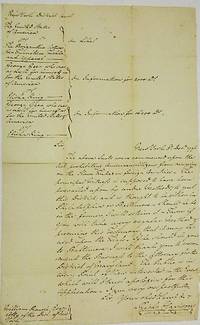
179635853New York 1796. Single page 9-1/2" x 15-3/4" entirely in manuscript. Headed with names of three cases pending in the New York District Court followed by Harison's letter to Rawle. Old folds with a pinhole at a fold intersection no text loss. Short fold split expertly repaired. Very Good.<br/><br/> Harison 1747-1829 was President Washington's appointee in 1789 as the first United States Attorney for the District of New York. He served until 1801 when Edward Livingston succeeded him. His correspondent William Rawle was Washington's appointee as U.S. Attorney for Pennsylvania. Rawle was founder and first president of the Historical Society of Pennsylvania president of the Pennsylvania Abolition Society and a highly respected writer on governmental matters.<br/> The Slave Trade Act of 1794 passed by the Third Congress and signed by President Washington was the first American regulation of the international slave trade. It prohibited Americans from trading in slaves to any foreign country. Harison had brought several cases under the Act as noted in this Letter: The United States vs. The Brigantine Active; and two by George Geer for himself and the USA vs. Elisha King. Harison explains "The above Suits were commenced upon the Act prohibiting American Citizens from carrying on the Slave Trade in foreign Countries." <br/> Harison's problem: "The principal witness is supposed to have been prevailed upon by undue Methods to quit this District is thought to be either in Philadelphia or Baltimore." If he's in Philadelphia "I will esteem it a Favor if you will take every regular Method of procuring his Testimony." If he's in Baltimore please "recommend the Business to the Attorney for the District of Maryland. The Public is in every Point of View interested in the Event." Diligent research has uncovered no additional information on these cases. unknown books
1900263502Lyon France: J. Bouvard & Cie 20 Rue Lafont 1900. 14 thick card sheets with samples centrally mounted vertically to recto and verso some sheets quite thick to accommodate larger epaulets each with manuscript notations of name size etc. 11-3/4 x 6-3/4 inches. Black cloth album with the printed label of "J. Bouvard et Cie Fabrique de Dorures Soireries Ornaments d'Eglise" to front paste-down. Some wear commensurate with age and use spotting and thumbsoiling apparently complete with all samples backing possibly restored at an early date. 14 thick card sheets with samples centrally mounted vertically to recto and verso some sheets quite thick to accommodate larger epaulets each with manuscript notations of name size etc. 11-3/4 x 6-3/4 inches. This very unusual French sample book contains a large range of epaulets and sequin samples with a few lettering and star samples. J. Bouvard & Cie 20, Rue Lafont unknown books
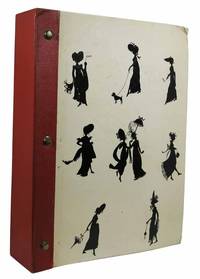
195742918Paris: Societe Paritys / Lebotys 1957. Post binder with 3 brass posts decorative screw tops. Publisher's color pictorial glazed boards blue spine and joints. Board edges rubbed and worn; short split to rear outer joint; inner joints tender paper splitting though cloth reinforcement beneath is intact. Page block foxed occasional foxing/spotting throughout; light offsetting from fabric samples to some pages. Fabric sample generally clean and bright with occasional creasing/fraying. Overall Gd. 97 pp. 16 color fashion drawings; ~ 740 pasted or tipped-in fabric samples. 16-1/8" x 12-1/8" <br/><br/>A mid-century salesman's sample catalogue from the winter collection of Parisian firm Société Paritys a haberdashery and fabric supplier established in 1946 and still in operation today. The fabric samples have been supplied by Lebotys a couture design firm in its own right and highly regarded for the quality of its textiles. As we find record of Lebotys having issued catalogues of its own collections in both the 1930s and 1960s we speculate that the two firms collaborated for a limited time possibly due to continuing post-war shortages and the need to adapt to the rapidly changing clothing market of the 1950s. The late 1950s saw a revolution in French fashion — and by extension Western fashion in general — due in no small part to the influence of material factors underlying the purely aesthetic side of the industry: availability of fabric continuing technological advances in synthetics and the surging post-war economies of America and Europe. The reluctant expansion of haute couture into the ready-to-wear market during the latter half of the century and the increasing reliance on synthetic fabrics to meet the demand would ultimately spell a major shift in the industry one that would impact fashion trends for decades to come. Some fashion houses like Dior whose “New Look” revitalized fashion at the beginning of the decade successfully managed to adapt by issuing couture ready-to-wear lines. Some however even long-established houses survived the war only to be undone by the prosperity that followed. The collaboration here of Société Paritys and Lebotys as well as the fabrics offered and styles displayed leads us to infer that the two firms were likely targeting the growing ready-to-wear market. The fabrics include a variety of silks cottons wools mohair etc. as well as nylon fibranne rayon Rhodia tergal crylor acetate and other “Matieres Synthètiques” often in blends and advertising their washable and/or antiwrinkling qualities. The styles in the illustrations still heavily influenced by the “New Look” emphasize wasp-waisted dresses hourglass silhouettes etc. No copies located on OCLC nor the major French institutions as searched on KVK. Societe Paritys / Lebotys hardcover books
195842919Paris: Societe Paritys / Lebotys 1958. Post binder with 3 brass posts. Publisher's pictorial glazed boards red cloth joints. Light extremity wear to boards; bumping to upper corner of front board; short split to front and rear joints. Page block lightly foxed foxing/spotting scattered throughout. Few white nylon fabric samples discolored by paste beneath. Fabric samples otherwise clean and bright with only minor occasional creasing/fraying. Overall VG. 80 pp. 12 color fashion drawings; ~590 pasted and tipped-in fabric samples 16-1/8" x 12-1/8" <br/><br/>A mid-century salesman's sample catalogue from the winter collection of Parisian firm Société Paritys a haberdashery and fabric supplier established in 1946 and still in operation today. The fabric samples have been supplied by Lebotys a couture design firm in its own right and highly regarded for the quality of its textiles. As we find record of Lebotys having issued catalogues of its own collections in both the 1930s and 1960s we speculate that the two firms collaborated for a limited time possibly due to continuing post-war shortages and the need to adapt to the rapidly changing clothing market of the 1950s. The late 1950s saw a revolution in French fashion — and by extension Western fashion in general — due in no small part to the influence of material factors underlying the purely aesthetic side of the industry: availability of fabric continuing technological advances in synthetics and the surging post-war economies of America and Europe. The reluctant expansion of haute couture into the ready-to-wear market during the latter half of the century and the increasing reliance on synthetic fabrics to meet the demand would ultimately spell a major shift in the industry one that would impact fashion trends for decades to come. Some fashion houses like Dior whose “New Look” revitalized fashion at the beginning of the decade successfully managed to adapt by issuing couture ready-to-wear lines. Some however even long-established houses survived the war only to be undone by the prosperity that followed. The collaboration here of Société Paritys and Lebotys as well as the fabrics offered and styles displayed leads us to infer that the two firms were likely targeting the growing ready-to-wear market. The fabrics include a variety of silks cottons wools mohair etc. as well as nylon fibranne rayon Rhodia tergal crylor lurex viscose imitation fur and other “Matieres Synthètiques” often in blends and advertising their washable and/or antiwrinkling qualities. The styles in the illustrations still heavily influenced by the “New Look” emphasize wasp-waisted dresses hourglass silhouettes etc. No copies located on OCLC nor the major French institutions as searched on KVK. Societe Paritys / Lebotys hardcover books
195942920Paris: Societe Paritys / Lebotys 1959. Post binder with 3 brass posts. Publisher's pictorial glazed boards white cloth joints. Light extremity wear to boards; short split to rear joint. Page block lightly foxed occasional foxing/spotting to margins throughout. Few white nylon fabric samples discolored by paste beneath. Fabric samples otherwise clean and bright with only minor occasional creasing/fraying. Overall VG. 108 pp. 16 color fashion drawings; ~800 pasted and tipped-in fabric samples. 16-1/4" x 12" <br/><br/>A mid-century salesman's sample catalogue from the summer collection of Parisian firm Société Paritys a haberdashery and fabric supplier established in 1946 and still in operation today. The fabric samples have been supplied by Lebotys a couture design firm in its own right and highly regarded for the quality of its textiles. As we find record of Lebotys having issued catalogues of its own collections in both the 1930s and 1960s we speculate that the two firms collaborated for a limited time possibly due to continuing post-war shortages and the need to adapt to the rapidly changing clothing market of the 1950s. The late 1950s saw a revolution in French fashion — and by extension Western fashion in general — due in no small part to the influence of material factors underlying the purely aesthetic side of the industry: availability of fabric continuing technological advances in synthetics and the surging post-war economies of America and Europe. The reluctant expansion of haute couture into the ready-to-wear market during the latter half of the century and the increasing reliance on synthetic fabrics to meet the demand would ultimately spell a major shift in the industry one that would impact fashion trends for decades to come. Some fashion houses like Dior whose “New Look” revitalized fashion at the beginning of the decade successfully managed to adapt by issuing couture ready-to-wear lines. Some however even long-established houses survived the war only to be undone by the prosperity that followed. The collaboration here of Société Paritys and Lebotys as well as the fabrics offered and styles displayed leads us to infer that the two firms were likely targeting the growing ready-to-wear market. The fabrics include a variety of silks cottons wools mohair muslin cashmere and others as well as nylon fibranne rayon Rhodia tergal crylor acetate Albène and other “Matieres Synthètiques” often in blends and advertising their washable and/or antiwrinkling qualities. The styles in the illustrations although still influenced by the “New Look” also show the influence of Dior's successor the young Yves St. Laurent who debuted his "trapeze line" in 1958. No copies located on OCLC nor the major French institutions as searched on KVK. Societe Paritys / Lebotys hardcover books
195741355Paris: Societe Paritys 1957. 1st printing thus. Publisher's color pictorial glazed boards post binder; 3 brass posts decorative screw tops. Red cloth joints. Some general extremity wear to binder with slightly bumped corners. Occasional dust soiling. Minor foxing. Overall VG with cloth samples generally VG to Nr Fine with the occasional crease to the odd sample or two. 104 pp printed in red on stiff-stock paper. 16 color fashion drawings; 897 of 898 tipped-in fabric samples. Folio. 16-1/4" x 12-1/8" <br/><br/>A mid-century salesman's sample catalogue from the summer collection of Parisian firm Société Paritys a haberdashery and fabric supplier established in 1946 and still in operation today. The fabric samples have been supplied by Lebotys a couture design firm in its own right and highly regarded for the quality of its textiles. As we find record of Lebotys having issued catalogues of its own collections in both the 1930s and 1960s we speculate that the two firms collaborated for a limited time possibly due to continuing post-war shortages and the need to adapt to the rapidly changing clothing market of the 1950s. The late 1950s saw a revolution in French fashion — and by extension Western fashion in general — due in no small part to the influence of material factors underlying the purely aesthetic side of the industry: availability of fabric continuing technological advances in synthetics and the surging post-war economies of America and Europe. The reluctant expansion of haute couture into the ready-to-wear market during the latter half of the century and the increasing reliance on synthetic fabrics to meet the demand would ultimately spell a major shift in the industry one that would impact fashion trends for decades to come. Some fashion houses like Dior whose “New Look” revitalized fashion at the beginning of the decade successfully managed to adapt by issuing couture ready-to-wear lines. Some however even long-established houses survived the war only to be undone by the prosperity that followed. The collaboration here of Société Paritys and Lebotys as well as the fabrics offered and styles displayed leads us to infer that the two firms were likely targeting the growing ready-to-wear market. The fabrics include a variety of silks cottons wools mohair etc. as well as nylon fibranne rayon Rhodia tergal crylor acetate and other “Matieres Synthètiques” often in blends and advertising their washable and/or antiwrinkling qualities. The styles in the illustrations still heavily influenced by the “New Look” emphasize wasp-waisted dresses hourglass silhouettes etc. Of particular note are the designs and fabrics for wedding dresses. No copies located on OCLC nor the major French institutions as searched on KVK. Societe Paritys hardcover books
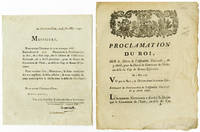
1790WRCAM51521Rouen: L. Oursel 1790. 3pp. with: PRINTED FORM LETTER COMPLETED IN MANUSCRIPT CONCERNING THE PROCLAMATION. N.p. 1790. 1p. Quarto on a folded folio sheet. Light wear and soiling. Very good. Proclamation by the Revolutionary government of France abolishing the monopoly of the French East India Company on trade beyond the Cape of Good Hope and declaring it open to all Frenchmen. The Compagnie des Indes Orientales was established in 1664 to compete with the British and Dutch East India companies. It had considerable difficulty maintaining itself financially through its long history and it was finally liquidated in 1769. In 1785 it was reconstituted and granted a seven-year monopoly on trade beyond the Cape of Good Hope but the French Revolution and the democratic zeal that accompanied it put an end to that with the present decree. The brief proclamation is accompanied by a transmittal form from the Bureau Intermediane du Departement de Montivilliers indicating that one copy of the proclamation was sent to the recipient. L. Oursel unknown books