4 737 résultats
1974ROD0042158PUF. 1974. In-8. Broché. Bon état, Couv. partiel. décollorée, Dos satisfaisant, Intérieur frais. 184 p.. . . . Classification Dewey : 380-Commerce, communications, transports
1972RO20141394CHEZ L'AUTEUR. 1972. In-12. Broché. Etat d'usage, Couv. légèrement passée, Dos satisfaisant, Intérieur frais. 143 pages. Quelques dessins en noir et blanc, dans le texte.. . . . Classification Dewey : 380-Commerce, communications, transports
1991R200082374LES EDITIONS DU PLAISANCIER. VERS 1991. In-8. Broché. Bon état, Couv. convenable, Dos satisfaisant, Intérieur frais. 126 pages. Nombreuses photos et illustrations en couleurs et noir et blanc, dans et hors texte. 1 tampon en page de titre.. . . . Classification Dewey : 380-Commerce, communications, transports
1934J41903Bruxelles, Editorial-Office 1934 viii + 1310pp., cart., 22cm., bon état
1968ROD0032864Editions maritimes et d'Outre-mer. 1968. In-8. Broché. Bon état, Couv. convenable, Dos satisfaisant, Intérieur bon état. 135p.. . . . Classification Dewey : 380-Commerce, communications, transports
193187497Paris, Alex-Gobelet, Videcoq 1931 Troisième édition revue, corrigée et considérablement augmentée., In-16 demi veau 15 cm sur 10. XII-612 pages. Bon état d’occasion. reliure légèrement frottée. et brunissures sur les pages.
1996RO20038953LITEC. 1996. In-12. Broché. Bon état, Couv. légèrement passée, Dos satisfaisant, Intérieur frais. 1618 pages. Ouvrage indexé.. . . . Classification Dewey : 380-Commerce, communications, transports
197813646The Stationery Office Books 1978. Paperback. Used: Acceptable. Paperback - 1981 - good condition - - . 0-11-512031-9. Isbn 0115120319. The Stationery Office Books paperback

2000LFA-126711999Un ouvrage de 269 pages, format 175 x 240 mm, illustré, broché couverture couleurs, publié en 2000, Mémoires et Documents de l'Académie Salésienne (tome 98), bon état
19082921New York & Chicago 1908. Thick quarto. 12 issues of this professional journal for the ice trade. Profusely illustrated with ads for all business connected to the trade. Contents include articles on large scale refrigeration installations various technical matters regional association activities trade conventions etc. Text block very good but three quarter brown morocco binding is split at the hinges and quite rubbed. Scarce in the trade. unknown books
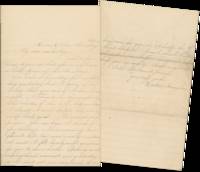
1909List3421Ohio Illinois Michigan and Ontario 1909. Seventy-four letters in thirty-seven envelopes mainly dating between 1885 and 1895. With two undated and one empty envelope. Conditions vary with a few letters having damage intersecting with significant amounts of text and others Near Fine. Overall excellent. A collection of letters mainly sent between Captain William Faragher 1842–1921 and his second wife Harriet Chamberlin 1853–1920 with several from Faragher’s children from his first marriage Burton 1872–1961 and Maude 1875–1952. Most letters are from Chamberlin to Faragher with fourteen from Faragher to Chamberlin.<br /> <br /> Faragher owned and captained several merchant ships in Lake Erie and Lake St. Clair—presumably sailboats as he frequently complains of having been stuck without wind. He also describes more severe weather out on the lake writing from St. Clair Michigan:<br /> <br /> “I am anxious to get down from here but as the day advanced the wind began to frisken and it began to snow hard and as it was freezing hard it had rained then snowed and then froze hard saturday night so the poor Venture was in a sad plight but she was in a worse one when we got to where we lay run as it breezed up fresh and the wind dead ahead the water was flying over her in all directions and froze wherever it fell and besides it had turned into a blinding snow storm but we had a certain point to make . she seemed as anxious to get to a place of safety as I did and as the boys say she got there and none too soon as it has been blowing a gale ever since and snowing and freezing but we are in the lee and at a good dock and are comfortable but oh the wind is whistling through the rigging .†November 20 1887<br /> <br /> In the 1880s steamships were increasing in popularity on the Great Lakes primarily because of sailboats’ susceptibility to both calm and weather; steamboats were bulky for their capacity and slow but more reliable whereas sailboats could carry overall more cargo.1 Generally steamers took packaged goods and passengers and sailboats mainly schooners took bulk cargo. The Great Lakes were the site of much shipping innovation; Faragher’s fleet was not yet behind the times but steam would overtake sail in the 1880s and 90s.<br /> <br /> Faragher’s cargo was mainly produce—apples and grapes—though he does mention picking up salt and other materials. His letters indicate that his business involved both shipping and mercantile aspects: he chose and bought the products shipped them to their destination and then also had to find and sell to customers. The grapes in particular seem to cause a lot of trouble:<br /> <br /> “We left Lorain Sunday morning early and had a nice trip to the Island got there at 4 PM bustled around monday morning and bought 400 baskets of grapes and had them all aboard by dark . it commenced to snow just as we got to Marine City bad bad omen for grapes but imagine my chagrin when I went up town and not a store or commission house wanted a grape folks were full of grapes and there was no sale for them and they said that I had got left and if the truth were known they were glad of it but its a cold day when I get left if trying will lit me out but one thing certain the weather and the lateness of the season were against me but you know I never cross a bridge before I get to it well we hauled up to our old Island Saturday morning and I sold out to my old friend . we had sold since 11 am 190 baskets of grapes . only half our cargo and at a good margin too. People would ask are you the man that was arrested here for selling grapes when told yes they seldom failed to buy but the strangest part was the number of ladies that came to buyâ€. October 28 1887<br /> <br /> Though he does not narrate the incident in which he was arrested for grape peddling—nor does it appear to have made the paper—he later mentions yet another grape-related debacle this time at Port Huron:<br /> <br /> “Sander and I went to town to sell the grapes today . when down came a city official and wanted to know if I had a license to sell . well I couldent sell another grape without paying 5.00 a day license that was a stormer you see the whole sale men were going to drive me out of the market . but they were not as sharp as they thought they were I went and gave a bill of sale of my whole cargo to a citizen here and he appointed one of his agents to sell the grapes†September 20 1888<br /> <br /> Faragher’s letters here do not discuss the financial state of his business but given Chamberlin’s statements it cannot have been all too positive. Chamberlin’s letters depict a woman struggling with her financial circumstances and with how the era’s expectations of her gender intersected with them. In one illustrative letter she writes:<br /> <br /> “A man drove by here Sat. asking for you. Ms. Lawler has given him her note to collect. He says the interest brings it to nearly fifty dollars. I told him I thought you could not meet it just at present but he said he must have the money and would give you just one week and if it was not paid then he would let the law settle it. Marvin and Laird are his lawyers. Mr. Laird is the one who helped get my money from father’s estate. I would not have them connected in this way about you for – O a great deal!! I have thought and planned till it seems as though my brain would burst. I have inquired about that law regarding taking any more married women as teachers. If Mr. Day would work for me it might perhaps be broken. There will be a vacancy in the Detroit building this fall. Will if I possibly can I want to commence teaching in Sept. The children would have to learn to do more about the house and with both of us earning it seems as though some of these harassing debts must be settled after a time. The frequent calls of men with bills against you have taken away all my pride and I believe I am humble enough to do most anything now.†July 11 1887<br /> <br /> In 1887 Ohio passed the Married Women’s Property Act which allowed married women to keep their own property separate from their husbands’—in fact Chamberlin occasionally mentions “her†money in her correspondence. At the same time the state’s Board of Education was debating passing an act that would not only ban school districts from hiring married women as teachers but also fire all the married women it then employed. Newspaper reporting at the time indicates that this measure was not particularly popular not the least because married women tended to be older and more experienced with the job.<br /> <br /> Chamberlin clearly perceives her role as a wife in a rather more progressive way at one point writing to Faragher that “a true wife†is “not a doll-baby to be kept in finery†N.d. after he had taken out a loan to send her money for a new hat. Throughout their correspondence Chamberlin is perhaps surprisingly open with Faragher about her opinions particularly on his work and their financial affairs; for instance:<br /> <br /> “I should like to examine your pocket-book after that $25 tax money left it. What are you going to live on up there while you are hunting for freight Sawdust won’t put any fat on your bones. Sailing up and down past Saginaw bay won’t prolong your life or lessen your grey hairs. What are you sailing for anyway For the sake of wearing yourself out and giving employment to two or three men and keeping the Root from rusting out I guess I am naughty!†May 25 1894<br /> <br /> She also frequently provides her opinion on whether and at what rate Faragher should sell his two other ships besides the Root the Venture and the Sassacus. She continues in the same letter:<br /> <br /> “I know I almost had a regular fight yesterday morning right there on the lounge. I wanted to do my housework and I couldn’t. I wanted to sew and I couldn’t sit up long for that. I wanted to help you and I couldn’t. I wanted to earn money and whereas I used to earn fifty-five cents for every hour I worked now I can not earn anything. Then if I could not do for self and family I wanted to make church and S.S. calls but I couldn’t walk for that.†<br /> <br /> Of course she was at that time prevented from these activities by her health not by gendered standards but she clearly had financial ambitions for herself. After her time as a regular school teacher Chamberlin taught at a Sunday school where she earned a few cents per student and in one letter reported having eighty-one students in a single session. <br /> <br /> Chamberlin also struggles with the expectations of her as step-mother to Faragher’s two children from his first marriage to Emma Humphrey 1848–1880. She writes:<br /> <br /> “I get so discouraged sometimes and it seems as though I am in the wrong place as mother. I think of Emma as my sister. I want to do as she would have me. I look upon my work as sacred. And yet sometimes I feel as though life was not worth living.†November 5 1886<br /> <br /> She frequently describes conflict with Burt who was then in his late teens to early twenties writing that she could not “have quite the very own mother-love for him†though she is “sure that Emma was not more conscientious in her desires to do right by him than I am†May 20 1891. As it still is today the role of step-mother was a difficult and frequently demonized one with the trauma of losing a mother and wife often in conflict with the feminine duty of maintaining perfect domestic harmony. In general Chamberlin seems to have been somewhat out of step with the feminine ideal of the time even telling Faragher in a letter describing the death of an acquaintance’s baby how glad she was to not have any children of her own.<br /> <br /> Overall a look at the private lives and difficulties of a middle-class Ohio household as despite the relative prestige of its head being a captain-owner it struggled with debt. Of interest to both historians of Great Lakes trade and those of women’s roles in the late nineteenth century.<br /> <br /> 1 Dina M. Bazzill “The Missing Link Between Sail and Steam: Steambarges and the Joys of Door County Wisconsin†East Carolina University Program in Maritime Studies Research Report no. 19 2007. unknown
19162092902141301921Geisha-do 1916. Soft Cover. Fine. Number of books: 1 Geisha-do paperback
192773445Detroit: General Motors 1927. First edition. Folio. 30 2 pp. Color illustrations throughout. Publisher's pictorial color wrappers. Light edge wear but a very good copy.This catalog announces in a very colorful manner the new colors available for Cadillacs. Each two page spread has the name of the color e.g. Bird of Paradise along with an animal or scene representative of that color and its application of the body and interior of a 1927 Cadillac. General Motors unknown
1914H6793Colorado Springs: The Prompt Printery 1914. Very Good. 9 inches tall folded 23.5 x 18 inches unfolded with a birds eye map of the region other pictures plus text and photos on the other side. The Prompt Printery unknown
1917SB9433Colorado Springs CO: The Colorado Springs Chamber of Commerce 1917. Ex-library copy one stamp and penciled markings on top inner corner of page 3 no other markings stamps or labels throughout. Small tear near top inner corner on title page otherwise extremely clean and tight. Small tear on front top edge near the corner on head of spine bottom front corner is chipped other corners are folded small library stamp on front bottom corner edges are slightly folded. 87pp. . Second Edition. Stapled Wraps. Very Good. Illus. by Photographs. 8vo - over 7¾" - 9¾" tall. Ex-Library Paperback. The Colorado Springs Chamber of Commerce Paperback
19297485Hartford: Colt's Patent Fire Arms Manufacturing Co 1929. First Thus. Stiff Printed Wrappers. Very Good. 4to. Pp. 36 2 laid in leaves. Black & white illustrations. Stiff gray paper wraps saddle stapled titles embossed and printed in blue blind embossed border and Rampant Colt. Laid in Retail Price List "PL 11" of January 1930. Laid in announcement of "Two New .22 Caliber Colt Revolvers." Covers minimally stained leaves crisp and bright. A brief history begins "Ninety-three Years of Colt Fire Arms Manufacture" dated from the first revolvers made at Paterson New Jersey in 1836. The new .22 caliber products announced are the Official Police Revolver and Officers' Model Target Revolver. Front cover emblazoned with the company motto" "The Arm of Law and Order". <p>A handsome fresh copy now preserved in a clear archival sleeve with an acid-free backing. Colt's Patent Fire Arms Manufacturing Co unknown
1906228234n.p. Citrograph Press ca. 1906. 1906. 3 1/4" x 6". 10 illustrations including cover photo of The Anderson Hotel. 16 pages including pictorial stiff wrappers. Very good. No signatures or bookplates. Promotional pamphlet focusing on Colton's business climate. Not in Rocq. Soft cover. Very Good. [n.p., Citrograph Press, ca. 1906]. paperback books
1910GITk034Roubais Typo-Litho Verschaeve-Hourquin sans date vers 1910. In-8 broché couverture illustrée 72pp 1 feuillet non chiffré table, 1 feuillet de papier orange (errata). Illustrations dans le texte: jumelles stéréoscopiques, appareils photographiques, cuvettes, cartons, albums pour cartes postales, plaques, papiers. Le catalogue est accompagné de nombreux conseils pratiques pages 3 à 27, puis 56 à 62 imprimés sur 2 colonnes. Tache verticale sur le 2e plat de la couverture, 5 lignes barrées dans les conditions de vente. Bel exemplaire malgré les défauts signalés, frais et complet. (5065)
196320873Paris Nouveaux Cahiers 1963 Petit in-4° 126 pp, exemplaire non coupé, tirage numéroté sur bouffant (1850 ex.)
192820886Paris Nouveaux Cahiers 1928 Petit in-4° 126 pp, exemplaire non coupé, tirage numéroté sur Lafuma
192920887Paris Nouveaux Cahiers 1929 Petit in-4° 245 pp, exemplaire non coupé, tirage numéroté sur Lafuma
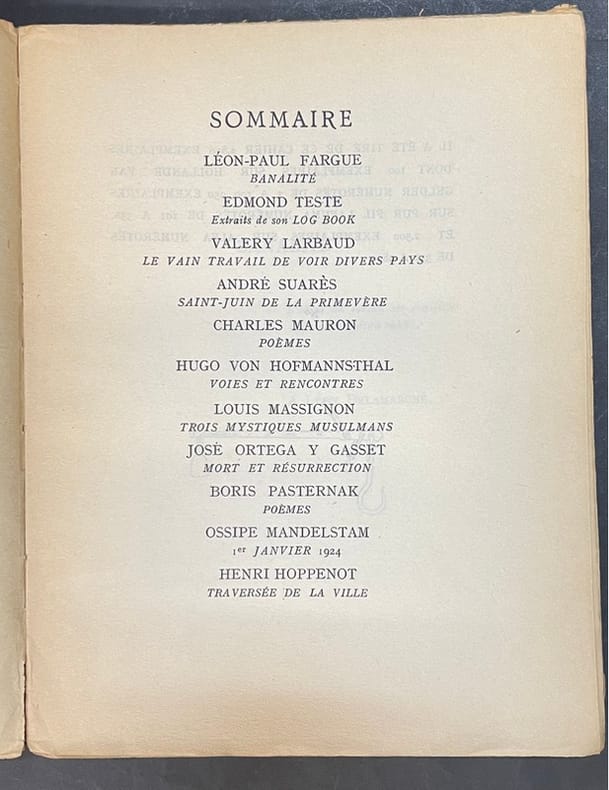
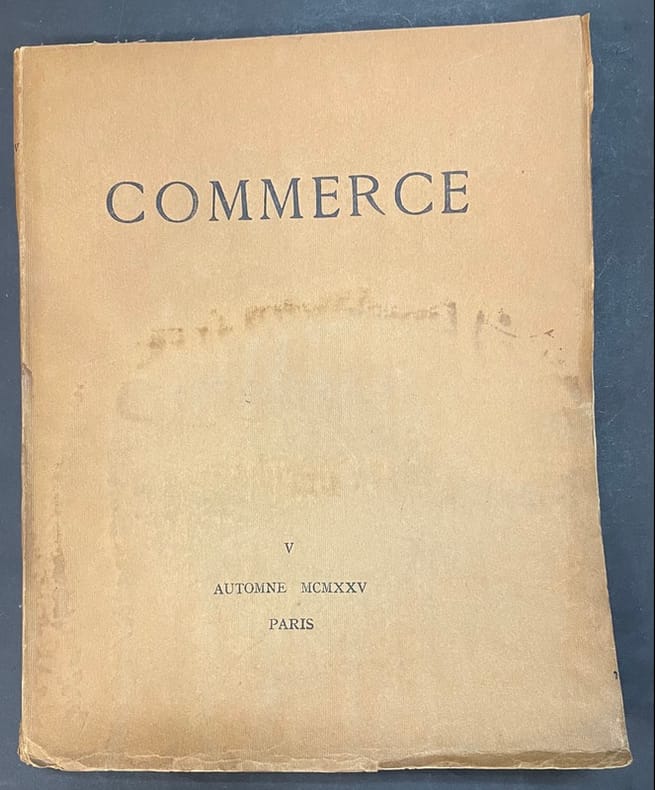
1925118869L. Giraud-Badin 1925 Un des 2500 ex numérotés sur Alpha. In-8 broché 24 cm sur 19. 208 pages. Dos et couverture insolés sinon bon état d’occasion.
1925119101Société Générale d'Impression et d'Edition 1925 Un des 2500 ex numérotés sur Alpha. In-8 broché 24 cm sur 19. 231 pages. Couverture et dos touchés par l’humidité, légères rousseurs éparses sinon bon état d’occasion.
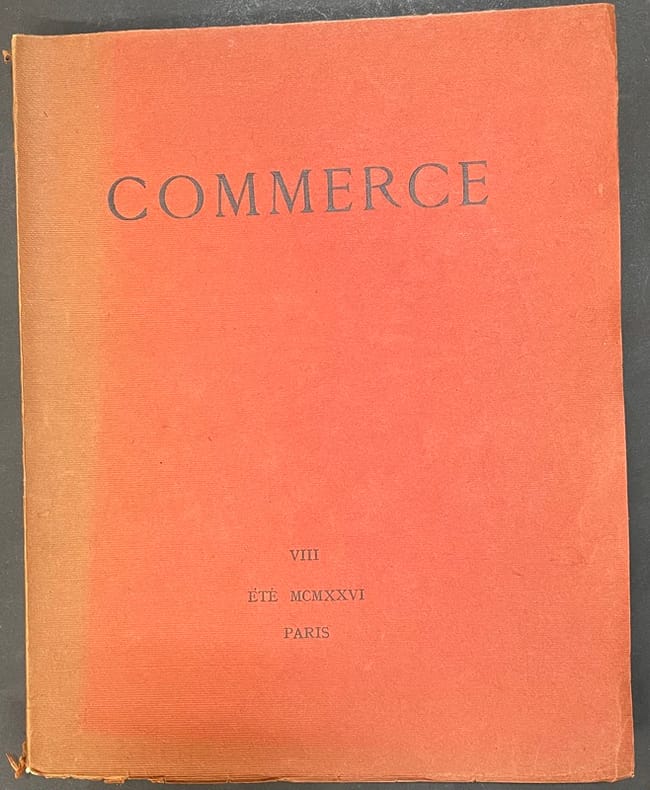
1926119267L. Giraud-Badin 1926 Un des 2500 ex numérotés sur Alpha. In-8 broché 24 cm sur 19. 199 pages. Bon état d’occasion.
1926119268L. Giraud-Badin 1926 In-8 broché 24 cm sur 19. 204 pages. Dos insolé sinon bon état d’occasion.