Chambersburg Chamber of Commerce; Chamber, Of Commerce; Alexander, Ted [Other Contributor]Biblio.com

4 734 résultats
1989Q-0942597141White Mane Pub 1989-04-01. Hardcover. New. In shrink wrap. Looks like an interesting title! White Mane Pub hardcover
19782111902160201247Fujita kobo 1978. Soft Cover. Fine. Volume: 1 Fujita kobo paperback
1950mon0000572712Kingsbridge & District Chamber o 1950T. paperback. Acceptable. in x in x in. NOT an ex-library book. Clean copy in good condition. Cover stained. Some marking due to age on pages but overall book remains in good condition considering age. Kingsbridge & District Chamber o paperback
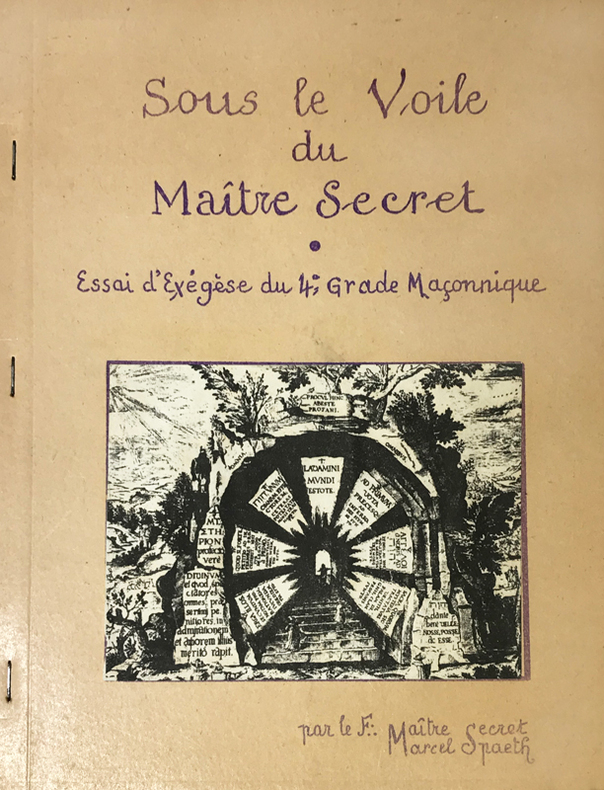
196014763Rueil-Malmaison, Marcel Spaeth, s.d. (circa années 1960) ; in-4, broché agrafé sur le côté, polycopié de 53, (3) ff. de planches, couverture beige illustrée, titre indigo reproduction d'écriture, (1) f. de papier bleu en frontispice, nombreuses figures, texte recto.
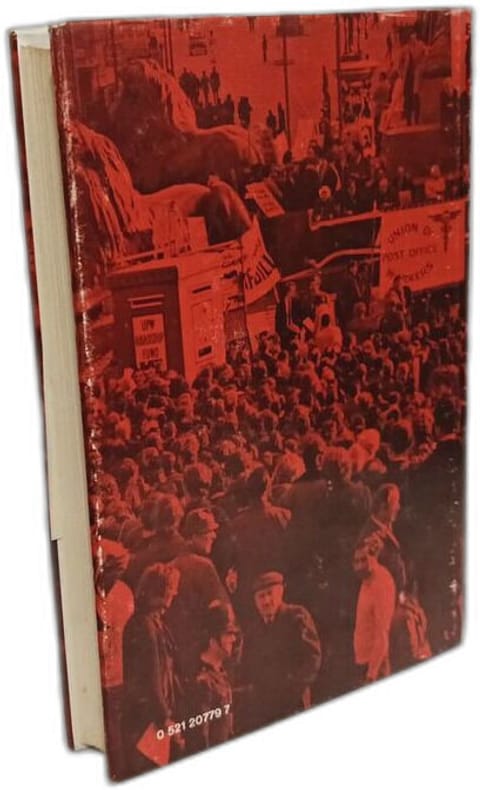
19673488103London, Butterworths, 1967. XXVIII, 336 S. Bibl.-Hlwd (Stempel auf Titelrückseite, Bibliotheks-Rückenschild).
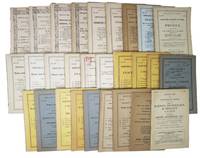
193146405London: Henry Sotheran Ltd 1931. 1st printings. Printed buff paper wrappers. Age-toning. Most a bit cocked. Signs of use with occasional prior owner annotations. A couple with wrappers beginning to detach. Withal a solid VG lot. Catalogues range in length from 72 pp to 176 pp most ~96 pp. 8vo. ~8-3/4" x 6" <br/><br/>Decade breakdown: 1930s - 5; 1940s - 9; 1950s - 13; 1960s -1. Most catalogues with a thousand to two thousand entries from Acta Eruditorum Lipsiae 1683 - 1739 to Zuchetta Brescia 1600 as found in catalogue No. 825 1931. A vertible treasure trove of bibliophilic information - both descriptive & price history - primarily works of science medicine & chemistry as offered by the oldest antiquarian book firm still in business today. Henry Sotheran Ltd unknown books
1980S87211London, Chatto & Windus 1980 xxvi + 468pp.with 80 bl/w ills. out-of-text and 8 plates in colour out-of-text, editor's hardcover, dustwrapper, 24cm., good condition, S87211
1969TECH1021The Japan Chamber of Commerce and Industry (1969). 96 S., mit zahlr. Textabb., OKart., abgegriffen, Umschlag leicht angeschmutzt.. am Rückendeckel schwache Knickspuren. Innen sauber und gut.
1967047562RUTLAND VT.: CHARLES E. TUTTLE CO. VG. PAPERBACK. 1ST. 1967. CHARLES E. TUTTLE CO. paperback
193888655Wuppertal-Ronsdorf. (Um 1938). 12 Seiten. Mit zahlr. Abbildungen. 25x17 cm
1991R240114125ARMAND COLIN. 1991. In-8. Broché. Bon état, Coins frottés, Dos satisfaisant, Intérieur frais. 240 pages - quelques graphiques et tableaux chiffrés. . . . Classification Dewey : 380-Commerce, communications, transports
2000RO40008855Nathan. 2000. In-12. Broché. Très bon état, Couv. fraîche, Dos lisse, Intérieur frais. 127 pages.. . . . Classification Dewey : 380-Commerce, communications, transports
1988X80290Leuven, Peeters 1988 Proceedings of the International Symposium held at the University of Haifa from the 28th of April to the 2nd of May 1985, xiv + 398pp.with some illustrations + frontispiece in colour, hardcover (editor's green cloth with gilt lettering), 25cm., in the series "Orientalia Lovaniensia Analecta" volume 23, very good condition, ISBN 978-90-6831-135-8, X80290
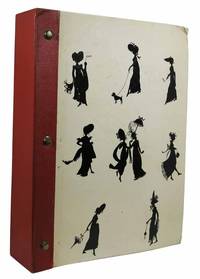
195742918Paris: Societe Paritys / Lebotys 1957. Post binder with 3 brass posts decorative screw tops. Publisher's color pictorial glazed boards blue spine and joints. Board edges rubbed and worn; short split to rear outer joint; inner joints tender paper splitting though cloth reinforcement beneath is intact. Page block foxed occasional foxing/spotting throughout; light offsetting from fabric samples to some pages. Fabric sample generally clean and bright with occasional creasing/fraying. Overall Gd. 97 pp. 16 color fashion drawings; ~ 740 pasted or tipped-in fabric samples. 16-1/8" x 12-1/8" <br/><br/>A mid-century salesman's sample catalogue from the winter collection of Parisian firm Société Paritys a haberdashery and fabric supplier established in 1946 and still in operation today. The fabric samples have been supplied by Lebotys a couture design firm in its own right and highly regarded for the quality of its textiles. As we find record of Lebotys having issued catalogues of its own collections in both the 1930s and 1960s we speculate that the two firms collaborated for a limited time possibly due to continuing post-war shortages and the need to adapt to the rapidly changing clothing market of the 1950s. The late 1950s saw a revolution in French fashion — and by extension Western fashion in general — due in no small part to the influence of material factors underlying the purely aesthetic side of the industry: availability of fabric continuing technological advances in synthetics and the surging post-war economies of America and Europe. The reluctant expansion of haute couture into the ready-to-wear market during the latter half of the century and the increasing reliance on synthetic fabrics to meet the demand would ultimately spell a major shift in the industry one that would impact fashion trends for decades to come. Some fashion houses like Dior whose “New Look” revitalized fashion at the beginning of the decade successfully managed to adapt by issuing couture ready-to-wear lines. Some however even long-established houses survived the war only to be undone by the prosperity that followed. The collaboration here of Société Paritys and Lebotys as well as the fabrics offered and styles displayed leads us to infer that the two firms were likely targeting the growing ready-to-wear market. The fabrics include a variety of silks cottons wools mohair etc. as well as nylon fibranne rayon Rhodia tergal crylor acetate and other “Matieres Synthètiques” often in blends and advertising their washable and/or antiwrinkling qualities. The styles in the illustrations still heavily influenced by the “New Look” emphasize wasp-waisted dresses hourglass silhouettes etc. No copies located on OCLC nor the major French institutions as searched on KVK. Societe Paritys / Lebotys hardcover books
195842919Paris: Societe Paritys / Lebotys 1958. Post binder with 3 brass posts. Publisher's pictorial glazed boards red cloth joints. Light extremity wear to boards; bumping to upper corner of front board; short split to front and rear joints. Page block lightly foxed foxing/spotting scattered throughout. Few white nylon fabric samples discolored by paste beneath. Fabric samples otherwise clean and bright with only minor occasional creasing/fraying. Overall VG. 80 pp. 12 color fashion drawings; ~590 pasted and tipped-in fabric samples 16-1/8" x 12-1/8" <br/><br/>A mid-century salesman's sample catalogue from the winter collection of Parisian firm Société Paritys a haberdashery and fabric supplier established in 1946 and still in operation today. The fabric samples have been supplied by Lebotys a couture design firm in its own right and highly regarded for the quality of its textiles. As we find record of Lebotys having issued catalogues of its own collections in both the 1930s and 1960s we speculate that the two firms collaborated for a limited time possibly due to continuing post-war shortages and the need to adapt to the rapidly changing clothing market of the 1950s. The late 1950s saw a revolution in French fashion — and by extension Western fashion in general — due in no small part to the influence of material factors underlying the purely aesthetic side of the industry: availability of fabric continuing technological advances in synthetics and the surging post-war economies of America and Europe. The reluctant expansion of haute couture into the ready-to-wear market during the latter half of the century and the increasing reliance on synthetic fabrics to meet the demand would ultimately spell a major shift in the industry one that would impact fashion trends for decades to come. Some fashion houses like Dior whose “New Look” revitalized fashion at the beginning of the decade successfully managed to adapt by issuing couture ready-to-wear lines. Some however even long-established houses survived the war only to be undone by the prosperity that followed. The collaboration here of Société Paritys and Lebotys as well as the fabrics offered and styles displayed leads us to infer that the two firms were likely targeting the growing ready-to-wear market. The fabrics include a variety of silks cottons wools mohair etc. as well as nylon fibranne rayon Rhodia tergal crylor lurex viscose imitation fur and other “Matieres Synthètiques” often in blends and advertising their washable and/or antiwrinkling qualities. The styles in the illustrations still heavily influenced by the “New Look” emphasize wasp-waisted dresses hourglass silhouettes etc. No copies located on OCLC nor the major French institutions as searched on KVK. Societe Paritys / Lebotys hardcover books
195942920Paris: Societe Paritys / Lebotys 1959. Post binder with 3 brass posts. Publisher's pictorial glazed boards white cloth joints. Light extremity wear to boards; short split to rear joint. Page block lightly foxed occasional foxing/spotting to margins throughout. Few white nylon fabric samples discolored by paste beneath. Fabric samples otherwise clean and bright with only minor occasional creasing/fraying. Overall VG. 108 pp. 16 color fashion drawings; ~800 pasted and tipped-in fabric samples. 16-1/4" x 12" <br/><br/>A mid-century salesman's sample catalogue from the summer collection of Parisian firm Société Paritys a haberdashery and fabric supplier established in 1946 and still in operation today. The fabric samples have been supplied by Lebotys a couture design firm in its own right and highly regarded for the quality of its textiles. As we find record of Lebotys having issued catalogues of its own collections in both the 1930s and 1960s we speculate that the two firms collaborated for a limited time possibly due to continuing post-war shortages and the need to adapt to the rapidly changing clothing market of the 1950s. The late 1950s saw a revolution in French fashion — and by extension Western fashion in general — due in no small part to the influence of material factors underlying the purely aesthetic side of the industry: availability of fabric continuing technological advances in synthetics and the surging post-war economies of America and Europe. The reluctant expansion of haute couture into the ready-to-wear market during the latter half of the century and the increasing reliance on synthetic fabrics to meet the demand would ultimately spell a major shift in the industry one that would impact fashion trends for decades to come. Some fashion houses like Dior whose “New Look” revitalized fashion at the beginning of the decade successfully managed to adapt by issuing couture ready-to-wear lines. Some however even long-established houses survived the war only to be undone by the prosperity that followed. The collaboration here of Société Paritys and Lebotys as well as the fabrics offered and styles displayed leads us to infer that the two firms were likely targeting the growing ready-to-wear market. The fabrics include a variety of silks cottons wools mohair muslin cashmere and others as well as nylon fibranne rayon Rhodia tergal crylor acetate Albène and other “Matieres Synthètiques” often in blends and advertising their washable and/or antiwrinkling qualities. The styles in the illustrations although still influenced by the “New Look” also show the influence of Dior's successor the young Yves St. Laurent who debuted his "trapeze line" in 1958. No copies located on OCLC nor the major French institutions as searched on KVK. Societe Paritys / Lebotys hardcover books
195741355Paris: Societe Paritys 1957. 1st printing thus. Publisher's color pictorial glazed boards post binder; 3 brass posts decorative screw tops. Red cloth joints. Some general extremity wear to binder with slightly bumped corners. Occasional dust soiling. Minor foxing. Overall VG with cloth samples generally VG to Nr Fine with the occasional crease to the odd sample or two. 104 pp printed in red on stiff-stock paper. 16 color fashion drawings; 897 of 898 tipped-in fabric samples. Folio. 16-1/4" x 12-1/8" <br/><br/>A mid-century salesman's sample catalogue from the summer collection of Parisian firm Société Paritys a haberdashery and fabric supplier established in 1946 and still in operation today. The fabric samples have been supplied by Lebotys a couture design firm in its own right and highly regarded for the quality of its textiles. As we find record of Lebotys having issued catalogues of its own collections in both the 1930s and 1960s we speculate that the two firms collaborated for a limited time possibly due to continuing post-war shortages and the need to adapt to the rapidly changing clothing market of the 1950s. The late 1950s saw a revolution in French fashion — and by extension Western fashion in general — due in no small part to the influence of material factors underlying the purely aesthetic side of the industry: availability of fabric continuing technological advances in synthetics and the surging post-war economies of America and Europe. The reluctant expansion of haute couture into the ready-to-wear market during the latter half of the century and the increasing reliance on synthetic fabrics to meet the demand would ultimately spell a major shift in the industry one that would impact fashion trends for decades to come. Some fashion houses like Dior whose “New Look” revitalized fashion at the beginning of the decade successfully managed to adapt by issuing couture ready-to-wear lines. Some however even long-established houses survived the war only to be undone by the prosperity that followed. The collaboration here of Société Paritys and Lebotys as well as the fabrics offered and styles displayed leads us to infer that the two firms were likely targeting the growing ready-to-wear market. The fabrics include a variety of silks cottons wools mohair etc. as well as nylon fibranne rayon Rhodia tergal crylor acetate and other “Matieres Synthètiques” often in blends and advertising their washable and/or antiwrinkling qualities. The styles in the illustrations still heavily influenced by the “New Look” emphasize wasp-waisted dresses hourglass silhouettes etc. Of particular note are the designs and fabrics for wedding dresses. No copies located on OCLC nor the major French institutions as searched on KVK. Societe Paritys hardcover books
1910GITk027Lyon Typ et Lith Léon sézanne 1910. In-16 broché belle couverture chamois ornée de fleurs de tournesol 34pp. Orné de tableaux dans le texte et à pleine page. Discret manque en bordure inférieure du 2e plat de la couverture. Bel exemplaire frais et complet. (5071)
1912GITk028Lyon Typ Lith Léon Sézanne 1912. In-16 broché belle couverture chamois ornée de fleurs de tournesol 48pp. Orné de tableaux dans le texte et à pleine page. bel exemplaire frais et complet. (5072)
1913GITk029Lyon Typ Lith Léon Sézanne 1913. In-16 broché belle couverture chamois ornée de fleurs de tournesols 48pp. Orné de tableaux dans le texte et à pleine page. Bel exemplaire frais et complet. (5073)
1910GITk046Sans lieu 1910-1911. In-12 broché belle couverture grise ornée de fleurs et feuillages 71pp. Texte inscrit dans un cadre de filet rouge. catalogue édité au moment de la fusion de la Société Jougla avec la Société Lumière, comme l'indique le tampon rouge frappé au centre du 1er plat de la couverture. Bel exemplaire. (5084)
195021680Washington: Chamber of Commerce 1950. 74p.wraps. Chamber of Commerce unknown books
1976100137593Cambridge University Press 1976 328 pages in8. 1976. Cartonné jaquette. 328 pages.
19058658Everett Washington: Snohomish County Executive Committee for the Lewis and Clark Fair. Fine with no dust jacket. 1905. First Edition. Original Wraps. When closed the pamplet is ~4x10". The pages aren't numbered but probably number about 60 or so. One of the postcards inside the front cover is slightly separated at its perforations. Staples are rusting and there is slight rubbing at two of the corners. ; Pamphlet; 8x10" . Snohomish County Executive Committee for the Lewis and Clark Fair paperback
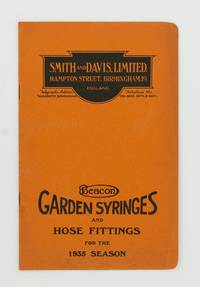
1935137332Birmingham: Smith and Davis Limited 1935. First Edition. Paperback. Very Good. Birmingham Smith and Davis Limited 1935. Tall octavo 12 pages with numerous illustrations 4 in colour and a tipped-in printed discount slip 'Beacon Hose Fittings Discount . 42½%'. Printed wrappers a little marked at the rear; bottom corner of the front cover and first three leaves slightly creased; a very good copy. Smith and Davis, Limited paperback