17 083 résultats
9514P., Grasset (Pour Mon Plaisir), 1933, in 12 broché, 278 pages ; couverture rempliée.
640977me année - N° 315 - 28 mars 1934 - in-4 broché - revue illustrée - paraît le mercredi
2001LFA-126711072Revue d'étude stratégique des grandes batailles : 98 pages, format 155 x 215 mm, illustrée, brochée couverture couleurs, publiée en 2001, bon état
2001R300284356Société Française de Revues. 2001. In-8. Broché. Etat d'usage, Couv. convenable, Dos satisfaisant, Intérieur acceptable. 98 pages - nombreuses illustrations en noir et blanc dans et hors texte.. . . . Classification Dewey : 944.051-Histoire de Napoléon 1er
2002R300284604Société Française de Revues. 2002. In-8. Broché. Bon état, Couv. convenable, Dos satisfaisant, Intérieur frais. 98 pages - nombreuses illustrations en noir et blanc dans et hors texte.. . . . Classification Dewey : 944.051-Histoire de Napoléon 1er
18224566Paris, Didot, 1821 - 1822. 3 Bde. 2 Bll., IV, 220 S., 1 Bl.; 2 Bll., IV, 106 S.; 3 Bll., 156 S. mit 3 Titelvignette und 27 Textabb. (alles in Aquatinta). 156 Aquatintas auf 116 Tafeln und 3 doppelblattgroße Kupferstichkarten. Gr.-Fol. Grünes HLdr. des 19. Jahrhunderts mit roten Rückenschildern (berieben und etw. bestoßen).
0543885488.Gpaperback. Good. Access codes and supplements are not guaranteed with used items. May be an ex-library book. paperback
1421228432.Gpaperback. Good. Access codes and supplements are not guaranteed with used items. May be an ex-library book. paperback
1797152774Paris: Chez H. J. Jansen 1797. Presented to Napoleon First edition presentation copy to Napoleon inscribed on each half-title verso "au Général Bonaparte; l'auteur". The work gives Saint-Fond's 1741-1819 account of his travels to Britain in the year 1784 with important observations on the geology of northern England and Scotland most notably his recognition that Fingal's Cave was a volcanic formation which had gone unnoticed by Joseph Banks. The work also includes anecdotes of Banks Adam Smith John Whitehurst and the Royal Society. The work was issued in octavo and the present large paper printing on quarto sheets; an English translation followed in 1799. At the time of publication Saint-Fond was professor of geology at the Jardin des Plantes; he was later involved in the extraction to French institutions of scientific materials across Napoleonic Europe. As one of the travelling commissaires of the clumsily but explicitly named Commission du gouvernement pour la recherche des objets scientifiques et artistiques dans les pays conquis par les armées de la République française established under the Directory for the purposes of pillage directed by connoisseurship and scientific expertise Saint-Fond certainly interacted with Napoleon who himself had refined the process by inserting clauses into peace treaties ensuring that governments would hand over the items selected. One of Saint-Fond's greatest triumphs was securing the fossil skull of the Monster of Maastricht a massive aquatic reptile from its home in Belgium. His 1799 account whereby the piece was retrieved by twelve grenadiers in exchange for an offer of 600 bottles of wine helped elevate the fossil to wide cultural fame but current informed opinion considers the narrative to be somewhat exaggerated. At publication Napoleon was leading French forces to repeated victories against the Austrians in northern Italy building his reputation as a national hero. It is well known that Napoleon was much taken with the myth of Ossian - he presumably read with particular attention the passages in the book relating to Fingal's legendary cave vol. II p. 454. So too he may have paid particular attention to Saint-Fond's account of his meetings with Adam Smith where Smith praised Rousseau and Voltaire and took Saint-Fond to a bagpipe competition much to his displeasure II pp. 277-283. Napoleon read the Wealth of Nations as a young man responding enthusiastically to the text though later affecting disdain for the economist. 2 vols quarto 255 x 196 mm. With 7 folding engraved plates. Contemporary calf rebacked with original spines laid down and later twin red and green labels spine compartments and covers ruled in gilt new endpapers. Housed in a brown solander cloth box by the Chelsea Bindery. Book label of 20th-century French collector Hubert Heilbronn to front pastedowns transposed from earlier endpapers when they were replaced. Extremities restored and gilt retouched. Contents with general soiling spotting and occasional rippling short closed tear in gutter of vol. II sigs. L-N 5.5 cm closed tear at foot of vol. II 2E3 not affecting text. A good copy. For Saint-Fond's role as a commissaire see Pierre-Yves Lacour La République naturaliste 2014. hardcover
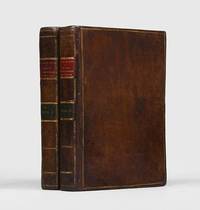
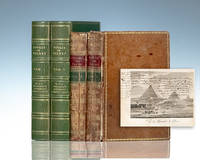
1799146536A Paris: Chez Dugour et Durand Libraires Rue et Hotel Serpente 1799. Volney's important work on Egypt and Syria from the library in exile of Napoleon Bonaparte with his annotations and corrections throughout several made as he was dictating details from the Egyptian Campaign for his own Memoirs. This copy may also have accompanied him during his Egyptian Campaigns; it is known that Napoleon brought along a copy of Volney's book to Egypt and it served as the standard reference source for the members of the campaign. Octavo two volumes bound in full contemporary French sprinkled calf with gilt tooling to the spine morocco spine labels lettered in gilt gilt scrolling to the front and rear panels with 3 engraved folding maps and 5 folding plates. First published in 1787 this important travel account by the renowned French historian orientalist philosopher and politician Constantin Francois de Chasseboeuf comte de Volney 1757-1820 is considered the best exposition of Egypt from Ottoman Syria in the late eighteenth century. It served as a basis for later Egyptian expeditions and many scientists as well as Bonaparte himself took this work with them on their expeditions. His candid descriptions did not romanticize Egypt's history or its contemporary social and political conditions but discussed the ills that plagued the country and explored the military weakness of the Ottoman Empire. Based on his observations Volney discouraged a conquest of Egypt and while he supported his friend Bonaparte politically he declined the invitation to accompany Napoleon's expedition in person. It is known that Napoleon brought along a copy of Volney's book to Egypt and it served as the standard reference source for the members of the campaign. The French campaign in Egypt and Syria 1798--1801 was a Napoleonic campaign in the Ottoman territories of Egypt and Syria executed by Bonaparte. Napoleon proclaimed to "defend French trade interests" and to establish "scientific enterprise" in the region. Despite early victories and an initially successful expedition into Syria Napoleon and his Armee d'Orient were eventually defeated and forced to withdraw especially after suffering the defeat of the supporting French fleet by the British Royal Navy at the Battle of the Nile. However on a scientific front the expedition was a success that led to the discovery of the Rosetta Stone creating the field of Egyptology. This important copy contains numerous annotations in ink and pencil in Bonaparte's hand mostly concerning measurements and other calculations including a heavily annotated folding plate of the pyramids "Vue de Pyramides de Djize" in Vol. I. The first volume contains ink annotations on pages 188 232 272 273 277-79 281 plate at page 229 cited above and map "Carte de la Syrie" at p. 288 outlines drawn in red pencil. The second volume contains mostly pencil annotations on pages 223 225 227 229 272 ink and pencil and 333. These corrections were made by Napoleon as he was dictating details from the Egyptian Campaign for his own Memoirs see provenance below. After Napoleon's death on St. Helena a large portion of his last library was divided by the executors among heirs and friends. The remainder was removed from St. Helena by order of the British Government and sold to the important French bookseller in London Martin Bossange. The lots that failed to sell almost half were quickly consigned by Bossange to Sotheby's and sold on 23 July 1823. The lengthy catalogue entry for the present lot in the Sotheby's catalogue reads: "This Work is one of the most interesting books that has occurred for sale for many years. Most persons are aware that Napoleon wrote very little but dictated to his favorite Generals Bertrand Montholon and Count Las Casas. The Egyptian Campaign which forms a part of two volumes just published of his Memoirs have been dictated from these volumes: he has taken notice of the most trifling error in the book; hence the many CORRECTIONS BY HIM. The Plate at page 229 vol. i is entirely covered with his hand writing. This unique Book forms an historical document which will be looked at with a mixture of pleasure and pain by the admirers of so great a man." Provenance: Napoleon I each title-page with circular hand-stamp in brown ink from Napoleon's library at Longwood House on St. Helena; and with his numerous ink annotations to plates and text in both volumes; Sir James Lewis Knight-Bruce bookplates; and with a note from his grandson regarding this copy: "These two volumes of 'Volnay's Voyages' which belonged to Napoleon the first were understood to have accompanied him during his Egyptian Campaigns and contain many notes in his the Emperor's handwriting. My grandfather the late Lord Justice Sir James Lewis Knight-Bruce of Roehampton Priory purchased these books presumably about 1821-2 when they were sent to England from St. Helena for sale. They being in Napoleon's possession there until his death in 1821." In very good condition with splitting to the spine and joints small section of leather torn from the upper cover of Vol. II; some wear to extremities. Occasional pale spotting internally final blank leaves 30/8 of both volumes removed presumably at the time of binding. First map in Vol. I with small marginal tear repaired near gutter margin second and third maps each with 2-inch tear repaired at gutter a few other plates with small marginal tears or reinforcements. Housed in a custom full crushed levant morocco clamshell box by Riviere & Son. Third edition revised and corrected. An exceptional piece of history with fascinating provenance. Chez Dugour et Durand, Libraires, Rue et Hotel Serpente hardcover
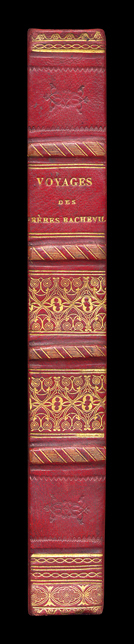
182259Paris, chez le capitaine Bacheville ; Corréard, libraire ; Ponthieu, libraire ; Imprimerie de David, 1822, in-8, broché ; VIII- 401 pp. et 1 p. de table, portrait lithographié de Antoine en frontispice (dans la deuxième édition, le frontispice montre les frères Bacheville se séparant pour toujours, en Turquie d'Europe), couverture muette de papier gris.
182215861Paris, Béchet Ainé et chez le Capitaine Bacheville, 1822 ; in-8 ; demi-veau glacé grenat à petits coins, dos à quatre nerfs plats décorés encadrant le titre et deux caissons décorés "à la cathédrale", palette et roulettes décoratives dorées, fleurons et roulettes à froid, tranches marbrées (reliure de l'époque) ; XII, 432, (2) pp., frontispice lithographié par G. Engelmann montrant les frères Bacheville se séparant pour toujours en Turquie d'Europe.
18180204821818 Chez L'Huillier Hardcover
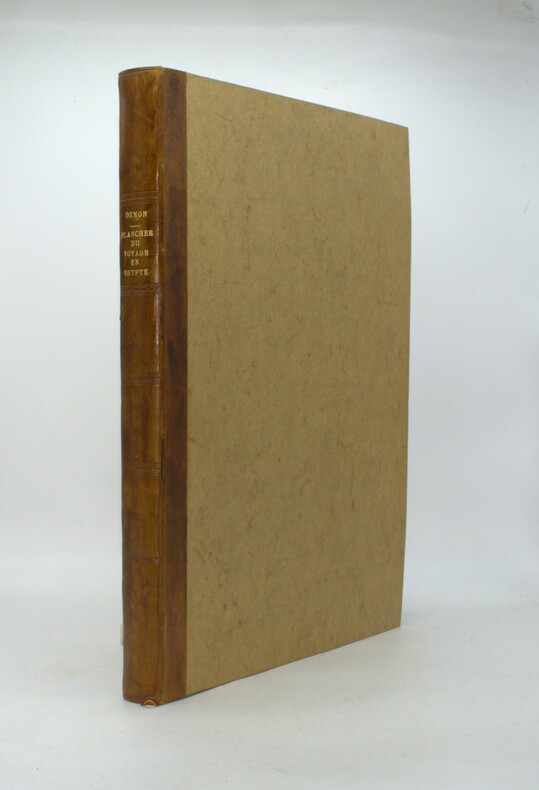
1802PHO-2073S.L (Paris), sd (1802), un volume folio (565x410mm) comprenant 131 planches (143, manque les pl. 10-14-24-27-33-41-54 bis -76-81-84-90-91). Demi basane fauve, auteur et titre au dos (reliure moderne), réparations sur les bordures de 3 planches. Quelques rousseurs
19574619Paris Henri Colas 1957 petit in-4 en feuilles Paris, Henri Colas, 1957. 28,5 x 20 cm, petit in-4, 173 (5) pp., 23 eaux-fortes dont 1 en frontispice, 2 en double page hors-texte, 5 hors texte et 15 dans le texte (les hors-teste sont compris dans la pagination), 2 petits bois gravés (l'un au titre, l'autre contrecollé au dos de l'étui), en feuilles sous couverture verte rempliée et imprimée, chemise et étui de l'éditeur.
217612Paris, Ducrocq, (1860) in-8, XXVII-368 pp., portrait, demi-chagrin rouge, dos à nerfs orné (reliure de l'époque). Qqs rousseurs. Coins usés. Fer du lycée de Vesoul sur le premier plat. Bon exemplaire.
HIS4123MV1822-1823, A Paris, chez MM. Encelin et Pochart, à Auch, au Bureau du Journal du Gers. 2 tomes en 1 fort vol. in-8, relié, demi-basane, dos lisse à pièces, 352 et 567pp. Ouvrage enrichi de 2 cartes dépliantes in fine du tome 2. Intérieur plaisant. Frottements d'usage. Bon exemplaire
1818PHO-1320Paris, Gide, 1818 , Un volume, in-8, de (2) ff., 359 pp., (5) pp. , illustré d’un portrait frontispice et 4 planches h.t. , demi cuir époque , dos lisse avec titre , frottements , coiffe usée .
1838PHO-1701Paris Ladvocat 1838-1839, 6 volumes, Texte : 5 tomes in-8, 402pp., 396pp., 406pp., 371pp., 384 pp. et l’Atlas in-4 Texte relié, dos lisse avec pièces de titre et tomaison rouge, réf. De biblio. en pied, cachet au titre et étiquettes au faux-titre, frottements, petits manques de papier aux coins. Atlas demi veau, manque au dos, frottements coupes et coins usés comprenant 12 planches et cartes (19), lettre manuscrite au dos du premier plat.
18370022921837 Paris, Chez Ladvocat, 1837-38. Cinq volumes in-8 (138 X 209) toile chagrinée vert lierre entièrement décorée d'entrelacs à froid, titre et tomaison dorés au dos, gardes papier jonquille (reliure de l'époque). Tome I : (2) ff. de faux-titre et titre, portrait frontispice, 402 pages ; Tome II : (2) ff. de faux-titre et titre, 396 pages, 1 carte et 4 vues dépliantes ; Tome III : (2) ff. de faux-titre et titre, 406 pages, (1) f. de table, 3 cartes et 7 vues ; Tome IV : (2) ff. de faux-titre et titre, 384 pages, 1 carte et une vue dépliantes ; Tome V : (2) ff. de faux-titre et titre, 372 pages, 3 cartes dépliantes. Habile restauration à l'angle inférieur du second plat du tome III, rousseurs claires éparses. Mention fictive de «Quatrième édition » sur le faux-titre des quatre premiers volumes, et de «Troisième édition » sur le titre du cinquième et dernier volume.
186023410Paris, L'Illustration, 1860. In-folio (28 x 38 cm) demi basane havane, dos lisse, titrage doré émoussé, plats de papier vert amande (un peu salis) illustrés de l'édition Reliure de l'époque (pages de garde un peu froissées).
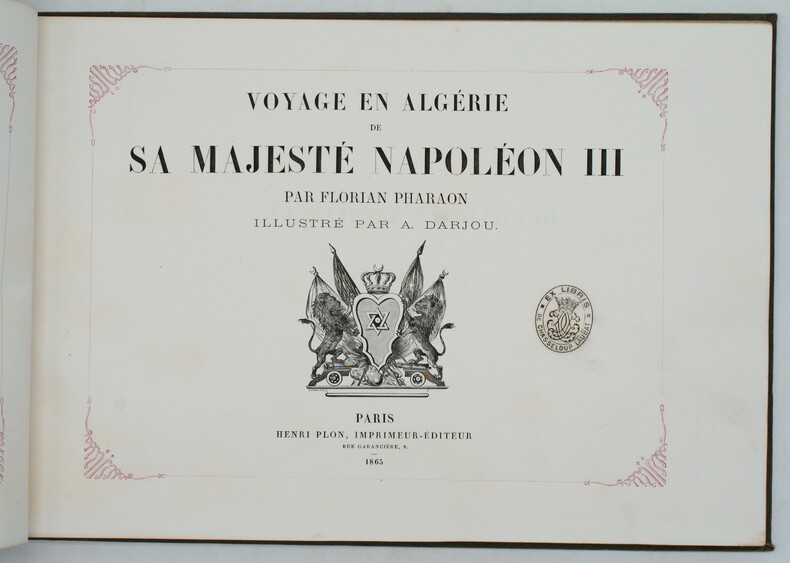
1865PHO-1276Paris, Henri Plon, 1865 , in-folio oblong (31 x 43 cm), pleine percale d'éditeur estampée, 4ffnch.-96 pp., 12 gravures hors texte et 53 dans le texte, ex-libris et timbre à froid Chasseloup-Laubat. reliure passée, Étiquette au dos
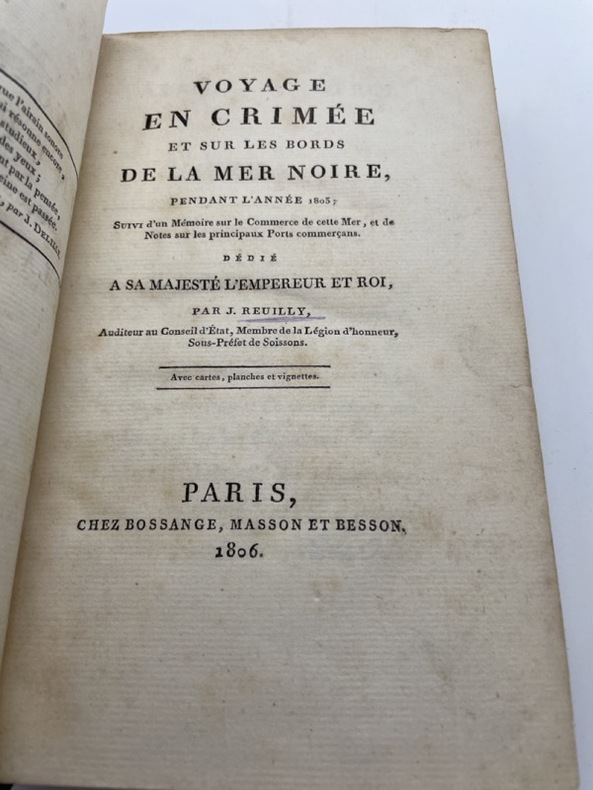
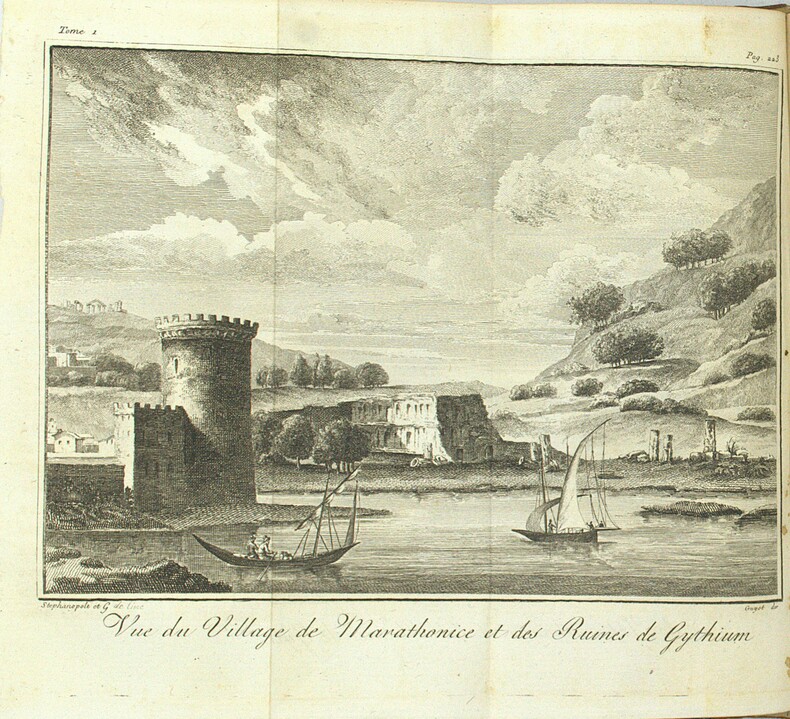
214498Pais, chez Bossange, Masson et Besson, 1806 in-8, [8]-XIX-[1]-302-[1] pp., plan replié, grande carte repliée, 3 planches repliées, 3 tableaux repliés, fig. in-t., index, demi-veau fauve, dos lisse, filets dorés (reliure pastiche). Bon exemplaire.
1800PHO-1932Paris, de l’imprimerie de Guilleminet, 1800, 2 tomes en 1, in-8, xvi-303pp,1f-319pp., demi basane, dos lisse avec pièce de titre rouge et date verte, tranches mouchetées, illustré de 8 planches dont 2 dépliantes, étiquette en page de garde « Marquis de Civille » et ex-libris manuscrit au titre, quelques écritures en marge, frottements aux plats et coupes. A été relié avec, écrit à la plume, la table des volumes ainsi qu’un texte fustigeant le coté révolutionnaire de l’auteur considéré comme un espion de Bonaparte désirant conquérir la Grèce.
1829PHO-1464Paris, Henri Gaugain et Cie -Caillou., 1829. 2 volumes de texte in-8, et un atlas grand in-folio (440x600),illustré du portrait de Vivant Denon en frontispice gravé par Garnier d'après R. Lefèvre et de 143 planches dont deux cartes., relié demi-veau époque , dos lisse avec titre et tomaison , coins usés ,frottements aux plats , frottements, coiffes usées et traces de réparations (atlas) , peu de rousseurs dans le texte .