SLAVERYBiblio.com
1 560 résultats
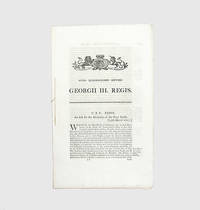
1807184142London: Printed by George Eyre and Andrew Strahan 1807. The African Slave Trade. is hereby utterly abolished prohibited and declared to be unlawful First edition of one of the most consequential acts of legislation in world history abolishing the slave trade within the British Empire. This copy is a well-preserved example of the separate folio printing. From 1807 enslaved persons could no longer be bought or sold within the British Empire while the Royal Navy was empowered to target vessels engaged in slave transportation a task it took up with vigour. Parliamentary acts were issued in collected annual volumes and as individual pamphlets all printed from the same type. As King's Printers Eyre & Strahan held the exclusive rights to publish and sell parliamentary statutes and this pamphlet would have been among those sold at their offices near Fleet Street. Folio 319 x 197 mm pp. 317-326 2. Woodcut headpiece. Stab-sewn as issued edges uncut. Minor offsetting else a near-fine copy. unknown
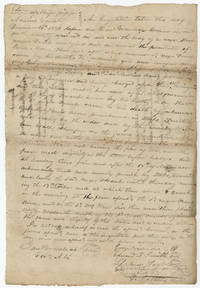
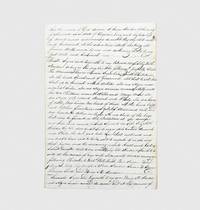
182122479<p>A Mississippi inquest holds a slave overseer accountable for killing a slave.</p> <b>SLAVERY.</b>Manuscript Document Signed by George Newman Edward T. Smith Sheppard Taylor Elijah Norman Hezekiah Kibbee David Collins and Daniel Greenleaf. Adams County Mississippi December 16 1821 1p. 8 5/8 x 12 3/8 in.<p><b><br /></b></p><p><b>Partial Transcript:</b></p><p><i>"the sd negro Frank came to his death by inhuman treatment and severe punishment in stocks starvation and lashes by the order and by the hand of William Wall.and so the sd Wm. Wall did then and there feloniously cause the death of the sd Negro Frank against the peace and dignity of the state and so we say all."</i></p> books
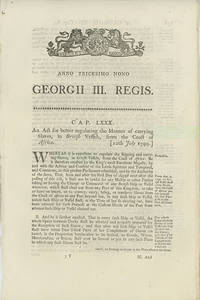
179928145London: Printed by George Eyre and Andrew Strahan Printers to the King's most Excellent Majesty 1799 1799. ESTC N60288 Lincoln's Inn Library and Wellcome Institute. Fine. 4to disbound paginated 637-652 untrimmed. An act passed by Parliament in the summer of 1799 delineated in 39 paragraphs that regulated the slave trade beginning in August 1800 - an act no doubt intended to placate the growing voices of opposition to the English slave trade. The act stipulates how many slaves could be stowed in a ship by mathematical formula according to the size of the ship but never more than 400; that slaves must be separated from other cargo; and that the space for the slaves "be full and complete perpendicular height of five feet." Nothing is said about their treatment other than that the ship's surgeon was required keep a log of illnesses and deaths of both slaves and crew. Much of the act is taken up with its enforcement and the penalties and fines for violations; it also regulates the conditions and treatment of the crew. The acts of Parliament were usually published separately and later issued in collections of the Public General Statutes; this one was issued as part of the collection of statues Passed in the Thirty-Ninth Year of the Reign of His Majesty King George the Third: Being the Third Session of the Eighteenth Parliament of Great Britain. This copy is disbound from such a volume. <br/><br/> (London: Printed by George Eyre and Andrew Strahan, Printers to the King's most Excellent Majesty, 1799) unknown books
1827213910London: John Hatchard and Son 1827. Illustrated by 9 etchings. viii 464 pp. 1 vols. 8vo. Full calf spine gilt. Upper board missing 8 leaves damp-stained else Near Fine. Illustrated by 9 etchings. viii 464 pp. 1 vols. 8vo. John Hatchard and Son unknown books
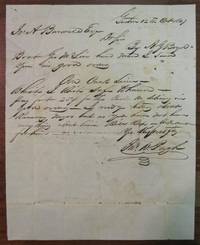
18472183421847. unbound. The writer Mr. Pugh also mentions that he has received a letter concerning a runaway slave and will keep a look out in part: ".I rec'd your letter about a Runaway Negro but as yet have not heard anything about him. Will keep a look out. Yours Respectfully." 1 page 8vo light water-staining 9.25 x 7.5 inches. No place October 12 1847. Very good- condition.<br/><br/> unknown books
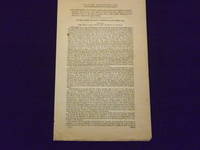
1834100531<p>Single small folio leaf printed on both sides. Faint creases whee originally folded probably removed modest aging and browning a couple of very small spots or stains; overall very good. Over forty years after William Wilberforce presnted evidence of the brutality of slavery to Parliament and following Thomas Clarkson's tireless efforts the crown finanlly put an end to salvery in the West Indies and her colonies. The act included a provision that all slaves above the age of six were to present themselves for apprenticeship. The crown also set aside 20 million pounds to compensate the slave owners who could retain their workforce for a modest sum.</p> Ordered by the House of Commons, books
1826WRCAM40209Philadelphia 1826. 40pp. Original tan wrappers. Wraps a bit creased spine slightly chipped. Contemporary ownership inscription on titlepage. Text a bit tanned. very good. A call for the abolition of the slave trade with sections regarding the involvement of a number of foreign countries in the trade. This copy belonged to the Rev. Leonard Worcester of Peacham Vt. Worcester was a member of the Auxiliary Colonization Society of the State of Vermont a regional subgroup of the American Colonization Society. A nice association copy. SHOEMAKER 23434. paperback books
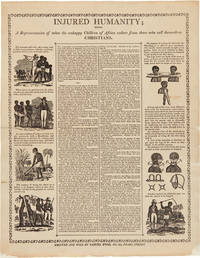
1808WRCAM54959New York: Samuel Wood 1808. Broadside 16 1/2 x 13 inches with main text printed in two center columns flanked on both sides by seven woodcut illustrations with descriptive text. The entire broadside surrounded by an ornamental border. Old folds minor chipping to edges short repaired tears small smudge in right column. Backed on acid-free tissue. Very good. A rare and powerful illustrated broadside describing in text and images the cruelties suffered by Africans in the West Indies slave trade. The main text is largely adapted from a work published in London in 1793 REMARKS ON THE METHODS OF PROCURING SLAVES WITH A SHORT ACCOUNT OF THEIR TREATMENT IN THE WEST- INDIES in support of an abolitionist boycott of West Indian goods with information gleaned from Parliamentary reports. It describes slave auctions and the "scrambles" by which sickly Africans are sold and gives details of the treatment of field and house slaves. The illustrations are horrifying showing slave families being separated at auction and then branded floggings at the hands of black overseers and various restraints to keep the slaves from eating or escaping including head-frames and mouthpieces neck braces weights leg spurs and shackles and yokes. The printer of this broadside Samuel Wood was a noted Quaker- reformist and the illustrations are credited to pioneering New York wood engraver Alexander Anderson. <br> <br> OCLC locates eleven copies and gives a publication date of 1802 though Pomeroy the American Antiquarian Society and Princeton give a date of 1805 to 1808 based on Samuel Wood's address as noted in the imprint. The Gilder Lehrman Institute also holds a copy as does the Rosenbach Museum. Rare and very interesting and a powerful manifestation of the growing abolitionist sentiment in the United States in the early 19th century. POMEROY ALEXANDER ANDERSON 169. HAMILTON EARLY AMERICAN BOOK ILLUSTRATORS AND WOOD ENGRAVERS 252. OCLC 33989651 476101156 945084251. Samuel Wood unknown books
1840WRCAM54016N.p. but Germany 1840. 16pp. text in German. Stitched as issued. Very light dampstaining at top edge. Very good. An imaginary dialogue between a slaveholder and a missionary in Georgia. They debate the rights and wrongs of slavery with the slaveholder gradually crumbling before biblical evidence. A most unusual German tract on the American slavery controversy. unknown books
18161138361816. First Edition. SLAVERY. The Interference of the British Legislature in the Internal Concerns of the West India Islands Respecting Their Slaves Deprecated. London: J. Mawman 1816. Slim octavo modern blue-gray paper wrappers; pp. 58. $1800.First edition of this defense of the West Indian slave trade arguing against emancipation.Cloaked in pro-abolition language and anonymously written by a person claiming to be an abolitionist this work is actually a zealous condemnation of British interference in the slave trade of the West Indies. After briefly discussing the abolition movement the 1807 act abolishing slavery in britain and prominent anti-slavery organization the author sets out to make his main argument: that a bill requiring registry of slaves in the West Indies would infringe on the rights of those colonies. The author swiftly aligns himself with the interests of the West Indian Planters arguing that abolishing slavery is a different cause from emancipating people of African descent. He points out that this bill is merely the first in a projected series of measures meant to emancipate the Black population of the West Indies. Set in the awkward period between 1807 and 1833 when slavery in Britain was illegal but the slave trade still thrived abroad this work makes sense of obvious hypocrisy by arguing that slavery was permitted by God and that Blacks of African descent were better off as slaves than in Africa. The will of those against slavery proved stronger and complete abolition eventually became the law of the land. Sabin 34904. Kress 21649. This work last appeared at auction over 25 years ago; prior to that it had not been seen since the 1940s.Interior quite clean with only slight pressure offsetting toning to spine of modern wrappers. A beautiful copy in fine condition. unknown
1816100537Pamphlet formate folio disbound first pamphlet 3 leaves printed on recto only second 7pp. third 6 pages and folding chart. Pamphlet extracted from larger volumne chipping along spine and edges not affecting text second papmple completely disbound paper browned and somewhat dry These pamphlets are rare and represent an important source of information on the numbers and values of slaves in early 19th century America. The first title presents the value assigned to slaves in 11 states including New York. The second lists the number and values of slaves in the various counties in the state of Maryland. The final pamphlet presents real estate values and values on dwellings including slaves in the counties of Pennsylvania. The information in these reports was compiled by Alexander James Dallas 1759-1817 who was the Secretary of the Treasury. Dallas born in Kingston Jamaica settled in Pennsylvania and practiced law there. Eventually he would become Secretary of the Treasury in 1814 when the nation was almost bankrupt. He managed to reorganize the department get the country out of debt created a surplus and even helped promote what would become the Second Bank of the United States. ANB. William A. Davis, books
1819190417Albemarle County VA: 1819-1823. A revealing survival from early 19th-century Virginia: the last will and testament of Isaac Hardin a prominent citizen and first legal owner of the land now known as the Greenwood historic district in Albemarle County. The will transfers ownership of 13 enslaved persons. In his will written in June 1819 and notarized and effected in May 1823 the ailing Hardin leaves the vast majority of his possessions to his wife Elizabeth. This includes the mansion house and plantation along with a number of enslaved persons: Juber Milly Milly's children Willis and Mary Ann and two girls named Hannah and Pheby. The enslaved people are mentioned in the will after Hardin's property and before the listing of his livestock. Later in the will he also transfers legal ownership of a man named Anderson to his oldest son Berry M. Hardin and of six other enslaved people to his daughter Lucinda Scott. The will was signed by Hardin with his mark and witnessed by four individuals on June 26 1819 and was later notarized on May 31 1823. We can assume that Hardin's will was carried out upon his death in 1820 and advertisements for a trust sale in 1830 tell us that much of this same property was later auctioned off including all of the enslaved men and women left to Elizabeth except for Hannah and Pheby who were singled out as Elizabeth's "to have and to hold and to dispose of as she may think proper". Bifolium handwritten on three pages docketed and with remnants of wax seal on fourth page. Old folds some damage to second leaf from where seal was removed not touching text. Very good. unknown
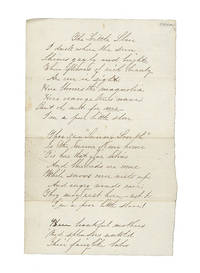
186134365Waterford Maine Feb 3rd 1861. In a neat nineteenth-century hand on a single leaf torn from a larger sheet of note paper. 1 vols. 5 x 8 inches. Old folds else fine. In a neat nineteenth-century hand on a single leaf torn from a larger sheet of note paper. 1 vols. 5 x 8 inches. "My mammy's worked out". Thirty-two line poem expressing pious sentiments at the plight of the child slave: "Here orange trees wave / But oh not for me -- / I'm a poor little slave . My mammy's worked out / And lies here in the grave / There's none to kiss me / I'm a poor little slave". unknown books
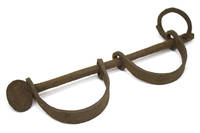
18003062751800. Wrought iron two semicircular wrist pieces approx. 4 inch in diameter attached to an 11-inch long bar. Oxidization consistent with age and material. Wrought iron two semicircular wrist pieces approx. 4 inch in diameter attached to an 11-inch long bar. A set of shackles of the type used in the Middle Passage slave route from Africa to the Americas in the 18th century. An illustration of this type of shackle appears on page 16 of Lydia Maria Child's Appeal in Behalf of that Class of Americans Called Africans Boston 1833 where she notes that these shackles were used to secure the ankles of adjacent slaves. "Yet even thus secured they do often jump into the sea and wave their hands in triumph at the approach of death unknown books
17921262151792. HAITI SLAVERY. A Particular Account of the Insurrection of the Negroes of St. Domingo Begun in August 1791: Translated from the French caption title as issued. London: 1792. Slim octavo modern green cloth; pp. 32. $1800.Fourth edition published one year after the very rare first of this sensationalistic account of the early months of the Slave Rebellion in Haiti the beginnings of the Haitian Revolution which ultimately led to the establishment of the first independent black state in the New World. The publishers of this polemic hoped to frighten the British public and turn them away from the abolitionists Wilberforce and Clarkson who were trying to put and end to slavery in the British colonies in the West Indies.Translated into English this is a speech to France's National Assembly ""by the Deputies from the General Assembly of the French part of St. Domingo."" The tract provides a frightening and grisly account of the August 1791 Slave Rebellion the result of ""a plot to set fire to the plantations and to murder all the whites."" The start of the insurrection by its ""perfidious"" leaders resulted in a catalogue of horrors and atrocities as the rebels ""spread over the plain with dreadful shouts set fires to houses and canes and massacred the inhabitants."" The ""fury of the cannibals"" is recounted in gory detail. The Speech is signed at the bottom of page 19 by six Deputies who call the insurrection ""the greatest calamity that has visited the human race in the course of the eighteenth century."" An Appendix records Letters and Speeches concerning the Rebellion. ESTC T110428. Goldsmiths' 15167. See Sabin 58932 1791 first edition; LCP 7460 2nd edition 1792; Work 349 1832 printing. First and last leaf slightly darkened text quite clean. Trimmed irregularly along upper margin affecting page numbers on two leaves but not any text. A very good copy of this scarce item. hardcover
1836WRCAM46521Pittsburgh: Alexander Jaynes 1836. 8pp. Dbd. Lightly and evenly tanned. Very good. "The question of Slavery being before the General Assembly of 1836 on petition from many members of the church that the Assembly would bear their testimony against the practice of slaveholding as a SIN it has been thought proper to reprint the testimonies and acts of former Assemblies on the same subject from the official Minutes without note or comment." Only three copies located in OCLC at Princeton Oberlin and the Library Company of Philadelphia. Alexander Jaynes unknown books
1833WRCAM40207Boston 1833. 28pp. Original tan printed wrappers. Wrappers lightly soiled. Spine chipped. Front cover separating at bottom. Lightly creased down the center. Some light foxing. About very good. Untrimmed. The Massachusetts Colonization Society was a regional subdivision of the American Society for Colonizing the Free People of Colour. The Society attempted to alleviate the problem of slavery and degradation of free blacks by establishing a colony for them outside the United States preferably in Africa thereby "separating them WITH THEIR OWN CONSENT from the white race." The Society established the colony of Liberia in 1822 assisting African Americans to resettle there. The colony continued to grow for the next twenty years and Liberia declared itself an independent state in 1847. AMERICAN IMPRINTS 20051. unknown books
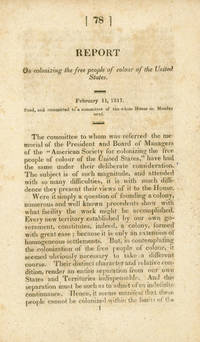
18179350WashingtonCity 1817. First Edition. 5 pp. 1 vols. 8vo. Disbound. Some foxing. First Edition. 5 pp. 1 vols. 8vo. First edition of the government's reply to the request of a group of Virginia planters for a "colony" to essentially rid them of the problem of "free coloured people." In December of 1816 a group of Virginia planters approached the government with a request asking for a location where freed blacks might be sent. In January this "memorial" was presented and in February it was answered with this "Report." This reply discusses location etc. In the end the government officially refused to have anything to do with the plan - thus the American Colonization Society was born. For a detailed account of these events see Dumond Anti-Slavery pp. 126-127. S&S 42738 2 copies unknown books
1020195134.Ghardcover. Good. Access codes and supplements are not guaranteed with used items. May be an ex-library book. hardcover
1728100536<p>Pamphlet 8vo modern full calf in the style of an 18th century Cambridge binding 32 pp.Very slight aging; in excellent condition. This is a rare first edition of a work that presents a complaint by British planters in the West Indies concerning the Assiento or agreement with Spain that gave Britain a virtual monopoly on the African slave trade. This agreement came out of the Treaty of Utrecht which ended the War of the Spanish Succession. This pamphlet indicates that the planters feared as a result of this agreement British slavers might be required to provide African slaves to the Spanish colonies which could result in insufficient numbers available for the West India plantations. The Assiento with Spain would mark the beginning of the Atlantic slave trade as a very powerful economic growth engine. Unfortunately this would translate into millions of Africans being taken from their homes.</p> H. Whitridge
1728100536Pamphlet 8vo modern full calf in the style of an 18th century “Cambridge†binding 32 pp.Very slight aging; in excellent condition. This is a rare first edition of a work that presents a complaint by British planters in the West Indies concerning the Assiento or “agreement’ with Spain that gave Britain a virtual monopoly on the African slave trade. This agreement came out of the Treaty of Utrecht which ended the War of the Spanish Succession. This pamphlet indicates that the planters feared as a result of this agreement British slavers might be required to provide African slaves to the Spanish colonies which could result in insufficient numbers available for the West India plantations. The Assiento with Spain would mark the beginning of the Atlantic slave trade as a very powerful economic growth engine. Unfortunately this would translate into millions of Africans being taken from their homes. H. Whitridge unknown books
1856257105Washington D.C.: Globe Office 1856. Signed by Kelsey ordering 2500 and by James Livingston for 100 and another. Old folds. Blind embossed " Platner & Porter Cobngress" staionary. Signed by Kelsey ordering 2500 and by James Livingston for 100 and another. Globe Office unknown books
1713370449London: Printed for John Baskett 1713. 2 48pp. printed in English and Spanish in parallel columns. Without the Privilege leaf preceding the title. Quarto. Trimmed and inlaid into folio sheets and bound within a folio volume of treaties between Great Britain and Spain assembled by the British Foreign Office Library approx. 850pp in total. 19th century half roan and marbled paper boards worn some restoration at joints. Provenance: British Foreign Office Library bookplate on the front pastedown. 2 48pp. printed in English and Spanish in parallel columns. Without the Privilege leaf preceding the title. Quarto. First edition in English of one of the most important documents in the history of slavery in the Americas and in the political and financial history of Europe and the Americas in the early 18th century. <br /> <br /> Though the term "assiento" could refer to any number of Spanish contracts "the Assiento" almost always refers to the "Assiento de Negros": a monopoly contract granted by the Spanish crown between 1528 and 1779 for the sole right to import slaves from Africa into the Spanish colonies. Normally granted to individual companies the 1713 Assiento was granted directly to the British crown as part of negotiations for the Treaty of Utrecht which ended the War of Spanish Succession. In the decades following this 1713 Assiento an estimated 200000 enslaved Africans were transported across the Atlantic.<br /> <br /> The document grants sole privilege for the trade to the British crown for a period of thirty years expiring in 1743. The agreement consisting of forty-two articles allows for a maximum of 4800 slaves to be introduced to the colonies each year with a provision for increasing that annual amount each year by paying an added duty places limits on sale prices sets the cost of the duty to be paid for each enslaved person allows for the use of British or Spanish ships and mariners in the slave trade provides for the French Guinea Company's extraction from the colonies and establishes the details of precisely where British ships would be allowed to travel and trade. The British were also granted the unique privilege to send one vessel with a cargo of up to 500 tons of other trade goods to the Spanish colonies each year. <br /> <br /> While the Assiento seemed a lucrative deal most Assientists over the years saw considerable losses due to the difficulty of cross-Atlantic trade and the duties paid to the Spanish king. The real benefit to its grantees was not profits from the slave trade but rather the illegal ability to send other contraband on board their vessels to the otherwise closed-off Spanish markets in the New World. Britain was eager to get their own products overseas and to deny this revenue stream to the French who had held the Assiento since 1701 thereby preventing them from refilling their coffers too quickly and upsetting the balance of power in Europe after the costly War of the Spanish Succession. <br /> <br /> Queen Anne delegated the Assiento privilege to the South Sea Company which had recently been established to pay off Britain's considerable national debt. The privilege was largely granted to them as an encouragement to investors in order to allow the Company to achieve its original purpose more readily. Ultimately however it proved to be a costly and unprofitable endeavor for the South Sea Company who were able to import only about one-third of their allowed quota of slaves each year were frequently interrupted by war and were required to render twenty-five percent of their profits to King Philip V of Spain. <br /> <br /> The present example comes from the British Foreign Office Library inlaid and bound into a folio volume of other treaties between Great Britain and Spain arranged chronologically by treaty date. Over the course of many years the library of the Great Britain Foreign Office inlaid copies of nearly every treaty involving Great Britain to folio size and bound them together by region. The library was dispersed in the late 20th century with most of the volumes and particularly the American volumes broken up and sold by the William Reese Company.<br /> <br /> Most of the other treaties with Spain within this volume are clippings or extracts from larger works or true copies in manuscript of treaties dated between the years 1176 and 1739. Included in the volume however is a separately-printed English edition of the Treaty between Great Britain and Spain as part of the Treaty of Utrecht 1713: Tractatus pacis & amicitiæ . Treaty of peace and friendship between The most Serene and most Potent Princess Anne by the Grace of God Queen of Great Britain France and Ireland Defender of the Faith &c. and the most Serene and most Potent Prince Philip the Vth the catholick King of Spain concluded at Utrecht the 2/13 day of July 1713. London: Printed by John Baskett 1714. 115 1pp. ESTC T51509.<br /> <br /> There are two issues of the Assiento treaty; this is the issue with a semicolon after "Assiento" and no punctuation after "or" on the titlepage. A crucially important document in the history of colonial trade Spanish-British relations English finances and slavery in the Americas. Sabin 2227; European Americana 713/85; Hanson 1896; Sperling 34; JCB 1III:175; ESTC T4476 Printed for John Baskett unknown
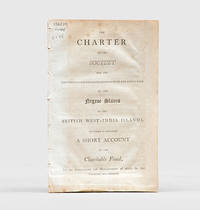
1794126550London no printer 1794 or later. First edition variously dated by ESTC and WorldCat between 1794 the date given at the end of the preliminary "Short Account of the origin and present state of the charitable fund" and 1823. The short account dated March 1794 is followed by a tipped in leaf reporting on the first meeting of the society which took place on Thursday April 3 1794 electing the Lord Bishop of London as president. The Charter of the Society 18 pages in length is dated at Westminster "this thirtieth Day of October in the thirty-fourth Year of our Reign" which again falls in 1794. Octavo 190 x 123 mm pp. ix 18. Sometime in a pamphlet vol. now disbound. Spine shows evidence of earlier binding sometime folded vertically; title lightly dust soiled page ix trimmed down and tipped onto p. viii; a good copy. Sabin 85881. unknown
1831WRCAM40189Washington 1831. xxv1357pp. plus one folding map. Original cream printed wrappers. Minor chipping to head and foot of spine. Contemporary ownership inscription on front cover. Titlepage foxed light tanning to some leaves else clean and bright. Very good. Untrimmed. The Society attempted to alleviate the problem of slavery and degradation of free blacks by establishing a colony for them outside the United States preferably in Africa thereby "separating them WITH THEIR OWN CONSENT from the white race." The Society established the colony of Liberia in 1822 assisting African Americans to resettle there. The colony continued to grow for the next twenty years and Liberia declared itself an independent state in 1847. The folding map shows the colony of Liberia. This copy belonged to the Rev. Leonard Worcester of Peacham Vt. Worcester was a member of the Auxiliary Colonization Society of the State of Vermont. Not in AMERICAN IMPRINTS. A nice association copy. unknown books