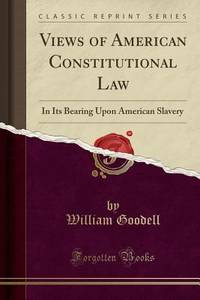
In Its Bearing Upon American SlaveryBiblio.com
224 résultats
133041957X.Gpaperback. Good. Access codes and supplements are not guaranteed with used items. May be an ex-library book. paperback
18391240991839. First Edition. JAY William. A View of the Action of the Federal Government in Behalf of Slavery. New-York: J.S. Taylor 1839. Small octavo 5 by 7-3/4 inches original gilt- and blind-stamped brown cloth; pp. i-iii iv-viii 13-217 1. $1600.First edition of the highly influential work by William Jay son of Founding Father John Jay documenting the ""grim"" legacy of the U.S. Constitution's ""guilty compromise""with Frederick Douglass honoring Jay at his death for his dedication to ""the great cause of universal freedom a tower of strength and his pen a two-edged sword""especially scarce in original cloth.Abolitionist and jurist William Jay was the son of John Jay the first Chief Justice of the Supreme Court and president of the Revolutionary Continental Congress. William Jay ""intensely invested in the fundamental goal of ending American slavery"" served as president of the New York Anti-Slavery Society drafted the constitution of the American Anti-Slavery Society and was removed as a judge in a New York county for his abolitionist activism. His 1839 View of the Action with its epigraph taken from the Constitution demonstrated Jay's conviction that ""Americans had to own up to their sin"" and acknowledged his family's part in that legacy. His book details the ways in which the Constitution's ""'guilty compromise' had shaped federal policy foreign and domestic"" for decades. In its ""nearly 200 pages of research"" he exposes officials ""who regularly made the choice to enact proslavery laws and procedures the data was grim. Yet by putting in one place such a well-informed catalog of federal policy Jay created a guidebook to issues on which antislavery politicians and lawyers could make their stand"" Gellman Liberty's Chain 190 209.Jay documents ""all the ways the federal government advanced slaveholding interests at home and abroad . the Constitution's three-fifth compromise had created substantial"" yet unacknowledged ""political advantages"" for slaveholding states and their supporters. The ""dominoes that fell included the Missouri Compromise"" which Jay firmly assails for surrendering ""all the cruelties and abominations"" of slavery to the territory. He also attacks a ""repugnant"" 1792 law barring Blacks from militia service as well as policies that made the nation's capital ""'the great slave mart of the North American continent' in Jay's book the poison born of moral compromise spread in every direction"" as he cites ""''gross hypocrisy and duplicity' in the lax enforcement of the international slave trade and insidious effects on domestic institutions and policies"" that hollowed out the Constitution in areas such as freedom of the press. In providing antislavery forces with ""a stiff empirical legal backbone ""View of the Action also reinforced a determination to use his family's ""insiders' credentials"" in order to advance defense of the Amistad rebels and to work closely with Black activists such as David Ruggles and minister and African nationalist Alexander Crummell. At Jay's death in 1858 Frederick Douglass honored him as man who ""in the great cause of universal freedom was a tower of strength and his pen a two-edged sword"" Gellman 209-213 3. First edition first printing: issued in brown this copy and dark green cloth no priority determined; mispagination as issued without loss of text. Work 327. Sabin 35866. Text fresh with light scattered foxing mild rubbing to original cloth. A distinctive near-fine copy. hardcover
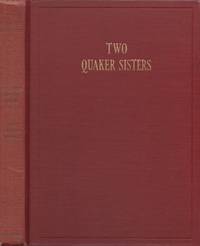
193736016New York: Liveright Publishing Corporation 1937. First Edition. Hardcover. Fair. Octavo. xxx 1 Burgundy cloth hardcover with gilt title on the front cover and spine. Frontispiece photograph of the two sisters. Illustrated. Map illustrated front end papers. Genealogical chart for "Arnoll Buffum m. Rebecca Gould." on the rear papers. Light shelf and edge wear to the hardcover. Interior contents clean. <br /> <br /> Inscribed by the author on the half title page: "To Winthrop W. Aldrich With my very sincere regards Malcom Read Lovell 1937. Contents include anti slavery reminiscences by Elizabeth Buffum Chace pages 110-183. Liveright Publishing Corporation hardcover
1996210311010Cassell 1996-03-01. Paperback. Very Good. Softcover. Clean text. Tight binding. Free of any markings and no writings inside. For any additional information or pictures please inquire. Cassell paperback
1996Q-030433264xCassell 1996-03-01. Paperback. New. In shrink wrap. Looks like an interesting title! Cassell paperback
DADAX030433264XUNKNO 0000-00-00. paperback. New. 5.50x0.75x8.75. Buy with confidence. Excellent Customer Service & Return policy. UNKNO paperback
17101200341710. First Edition. SLAVERY ANONYMOUS. A True State of the Present Difference Between the Royal African Company and the Separate Traders. London: No publisher 1710. Slim octavo period-style full tan sheep gilt red morocco spine label raised bands; pp. 40. $1650.First edition of this argument against providing a monopoly over the British slave trade to the Royal African Company with tipped-in diagram of one of the Royal African Company's forts.This work attempts to highlight the irregularities of the business practices of the Royal African Company and to argue for the superiority of open trade in Africa particularly as a means of supplying slaves to the American plantations. Founded in 1660 by the royal Stuart family and the City of London the Royal African Company was founded to exploit natural resources like gold along the west coast of Africa. While the Royal African Company did participate heavily in the gold trade the majority of their income came from slave-trading. The Royal African Company was part of a concerted effortfully elaboration in the Navigation Actsto establish dominance in the slave trade since the Dutch had been the leading slave-traders prior to the Restoration. To that end the Royal African Company established a brutal and highly efficient slave-trading system eventually providing more slaves to the West Indies than any other company or state. The slaves were branded with the initials of the company or its longtime governor the Duke of York. Children were included in the transports. Between 1662 and 1731 the Company transported approximately 212000 slaves a fifth of whom died enroute. While the Company formally gave up slave-trading in 1731 they remained involved in the trade of ivory and gold dust industries dependent on labor exploitation and slavery. Goldsmiths 4605. Kress 2677. Early ink underlining and marginal notations.Small paper repair to diagram text and diagram trimmed close affecting portion of imprint and scattered catchwords not affecting readability. A very good copy. hardcover
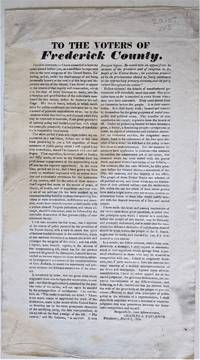
1833713Winchester Va. 1833. Broadside 4to. 290 x 160 mm. 11 ¼ x 6 ¼ inches. Printed in two columns signed in type by Charles J. Faulkner at Winchester dated March 8 1833 at conclusion. Lightly dust-soiled pale stain affecting perhaps one-third of the left-hand margin and column of text. Neatly silked on verso. Withal about very good. Following the August 1831 Nat Turner rebellion in Southampton County a last effort was made by moderate Virginians to gradually abolish slavery. Faulkner a 26-year-old lawyer and assemblyman along with Thomas Jefferson Randolph sponsored legislation to free all children born of slave parents after July 4 1840. His speech emphasized the evil of slavery for Southern white labor noting that slavery "converts the energy of the community into indolence--its power into imbecility--its efficiency into weakness.Shall society suffer that the slave-holder may continue to gather his crop of human flesh" As the Assembly was malapportioned in favor of the Tidewater slaveocracy the proposal lost rather narrowly and nearly thirty years later the Confederacy was assured of Virginia's succession. It is perhaps not surprising that Faulkner "comparatively a stranger" to the county but a member of the Virginia House of Delegates at this time 1831-34 was not successful in his campaign to represent Virginia in the U.S. Senate. However Faulkner was elected to three terms in Congress from Virginia in the 1850s. He was elected to Congress from West Virginia after the Civil War. In the interim he served as Minister to France during the Buchanan administration and on the staff of Stonewall Jackson. Dictionary of American Biography. Not in Hummel. Not found in American Imprints for 1833 and not in the 1830-1839 title index. OCLC records four copies at The Library of Virginia University of Virginia Virginia Historical Society and American Antiquarian Society. unknown
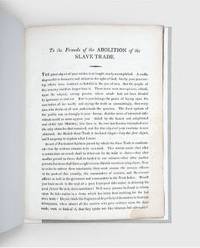
1807190225London: W. Flint 1807. First edition published soon after the abolition of the slave trade in the British Empire appealing for Britain to make the international end of the trade a core part of its aims in the ongoing Napoleonic Wars. Quarto 248 x 194 mm 4 pp. Recent white and grey boards printed paper label to front cover. Light stain at bottom fore corner and light spotting: a good copy. hardcover
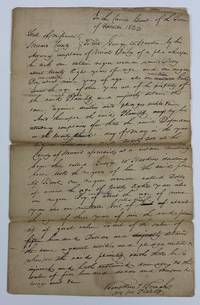
18224276Howard County Mo 1822. Good. Three documents totaling 3pp. folio the two earliest documents written on each side of the same leaf with an integral blank and attached to the third document with sealing wax each document docketed on verso. Some short separations along folds minor spotting two short tape repairs. A series of three documents recording a case of slave theft in Missouri. The plaintiff in the case George W. Hardin sues a man named Urial Bailey for stealing three slaves from the Hardin estate in Howard County Missouri. The first document is a sworn oath dated May 23 1822 by George Hardin stating that "He was lawfully possessed of the negroes.and that the same were unlawfully taken by Urial Bailey.from his properties and with out his consent within one year last past and that he is now lawfully entitled to the possession of the said negroes." The document is attested by the clerk and signed by Hardin.<br /> <br /> The second document is executed by Hardin's lawyers on the verso of his oath dated the same day and constitutes an order from the court to the Sheriff of Howard County informing him that "George W. Hardin hath come into the Circuit Court held in the town of Franklin and found sufficient sureties as well as his clamour to prosecute for a certain woman called Dolly about the age of twenty eight years also one negro boy of about the age of nine years named Nathan also one negro girl called Eliza about the age of three years all the property of the said Plaintiff.which a certain Uriel Bailey.hath taken and unjustly detains. You are hereby commanded that the said goods.be delivered to the said George W. Hardin and that.Uriel Bailey appear before the said Circuit Court to be held at the town of Franklin."<br /> <br /> The third document is executed by Hardin's lawyers on the verso of his oath dated September 1822 and lays out the facts of the case. It reads in part: "George W. Hardin by his Attorney Tompkins & French complains of Urial Bailey that he took the previously named slaves of great value. To wit of the value of fifteen hundred dollars.where fore the said Plaintiff saith that he is injured and hath sustained damages to the value of five hundred dollars and therefore he brings suit." Interestingly in this document Hardin's lawyers refer to the youngest slave Eliza as a "mulatto girl." Docketing on the integral blank attached to the oath and lawyer's document dated May 23 1822 indicate that Hardin was seeking "Replevin Damages" of $500 which the court seems to grant. <br /> <br /> The motive behind Urial or Uriel Bailey's thefts are not recorded here but the issue of slave stealing was not uncommon and had been going on in the American colonies and the fledgling United States for a long time. According to Timothy F. Reilly in "Slave Stealing in the Early Domestic Trade as Revealed by a Loyal Manservant" published in Louisiana History: The Journal of the Louisiana Historical Association Vol. 55 No. 1 Winter 2004 pp.5-39: "Slave stealing plagued domestic slaveholders as far back as the colonial period when those who would unlawfully deprive a property owner of human chattel were detested as 'Negro jockeys.' Whether operating in the northern or southern colonies a 'man-stealer' lurking about either as a piratical thief or as a high-minded abolitionist was guilty of one of the worst crimes against the sanctity of property. By the 1830s man stealing reached epidemic levels in parts of the South."<br /> <br /> Despite the seeming prevalence of slave theft for a long period of time in the United States primary source records of court cases are very scarce. unknown
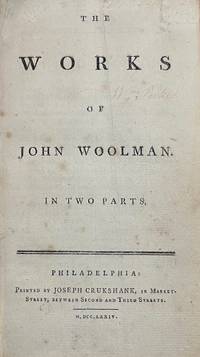
177434482Philadelphia: Joseph Crukshank 1774. First Edition. Three-quarter leather. Good. Octavo. 1 xiv 2 436 pages 1. Rebound in three quarter leather with tan cloth covered boards. Raised bands gilt decorations and title on the spine. Two title pages but continuos pagination. Inscription by the previous owner on the front blank end sheet. Front blank end sheet has some holes upper corner partly affecting the inscription. Moderate toning to the contents. Small worm hole lower back foredge not affecting the text. Pages 407-428 also has a small worm hole top edge not affecting the text. Chapter in part 2 pages 279-311 is titled "Considerations On the Keeping of Negroes."<br /> <br /> This first edition was published after the death of Woolman 1720-1772. Several later editions have been published. John Woolman was a Quaker minister and early abolitionist. He traveled to England in 1772 to promote the abolition of Slavery but died soon after arriving in England. He is buried in York. <br /> <br /> <br /> Howes W 669; Sabin 10524. Joseph Crukshank unknown
177435034Philadelphia: Joseph Crukshank 1774. First Edition. Leather bound. Fair. Octavo. 1 xiv 2 436 pages 1. Polished calf leather covers. Chipped title on the spine. Missing a section of leather bottom spine and another section is coming loose. Front cover is detached. Text lightly toned with scattered light brown stains. <br /> <br /> Two title pages with continuos pagination. Chapter in part 2 pages 279-311 is titled "Considerations On the Keeping of Negroes." This first edition was published after the death of Woolman 1720-1772. Several later editions have been published. John Woolman was a Quaker minister and early abolitionist. He traveled to England in 1772 to promote the abolition of Slavery but died soon after arriving in England. He is buried in York. <br /> <br /> Howes W 669; Sabin 10524. Joseph Crukshank unknown
186064001London UK: William Tweedie 337 Strand 1860. Small 4to. 5.25 x 7.5 in. xv 1 3-172 xi 1 pp. Woodcut-engraved frontisp. of the author still preserving tissue guard. Publisher’s ribbed plum-coloured cloth dark maroon coloured title label & price of 1 shilling 6 pence mounted front cover very minor chipping head & foot of spine slight fraying title label stamping dimmed and minor bumping to a couple corners still a VG copy w/ London UK bookseller’s label partially removed at gutter margin front pastedown. First edition first printing of the first book wholly devoted to the Underground Railroad published only in England and by an African-American/Native-American author. Mitchell was a pivotal figure in the Underground Railroad who also aided the escaped slave “Eliza†whose escape over the Ohio River ice inspired the key dramatic moment in Harriet Beecher Stowe’s pivotal Uncle Tom’s Cabin. “Eliza†was sheltered originally in the network by noted abolitionist John Rankin passed on to Mitchell who then subsequently ensured her safe passage along the network overseen by Levi Coffin 1798-1877. Ironically the passage of the 1850 Fugitive Slave Act which criminalized those aiding in the Underground Railroad to free slaves with fines of $ 1000 and six months imprisonment fueled resistance and forced Mitchell to publish this seminal work in Great Britain rather than the U.S. As a freeborn orphan Black in North Carolina Mitchell was forced into apprenticeship with a North Carolina plantation owner where he witnessed the deprivations of slavery and became inspired to aid African-American slaves to escape to Canada. From 1842-1855 he helped over 1300 slaves reach Canada from his Washington Court House Fayette County Ohio way station. This memoir recounts many anecdotes of the formerly enslaved including: one enslaved woman who died from frostbite while protecting her three children and a former slave John Mason brought Mitchell in just 19 months of that 13 year span “265 human beings whom he had been instrumental in redeeming from slavery.†Mitchell further recounts Mason’s recapture in Kentucky and later escape from New Orleans to Canada. Mitchell estimates in his book that 60000 enslaved peoples escaped into Canada on the Underground Railroad modern estimates range from 40000 to 100000. At the end of the 1850’s he moved to Toronto and began serving as a minister to African-American Baptist Free Mission congregations largely composed of freed slaves and the final section details the lives of these Canadian Black immigrants. In the final appendix he urgently pleads for a boycott of Southern cotton by Great Britain attempting to overcome resistance to the economic impact and hardship it would have on British cotton mills and related industries. Mitchell c. 1826-c.1879 was encouraged to write this historic work by W.H. Bonner A British abolitionist and had toured Britain in 1860 with William Howard Day and British abolitionist George Thompson to oppose the condition of slavery before the outbreak of the Civil War. This work is quite scarce with only 2 copies at auction in the last 50 years and both those appear to have been the 2nd edition which removed the hyphen in “Under-Ground†extended the title and a couple other revisions. William Tweedie, 337, Strand, hardcover
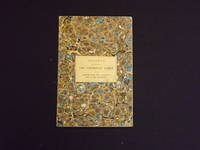
18361005398vo pamphlet marbeled wrappers with printed label on front cover 32 pp.some minor spine snd edge wear slight aging; very good or better.The work begins with the original source of funds for its "Charitable Fund" which began with estate of Robert Boyle in 1691. Since the 500000 Negro Slaves in the West Indies were mostly "infidels and heathens" converting them to Christianity would be doing them a favor and help the empire.Converting the slaves to Christianity would make them more virtuous more comfortable offer them a prospect of eternall happines and even make them better servants. Richard Clay,
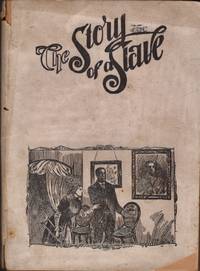
189435946Chicago: Published for the Trade 1894. Wraps. Fair. Stapled wraps. Approx. 7" x 5". 192 pages. Illustrated front cover with title. Original pink wraps have faded on the front cover. Front cover is chipped bottom right edge. Small chips to the spine and joints. Paper is brittle and browned. <br /> <br /> Anonymous author but credited to Charles Chandler a white author. This is a fictionalized story of Slavery of Paul the Slave and his young mistress. The author condemns Slavery in the preface. Published for the Trade unknown
1852100540<p>Letterpress braodsheet 10 3/4 x 6 1/4 text on both sides. Margins trimmed on both sides a little uneven on the left side close to words on reverse but not affecting text a few small stains in text. Indiana was for many years a site of refuge for escaping slaves. With this joint resolution the document declares that the only real way to do away with the injustice of slavery was to advocate emigration and colonialization of Africa.</p>
1332593208.Gpaperback. Good. Access codes and supplements are not guaranteed with used items. May be an ex-library book. paperback
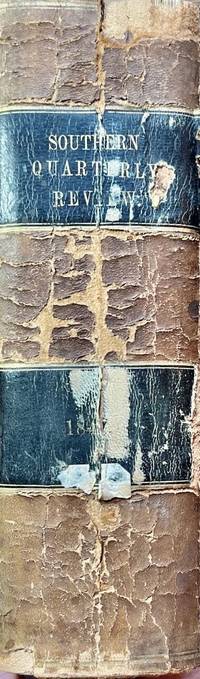
184736797Charleston: Burges & James 1847. Hardcover. Poor. Thick octavo. Two volumes. v index 1 page blank 524 pages; 536 pages v index 1 page blank 1. Ex-library copy with perforated stamp from "The University of The South Library" on the title page. Faded purple stamp page 101. Binding is in poor condition. Front cover is missing. Spine is dry cracked and chipped. Toning and light scattered foxing to the contents. <br /> <br /> Contents include articles on Adam Smith's Wealth of the Nations; Labor The Wilmot Provisio; China and the Chinese Life of Zachary Taylor; Carolina Sports; Slavery in the United States; Fanny Kemble and more. Poor to fair condition. Burges & James hardcover
2001__0252026322Univ of Illinois Pr 2001. Hardcover. New. 328 pages. 9.25x6.25x1.00 inches. Univ of Illinois Pr hardcover
185634998Philadelphia: Printed for the Author by C. Sherman and Son 1856. First Edition. Wraps. Very good. Original brown printed stitched wraps with title on front. 46 pages 1. Very light chipping to head and base of spine.<br /> <br /> Sabin 14916. Printed for the Author by C. Sherman and Son unknown
0656338911.Ghardcover. Good. Access codes and supplements are not guaranteed with used items. May be an ex-library book. hardcover
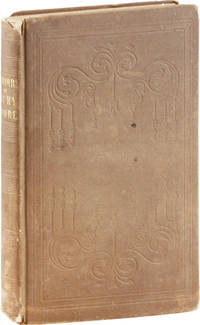
184657411Boston: Anti-Slavery Office 1846. Sixth Edition. Two volumes bound in one; small octavo 20cm.; publisher's embossed cloth titled in gilt on spine1231115pp. Slight rubbing and wear to cloth heavier at board corners and with small loss at crown of spine; text tight and unmarked but moderately foxed; sound and Good. Contemporary ownership signature "Lucia A Haynes" to front free endpaper. <br /> <br /> A popular and much-reprinted anti-slavery novel though its sensational portrayal of an incestuous triangle between the protagonist Archy his sister Cassy and their father Colonel Moore generally inspired disgust more than abolitionist sympathy among contemporary reviewers. However the novel did provide "first-hand observation of Southern plantation life and slavery conditions" Friedland p. 129 based on the two years the author spent in Florida for the benefit of his health. For additional information see Louis S. Friedland "Richard Hildreth's Minor Works" in "The Papers of the Bibliographical Society of America" Vol. 40 no. 2 2nd Quarter 1946. LCP AFRO-AMERICANA 4798-4800 for other editions; SABIN 31790; WRIGHT I 1189. Anti-Slavery Office unknown
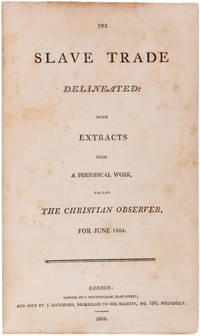
180521055261805. London: Whittingham for Hatchard. 1805. 8vo. Recent marbled wrappers; pp. 20 printed in two columns; one corner of title-page clipped light browning; a good copy of a great rarity.This combined offprint opens with a first-hand report by 'Leo Africanus' of a journey recently made on a slave ship from West Africa to the West Indies. On board the ship the Captian told the visitors and traveller 'that a slave ship was a very different thing from what it had been represented. We should find the slaves rejoicing in their happy state' p. 3. The truth however showed the sheer horror of this crime against humanity at high sea. This is followed on page ten by a discussion of a Hatchard-published pamphlet on the abolition of the slave trade. The present pamphlet is concluded by the refutation of the printed Letter to the Right Honorable W.Pitt containing some new Arguments against the Abolition of the Slave Trade in which the author Britannicus had argued 'if we give freedom to the negroes we shall ourselves indubitable become slaves of Bonaparte' p. 13. Post-truth over two hundred years ago. unknown
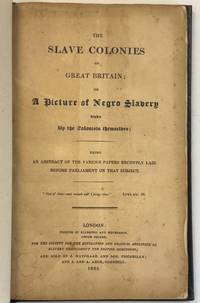
182541192London: Printed by Ellerton and Henderson Gough Square for the Society for the Mitigation and Gradual Abolition of Slavery Throughout the British Dominions; and Sold by J. Hatchard and Son Piccadilly; and J. and A. Arch Cornhill 1825. iv 164 pp. Some foxing to first and last few leaves; title and last page toned. Bound in modern dark boards with gilt-lettered title stamped on front cover. Good plus. <br /> <br /> A second edition issued in 1826. The book reviews developments concerning slavery in each of the British West India colonies: laws for free people of color and for slaves manumissions proposed reforms and objections to reforms trials of alleged rebels and insurgents including the destruction of the Methodist chapel in Barbados and revolts and trials in Jamaica changes in the law punishments inflicted manumissions the slave trade slave unrest.<br /> "The reports were called for in order to learn what had been done in the way of effecting amelioration in the colonies. This work brought out by the Society for the Mitigation and Gradual Abolition of Slavery Throughout the British Dominions. . . showing that nothing substantial has been done" Ragatz. It "presents cases of extreme cruelty" id. to slaves in Berbice. <br /> Authorship and editorship are attributed to Zachary Macaulay founder and organizer of several antislavery societies and a major force in accomplishing the British Emancipation. He focused on providing a picture of Negro Slavery based on reports of "the colonists themselves."<br /> FIRST EDITION. Ragatz 458. Sabin 82063. Not in LCP. Printed by Ellerton and Henderson, Gough Square, for the Society for the Mitigation and Gradual Abolition of Slavery Throughout unknown
186063532New York: Published and for sale at 5 Beekman Street 1860. First Edition. 12mo. 20th-c. binding of tan calf over paper-covered boards; marbled page edges; 951pp. About fine and complete; the pamphlet appears to have been offered without cover wrappers in any case not noted by Blanck.<br /> <br /> Uncommon first edition of this late tract by the important abolitionist and feminist Lydia Maria Child 1802-1880. Child's intention with this work was to make a direct case to southern slaveholders based not on any moral grounds but purely on business hoping that the Caribbean example would convince southerners that abolition could be achieved without wrecking their economy. "Child suggested to Samuel B. May the publisher .that the title page omit any mention of the American Anti-slavery Society giving only an address but no publisher. She even considered issuing the tract anyonymously but decided that her notoriety would probably help rather than hinder its circulation" see Karcher The First Woman in the Republic: a Cultural Biography of Lydia Maria Child. Durham 1994; p.428ff. Blanck notes two editions in 1860 as well as a reissue in 1862; this with verso of the final leaf unprinted is the first. Rarely encountered in commerce. BAL 3189. Published and for sale at 5 Beekman Street unknown