224 résultats
1970z015630Westport CT: Negro Universities Press 1970. Reprint. Very Good. Facsimile reprint. 8vo. in black cloth. Varying internal paginations. Very good. Boards and top edge foxed. Light penciling to contents else internally unmarked in a sound binding. Negro Universities Press unknown
1759ST19900Philadelphia and Germantown: Benjamin. Franklin and David. Hall or Christopher Sower 1759-60. 192 x 130 mm. 7 1/2 x 5". 1 p.l. collection title 47 1 71 4 76-168 iv 5-43 1 55 1 64 16 pp. <br/> Contemporary blind-ruled sheep nicely rebacked to style raised bands. Verso of front flyleaf inscribed in ink in the recipient's hand: "This Book is the Gift of Mr. Anthony Benezett sic to William Anderson October 14th 1760"; front pastedown with ink inscription: "The holy Book To Be Read"; title page with signature of William Anderson dated 1760; front flyleaf and both free endpapers with additional 19th century owner inscriptions. Miller 730; Smith Friends' Books I p. 240. For "Observations": Sabin 4676; Evans 8542. Boards a little dried and scuffed with a couple of small stains text variably toned because of colonial paper quality perhaps a fifth of the text rather browned dampstaining in the upper margin in the middle part of the volume mostly unobtrusive but darker and extending downward on a few leaves. The texts in the kind of problematic condition expected with early American imprints but the binding much better than is normally seen.<br/> <br/> This is a presentation copy of an important published collection of Quaker texts that includes four works printed by Benjamin Franklin as well as an early significant abolitionist tract that delivers a powerful condemnation of the slave trade. The collection title page lists nine tracts in total six of which were issued with separate title pages comprising: "An Extract from the Spirit of Prayer" by W. Law; "A Discourse on Mistakes concerning Religion" by Thomas Hartley; "Christ's Spirit or a Christian's Strength" "The Stumbling Stone" "The Doctrine of Baptism" and "The Trial of Spirits" all by William Dell; "The Liberty of Flesh and Spirit Distinguished" by J. Rutty; and "Observations on Enslaving Importing and Purchasing of Negroes &c." followed by "The Uncertainty of a Death-bed Repentance" both by Anthony Benezet. Miller asserts that "the first fifth sixth and seventh had previously been printed by Benjamin Franklin and David Hall all in Caslon type. The remainder had been printed by Christopher Saur who owned no Caslon letter." The volume title also in Calson type is attributed to the press of Franklin and Hall for the same reason. According to Miller Anthony Benezet put together this collection of Quaker material in the spring of 1760 in an edition of 500 copies with the hope of reaching those living "in ye back Parts of Maryland Virginia & N. Carolina . . . and Connecticut." First printed in 1759 Benezet's forceful denunciation of the slave trade is notable for using eyewitness accounts from people actually involved with the trade recounting the horrific practices and conditions that were realities of the system. Citing various lines of scripture Benezet argues that slavery runs contrary to Christian teachings and Mosaic law and that those who purchase and keep slaves bear as much guilt as the traders themselves. Born in France to Huguenot parents Benezet 1713-84 was a Quaker abolitionist educator and writer who became one of the earliest and most outspoken advocates against slavery in colonial America. He emigrated to Philadelphia by way of Rotterdam and London in 1731 where he founded Pennsylvania's first secondary school for girls and later opened one of the first schools to welcome black students. ANB says that "Although Benezet is recognized as the most prolific antislavery propagandist of the eighteenth century throughout his lifetime he supported and wrote about a wide variety of causes and topics including assistance for Acadian refugees temperance peace fair treatment of Native Americans religion educational reform and poor relief." His wife Joyce Benezet d. 1786 née Marriott was a preacher in the faith herself. According to Waldstreicher Franklin maintained a "lifelong friendship with Quaker politicians merchants and scientists. . . . He admired Quakerism because of its affirmation of simplicity frugality anti-slavery and humanitarianism." Franklin also saw the possibility of profit in printing for the considerable Quaker population of his colony. Hall 1714-72 came to Philadelphia from London in 1744 to work for Franklin and became a partner in the firm in 1748. As a considerable mark of his regard for Hall Franklin drew up a contract whereby his partner would over an 18-year period buy him out. It is a further sign of Franklin's regard for Hall that the printer is buried beside Franklin and his wife. As to contemporaneous provenance we can speculate with some degree of certainty that our William Anderson was the person of that name who was a Quaker preacher from Haverford near Philadelphia. His wife Margaret--like Benezet's wife Joyce--was also a preacher and these two husband-and-wife teams are dealt with in Rebecca Larson's "Daughter of Light: Quaker Women Preaching and Prophesying in the Colonies and Abroad 1700-1775" 1999 Appendix 2. . B[enjamin]. Franklin and D[avid]. Hall or Christopher Sower unknown
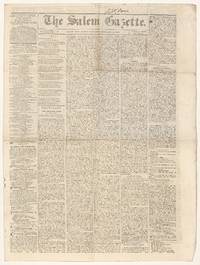
1850515519Salem Mass: Published by C. Foote 1850. Unbound. Very Good. First edition. Folio. 4pp. Printed self-wrappers. Owner's contemporary ink name on front cover in upper margin. Text is folded lightly creased few spots of faint soiling very good. Text includes: "The Beloved Tune" by Lydia Maria Child three full columns and a thirty-six line announcement about the pending publication of Nathaniel Hawthorne's The Scarlet Letter. Also includes a brief article entitled "Mr. Clay on Slavery" printing extracts from a debate between Senator Clay and General Cass; also prints a three-line announcement about the liberation of fourteen slaves: "Fourteen slaves belonging to Dr. John Casson of Mississippi have been taken to Cincinnati and liberated by their owner. Published by C. Foote unknown
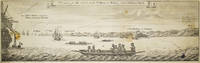
1745316296London: Thomas Astley 1745. Engraving. 4 x 13-1/4 inches. Creased from prior folding a few wormholes soiling and foxing. Engraving. 4 x 13-1/4 inches. Engraving showing "Negro Canoas carying Slaves aboard at Mansrow" extracted from A New Collection of Voyages and Travels 4 vols London: Thomas Astley 1745-7. <br/><br/> Thomas Astley unknown
185740445Boston: John Wilson and Son 1857. Paperback. Small 4to. Self-cover. 12pp. Very good. Outer wrappers only faintly age toned. Clean attractive first edition of this lengthy diatribe against President James Buchanan's handling of the slavery issue in Kansas which they considered weak and ineffective followed by his reply and their response to it. "They fervently hope "that you may yet see that in this respect one false principle if adhered to must prove a principle of weakness and decay -- a sure prelude to the end of all our greatness happiness and glory -- a death-spot in the tree of liberty whose leaves like those of the tree of life are for the healing of the nations." Signed in type at the conclusion by these Connecticut congressmen in order: Nathaniel W. Taylor Theodore D. Woolsey Henry Dutton Charles L. English John H. Brockway Eli W. Blake Benjamin Stilliman Jr. Thomas A. Thacher J.A. Davenport Worthington Hooker Philos Blake Amos Townsend James Brewster Eli Ives S.G. Hubbard John A. Blake William H. Russell A.N. Skinner Charles Robinson Joel Hawes G.A. Calhoun Leonard Bacon H.C. Kingsley Benjamin Stilliman Sr. Charles Ives Josiah W. Gibbs James F. Babcock and Alfred Walker. OCLC cites 20 copies. SABIN 52997. John Wilson and Son paperback
28345Confidant of Missouri pioneer Jonathan Bryan 1759-1846 of the noted St. Charles family whose relatives included their neighbor Daniel Boone. DS 1p 7½" X 12" St. Charles County MO 1847 February 2. Near fine. Acknowledgment that Tuter who signs himself as "Administrator of the Estate of Johnathan Bryan" has had a writ of replevin made out and issued to the St. Charles sheriff Edward C. Cunningham 1809-65 for delivery to an unnamed offender. The writ seeks to recover the following property apparently wrongfully taken from Jonathan Bryan's estate: "one negro man a Slave named Heney one Two horse waggon and one pair of Briches Two Black horses one Lorrel horse with bold face one walnut Cupboard one clock one Bureau one bedstead and bedding one walnut Table one Trunk one Bible." In other words everything but the kitchen sink. Signed at the conclusion by Tater in his definitely untutored hand. Tales of slaves are found in the Bryan family lore such as: "Mrs. Jonathan Bryan a kinswoman of Daniel Boone was working in her yard with a slave woman when a boy slave screamed. She saw an Indian warrior heading for them with a tomahawk in one hand and a gun in the other. The women ran for the house. Just as they were slamming the door they caught the warrior's head and right arm between the door and facing. The slave woman grabbed the hatchet from his hand and killed him with a sharp blow. The women had barely recovered from their fright when the boy shouted again." Could the slave boy in this old family legend by none less than the "Slave named Heney" whose return is demanded in this replevin suit Quite unusual slavery item with an intriguing history. unknown
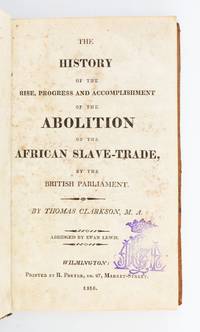
1816ST19567-131<p>Wilmington: Printed by R. Porter 1816. Abridged Edition. 180 x 115 mm. 7 x 4 1/2". 348 pp.Abridged by Evan Lewis. <br />Contemporary tree calf smooth spine with double gilt rules tan leather label with gilt lettering. With one small illustration of a seal in text. Title with crowned monogram stamp in purple ink. Sabin 13486. Calf with significant wear front hinge exposed but the binding very tight; text as expected with varying sometimes noticeable degrees of foxing and browning because of quality of paper.<br /><br />First published in two volumes in 1808 this important work on the history of the slave trade is an "invaluable" resource and "contains much essential autobiographical and other information." DNB The present edition was condensed into one volume in order to "be more generally diffused among the people of the United States" where slavery would not be abolished for another half a century. Thomas Clarkson 1760-1846 was a leading English abolitionist who advocated for an end to slavery world-wide and was an original founder of the Committee for the Abolition of the Slave Trade as well as the pacifist Society for the Promotion of Permanent and Universal Peace.</p> Printed by R. Porter
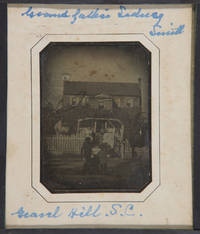
184542820850<p><strong>A unique survival.</strong> This important collection of largely identified photographs documents the home and family of Dr. Sidney Smith and those he enslaved at Gravel Hill his South Carolina plantation. The collection includes an extraordinary daguerreotype depicting Dr. Smith his two daughters and his brother posed together with two enslaved African American men. This is <strong>one of the earliest known images—if not the very earliest photograph—of an identified plantation owner posing with enslaved African Americans. </strong></p><p><strong> The photographs :</strong></p><p>1. Quarter plate daguerreotype 4 x 3 1/8 in. of Gravel Hill Plantation near Robertville St. Peter's Parish Beaufort District South Carolina. Ca. mid-to-late 1840s. Manuscript notation on passe-partout mat "Grandfather Sidney Smith Gravel Hill S.C." The image shows the plantation house with various figures engaged in an unidentified activity with a horse tied to a picket fence. The two girls in white may be Sidney Smith's daughters Arabella b. 1832 and Julia b. 1837 and the others may be enslaved African American children. An enslaved African American subject stands on the steps in the background. In the foreground are two figures with an unknown object perhaps a dog cart or a bone-shaker bicycle. In front of the house is a heavily-vined grape arbor presumably connected with Smith's efforts in viniculture.</p><p>2. A quarter plate tintype copy of the above daguerreotype.</p><p>3. Sixth plate daguerreotype of Sidney Smith his daughters Arabella and Julia his brother James Laurens Smith and two unidentified African American men almost certainly enslaved men. Ca. mid-1840s-1850. One of the girls is blurred because she is hold a struggling dog. Accompanied by the envelope in which the daguerreotype was discovered with penciled notation about the subjects as well as a tentative date of "1850 or thereabout."</p><p>4. Sixth plate daguerreotype of Smith's daughters Arabella and Julia pointing to a book and an unidentified object. Ca. mid-1840s-1850.</p><p>5. Sixth plate daguerreotype of Sidney Smith. Ca. 1845. Smith appears to be wearing a mourning band on his coat suggesting that the image was made following the death of his first wife Eliza in March 1845.</p><p>6. Sixth plate tintype copy of the above portrait.</p><p>7. Sixth plate tintype portrait of Maria King Smith second wife of Sidney Smith with an infant possibly William King Smith. A period copy image.</p><p>8. Sixth plate ambrotype of William King Smith son of Sidney and Maria Smith possibly as a cadet. Ca 1850s.</p><p>9. Quarter plate ambrotype of Sarah Smith sister of Sidney and James Laurens Smith aunt to Arabella and Julia. Ca 1850s-1860s.</p><p>10. Sixth plate ambrotype of Rosa Nicholes sister of Maria Smith with "Eddie" Postell possibly the Edward Postell who was killed in action in 1863 at Fort Wagner. Ca 1850s.</p><p><strong> Dr. Sidney Smith</strong></p><p>Sidney Smith was born in 1805 in or near Beaufort SC the son of William Smith a man of moderate wealth and Elizabeth Wilson Smith of Philadelphia reportedly a Quaker. Sidney was sent to Yale College and subsequently studied medicine in Ohio. His younger brother James Laurens Smith b. 1809 studied law but he apparently never practiced devoting himself instead to agriculture. Sidney Smith married Eliza Lawton in 1829. The two had several children including daughters Arabella and Julia. Smith was apparently practicing medicine in the vicinity of Robertville South Carolina as well as trying his hand at being a planter. In 1831 he appears in the Lawton Family Papers as having been paid two dollars for "expirating a Fungus Tumor from the head of Little Negro Shiloh" Inabinett 1963. His name appears in several land transactions in the upper St. Peter's Parish in Beaufort District where he experimented with various crops.</p><p>Smith's experiments with wine received wide-ranging coverage in the press. A notice in the Boston Daily Atlas of 28 December 1844 printed a report from a Savannah newspaper: "This editor of the Savannah Republican has samples of eight kinds of wine made by Dr. Sidney Smith of Robertville Beaufort District S.C. They are pure juice of the grape without the addition of any spirits whatever. One of the specimens is from the vintage of 1833 another from that of '38 and the other six from that of the present year. They differ in flavor according to the species of grape from which they were expressed … Dr. S. has on hand some 800 gallons of those wines which he finds useful for all medicinal and culinary purposes."</p><p>Smith's first wife Eliza died in 1845 at the age of 37 possibly explaining her absence from the group portrait. In 1846 Smith married Maria Ann King with whom he would have two children who survived into adulthood William King Smith b. 1846 and Walter Watson Smith b. 1849.</p><p>By 1850 Smith and most of his family had left Gravel Hill and relocated to Marietta Georgia where he acquired another plantation Rockford near Marietta. By this time Smith had acquired 74 slaves according to the 1850 Slave Schedules of the United States Census. He continued to run Gravel Hill as an absentee owner from Georgia.<br />In 1853 Smith sold Gravel Hill then comprising 700 acres and his other plantation properties in the Robertville area to John Goldwire Lawton in 1853 according to genealogical records at the Heritage Library Foundation. Smith's Gravel Hill home appears to have been on the site of present-day Gravel Hill Plantation the ca. 1910 hunting preserve near Robertville on the National Register of Historic Places. The elaborately decorated center-hall plan home as well as the town of Robertville was burned by W.T. Sherman's troops in 1865.</p><p>After the war the land was sold to Northern buyers. Newer structures were apparently built on the foundations of the original Gravel Hill around 1910 when it was refashioned as a gentleman's hunting plantation. Dr. Smith and his wife Maria died in 1856. Their sons Walter and William became wards of Smith's brother James who himself apparently died in 1865. Walter Smith was a student at the Georgia Military Institute when it closed at the time of W. T. Sherman's approach in 1864. At the age of 14 he and the other cadets were sent to guard the river crossings in the approaches to Atlanta. With his brother William Walter served in Confederate units until the end of the Civil War. Sidney Smith's sister Sarah known as "Aunt Sarah" to Walter and William Smith wrote vivid letters describing the evacuation of Marietta and her flight to Atlanta.</p><p>While no documentary evidence of the Smith family's views on slavery has been found Susan E. Geoffrey claims in her academic paper "A Southern Family in Transition 1830-1865" that Sidney and his siblings were "reasonably humane to their slaves according to the standards of their society." Geoffrey adds that Sidney's sisters Sarah and Hannah developed an interest in educating their brothers' enslaved children. Dexter's biographical sketch of Smith notes that Smith "opposed strenuously the act of nullification in South Carolina and by his personal efforts retarded the action of that State." Smith's brother James provided in his 1853 will that every tenth! child born into slavery in the estate should at age eighteen be granted freedom to be facilitated by the Colonization Society.</p><p><strong>The photographers</strong></p><p>The photographers of these images are unidentified but it appears that Smith himself may have made two of the daguerreotypes. <em>Biographical Sketches of the Graduates of Yale College with Annals of the College History</em> vol. 7 1913 notes of Smith: "He was a man of unusual mental gifts an earnest student and devoted to the community and mankind. When the art of the daguerreotype was first introduced he was a pioneer in cultivating it in the South."</p><p>Based on his interest in the "art of the daguerreotype" it is possible that Smith created the daguerreotypes himself perhaps with the aid of an assistant so he could be included in certain images most notably the group portrait. The informal group portrait shows a relaxed family posing together. Smith appears to have moved into the frame at the last moment after setting up the shot. Likewise the subjects in the Gravel Hill daguerreotype are in casual poses as if they are in a Daguerreian snapshot of the family rather than formally arranged portraits.</p><p><strong>Dating</strong></p><p>The approximate dating of the featured images has been determined based on the estimated ages of Smith's daughters Arabella and Julia who are pictured in two or perhaps three of the daguerreotypes. Arabella b. 1832 and Julia b. 1837 appear to be around the ages of twelve/thirteen and eight/nine respectively. The girls appear together in a sixth plate daguerreotype portrait and in the sixth plate group portrait of Dr. Sidney Smith his brother and two unidentified African American men almost certainly enslaved subjects. The sisters may also be the two girls in white dresses on the steps of the house in the quarter plate daguerreotype.</p><p>This dates those daguerreotypes to the mid-1840s and no later than 1850 thus making them among the very earliest photographs of a slave-holding antebellum plantation.</p><p><strong> A rare opportunity</strong></p><p>It is evident that Dr. Sidney Smith wanted to use the new art of photography to create a visual record of his plantation home at Gravel Hill and of his family and the enslaved individuals who worked for him. The daguerreotypes offered here most notably the group portrait of Smith with his brother daughters and two Black men are unique in depicting enslaved subjects posed together with their owner especially in a relatively informal setting. We are not aware of comparable images dating from the mid-to-late 1840s.<br />This exceptional collection of photographs from an identified family in the antebellum South is worthy of further research.</p><p><strong>References </strong></p><p>Dexter Franklin Bowditch. <em>Biographical Notices of Graduates of Yale College</em> 1913</p><p>Geoffrey Susan E. "A Southern Family in Transition 1830-1865" 1982 Accessed online through the Heritage Library History and Research Center in Hilton Head SC September-October 2024. Background on the Smith family is derived from this academic paper although the research center's copy is incomplete lacking numerous footnotes and bibliography. Some but not all of Geoffrey's sources have been located in the William King Smith Papers Wilson Special Collections Library UNC Chapel Hill.</p><p>1845-1850 four daguerreotypes and ca. 1855-1860 three ambrotypes plus three early tintype copy images. 10 items.</p>
185426154Washington: Printed at the Congressional Glove Office 1854. First edition. pp. 22. 1 vols. 8vo. Self wrappers unsewn as issued. Some browning and spotting wear along spine and edges but a very good copy. First edition. pp. 22. 1 vols. 8vo. Primarily concerning the issue of slavery in the territories this speech was part of the debates for the Kansas-Nebraska Act. The act initiated by Douglas ultimately repealed the Missouri Compromise allowed the local residents to determine whether the area was free or slave territory allowed for "the doctrine of popular sovereignty of the two territories" and laid the way for a transcontental railroad. The Kansas-Nebraska Act was passed in the Senate on the 3rd of March. Clayton was a lawyer noted agriculturist and long-time member of Congress who was Secretary of State under President Taylor. As Secretary of State he is best remembered for having negotiated the Clayton-Bulwer treaty with Great Britain which provided for a neutral international canal across Central America and "contained pledges which ultimately forced Great Britain to withdraw from large tracts of territory which.it had been occupying on the Isthmus." DAB. Sabin 13576n Printed at the Congressional Glove Office unknown
179928145London: Printed by George Eyre and Andrew Strahan Printers to the King's most Excellent Majesty 1799 1799. ESTC N60288 Lincoln's Inn Library and Wellcome Institute. Fine. 4to disbound paginated 637-652 untrimmed. An act passed by Parliament in the summer of 1799 delineated in 39 paragraphs that regulated the slave trade beginning in August 1800 - an act no doubt intended to placate the growing voices of opposition to the English slave trade. The act stipulates how many slaves could be stowed in a ship by mathematical formula according to the size of the ship but never more than 400; that slaves must be separated from other cargo; and that the space for the slaves "be full and complete perpendicular height of five feet." Nothing is said about their treatment other than that the ship's surgeon was required keep a log of illnesses and deaths of both slaves and crew. Much of the act is taken up with its enforcement and the penalties and fines for violations; it also regulates the conditions and treatment of the crew. The acts of Parliament were usually published separately and later issued in collections of the Public General Statutes; this one was issued as part of the collection of statues Passed in the Thirty-Ninth Year of the Reign of His Majesty King George the Third: Being the Third Session of the Eighteenth Parliament of Great Britain. This copy is disbound from such a volume. (London: Printed by George Eyre and Andrew Strahan, Printers to the King's most Excellent Majesty, 1799) unknown
1827213910London: John Hatchard and Son 1827. Illustrated by 9 etchings. viii 464 pp. 1 vols. 8vo. Full calf spine gilt. Upper board missing 8 leaves damp-stained else Near Fine. Illustrated by 9 etchings. viii 464 pp. 1 vols. 8vo. John Hatchard and Son unknown
1846319747Boston: Eastburn's Press 1846. 20pp. 8vo. Removed. Staining lower text. 20pp. 8vo. <br/><br/> Eastburn's Press unknown
182529465Manchester: Printed by Henry Smith 1825. 8vo 36 pp. Disbound. The report running to 193 pages was published the same year in London. Manchester: Printed by Henry Smith unknown
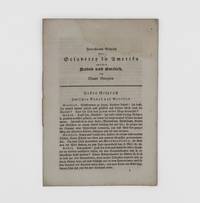
1845332998United States 1845. 16pp. 8vo. Self-wrappers dampstaining. 16pp. 8vo. An anti-slavery work in German written in the form of a dialogue between Gottlieb who argues that the slave trade is a sin and Nabob who begins by arguing in defense of slavery but is swayed by Gottlieb's arguments. unknown
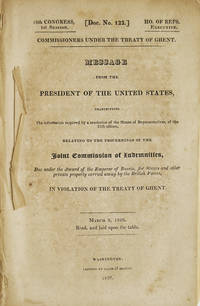
182634337Washington: Printed by Gales & Seaton 1826. 181 pp. 1 vols. 8vo. Disbound some browning to title page else a good tightly sewn copy. 181 pp. 1 vols. 8vo. John Quincy Adams' brief memorandum transmits Secretary of State H. Clay's report; a detailed list of slave owners and the names of their slaves comprises the bulk of this document. <br/><br/> Printed by Gales & Seaton unknown
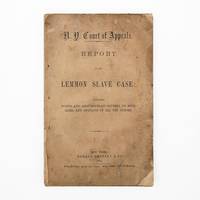
1860372448New York: Horace Greeley & Co 1860. 146pp. 8vo. Stitched self wrappers. Toned title a bit tattered at edges scattered minor staining. 146pp. 8vo. In 1852 the Lemmon family took a ship from Virginia to New York along with eight enslaved people planning to embark immediately on another ship for New Orleans. With slavery abolished in New York the slaves were freed by a writ of habeas corpus. Chief Justice Paine upheld the writ and in 1860 the case went to the court of appeals where the original judgment was overturned to preserve peace in the Union. The case would likely have been considered by the Supreme Court if not for secession and the outbreak of the Civil War.<br /> <br /> "The fullest legal examination of slave transit and comity before the Civil War . One of the most extreme examples of hostility to slavery in Northern courts . pushed the nation one step closer to Civil War" Finkelman Slavery in the Courtroom pages 56-57. Cohen 11900; Library Co. Afro-Americana 7104; Sabin 40003; Work page 346 Horace Greeley & Co unknown
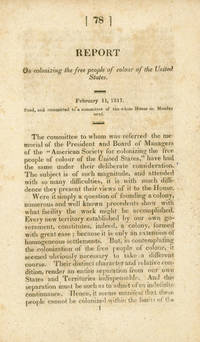
18179350Washington City 1817. First Edition. 5 pp. 1 vols. 8vo. Disbound. Some foxing. First Edition. 5 pp. 1 vols. 8vo. First edition of the government's reply to the request of a group of Virginia planters for a "colony" to essentially rid them of the problem of "free coloured people." In December of 1816 a group of Virginia planters approached the government with a request asking for a location where freed blacks might be sent. In January this "memorial" was presented and in February it was answered with this "Report." This reply discusses location etc. In the end the government officially refused to have anything to do with the plan - thus the American Colonization Society was born. For a detailed account of these events see Dumond Anti-Slavery pp. 126-127. S&S 42738 2 copies unknown
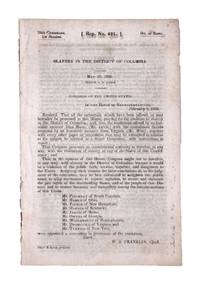
1836346520Washington D.C. 1836. 24th Congress 1st Session House Rep. No. 691. 24pp. 8vo. Disbound. 24th Congress 1st Session House Rep. No. 691. 24pp. 8vo. Many of the early anti-slavery efforts focussed on the abolition of slavery in the District of Columbia as Congress had full control over the laws within the District thus obviating any argument over state's rights. Until "retroceded" back to Virginia in 1846 the city of Alexandria and its notorious slave market was considered part of the District of Columbia making slavery in the District of particular importance. Inundated with petitions calling for the abolition of slavery in the District in 1836 Congress passed the so-called Pinckney Resolution which asserted that Congress "ought not" to consider slavery in the District and created a gag rule whereby all petitions memorials or other resolutions on the subject would be automatically tabled. unknown
1856257105Washington D.C.: Globe Office 1856. Signed by Kelsey ordering 2500 and by James Livingston for 100 and another. Old folds. Blind embossed " Platner & Porter Cobngress" staionary. Signed by Kelsey ordering 2500 and by James Livingston for 100 and another. Globe Office unknown
1856218<b>First edition of "the most complete record available" of the controversial Pennsylvania case on fugitive slaves establishing a "precedent set in federal and state courts… and important cause célèbre for the antislavery movement" crucial in asserting a clear path for the following year's Dred Scott decision and provoking a "legal crisis… that led to the Civil War" elusive in original cloth. An overall clean text with soiling on top of pages 1-16 & pgs. 161-191 and contemporary ink marginalia by Strawbridge on a few pages. John Strawbridge is inscribed in old ink on page prior to title page. A book which has become difficult to find in the original cloth.</b> Uriah Hunt & Son hardcover
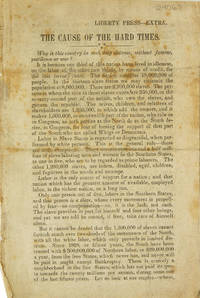
184324068Utica 1843. 4pp. 1 vols. 8vo. Disbound spotted and soiled separated along spine else a good copy of this rare piece. 4pp. 1 vols. 8vo. Rare. An "Extra" to the "Liberty Press" relating to slavery and the "deep distress" and idleness caused by slavery. The author signed "Truth-Teller" attributes most of the labor problems and many of the economic ones to the instution of slavery. He recommends allowing Florida a place in the Union as a free state and Congress guaranteeing each state a republican form of government which he feels would bring about the end of slavery. <br/><br/> unknown
186062260Atlanta: Printed at the Daily Locomotive Job Office 1860. 47 pp. 1 vols. 8vo. Original blue printed wrappers. Wrapper a bit chipped else Fine. 47 pp. 1 vols. 8vo. Printed at the Daily Locomotive Job Office unknown
1805369285London 1805. 309; 4 46pp. Uncut. 2 vols. Folio. Disbound. 309; 4 46pp. Uncut. 2 vols. Folio. Two British Parliamentary papers on the slave trade issued in the midst of the debates for its abolition. The first paper organized by West Indian island includes the correspondence between the British government and their West India colonies regarding slavery from the period 1797 to 1800 and includes the text of the Leeward Island Amelioration Act of 1798. The paper includes a wealth of statistical information on the enslaved populations of each island as well as the names of plantation owners and their holdings. The second paper continues the correspondence from 1804-1805 with updated statistics. unknown
1805369319London 1805. 4 46pp. Folio. Disbound. 4 46pp. Folio. A British Parliamentary paper on the slave trade issued in the midst of the debates for its abolition. The paper includes the correspondence between the British government and their West India colonies from 1804-1805 with statistical information on the enslaved populations of various islands and plantation owners. unknown
185562372Boston: Bela Marsh 1855. Second printing. Frontispiece portrait. 122 pp. 1 vols. Small 8vo. Brown cloth stamped in blind and gilt. Upper half of spine shaky else a nice tight copy. Second printing. Frontispiece portrait. 122 pp. 1 vols. Small 8vo. The author was convicted of aiding slaves to escape from Washinton D.C.--Blockson. Sabin 20912 Blockson 9838 for first ed. Bela Marsh unknown