Negro History BulletinBiblio.com
160 résultats
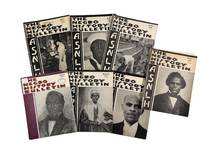
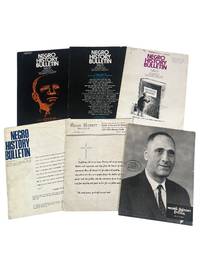
1964212461964. Woodson Carter G. ed. The Negro History Bulletin. These mid-twentieth century periodicals document the expansion of African American historical scholarship and pedagogy during the Civil Rights era when educational institutions activists and scholars increasingly challenged the exclusion of Black history from mainstream curricula. Issued between 1964 and 1971 these issues reflect the evolving intellectual priorities of the period including the emergence of Black Studies programs renewed attention to Reconstruction and slavery and the growing influence of Black Power thought. Founded in 1937 at the urging of Mary McLeod Bethune the Negro History Bulletin functioned as a teaching-oriented publication under the direction of Carter G. Woodson and the Association for the Study of Negro Life and History providing accessible but research-informed content for educators students and general readers. The issues in this group demonstrate how African American history was interpreted and taught during a period of legislative change cultural transformation and increased institutional recognition.<br /> <br /> Woodson Carter G. ed. The Negro History Bulletin. Washington D.C.: Association for the Study of Negro Life and History 1964-1971. Archive of six issues. Quarto. Stapled wrappers.<br /> Archive includes: 1 May 1964 issue with a dedication to Albert N. D. Brooks; 2 December 1964 issue featuring articles on John Willis Menard African American education and Black military service; 3 January 1969 issue including content on Wiley College Library poetry book reviews and contemporary educational policy developments; 4 January 1971 issue addressing music W. E. B. Du Bois's The Souls of Black Folk and the expansion of Black Studies programs; 5 October 1971 issue including discussions of Freedmen's schools antebellum Black separatist rhetoric Southern Black political organizations and housing and social policy; 6 November 1971 issue featuring articles on Black Power five years after its emergence the Gabriel Insurrection of 1800 Southern integration and prominent Black professionals. Each issue approximately 20-22 pages measuring 8.5 x 11 inches illustrated with black and white photographs and line drawings.<br /> <br /> These issues were produced during a period in which African American history moved from the margins toward institutional recognition particularly through the establishment of Black Studies programs and curriculum reforms in schools and universities. The Negro History Bulletin played a central role in translating scholarly research into classroom practice shaping how history was taught during a decade of social and political transformation. Its continued publication now under the title Black History Bulletin reflects its long-standing influence within the field. Light wear to covers; bindings generally sound with clean interiors; overall very good condition. The archive provides a focused record of African American historiography and educational practice during the Civil Rights era. unknown
1941211681941. Woodson Carter G. The Negro History Bulletin. These mid-twentieth century periodicals document the institutionalization of African American historical scholarship and pedagogy under the leadership of Carter G. Woodson whose work established Black history as a formal field of study in the United States. Issued between 1941 and 1949 these issues provide primary evidence of how African American history was researched interpreted and disseminated during a period shaped by World War II migration and ongoing struggles for civil rights. Founded in 1937 at the urging of Mary McLeod Bethune the Negro History Bulletin functioned as an educational tool for teachers and students presenting accessible scholarship on African American life the African diaspora and global Black history. Editorial direction under Woodson emphasized correcting omissions in dominant historical narratives and foregrounding Black agency with content ranging from slavery and Reconstruction to contemporary wartime contributions and cultural production.<br /> <br /> Woodson Carter G. ed. The Negro History Bulletin. Washington D.C.: Association for the Study of Negro Life and History 1941-1949. Seven issues. Quarto. Stapled wrappers.<br /> Archive of seven issues spanning April 1941 through June 1949 each approximately 20-22 pages and measuring 8.5 x 11 inches illustrated with black and white photographs and line drawings. Contents include: 1 April 1941 issue with articles on the Underground Railroad Black communities in Canada and book reviews; 2 May 1944 issue addressing World War II and African American participation across military and civilian life; 3 March 1945 issue featuring Sojourner Truth labor equality free Black populations in antebellum Alabama and racial violence; 4 May 1945 issue examining the Department of Negro Affairs and early American attitudes toward slavery; 5 May 1947 issue including studies of formerly enslaved families such as the Loguens and Tanners suffrage in the South and profiles of Black educators; 6 January 1949 issue with articles on education in Haiti the Negro Little Theatre Movement Negro spirituals and a biography of Frederick Douglass; 7 June 1949 issue addressing intersections of Jewish and Black history modernization in the Virgin Islands regional Black history in Maryland and Virginia and educational policy.<br /> <br /> These issues were produced during a formative period in the expansion of African American historical consciousness when Woodson's efforts challenged the exclusion of Black experiences from mainstream curricula and scholarly discourse. The Negro History Bulletin operated as a bridge between academic research and classroom instruction shaping generations of teachers and students and contributing to the eventual institutionalization of Black Studies programs in the later twentieth century. The publication continues today as the Black History Bulletin recognized as the longest continuously published journal for practitioners in the field. Clean pages with light handling wear; fragile binding to the earliest issue and a punch hole to the upper corner of the June 1949 issue; overall very good condition. The archive provides a concentrated record of early African American historiography and educational practice during a critical period of intellectual and social transformation. unknown
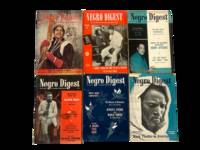
1947223891947. Johnson John H. founder. Negro Digest 1947-1969 documents African American political thought literary production and cultural criticism across the postwar period the Civil Rights Movement and the emergence of the Black Arts Movement. Published as a digest format periodical the magazine brought together essays fiction journalism and commentary by leading Black writers and public intellectuals establishing a widely circulated forum for debate on race identity labor international politics and the arts. The issues in this archive include contributions by figures such as LeRoi Jones Alice Childress C. Eric Lincoln Arna Bontemps and Barbara Ann Teer supporting research into African American intellectual history Black theater and mid twentieth century print culture.<br /> <br /> Negro Digest. Chicago: Johnson Publishing Company 1947-1969. Archive of six issues in printed wrappers each approximately 7.5 x 5.5 inches. Issues included are: 1 January 1947 with articles including Richard Wright's "How Jim Crow Feels" Eleanor Roosevelt's contributions and "How Jackie Robinson Took It"; 2 February 1951 featuring "I Didn't Raise My Boy to Be a Fighter" by Lillie Brooks and articles by Walter White and Roi Ottley; 3 November 1961 including "The New Black Renaissance" by Arna Bontemps and commentary by Duke Ellington and C. Eric Lincoln; 4 December 1962 featuring "The Menace of Mediocrity" by C. Eric Lincoln and essays on African American urban life and global politics; 5 April 1967 Second Annual Theater Issue including LeRoi Jones's play Slave Ship and essays by Alice Childress Ronald Milner and others on Black theater and performance; 6 April 1969 Annual Report on Black Theater in America with contributions by Barbara Ann Teer Woodie King Jr. and a roundtable including Sam Greenlee and Hoyt W. Fuller. The issues include essays reportage literary excerpts and visual material documenting cultural and political developments.<br /> <br /> Published during a period of expanding Black media and activism Negro Digest functioned as a central platform connecting literary production with political discourse tracing shifts from integrationist arguments in the postwar years to the cultural nationalism and artistic experimentation of the late 1960s. The inclusion of theater-focused issues reflects the increasing importance of performance as a site of political expression within the Black Arts Movement while earlier issues address labor segregation and international Black identity. Light edge wear and rubbing particularly to earlier issues; covers remain vibrant with pages clean and intact; overall very good condition. This archive provides sustained documentation of African American intellectual and cultural life across a critical period of twentieth century history. unknown
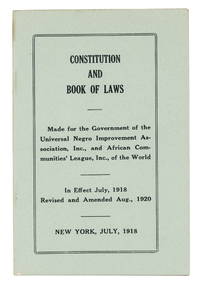
1920140945266New York: No Publisher 1920. 40 pp. Bound in publisher's pale green stapled wraps. Near Fine rear wrap toned along upper edge staples slightly rusted. A bright attractive copy of the guidelines of Marcus Garvey's pan-African Black Power UNIA organization. Revised and amended as of August 1920 according to front wrap. Uncommon. [No Publisher] unknown
19613987Pittsburgh: Shields Watson & Washington Attorneys at Law 1961. Very good. Together 4 leaves 7 pp. the first two legal-size 14" x 8 1/2" the others slightly shorter; brad bound inside a 14.74 x 9" printed chemise folded to 9" x 3.75". Creases at folds; chemise moderately worn; leaves lightly dust-soiled with one small stain. APPLICATION TO CHARTER AN AFRICAN AMERICAN NON-PROFIT BUSINESS ASSOCIATION. IT WAS CREATED IN RESPONSE TO JIM CROW LAWS THAT REMAINED IN FORCE IN WESTERN PENNSYLVANIA AND ELSEWHERE. THIS SCARCE PRIMARY SOURCE MATERIAL DOCUMENTS THE NEEDS OF AFRICAN AMERICAN BUSINESS OWNERS TO UNITE IN ORDER TO SURVIVE. <br /> <br /> Our charter shows that the "Negro Licensed Beverage Association of Western Pennsylvania" NLBAWP was a group of African American hotel owners restaurant owners and tavern owners. Lingering Jim Crow laws and other societal forces made it exceptionally difficult for such businesses to succeed in the Pittsburgh area and of course elsewhere. The late 1950s and early 1960s saw the development of similar organizations in Philadelphia National Negro Licensed Beverage Association and New Orleans Negro Tavern Owners Association. <br /> <br /> Importantly this document lists the goals of the NLBAWP organization:<br /> <br /> "To foster strengthen and improve business within the Negro community." <br /> "To advance the cause of the Negro tavern and hotel owner as a whole." <br /> "To give service to members to do things for them which they cannot do for themselves or which can be done better or less expensively if done collectively." <br /> "To create and project the proper image of a tavern or hotel owner in the community." <br /> "To sponsor aid and assist any charitable or civic project approved by the members."<br /> <br /> One noteworthy incorporator listed here was Vivian Mason Lane. Lane owned four Pittsburgh taverns in the 1960s and was a community leader through at least the 1980s. She led a neighborhood Chamber of Commerce and ran unsuccessfully for County Commissioner and the State House.<br /> <br /> The 1966-67 Negro Traveler's Green Book "For Vacation Without Aggravation!" lists a grand total of eight suitable motels tourist homes and restaurants in Pittsburgh. In any event we have been unable to determine what -- if anything -- became of the Negro Licensed Beverage Association of Western Pennsylvania. Shields, Watson & Washington, Attorneys at Law unknown
1998C94008Artioli. As New. 1998. Hardcover. 8877920572 . FREE UPGRADE to Courier/Priority Shipping Upon Request - IN STOCK AND IMMEDIATELY AVAILABLE FOR SHIPMENT - Flawless copy brand new pristine never opened -- Text in Italian. 352 pages; 686 illustrations. Catalogue Raisonne Catalog Raisonné Complete Works Catalogo Ragionato Catalogo delle Opere L'Opera Completa Raisonnee -- with a bonus offer-- - May be EITHER: out of print OOP and extremely rare in this pristine condition; signed by author or contributor; or a first or special edition; inquire for details . Artioli hardcover
199894008Artioli. New. 1998. Hardcover. 8877920572 . FREE UPGRADE to Courier/Priority Shipping Upon Request - IN STOCK AND IMMEDIATELY AVAILABLE FOR SHIPMENT - Flawless copy brand new pristine never opened -- Text in Italian. 352 pages; 686 illustrations. Catalogue Raisonne Catalog Raisonné Complete Works Catalogo Ragionato Catalogo delle Opere L'Opera Completa Raisonnee -- with a bonus offer . Artioli hardcover
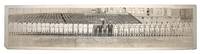
1925346509Philadelphia 1925. Panoramic photograph of both teams with the names of each player in the negative taken by Harold Stott Philadelphia. Approx. 8 x 35 inches. Expert restoration with some retouching archivally mounted. Panoramic photograph of both teams with the names of each player in the negative taken by Harold Stott Philadelphia. Approx. 8 x 35 inches. An extraordinarily rare image of the second Colored World Series. Taken in the Baker Bowl in Philadelphia prior to Game 5 of the series a rematch of the 1924 first World Series featuring the Kansas City Monarchs Champions of the Negro National League and the Hilldale Club the Eastern Colored Champions the panoramic photograph depicts 18 members of the Hilldale team and 15 Kansas City Monarch players with four league executives in the center. Included on the Hilldale team sometimes known as the Darby Daisies are Hall of fame catcher Biz Mackey Hall of Fame third basemen "Judy" Johnson player/manger Francis Warfield Hall of Fame slugger Louis Santop and southpaw ace "Nip" Winters. Notable players on the Monarchs included pitcher/manger Jose Mendez and second basemen Newt Allen; not pictured on the Monarchs was their ace Hall of Famer Bullet Rogan who injured himself prior to the series. Between the two teams in the center of the image stands Andrew "Rube" Foster the founder of the Negro National League and the "Father of the Negro Leagues." Hilldale would redeem their loss in the first world series wining this one 5-1. <br /> <br /> The last example of this photograph we could locate on the market appeared in the sale of the collection of Jeff Eastland selling at Robert Edwards Auctions in their Spring 2004 sale for $13800 said at the time to be one of two known copies. unknown