608 résultats
1997RO80145827CHEZ L'AUTEUR. 1997. In-8. Broché. Très bon état, Couv. convenable, Dos satisfaisant, Intérieur frais. Plaquette dépliante, en 6 volets, illustrée en couleurs et en noir et blanc.. . . . Classification : 500-Gravures XVIIeme
2004R300305230Bayard. 2004. In-8. Broché. Bon état, Couv. convenable, Dos satisfaisant, Intérieur frais. 240 pages.. . . . Classification Dewey : 150-Psychologie
Helena Björkman, Urban BIn Pristine Condition. unknown
2013Q-1477847030Two Lions 2013-11-12. Hardcover. New. In shrink wrap. Looks like an interesting title! Two Lions hardcover
Photocrome su cartoncino di cm 23x16,5. Il processo fu inventato negli anni 1880 da Hans Jakob Schmid (1856-1924), un impiegato della compagnia svizzera Orell Gessner Füssli, un'impresa di stampe la cui storia risale al XVI secolo. La Füssli fondò la società per azioni Photochrom Zürich (conosciuta in seguito come Photoglob Zürich), come veicolo negli affari per lo sfruttamento commerciale del processo. Sia la Füssli che la Photoglob esistono ancora oggi. Dalla metà degli anni 1890 il processo fu concesso in licenza ad altre società, tra cui la Detroit Photographic Company, negli Stati Uniti, e la Photochrom Company di Londra. Il processo di fotocromia fu molto popolare negli anni 1890, quando la vera fotografia a colori era già stata sviluppata ma era ancora commercialmente impraticabile.
Albumina di cm 27x21. Buono, ordinari segni d'uso e del tempo. Presenta lievi difetti marginali.
2022x-1444339656Blackwell Pub 2022. Hardcover. New. 688 pages. 9.68x6.73x1.61 inches. Blackwell Pub hardcover
ria9781444339659_inpHardcover. New. New Book; Fast Shipping from UK; Not signed; Not First Edition; N/A hardcover
11533547-nnew. unknown
11533547like new. unknown
2025BBS-2023783Bloomsbury Publishing 2025. First Edition. Hardcover. Very Good/Near Fine. 6x1x9. First printing with number line to 1. The special edition from Fairy Loot: with DJ cover art by Jason Chuang in an exclusive colorway and redesign on a reversible dust jacket with character artwork at the reverse side by Gabriella Bujdoso the hardcover book itself in an illustrated design by Ali Al Amine sprayed page edges with green at top and bottom and a floral design at fore-edge and character art at endpapers also by Bujdoso. The special edition also includes a bonus chapter from Anton's perspective. Boards fine with no visible wear in near fine dust jacket with only minor edgewear. Spine square. Binding sound. The pink ribbon placemarker has become detached from where it connects at spine head but is still present. Pages bright text unmarked. Bloomsbury Publishing hardcover
1039013546.Gpaperback. Good. Access codes and supplements are not guaranteed with used items. May be an ex-library book. paperback
1039010350.Ghardcover. Good. Access codes and supplements are not guaranteed with used items. May be an ex-library book. hardcover
SLIVCN-9791028138615Bragelonne (3/2026)
SLIVCN-9781526681393Bloomsbury (6/2025)
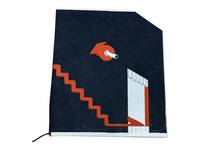
19888984Chicago: Axe Street Arena 1988. 21cm x 18cm. Black and red painted cardstock wraps with a diagonal cut to top right corner as issued string bound illustrated throughout with black and white photographs drawings and text near fine. <br /> <br /> The Axe Street Arena Collective was a community arts center located in the Logan Square of Chicago from approximately 1985-1989. Most of the members lived and worked out of the collective gallery and performance space at the top of the Goldblatt Building at 2778 N. Milwaukee. Their focus was politically-minded art and exchanging ideas.<br /> <br /> According to this record in 1986 "graffiti artist establish the use of stairway as art" and the collective members are inspired to use the four flights of stairs as another exhibit hall of sorts. This publication is meant to serve as a record of those activities with photographs drawings and text. "It is a collage or block of space-time that yields a new poetic whole. Installations as raw material like words on a page."<br /> <br /> Scarce we find no listings in OCLC or any sales records. Axe Street Arena unknown
2018__8869771105Mimesis Edizioni 2018. Paperback. New. 274 pages. 11.00x8.30x0.94 inches. Mimesis Edizioni paperback
3191l atelier de la danse populaire creteil sans date . 122 pages format in 8 broché bon état
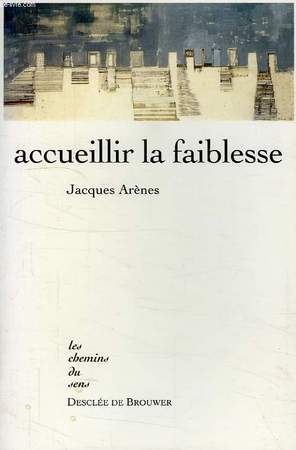
1999RO40127975Desclée de Brouwer. 1999. In-12. Broché. Bon état, Couv. convenable, Dos satisfaisant, Intérieur frais. 171 pages. Annotations dans le texte.. . . . Classification Dewey : 844-Essais
SLIVCN-9782220044804Desclée de Brouwer (5/1999)
16702332Stampatus in Stampatura Stampatorum" i.e. Paris 1670. 12mo 142 x 80 mm. 191 pp. Two parts separately titled but continuously paginated. Woodcut peacock device on title. A pretty copy; occasional light foxing to upper margins. Eighteenth-century French red morocco sides with triple gilt fillet smooth spine gold-tooled with green morocco lettering-piece edges gilt over marbling marbled endpapers edges slightly scuffed. Provenance: Marquis de Rognes engraved armorial bookplate signed and dated Nicolas de Mire 1777; coded purchase note "ca" in pencil on recto of final free endleaf probably from Jean-Jacques Debure ca. 1800 thanks to Erick Aguirre for this information.<br/> <br/> Most complete edition of one of the earliest collections of French macaronic poetry an often burlesque admixture of the vernacular and Latin celebrated for its valuable descriptions of and notations of early Provençal dance. The preface from the supposed publisher "Librarius" is addressed to the "bragardissimis" dancers of France: bragare in Arena's personal brand of Latin means to "have fun" but Arena's work addressed to students was intended to meet a semi- serious need: To attract students to the University of Aix less popular than the faculties of Avignon and Montpellier the rector had decided to authorize a ball at the time of graduation for the graduates and their families but "for certain students dancing in public was a much more forbidding test than all of those that they had undergone during their studies" Louisson-Lassablière p. 268 our translation. Thus Arena's goal was to familiarize students with the many different "basses danses" currently in fashion. <br/> <br/> Following a prose introduction to the subject the poem in 1896 lines is in two parts the first being an autobiography in which the author successively a law student soldier and lawyer of whom little else is known recalls his horrific experiences in the Italian campaigns including an eye-witness account of the Sack of Rome in 1527. Following his final return from Italy in 1528 he had given his first dance lessons and thus the work segues into a largely tongue-in-cheek introduction to dance and to proper comportment. Of greatest interest for dance historians are the technical descriptions of dances found in a four-page section pp. 86-90 in French in which the author uses a stenographic notation system in which each step is designated by the initial of its name repeated to indicate a repetition of the step. Thus in the description "R c ss d ss d d d ss r c ss a ss r c" "c" signifies "congé" "ss" signifies "deux simples" "d d d" signifies "trois doubles" and so on. Such detailed choreographic records are rare for this period. Each dance description occupying no more than one line is prefaced by the title or titles of popular songs or melodies to which it should be danced. The earliest known edition of the work was printed anonymously probably in Lyons in 1528; at least 40 more editions followed the last from 1758 a full census including untraced and "ghost" editions is provided by R. Mullally. The present edition includes other previously published macaronic verse including Rémy Belleau's "Poema macaronicum de bello huguenotico" and separately titled a collection of Italian macaronic poetry by Bartolomeo Bolla first printed in 1604 with satirical poems such as one addressed to the "culinary Muse" p. 147 humourous lists of attributes including types of women associated with various Italian towns pp. 121-129 and poems in the patois of Bergamo. On textual grounds Mullally revised the attribution of this edition to Paris; it was traditionally assigned to Lyon. <br /> <br /> Brunet I 393 "Edition la plus complète que l'on ait de ce recueil" ; Fletcher Bibliographical Descriptions of Forty Dance Books 3a ; Clarke Four Hundred Years of Dance Notation 1987 no. 6; Robert Mullally "The editions of Antonius Arena's Ad suos compagnones studiante" Gutenberg-Jahrbuch 1979:146-57 edition P12. Cf. Marie-Joëlle Louisson-Lassablière "Antonius Arena ou le Latin macaronique" in E. Bury Tous vos gens à Latin 2005. Stampatus in Stampatura Stampatorum," [i.e., Paris] unknown
16702332Stampatus in Stampatura Stampatorum" i.e. Paris 1670. 12mo 142 x 80 mm. 191 pp. Two parts separately titled but continuously paginated. Woodcut peacock device on title. A pretty copy; occasional light foxing to upper margins. Eighteenth-century French red morocco sides with triple gilt fillet smooth spine gold-tooled with green morocco lettering-piece edges gilt over marbling marbled endpapers edges slightly scuffed. Provenance: Marquis de Rognes engraved armorial bookplate signed Nicolas de Mire 1777.<br/><br/>Most complete edition of one of the earliest collections of French macaronic poetry an often burlesque admixture of the vernacular and Latin celebrated for its valuable descriptions of and notations of early Provençal dance. The preface from the supposed publisher "Librarius" is addressed to the "bragardissimis" dancers of France: bragare in Arena's personal brand of Latin means to "have fun" but Arena's work addressed to students was intended to meet a semi- serious need: To attract students to the University of Aix less popular than the faculties of Avignon and Montpellier the rector had decided to authorize a ball at the time of graduation for the graduates and their families but "for certain students dancing in public was a much more forbidding test than all of those that they had undergone during their studies" Louisson-Lassablière p. 268 our translation. Thus Arena's goal was to familiarize students with the many different "basses danses" currently in fashion. <br/><br/>Following a prose introduction to the subject the poem in 1896 lines is in two parts the first being an autobiography in which the author successively a law student soldier and lawyer of whom little else is known recalls his horrific experiences in the Italian campaigns including an eye-witness account of the Sack of Rome in 1527. Following his final return from Italy in 1528 he had given his first dance lessons and thus the work segues into a largely tongue-in-cheek introduction to dance and to proper comportment. Of greatest interest for dance historians are the technical descriptions of dances found in a four-page section pp. 86-90 in French in which the author uses a stenographic notation system in which each step is designated by the initial of its name repeated to indicate a repetition of the step. Thus in the description "R c ss d ss d d d ss r c ss a ss r c" "c" signifies "congé" "ss" signifies "deux simples" "d d d" signifies "trois doubles" and so on. Such detailed choreographic records are rare for this period. Each dance description occupying no more than one line is prefaced by the title or titles of popular songs or melodies to which it should be danced. The earliest known edition of the work was printed anonymously probably in Lyons in 1528; at least 40 more editions followed the last from 1758 a full census including untraced and "ghost" editions is provided by R. Mullally. The present edition includes other previously published macaronic verse including Rémy Belleau's "Poema macaronicum de bello huguenotico" and separately titled a collection of Italian macaronic poetry by Bartolomeo Bolla first printed in 1604 with satirical poems such as one addressed to the "culinary Muse" p. 147 humourous lists of attributes including types of women associated with various Italian towns pp. 121-129 and poems in the patois of Bergamo. On textual grounds Mullally revised the attribution of this edition to Paris; it was traditionally assigned to Lyon. Brunet I 393 "Edition la plus complète que l'on ait de ce recueil" ; Fletcher Bibliographical Descriptions of Forty Dance Books 3a ; Clarke Four Hundred Years of Dance Notation 1987 no. 6; Robert Mullally "The editions of Antonius Arena's Ad suos compagnones studiante" Gutenberg-Jahrbuch 1979:146-57 edition P12. Cf. Marie-Joëlle Louisson-Lassablière "Antonius Arena ou le Latin macaronique" in E. Bury Tous vos gens à Latin 2005. Stampatus in Stampatura Stampatorum," [i.e., Paris] unknown books
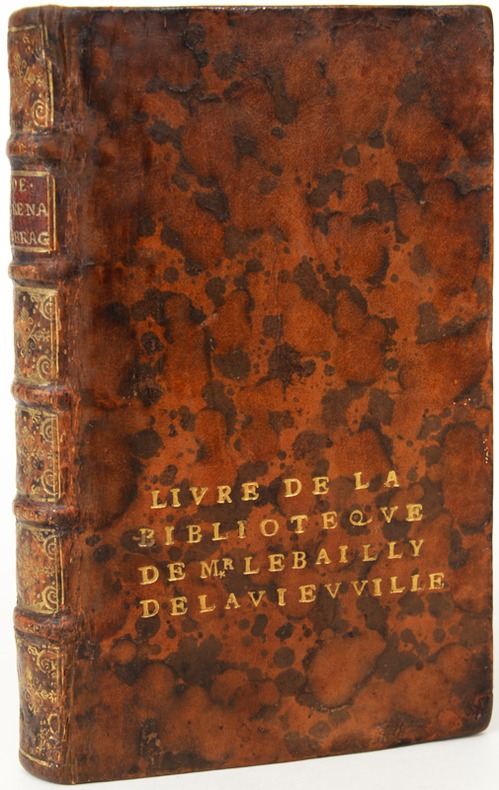
167040233S.l. (Paris), Stampatus in stampatura stampatorum, 1670. 2 parties en 1 vol. in-12 de 191-(1) pp., veau marbré, dos orné à nerfs, pièce de titre en maroquin rouge, super-libris en capitales dorées sur le plat supérieur, tranches mouchetées (reliure de l'époque).
5725Editions Plume, 1993, in-8, cartonnage déditeur illustré, nombreuses reproductions couleurs de documents (affiches, gravures, publicités, cartes, photographies, etc) sur la tauromachie, provenant des collections de Lucien Clergue et de Jean-Michel André. Textes de Lucien Clergue. Bel exemplaire, à létat quasi neuf (aucune annotation), de cet agenda tauromachique. Rare.
64438, Brepols, 2023 Hardback, 989 pages, Size:178 x 254 mm, Illustrations:62 b/w, 77 col., Language: French. ISBN 9782503596525.