2 347 résultats
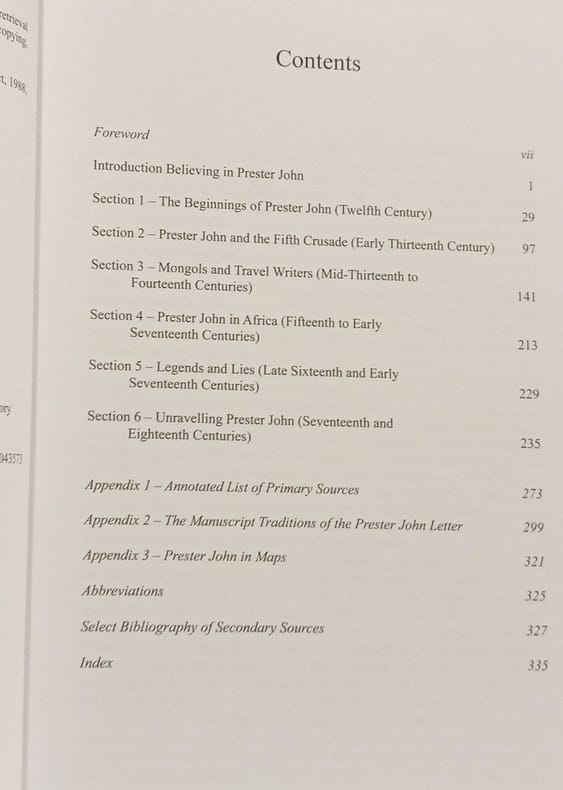
1992C64650London 1992. First Edition. Hardback. Lacks Dust Jacket. Very good condition few signs of use. 8vo. pp viii ii 204. Publisher's black buckram lettered in silver at front and spine. Lacks dust jacket.ISBN: 0415079578 hardcover
1764D6239Venice: Nicholas Pezzanae 1764. Hardcover. Very Good. 4to 255 x 190mm. Title printed in red and black. Text in two columns. Contemporary vellum; endpapers browned. Pictorial wood-engraved ex-libris by Leo Wyatt for Lord Norwich on front pastedown. <br/><br/>Sauvages major nosological treatise after Sydenham. François Boissier de Sauvages wrote this comprehensive symptom-based classification called Nosology after the science that deals with the systematic classification of diseases. The author a professor of medicine and botany at Montpellier presents clinical cases classified according to the methods of Thomas Sydenham considering mainly the symptoms and the morphology of the disease and showing much more interest in the diagnosis of disease and for its care. The beginnings of the systematic model in medicine appear early in the writings of Sydenham. A friend of Locke and admirer of Francis Bacon Sydenham called for the setting aside of hypotheses and philosophical systems in favor of a natural description or history of all diseases. He took the significant step of asserting that as there were species of plants so too there were species of disease. This implied that diseases were distinct entities not merely disturbances blending into one another and that these distinct entities could be systematically grouped or classified. This Sauvages magnum opus arranged its objects in classes orders and genera as well as species. Like Sydenham Sauvages distrusted contemporary physiological theories and rejected the idea that a classification of diseases could be based on knowledge of their underlying causes. He insisted that classification be based instead on study of directly observable symptoms. Species definition depended largely on designation of the various circumstances in which symptoms might appear. Species proliferated accordingly finally reaching 2400 divided into 315 genera 44 orders and 10 classes. Sauvages and his contemporary Carl Linnaeus set the pattern for the nosology of the latter 18th century. There is a clustering of nosological treatises in the 1760s and 1770s. Vogel published at Göttingen in 1764; Cullen at Edinburgh in 1772; Macbride at Dublin in 1775; Sagar at Vienna in 1776; and Vitel at Lyons in 1778. All followed Sauvages in departing from Sydenhams original emphasis within the systematic program. Rather than seeking new more accurate descriptions of disease the nosologists of the latter 18th century took existing descriptions and tried to catalogue and group them usually on the basis of symptoms. Nicholas Pezzanae hardcover
1764D6239Venice: Nicholas Pezzanae 1764. Hardcover. Very Good. 4to 255 x 190mm. Title printed in red and black. Text in two columns. Contemporary vellum; endpapers browned. Pictorial wood-engraved ex-libris by Leo Wyatt for Lord Norwich on front pastedown. <br/><br/>Sauvages major nosological treatise after Sydenham. François Boissier de Sauvages wrote this comprehensive symptom-based classification called Nosology after the science that deals with the systematic classification of diseases. The author a professor of medicine and botany at Montpellier presents clinical cases classified according to the methods of Thomas Sydenham considering mainly the symptoms and the morphology of the disease and showing much more interest in the diagnosis of disease and for its care. The beginnings of the systematic model in medicine appear early in the writings of Sydenham. A friend of Locke and admirer of Francis Bacon Sydenham called for the setting aside of hypotheses and philosophical systems in favor of a natural description or history of all diseases. He took the significant step of asserting that as there were species of plants so too there were species of disease. This implied that diseases were distinct entities not merely disturbances blending into one another and that these distinct entities could be systematically grouped or classified. This Sauvages magnum opus arranged its objects in classes orders and genera as well as species. Like Sydenham Sauvages distrusted contemporary physiological theories and rejected the idea that a classification of diseases could be based on knowledge of their underlying causes. He insisted that classification be based instead on study of directly observable symptoms. Species definition depended largely on designation of the various circumstances in which symptoms might appear. Species proliferated accordingly finally reaching 2400 divided into 315 genera 44 orders and 10 classes. Sauvages and his contemporary Carl Linnaeus set the pattern for the nosology of the latter 18th century. There is a clustering of nosological treatises in the 1760s and 1770s. Vogel published at Göttingen in 1764; Cullen at Edinburgh in 1772; Macbride at Dublin in 1775; Sagar at Vienna in 1776; and Vitel at Lyons in 1778. All followed Sauvages in departing from Sydenhams original emphasis within the systematic program. Rather than seeking new more accurate descriptions of disease the nosologists of the latter 18th century took existing descriptions and tried to catalogue and group them usually on the basis of symptoms. Nicholas Pezzanae hardcover books
Broché. 249 pages.
1957015565Paris Gallimard - Collection "La Croix du sud" 1957 In-12 Broché Edition originale
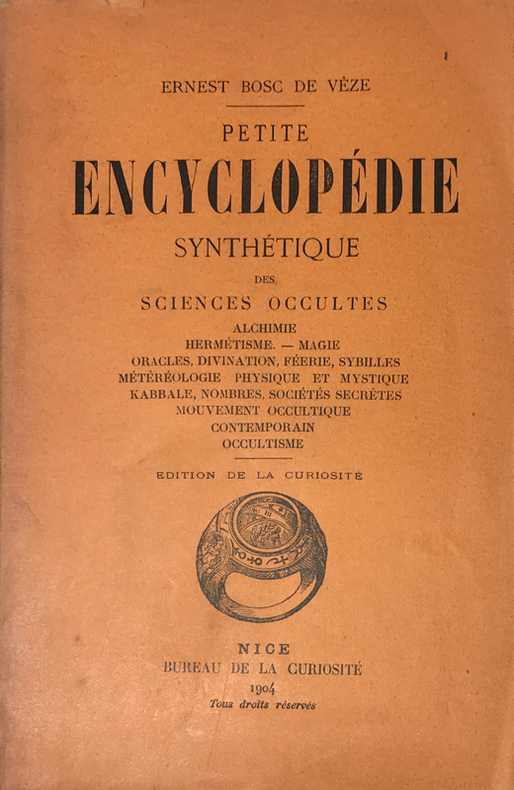
190415347Nice, Bureau de la Curiosité (La Roche sur Yon, Petite Imprimerie Vendéenne), 1904 ; in-12, broché ; XIII, 285, (3) pp., couverture orange illustrée.
446Genève, Skira, 1995 ; 4∞, 144 p., cartonnage, jaquette illustrée, Bibliogr.
194917662En Cevennes ( Mialet) Musée Du Désert 1949 Plaquette In-16 24 pp et trois planches de différents modèles de croix, annotations au stylo bille
1985R117097Achel, Editions Sinite Parvulos VBVB 1985 152pp., 24cm., brochure originale, dans la série "Cîteaux, commentaria cistercienses. Studia et documenta" vol.2, bon état, [Etude en français, textes en latin], R117097
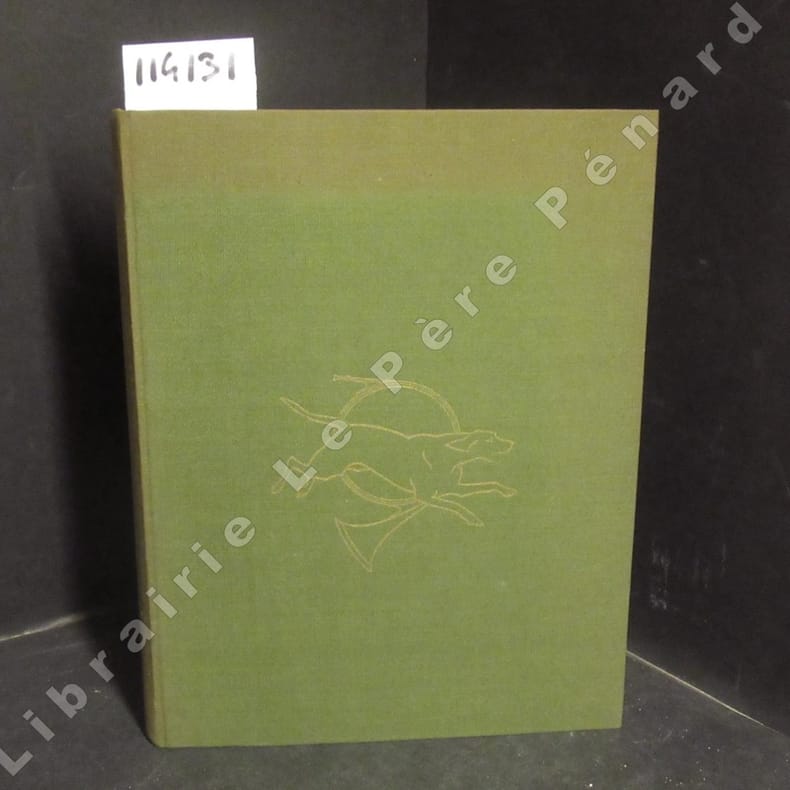
19751141311975 Editions Société de Vénerie - 1975 - In-4, cartonnage toilé vert de l'éditeur avec décor en doré sur le 1er plat - 467 p. - Très riche iconographie in texte en N&B - Complet de sa carte d'implantation des équipages en fin d'ouvrage
27587PARIS, SOCIETE DE VENERIE, 1975 - In-4 - Couverture pleine toile verte de l'éditeur, illustrée au 1 er Plat - Très beau traité sur ce sujet, avec dinnombrables illustrations dans le texte -467 pages - Intérieur frais - Bon exemplaire - Envoi rapide et soigné
62779Paris, Société de Vénerie, 1975, EDITION ORIGINALE, gd. fort in-4, cartonnage toilé vert foncé éd., décor doré d'un chien et d'une trome de chasse éd., emboîtage carton toilé vert éd. avec un ruban rouge pour extraire le livre sans difficulté, 480 pp., très nb. photos et portées de musique en noir, sommaire : un historique de la chasse à courre - les équipages avec une fiche technique ainsi que leur "musique" - le chien courant - la chasse sous terre - la louveterie - la fauconnerie - la chasse à courre dans le monde - la trome - le musée de la vénerie et les musées de chasse - la chasse photographique - le découplé. La liste alphabétique des équipages de France, de Belgique et du Canada, on y joint "La carte couleur dépliable de l'implantation des équipages en France ( IGN de 1975 - 1 : 1 000 000) Un livre de référence sur la chasse à courre appelée aussi la vénerie. Très bonnes fiches "techniques" sur les équipages français. Très bon état de cette rare carte IGN des implantations des équipages. Très bon état
c3425Paris, Sociéte de Vénerie, 1975 et Editions du Passage, 1982 ; 2 volumes grand in-8°, reliure éditeur pleine toile vert olive et beige ( pour le Tome 2) ; 467pp+5n.ch.; 512pp.Manque la jaquette du premier volume. Jaquette illustrée en couleurs au Tome 2 (infimes accrocs).
Paris, G. Crès et C.ie, 1921, voll. 2, in-8, br. edit., pp. (10), 233, (9), (6), 177, (13). Con ritratto in antiporta. Dedica a stampa a Théodore de Banville. N° 307 di una edizione in 1500 esemplari, impressi su "vélin pur fil Lafuma". Ottime condizioni, eccetto minima mancanza alla cop. ant. del vol. II. "Bibliothèque de l'Académie Goncourt". Ex libris Constantino.
182728663Margival 1827 GRAND In-8 11 ff manucrits à la plume et aquarellé avec les parcelles mesurées de ces territoires de l'Aisne, recensement pour un propriétaire d'un peu plus de vingt hectares
1830119542Paris : chez Gauthier FrÂres 1830. 215x130mm. demi-basane de lՎpoque piÂce de titre et de tomaison en maroquin rouge ornementations dorÂŽs plats papier marbrÂŽ tranches marbrÂŽes. Bon ÂŽtat. SÂŽrie sans les quatre volumes de la continuation mais complet en 12 volumes du texte de BÂŽrault-Bercastel. 7765 chez Gauthier FrÂres unknown
2015100143015Routledge 2015 352 pages in8. 2015. Cartonné. 352 pages.
195027554Paris A. Porcabeuf 1950 Une Eau-Forte, technique pointe sèche à l'encre noire, sur papier blanc, Format de la cuvette : (19,5 x 15 cm cm), Format feuille entière : 34 x 25,5 cm , signature : A. Brient dans la gravure en bas à droite, Tirage Limité à 100 exemplaires, eau-forte EXTRAITE DE : "Sur les ponts de Nantes". 20 Planches de dessins et gravées sur cuivre par A. Brient. V.1950. à Paris A. Porcabeuf Imprimeur Editeur,
175421403S.l., s.n., 1754 ; in-8° (182 mm), broché, couverture papier dominoté ; 278 pp., 1 tableau dépliant.
1948116115Paris Plon 1948 1 vol. relié in-8, demi-chagrin bleu-nuit, dos à nerfs, caissons encadrés d'un double filet doré, couvertures conservées, préface + VI + 482 pp., fac-similé, carte et 21 gravures hors-texte. Bon exemplaire, agréablement relié à l'époque.
1948116115Paris Plon 1948 1 vol. relié in-8, demi-chagrin bleu-nuit, dos à nerfs, caissons encadrés d'un double filet doré, couvertures conservées, préface + VI + 482 pp., fac-similé, carte et 21 gravures hors-texte. Bon exemplaire, agréablement relié à l'époque.
195525833Paris Julliard 1955 In-12 207 pp
329 pages. Includes some black and white photos. This book is the best gift you could give yourself or anyone you know who needs an upbeat, honest, funny and inspiring role model for life's adventures to 80 and beyond. Crosses generations and time zones with author's witty, well-crafted autobiographical stories. Moderate wear. Prior owner's name atop half-title page else unmarked. Nice copy in illustrated covers. Book
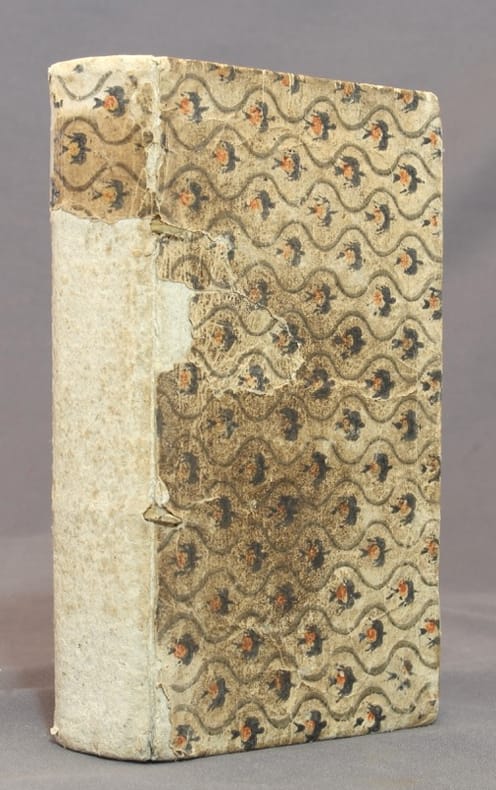
180815610Venezia, nella stamperia Santini, 1808. 2 tomes en un volume in-12 de 244; 268 pages, couverture d'attente décorée, avec manque de papier au dos.
369421 vol in-8 broché - 119 pages - années 1875 - Tome IX - 34 ème livraison