166 résultats
127 p. d'ill. coul. Inv. Th 148
127 p. d'ill. coul. Inv. Th 149
209 p., 461 lots en partie illustrés en n/b et en coul. Inv. 44387
173 p., 397 lots en partie illustrés en n/b et en coul. Inv. 44388
204 p., 554 lots la plupart illustrés n/b et coul.Inv. 44390
cm. 18 x 25,5, 364 pp. con varie ill. Istituto Nazionale di Studi Etruschi - Atti di convegni 630 gr. 364 p.
IN-4 (cm 31,6x21,8), pp. 94, brossura edit. ill., ill. nel testo. Testo italiano- inglese. Pieghetta all'angolo basso del piatto anteriore, minimi segni d'suo, Buono.
1764ST15125Augustae Vindelicorum Augsburg: Conradum Henricum Stage 1764. Second Edition in Latin. 208 x 160 mm. 8 1/8 x 6 1/4". 9 p.l. 262 pp.Translated from French into Latin by Joseph Claude Destouches. <br/> VERY ATTRACTIVE LATE 18TH CENTURY ETRUSCAN CALF IN THE STYLE OF EDWARDS OF HALIFAX covers with gilt border central panel framed by stencilled palmettes within double gilt rules an Etruscan-style vase at center within a stencilled sunburst raised bands spine panels with blind-stamped Etruscan vase black morocco label gilt-rolled turn-ins all edges gilt. With printer's elaborate engraved device on title page engraved portrait of Elector Maximilian-Joseph of Bavaria at the head of the dedication to him engraved allegorical headpiece at the opening of Book I wood-engraved tailpieces at end of each section. Small wormhole near head of front joint two corners a bit bumped minor foxing to title and final page other trivial imperfections but QUITE A FINE WIDE-MARGINED COPY clean fresh and bright internally and in a binding with only minor defects.<br/> <br/> This beautifully preserved and attractive Neoclassical binding is a fitting cover for a Latin edition of Fénelon's Homeric coming-of-age tale. Edwards of Halifax is credited with developing the process of acid staining calf by using stencils a method known most notably to produce as here their so-called Etruscan calf bindings after the Etruscan vase decoration they resembled. The process was also adopted by binders on the Continent and became a fashionable choice for bindings in the late 19th century when the present binding was surely produced. It is difficult to say whether this binding was done by the Edwards firm or by an imitator but in any case the quality of execution is very high. The popularity of Fénelon's account of the adventures of the son of Odysseus also spread in this case beyond his native France and it became a favorite of schoolboys far removed from the young Dauphin for whom it was originally composed. First printed in 1759 our Latin translation offered an opportunity for young men to practice reading that classical language. The engravings here were newly designed and executed for this edition by German painter and engraver Georg Sigmund Rösch d. 1766. Conradum Henricum Stage unknown
2015ARTSSS61215Milan, Silvana Editoriale, 2015, 23 x 28, 192 pages cousues sous couverture souple rempliée illustrée. Iconographie en noir & blanc et en couleurs. Catalogue raisonné de la collection étrusque et italique du Musée Antoine Vivenel de Compiègne. Préfaces de Claire Iselin et Françoise Gaultier.
201224508Paris, Plon, s.d. ; in-4, cartonnage de l'éditeur. Jaquette usée.
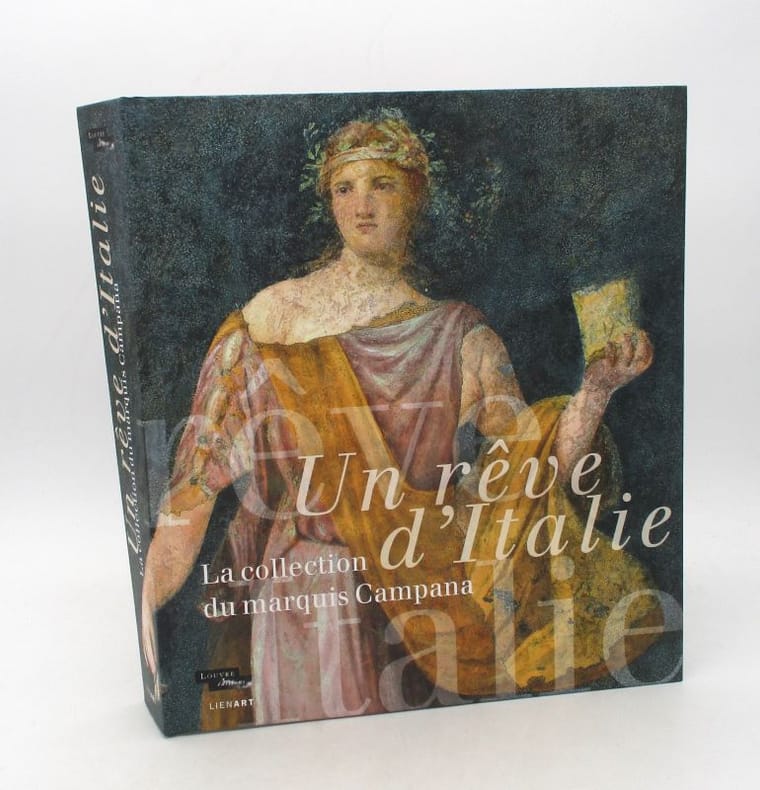
22942Paris, Lienart, 2019. In-folio, 607 pp., cartonnage éditeur illustré (quelques minuscules frottements).
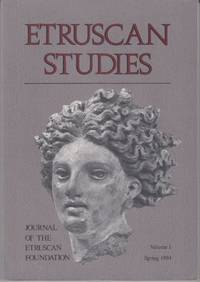
117963Detroit/ Fremont Wayne University Press and Etruscan Foundation 1994-2008. 8vo. Volume 1-5 sewn as issued and 6-11 in publ. red cloth. 11 volumes. From the library of Charlotte Scheffer. Edited by Jane K. Whitehead to volume 7 2000 and then by Gregory P. Warden. hardcover
1893142910London: British Museum 1893. First Edition. Hardcover. Very Good. London British Museum 1893 to 1925 all first editions. Small quarto four volumes in five full details below; original dark green cloth lettered in gilt on the spines; minimal signs of age and use but essentially in excellent condition throughout. Volume I Part I: Prehistoric Aegean Pottery by E.J. Forsdyke 1925; xliv 228 pages with numerous illustrations plus 16 plates. <p>Volume I Part II: Cypriote Italian and Etruscan Pottery by H.B. Walters 1912; xxxii 276 pages with numerous illustrations plus 34 plates. <p>Volume II: Black-figured Vases by H.B. Walters 1893; iv 314 pages with '40 illustrations in text' plus 7 plates. <p>Volume III: Vases of the Finest Period by Cecil H. Smith 1896; vi 426 pages with '28 illustrations in text' plus 28 plates. <p>Volume IV: Vases of the Latest Period by H.B. Walters 1896; vi 276 pages with '30 illustrations in text' plus 16 plates. <p>The out-of-sequence dates of publication of the two parts of the first volume are explained in the respective prefaces. The one in Part II 1912 notes that 'When the present Catalogue . was planned in 1891 Volume I was assigned to the vases then exhibited in the First Vase Room which are for the most part of an early date and represent the beginnings of Greek Vase-painting in many places and styles. The subsequent growth of the collection especially in the sections dealing with Crete and Cyprus has made it necessary to divide the volume into two parts the second of which is the first to be ready for issue'. <p>The preface in Part I 1925 adds that 'The lapse of time consequent on the interruption of the War and the further growth of the collection have caused an additional sub-division. The Second Part of Vol. I is devoted to the special groups of Cypriote Early Italian and Etruscan Vases. The Third Part when it appears will deal with the Geometric Early Corinthian and Ionian wares intermediate between the prehistoric pottery of Part I and the black figure vases which are the subject of Vol. II'. This Part III appears not to have been published. 5 items. British Museum hardcover
Small illustrated handbook on Greek and Etruscan art 158p. plates. col Donor inscription on ffep, else fine. Book
Mm 165x235 Brossura editoriale di pp. 15. Estratto da "Studi linguistici per i 50 anni del circolo linguistico fiorentino e i secondi mille dibattiti 1970-1995". Opera in ottime condizioni. SPEDIZIONE IN 24 ORE DALLA CONFERMA DELL'ORDINE. WORLDWIDE DELIVERY.
cm. 18 x 25,5, xxxvi-224 pp. Biblioteca dell'?Archivum Romanicum? - Serie II: Linguistica 548 gr. xxxvi-224 p.
In 8°, br. edit., pp. 312 con num. ill. e cartine b/n n.t.; testo in lingua tedesca, ottimo es.. (m096) (La spedizione standard è SEMPRE tracciata con raccomandata - piego di libri, eventuale FATTURA da richiedere all'ordine)
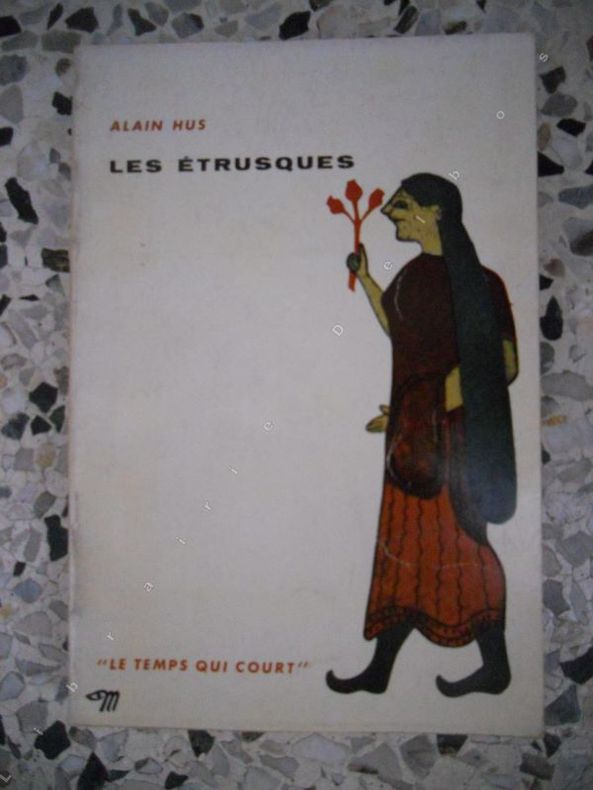
32380Seuil, collection "Microcosme, le temps qui court" n°12. Format poche. Bon etat, petites traces d'usage sur un livre d'occasion.
19763130086Lucera: Constantino Catapano 1976. 82 Seiten. Gr. 8° (22,5-25 cm). Orig.-Broschur. [Softcover / Paperback].
In-4°, (4cc), 203pp, (5cc), vignetta calcografica al frontespizio, fregio e iniziale xilografica, legatura in piena pergamena rigida. Nel 1637 Inghirami pubblicò gli Etruscarum antiquitatum fragmenta, in cui annunciava la scoperta di importanti documenti, contenenti quasi tutta la storia del popolo etrusco e della sua civiltà, nel suo possedimento di Scornello, vicino a Volterra. L'opera suscitò un vastissimo scalpore in tutta Europa. Si trattava in realtà di un falso clamoroso, come venne quasi subito dimostrato. Inghirami difese la genuinità delle sue scoperte in un ampio Discorso (1645), ma il prefetto della Biblioteca apostolica vaticana Leone Allacci dimostrò in modo inconfutabile la falsità dei documenti nell'opuscolo polemico Animadversiones in antiquitatum etruscarum fragmenta. La scrittura nei testi etruschi andava nella direzione sbagliata, da sinistra a destra. Più importante - e più significativo - era il fatto che i testi latini erano scritti in minuscolo. Attingendo a umanisti precedenti, molti dei quali avevano discusso brevemente o di sfuggita l'argomento, Allacci insisteva sul fatto che i romani avevano sempre redatto i loro testi letterari in maiuscolo. Il breve schizzo della storia dell'antica scrittura latina redatto da Allacci fornì il modello per Mabillon, che lo citò nel suo De re diplomatica (1681). In-4°, (4cc), 203pp, (5cc), the title page with copper engraved vignette, wood engraved frieze and initial, full contemporary vellum binding. In 1637 Curzio Inghirami published the Etruscarum antiquitatum fragmenta, in which he announced the discovery of important documents, containing almost the entire history of the Etruscan people and their civilization, in his possession of Scornello, near Volterra. The work caused a huge turmoil throughout Europe. It was actually a sensational fake, as was almost immediately demonstrated. Inghirami defended the genuineness of his discoveries in an extensive Discorso (1645), but the prefect of the Vatican Apostolic Library Leone Allacci irrefutably demonstrated the falsity of the documents in the polemical pamphlet Animadversiones in antiquitatum etruscarum fragmenta. Writing in Etruscan texts went the wrong way, from left to right. More important - and more significant - was the fact that the Latin texts were written in lower case. Drawing on earlier humanists, many of whom had discussed the subject briefly or in passing, Allacci insisted that Romans had always written their literary texts in capital letters. Allacci's short sketch of the history of ancient Latin writing provided the model for Mabillon, who quoted it in his De re diplomatica (1681).
8°, pp.80, cop. posticcia. Mancanze e restauri al front. senza perdita di testo.
Slight creasing to front board. Pages slightly tanned. ; Biblioteca Moderna Mondadori; 190 pages
In 8 (cm 15 x 23), pp. 165. Brossura editoriale. Traduzione tedesca di questo studio di paleografia etrusca di Ariodante Fabretti.
1988AUB-9039Milan, Franco Maria Ricci 1988. Bel exemplaire relié, reliure pleine toile ornée, 101 pages sur vergé + supplément.
5824N° 316 de Sept / Octobre 1981 - In-8 broché