3 675 résultats
20101229676PN. New. 2010. Reprint Edition. Soft Cover. Date is copyright date; this is a later reprint edition . PN paperback
19821002419<p>Celebrated Franciscan monastery with sixteenth-century origins in Spanish Quito Ecuador greatly expanded in the eighteenth century and restored thereafter. 365pp. Color and B&W photographs throughout foldout architectural plans and four plans in pocket on back cover. Edition of 3000 / 3000 ejemplares. Imported from Ecuador for shop inventory. Interior and hard cover in excellent condition. Shelf wear to dust jacket two minor tears and rubbing. In stock. Usually ships in three days.</p> BANCO CENTRAL DEL ECUADOR hardcover
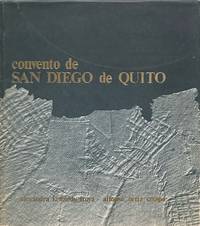
1982240317015Museo del Banco Central del Equador 1982. Hardcover. Good/Good. 0x0x0. Text in Spanish. First Edition of 3000 copies. No dust jacket minor wear binding sound internally clean. Includes 4 diagrams/plans of the Convent tucked into a pocket affixed to the inside rear cover. Profusely illustrated. The Convent of San Diego was the old Recoleta of the Franciscan Order. It is the first Recoleta of Ecuador founded on January 29 1597 by Father Bartolomé Rubio and the second in South America; the first is in Peru that of Our Lady of the Angels of Lima in Rímac founded in 1592.Its walls keep precious canvases with allegories of the passion of Christ the Assumption of the Virgin Mary and the life of chastity and poverty of saints such as San Francisco de Asís and San Diego de Alcalá patron of the Convent. It has great wealth in canvases sculptures textiles and silverware. The works bear the talent of the Quito School of the 17th and 18th centuries.Pieces that are of great interest are the pulpit an example of baroque ornamentation of the 18th century; the image of the Virgin of Chiquinquirá; and the Crucifix over which the bohemian Father Almeida went out to his nocturnal jaranas. Museo del Banco Central del Equador hardcover
2010Q-1552858499Whitecap Books Ltd 2010-01-01. Paperback. New. In shrink wrap. Looks like an interesting title! Whitecap Books Ltd paperback
2010Q-155285843xWhitecap Books Ltd 2010-01-01. Paperback. New. In shrink wrap. Looks like an interesting title! Whitecap Books Ltd paperback
2011Q-0071749071McGraw-Hill Education 2011-01-04. Paperback. New. In shrink wrap. Looks like an interesting title! McGraw-Hill Education paperback
0880385472.Gpaperback. Good. Access codes and supplements are not guaranteed with used items. May be an ex-library book. paperback
20132-0989178714Theodore A Holden 2013. Paperback. New. 298 pages. 9.00x6.00x0.70 inches. Theodore A Holden paperback
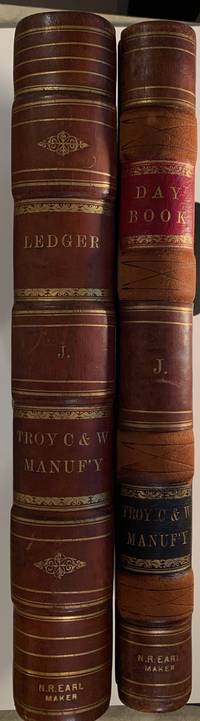
1613Very Good to Near Fine Condition/None. CottonManufacturing Two Massive Bound Ledgers for Troy Cotton & Woolen Manufactory Fall River Massachusetts 1885-1887 1893-1897 16 x 11.5 inches 360 & 552pp. <br /> <br /> Beautiful custom bound ledgers. Both in full leather; one with suede with beautiful stamping and gilt second full leather with intricate gilt stamping. Light rubbing and edge wear. Tight binding and clean interior. Great exemplars of late 19th century business ledgers bound by N.R. Earl. Very Good to Near Fine Condition.<br /> <br /> I fully admit to having a soft spot for business ledgers and these two are some of the best we have handled. Not only are they beautiful but they also present a window into post-civil war northern manufacturing of an exclusive southern product--cotton.<br /> <br /> The Troy Cotton & Woolen Manufactory Company was founded in 1813 in what Fall River is now Massachusetts. The town was known as Troy between 1804-1834 hence the name of the company. Located over the uppermost falls of the Quequechan River Troy Cotton was the second textile mill on the Quequechan. Fall River's geography and location with convenient access to waterpower and port facilities helped propel the city into one of the centers of American textile manufacturing.<br /> <br /> These ledgers provide a unique window into the triangular structure of the cotton industry--i.e. the sourcing of raw cotton from slave-free southern plantations by northern textile mills and the eventual sale of resulting cloth to world markets. Before the Civil War cotton sugar and tobacco were the basis for a thriving American economy built on the backs of slave labor. By 1870 sharecroppers small farmers and plantation owners in the American South produced more cotton than the slave laborers had in 1860 a trend that lasted into the early 1900's.<br /> <br /> The earliest ledger commencing June 1885 features a daily tally of all goods bought and sold by the Troy Cotton & Woolen Manufactory thru May 1887. Raw cotton is supplied by scores of suppliers and factors brokers working in major port cities Mobile and New Orleans plus many smaller cities as Dawson GA Corsican TX Charlotte NC Louisville KY Hillsboro TX etc. Additional products purchased by Troy Cotton includes spinners brooms lumber grain cards bagging paid labor new machinery printing supplies and much more. <br /> <br /> The second ledger commencing October 1892 provides a full accounting of Troy Cotton & Woolen Manufactory thru June 1897. Ledger notations include stock balances real estate holdings cash on hand construction costs and additional P & L entries. Specific line-item expenditures include rent repairs interest gas oil brokerage fees and labor costs. Customers buying finished products were located in Boston Chicago Staten Island Philadelphia Baltimore Providence New York City Hartford etc. <br /> <br /> The company operated until 1929 with their various buildings occupied by businesses including those in the garment industry. Troy Cotton & Woolen Manufactory buildings were demolished in the 1960s as part of urban renewal and to make way for Interstate 195.<br /> <br /> A small grouping of laid in ephemera include 30 dividend receipts from 1874 three $500 stock shares 1924 1925 and 1935 a 1924 receipt for stock shares plus a 20-page 1909 mortgage deed of trust. <br /> <br /> Extra shipping required. unknown
19991314769PN. New. 1999. Soft Cover. Date is original print. This is a reprint edition . PN paperback
188 pages. Features: Signposts toward super yields; Scrob cows good-bye - artificial insemination; "Like to Ride with Daddy" - farm safety; California's new Millions; Clover Seed Can be a Cash Crop; Dyed-In-The-Wool Ranchers - the John Norton's of Montana's Gallatin Valley; I Farm in the Moon; That Laborsaving Tractor Lift; Making good land better; Now the aminals tell us; and more. Unmarked with average wear. A sound vintage copy. Magazine
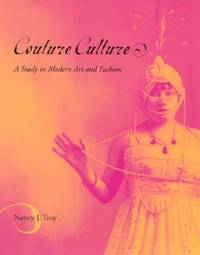
2002273855The MIT Press USa 2002. Softcover. Very Good Condition. In Couture Culture Nancy Troy offers a new model of how art and fashion were linked in the early twentieth century. Focusing on a leader of the French fashion industry Paul Poiret Troy uncovers a logic of fashion based on the tension between originality and reproduction that bears directly on art historical issues of the period. This tension lies at the heart of haute couture which although designed for the wealthy was also intended to be adapted for sale in department stores and other clothing outlets that catered to a broader consumer market. Troy examines the relationships between elite and popular culture the professional theater and the fashion show as well as the presumed polarity between Orientalist and classical sensibilities. She shows how Poiret and other designers patronized the arts and presented themselves as artists not only to sell their individual dresses to wealthy clients but also to promote the mass production of their designs. The contradictions she uncovers suggest surprising parallels with the readymades and fashion-related work of Marcel Duchamp who explored the questions of originality and authenticity raised by couture culture during the 1910s and 1920s. In contrast to dominant accounts of early twentieth-century art that have dismissed fashion as superficial fleeting and feminized Troy's more nuanced approach reveals conceptual structures and marketing strategies shared by modern art and fashion in these years. 438 pages. Illustrated. Quantity Available: 1. Shipped Weight: 1-2 kilos. Category: Art; Art & Design; Fashion & Beauty. ISBN: 0262201402. ISBN/EAN: 9780262201407. Inventory No: 273855. 9780262201407 The MIT Press paperback
6522308-6MIT Press. Used - Good. Former library copy. Pages intact with minimal writing/highlighting. The binding may be loose and creased. Dust jackets/supplements are not included. Includes library markings. Stock photo provided. Product includes identifying sticker. Better World Books: Buy Books. Do Good. MIT Press unknown
2002018729The MIT Press 2002. 1st Edition . Hardcover. Very Good. Hard cover book in very good condition. Questions welcome. We ship internationally from the United States and Canada every week. If buying internationally please be aware that additional charges may apply for heavier books. We guarantee a safe quick and secure transaction. 10 years in online bookselling experience. <br/> <br/> The MIT Press hardcover
0262201402.Ghardcover. Good. Access codes and supplements are not guaranteed with used items. May be an ex-library book. hardcover
0262701030.Gpaperback. Good. Access codes and supplements are not guaranteed with used items. May be an ex-library book. paperback
2002Q-0262201402The MIT Press 2002-11-01. Hardcover. New. In shrink wrap. Looks like an interesting title! The MIT Press hardcover
2003190673Cambridge MA: MIT 2003. Hardcover. Near Fine light shelf-wear scuffs to lower board edges; light wear to dustjacket. white flower decorated boards w/ quarter silken cream cloth spine grey printing. 438 pgs w/ bw illustrations. grey pictorial dustjacket w/ black printing. In Couture Culture Nancy Troy offers a new model of how art and fashion were linked in the early twentieth century. Focusing on a leader of the French fashion industry Paul Poiret Troy uncovers a logic of fashion based on the tension between originality and reproduction that bears directly on art historical issues of the period. This tension lies at the heart of haute couture which although designed for the wealthy was also intended to be adapted for sale in department stores and other clothing outlets that catered to a broader consumer market. Troy examines the relationships between elite and popular culture the professional theater and the fashion show as well as the presumed polarity between Orientalist and classical sensibilities. She shows how Poiret and other designers patronized the arts and presented themselves as artists not only to sell their individual dresses to wealthy clients but also to promote the mass production of their designs. The contradictions she uncovers suggest surprising parallels with the readymades and fashion-related work of Marcel Duchamp who explored the questions of originality and authenticity raised by couture culture during the 1910s and 1920s.--Amazon. MIT hardcover
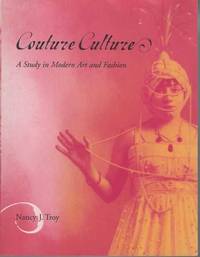
2003139769Cambridge MA: MIT 2003. Softcover. VG but with small gallery ex-lib. sticker on spine. Fuschia and orange wraps with white spine lettering and cover illustration; 438 pp. with bw images throughout. In Couture Culture Nancy Troy offers a new model of how art and fashion were linked in the early twentieth century. Focusing on a leader of the French fashion industry Paul Poiret Troy uncovers a logic of fashion based on the tension between originality and reproduction that bears directly on art historical issues of the period. This tension lies at the heart of haute couture which although designed for the wealthy was also intended to be adapted for sale in department stores and other clothing outlets that catered to a broader consumer market. Troy examines the relationships between elite and popular culture the professional theater and the fashion show as well as the presumed polarity between Orientalist and classical sensibilities. She shows how Poiret and other designers patronized the arts and presented themselves as artists not only to sell their individual dresses to wealthy clients but also to promote the mass production of their designs. The contradictions she uncovers suggest surprising parallels with the readymades and fashion-related work of Marcel Duchamp who explored the questions of originality and authenticity raised by couture culture during the 1910s and 1920s.--Amazon. MIT paperback
200373159Cambridge:: MIT Press. Near Fine in Near Fine dust jacket. 2003. Hardcover. 0262201402 . Black and white illustrations. First printing. Near fine in a near fine dust jacket. ; 438 pages . MIT Press, hardcover
SONG0262701030The MIT Press 0000-00-00. paperback. Used: Good. 6.75x0.75x8.75. Buy with confidence. Excellent Customer Service & Return policy. The MIT Press paperback
200373159Cambridge:: MIT Press. Near Fine in Near Fine dust jacket. 2003. Hardcover. 0262201402 . Black and white illustrations. First printing. Near fine in a near fine dust jacket. ; 438 pages . MIT Press, hardcover books
2003139769Cambridge MA: MIT 2003. Softcover. VG but with small gallery ex-lib. sticker on spine. Fuschia and orange wraps with white spine lettering and cover illustration; 438 pp. with bw images throughout. Troy offers a new model of how art and fashion were linked in the early 20th century. Focusing on Paul Poiret a leader of the French fashion industry Troy uncovers a logic of fashion based on the tension between originality and reproduction that bears directly on art history issues of the period. MIT paperback books
500364087Sans date.
19711155779Paperback Library 1971. Nude photo cover. Tiny 5mm splits on tip front corners of spine. 5th Printing. Mass Market Paperback. Near Fine small fault. Book. Paperback Library Paperback