Ulysses Sherman GrantBiblio.com

2 653 résultats
0332833089.Ghardcover. Good. Access codes and supplements are not guaranteed with used items. May be an ex-library book. hardcover
B9781032879949Paperback / softback. New. <p><i>Beyond Health Capacity </i>sheds light on the systemic challenges communities with limited access to medical support and health maintenance have endured. It emphasizes how approaching medical interventions through non-traditional health facilities can positively impact health's social and environmental impact. </p> paperback
49907122like new. unknown
49907122-nnew. unknown
A9781032879949Paperback / softback. New. <p><i>Beyond Health Capacity </i>sheds light on the systemic challenges communities with limited access to medical support and health maintenance have endured. It emphasizes how approaching medical interventions through non-traditional health facilities can positively impact health's social and environmental impact. </p> paperback
A9781165292585New. unknown
B9781165292585New. unknown
B9781165272815New. unknown
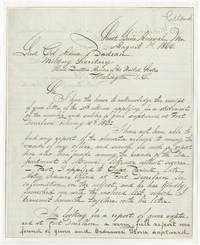
186622955St. Louis MO 1866. No binding. Fine. Manuscript Letter Signed as Lt. Col of Ordnance and Brevet Brigadier General to Adam Badeau Grant's Military Secretary St. Louis Arsenal Mo. August 1 1866. 2 pp. 7 3/4 x 9 1/2 in. Callender responds to Grant's aide-de-camp Adam Badeau's request ""for a statement of the number and calibre of guns captured at Fort Donelson February 16th 1862"" the Tennessee battle that was Grant's first success. Not having that report he offers one on Vicksburg instead.Callender advises: ""I have not been able to find any report of the character referred to among the records of my office and search for such a report has also been made among the records of the Department of the Missouri - likewise without success. But I applied to Capt. Brink late Acting Ordnance Officer at Fort Donelson for information on the subject and he has kindly furnished me with the enclosed list which I transmit herewith together with his letter neither is present. In looking for a report of the guns captured at Fort Donelson a very full report was found of guns and Ordnance Stores captured at Vicksburg - which if the General Grant desires could be forwarded to you.""Franklin D. Callender 1817-1882 Union officer; after distinguished service in the Seminole War and Mexican War took command of the St. Louis Arsenal in 1861 and served as Chief of Ordnance of the Dept. of the Missouri Nov. 19 1861-Mar. 11 1862; holding same post in Dept. of the Miss. March 11 - July 11 1862 he returned to Mo. where he was on the Governor's staff and then served in the advance upon and siege of Corinth; returned to Dept. of the Mo. and the St. Louis Arsenal July 11 1862 and commanded it throughout the war; breveted B.G. USA for Corinth St. Louis and war service. unknown books
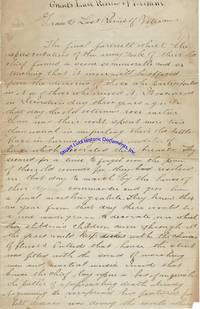
4510ULYSSES S. GRANT 1822-1885. Grant was the Eighteenth President and the head of the Union Army during the Civil War. Manuscript. 3pg. 8†x 12 ½â€. No date circa 1888. No place likely New York. A lengthy manuscript entitled “Grant’s Last Review of Veterans†done by an unknown soldier. He wrote “The final farewell which the representatives of the Army took other old chief for the scene so memorable and so touching that it will never be if faced from the memories of those who participated in it or of those who viewed it. It occurred on decoration day three years ago. On that day the old veterans rose earlier than was there want spent more time than usual in unfurling their old battle flags in burnishing their metals of honor which decorated their breasts. They seem for time to forget ever the pain of their old wounds for they had resolved on that day to March by the house of their dying commander give a final marching salute the knew that one year from that day there would be a new made grave to decorate one which their children's children down through all the years would keep decked with the choicest of flowers. Outside that house the street was filled with the sound of marching men and martial music. Inside that house the chief lay upon a bed of anguish the power of approaching death already beginning to… His features for his disease with doing the work which even the enemies bullets had shrunk from. The hand which it sees the surrender sounds of countless thousands was scarcely able to return the pressure of a friendly grasp. The voice which had cheered on to triumph and victory the legions of American manhood was no longer able to call for the cooling draft which lacked the thirst of a fever tongue and prostrate upon that bed of suffering lay the form which is the New World had written at the head of concrete columns in the old world had marched through the palaces of crown heads with the descendants of a line of kings rising and standing uncovered before him. His ears caught the sound of the movement of marching men. The bands were playing the grand strains which had mingled with the echo of his guns at Vicksburg playing the same quick steps to which his men had stepped in hot haste in pressuring Lee through Virginia and there came the measured tread swinging past of trained men which seem to shake the earth. He understood it all then it was the approaching tread of the old veterans. He seized his crutch with his little remaining strength and dragged himself painfully and slowly to the window. And as he gazed upon those banners bullet ridden battle stained those kindled in his eyes the flame which had lit them at Chattanooga at the Wilderness and amid the glories of Appomattox. And as he gazed upon those banners dipping to him in the salute he once more drew himself into the position of a soldier. And as they saw him standing cheeks which had been bronzed by Southern suns and begrimed with powder were now bathed in the tears of a manly grief. And then they saw a rising hand which had so often pointed out to them the path of victory he raises slowly and feebly to his head in acknowledgment of their salutations. The last the column had passed. The hand fell…to his side. It was his last military salute.†In late May 1885 the Union veterans knowing that Grant was dying had a military parade outside his 66th Street home. The document has light staining and chipping; the two pages have some separation and the lower right corner of the third page is missing but it affects no text. A fine firsthand account of the love the troops had for their general. unknown books
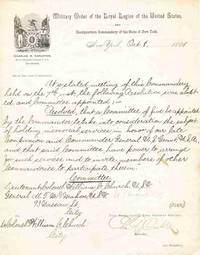
2665D. 2pg. 8†x 10â€. October 8 1885. New York. A document regarding a memorial service for President Grant not long after he died. It is on “Military Order of the Loyal Legion of the United States†letterhead and reads: “At a stated meeting of the Commandery held on the 7th inst the following Resolution was adopted and Committee appointed: ‘Resolved that a Committee of five be appointed by the Commander to take into consideration the subject of holding memorial services in honor of our late Companion and Commander General U.S. Grant U.S.A. and that said Committee have power to arrange for such services and to invite members of other Commanderies to participate therein.†The document then lists the five members of the committee; Church General M.T. McMahon General Israel Vogdes Commander Edward Hooker and Colonel H.C. King. The document has light soiling and smudges and is in fine condition. unknown books
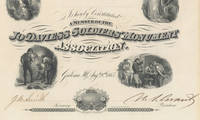
18653462628/08/1865. <p>Ulysses S. Grant was living in Galena Illinois when the Civil War broke out. The Civil War won on August 18 1865 Galena celebrated Grant’s heroic return. Following a jubilant procession with much flag waving and speeches a group of Galena citizens presented the General with a handsome furnished house on Bouthillier Street. Today the house is managed by the Illinois Historic Preservation Agency as the U.S. Grant Home State Historic Site.</p><p>The Soldiers Monument Association was a group of local organizations founded after the American Civil War to fund and erect monuments to fallen soldiers and veterans. In 1865 many such groups formed and one of these was the Jo Daviess Soldiers Monument Association in Galena Illinois established to honor that county's soldiers who served in the Civil War. The Association is known for its handsome membership certificates which pictured vignettes of Lincoln Liberty flags and soldiers and were signed by Grant who was the honorary president. In time a monument to the soldiers of Jo Daviess County was constructed in Grant Park Galena.</p><p>A <strong>membership certificate</strong> to the Soldiers Monument Association with compelling vignettes including Lincoln constituting individuals as members of the Jo Daviess Soldiers Monument Association Galena dated August 28 1865 and <strong>signed</strong> by Grant as President of the Association. Gen. J.C. Smith has also signed as Secretary.</p><p>This is the first Soldiers Monument Association certificate we have ever carried and it is particularly compelling with its association of Grant and Lincoln.</p><p><img class=""alignnone wp-image-25018 size-post-window"" src=""https://cdn.raabcollection.com/wp-content/uploads/20231204144051/Folder-site-11-1600x1327.jpg"" alt="""" width=""1600"" height=""1327"" /></p> unknown
18793244413/05/1879. <blockquote><p>We are aware of no other autographs of Grant from this trip having reached the market</p></blockquote><p>Richard Nixon was not the first President to visit China. On February 20 1979 the New York Times reported: ""When President Nixon arrives in China today on an unprecedented state visit he will not be the first American President to have set foot on that nation's shores. Nearly one hundred years ago while the Manchu dynasty still held sway over the crumbling Chinese Empire Gen. Ulysses S. Grant entered the gates of Peking and was borne in an imperial palanquin into the heart of the Forbidden City. Just one month after the expiration of his Presidential term General Grant embarked on a worldwide tour which took him to Europe Asia Minor India and Indochina on his way to the two great realms of the Far East. In all he spent six weeks In China visiting the cities of Canton Swatow Amoy Shanghai Tientsin and Chefoo with a full week in Peking from June 3 to 10 1879. During his stay he was entertained in the royal manner and granted interviews with Prince Kung the ruling regent of the Manchu Court —the real Emperor was only 5 years old at the time—and Li Hung_chang the Western_oriented strongman of North China.""</p><p>The Chinese had hopes largely unrealized that Grant would help them handle diplomatic and military crises with Japan and Vietnam where the French had influence. He went with a delegation of his own which included his wife and son officers of the US Navy and one of the earliest US ministers to China Chester Holcombe.</p><p><strong>Document signed</strong> Swatow Shantou China May 13 1879 a place card for the dinner held in Grant's honor that evening belonging to a Mrs. Scott. Signed by Ulysses S. Grant his son Frederick Dent Grant his wife Julia Grant Charge d'Affaires Chester Holcombe two representatives from his naval escort.</p><p><img class=""alignnone wp-image-25018 size-post-window"" src=""https://cdn.raabcollection.com/wp-content/uploads/20231204144051/Folder-site-11-1600x1327.jpg"" alt="""" width=""1600"" height=""1327"" /></p> unknown
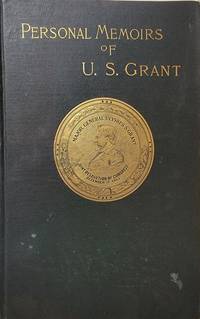
1879024745Philadelphia: The National Publishing Co. First Edition. Original green decorated cloth. Slight edge wear area of lighter green near the top of the back cover slight spotting on the back cover Very Good. . Very Good. Hardcover. 1st Edition. 1879. The National Publishing Co hardcover
5677ULYSSES S. GRANT 1822-1885. Grant was the Eighteenth President and the head of the Union Army during the Civil War. A two volume first edition of Personal Memoirs of U.S. Grant. They are bound in green cloth and gilt stamped. The boards have minor wear and the corners are bumped. There are fold outs of Grant facsimile letters. The internal pages have slight foxing but are in fine condition. hardcover
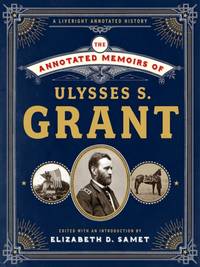
ria9781631492440_inpHardback. New. New Book; Fast Shipping from UK; Not signed; Not First Edition; With kaleidoscopic insights Elizabeth D. Samet has produced the most ambitious edition of Ulysses S. Grant's Memoirs yet. hardcover
18642764930/12/1864. <blockquote><p>Welles had written at the President's suggestion: ""The largest naval force ever assembled is ready""</p></blockquote><blockquote><p>Fort Fisher guarded the port of Wilmington NC the last port open to blockade runners supplying Robert E. Lee’s Confederate forces in Virginia</p><p> </p></blockquote><p><img class=""alignnone wp-image-28384 size-post-window"" src=""https://cdn.raabcollection.com/wp-content/uploads/20231204120136/Grant_168-2-1-e1694097936583-1600x492.jpg"" alt="""" width=""1600"" height=""492"" /></p><p>As 1864 dawned Wilmington North Carolina protected by Fort Fisher was one of the Confederacy’s last remaining major ports on the Atlantic open to blockade runners and was the chief supply line for General Robert E. Lee’s Army of Northern Virginia. Navy Secretary Gideon Welles reintroduced the idea of a joint operation against Wilmington to the Secretary of the War Edwin Stanton but Stanton saw it as premature. After the Navy’s occupation of Mobile Bay in August all eyes turned to Wilmington. In October 1864 Wilmington finally became the next objective for a joint amphibious operation. Admiral David Porter was chosen to command the naval squadron and General Benjamin Butler the army contingent.</p><p>On December 24 the 63 ships of Porter’s fleet prepared to bombard the fort. Thirty-seven ships formed in three lines of battle end-to-end facing the enemy. Just after midday Porter commenced the Navy’s first bombardment of the fort and continued firing until it became too dark to aim the guns effectively. While the Confederate troops hid and huddled beneath the mounds of the fort this bombardment actually did little damage with the exception of the wooden quarters of the garrison which were set ablaze. Butler’s force returned too late on that first night to attempt a landing. The next morning December 25 the fleet resumed its barrage while a naval contingent sought to secure a landing area for the Union infantry north of the fort. A group of sailors was sent to take soundings south of the fort but Porter withdrew the sounding party after it became clear that the army group was making no progress north of the fort. The timely arrival of Confederate reinforcements caused Butler to question the strength of his position. He felt his forces could not take the fort without a siege for which they were unprepared. Butler immediately began to re-embark his soldiers. On December 27 he called off the expedition and directed the transports to return to Hampton Roads. The U.S. Navy had suffered 83 casualties and the U.S. Army 12. Thus the first attempt by the Union forces to close the port of Wilmington ended in failure. While Butler returned to Hampton Roads Porter remained off the coast of North Carolina dedicated to preparing another attempt to capture Fort Fisher.</p><p>Following the fall of Savannah on December 21 1864 General William T. Sherman prepared to march through the Carolinas. Knowing Sherman could soon be in North Carolina and ready to try to capture the fort again on December 25 Porter wrote to Sherman clearly expressing his frustration with Butler’s decision to abandon the joint operation. Porter was also in communication with Welles. With these communications in hand Welles spoke to President Lincoln who was all for trying again to take the fort. On December 29 Welles wrote to General U.S. Grant in overall command of the army that the President hoped that another joint operation might be forthcoming.</p><p>Welles’s telegram to Grant stated: “December 29 1864 at 9:30 pm. The substance of dispatches and reports from Rear-Admiral Porter off Wilmington is briefly this: The ships can approach nearer to the enemy’s works than was anticipated. Their fire can keep the enemy away from their guns. A landing can easily be effected upon the beach north of Fort Fisher not only of troops but all their supplies and artillery. This force can have its flanks protected by gun-boats. The navy can assist in the siege of Fort Fisher precisely as it covered the operations which resulted in the capture of Fort Wagner. The winter season is the most favorable for operations against Fort Fisher. The largest naval force ever assembled is ready to lend its co-operation. Rear-Admiral Porter will remain off Fort Fisher continuing a moderate fire to prevent new works from being erected and the ironclad have proved that they can maintain themselves in spite of bad weather. Under all these circumstances I invite to such a military co-operations as will insure the fall of Fort Fisher the importance of which has already received your careful consideration. This telegram is made at the suggestion of the President and in hopes that you will be able at this time to give the troops which heretofore were required elsewhere. If it cannot be done the fleet will have to disperse whence it cannot again be brought to this coast.â€</p><p><img class=""alignnone wp-image-28385 size-post-window"" src=""https://cdn.raabcollection.com/wp-content/uploads/20231204120124/Grant_177-1-1-e1694097999755-1600x684.jpg"" alt="""" width=""1600"" height=""684"" /></p><p>Grant responded to Welles immediately. <strong>Autograph letter signed</strong> headquarters at City Point Va. December 30 1864 to Welles. <em>“Your dispatch of 9:30 p.m. 29th received. I will advise fully with the Sec. of War about what you propose. Please call on him for information. U.S. Grant Lieut. Gen.â€</em> Thus Grant promised to inform Stanton “fully†about the plan and requested that Welles consult with Stanton to finalize it. Grant had told Stanton that he did not intend to correspond with the Navy Department except through Stanton and this letter further indicates that.</p><p>Porter had a good working relationship with Grant and a solid record of success in joint operations. Due to this Welles was able to argue successfully with Lincoln for Porter’s retention as commander. In early January Porter coordinated directly with Sherman and Grant about plans for a renewal of operations against Fort Fisher. As Sherman marched north the port of Wilmington was now more important to the U.S. Army than it had been during the first battle for Fort Fisher. Butler rightly took the blame for the first expedition’s failure. For his replacement Grant chose General Alfred Terry one of Butler’s staff officers. Grant assigned him the same troops that had participated in the first attempt augmented with an additional brigade for a total of 8000 soldiers. On January 4 1865 the second expedition to capture Fort Fisher embarked from Bermuda Landing in Virginia. On January 12 they headed for Fort Fisher. Arriving that night Porter and Terry prepared to commence their attack the next day. At dawn on January 13 8000 Federal soldiers landed above the fort as the Navy began its bombardment. Sailors were landed on the 15th and drew fire. This diversion allowed the army to breach the walls of the fort. By 10 p.m. the fort was in possession of the Federal forces. The Confederates started a retreat and when Federal infantry caught up with them General Terry accepted the formal surrender of the fort.</p><p>The first battle of Fort Fisher was the most concentrated naval bombardment of the war. The fleet fired 20271 projectiles into the fort during the first battle. Another 19682 were fired during the second battle. In total the U.S. Navy expended 39953 projectiles at the fort. After Fort Fisher’s capture Porter proceeded to put vessels over the bar and into the Cape Fear River. He declared the port of Wilmington to be “hermetically sealed against blockade runnersâ€. Five weeks after the fall of Fort Fisher the Federal army occupied the city of Wilmington. This occupation ended the trickle of supplies coming along the Wilmington and Weldon Railroad to the Army of Northern Virginia. The fall of Wilmington contributed directly to this army’s surrender at Appomattox Courthouse in April 1865.</p><p><img class=""alignnone wp-image-25018 size-post-window"" src=""https://cdn.raabcollection.com/wp-content/uploads/20231204144051/Folder-site-11-1600x1327.jpg"" alt="""" width=""1600"" height=""1327"" /></p> unknown
1396652973.Ghardcover. Good. Access codes and supplements are not guaranteed with used items. May be an ex-library book. hardcover
1391342070.Gpaperback. Good. Access codes and supplements are not guaranteed with used items. May be an ex-library book. paperback
0835919609.Ghardcover. Good. Access codes and supplements are not guaranteed with used items. May be an ex-library book. hardcover
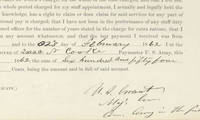
1862806901/03/1862. <blockquote><p>In it he also pays for his servants 3 of whom were black; An extreme rarity the first such document we can find having reached the market in a quarter century</p></blockquote><p>The battle of Fort Henry in Tennessee took place on February 6 1862 and an obscure and virtually unknown brigadier general named Ulysses S. Grant captured the fort and opened the Tennessee River to Union movements. This early in the war Union victories of any kind were scarce and this one was probably the most consequential of the war to date. Grant then moved directly on Fort Donelson entrapping the place both by land and sea from February 11-16. On the morning of February 15 the Confederate commander Simon B. Buckner sent a note to Grant requesting an armistice and asking terms of surrender. Buckner was expecting to give up the fort but get his soldiers paroled so they would not be prisoners of war. Grant refused to give terms but demanded unconditional surrender. The Confederates surrendered the next day the 16th. This victory opened the Cumberland River an important avenue for the invasion of the South to Union operations and Grant became instantly famous earning the nickname ""Unconditional Surrender"" Grant. President Lincoln took note of the fact that in Grant he had a general who could win. On February 20 1862 Lincoln promoted Grant to the rank of Major General a prerequisite to Grant's being able to command a large army.</p><p>However Grant’s very successes at Forts Henry and Donelson incurred the jealousy of his superior Gen. Henry Halleck who was in command of the whole Western Theater of war. Grant not yet realizing the peril Halleck's opposition placed him in knew Nashville was wide open with little in the way of defensive forces. Though Halleck had expressly forbade him to advance Grant ordered Union forces to enter Nashville. It fell on February 25 with Gen. Don Carlos Buell accepting the city's surrender. Nashville thus became the first Confederate state capital to fall into Union hands. Over the next week thousands of Union soldiers poured into the city and Grant took a boat upriver from Donelson to Nashville to confer with Buell. Halleck saw the taking of Nashville not as Grant recognizing and seizing an important opportunity but as willful disobedience of an order. And Grant's unauthorized trip to see Buell there only added to Halleck's anger.</p><p><img class=""alignnone wp-image-32063 size-post-window"" src=""https://cdn.raabcollection.com/wp-content/uploads/20240907140939/Grant-March-1-1862-1-1-1600x348.jpg"" alt="""" width=""1600"" height=""348"" /></p><p>So on March 1 1862 Halleck decided to tie Grant's hands by ordering him to return to Fort Henry and from there to launch an expedition up the Tennessee River to the state of Mississippi. The objective was the destruction of several key railroad bridges. Grant was to “avoid any general engagement with strong forces†and was told that it was “better to retreat than to risk a general battle.†Grant went to Fort Henry as ordered but did not communicate with Halleck directly. The next day Halleck complained to Gen. McClellan that he had heard no word from Grant for a week and that “his army seems to be as much demoralized by the victory of Fort Donelson as was that of the Potomac by the defeat of Bull Run.†On March 4 Halleck relieved Grant from his command writing him: “You will place Maj. Gen. C. F. Smith in command of expedition and remain yourself at Fort Henry.†Grant was shocked. “Thus"" say Grant's Memoirs ""in less than two weeks after the victory at Donelson the two leading generals Halleck and McClellan in the army were in correspondence as to what disposition should be made of me and in less than three weeks I was virtually in arrest and without a command.â€</p><p>Grant turned over command to Smith on March 5. Even as he did so he felt intensely frustrated and longed for action writing on the same day “I have not been well for the last ten days and don’t see that I will be much better until I can get to moving again.†Grant and Halleck exchanged letters after which Grant on March 11 demanded that Halleck relieve him from duty altogether in order to clear his name. ""There is such a disposition to find fault with me that I again ask to be relieved from further duty until I can be placed right in the estimation of those higher in authority.""</p><p>Perhaps this letter caused a change of mind or it may be that Halleck just could not risk loss of the popular Grant altogether. In any event surprisingly he refused and instead told Grant he would receive a new command writing him ""You cannot be relieved from your command. There is no good reason for it…Instead of relieving you I wish you as soon as your new army is in the field to assume the immediate command and lead it on to new victories."" Just four days later Grant was actually given a new command - he was placed in charge of Union forces in Tennessee. He proceeded to Pittsburg Landing Tennessee and arriving on the 17th established a wide camp with his forward units around Shiloh Church some 2.5 miles south of Pittsburg Landing. He wrote ""I at once put all the troops at Savannah in motion for Pittsburg Landing knowing that the enemy was fortifying at Corinth and collecting an army there under Johnston. It was my expectation to march against that army as soon as Buell who had been ordered to reinforce me with the Army of the Ohio should arrive; and the west bank of the river was the place to start from. Pittsburg is only about twenty miles from Corinth…When all reinforcements should have arrived I expected to take the initiative by marching on Corinth and had no expectation of needing fortifications though this subject was taken into consideration."" He reported to Halleck on his troop dispositions and imminently awaited reinforcements so he could move against Corinth. Halleck meanwhile continued to nitpick at Grant for supposed failure to discipline his troops properly.<br />The month of March was a significant one in Grant's career one that saw the tables turn twice on him. First in the flush of his great successes at Forts Henry and Donelson he was victimized by jealousy and relieved of command. Then when all seemed lost he was given an even greater command. And as he assumed that command and awaited reinforcements so he would move on Corinth he was unwittingly actually preparing for the Battle of Shiloh one of the most fateful of the war.</p><p><img class=""alignnone wp-image-32064 size-post-window"" src=""https://cdn.raabcollection.com/wp-content/uploads/20240907141021/Grant-March-1-1862-2-1600x657.jpg"" alt="""" width=""1600"" height=""657"" /></p><p><strong>Document signed</strong> Pittsburg Landing Tenn. April 2 1862 being a voucher for his own pay and expenses and those of his four private servants for the period from March 1 to March 31 1862. His pay was $220 per month and he received $52 per month for the pay of his servants. Forage for his seven horses came to $56 for the month. He received $10 per month as a clothing allowance and he was entitled to <em>""double rations for commanding army in the field""</em> which came to over 1000 rations for the month. The rations called ""<em>subsistence</em>"" cost $316.20. At the end the document recites that Grant has received a total of $654.20 from the paymaster and he has signed <em>""U.S. Grant Maj. Gen. Commanding Army in the field."" </em>Interestingly Grant's four servants are named and their skin color height and eye and hair color given. Frank was white; and Dan Jim and Sam were black. The voucher is docketed on the verso.</p><p>This is the first signed voucher for Grant's pay during the Civil War that we have seen. Research in public records going back 40 years discloses one previous monthly voucher having reach the market and that was a quarter century ago.</p><p>On April 6 1862 just four days after signing this document the Confederates commenced the Battle of Shiloh by bursting through Union lines and threatening to drive Grant's men back into the Tennessee River. Historians differ on whether Grant was at fault in being surprised but it is clear that Union forces only escaped being routed with the arrival of Buell's army. The next day the Union recaptured the initiative and drove the Confederates back in disorder. The battle was essentially a draw while also being the bloodiest battle yet to occur on the American continent. When the news reached the North where expectations had been high a storm of abuse broke out against Grant who was held responsible. He may well have not deserved the blame but he admitted reassessing the war after Shiloh. He wrote “Up to the battle of Shiloh I as well as thousands of other citizens believed that the rebellion against the Government would collapse suddenly and soon if a decisive victory could be gained over any of its armies. Donelson and Henry were such victories.But when Confederate armies were collected which not only attempted to hold a line farther south.but assumed the offensive and made such a gallant effort to regain what had been lost then indeed I gave up all idea of saving the Union except by complete conquest.â€</p><p><img class=""alignnone wp-image-25018 size-post-window"" src=""https://cdn.raabcollection.com/wp-content/uploads/20231204144051/Folder-site-11-1600x1327.jpg"" alt="""" width=""1600"" height=""1327"" /></p> hardcover
0267509308.Ghardcover. Good. Access codes and supplements are not guaranteed with used items. May be an ex-library book. hardcover
0364604913.Ghardcover. Good. Access codes and supplements are not guaranteed with used items. May be an ex-library book. hardcover
ria9781789431667_inpPaperback. New. New Book; Fast Shipping from UK; Not signed; Not First Edition; N/A paperback
B9781789431667Paperback / softback. New. paperback