Grant, Ulysses SBiblio.com
2 653 résultats
0548244820.Ghardcover. Good. Access codes and supplements are not guaranteed with used items. May be an ex-library book. hardcover
1017077223.Ghardcover. Good. Access codes and supplements are not guaranteed with used items. May be an ex-library book. hardcover
0267509308.Ghardcover. Good. Access codes and supplements are not guaranteed with used items. May be an ex-library book. hardcover
0364604913.Ghardcover. Good. Access codes and supplements are not guaranteed with used items. May be an ex-library book. hardcover
033194264X.Ghardcover. Good. Access codes and supplements are not guaranteed with used items. May be an ex-library book. hardcover
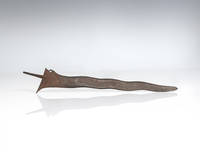
147821Rare Javanese kris commonly used in the pencak silat martial art native to Indonesia from the collection of General William T. Sherman preserved in his military trunk. Ulysses S. Grant a close friend of Sherman’s went on a “World Tour†after his second presidential term had ended. It has been suggested that Grant collected a few souvenirs for his dear friend while visiting Asia. When the Grant family returned from their trip Sherman greeted Grant at a reunion held by the veterans of the Army of the Tennessee. In good condition with handle missing. The piece measures 14.5 inches. General William Tecumseh Sherman and General Ulysses S. Grant were key figures in the Union Army during the American Civil War forming a close personal and professional relationship that significantly influenced the war’s outcome. Grant known for his strategic leadership recognized Sherman’s military talents early in the war and the two collaborated on major campaigns including the Vicksburg Campaign 1863 and Sherman’s March to the Sea 1864–1865. Their coordinated efforts exemplified the Union’s strategy of total war aimed at crippling the Confederacy’s resources and morale. After the war their partnership continued with Sherman succeeding Grant as Commanding General of the U.S. Army in 1869 when Grant became President. Their mutual trust and shared military philosophy played a crucial role in shaping U.S. military strategy and post-war reconstruction efforts. unknown
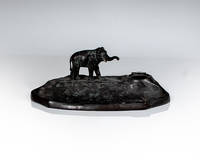
147816Rare bronze sculpture of an elephant most likely used as an ink well from the collection of General William T. Sherman preserved in his military trunk. Ulysses S. Grant a close friend of Sherman's went on a "World Tour" after his second presidential term had ended. It has been suggested that Grant collected a few souvenirs for his dear friend while visiting Asia. When the Grant family returned from their trip Sherman greeted Grant at a reunion held by the veterans of the Army of the Tennessee. In very good condition with some patina. The piece measures 9.5 inches by 4.5 inches. General William Tecumseh Sherman and General Ulysses S. Grant were key figures in the Union Army during the American Civil War forming a close personal and professional relationship that significantly influenced the war’s outcome. Grant known for his strategic leadership recognized Sherman’s military talents early in the war and the two collaborated on major campaigns including the Vicksburg Campaign 1863 and Sherman’s March to the Sea 1864–1865. Their coordinated efforts exemplified the Union’s strategy of total war aimed at crippling the Confederacy’s resources and morale. After the war their partnership continued with Sherman succeeding Grant as Commanding General of the U.S. Army in 1869 when Grant became President. Their mutual trust and shared military philosophy played a crucial role in shaping U.S. military strategy and post-war reconstruction efforts. unknown
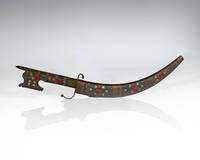
147820Rare Indo-Persian khanjar a 20th century curved dagger from the collection of General William T. Sherman preserved in his military trunk. The khanjar has decorative wooden and metal inlays and intricate detailing to the handle and sheath with etchings to the blade. Ulysses S. Grant a close friend of Sherman's went on a "World Tour" after his second presidential term had ended. It has been suggested that Grant collected a few souvenirs for his dear friend while visiting Asia. When the Grant family returned from their trip Sherman greeted Grant at a reunion held by the veterans of the Army of the Tennessee. In very good condition. The piece measures approximately 15.5 inches. General William Tecumseh Sherman and General Ulysses S. Grant were key figures in the Union Army during the American Civil War forming a close personal and professional relationship that significantly influenced the war’s outcome. Grant known for his strategic leadership recognized Sherman’s military talents early in the war and the two collaborated on major campaigns including the Vicksburg Campaign 1863 and Sherman’s March to the Sea 1864–1865. Their coordinated efforts exemplified the Union’s strategy of total war aimed at crippling the Confederacy’s resources and morale. After the war their partnership continued with Sherman succeeding Grant as Commanding General of the U.S. Army in 1869 when Grant became President. Their mutual trust and shared military philosophy played a crucial role in shaping U.S. military strategy and post-war reconstruction efforts. unknown
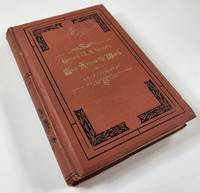
1879047975Hartford CT: James Betts & Co. 1879. First edition 1879. Attractive Victorian binding in brick red cloth over beveled boards gilt lettering decoration in black frontis portrait of Grant 350 pages. Modest wear to corners and spine ends smudge on front cover from what looks like removal of a price sticker good hinges firm text block a little foxing to the top of the frontis portrait and title page lightly age-toned but clean pages no names or other markings. First Edition. Hard Cover. Very Good. 8vo - over 7¾" - 9¾" tall. James Betts & Co. Hardcover
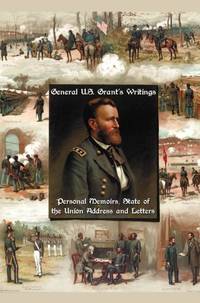
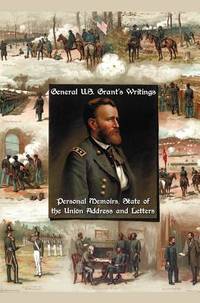
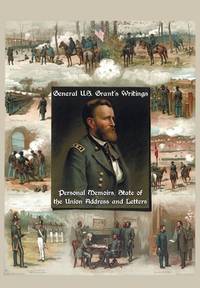
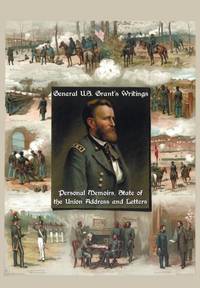
ria9781781393574_inpHardcover. New. New Book; Fast Shipping from UK; Not signed; Not First Edition; N/A hardcover
2013DADAX1781393575Benediction Classics 2013-01-13. hardcover. New. 6.69x1.75x9.61. Buy with confidence. Excellent Customer Service & Return policy. Benediction Classics hardcover
1789431662.Gpaperback. Good. Access codes and supplements are not guaranteed with used items. May be an ex-library book. paperback
1781393575.Ghardcover. Good. Access codes and supplements are not guaranteed with used items. May be an ex-library book. hardcover
ria9781789431667_inpPaperback. New. New Book; Fast Shipping from UK; Not signed; Not First Edition; N/A paperback
B9781789431667Paperback / softback. New. paperback
41746527-nnew. unknown
41746527like new. unknown
19333946like new. unknown
19333946-nnew. unknown
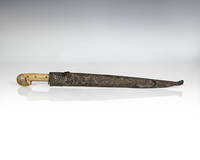
147824Rare Persian kard a straight single-edged dagger that is worn on the left side of the belt from the collection of General William T. Sherman preserved in his military trunk. The kard has a bone handle no guard and repoussé sheath with a floral arabesque design. A major characteristic of a kard is that the sheath partially covers the hilt. Ulysses S. Grant a close friend of Sherman's went on a "World Tour" after his second presidential term had ended. It has been suggested that Grant collected a few souvenirs for his dear friend while visiting Asia. When the Grant family returned from their trip Sherman greeted Grant at a reunion held by the veterans of the Army of the Tennessee. In very good condition with the tip of the blade broken the end of the right extended side of the handle missing and the left side cracked. The piece measures 19 inches. General William Tecumseh Sherman and General Ulysses S. Grant were key figures in the Union Army during the American Civil War forming a close personal and professional relationship that significantly influenced the war’s outcome. Grant known for his strategic leadership recognized Sherman’s military talents early in the war and the two collaborated on major campaigns including the Vicksburg Campaign 1863 and Sherman’s March to the Sea 1864–1865. Their coordinated efforts exemplified the Union’s strategy of total war aimed at crippling the Confederacy’s resources and morale. After the war their partnership continued with Sherman succeeding Grant as Commanding General of the U.S. Army in 1869 when Grant became President. Their mutual trust and shared military philosophy played a crucial role in shaping U.S. military strategy and post-war reconstruction efforts. unknown
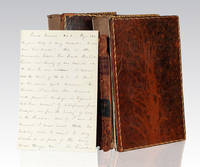
1885145720New York: Charles L. Webster & Company 1885-86. Exceedingly rare first edition of the autobiography of Ulysses S. Grant the 18th President of the United States which focusing mainly on his military career during the Mexican War and the Civil War entirely singular owned and annotated by Grant's close friend and most esteemed general: William Tecumseh Sherman. Octavo 2 volumes bound in the original full deluxe tree calf with gilt titles and elegant tooling to the spine gilt ruled borders to the front and rear panels gilt inner dentelles all edges gilt engraved portrait frontispieces illustrated with numerous facsimile letters 2 folding maps and wood engravings. William Tecumseh Sherman evidently read thes volumes in great detail making marginal notes on at least 18 pages in Vol. I several of them signed with his initials. On the last page of Vol. I Sherman wrote: "Read at St. Louis Mo. Dec 5 6 1885. This account of the Civil War is wonderfully accurate and him. W.T.S." Many of the notes are small corrections and additions by Sherman. On a passage regarding the Yazoo Pass Expedition on page 435 of Vol. I Sherman pointedly writes: "This conforms literally to my memoirs on the point most contested by Grant's pretended friends. W.T.S." He provides further thoughts regarding political interference on the next page: "If Grant had gone ahead living off the country we would have been inside of Vicksburg by Christmas 1862 the distance from Grenada to Vicksburg is little more than the circuit we afterward made from Bruinsberg via Jackson to Vicksburg --- This was my understanding when we parted at Oxford and the intervening country was better supplied with hay hominy. W.T.S." On p. 440-441 Grant wrote about the need to assign politically-connected John McClernand as Corps Commander: "I would have been glad to put Sherman in command to give him an opportunity to accomplish what he had failed in the December before; but there seemed no other way out of he difficulty for he was junior to McClernand. Sherman's failure needs no apology." In the margins Sherman's distinctive hand writes passionately: "because it was no failure at all." There is only one marginal annotation in Vol. II; however an autograph note is laid in at p. 123 supplying Sherman's recollection of Grant's first meeting with Lincoln which corroborates Grant's account. While Sherman was not present at the meeting between Grant and Lincoln he almost certainly heard about what transpired from Grant himself. The note reads in full: "Grants Memoirs Vol 2 Page 123 A good story is very correct. 'Si non vero ben trovalo.' Even if it is not true it is well conceived. This is the conversation between Genl. Grant President Lincoln and Secretary of War Stanton at the time he was addressed to command all the Armies of the U.S. Grant said in his usual quiet manner 'Mr. Lincoln I am told that several well planned campaigns in Virginia have been marred by interference from Washington viz from the Secretary of War or the President now if I am to command I must insist that no military order be issued to any detachment or part of the Army except through me' Mr. Lincoln in his inimitable way turning to Stanton said 'Stanton you and I have been running this machine for two years and have not made a brilliant success. I guess we had better trust this little man' Grant and then then and there the promise was made. And it is to the credit of Mr. Lincoln to say that he kept his word literally never interfering or making any order even when Washington was in real peril from Early's Army in 1865." Grant's insistence that there would be no political interference was likely particularly important to General Sherman who famously hated politicians. In good condition with detaching of the front boards and spines of each volume detaching of the rear board and separation of the folding facsimile letter at p. 312-313. Copies bound in highly polished gilt tree calf are extremely rare with only three other copies known. The first prospectus of Grant's Memoirs listed only 4 bindings: fine cloth full sheep fine half morocco and full Turkey morocco. The only other copy of Grant's Memoirs bound in tree calf was sold at auction - a copy presented to Mark Twain by Julia Grant and inscribed by both. Only two other known copies are located in private collections. To date no copies bound in the tree calf have been traced to institutional collections. As Grant died before publication was complete the only copy that he saw before his death was a prospectus bound in cloth; the extant tree calf copies suggest that the binding was perhaps reserved exclusively for presentations made by Julia Grant. Even the copies presented by publisher Mark Twain to his friends and colleagues were bound in one of the other available bindings. Though this copy bears no presentation inscription by Julia Grant Mark Twain or anyone else it is plausible that one of these figures would have sent the copy directly to General Sherman. After his second presidential term and world tour President Grant was stripped of nearly all of his life's earnings by conman Ferdinand Ward. Grant had forfeited his and his widow's military pension when he resigned as general to assume the presidency and his recent throat cancer diagnosis brought him deep concern about how his wife and family would manage financially after his death. In this moment of crisis Sherman rushed to Grant's aid and assisted him in restructuring his debt ensuring that Grant was able to keep his most prized possesions. Most importantly Sherman also encouraged Grant to do what he should have done years ago - write his memoirs. By June 1884 Grant had begun publishing articles on his major engagements of the Civil War for 'Century Magazine' which paid him $500 for each submission. The articles were received with great enthusiasm and Grant met with the magazine's representatives in early September to arrange for the publication of his memoirs. However when Samuel Clemens popularly Mark Twain learned of the potential arrangement with 'Century Magazine' he convinced Grant to sign with his own subscription publishing company which was able to offer Grant 70% of the net profit made from the sale of his memoirs. This rate was exorbitantly higher than what 'Century Magazine' had proposed. Grant began writing his memoirs in earnest racing against the illness to finish and ensure his family's financial stability. During this time Grant welcomed Sherman's repeated visits. On December 24 1884 Sherman wrote to his wife Ellen: "Grant says my visits have done him more good than all the doctors" Flood p.395. Grant with the moral support of Sherman lived to finish the memoir dying five days after its completion. Widely considered the finest military narrative ever published the memoirs were a national bestseller and Grant's widow Julia would eventually receive nearly $450000 about ~$14000000 today in royalties from their sale. Charles L. Webster & Company hardcover
620293719X.Gpaperback. Good. Access codes and supplements are not guaranteed with used items. May be an ex-library book. paperback
42551333like new. unknown
6202937181.Gpaperback. Good. Access codes and supplements are not guaranteed with used items. May be an ex-library book. paperback
2005LFA016dc2005 : une revue de 144 pages, format 215 x 270 mm, illustrée, brochée couverture couleurs, bon état