VAN DEN BRULE (Al.).-Livre Rare Book
Universita' di CambridgeMareMagnum
Storia antica
In 8 (21x15,5) Brossura; pp. 408; copertina sciupata, strappo in antiporta, internamente buono

Booklovers.It · Novara, IT20,00 €
610 résultats
1904754371904 Paris, Juven, sans date (1904), in 8° relié demi-percaline rouge, dos liss orné, 208 pages.
In 8 (21x15,5) Brossura; pp. 408; copertina sciupata, strappo in antiporta, internamente buono
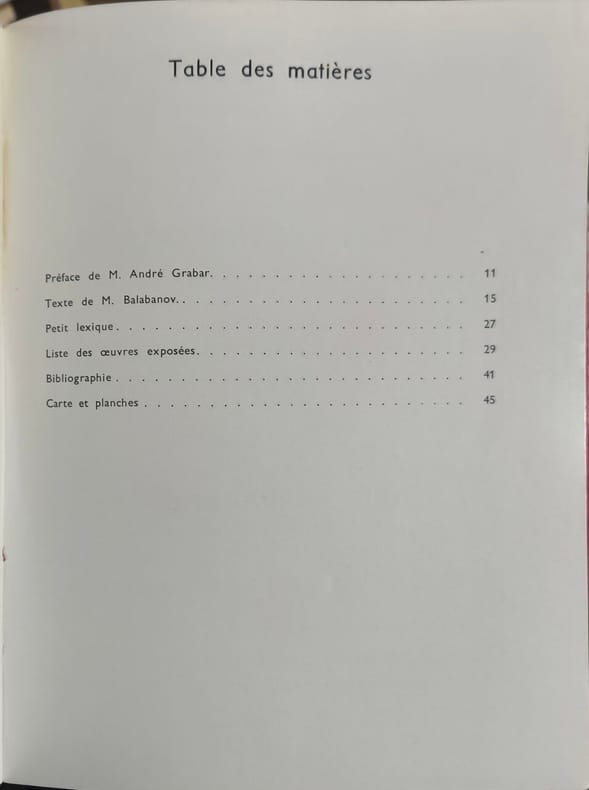
19653860Palais du louvre 1965 43 pages in8. 1965. broché. 43 pages. Catalogue publié à l'occasion de l'exposition "Icônes de Macédoine du XIe au XVIIe siècle" présentée au Palais du Louvre en 1965. L'ouvrage documente des collections yougoslaves d'art sacré byzantin avec une préface d'André Grabar et un texte de K. Balabanov
Series:Idruma Meleton Khersonesou tou Aimou, 238. Edited by Athanasios E Karathanases.In the 19th. century the population of Meleniko [Melnik] was predominantly Greek, but in the settlement after the Balkan Wars the area was ceded to Bulgaria and the Greek population was exiled to Greece. This book includes documents and phoographs relating to this perriod. 125p. plates Book
Minor scratches to front wrap else Fine ; 0.77 x 8.5 x 5.46 Inches; 320 pages; The papers collected in this volume present a systematic survey of the struggles of Athens, Sparta and Thebes to dominate Greece in the fourth century - only to be overwhelmed by the newly emerging Macedonian kingdom of Philip II. Additionally, the situation of Greeks in Sicily, Italy and Asia is portrayed, showing the geographical and political diffusion of the Greeks in a broader historical context. This is a book that will provide the reader with a clearly drawn and vivid picture of the main events and leading personalities in this decisive period of Greek history.
Light edgewear to wraps else book is fine. ; 179 pages
Il corposo saggio su ANTIGONO III DOSONE di Macedonia occupa complessive 67 pagine nei 2 fasc. Piero TREVES, figlio del socialista fuoruscito Claudo, fu sempre sorvegliato dal regìme, studiò e Torino con il grande Gaetano De Sanctis e lo seguì a Roma dove si laureò nel 1931 con una tesi francamente antifascista "Demostene e la libertà greca", edita da Laterza per interessamento di Benedetto Croce. A questo libro fa qui riferimento in una nota. Le leggi razziste lo esiliarono poi a Londra, dove lavorò con radio Londra. I due fascicoli in-8° (cm. 24x16), brossura editoriale, sono completi delle loro circa 120 + 120 pagine e conengono inoltre: 1) M. Della CORTE Scoperte epigrafiche pestane: i M. M. CICERONES. 12 pp. 2) Alfredo PASSERINI, CAIO MARIO,la caduta e la vendetta. 34 pp. 3) A. MOMIGLIANO. Re e popolo in MACEDONIA prima di Alessandro Magno. 19 pp. 4) A. PASSERINI. Il testo del FOEDUS di Roma con Callatis. 16 pp. 5) H. DREXLER. Aporien im Prooemium IV des LUKREZ... pp, 28 pp. Inoltre importanti recensioni. I due fascicoli, inseparabili
Contents slightly shaken. Shelfwear. ; 9.4 X 6.5 X 0.9 inches; 460 pages
Mm 135x215 Prima edizione italiana a cura di Francesco Spagnolo Acht. Palinsesto di parole e immagini raccolto e ordinato da Imre Toth - Volume cartonato con sovraccoperta editoriale illustrata a colori, 487 pagine con tavole a colori fuori testo. Opera in ottime condizioni. SPEDIZIONE IN 24 ORE DALLA CONFERMA DELL'ORDINE.
49798221like new. unknown
Very Good English Paperback. Roy. 8vo. (24 x 17 cm). In Macedonian with a short French summary. 175-180 pp. Addition to the studying of the stylistic and expressive characteristics of the Macedonian folk proverbs (summary).= Prilog kon prouchuvacheto na stilsko-izraznite karakteristiki na Makedonskite narodni poslovitchi i pogovorki. [SIGNED COPY]. [Separatum from Makedonski Folklor = Le Folklore Macedonien, Godina II, Epoj 3-4]. Signed and inscribed by Sazdov to Turkish folklorist Tahir Alangu, (1915-1973). Tome Simon Sazdov, (1934-) is a Yugoslav humanist educator.
New New English Original bdg. Dust wrapper. 4to. (31 x 23 cm). In English. [xxi], 208, [2] p., 42 p. color maps. Contents: In Place of an Introduction, Old and New Names, New and Old Names, Bibliography, Administrative division of the Aegean Macedonia, Annex Maps, Maps.
8886Berlin, Ernst Wasmuth, Editeur, 1926. 1 fort volume in-4, reliure pleine toile, 34 pp. de texte et 96 planches en couleurs avec texte explicatif, très bon état.
"The odyssey of a young lion-hearted New Zealander is told with modesty and humour. Captured in Crete, the author, after a number of bold attempts to gain his liberty, finally succeeded in making a fantastic escape which involved hiding for many months among the Monasteries on Mount Athos before reaching Turkey and freedom." 235p. maps. Book
Very Good Turkish, Ottoman (1500-1928) Original map of Kars Fortress. Oblong: 45x57 cm. In Ottoman script. Scale: 1/21000. [PLAN OF KARS FORTRESS] Kars Kal'asi plâni (Based on 1898 discoveries and 1908 practice). A very detailed plan in Ottoman script of Kars Fortress and is environment. Some red markings. Extremely rare.
DJ Spine is browned and rubbing to bottom of spine. ; The first of the modern biographies of great Hellenistic kings is surely W. W. Tarn's Antigonos Gonatas, originally published in 1913. Tarn's book is biography on a grand scale; he aims not only to recount Antigonos' political career, but to bring to life the man and his times, and there is no missing his genuine admiration for his subject. ; 501 pages
Very minor shelfwear else Fine. ; The first of the modern biographies of great Hellenistic kings is surely W. W. Tarn's Antigonos Gonatas, originally published in 1913. Tarn's book is biography on a grand scale; he aims not only to recount Antigonos' political career, but to bring to life the man and his times, and there is no missing his genuine admiration for his subject. ; 501 pages
Some foxing to textblock. Former owner's name to ffep. ; The first of the modern biographies of great Hellenistic kings is surely W. W. Tarn's Antigonos Gonatas, originally published in 1913. Tarn's book is biography on a grand scale; he aims not only to recount Antigonos' political career, but to bring to life the man and his times, and there is no missing his genuine admiration for his subject. ; 501 pages
Minor shelfwear to textblock and boards. ; The first of the modern biographies of great Hellenistic kings is surely W. W. Tarn's Antigonos Gonatas, originally published in 1913. Tarn's book is biography on a grand scale; he aims not only to recount Antigonos' political career, but to bring to life the man and his times, and there is no missing his genuine admiration for his subject. ; 501 pages
An exhaustive analysis of the various linguistic, political and religious attitudes and activities of different "Macedonian" immigrants in Australia. By examining how the inter-communal controversies arose in Australia it also reveals much about the complicated ethnic mixtures of the Balkan states and the ways in which they were politically exploited even in their new environment.387p. illus. bibliography. index Book
Very Good English Makedonya eskiyalik tarihi ve son Osmanli yonetimi, Tahsin Uzer, Ttk., Ank., 1979. 1st edition. Large 8vo. (24 x 17 cm). Paperback. Pbo. [viii], [i], 393, [26] p. B/w pcs. =[History of banditry and the last Ottoman rule in Macedonia]. First Edition.
193718391937. Bucarest Académie roumaine 1937- Broché 17 cm x 25 cm 76 pages + carte et photos hors-textes non coupé bibliographie - Texte de T. Capidan - Bon état
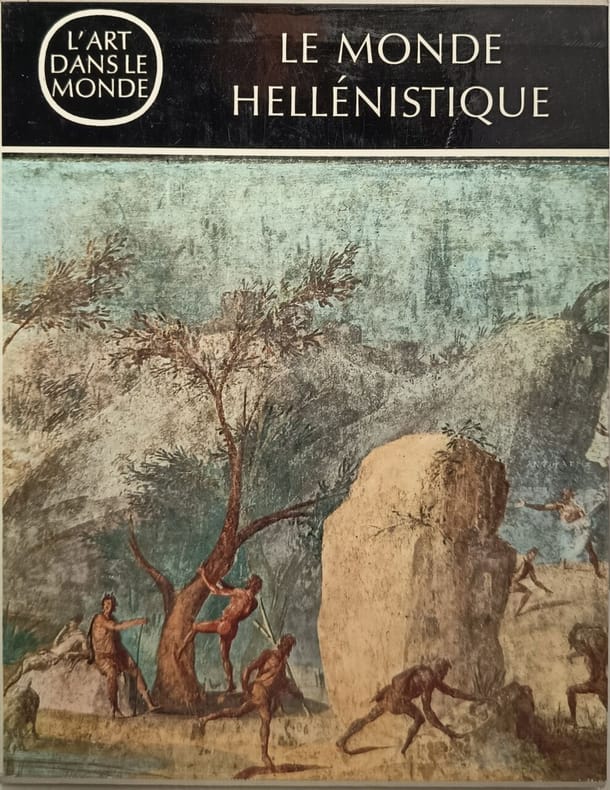
19707634ÉDITIONS ALBIN MICHEL PARIS 1970 267 pages in8. 1970. reliure editeur pleine toile. 267 pages. Ouvrage de référence sur la période hellénistique publié en 1970 et traduit de l'anglais. Il s'agit d'un livre d'art et d'histoire richement illustré en couleurs qui couvre la civilisation grecque et orientale après les conquêtes d'Alexandre le Grand
Very Good Turkish, Ottoman (1500-1928) Paperback. Chipped on margins. Some owner notes. Otherwise a good copy. Roy. 8vo. (24 x 18 cm). In Ottoman script. 32 p. This rare book includes the royal travel of Sultan Abdülmecid in 1262 AH [1846 AD] to Roumelia. From Edirne, Abdülmecid proceeded to Eski Zagra (Stara Zagora), Kizanlik (Kazanluk), Gabrova (Gabrovo), Tirnova (Turnovo), Rusçuk (Ruse), Silistre (Silistra), and Varna. The route of the 1846 tour followed closely, except in reverse order, Mahmud II's tour of 1837. According to witness accounts, along the way, the sultan was greeted everywhere with poetic recitations and songs of praise and prayer, both in Ottoman and Bulgarian. The pride of place among welcoming parties invariably fell on students, of all creeds, most clad in white uniforms, some in solemn church-going attire, with flowers and green branches in their hands. At every stop, ceremonial cannon salvos were fired during the day and elaborate firework illuminations were performed at night. In the town of Kizanlik, known then as now for the most fragrant roses and the best rose oil, the sultan's visit coincided, possibly by design, with the rose harvesting season. So the locals sprinkled rose water and poured rose oil before the sultan's cavalcade. According to Hristo Stambolski, in the three days of the sultan's stay in town, no rose harvesting was done so that the whole area would be exquisitely scented in his honor. For his part, the sultan had doctors vaccinate all children against smallpox in public before sending each one off with a small gift of money. Even people with rare diseases were, on occasion, summoned to the sultan's presence so his doctors could cure them. The sublime visit caused the locals, who were unaccustomed to direct contact with the center of power, quite a stir. The most detailed account, albeit from a hostile source, relates the sultan's visit to Rusçuk, which, at four days, may have also been the longest. According to Nayden Gerov, the greeting ceremonies proceeded on a communal basis, with the Jews being placed closest to the town walls, next to them the Armenians, then the Bulgarians, and finally, the Muslims, situated the farthest from town, yet being the first to see and welcome the sultan. As the sultan approached, each group of youngsters would in turn sing for him, everyone else bowing profusely. Based on Gerov's description, it seems that Abdülmecid was dressed in a slightly more luxurious fashion than during state ceremonies in Istanbul. ((Source: Sultan Abdülmecid's Tour of Rumelia and the Trope of Love by Stephanov). The sultan began to travel by the way of the gate of Yedikule in Istanbul in May 6, 1846. He followed the way of Ayastefanos, Silivri, Çorlu, Burgaz, Edirne, Zagra-i Atik, Kizanli, Trnova, Rusçuk, Silistre, Rusçuk, Shumnu, and Varna and came back to Istanbul by way of the sea on June 14, 1846. During this travel, the Sultan listened to people's problems and ordered the authorities to be solved with those problems. He received successful military and administrative authorities in settlements on the way of travel and rewarded them. He also received the governors of Serbia, Eflak and Bogdan, and the representatives of foreign states. With this travel, the Sultan aimed to strengthen the connection to the center of people and administrators in provinces. Özege 17910. First Edition.
br. Schiacciato dalla preponderante figura del figlio Alessandro Magno, Filippo II, in circa 24 anni (360-336 a.C.), seppe trasformare la Macedonia da stato periferico, vessato dalle grandi poleis, in regno potentissimo, in grado di guidare il mondo greco nella spedizione contro l'impero persiano. In questo libro l'autore ne stila un agile ritratto, mettendone in evidenza non solo le indiscusse doti strategiche, che gli permisero di imporsi sui pericolosi vicini e di impossessarsi di ricche regioni, ma soprattutto la capacità di abbinare - e in molti casi sostituire - alla spada la forza della parola, trovando le giustificazioni più persuasive ad azioni che, in realtà, ebbero nel desiderio di conquista e nella volontà di allargare i confini del regno le motivazioni più autentiche.