610 résultats
Book is fine. DJ spine very slightly sunned now in plastic. ; 9.75 x 1 x 6.5 Inches; 220 pages
Former owner's name on ffep. One small bump to top corner. Dustjacket has minor shelfwear and rubbing. ; 9.75 x 1 x 6.5 Inches; 220 pages
Top corner of wrap has slight tear. ; Clarendon Paperbacks; 0.97 x 9.23 x 6.24 Inches; 440 pages; In 338 BC Philip II of Macedon established Macedonian rule over Greece; he was succeeded in 336 by his son Alexander the Great, whose conquests in the twelve years that followed reached as far as the Russian steppes, Afghanistan, and the Punjab, and created the Hellenistic world. The study of Macedonia is now a growing point in ancient history. The first ever history of ancient Macedonia has now been completed in three volumes by N. G. L. Hammond, helped by G. T. Griffith and F. W. Walbank. On the basis of that work Professor Hammond now provides in one volume a history of the Macedonian state and its institutions both in Europe and in the Hellenistic kingdoms in Asia and Egypt, on which much new light has been shed by epigraphic and archaeological discoveries. Those institutions have had a profound influence on subsequent history. Full references are given to the ancient sources of information and to archaeological, numismatic, and epigraphic articles.
Bottom corner is slight bumped. ; Clarendon Paperbacks; 0.97 x 9.23 x 6.24 Inches; 440 pages; In 338 BC Philip II of Macedon established Macedonian rule over Greece; he was succeeded in 336 by his son Alexander the Great, whose conquests in the twelve years that followed reached as far as the Russian steppes, Afghanistan, and the Punjab, and created the Hellenistic world. The study of Macedonia is now a growing point in ancient history. The first ever history of ancient Macedonia has now been completed in three volumes by N. G. L. Hammond, helped by G. T. Griffith and F. W. Walbank. On the basis of that work Professor Hammond now provides in one volume a history of the Macedonian state and its institutions both in Europe and in the Hellenistic kingdoms in Asia and Egypt, on which much new light has been shed by epigraphic and archaeological discoveries. Those institutions have had a profound influence on subsequent history. Full references are given to the ancient sources of information and to archaeological, numismatic, and epigraphic articles.
Very light pencil underlining to a few pages. ; Pitt Paperback; 94; 8.5 X 5.5 X 0.5 inches; 196 pages
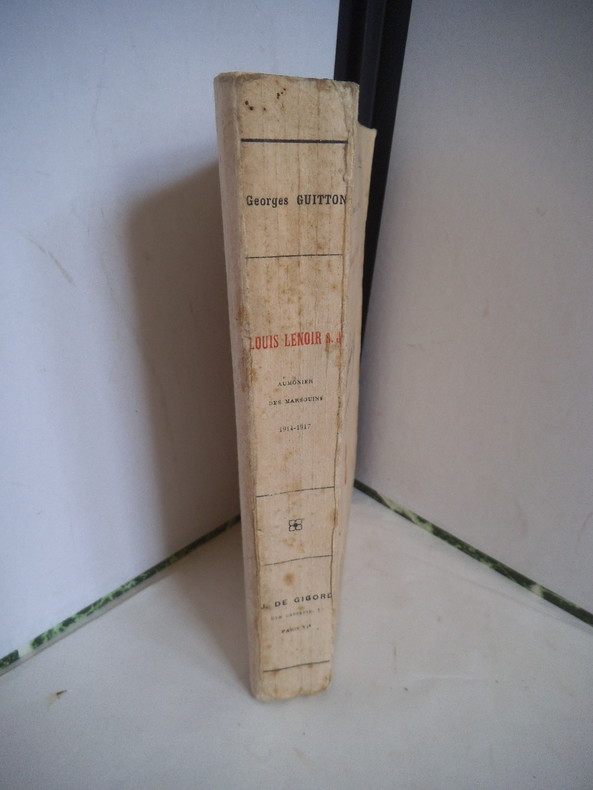
2378PARIS, J de Gigord & Action Populaire - In-8 débroché - frontispice - 9 cartes - 545 pages
PARIS, J de Gigord & Action Populaire - In-8 débroché - frontispice - 9 cartes - 545 pages
11661In 12 broché, faux-titre, titre, frontispice (portait photos. de Louis LENOIR) titre, 546 pages, 9 cartes, J de Gigord éditeur sans date. La guerre de mouvement, la Champagne, apostolat d’ambulance, la Somme, vers l’orient, la Macédoine,
Very Good French Original decorated map. Hand-coloured. Oblong elephant folio. (54 x 76 cm). In French. Shows Greece, Archipelago, Isle de Candie, Asia Minor (Western side), and East Mediterranean. Delisle od de l'Isle was a French cartographer known for his popular and accurate maps of Europe and the newly explored Americas. At 27, Delisle was admitted into the French Académie Royale des Sciences, an institution financed by the French state. After that date, he signed his maps with the title of "Géographe de l'Académie". Five years later, he moved to the Quai de l'Horloge in Paris, a true publishing hub where his business prospered. Delisle's progress culminated in 1718 when he received the title of Premier Géographe du Roi. He was appointed to teach geography to the Dauphin, King Louis XIV's son, a task for which he received a salary. Again, his father's reputation as a man of science probably helped the younger Delisle. Historian Mary Sponberg Pedley says, 'once authority was established, a geographer's name might retain enough value to support two or three generations of mapmakers'. Delisle's case, it could be said that his accomplishments surpassed his father's. Up to that point, he had drawn maps not only of European countries, such as Italy, Spain, Germany, Great Britain, Poland, and regions such as the Duchy of Burgundy, but he had also contributed to the empire's claims to recently explored continents of Africa and the Americas. Like many cartographers of his day, Delisle did not travel with the explorers. He drew maps mostly in his office, relying on a variety of data. The quality of his maps depended on a solid network to provide him first-hand information. Given his family's and his own reputation, Delisle had access to fairly recent accounts of travellers who were returning from the New World, which gave him an advantage over his competitors. Being a member of the Académie, he also kept current with recent discoveries, especially in astronomy and measurement. When he could not confirm the accuracy of a source, he would indicate it clearly on his maps. For instance, his Carte de la Louisiane shows a river that the baron of Lahontan claimed he discovered. As no one else could validate it, Delisle noted a warning to the viewer that it might not exist. (Source: Wikipedia). Tooley, p.43.
1993130147France-Empire, coll. « Histoire Et Terroirs » 1993 In-8 broché 23,9 cm sur 15,3. 284 pages. Bon état d’occasion.
2002100124497University of California Press 2002 362 pages 22 8x2 4x14 6cm. 2002. Broché. 362 pages.
224629Berlin, Allgemeiner Verein für deutsche Literatur, 1903 in-8, [4] ff. n. ch., 456 pp., [4] ff. n. ch. de catalogue, avec 21 planches hors texte, percaline Bradel bordeaux, dos et plat supérieur ornés de filets dorés, tranches marbrées (reliure de l'éditeur). Charnière inférieure entièrement fendue.
Minor shelfwear. Foxing to textblock. Minor shelfwear to DJ. ; Until recently, popular biographers and most scholars viewed Alexander the Great as a genius with a plan, a romantic figure pursuing his vision of a united world. His dream was at times characterized as a benevolent interest in the brotherhood of man, sometimes as a brute interest in the exercise of power. Green, a Cambridge-trained classicist who is also a novelist, portrays Alexander as both a complex personality and a single-minded general, a man capable of such diverse expediencies as patricide or the massacre of civilians. Green describes his Alexander as "not only the most brilliant (and ambitious) field commander in history, but also supremely indifferent to all those administrative excellences and idealistic yearnings foisted upon him by later generations, especially those who found the conqueror, tout court, a little hard upon their liberal sensibilities. " This biography begins not with one of the universally known incidents of Alexander's life, but with an account of his father, Philip of Macedonia, whose many-territoried empire was the first on the continent of Europe to have an effectively centralized government and military. What Philip and Macedonia had to offer, Alexander made his own, but Philip and Macedonia also made Alexander form an important context for understanding Alexander himself. Yet his origins and training do not fully explain the man. After he was named hegemon of the Hellenic League, many philosophers came to congratulate Alexander, but one was conspicuous by his absence: Diogenes the Cynic, an ascetic who lived in a clay tub. Piqued and curious, Alexander himself visited the philosopher, who, when asked if there was anything Alexander could do for him, made the famous reply, "Don't stand between me and the sun. " Alexander's courtiers jeered, but Alexander silenced them: "If I were not Alexander, I would be Diogenes. " This remark was as unexpected in Alexander as it would be in a modern leader. For the general reader, the book, redolent with gritty details and fully aware of Alexander's darker side, offers a gripping tale of Alexander's career. Full backnotes, fourteen maps, and chronological and genealogical tables serve readers with more specialized interests.; 8.5 x 1.5 x 5.75 Inches; 617 pages
1970460LONDON. WEINDEN FELO AND NICOLSON. 1970. IN-8 CARRE DE 272 PAGES, RELIURE DE L’EDITEUR PERCALINE BLEUE, TITRE EN BLANC SUR DOS LISSE ,SOUS JAQUETTE ILLUSTREE EN COULEURS. ILLUSTRE DE 150 FIGURES EN NOIR ET DE 48 PLANCHES HORS-TEXTE EN COULEURS. INDEX, BIBLIOGRAPHIES. CARTES. CACHETS DE BIBLIOTHEQUE, PETITS DEFAUTS, SINON BON EXEMPLAIRE.
Large format beautifully illustrated book about the treasures of the Archaeological Museum of Thessaloniki. 378p. This extremely large [14x11x4 inches - 35x28x4cm] and heavy volume weighs. 3.5 kg.- almost 8 lbs [7 Copies found WorldCat] Book
Giuseppe Gino Guarnieri La Macedonia e la questione Macedone. , L. Colombo 1935, La Macedonia e la questione macedone, con illustrazioni e cartine dimostrative. La brossura editoriale presenta usuali segni del tempo e scoloriture, le pagine sono ingiallite ma completamente fruibili. Buono (Good) . <br> <br> <br> 40<br>
Very Good Latin Original map. Oblong 4to. (25 x 34,5 cm). In Latin. From 'Mercator Atlas'. A very good copy. A detailed and decorative engraved map. B/w. Including Europae Pars (Thrace) and Black Sea, Aegean and Mediterranean, and with all ancient toponyms and names of regions including Cyprus and Syriae (Syria). Could not be find map-maker and being from which book. An early and decorative map of Asia Minor.
New French Paperback. Roy. 8vo. (24 x 17 cm). In French. 255 p. Foreword Acknowledgments List of Abbreviations Introduction 1. Greek Foreign Policy and the Macedonian Question: 1878-97 I. The Eastern Crisis: 1876-78 II. The Balkan Crisis: 1886 III. The Greek Crisis: 1897 2. 1903: Annus Mirabilis I. The Ministry and the Reforms Before Ilinden II. Ilinden III. The Rhallys Initiative 3. The Macedonian Defence: 1903-07 I. The Dragomises and the Macedonian Defence II. The Ministry After Ilinden: 1903-04 III. The Ministry and the Macedonian Defence 4. The Defence and Greek-Politics I. 1904-1907: Obstacles to the Defence II. 1908-09: The Young Turk and Goudi Revolutions III. Goudi's favourites: Stephanos and Venizelos Conclusion Bibliography.
EINAUDI 1944 XII - 345 PP. “FONDO DI MAGAZZINO: RESIDUO DI ADESIVO DELL'ACETATO AI CONTROPIATTI SEGNI DEL TEMPO, INGIALLIMENTO DELLE PAGINE, TUTTE LE PAGINE ANCORA DA PARIRE, LETTERALMENTE INTONSO”<br/>
Autori: Georges Castellan.
In 8, pp. 31 + (1b). Br. ed. Br. ed. Studio relativo alla potenza navale della marina militare degli stati ellenistici, in particolare di quella di Filippo di Macedonia e di Alessandro Magno.
1632PARIS, fayard - 1994 - In-8 ° broché - Cartes dans le texte - 464 pages -Ex. propre
PARIS, fayard - 1994 - In-8 ° broché - Cartes dans le texte - 464 pages -Ex. propre
New French Paperback. Roy. 8vo. (24 x 17 cm). In French. 222 p. I. Introduction Concepts, goals, methods The location General remarks II. The background to the tension and the komitadji phenomenon Conflict types - general overview The escalation of the conflicts Some temporal and spatial patterns of ceta activity Ceta types and their origins The social background and functions of the revolutionary organizations Financial sources Methods of rule III. Violence in Skopje Sanjak Everyday violence The practice of destabilization - other forms of violence IV. Conflict types in Prizren Sanjak General tendenciesTraditional banditry - weakening central power Banditism vs. the state authorities The state treatment of Banditism - a successful solution? Violence as an alternative source of income for Ottoman state officials Conflicts indirectly generated by the competition between the PowersThe case of the Bogoslovie in Prizren (1899-1900) Protests against the opening of new consulates and trade agencies Actions against sacred places during Christian festivals The Albanian village vs. the town Conflicts stemming from border positions V. Local strategies of coexistence and survival, the politics of neighbouring states and the attempts of the Ottoman government and Great Powers to restore peace Scratching the surface: exit strategies - Symptoms of economic breakdown or of collapsing public security? The macroeconomic situation before 1903 and attempts at reform Prevailing agrarian (social) problems after 1903 The response To the challenge I: The central government and local society The ceta problem reloaded Community-level response to the changes II: The strategy of the Serbs in Macedonia Strategies of intimidation and strategies of survival VI. Epilogue Notes in the margin: the limits to Muslim-Christian cooperation The new order Bibliography Index.