1 751 résultats
BIB-29595213Original Hardcover. Publisher: John Wiley & Sons Utg. 2007 Original Hardcover 7720 p. This book is brand new. Language: Engelska We have this book in our store house - please allow for a couple of extra days for delivery. hardcover
1807014368New York: Printed and Sold By Collins and Perkins 1807. Contemporary calf new calf spine and leather spine label One-word ink correction on p. 62 not on errata leaf. Lightly browned; a little soiling especially on lower corners and occasional minor stains; small repairs in one blank outer margins and two blank upper corners. Collation: 239 1 pp. Nineteen wood-engraved text illustrations.First textbook of midwifery by an American physician. Bard prepared this book for prospective midwives who could not afford an adequate formal education. His text "embodied the standard obstetric teaching of his day leaning heavily on the authority of Smellie Baudelocque Perfect and Denman and quoting selectively from their case reports. . . . He described well the mechanism of labor and presented an excellent picture of pre-eclampsia"Speert Obstetrics and gynecology in America: a history 126-27. Bard was one of the leading New York physicians of his time. His favorite branch of medicine was midwifery. . . . Perhaps no physician in this country has ever enjoyed a larger share of practice in this department or acquired a higher reputation as an accoucheur" Kelly and Burrage Dictionary of American medical biography p. 60. Garrison-Morton 6163.1; Austin 116; Norman 120. See Cutter and Viets Short history of midwifery pp. 160-64 213-14; Kelly and Burrage pp. 58-60; Thoms Chapters in American obstetrics pp. 26-34 the title page is reproduced on p. 29. First Edition. Hard Cover. Very Good. Printed and Sold By Collins and Perkins Hardcover
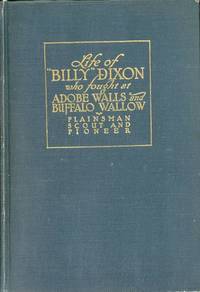
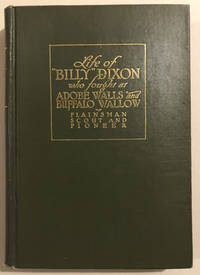
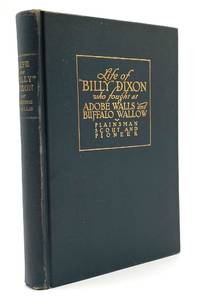
191453354Guthrie Oklahoma: Co-Operative Publishing Co. 1914. 1914. First Edition. 8vo. Inked inscription on the front free fly leaf "To E. A. Brininstool With Kindest regards and best wishes of the author. Olive K. Dixon Miami Texas Jan. 4 - 1924." Green Cloth 320 pp. Frontis. Preface Illustrations from old photographs. "A narrative in which is described many things relating to the early Southwest with an account of the fight between Indians and buffalo hunters at Adobe Walls and the desperate engagement at Buffalo Wallow for which Congress voted the Medal of Honor to the survivors." Born in West Virginia in 1850 Billy Dixon lived in Missouri from 1862 until 1865 when he took a job with a freight contractor as a bull-whacker and mule-skinner in Kansas. He freighted throughout western Kansas and Nebraska and eastern Colorado for 4 years. In 1869 Dixon joined a hunting and trapping venture in the Saline River Valley northwest of Fort Hays. Billy's excellent marksmanship soon led him to the highly profitable trade in buffalo hides. He invested in a supply store and did quite well until his partner "sold out" and took off with the proceeds during Billy's absence. He hunted the Texas Panhandle in the early and mid 1870's. Billy Dixon was one of 28 men and 1 woman who fought off a large party of hostile Indians in the second Battle of Adobe Walls. He scouted for Gen. Nelson Miles in 1874 when carrying dispatches to Fort Supply Dixon and 5 others were attacked by Indians. Billy Dixon received the Congressional Medal of Honor for his part in the action. Still scouting for General Miles Dixon was present at the rescue of the Germaine sisters from the Cheyenne in November 1874. Dixon saved the Nolan Expedition in 1877 by leading them to water while in pursuit of hostile Comanches on the Staked Plains. Dixon returned to civilian life in 1883. He worked on the Turkey Trot Ranch before homesteading at the site of the original Adobe Walls. Eventually he homesteaded again in Cimarron County Oklahoma where he died in 1913. An excellent biography. An exceptionally clean fine bright copy with only the slightest of rubbing to spine ends and corners. A 2 1/2" x 3 1/2" photograph of Hugh Dixon on the front pastedown sheet and another on a fly leaf of Olive Dixon dated 1932. Pencilled notations by either Brininstool or Dixon at four locations. Rare especially in this condition. Protected in a custom cloth clamshell case with titles in gilt on front cover and leather label on spine. Co-Operative Publishing Co., 1914. hardcover
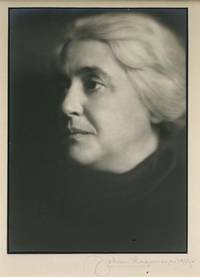
1927225931Carmel Calif 1927. Vintage gelatin silver print bust portrait in profile. Signed and dated in pencil "Johan Hagemeyer 1927" on the mount. 1 vols. 22 x 16.5 cm. 8-3/4 x 6-1/2 inches. Matted. Fine. Docketed on verso of mount in pencil "#3. Vintage gelatin silver print bust portrait in profile. Signed and dated in pencil "Johan Hagemeyer 1927" on the mount. 1 vols. 22 x 16.5 cm. 8-3/4 x 6-1/2 inches. Magnificent portrait of the great suffragist reformer activist free-thinker and poet Sara Bard Field 1882-1974. Field was also the passionate lover of the anarchist C.E.S. Wood and the couple lived together in a celebrated "free union" first in San Francisco then in Los Gatos "where they built a house . that became a gathering place for Bay area writers artists and political activists" American National Biography; and where the famous Bay area photographer Johan Hagemeyer 1884-1962 made this fine indelible portrait in the year her first volume of poems appeared THE PALE WOMAN.<br /> <br /> According to THE BANCROFT LIBRARY'S on line "Guide to the Johan Hagemeyer Photograph Collection":<br /> <br /> "In late 1916 just prior to Hagemeyer's return to California - and despite having had little photographic experience - Hagemeyer visited Stieglitz's 291 salon in New York City. The two developed an immediate rapport and the meeting proved to be decisive for Hagemeyer. "We talked" Hagemeyer later recalled "and he practically by way of speaking made me follow photography. I had already gone overboard for it" OHT 22.<br /> <br /> "Back in California Hagemeyer first apprenticed with a Berkeley-based commercial portrait photographer named McCullagh. Soon afterwards he moved south to Pasadena and in early 1918 met Edward Weston already by then an accomplished photographer based in Tropico now Glendale. The two took an immediate liking to each other and formed a friendship and working partnership that was of mutual benefit: Weston opened his home and studio to the upstart Hagemeyer and Hagemeyer introduced the relatively unschooled Weston to new worlds of intellectual and aesthetic learning. The two would have a profound influence on each others' artistic development for years to come. Arch. see essays by Lorenz and Schaefer<br /> <br /> "Hagemeyer's talent developed rapidly and by the early 1920s he was exhibiting his work in many important photographic salons and garnering much popular and critical acclaim. After moving to San Francisco at the end of World War One Hagemeyer soon discovered the intellectual and artistic colony of Carmel-by-the-Sea. In 1923 he established his first studio in Carmel and would remain anchored there for over 20 years. In 1924 he established the town's first art gallery - based out of his studio - where he exhibited the works of local painters sculptors and photographers and hosted very popular musical performances. Shortly thereafter Hagemeyer opened a second studio in San Francisco whose clientele could be rivaled by that of Carmel only during the smaller town's summer vacation season. In 1927 he was appointed staff photographer of the artistic/literary magazine The San Franciscan . unknown
191453297Guthrie Oklahoma: Co-Operative Publishing Co. 1914. 1914. First edition. First Edition. 8vo. Green Cloth 320 pp. Frontis. Preface Illustrations from old photographs. "A narrative in which is described many things relating to the early Southwest with an account of the fight between Indians and buffalo hunters at Adobe Walls and the desperate engagement at Buffalo Wallow for which Congress voted the Medal of Honor to the survivors." Born in West Virginia in 1850 Billy Dixon lived in Missouri from 1862 until 1865 when he took a job with a freight contractor as a bull-whacker and mule-skinner in Kansas. He freighted throughout western Kansas and Nebraska and eastern Colorado for 4 years. In 1869 Dixon joined a hunting and trapping venture in the Saline River Valley northwest of Fort Hays. Billy's excellent marksmanship soon led him to the highly profitable trade in buffalo hides. He invested in a supply store and did quite well until his partner "sold out" and took off with the proceeds during Billy's absence. He hunted the Texas Panhandle in the early and mid 1870's. Billy Dixon was one of 28 men and 1 woman who fought off a large party of hostile Indians in the second Battle of Adobe Walls. He scouted for Gen. Nelson Miles in 1874 when carrying dispatches to Fort Supply Dixon and 5 others were attacked by Indians. Billy Dixon received the Congressional Medal of Honor for his part in the action. Still scouting for General Miles Dixon was present at the rescue of the Germaine sisters from the Cheyenne in November 1874. Dixon saved the Nolan Expedition in 1877 by leading them to water while in pursuit of hostile Comanches on the Staked Plains. Dixon returned to civilian life in 1883. He worked on the Turkey Trot Ranch before homesteading at the site of the original Adobe Walls. Eventually he homesteaded again in Cimarron County Oklahoma where he died in 1913. An excellent biography. An exceptionally clean fine bright copy with only the slightest of rubbing to spine ends and corners. Rare especially in this condition. Protected in a custom clamshell box with title author and year of publication in gilt on leather label on spine. Co-Operative Publishing Co., 1914. hardcover
1735437057Paris : Barde Manget & Compagnie 1735. 1st edition. Hardcover. Good copies 38 in aniline-calf-covered boards. Covers and spines nicked dust-dulled and roughly rubbed as with age with some cracks and loss material dusting. Internally some browning and light foxing. Physical description; 38 vols 17 cm. Contents; vols 1 - 13; 18 - 41. Subjects; Contes de fées. Contes de fées Histoire et critique. Criticism interpretation etc Fairy tales. Fairy tales History and criticism. Fairy tales French. Paris : Barde, Manget & Compagnie hardcover
2016119719Routledge. New. 2016. Hardcover. 1611329191 . FREE UPGRADE to Courier/Priority Shipping Upon Request - IN STOCK AND IMMEDIATELY AVAILABLE FOR SHIPMENT - Flawless copy brand new pristine never opened -- with a bonus offer-- . Routledge hardcover
2016119718Routledge. New. 2016. Paperback. 1611329205 . FREE UPGRADE to Courier/Priority Shipping Upon Request - IN STOCK AND IMMEDIATELY AVAILABLE FOR SHIPMENT - Flawless copy brand new pristine never opened -- with a bonus offer-- . Routledge paperback
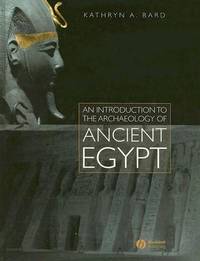
200858394Blackwell. New. 2008. Hardcover. 1405111496 . FREE UPGRADE to Courier/Priority Shipping Upon Request IN STOCK AND IMMEDIATELY AVAILABLE FOR SHIPMENT - Flawless copy brand new pristine never opened -- 452 pp. With 154 ills. 33 col. . 25 x 20 cm. -- with a bonus offer-- . Blackwell hardcover
200858395Blackwell. New. 2008. Paperback. 1405111488 . FREE UPGRADE to Courier/Priority Shipping Upon Request IN STOCK AND IMMEDIATELY AVAILABLE FOR SHIPMENT - Flawless copy brand new pristine never opened -- 452 pp. With 154 ills. 33 col. . 25 x 19 cm. -- with a bonus offer-- . Blackwell paperback
199760669Harry Abrams; Et Al. New. 1997. Hardcover. 0810912406 . FREE UPGRADE to Courier/Priority Shipping Upon Request IN STOCK AND IMMEDIATELY AVAILABLE FOR SHIPMENT - Flawless copy brand new pristine never opened -- 176 pp. With 152 ills. 121 col. . 22 x 27 cm. -- with a bonus offer-- . Harry Abrams; Et Al hardcover
2014107846Bard Center. New. 2014. Paperback. 0300200722 . FREE UPGRADE to Courier/Priority Shipping Upon Request - IN STOCK AND IMMEDIATELY AVAILABLE FOR SHIPMENT - Flawless copy brand new pristine never opened - -- with a bonus offer-- . Bard Center paperback
Z1-C-084-00256C. V. Mosby Co. Used - Good. Contains some ink pen markings 1942 edition. Binding slightly torn. Ships from UK in 48 hours or less usually same day. Your purchase helps support Sri Lankan Children's Charity 'The Rainbow Centre'. Ex-library so some stamps and wear but in good overall condition. 100% money back guarantee. We are a world class secondhand bookstore based in Hertfordshire United Kingdom and specialize in high quality textbooks across an enormous variety of subjects. We aim to provide a vast range of textbooks rare and collectible books at a great price. Our donations to The Rainbow Centre have helped provide an education and a safe haven to hundreds of children who live in appalling conditions. We provide a 100% money back guarantee and are dedicated to providing our customers with the highest standards of service in the bookselling industry. C. V. Mosby Co unknown
189036700Annandale NY: 1890 through 1896. 1890's 1890's. Good. - A collection of original photographs and original brochures and ephemeral publications relating to St. Stephen's College of Annandale NY which was founded by John & Margaret Bard and was later to become Bard College of Annandale-on-the-Hudson. Included are 30 original photographs including 29 cyanotypes 13 of which depict college buildings the remaining 17 being portraits and scenery including the campus Zabriskies Falls and interiors. The cyan-tinged images range from 4 inches high by 3-1/4 inches wide to 9 inches high by 6-1/2 inches wide with a variety of sizes in between. One of the images is an exception being sienna-toned and not in fact a cyanotype. The photographs are in various condition some are fine while others are creased or lightly stained with one portrait having several tears to the edges.<p>Also included in this collection are 14 ephemeral publications and brochures relating to St. Stephen's College with programs and flyers for events including 3 relating to the ritual burying of the algebra by incoming freshmen. The items were all apparently once removed from a scrapbook and thus the condition varies. A few have stains while several have remnants of paper or glue on the versos. <p>Following is a list of the images represented by the photographs:<p>1 The entrance to Potter Hall part of Stone Row with a horse-drawn cart.<p>2 An unidentified image which looks like a dormitory building.<p>3 Chapel of Holy Innocents and St. Margaret's Well with the Stone Row dormitories in the background<p>4 Chapel of Holy Innocents & St. Margaret's Well 1890 Part of Stone Row in the background.<p>5 Bard Hall 1891. There are glue or chemical stains to the edges of this photo.<p>6 An unidentified image. This is a small photo with creasing & stains.<p>7 Aspinwall Hall.<p>8 Interior of the Chapel of Holy Innocents Christmas 1890. There is a light corner stain.<p>9 Chapel of Holy Innocents 1891. There is a light corner stain.<p>10 Interior of the Chapel of Holy Innocents decorated at Christmas.<p>11 Chapel of Holy Innocents.<p>12 Landscape in snow with the Chapel of Holy Innocents & St. Margaret's Well. There is creasing to this photo mainly at the edges.<p>13 "Stone Row" dormitories 1893 with the Chapel of Holy Innocents & St. Margaret's Well in the foreground.<p>14 Interior of a dorm room with 2 students.<p>15 A staged photo of 2 students in wedding attire one is in drag.<p>16 Three Class of 1894 students. This photo has a crease along the center.<p>17 through 22 Six different photos of Zabriskies Falls. One a small sepia-toned photo has a crease along the edge another has minor creases and a third has a light stain.<p>23 Large group of students in front of the Chapel of Holy Innocents.<p>24 Three students. There is creasing to this photo.<p>25 A view of the campus.<p>26 Photo of the Class of 1897. This photo is quite dark.<p>27 Interior of a room with 2 students.<p>28 A group of 13 students June 1893.<p>29 A view from the campus showing the Catskills & Hudson River.<p>30 A portrait of the President of the College Robert B Fairbairn.<p>The ephemera related to St. Stephen's College consists of:<p>1 A 4-page "St. Stephen's College Glee Club" program bound in cream wraps titled in red with a silk cord. The program is dated "March '93" in ink at the bottom of the cover.<p>2 A 2-page "St. Stephen's College" brochure. The top edge of the second page is trimmed without loss of text.<p>3 A 4-page St. Stephen's College "Field Day / June 20 1893" brochure with penciled notes indicating the winners.<p>4 The 4-page "Thirty-Fourth Commencement" program. Dated June 21 1894.<p>5 "The St. Stephen's College Messenger" issue dated April 1896.<p>6 A broadside of the St. Stephen's College schedule and rules. The broadside is stained.<p>7 A small card with the program for the "Eulexian Society Reunion Supper" a literary society dated June 21 1893.<p>8 An announcement printed on mourning stationery regretting that "The Class of Ninety-six" could not invite the recipient to "the burying of its Algebra on account of the secrecy of the burial". Together with the original mourning envelope.<p>9 A 3-page program for the "Laying of the Corner-stone" of the Hoffman Library dated June 22 1893. Construction of the library began in 1893 and was completed in 1895.<p>10 A humorous description of the death and burial of algebra in 1894 and it's subsequent exhumation by the class of 1897. The 4-page announcement is printed on light gray card stock shaped as a tombstone. The original mourning envelope is present.<p>11 A 4-page program with class statistics entitled "Class Day S. Stephen's College. June 15 1892". In addition to age height and weight the statistics include favorite drink "brandy" "rain water" "blood" etc favorite study "himself" "women" "how to do nothing" etc favorite amusement "sleeping" scrapping" "being sick" etc and others.<p>12 The 4-page "Thirty-Third Annual Commencement" program dated June 22 1893 with profuse penciled notes.<p>13 Unused 4-page "St. Stephen's College" letterhead.<p>14 The 1894 "Funeral" program for algebra printed in red on buff card stock in the shape of a coffin. Purple mourning lines frame the edges of the 4 pages of card stock which is bound at the top with red cotton ribbon.<p>The tradition behind the burial of the algebra was sort of a light hazing ritual performed by freshmen students. Thirty days after arriving at Bard the freshmen were to steal an algebra book which they were to then sign and bury with several bottles of wine. Then the night before commencement the students now seniors would dig it up and consume the wine raising a toast to their graduating class. The ritual is described as follows in a 1930 issue of the Lyre Tree a student newspaper: "There is a tradition of long standing at St. Stephen's that within 30 days after the close of the first semester the Freshman class shall with all the ritual and solemnity due to the occasion secretly inter an algebra autographed by each member of the class and with it a certain quantity of wine. To be legal every Freshman must be at the grave during the burial. At the end of the four years the algebra is exhumed and burned on a funeral pyre during the Class Day exercises. Toasts are drunk to the college and to the outgoing and incoming Senior class."<p>"St. Stephen's College was established as a Training College for the Ministry and as such it was requested to make an annual report to the Convention of the Diocese of New York. The object was the supervision of the young men who had devoted themselves to the ministry of the Church. It was afterwards opened to any who would not disturb the general purpose for which it was originally instituted." Quoted from "The Thirty-First Annual Catalogue of St. Stephen's College Annandale N.Y. 1892-93".<p>The land now owned by Bard College was once composed of several country estates Blithewood Bartlett Sands Cruger's Island and Ward Manor/Almont among them. John & Margaret Bard purchased a part of the Blithewood estate in 1853. Renaming the property as Annandale they established a parish school the following year. They then began building the Chapel of the Innocents next to Bard Hall in 1857 and the following year donated the unfinished Chapel and surrounding acreage to New York's Episcopal diocese which had promised financial support to grow the school into a theological college. St. Stephen's College was thus founded in 1860. In honor of its founder the school changed its name to Bard College in 1934. Ten years later in 1944 Bard became a co-educational school welcoming female students and faculty. Annandale, NY: 1890 through 1896. [1890's] paperback
1547This copy is quite clean. The hinges are solid unbroken. There is some wear from rubbing on the bottom of the spine and the corners. One corner at bottom with small spot worn through; very light rubbing to the top corners and top of the spine. There is also some rubbing along the edge of the spine on the front side. " Near Fine. <p>Barde Frederick S. compiler. Life and Adventures of "Billy" Dixon of Adobe Walls Texas Panhandle. Guthrie TX: Published by Co-Operative Printing Co. 1914.</p> <br /> <p>First Edition. Blue cloth titles stamped in gold gilt on the front cover and spine. 320 pages. Numerous b/w photographs.</p> <br /> <p>Dixon was born in Ohio County West Virginia on September 25 1850. He was orphaned when he was 12 years-old and sent to live with uncle in the fall of 1864. He worked as a woodcutter along the Missouri River and later worked as a government contractor in Kansas. He tried a couple other jobs but in the winter of 1868 he "joined a group who were hunting and trapping on the Saline River northwest of Fort Hays Kansas." For a short time Billy had a ranch supply store with a partner manager who sold the merchandise and departed with the money. Billy returned to hunting buffalo sometimes having 4-5 hunters/skinners working for him." In 1872 Billy had moved to Dodge City and in the fall and winter in 1872 and 1873 marked the beginning of the "high tide of buffalo hunting and they were killed by the thousands. "Early in the morning of June 27 1874 a combined force of some 700 Comache Cheyenne Koowa and Arapho warriors led by Comanch Chief Quanah Parker and Isa-tai attacked the buffalo camp at Adobe Walls the second battle of Adobe Walls. It was in this battle that Dixon and 26 addition men and one women were forced into two stores and a saloon to stand off the Indians. It was here that Dixon became a hero when he supposedly knocked an Indian off his horse from nearly a mile away. The battle for Adobe Walls came to an end. A few months later Dixon and a group of six other men were attacked by Indians. Dixon and his men took shelter in a buffalo wallow. For three days they managed to hold off the Indians. One man was killed and the remaining six were wounded before the Indians turned away because of freezing rain. Dixon and the other survivors of "The Buffalo Wallow Fight" were awarded the Medal of Honor. Dixon continued to work with the Army until 1883 when the returned to civilian life. He married Olive King Dixon and they had seven children. On March 9 1913 he died of pneumonia. His remains are now interred at the Adobe Walls site. Much of the above information was gained from Kathy Weiser/Legends of America updated June 2017 either quoted or paraphrased. She has done a wonderful job summarizing the life of Billy Dixon and deserves credit for it.</p> . unknown
7032, Berlin/ Bologna, Verlag Julius Bard/ Casa Editrice Apollo, 1923.**, Relie en toile bleu, cadre fleuronne d' argent, dos orne de fil. argent, 25,5x32,5cm, 36pp + 100pp planches n/b.
1974mon0000417684Dekker Marcel Inc 1974-01-01. Hardcover. Very Good. in x in x in. Dekker, Marcel Inc hardcover
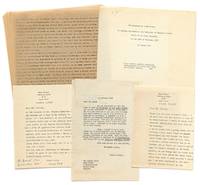
19586139071958. Unbound. Very Good. A small collection of correspondence between Yale professor and Ezra Pound scholar Donald Gallup and writer editor and friend of Pound Joseph Bard including an excerpt of a talk Bard gave involving personal anecdotes of Pound.<br /> <br /> At the center of the collection is a mimeographed excerpt of an address given by Bard at the Institute of Hispanic Studies in Puerto de la Cruz Tenerife on the 28th of February 1957 titled "The Dynamism of a New Poetry"; the excerpt includes the "central section containing reminiscences of Pound from total of 15 numb. leaves" Gallup's typed note. The excerpt contains pages five to nine five leaves each printed on the recto with about a paragraph of text on the versos with the addition of a cover sheet and a page of typed notes only partially related to the address some of the notes here appear in Gallop's bibliography on Pound. This was sent along with a short typed letter dated October 3 1958 "Dear Mr. Gallup at the request of Mr. Charles Hamilton I am sending you a copy of my lecture in Spain on 'New Poetry.' It was discussed on Madrid Radio and . Ezra said in a letter which you probably possess that it was the best introduction to m.p. yet. Sorry about this torn copy but it is the only one I have." The letter is signed by Bard and in his hand is written "N.B. Hurrah! I have found a clean copy!" though this copy is not present here.<br /> <br /> The excerpt speaks of Bard's time spent with Pound and their correspondence. Bard writes "I had an introduction to him from a literary friend but this was never used because on seeing me on the sea-shore he greeted me at once as a long-lost brother.†He goes on to describe how Pound wore a black corduroy suit gifted to him by W.B. Yeats. He briefly describes walks he Pound and Yeats would take in Rapallo and describes Pound's bluntness and passion for intellect "But above all things he Pound was interested in living and dedicated minds and had but contempt for the average commercial man and said with Machiavelli: li uomini vivono in pochi gli altri son pecorelli" which roughly translates to "A few men live the rest are sheep."<br /> <br /> Bard goes on to discuss his correspondence with Pound which began in 1927 shortly after Bard's marriage fell apart Bard describes his mood as "greatly perturbed" and that Pound's advice at the time was simply "Joseph practice polygamy." In another letter Pound writes "‘Oh if only you had translated Frobenius when it was offered to you in 1932 you would have saved the lives of two million human beings†this refers to the work of ethnologist Leo Frobenius who Pound would eventually meet and become "great friends" with. The most colorful anecdote in the talk does not involve Pound but rather someone Pound introduced Bard to the writer Natalie Barney:<br /> <br /> "Such was the introduction to Natalie Barney's salon in the Rue Jacob Paris this Lady being the well-known 'Amazon' the friend of Remy de Gourment's a salon where our Junoesque hostess ruled supreme over the lions and lionesses of art letters and drama—and where we were ceremoniously taken to the 'Temple d’Amour' and where the very sacharin sic was taken out from a book-shaped little etui by chubby Salomon Reinach" Reinach was an influential French archaeologist and religious historian. It's likely that Bard made a mistake here though and was actually referring to Barney's "Temple d’Amitie" which translates to "Temple of Friendship."<br /> <br /> The address continues to quote Bard's correspondence with Pound before getting into Pound's actual work at which point the excerpt cuts off. Included is a copy of Gallup's reply to Bard dated October 14 1958 expressing his delight at receiving a copy and commenting on Pound's recent hospital release "What a relief it is to have Pound out of St. Elizabeth's and at Brunnenburg! The change will of course have a tremendous influence on his work." Also included is a Spanish newspaper clipping discussing Bard's talk and a second letter from Bard dated October 27 1958 asking Gallup if he "could put me in touch with somebody in the U.S.A. who would be interested in the broadcasting of short-stories already produced by the B.B.C. Third." Enclosed is a clipping from Radio Times with the title "A Boyhood by the Danube" discussing the broadcast presentation of Bard's story "The Tale of a Child" which tells of Bard's childhood growing up in Hungary.<br /> <br /> Altogether the collection consists of two short typed letters a one page letter 5¼" x 6¾" and a two-page letter on a single leaf 5¼" x 7" when folded from Joseph Bard both Signed both include newspaper clippings; the mimeographed excerpt 8½" x 11"; a short one-page typed letter from Donald Gallup 5½" x 8½"; two envelopes addressed to Gallup and a typed receipt of the lecture "Gift of Dr. Joseph Bard . for the Ezra Pound Collection in the Y.C.A.L."<br /> <br /> OCLC locates two holdings of this talk under its Spanish title "El Dinamismo de Una Nueva Poesia" at Yale and UT-Austin but they date the conference as being held on March 8 1957. The publication of this talk is listed at B59 in Donald Gallup's bibliography of Pound which states "Published March 1957; number of copies unknown." The entry goes onto describe a reproduction of a letter from Pound to Bard dated December 17 1932 that apparently goes with the published talk; part of that entry is found in the additional page of notes included here in the mimeographed excerpt.<br /> <br /> All of the material has some toning and light wear a paperclip mark and tearing at the top of the mimeograph excerpt overall very good; though it should be noted that towards the bottom of each page is an additional layer of text printed in blue ink upside down and mirrored reproducing a portion of the text found elsewhere on the page.<br /> <br /> An interesting bit of writing concerning Ezra Pound along with the brief correspondence of two men of letters both connected to Pound in different ways. unknown
1764838641764. BARD Samuel. ALS to John Bard 5 May 1764 Edinburgh. Folded sheet 4pp. Mild foxing old tape repairs to pp. 3/4 hole in paper where seal was broken with minor loss of text. Accompanied by three prints with some minor dampstaining. Overall very good. Bard 1742-1821 son of New York physician John Bard took his medical degree in Edinburgh and studied there between 1761 and 1765 before returning home and joining his father's practice. He went on to found the first medical hospital in New York and to briefly serve as George Washington's private physician. This letter however is a chatty missive of a young student to his parents thanking his mother for a box of sweetmeats updating his father on a deal to purchase land in Montpellier France and asking for money to pay his food bills from the previous winter. The final page turns to explaining that the final week of the semester has been so busy he cannot possibly write any more news. This letter is accompanied by three prints: two views of Columbia College c. 1831 where Bard had established a medical school founded on the Edinburgh model and one portrait of Samuel Bard. unknown
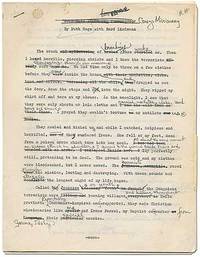
19643245651964. Unbound. Near Fine. Typed manuscript. 16pp. Single sheets typed rectos only stapled at the corner with some wear to the corners a spot on the first sheet and oxidation marks on the rear near fine. The manuscript has extensive holograph corrections throughout including a new title and two stapled yellow sheets replacing paragraphs. The harrowing account of a missionary woman in the turbulent period after Congo's independence in 1960 later expanded by Hege into a full length book We Two Alone. Hege's co-missionary Irene Ferrell was executed by Communist-trained terrorists and Hege barely escaped the same fate. unknown
2020__9004415173Martinus Nijhoff 2020. Hardcover. New. 01 edition. 1375 pages. 9.50x6.50x2.75 inches. Martinus Nijhoff hardcover
2004BN121456Paderborn Schöningh 2004. 2004. Die deutschen Mystikerinnen und ihr Gottesbild. Das Gottesbild der deutschen Mystikerinnen auf dem Hintergrung der Mönchstheologie. 3 Teile in 3 Bänden. <br/><br/>Die deutschen Mystikerinnen und ihr Gottesbild. Das Gottesbild der deutschen Mystikerinnen auf dem Hintergrung der Mönchstheologie. 3 Teile in 3 Bänden. Bardo Weiß Paderborn, Schöningh unknown
2012x-3642295509Springer Verlag 2012. Hardcover. New. 2nd exp rev edition. 991 pages. 10.00x7.25x2.50 inches. Springer Verlag hardcover
2016x-3662500515Springer Verlag 2016. Paperback. New. 2nd reprint edition. 991 pages. 10.00x7.01x1.99 inches. Springer Verlag paperback
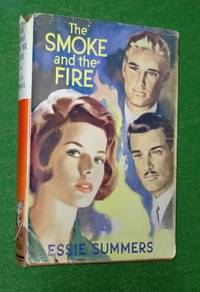
1960013164London: Hammond 1960 extremely scarce title British first edition VG copy spine has a lean to it two pen names to fep with crossing out unclipped DW has some heavy chips to corners with some loss at lower corners and spine tail short edge tears but still fairly complete and tidy dust jacket 185pp 4 pp adverts illustrated in line. First Edition. Hard Cover. Very Good/Good. 8vo - over 7 - 9 tall. Hammond hardcover