3 036 résultats
Minor shelfwear. Scholar's bookplate to inner cover (G. P. Goold). ; The Iguvine Tables were a series of seven bronze tablets discovered at Iguvium, contemporary Gubbio, in Italy in the year 1444. The earliest tablets were probably written in the 3rd century BC in the native Umbrian alphabet, the latest in the 1st century BC in the Latin alphabet. The tablets contain religious inscriptions that memorialize the acts and rites of the Atiedian Brethren, a group of 12 priests of Jupiter with important municipal functions at Iguvium. They are written in the Umbrian language, one of the Italic languages, a not-too-distant relative of Latin. They shed light on the grammar of this ancient dead language, and also on the religious practices of classical paganism. They appear to be written in an accentual metre, similar to the Saturnian metre that is encountered in the earliest Latin poetry. Includes Grammar, text, translation and extensive commentary. ; Philological Monographs, Number XVII; 333 pages
Scholar's name to inner cover (G. L. Huxley). Spine and part of wraps are browned. Front wrap has creasing to corners. Faint crease to lower cover of pages. Pages a little tanned. ; University of California Publications in Classical Archaeology Volume 4, No. 4., Pp. 267-402, Plates 20-24, 3 Figures in Text; 135 pages
Scholars' bookplate to ffep. Small black dot to back wrap. Very minor shelfwear. ; Originally published in Byzantion, Bd. 13-14, 1938-39.; 133 pages
Scholar's name on ffep (Kenneth Snipes). ; Originally published in Byzantion, Bd. 13-14, 1938-39.; 133 pages
New English Paperback. Pbo. 4to. (28 x 20 cm). In English. 288 p., color and b/w ills. "With a chapter by J. Crow and contributions by O. Özel, A.C.S. Peacock, A. Saunders, and W.M. Thackston, Jr. This book reintroduces and reexamines the Seljuk inscriptions from the walls of Sinop citadel. First published at the beginning of the last century, these inscriptions open a window onto scribal, administrative, and architectural practice during an important, formative period of the Seljuk sultanate in the early thirteenth century. 16 inscriptions of Sinop citadel, all made within a five month period in the summer of 1215, allow us a glimpse of the Seljuk elite at work, with aspirations and ideals of state and office mixing and competing with individual and factional rivalries and administrative changes. This book corrects previous published versions, and offers for the first time a reading of the main sultanic inscription, which has been chiselled out. Contributors analyze the Persian verse inscription, the first of its kind from Seljuk Anatolia, and the only known Seljuk bilingual Arabic-Greek inscription. In addition to an in-depth rereading and analysis of these inscriptions, this book examines their architectural context. This includes the first signed work of Abu Ali al-Halabi, the Syrian military architect who served the Seljuk state, and who later built the well-known Red Tower in Alanya. This book provides a new analysis not only of Seljuk architectural practice based on architectural and inscriptional evidence, it also reevaluates the architecture of the citadel itself. Sinop citadel, one of the most impressive in medieval Anatolia, is redated to the Byzantine era.".
Rebound in Half dark brown cloth with marbled boards. Handwritten spine label to ffep. Some edgewear to corners. Small ding to front board near upper corner. Light edgewear. Former scholar's name to ffep (Albert Merriman). Light browning to titlepage. Age-toning to pages. ; 460 pages
4 voll. in 4', br. ed. pp. 164+196+231+39; segni d'uso alle cop., fioriture ai tagli e ai dorsi, in misura minore ai piatti, interni in buono stato, lievi fioriture intonsi.Fasti atque auspicia laudationes honores tributi inscriptiones historicae memoriales funebres templa et sacra in templis.Rerum gestarum monumenta privata et publica prooemia orationes epistulae laudationes testimonia temporum inscriptiones ambrosianae.Iscrizioni augurali celebrative storiche funebri tempi dell'ambrosiana date e discorsi.Indice dei nomi delle persone e dei luoghi contenuti dal cav. Maurizio Cogliati.
102575Amsterdam, Gieben, 1999.
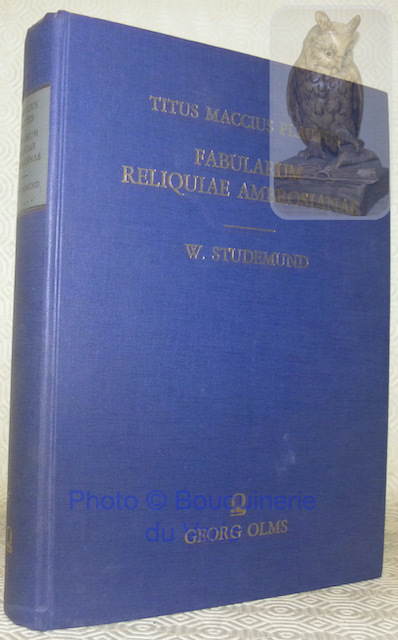
95991Hildesheim - New York, Georg Olms 1972, 245x180mm, XXXII - 524pages, reliure toile de l’éditeur.
New New English Original bdg. Dust wrapper. Mint. 4to. (34 x 25 cm). In Turkish. [x], 259 p., maps. Color and b/w ills. Gokturk (Runic) inscriptions in Eastern Europe. Göktürk (Runik) yazili belge, yazit ve anitlarin albümü projesi 2: Dogu Avrupa'daki Göktürk (Runik) isaretli yazitlar.
593159Damas, Institut français de Damas, 1967. In-4 br., en partie non coupé, 213 pp., qqes fig. in-t., 12 pl. hors-texte de reprod. photog. en noir, index. Textes en français et arabe.
601365Rudolf M. Rohrer, Wien, 1944. In-4, rel. demi-chagrin vert, dos à 2 nerfs, titre et filets dorés, VI-280 pp., Xl pl., 108 fig. dont certaines dépl., un plan dépl. Texte en allemand sur deux colonnes. Quelques notes au crayon dans les marges.
601366Rudolf M. Rohrer, Wien, 1947. In-4, rel. pleine toile bleue, titre en jaune, VI-201 pp., XXVIIl pl., 94 fig. dont certaines dépl., un plan dépl. Texte en allemand sur deux colonnes. Quelques notes au crayon dans les marges.
In 4? (cm 30), Brossura originale, pagg.139 (pagg. 233-372) con numerose ill. e XIX tavv. b.n. n.t., piccole mende al dorso, qualche strappetto al margine della coperta, ben conservato. Notizie relative alle scoperte archeolgiche presso: Chiusi ("Deposito funerario in localit? Paccianese"; Montepulciano ("Rinvenimento di suppellettili tombali in contrada Gracciano"); Orvieto ("Scoperta di tombe etrusche ad ipogeo in vocabolo Caccaita, podere di Pietra Campana"; "Trovamenti archeologici nella zona di S. Domenico"); Norchia ("Ritrovamento di tombe etrusche"); Roma ("Statuetta di Dioniso, Libero, Sole"); Pompei ("Nuove scoperte epigrafiche"); Caserta ("Tombe osche rinvenute nella frazione S. Nicola la Strada"); San Luca d'Aspromonte ("Chiesa bizantina in contrada San Giorgio"); Milazzo ("Rinvenimento d'un mosaico romano nell'ex convento di S. Francesco"); Gela ("Monte Dessueri").
(Torino?), s.n.t., s.d. (sec. XIX), in-8, br. muta coeva legata al dorso da nastrino azzurro, pp. (82). Manoscritto anonimo, vergato in inchiostro in chiara grafia, che riporta la serie consolare da Lucio Giunio Bruto (509 a.C.) a Flavio Decio Paolino (534 d.C.); la divisione in Olimpiadi (ciclo di 4 anni), qui riproposta a partire dalle iscrizioni raccolte da Pirro Ligorio (1513-1583), risale al calendario greco e fu adottata anche a Roma, legata prima al nome dei consoli in carica, poi alla fondazione di Roma (a.u.c.), modificata con l'adozione dall'VIII sec. della cronologia legata alla nascita di Cristo nel calendario giuliano ancora in uso. L'anonimo autore riferisce l'impossibilità a confrontare le iscrizioni raccolte da Marquard Gude (1635-1689) con quelle Ligoriane custodite nei Regi Archivi (31 codici manoscritti oggi conservati nella Biblioteca antica dell'Archivio di Stato di Torino), segue perciò, anche negli errori solo le seconde.
IV + (183)-332 p. Les deux tableaux annonçés dans la table des planches manquent; la belle planche gravée de monnaies celtiques des Aquitains a été placée en tête. Inv. 10049
588467Museum Tusculanum Press, Univ. of Copenhagen, 1994 In-4, cartonnage d'édition sous rhodoïd, 631pp, 37 planches d'illustrations.
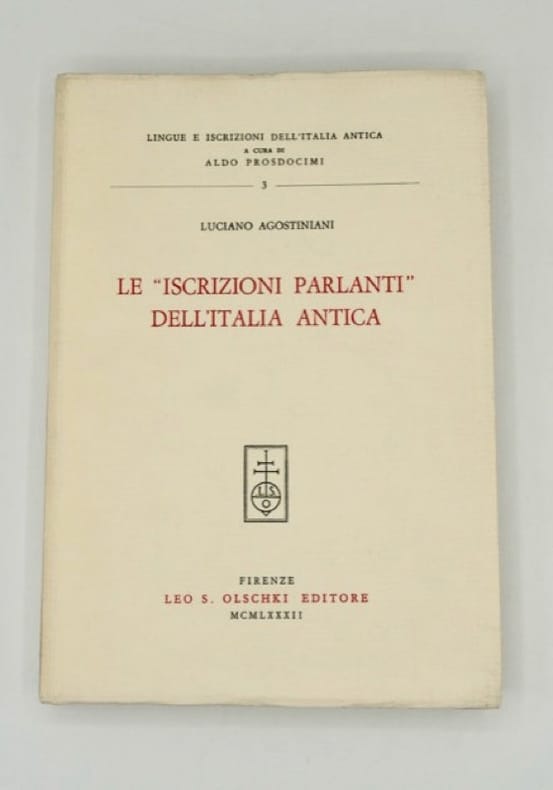
583414Firenze, Leo S. Olschki, 1982. Petit in-4 broché, 322 pp., tables, indices, (Lingue e Iscrizioni dell'Italia Antica, 3).
117463Stuttgart, Leipzig, B.G. Teubner, 1997.
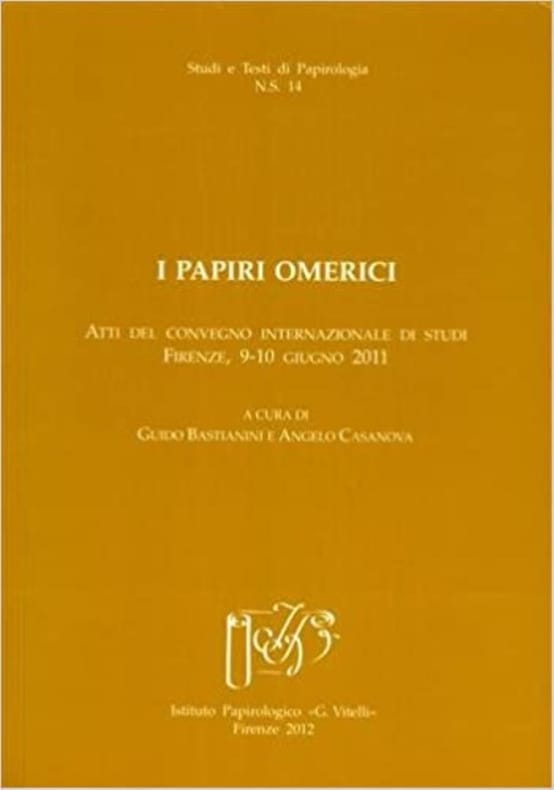
586915Firenze, Istituto Papirologico "G. Vitelli", 2012 In-8 broché, couv. rempliée, 292 pp., 16 pl. en n/b. Texte essentiellement en italien. Epuisé chez l'éditeur.
588529Siracuse, Instituto Internazionale del Papiro, 1994 In-8, cartonnage éd. sous jaquette ill., 103 pp. - XXVI pl. - 10 pl. couleurs et NB ; texte en italien.
In 8, pp. 52 con 1 tav. f.t. Br. rifatta. Saggio in latino sullo stile delle iscrizioni lapidarie: 'Inscriptionum Sacrarum'; 'Inscriptionum Honorarium'; 'Inscriptionum Historicarum'; 'Epitaphiorum'; 'Elogiorum', etc...
602627Paris, Auguste Picard, 1949-1952. 2 tomes d'album en 3 chemises in-4, en feuilles sous chemise à rabat, Tome I : 54 planches de fac-similés. Tome II : 1ère série : 17 planches de fac-similés dont 4 à double pp., 2ème série : 16 planches de fac-similés.
<p>3 volumi, 26 cm, cartoncino editoriale illustrato; p. XIV, 1.538 (numerazione continua). Numerose illustrazioni in b/n nel testo</p>
2011G85883Wien, Holzhauser Verlag 2011 [viii] + 409pp.+ 20 plates out-of-text, 24cm., softcover, very good condition, contains contributions in various languages, G85883