116 résultats
2010Q-1439148414Pocket Books/Star Trek 2010-12-14. Paperback. New. In shrink wrap. Looks like an interesting title! Pocket Books/Star Trek paperback
2017BN72437Cross Cult Entertainment 2017. 2017. Star Trek - Deep Space Nine: Sakramente des Feuers Sakramente des Feuers <br/><br/> Cross Cult Entertainment unknown
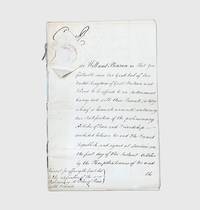
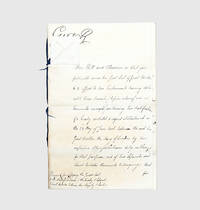
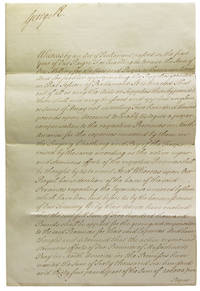
1801167096St James Palace 9 October 1801. Peace in Europe A royal warrant signed by George III at the beginning and end ordering that the Great Seal be applied to the Treaty of London the preliminary peace treaty to mark the cessation of hostilities between Britain and France while negotiations continued towards the Treaty of Amiens. The document is countersigned on the second page by the foreign secretary Charles Jenkinson Lord Hawkesbury. It orders the Great Seal to be affixed "to an Instrument. containing our Ratification of the preliminary Articles of Peace and Friendship concluded between us and the French Republick and signed at London". The Treaty of London was signed on 1 October 1801; this warrant applies the Great Seal on 9 October to ratify it. King George proclaimed the cessation of hostilities on 12 October. The Treaty of London paved the way for the Treaty of Amiens signed on 25 March 1802. Amiens created a year of peace the only such period between 1793 and 1814. The Treaty of Amiens is better known than the preliminary Treaty of London but most of the provisions of Amiens were established by London including the restoration to France of colonies occupied by the British the French evacuation of Egypt and the restoration of Malta to the order of St John of Jerusalem. Folio 309 x 197 mm. 12 leaves first 2 pages with manuscript warrant the subsequent 19 pages with manuscript copy of the treaty followed by 2 blank pages terminal page with docket title; seal impression beneath signature sewn with blue thread paper watermarked 1800. Light creases where folded at time else in excellent fresh condition. unknown
180718934215 July 1807. Diplomatic deals in the Napoleonic Wars A royal warrant signed by George III at the head ordering the application of the Great Seal to the Convention of Subsidy between Great Britain and Sweden signed at Stralsund on 23 June 1807. The document is countersigned on the second page by the Foreign Secretary George Canning later prime minister. The warrant orders the Great Seal be affixed to two instruments "containing our Ratifications of a Treaty concluded & signed at Stralsund on the 23d Day of June last between us and our good brother the King of Sweden by our respective plenipotentiaries". Annexed to the document are manuscript copies of the instruments. Sweden joined Britain in the war against Napoleon in 1805 in the Treaty of Bäckaskog. In early 1807 France launched an offensive against Swedish Pomerania and by June Swedish forces were weakening. Canning saw Pomerania as the only viable base for continental military operations against Napoleon and agreed in the treaty of 23 June to provide British subsidies to Swedish troops. The Swedes nevertheless capitulated in August. Britain reinforced Sweden in 1808 as France's allies entered the war against her but in 1809 King Gustav IV was deposed and in 1810 Sweden aligned with France and declared war on Britain. Folio 309 x 197 mm. 10 leaves: 2-page warrant followed by 16-page treaty blank page and final page with docket title all in manuscript; blind-impressed paper seal mounted over George III signature sewn with blue thread paper watermarked 1805. Minor fraying to ribbon else in fine condition. unknown
1393584128.Gpaperback. Good. Access codes and supplements are not guaranteed with used items. May be an ex-library book. paperback
43717George the Third's Hair Cut 22nd July 1819." 5½" x 3" no place 22nd July King George died of pneumonia at Windsor Castle on 29th January 1820 aged 81 six days after the death of his fourth son Prince Edward Duke of Kent and Strathearn. His favourite son Prince Frederick Duke of York and Albany was with him. He lay in state for two days and his funeral and interment took place on 16th February in St George's Chapel Windsor Castle Provenance: From a small collection of locks of Royal Hair. unknown
43718George the Third's Hair Cut 22nd July 1819." 5½" x 3½" no place 22nd July King George died of pneumonia at Windsor Castle on 29th January 1820 aged 81 six days after the death of his fourth son Prince Edward Duke of Kent and Strathearn. His favourite son Prince Frederick Duke of York and Albany was with him. He lay in state for two days and his funeral and interment took place on 16th February in St George's Chapel Windsor Castle Provenance: From a small collection of locks of Royal Hair. unknown
2003Q-0743464036Pocket Books 2003-08-26. Mass Market Paperback. New. In shrink wrap. Looks like an interesting title! Pocket Books paperback
16mo., First Edition, on laid paper; attractively bound in twentieth century grey boards, paper label lettered and ruled in black on upper board, small marginal chip in D4 (not affecting text), a remarkably bright, fresh, clean copy. Most attractive copy of a none-too-subtle satire on the supposed power of the Scots in the English establishment and society. The barb was evidently a popular one, for it reissued in the same year with a third printing in 1780. Rare.
193798431937 London, Jonathan Cape, 1937, In huit, 318 pp, reliure toilée d'éditeur, bleu nuit, auteur et titre dorés sur dos lisse, tête bleutée, qqs rousseurs,
2010Q-1439160813Pocket Books 2010-12-28. Mass Market Paperback. New. In shrink wrap. Looks like an interesting title! Pocket Books paperback
2010DADAX1439160813Pocket Books/Star Trek 2010-12-28. mass_market. New. 4.19x1.00x6.75. Buy with confidence. Excellent Customer Service & Return policy. Pocket Books/Star Trek unknown
AQ30653s.i.: s.n. 1788 Manuscript on paper. Seven joined vellum membranes. A trifle creased and discoloured. Inscribed at foot: 'Examined by Thomas Lowley Deputy Clerk of the Pipe 10 July 1811'. An examined copy of a roll of foreign accounts dealing at a largely superficial level with the financing of troops stationed in Gibraltar Ireland North America the West and East Indies and associated plantations. Some specific sums are recorded such as the receipt of £300 18s 2d for the sale by public auction in Quebec of the brig Maria. Charges and receipts amounted to £3377122 0s 11 1/2d and payments and allowances to £1772059 19s 11d which after further allowances was reduced to a debt of £423277 2s 2 3/4d. Perhaps the most interesting inclusion is the list of deputy-paymasters and their stations and the numerous officials and the salaries which they received. The office of Paymaster of the Forces was established in 1661. By the eighteenth century it had become a political prize and potentially one of the most lucrative offices one could obtain during a parliamentary career offering a salary of £4000. At the time this roll was produced the office was jointly held by future Prime Minster William Wyndham Grenville Baron Grenville 1759-1834 and naval officer and politician Constantine John Phipps 1744-1792. . Dimensions 1425 x 29 cm. [s.n.], [1788] hardcover
178838765London: Stockdale 1788. <p>George III 1738-1820. Report from the committee appointed to examine the physicians who have attended his Majesty. . . . 8vo. 16pp. London: J. Stockdale 1778 i.e. 1788. 210 x210 x 133 mm. Modern boards. Fine apart from a little spotting.</p> <p> Reprint of a parliamentary report. Few illnesses of historic personages have been followed so closely and documented so well as the insanity of George iii king of Great Britain from 1760-1820. The king suffered five separate attacks of mental illness during his long reign the first in 1765 and the last in 1810; this final breakdown which ended only with the king's death resulted in the establishment of the Regency. Of the remaining four attacks the one that incapacitated the king between October 1788-March 1789 is the most interesting not only because of the political turmoil it generated over the regency question but also because of the stimulus it gave to the study of psychiatry. The question of the king's recovery was of such political importance that special committees from each house of Parliament were set up to interrogate the king's doctors about the progress and probable outcome of his illness. These examinations printed in the Parliamentary proceedings and republished in numerous cheap popular editions advanced the cause of psychiatry by educating the public about mental illness and by giving an aura of respectability to the study of insanity. Guttmacher pp. 1-15. Hunter & Macalpine pp. 509-514. See Norman 889. </p> . Stockdale unknown books
178938761London: Logographic Press 1789. George III 1738-1820. Report from the committee appointed to examine the physicians who have attended his majesty during his illness; touching the present state of his majesty's health. 4to. 4-52pp. lacking half-title. London: Logographic Press 1789. 210 x 160 mm. Later half calf marbled boards a bit rubbed. Occasional foxing otherwise very good. Bookplate of Charles W. Pilgrim. <p>Reprint of a parliamentary report issued in January 1789. Few illnesses of historic personages have been followed so closely and documented so well as the insanity of George III king of Great Britain from 1760-1820. The king suffered five separate attacks of mental illness during his long reign the first in 1765 and the last in 1810; the final breakdown which ended only with the king's death resulted in the establishment of the Regency. Of the remaining four attacks the one that incapacitated the king between October 1788-March 1789 is the most interesting not only because of the political turmoil it generated over the regency question but also because of the stimulus it gave to the study of psychiatry. The question of the king's recovery was of such political importance that special committees from each house of Parliament were set up to interrogate the king's doctors about the progress and probable outcome of his illness. These examinations printed in the Parliamentary proceedings and republished in numerous popular editions such as the one we are offering here advanced the cause of psychiatry by educating the public about mental illness and by giving an aura of respectability to the study of insanity.</p> <p>The present report contains testimony from the eight physicians attending the king during his illness taken on January 7-13 1789. The most influential of these physicians was Francis Willis proprietor of a private asylum in Lincolnshire; his optimism about the king's eventual recovery found favor with Prime Minister William Pitt and the Tory government which had been supported by the king. Willis's chief rival was Richard Warren a friend of the leaders of the Whig opposition; his pessimistic views about the king's illness were adopted by those who wished to see the Prince of Wales established as Regent. Guttmacher pp. 1-15. Hunter & Macalpine pp. 509-514. See Norman 890. 38761</p> . Logographic Press unknown books
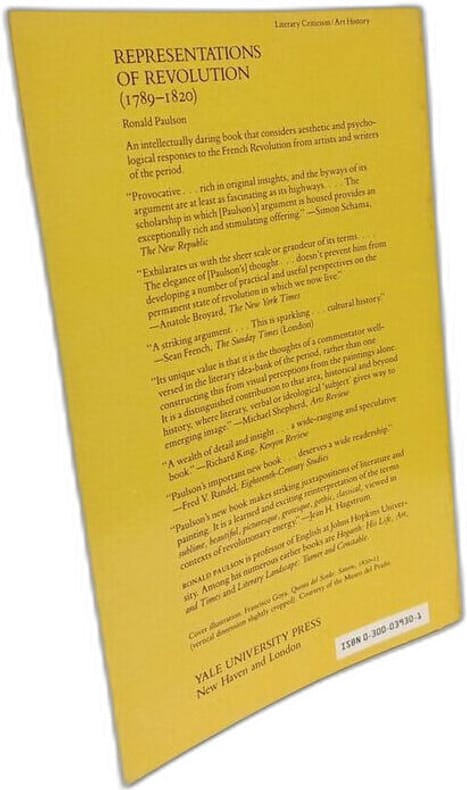
1987100138503Yale University Press 1987 416 pages 15 24x1 27x23 114cm. 1987. Broché. 416 pages.
0260747815.Ghardcover. Good. Access codes and supplements are not guaranteed with used items. May be an ex-library book. hardcover
2002Q-0743445600Pocket Books 2002-08-27. Mass Market Paperback. New. In shrink wrap. Looks like an interesting title! Pocket Books paperback
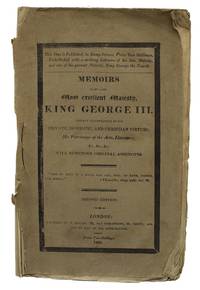
1820AQ26129London: Published by R. Miller 1820. 64pp. With an engraved portrait frontispiece and one further engraved plate a portrait of George IV. Uncut. Later stitched into original publisher’s printed buff wrappers with the edition of a 2pp publisher's advertisement announcing the publication of the present work. Extremities worn loss to spine. Plates foxed. The second edition printed in the same year as the first of a rather obsequious biography eulogising George III; to which is appended numerous official announcements of the monarch's death. Both editions are remarkably scarce OCLC records a single copy of the second Texas; COPAC adds no further. . Second edition. 8vo. Published by R. Miller unknown
178924645London 1789. 4 pages including docketing. 1 vols. Folio. The Warrant for accounts due for December 1787 until December 1788 to Sir Charles Gould Judge Advocate General. Folds some light discoloration else very good. 4 pages including docketing. 1 vols. Folio. Sir Charles Gould afterwards Morgan was appointed judge advocate general in 1771. "The manner in which he discharged the duties of this office it is said 'won the favour and exteem of George III in no ordinary degree' "DNB He was also one of the authors of the Oxford poem in 1751 on the death of Frederick Prince of Wales. Gould was knighted in 1779 made a baronet in 1792 and then a privy counvillor in 1802. unknown books
1761319882Great Britain 1761. 2pp. plus integral blank. Docketed on verso "King's Warrant / Province of Massachusetts / Bay £60634 in part / of £200000 Granted for / the North American / Provinces." Signed by George III at the head of the first page countersigned on the second page by William Wildman Barrington James Oswald and Gilbert Elliot. Folio 14 1/4 x 9 1/2 inches. Usual folds. 2pp. plus integral blank. Docketed on verso "King's Warrant / Province of Massachusetts / Bay £60634 in part / of £200000 Granted for / the North American / Provinces." Signed by George III at the head of the first page countersigned on the second page by William Wildman Barrington James Oswald and Gilbert Elliot. Folio 14 1/4 x 9 1/2 inches. Towards the end of the French and Indian War William Pitt started a specie grant program to reward colonies for raising troops thus putting the colonies in competition with each other for a share of an annual 200000 pounds. With specie scarce in the colonies the colonial assemblies were thus incentivized to raise troops to fight against the French. The present document authorizes Henry Fox to make payment to Massachusetts via their colonial agent William Bollan for their share of the annual grant. Although successful the policy was abandoned in favor of direct taxation after 1762 leading to the Sugar Act and most notably the Stamp Act. <br /> <br /> This undated document -- the space for the date being left blank suggesting it to possibly be a draft -- is countersigned by William Wildman Barrington Chancellor of the Exchequer 21 March 1761 to 8 May 1762; Sir Gilbert Elliot third Baron Minto Lord of the Treasury 1761-62 and James Oswald Commissioner of the Treasury 1759-63. The date would therefore appear to be 1761 or early in 1762.<br /> <br /> George III documents relating to North America from the early years of his reign are particularly scarce. unknown
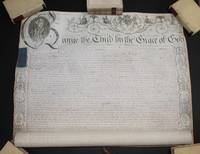
20855Manuscript on vellum three membranes with an initial portrait of the King and the Great Seal attached. The document overall 31 x 24 inches the Great Seal 6 inches in diam. All contained in the original shaped leather over wood case; the case now rather worn and lacking much of the original leather covering. The Great Seal is a rather poor lumpy impression and now lacking the original tin case skippet. The document inscribed to the reverse "The within Patent has been duly recorded in the College of Arms London pursuant to the tenor of His Majesty's Warrant under his Royal Signet and Sign Manual .Examined therewith the thirteenth day of December 1803" and signed George Harrison Clarenceux & Register. Watson has an interesting history. At the age of 14 and in the employ of his uncle on one of his merchant ships whilst swimming in Havana harbour was attacked by a shark and lost his right leg This incident prompted Watson in 1778 to commission John Singleton Copley to paint this dramatic scene known as "Watson and the Shark" for which see our illustration which when exhibited at the Royal Academy caused a sensation. It now hangs in the National Gallery of Art Washington D.C.Watson was a member of the original committee of the Corporation of Lloyd's of London; he was elected as an Alderman of the City of London and served as M.P. for the City of London. Lord Mayor of London in 1796 and a deputy Director of the Bank of England.Copley painted a portrait of Watson in c.1796. This now hangs in Indianapolis Museum of Art. He was also the subject of a caricature by Robert Dighton in 1803. His coat of arms had his severed leg on it and the shark as the crest. hardcover
0267212348.Ghardcover. Good. Access codes and supplements are not guaranteed with used items. May be an ex-library book. hardcover
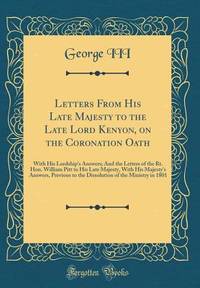
1827619L14London: John Murray 1827. First edition. Leather. Good Only. 11" by 9". None. A selection of letters from George III to two political figures regarding the proposition of Catholic emancipation and his Coronation Oath. He writes to British politician and barrister Lord Kenyon and the then Prime Minister William Pitt. The first edition of this uncommon work. These letters are associated with the political process during the late eighteenth and early nineteenth century regarding the 'Catholic emancipation' or 'relief'. Following the Act of Union between Great Britain and Ireland there was a call to remove many of the restrictions on Roman Catholics introduced by the Act of Uniformity Test Acts and penal laws. During the Act of Union William Pitt the Younger the Prime Minister at the time promised emancipation to accompany the act. However no further steps were taken. This was due to King George III believing that any Catholic emancipation would violate his Coronation Oath. To this work there are correspondences between Pitt and George III regarding this matter. Pitt resigned from his position as Prime Minister when the King's opposition became known. To the main body of this work George writes to Kenyon regarding the standing of the Coronation Oath. He notes to the first letter that 'The following Queries on the present attempt to abolish all distinctions in Religion in Ireland with the intention of favouring the Roman Catholics in that Kingdom.' The King is enquiring to Kenyon as to whether emancipation would affect his Coronation Oath. With an introduction by Henry Phillpotts a well known opponent of Catholic emancipation. One of his well known works is 'A Letter to an English Layman on the Coronation Oath which was issued after this work. This copy is from the Bishop Phillpotts Library in Truro with a bookplate for the library to the front pastedown. The Philpotts library is still an important centre for theological studies. It was first opened in 1871 by Henry Phillpotts. Another prior owner's bookplate to front pastedown 'Henricus Exoniensis'. There are six letters between Kenyon and George III to this volume and five letters between Pitt and the King. With a facsimile letter by George III as the frontispiece. The first edition of this interesting contemporaneous account of British history. In a half calf binding with paper covered boards. Externally sound with slight rubbing to the boards spine and extremities. Loss to the calf at the spine due to a previous library removal. Bookplate to the front pastedown for Bishop Philpotts' Library Truro. Philpotts wrote the introduction to this work. Another bookplate to front pastedown Clero Cornubiensi Henricus Exoniensis. Front hinge is strained but firm. Internally firmly bound. Pages are generally bright with patches of scattered spotting mostly to the page edges. Good Only John Murray hardcover
0313230390.Ghardcover. Good. Access codes and supplements are not guaranteed with used items. May be an ex-library book. hardcover