6 938 résultats
rel. éd., (insolé)
18488Lyon, A. Storck - Paris, G. Masson, s.d. ( 1889). In-12 de II et 314 pages. Bon état intérieur. Percaline d'éditeur vert-olive, tranches rouges. Plusieurs tâches d'eau au dos et au second plat. Nombreux tampons de Radio France et ORTF.
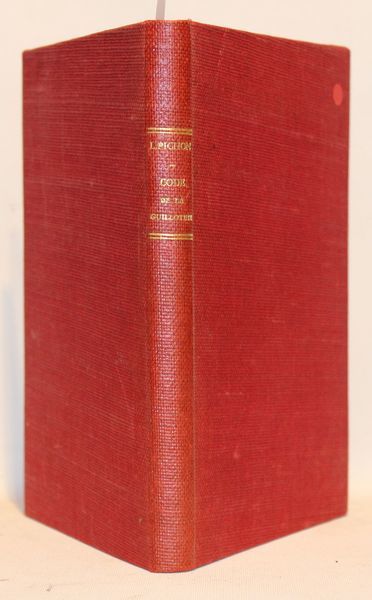
7831Paris, Barreau de Paris, Typographie Firmin-Didot et Cie, 1933. Plaquette in-8, reliure toilée.
206575S.l.n.d. in-8, 18 pp., dérelié.
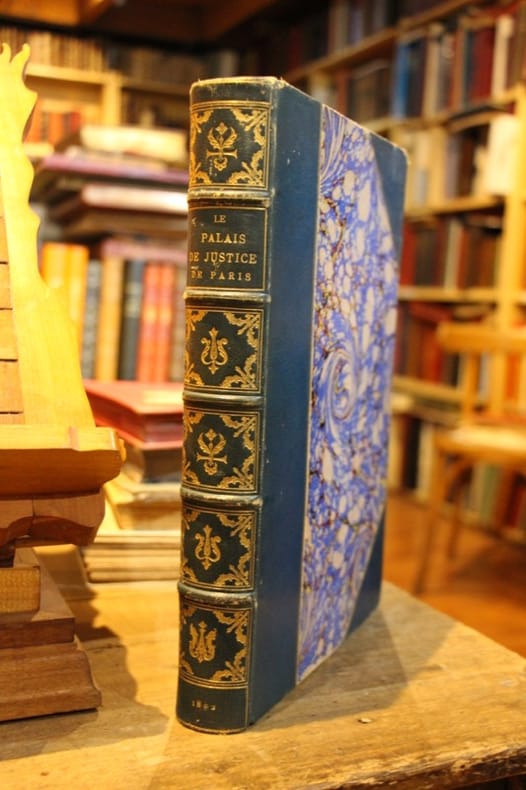
189297672Paris, Librairies-Imprimeries Réunies 1892 In-4 28,5 x 19,5 cm. Reliure demi-maroquin bleu à coins, filets dorés, dos à nerfs encadrés de fers dorés, couvertures conservées, tête dorée, XVIII-400 pp., 150 dessins inédits dont 25 à pleine page et 4 planches hors-texte en couleurs caricatures d’avocats, table des matières. Reliure frottée.
205270Bruxelles, 1787 in-8, 20 pp., broché.
239261Bruxelles, 1787 in-8, 20 pp., broché, couv. papier bleu moderne.
205782Aix, S.l.n.d. (1788) in-8, 24 pp., cousu.
206829Paris, Baudouin, (1790) in-8, 3 pp., dérelié.
236017Paris, Baudouin, (1790) in-8, 3 pp., broché, couv. papier bleu postérieur.
6251Sans lieu ni date (circa 1770). In 8 dérelié de 14 pp.
24595P., Goupy, 1868, in 8° broché, 84pp. ; large mouillure en tête de toutes les pages ; couverture légèrement fanée.
206063Paris, Impr. Nationale, (1790) in-8, 4 pp., dérelié.
176819Paris, Imprimerie Nationale, 1791 in-8, 16 pp., dérelié.
177733A Beauvais, Desjardins, 1791 in-4, 16 pp., dérelié.
140618Paris, Imprimerie Nationale, s.d. in-8, 22 pp., dérelié.
203405Paris, Imprimerie nationale, (1791) in-8, 15 pp., dérelié.
ORD-8319pour contravention aux Statuts, Ordonnances, Arrêts & Réglements concernant la Communauté des Maîtres Perruquiers. Pierres. 1782. 3pp.in-4 sans couverture. Bandeau.
16013683Salamanca: S.n. 1601. First edition. Signed at foot by a municipal officer Diez de la Puente. One-page contemporary manuscript on p. 3 relating to the administration of the tax. Unbound as issued. Pinholes at gutter some edge chipping and small dents brown stain affecting the upper portion throughout. Otherwise a good well-preserved copy. First edition. Signed at foot by a municipal officer Diez de la Puente. One-page contemporary manuscript on p. 3 relating to the administration of the tax. Unbound as issued. 4 last 2 blank p. <p><br /> Unrecorded 1601 ordinance from Salamanca enforcing the Armada-era servicio de millones Spain’s foundational fiscal levy.<br /> <p><p><br /> Printed ordinance issued by the municipal council of Salamanca implementing the royal tax known as the servicio de los dieciocho millones. In accordance with the royal cédula of 9 February 1601 the Concejo Justicia y Regimiento instructs subordinate towns and villages to collect an eighth part of all wine and olive oil sold to be remitted through a chain of local receivers. The text regulates how wine and oil must be measured recorded and taxed forbids additional repartimientos and orders prompt transfer of funds to the city’s main treasury. Dated at Salamanca 10 March 1601 and naming four municipal commissioners appointed for its execution it represents the earliest stage of local enforcement of Philip III’s fiscal scheme transforming the national levy into a functioning municipal excise. A contemporary handwritten endorsement below the text signed by Diez de la Puente attests its execution. Accompanying the printed ordinance is a contemporary manuscript headed on p. 3 “Dudas que se ofrecen en la administración de las sisas†listing practical questions concerning the execution of the tax—registration and measurement of goods roles of administrators and receivers form of payment penalties and conditions of tax farming arrendamiento.<br /> <p><p><br /> The servicio de los dieciocho millones formed part of the broader system of millones taxes created by the Cortes of Castile to meet the Crown’s desperate financial needs after the prolonged wars of Philip II. The servicio de millones had first been introduced by royal request and approved by the Cortes on 4 April 1590 conceived to raise eight million ducats over six years to finance the royal expenditure associated with the Armada campaign against England and other military commitments. Rather than remaining temporary it evolved into a regular levy on six staple items—wine oil vinegar meat soap and tallow candles—collected through local sisas and eventually forming the backbone of Castile’s fiscal structure. By 1600–1601 under Philip III the scheme was renewed and expanded to eighteen million ducats its collection entrusted to municipal governments such as Salamanca’s Concejo Justicia y Regimiento. As described in Bartolomé Yun Casalilla’s Sobre la transición al capitalismo en Castilla this marked a transition from feudal income to a centralized fiscal system financed through municipal taxation embedding local economies within the machinery of the Habsburg war state. The present ordinance captures this process of consolidation—when the monarchy sought tighter control over municipal revenues demanded proper accounting and remittance of surpluses and aimed to prevent arbitrary over-taxation—reflecting both the fiscal strain and administrative centralization characteristic of early-seventeenth-century Spain.<br /> <p><p><br /> Reference: Yun Casalilla B. 1987. Sobre la transición al capitalismo en Castilla: EconomÃa y sociedad en Tierra de Campos 1500–1830. Valladolid: Junta de Castilla y León ConsejerÃa de Educación y Cultura.<br /> <p>. [S.n.] unknown
26669In pencil on verso date 18 April 1946. Photograph 24 x 18cm verso sl. spotted photo good and clear. See Image. On verson stamped " Fotodienst de Arbeiderspers Amsterdam" with pencil notes "Inaugural Meeting 18April 1946" and my note about the Foudation in 1945. [In pencil on verso, date 18 April 1946] unknown
197998Riom, Imprimerie de P. Thomas, s.d. (1736) placard in-folio de 49 x 38 cm, texte sur deux colonnes, en feuille. Petits manques de papier, avec perte de quelques lettres.
201799Tulle, R. Chirac, s.d. (vers 1812) in-plano (64 x 47 cm), texte sur trois colonnes, en feuille.
197852[Paris], Imprimerie Henri et Charles Noblet, s.d. (1851) placard in-folio de 55 x 42,5 cm, en feuille.
198022Aix, Imprimeries de Gibelin-David & Emeric-David, 1790 placard in-folio de 46 x 35 cm, en feuille. Petit manque de papier à l'extrémité d'une pliure, avec perte de quelques lettres, mais bon exemplaire.