BOURRIENNE (Louis-Antoine Fauvelet de).Livre Rare Book
4 021 résultats
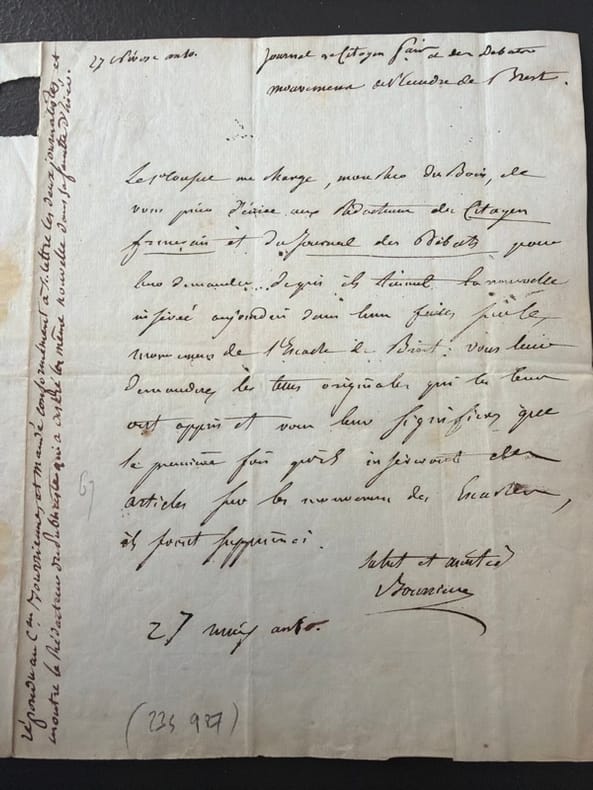
234987Paris, 27 Nivôse an X (17 janvier 1802) bifeuillet in-8, écrit au recto du premier feuillet, en feuille.
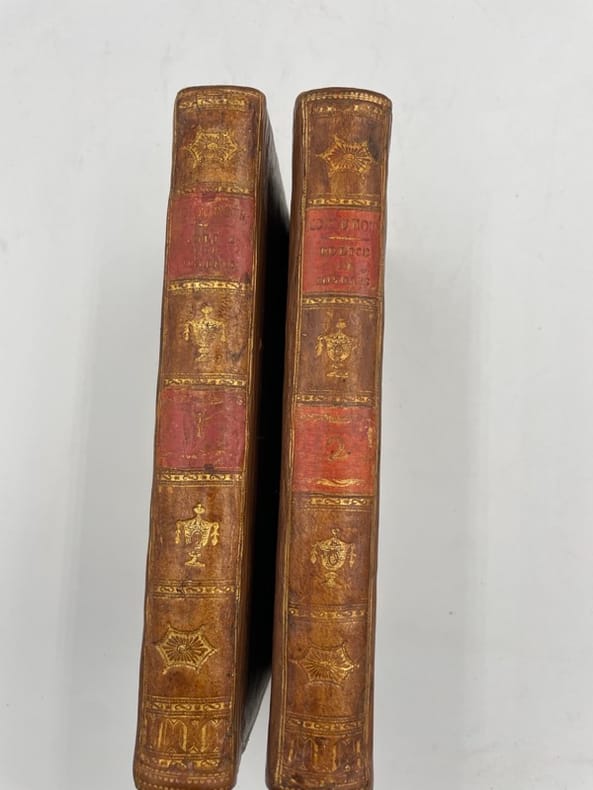
662532A Paris, chez Léopold Collin, 1807 2 vol. in-8, XX-424 pp. et 466 pp., tableaux dépliants, basane fauve, dos lisse orné, tranches citron mouchetées de rouge (reliure de l'époque). Mors restaurés.
1374188Paris: Léopold Collin, 1807 2 volumes in-8, xx-424 pages, 1 tableau se dépliant et 466 pages, 1 tableau se dépliant. Demi reliure d'ép. dos lisse ormé de fleurons, coiffes manquantes, dos frotté, très bon état intérieur. Première édition française, Quérard 698. De la bibliothèque de Frederic de Sevillia.
1850112212P., Guillaumin, 1850, 2 vol. in-8°, (4)-xv-560 et (4)-560 pp, pièces justificatives, reliures papier fantaisie à la bradel, dos lisse, pièce de titre basane verte, plats de couv. imprimés conservés (rel. fin XIXe), dos uniforméments passés, pt mques de papier sur un mors, bon état. Edition originale. Très rare
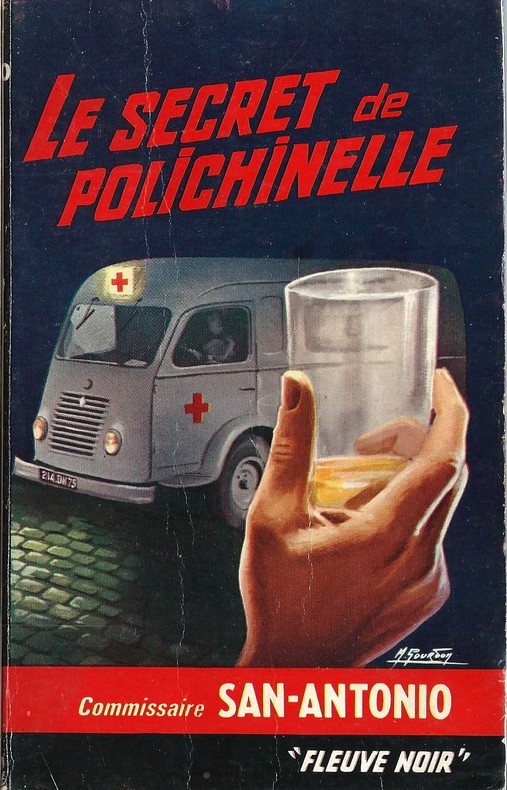
24359Editions Fleuve Noir / Spécial Police n° 145 de 1966. In-12 broché de 219 pages au format 11,5 x 17,5 cm. Superbe couverture illustrée de Michel Gourdon. Plat et intérieur frais, malgré une infime trace de pliure verticale en couverture, ainsi que des infimes frottis aux mors et aux coins. 4ème plat avec publicité pour la parution du roman " La Nuit de Thermidor " par Jacques Chabannes. Imprimerie P.I.E, Monte-Carlo. Dernier titre paru : Pierre Vial : Deux Mafiosi ( n° 528 ). Au 4e plat Prix 2,40 FRS et 2,47 T.L comprise. Deuxième édition en superbe état de fraicheur. Précieux exemplaire enrichi d'une cordiale dédicace autographe, de Frédéric Dard, signée " San-Antonio " à Albert Simonin : Pour Albert, cette littérature ( ? ),très discutable ( mais indiscutée !! ), avec ma tendre amitié. Provient de la bibliothèque d'Albert Simonin.
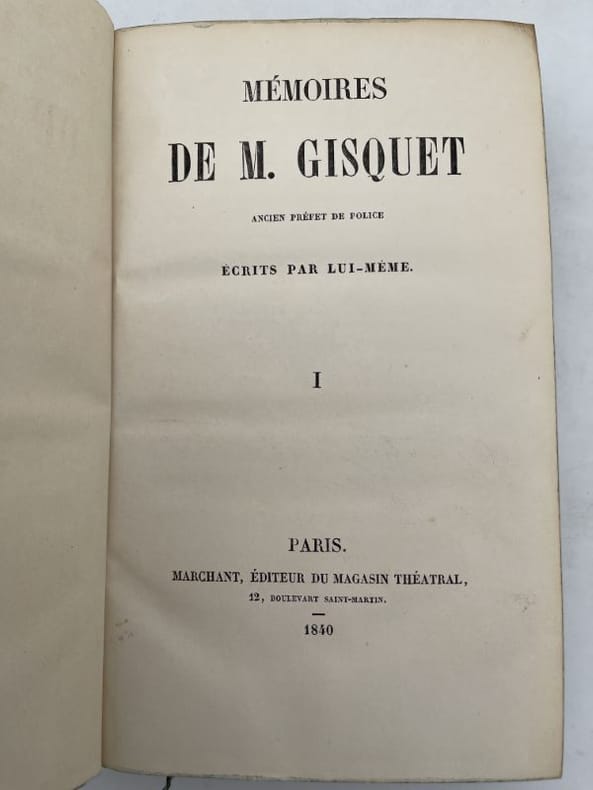
1840184958Marchant Marchant, Paris, 1840. 4 volumes in-8 reliés plein veau de l'époque de 552 + 489 + 523 + 479 pages. Dos à nerfs ornés d'entrelacs dorés, motifs dorés, pièces de titre maroquin rouge, pièces de tomaison de maroquin noir. Tranches marbrées. Roulettes sur les coupes. Ex-libris de Lord Dinorben. Gisquet fut nommé préfet de police de Paris par Casimir Perier le 15 octobre 1831 en remplacement de Sébastien Louis Saulnier. Il devait rester à ce poste pendant cinq ans, cette longévité contrastant avec l'instabilité qui avait prévalu depuis la Révolution de Juillet. Edition originale. Très bon exemplaire.
184013111Paris, Marchant, 1840. 4 vol. in-8 de (4)-552 pp. ; (4)-489 pp. ; (4)-523 pp. ; (4)-479 pp., demi-veau bleu, dos lisse orné, tranches marbrées (reliure de l'époque).
Marchant, Paris, 1840. 4 volumes in-8 reliés plein veau de l'époque. Dos à nerfs ornés d'entrelacs dorés, motifs dorés, pièces de titre maroquin rouge, pièces de tomaison de maroquin noir. Tranches marbrées. Roulettes sur les coupes. Ex-libris. (4)-552 ; (4)-489 ; (4)-523 et (4)-479 pages. Gisquet fut nommé préfet de police de Paris par Casimir Perier le 15 octobre 1831 en remplacement de Sébastien Louis Saulnier. Il devait rester à ce poste pendant cinq ans, cette longévité contrastant avec l'instabilité qui avait prévalu depuis la Révolution de Juillet. Edition originale. Très bon exemplaire.
Abundant black and white illustrations and reproductions of photos. Features: 'Twixt Sunset and Sunrise - Mining Engineer William Bartle relates a story from Mexico where, outside the large cities "no foreigner's life is worth a farthing"; The Cannibal Islands - Part II - photo-illustrated article by Clifford Collinson who has lived in the Solomon Islands for several years and, in this instalment, visits the little-known atolls of Ong-Tong-Java, with nice photos; The Disappearance of Annie Mooney - A thirty-year-old mystery is solved in a strange and unlooked-for manner - was she kidnapped by the Chinese all those years ago?; The Most Wonderful School in the World - A remarkable "sun-cure" establishment at Aigle in the Swiss mountains where children - recently hopeless cripples - learn their lessons and romp in deep snow clad only in loin-cloths and boots! - with photos; Obyada, Bad Indian - story related by a member of the Royal North-West Mounted police about a troublesome individual near Red Deer, Alberta; The Rum-Runner - the story of a sea captain's first smuggling voyage, as told in St. Pierre, headquarters of a fleet of ships engaged in the liquor-running business; Soliman the Seer - the mysterious fortune-teller of the Pyraid of Cheops; The Children of the Wilderness (Conclusion) - Juliet Bredon's photo-illustrated travels in little known Mongolia; A Wildfowling Adventure - a nasty little adventure on the Solway Firth; Fishing for Crocodiles - using a special hook and line; On Patrol - a quaint little experience related by a flying officer of the Royal Air Force; The MIssing Links - An Indian magician discovers a thief when the police had failed; Round the World With a Lasso - former Texas Ranger Captain George Ash tours the world giving exhibitions and training troops in the use of the lasso - article with photos; The Strangest Mutiny on Record - The Schooner Pedro Varela; Six Hundred Thousand Francs - One of the most audacious jewel robberies ever perpetrated (in Paris); and more. 88 pages plus 16 pages of nostalgic ads. Clean and unmarked with light wear. A quality copy of this excellent vintage issue. Book
1876008261Hobart Town: James Barnard Government Printer 1876. First Edition . Cloth. No Jacket as Issued. 4to - over 9¾" - 12" tall. Very Good with light wear to the covers. PP 206 weekly police reports for the year 1876 Rare ! <br/> <br/> James Barnard Government Printer hardcover
1900008262Hobart: John Vail Government Printer Hobart 1900. First Edition . Cloth. No Jacket as Issued. 4to - over 9¾" - 12" tall. Very Good with light wear to the covers. PP 206 weekly police reports for the year 1899 Rare ! <br/> <br/> John Vail Government Printer Hobart hardcover
19792082702114901040Kochi Prefecture Police Headquarters 1979. Soft Cover. Fine. Size: chrysanthemum stamp Kochi Prefecture Police Headquarters paperback
18842110502151101673Tokoshoin 1884. Soft Cover. Fine. Number of books: 2 Tokoshoin paperback
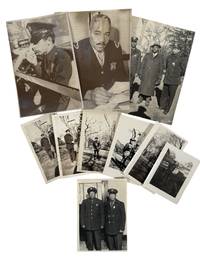
1960210231960. African American law enforcement photographic archive 1940s-1969 documenting the presence and professional roles of Black police officers during the decades spanning segregation and the Civil Rights Movement in the United States. These images record individual officers peer relationships and public-facing roles within police institutions providing visual evidence of Black participation in law enforcement at a time of limited access to such positions. The archive captures both formal portraiture and informal interaction situating these individuals within evolving social and institutional conditions.<br /> <br /> Archive comprises 11 vintage silver gelatin photographs ranging in size from approximately 2.75" x 5.5" to 5.5" x 7.25". A sequence of six smaller photographs depicts several African American men in uniform including officers wearing double-breasted dress coats with badges a patrolman in standard duty attire and one image showing a man in a Marine uniform standing beside a police officer. One photograph captures two uniformed officers shaking hands suggesting a moment of professional recognition such as academy completion. Another image shows two officers flanking a third individual in civilian attire possibly a legal official based on positioning and dress. A separate photograph includes two older uniformed officers with a handwritten inscription on the verso reading "This is your Brother A.B. and his buddy Ezell Anderson." The archive also includes a 1969 press photograph identifying Herbert A. Craigwell as a high-ranking officer in the Boston Police Department alongside accompanying text referencing increasing representation of Black officers in major city forces. An additional press image identifies Los Angeles patrolman Ronald Allen described in relation to the gradual inclusion of Black officers within urban policing structures. A signed photo of a policeman wearing small round glasses a hat with the number 7 above "Police" reads "Lovingly Kenny" depicting an African American officer likely from the mid 1940s at a municipal department.<br /> <br /> Created during a period marked by both institutional exclusion and gradual integration these photographs provide a record of African American participation in law enforcement prior to and during major Civil Rights reforms. The inclusion of press images and personal photographs reflects both public recognition and private documentation of professional identity. Minor edge wear and light fading visible across several photographs; overall very good condition. This archive offers a focused visual record of Black law enforcement presence in mid-twentieth-century America. unknown
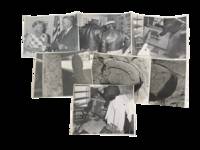
1950233981950. 1950s crime investigation archive documenting police evidence work during a period when departments increasingly relied on crime-scene photography forensic comparison procedure footwear evidence analysis fingerprint comparison and organized mid-century police evidence methodology to connect suspects to burglaries thefts and other property crimes. The material records officers inside a commercial or storage-room setting examining a desk or cabinet area inspecting the floor and documenting a shoeprint impression with a clearly visible sole pattern. One scene includes a Black officer standing among uniformed white officers a significant detail for mid-century police history since African American officers in many American cities were still restricted in assignment promotion or patrol authority during the 1940s and 1950s. The archive originated from Wisconsin house.<br /> <br /> Photo archive of 7 Very large format silver gelatin photographs each 11" x 13.75" United States circa 1950s-1960s. This archive showcases the order of investigative procedure with officers entering an interior crime scene locating possible points of entry or concealment documenting footwear evidence conducting footwear comparison analysis and marking distinctive characteristics for forensic comparison. Uniformed officers in leather jackets and peaked caps gather in a cramped small commercial setting lined with cardboard boxes while a Black officer is visible between them near the center of the room. Investigators examine the lower section of a desk or built-in counter with one man crouched partly underneath the work surface and another officer reaching toward the floor. Close-up evidence views record a shoeprint or boot impression pressed into dirt or soft material with original red circles marking specific cuts gouges or comparison points in the sole pattern. Additional views compare a dirty shoe sole against the recovered impression while another scene places a woman wearing a veterans' cap in conversation with a suited man in an office with an American flag possibly connected to witness victim or community context.<br /> <br /> The presence of a Black officer inside the active investigative setting adds a further historical layer placing African American law enforcement labor within the daily practice of police work at a time when many departments were only slowly expanding Black officers' authority beyond segregated or limited assignments. Light curling handling wear minor edge creasing and surface wear visible; images remain clear and detailed. Overall in very good condition. unknown
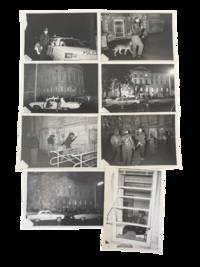
1960234741960. Police investigation photo archive depicting mid century law enforcement activity riot control operations and custodial procedures during the period when American police departments expanded specialized enforcement units in response to rising urban unrest and public disorder in the 1960s. After the riots in Watts in 1965 Newark and Detroit in 1967 and hundreds of smaller confrontations between police and civilians across American cities departments throughout the Midwest and East Coast increasingly organized motorcycle patrol divisions tactical crowd control units and coordinated search operations using dogs radios and mobile patrol systems. Police departments also adopted more militarized uniforms transportation fleets and surveillance procedures during the decade reflecting the growing emphasis on rapid response policing and visible authority in public spaces. The unidentified location and unnamed investigation place the archive within the broader operational culture of mid century American policing rather than a single sensational crime preserving the routine procedural atmosphere of municipal law enforcement during a period of national tension.<br /> <br /> Photo archive of 8 silver gelatin photographs likely Midwest or East Coast United States circa 1960s. A uniformed officer wearing a shoulder patch reading "Motorcycle patrol riot control" leads a police dog during a nighttime search outside a large civic building illuminated by streetlights and patrol vehicles. Several scenes show officers standing beside a man seated in the rear compartment of a police cruiser while smoking a cigarette. Additional photographs depict officers entering or exiting the building a sheriff standing inside a county jail entrance and investigators searching stairwells and sidewalks around the stone municipal building. Each print bears the "A.G. Oehler Photographer" stamp in the lower margin indicating professional or departmental photographic documentation for internal use.<br /> <br /> By the late 1960s many municipal departments reorganized patrol systems around riot squads motorcycle enforcement divisions and rapid mobilization units as demonstrations labor actions antiwar protests and urban unrest became recurring features of American public life. Light surface wear and occasional handling marks; overall in very good condition. Rather than focusing on dramatic violence these scenes preserve the quieter operational routines of custody perimeter searches interrogation transport and nighttime investigation that structured everyday police work during the era. unknown
175818688paris Gissey 1758 in-4 plein-veau un volume, reliure de l'époque plein veau brun moucheté (binding full calfskin in-4) in-quarto (19,5 x 26 cm), dos à nerfs (spine with raised bands) décoré or (gilt decoration) filets or (gilt line) et filets à froid (blind-stamping line decoration), entre-nerfs à compartiments à fleuron au fer plein (floweret with full blocking stamp) dans un encadrement à filet et roulette or à fleurettes "or" aux angles, titre frappé or (gilt title), pice de titre sur fond bordeaux à filet et roulette or, la coiffe de tête manque, roulette or en place des nerfs et filets à froid de part et d'autre des nerfs, roulettes sur les coupes (fillets on the cuts) avec légers manques de dorure (blurred gilding), toutes tranches rouges (all red edges), sans illustrations (no illustration) excepté des fronts de chapitres, lettrines et culs-de-lampes gravés sur bois en noir, XVI-588 pages avec privilège du roy, 1758 Paris, Gissey Editeur,
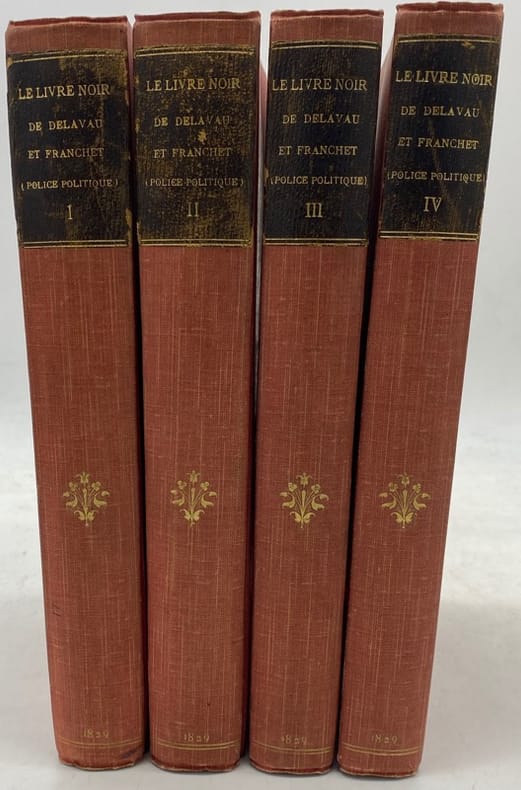
147935Paris, Moutardier, 1829 4 vol. in-8, bradel demi-percaline rose à coins, dos orné, couv. cons. (reliure postérieure).
2596Dessin original en noir et blanc, encre de chine et tipp-ex. 1994. Dim: 67 x 83 mm. Signé au dos par l'artiste.
2596Dessin original en noir et blanc, encre de chine et tipp-ex. 1994. Dim: 67 x 83 mm. Signé au dos par l'artiste.
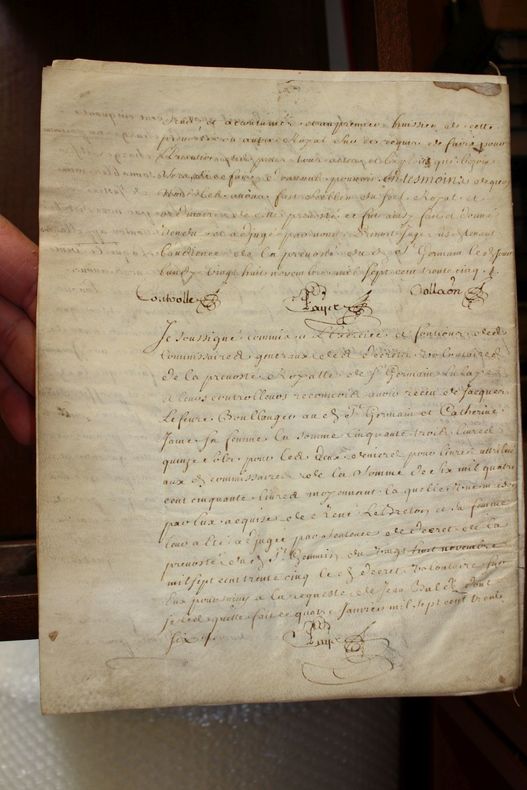
002153In-4, 24p sur peau de vélin. Cachets de la généralité de Paris. Le document mentionne différents personnages des Yvelines. On y retrouve Jean Baldé, vinaigrier à Saint Germain, Jacques Lefevre, boulanger à Saint-Germain et sa femme Catherine Jamme, demeurant rue de Louviers à Saint-Germain-en-Laye (à 2 pas du château). Lefevre et Jamme se sont mariés le 23 octobre 1730 à Saint-Germain. Il est question d'une somme de 200 livres que le couple doit à Baldé mais refuse de payer. Il est fait ensuite mention de maisons appartenant à René Le Breton, après la porte de Poissy, d'une maison appartenant à Pierre Allin, incendiée. Le couple Lefevre les aurait acquises aux enchères et il est question de saisir le couple Lefevre, qui doit payer 6450 livres pour la maison de René Le Breton. Il est aussi fait mention de la rue de Poissy et de la maison du Soleil d'Or, qui était semble-t-il une auberge à l'époque. Le document est signé, vraisemblablement par le greffier qui l'a copié. Document judiciaire important par les petits détails qu'il apporte sur la vie de Saint-Germain-en-Laye, à découvrir.
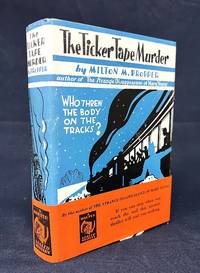
1930021149N.Y.: Harper & Brothers 1930. First edition so stated. Previous owner's name at inside cover. Some mnor rubbing at spine edges and along bottom edges with corners bumped. Some loss of white lettering at spine otherwise a very good near fine copy in a beautiful dust jacket no tears or creases and with the very rare wrap-around band for the Harper Sealed Mystery. "Philip Nixon is the president of American Motors the biggest auto concern in the world. On the eve of cornering the US automobile market his corpse is found on the train tracks. Sgt. Gilmore had been asked to act as a bodyguard to the financier. Fortunately Gilmore was a passenger on the train that hit Nixons body.Milton M. Propper 1906-62 was an American devotee of Freeman Wills Crofts and Lynn Brock. The book is the American equivalent of Crofts: a methodical policeman Detective Sergeant Gilmore and Tommy Rankin of the Philadelphia police-- not brilliant but capable and thorough-- testing discrepancies and checking alibis; finance; transport three different train and two cars thundering across New Jersey by night; and plenty of railway timetables. Like his British models Propper handles a complex plot admirably unfolding layer by layer each mysterys solution opening new possibilities. The pure puzzle satisfies because there is no fat. But which character doesnt need to be in the book has no motive and hasnt been suspected when all the other characters have been eliminated Theres your murderer! With Audobon stock soaring under his skillful manipulation with the money world aghast at the significance of the colossal corner the death of Philip Nixon was a calamity. Mangled on the steel rails of the East Shore Express his body yielded no clues. Armed with knowledge of blackmail threats Detective Sergeant Gilmore of the Philadelphia Police took the case with full confidence of pushing it to an obvious and rapid conclusion. But numerous motives appeared and soon the list of potential murderers included gangsters thirsting for revenge the brothers of a betrayed girl a desperate bear speculator and the mans own secretary once before convicted of manslaughter. Who threw the body on the tracks By sheer doggedness and an intelligence that missed no single detail Gilmore solved this thrilling mystery in a way that will delight the keenest reader." -- Nicholas Fuller at "The Grandest Game in the World" blog. This copy although not marked as such comes from the auction of the Gary Groton Crime Fiction collection of detective fiction . First Edition. Hardcover. Very Good-Near Fine/Fine. Book. Harper & Brothers
18872110502150400702Okudzuke nashi 1887. Soft Cover. Fine. Volume: 1 Okudzuke nashi paperback
1834973F4London: A. Varnham 1834 . First edition. Cloth. Near Fine. 13" by 8.5". None. A fascinating and very scarce 1834 review of the Metropolitan Police and its management expenditure and effectiveness. A very scarce first edition report.This report offers a rigorous review of the Metropolitan Police force just five years after its establishment under the 1829 Act. Including minutes of evidence which feature testimonies from Members of Parliament local parish representatives and police officials who debated issues of cost constitutional concerns public trust and the force's structure.Rebound in cloth with endpapers renewed.The committee and report ultimately upheld the Metropolitan Police's and offered the endorsement of it as "one of the most valuable modern institutions" for its role in suppressing crime and safeguarding life and property. Rebound in cloth with endpapers renewed. Externally fine. Internally firmly bound. Pages a touch age toned to perimeters otherwise clean and bright. Near Fine A. Varnham hardcover
124909aafLeipzig, in der Commerschen Buchhandlung, 1810, in-8vo, Titelblatt + 130 S. + gef. Kupfertafeln, Stempel auf Titelblatt ‘Bibliotheca Smecnensis’, schlichter O.-Pappband d. Zeit