Pierre GobionLivre Rare Book
285 résultats
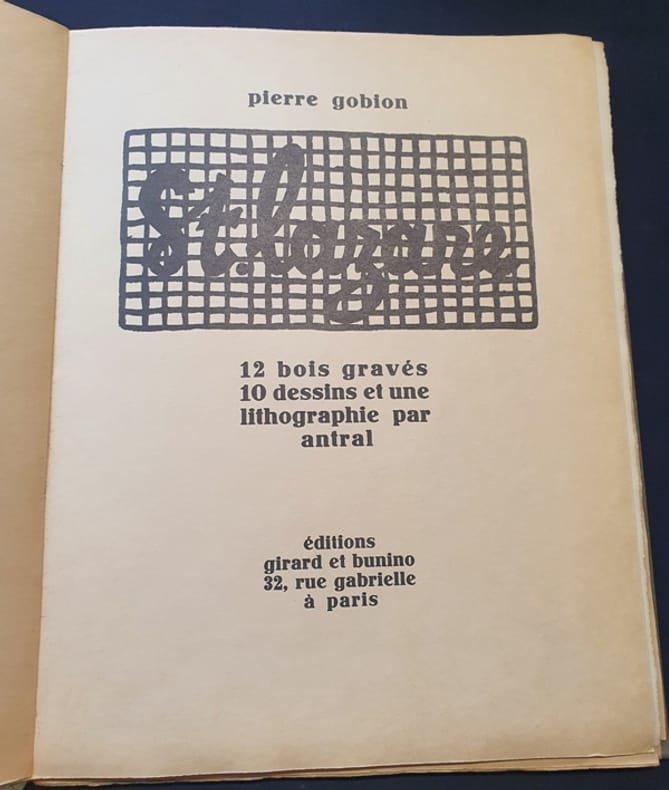
1930Arm1002Paris Girard et Bunino 1930 In4 - broché - 67 pages - dos insolé - Exemplaire N. 1 sur Japon sans les dessins orignaux et sans les suites annoncées , toutefois le frontispice est en deux états . Louis Robert Antral ( 1895/1940) peintre graveur et lithographe , élève de Cormon , membre du Salon des Indépendants illustra de nombreux écrivains . La prison St Lazare était une prison pour femmes .
1930Arm1002Paris Girard et Bunino 1930 In4 - broché - 67 pages - dos insolé - Exemplaire N. 1 sur Japon sans les dessins orignaux et sans les suites annoncées , toutefois le frontispice est en deux états . Louis Robert Antral ( 1895/1940) peintre graveur et lithographe , élève de Cormon , membre du Salon des Indépendants illustra de nombreux écrivains . La prison St Lazare était une prison pour femmes .
1903122713Paris, Imprimerie Nationale, coll. « Histoire générale de Paris. Collection de documents publiée sous les auspices de l'édilité parisienne » 1903 In-folio 34,5 x 25 cm. Reliure éditeur pleine percaline vert-émeraude, report auteur et titre dorés sur le dos, fer de la Ville de Paris sur le premier plat, LIII-482 pp., 12 gravures hors texte dont le frontispice, table onomastique et méthodique. Exemplaire en très bon état, intérieur d’une grande fraîcheur, pages non coupées.
1951GITh338Ensemble de 251 numéros de cette célèbre revue de faits divers, format in folio (30cm sur 41cm). *1951 numéros 264 à 287, du 23 juillet au 31 décembre, 20 numéros (sans les numéros 265, 270, 284 et 285). *1952 numéros 288 à 326, du 7 janvier au 29 septembre, 32 numéros (sans les numéros 294, 299, 308, 309, 310 et 312). *1953 numéros 353 à 374, du 6 avril au 28 décembre, 30 numéros (sans les numéros 355, 366, 367, 368, 376, 386, 387 et 390). *1954 numéros 392 à 443, du 4 janvier au 27 décembre, 43 numéros (sans les numéros 397, 399, 409, 413, 418, 435, 437, 438, et 439). *1955 numéros 445 à 495 du 10 janvier au 26 décembre, 40 numéros (sans les numéros 452, 453, 455, 457, 465, 469, 478, 481, 482 483 et 487). *1956 numéros 496 à 548 du 2 janvier au 31 décembre, 32 numéros (sans les numéros 499, 500, 502, 503, 505, 507, 508, 510, 511, 516, 517, 521, 522, 523, 525, 529, 532, 536, 537, 545 et 547). * 1957 numéros 552 à 600 du 28 janvier au 30 décembre, 32 numéros (sans les numéros 558, 560, 563, 564, 571, 573, 574, 577, 580, 584, 586, 587, 590, 594, 595, 596 et 599). * 1958-1959 numéros 601 à 657 du 6 janvier 1958 au 30 janvier 1959, 23 numéros (sans les numéros 602, 605, 607, 608 à 612, 614 à 629, 631, 632, 634, 643, 644, 646, 647, 652 à 656. Abondante illustration d'après des photographies. Quelques numéros présentent une usure des dos, des coupures ou des petits manques sans gravité, le plus grand nombre est frais et en bon état. Ensemble de 9 années incomplètes mais chaque numéro est bien complet et représente un aperçu intéressant des fais divers de cette époque, servi par une bonne iconographie, dans la tradition de cette revue créée en 1928 par Gaston Gallimard et qui continue à paraître de nos jours.
1948015871Paris Les Actes des Apotres, Charles de Jonquières Editeur 1948 In-12 Reliure Ed. originale
195025986Milwaukee WI: Tee-Pee-Gee Company n.d. but ca.1950. Board game consisting of one 1 game board 21.5" x 22" set of two 2 red acrylic dice 41 round and square painted wood pieces in black white green red yellow blue and brown one black piece replaced 17 game cards 2.25" x 3.75" printed on rectos only and original instruction manual 6" x 4". Dice game pieces and cards housed in the original manufacturers two-piece box. Game board is hinged with linen lightly worn at extremities with some occasional board exposure; instruction manual is browned overall folded in half with some splitting along spine fold and holographic notes to front and rear wrappers. Box for entire game not present though it is unclear whether or not one was issued. Presumed complete. "The fascination of this game lies in the variety of ways chances and combinations in which it can be played. For instance - a player may decide to play all the men on the straight and narrow path to freedom by being pardoned or take a shorter but more risky method as a fugitive. The trials of fate and temptation may enter at any time and upset all plans. This novel game which may be played by two to six players illustrates the separation of prisoners from the outside world and their discipline and reformation. It is a game of chance and skill and the possibility of your opponents' chance to win depends upon where and how you make your moves. It will hold you spellbound from beginning to end" - opening statement from instruction booklet.<br/><br/>A prison-themed board game with a phantom manufacturer; our research has failed to reveal much information about either one though in theory and objective it bears remarkable similarities to the much later ca.1990's board game The Slammer produced by Ruppert Games. Tee-Pee-Gee can be played by up to six players and while it appears fairly easy at first glance the dynamics are quite complicated with game pieces representing inmates messengers guards and visitors. The possibility for numerous moves exists dictated by the roll of the dice cards chosen and each players respective positioning on the board. Prisoners can be released or can choose to escape with or without the help of visitors. The winner of the game is the player with all their prisoners outside the walls either as "pardoned" or "fugitives" and their visitors "in good standing" with the prison officials. Rare; we find no example for sale at the time of this writing March 2021 and no record in OCLC. Tee-Pee-Gee Company unknown books
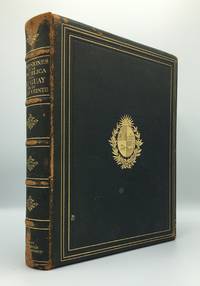
19121080Londres etc.: Lloyds Greater Britain Publishing Company Limited. 1912. First edition. Large quarto. Publisher's original full dark-green morocco; the upper board triple-ruled in gilt and with the Uruguayan crest in gilt; the spine with five raised bands compartments ruled and decorated in gilt and with titles in gilt. All edges gilt. Marbled endpapers. Title page contents page introduction and first text page with gilt borders and embellishments. Illustrated profusely throughout with black and white photographs and one map. Ownership inscription of the Australian writer Mary Gilmore to the head of the title page: "Mary Gilmore / Her book / 16. 3. 26". A very good copy the binding square and firm with a few small marks and scuffs to the boards rubbing to the spine and joints and wear to the corners. The contents with scattered foxing to the endpapers are otherwise in very good order and clean throughout. An interesting association copy of this comprehensive extensively illustrated and luxuriously produced survey of the people culture history politics economy industry agriculture geography and natural history of Uruguay at the beginning of the twentieth-century belonging to the influential Australian author journalist and poet Dame Mary Gilmore 1865-1962. </p><p>A prolific contributor to Australian literature and the broader national discourse during the first half of the twentieth-century Gilmore wrote for a number of leading newspapers and journals of the period serving as the editor of the women's section of The Australian Worker 1908-1931 as well as The Bulletin The Sydney Morning Herald and the Communist Party's Tribune becoming known as a campaigner for the welfare of the disadvantaged. Her first volume of poetry was issued in 1910 thereafter publishing prodigiously for the ensuing half-century coming to be regarded as one of Australia's most popular and widely read poets. Her poetry essays and memoirs covered a wide variety of themes although public imagination was particularly captured by her evocative views of country life with her best known work - 'No Foe Shall Gather Our Harvest' - serving as a morale booster during the Second World War.</p><p>A political progressive Gilmore gained a reputation as a 'fiery radical' - a champion of the workers and the oppressed. Involving herself with the burgeoning labour movement early in her life she had become a devotee of the utopian socialism of William Lane 1861-1917. In 1896 Gilmore and two hundred others followed Lane to Paraguay where they established a communal settlement called New Australia. She started a family there with William Gilmore whom she married in 1897 but the colony was ultimately short-lived with Gilmore leaving in 1900 living in Buenos Aires for six months followed by a period in Patagonia returning to Australia in 1902 after having saved enough money for a return passage.</p><p>Gilmore maintained a strong interest in Latin American politics culture and literature for the rest of her life. Indeed she also engaged in translation projects bringing Latin American literature to a wider audience notably endeavouring to produce a 'Uruguayan anthology' for which she corresponded with friends and associates in the country. This was perhaps also the origin of the present volume which itself forms a pleasing representation of Gilmore's wide-ranging ambitions.</p><p>By her later years Gilmore was a doyenne of the Sydney literary world and became something of a national icon making frequent appearances in the new media of radio and television and maintaining a significant literary output into old age publishing her last book of verse in 1954 aged 89. She died at the age of 97 and was accorded a state funeral a rare honour for a writer and has featured on the reverse of the Australian ten-dollar note since 1993. Londres [etc.]: Lloyds Greater Britain Publishing Company, Limited. hardcover
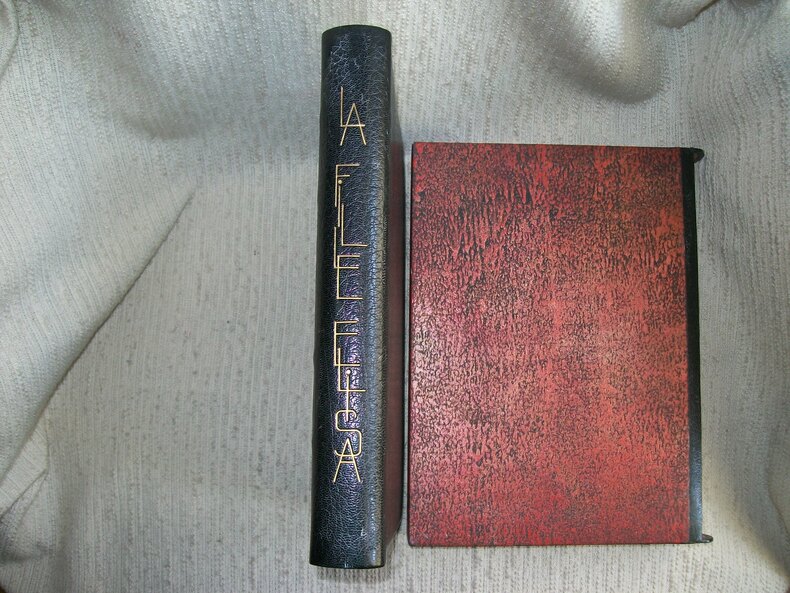
1929GITk288Paris Le Livre du Bibliophile Georges Briffaut 1929. In-4 3 feuillets blancs, 2 feuillets non chiffrés, II-VI 1 feuillet non chiffré (fin de la préface) 1-201pp 1 feuillet blanc, 1 feuillet achevé d'imprimer. Plein maroquin ébène, dos lisse avec le titre en long (lettres bâton dorées se chevauchant), tête dorée, non rogné, large bordure intérieure de maroquin ébène à quadruple filet doré, contreplats et gardes de papier brique, doublé de papier fort mordoré; reliure de l'époque (Y.M.O) sous étui recouvert de papier mordoré, bordé de maroquin ébène. Orné de 20 pointes sèches de Paul-Louis Guilbert: grande vignette sur le titre, frontispice, 3 têtes de chapitre, 1 dans le texte, 14 pratiquement à pleine page. A ces illustrations s'ajoutent 2 CROQUIS ORIGINAUX (au lieu d'un) contrecollés sur un feuillet blanc.EDITION DE LUXE appréciée des Amateurs, tirée à 425 exemplaires, celui-ci 1 des 30 sur Japon Impérial portant le numéro 36 avec 2 états des illustrations dont un avec remarque et 1 croquis original (notre exemplaire en possède 2). Carteret IV page 190. Talvart et Place VII page 220. BEL EXEMPLAIRE TRES FRAIS dans une reliure sobre de bonne facture, qui se marie bien à la noirceur du texte de Edmond de Goncourt, tout comme les illustrations de Paul-Louis Guilbert. Enrichi d'un croquis supplémentaire.
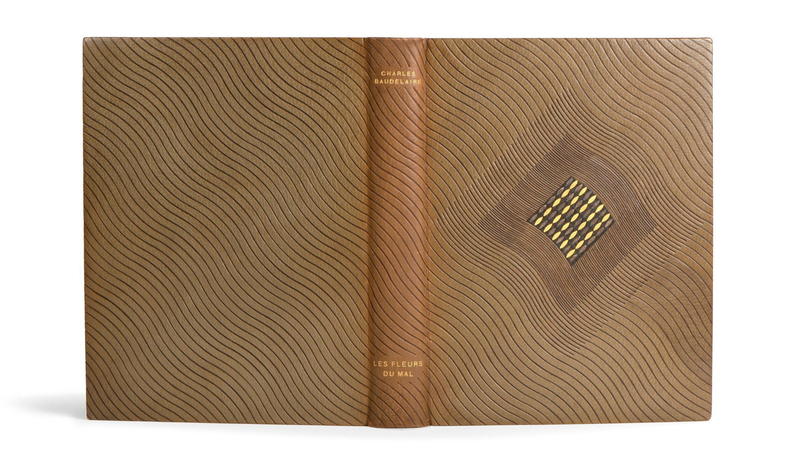
19283859Paris, G. Govone éditeur, 1928. Un volume in-4 (339 x 250 mm) 337 pp., reliure en plein maroquin gris, plats et dos ornés en continue de filets ondulés noirs parallèles, encadrant au centre du premier plat un losange de maroquin noir orné de bandes de motifs ovales mosaïqués bronze et dorés, dos lisse titré or, doublures avec un large encadrement de maroquin gris, orné de filets ondulés parallèles à froid et gardes de soie moirée bronze, doubles gardes, tête dorée, non rogné, couverture et dos conservés, étui bordé (Lefranc). Édition limitée à 353 exemplaires, ornée de la reproduction d’un autoportrait de Baudelaire et d’une page autographe de l’auteur en fac-similé, contrecollées à pleine page. 10 EAUX-FORTES ORIGINALES DE MARIETTE LYDIS TOUTES EN HORS-TEXTE. L'exemplaire est l'un des 290 exemplaires numérotés sur Hollande Pannekoek (n° 92). Il est exceptionnellement enrichi de LA SUITE COMPLÈTE DES DIX EAUX-FORTES TIRÉES EN COULEURS ET SIGNÉES AU CRAYON PAR MARIETTE LYDIS. Il s’agit ici de l’une des 75 en couleurs sur vélin de Hollande Pannekoek. Cette suite, considérée comme l’une des meilleures productions de l’artiste, a été publiée séparément par l’éditeur à 125 exemplaires seulement. À noter qu’en 1937, l’éditeur publiera une autre suite très différente de 33 compositions lithographiées en couleurs de Mariette Lydis pour illustrer ce même texte.
194611878Paris, Imprimerie Roger Amiard, 1946. Petit in-4 autographié (23 x 18 cm) de 350-(2) pp., couverture imprimée conservée, demi-maroquin bleu, dos à nerfs (reliure moderne).