5 445 résultats
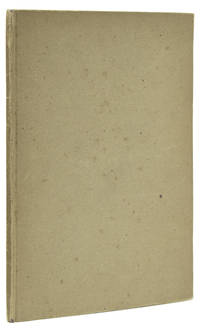
Boards with light rubbing to extremities. Spine lettering faded. First and last few pages browned. Back hinge started; Clarence Darrow was one of history's most eminent attorneys, arguing such notable cases as the Leopold-Loeb murder case, and the Scopes 'monkey' trial. Learn what shaped his beliefs and his feelings about these and other celebrated cases. This is a presentation copy to Thomas Massie, signed by numerous friends, including Clarence Darrow: "To my friend Lt. Thomas Massie - My client and friend with respect and deep affection from Clarence Darrow, Honolulu, April 4th - 1932". Thomas Massie - My client and friend with respect and deep affection from Clarence Darrow, Honolulu, April 4th - 1932". (Signed during the Massie trial). In nicely made 1/4 leather custom box ; B&W Photographs; 8vo; 465 pages
In-4°; pp.(4), 255, (1), con quattro illustrazioni, di cui una applicata a p. 65. Legatura coeva in mezza pelle con angoli. Edizione originale dell’opera di Cesare Lombroso (1835-1909) considerata fondamentale per la nascita dell’antropologia criminale. Lombroso fu un convinto seguace del positivismo francese, che applicò ai suoi studi di medicina sociale; riallacciandosi a tesi già percorse relative alla criminalità innata e biologicamente condizionata, Lombroso si spinge nell’Uomo delinquente a sostenere che i comportamenti criminosi possono essere determinati da predisposizioni di natura fisiologica, che si manifestano in particolari conformazioni anatomiche del cranio. Pesa sugli studi lombrosiani un forte assoluto determinismo. PMM 364. Govi 317.
1967List2964United States 1967. Approximately 108 items: Eighteen packets of carbon-copied documents totaling 114 pages; thirty-nine pages of handwritten notes; twenty-six letters from William Burke to Elwood Hammock; thirteen notes and letters from Elwood Hammock to Arthur Lea; fourteen packets of carbon copies of Burke's letters totaling fifty pages; two newspaper articles about the case; and three copies and one negative of a mugshot. Excellent. The story of Operation Homex an investigation by the FBI into a blackmail ring targeting gay men during the mid-to-late 1960's begins with the arrest of John Aitken by Detective James McDonnell in July of 1965. Police were called to the Grand Central Western Union where Aitken who had been impersonating a police officer while traveling with a 14-year-old boy was attempting to convince the boy's father to wire him $150 to fly him home. Aitken had a prior arrest for child molestation -to avoid doing hard time Aitken told McDonnell that he could tell the NYPD about something much more interesting than the crime he was currently committing.1<br /> <br /> The extortion ring Aitken told the NYPD about had been shaking down dozens of men across the country for almost a decade taking in over $2 million. Corrupt police-and men impersonating police known as "bulls"-used young men and boys known as "chickens" to lure in and blackmail prominent closeted gay men. Their victims included high-ranking military officers doctors professors entertainers and even a sitting Congressman. Over the next two years the investigation headed by the Manhattan District Attorney and the FBI would reveal an operation of unprecedented scope with activities in over a dozen cities.<br /> <br /> The present archive of correspondence is from the collection of Special Agent Arthur B. Lea who was based in Fayetteville North Carolina. The majority of the letters are written by William Joseph Burke an ex-con and ring member who was arrested as part of the first public wave of indictments in February of 1966 to "Bone" or "Bud" a.k.a Elwood "Buddie" Lee Hammock one of the three ringleaders primarily responsible for the whole of the extortion operation. According to a carbon copy of an FBI report included here Hammock was arrested in September of 1966. It would appear that he subsequently began cooperating with the investigation including forwarding Burke's letters to Special Agent Lea.<br /> <br /> Burke discusses the legal case with Hammock candidly and in great detail though using pseudonyms for most of the players. He tells Hammock:<br /> <br /> "Yes the Thumb mentioned your name I assume one of the two contracts he was inflating his ego with may have belonged to you but he was all confused like I told you. He appeared to be sure about one thing and that was that his victims would never show up and take the stand at the trial but when I told him that Murphy the Apple were going to plead guilty his chin dropped he asked me if the Apple was talking ." January 9 1966<br /> <br /> It was incredibly difficult to convince victims to testify a fact which Burke alludes to several times in his letters. One victim Admiral William Church committed suicide rather than even speak to investigators in New York. As Burke himself notes "the laws in the U.S. . tend to encourage Vice Squads etc. to shake down such people" and left them little recourse September 22 1966.<br /> <br /> Hammock's main concern which is shared by Burke is that he would face serious prison time despite his cooperation with the authorities. He tells Lea:<br /> <br /> "Somebody has got to do something for me Art. I've worked hard as hell breaking up this ring now they're going to toss me to the vultures that ain't right Art I aint got no money to hire me a lawyer or nothing - Thats why the Hebe flew away". No Date<br /> <br /> "The Hebe" is Sherman Kaminsky who skipped bail after Church's suicide and disappeared for 11 years his flight is the subject of much ire from both Burke and Hammock. According to Hammock investigators let Kaminsky out of the courtroom at lunchtime and left him alone while he sat on a bench reading the paper and feeding the pigeons. When they came to retrieve him "Boom No Hebe no where in sight" No Date.<br /> <br /> Among the other items included here are two mugshots a photo negative and the complete FBI file of Jimmy Michael Haithcock one of the chickens whose name is included on the aforementioned FBI report. There are many pages of Lea's hastily written notes numerous photocopies of letters from Burke and a substantial stack of call records from Southern Bell Telephone and Telegraph Company. An unusual collection to be sure with much to glean about a fascinating and largely forgotten episode of American history.<br /> <br /> 1 William McGowan "The Chickens and the Bulls" Slate July 11 2012. unknown
194980332Garden City:: The Crime Club 1949-1954. Fine. The jackets are preserved in jacket sleeves and enclosed in modern brad-bound stiff wrappers. Additional postage applicable. Titles: The Cat and Capricorn. Board Stiff. Not in the Script. Murder Twice Removed. Grave Consequences. Deadly Beloved. The Three Widows. Tread Lightly Angel. Divining Rod for Murder. The Widow of Bath. Scared to Death. Night Train to Paris. Tragic Target. From This Death Forward. The Mamo Murders. Murder Repeat Murder. The Judas Goat. The Clock that Wouldn't Stop. Grow Young and Die. Heavy Heavy Hangs. Elk and the Evidence. Mask for Murder. The Saint vs. Scotland Yard. M'Lord I am Not Guilty. Glass on the Stairs. A Rag and a Bone. The Other Side of the Wall. The Moon Gate. Inspector Maigret and the Strangled Stripper. Seeing Red. Miscast for Murder. The Devil Threw Dice. The Body in the Basket. Shroud of Darkness. Fatal in my Fashion. The Black Italian. The Crime Club, unknown
2003031688Beverley Hills California: Blue Pearl Press 2003. INSCRIBED / SIGNED by the AUTHOR on the front inside cover. SIGNED copies are SCARCE. Fine condition with only a hint of very mild shelfwear to the cover. Flat uncreased spine. NO chips tears creases or fading. NOT price clipped $16.00. Sharp corners. NOT a library discard. NOT a remainder. Pages are fresh crisp clean and unmarked. NO underlining. NO highlighting. NO margin notes. Camelot fiction -- a unique take on the King Arthur tale. 4.33 Goodreads rating. Bound in the original full color pictorial wraps From the rear cover: "Born of Betrayal is a totally unique view of the story of King Arthur. It centers on the influence of a charismatic Merlin and upon the parents of King Arthur. It is their love story.". INSCRIBED / SIGNED by the AUTHOR. 1st ed No additional printings listed. Softcover. Fine condition. Illus. by Anido Vince cover art by. 8vo. 327pp. Great Packaging Fast Shipping. Blue Pearl Press Paperback
Boards with light rubbing to extremities. Gilt lettering and gilt spine lettering faded. Hinges started. One page with rough paper and affecting the contents - apparently from an attempt to separate two pages that were stuck together. ; Darrow's autobiographical novel, a fictionalized account of his boyhood. Presentation copy: Inscribed by the author on front free endpaper: "Inscribed to Mary Hoover with the regards of Clarence Darrow, March 4th 1927". Additionally laid in is Ms. Hoover's contemporaneous account of a talk given by Darrow at the Negro Industrial Schho, Daphne, Alabama on February 10, 1927: "I can't help you, you will have to help yourselves, but I advise always an attitude of defiance toward the white man who calls himself your friend. How has he manifested this friendship? By hanging and burning you; by making you do his work and use his back door..." In blue linen custom box; 12mo 7" - 7½" tall; 220, 2 pages
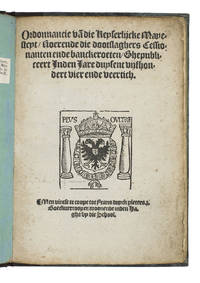
1544ABC_46700The Hague: sold by Frans Duyck Pietersz. colophon: Delft printed by Symon Jansz. 1544. Modern half brown buckram marbled paper sides blue endpapers with an older ca. 1840 front wrapper bound in. 4to. With the woodcut crowned coat of arms of the Holy Roman Emperor Charles V with the order of the Golden Fleece a column on either side and the motto plus oultre on the title-page. Set in 2 sizes of textura gothic type with 2 lombardic initials cast type. First and only edition of a rare ordinance printed in Delft. The ordinance promulgated 19 May 1544 tried to reduce or at least prevent a further rise in crime in Holland and even in other parts of the Holy Roman Empire by addressing the negligence of officers in enforcing the law. It notes that crime rates - from murders to fraud and other smaller incidents - are rising in Holland and across the Holy Roman Empire because officers of the law are failing to do their jobs in the eyes of Holy Roman Emperor Charles V and other lower ranking officials like the stadtholders in the Low Countries. The present ordinance addresses problems concerning the enabling fraudulent behaviour towards creditors of any kind authorities too readily issuing letters permitting deferment of payment resulting in an exorbitant volume of unpaid debts. In total the ordinance contains 40 rules and regulations mainly for officers of the law but also for criminals and others profiting from the lack of law enforcement decreed and published with the intent of bringing down crime rates and reminding officers of their duties. The printer Simon Jansz. in Delft printed the ordinance in two issues the present for Frans Duyck Pietersz. in the Hague and the other with his own imprint Typ. Batava 5796 2 copies.With contemporary marginal annotations and underlining of the text in pen. The second flyleaf is the older front wrapper with an inscription in brown ink on the back: "19 Mei 1544" along with an old catalogue clipping and a few pencilled bibliographical notes. With edges of the leaves slightly frayed slight browning throughout mostly around the edges but overall in good condition.l Petit Pamfletten 1 1882 71; STCN 119453460 2 copies cf. 831527528: Delft issue; Typ. Batava 5797 4 copies cf. 5796: Delft issue; USTC 421160 same 4 copies 1 listed as if it were 2 cf. 421163: Delft issue; not in Knuttel; Kress; Van der Wulp. sold by Frans Duyck Pietersz. (colophon: Delft, printed by Symon Jansz.), hardcover
1920216411920. Japan OccupationWWII Primary-source photo album of United States military governance during the occupation of Japan with particular emphasis on the enforcement of legal authority and the administration of war crimes proceedings under Allied control. Centered on the career of General Charles Sabin Ferrin in his capacity as Provost Marshal of Tokyo the album captures the institutional frameworks through which U.S. forces maintained order supervised political transition and participated in the International Military Tribunal for the Far East IMTFE. The collection includes images of high-ranking military and political figures official proceedings connected to the war crimes trials and formal and informal interactions with Japanese leadership situating Ferrin's role within broader systems of occupation-era administration legal oversight and diplomatic engagement.<br /> <br /> The album contains 85 black-and-white silver gelatin photographs varying in size from 2.5" x 2.5" to 6" x 4.25" mounted in a clothbound album measuring approximately 7" x 5". The images begin in the United States depicting early domestic life before shifting focus to Ferrin's stationing in China from 1919 into the 1920s and later to his critical role in postwar Japan where he engaged with Japanese political and military officials at the highest levels. The China-era photographs include striking scenes of the U.S. Army's presence in Tientsin Tianjin as indicated by labeled photographs of "U.S. Army Buildings Tientsin" designed by architect Albert Benz. Other images capture American cavalrymen of the 15th Infantry Regiment on horseback lined up in disciplined formation labeled "1921 Tientsin China 15th Infantry U.S.A." The album also contains personal family moments such as a uniformed soldier cradling a small child on horseback annotated "1918 Russell" and an image of two children dressed formally on a walkway inscribed "Aug 26 1919 leaving for China." Additionally candid moments in Tientsin show a young child riding in a rickshaw pulled by a Chinese laborer and another with a Chinese woman identified as an "Ama" caring for the family's child at a beach in Chinwangtao Qinhuangdao in July 1921. <br /> By the late 1940s the album shifts focus to Ferrin's tenure as Provost Marshal of Tokyo a role that placed him at the center of postwar military governance and legal oversight. Several photographs depict U.S. military officials dining and meeting with Japanese political figures. One particularly notable photograph shows Ferrin standing beside a dignitary identified as "Prince Takamatsu Hirohito's younger brother." Other images depict high-ranking officers including Admiral James O. Richardson testifying at the International Military Tribunal for the Far East IMTFE with a caption stating: "Admiral James O. Richardson Commander-in-Chief United States Fleet testifies on the witness stand at the International Military Tribunal for the Far East during the Pearl Harbor phase of the trials of the 27 accused Japanese war criminals." A separate image shows troops of the 720 MP Battalion executing a right-dress formation in front of the War Ministry Building in Tokyo on October 13 1947. The presence of these high-ranking officials alongside candid social and formal meetings with Japanese elites underscores Ferrin's prominent role in enforcing law and order during the American occupation and his involvement in overseeing war crimes proceedings. The album is in very good condition overall. A rare and historically significant visual chronicle of General Charles Sabin Ferrin's career across pivotal moments in 20th-century history with firsthand images of U.S. military presence in China the occupation of Japan and high-level engagements with political and military leadership. unknown
1886140042London: Irwin Langley & Co. 1886. Advice to Strangers" - avoiding the criminal pitfalls of 1880s London First and only edition of this extraordinary little volume offering practical advice against the thieves and tricksters plaguing the streets of London. The first half of the text is a spotter's guide on pickpockets "Who they are and what they are like" with explanations of their methods the distraction of the "stall" the techniques of the "wire" given in sufficient detail and with such specifics as to suggest that the author genuinely was of the profession claimed. The second section offers "Advice for Strangers" to the metropolis illuminating the operations of the "Mysterious Dental Rooms" "swell assignations houses" that thrive on the "carnal weaknesses of casual visitors to the city"; forwards an explanation for "the mysterious disappearances which are almost daily reported" the lure of "a pretty face snapping black eyesand red lips" drinks in a café ending with a "bloated disfigured swollen corpse" pulled from the river; and looks into the "women and young girls who have a great mania for disappearing". A respectable and highly cultivated young girl in Liverpool taking "short cut through a disreputable part of town" reappears in London the story never made public but understood to be "horrible in the extreme". The final sections comprise a short piece on "the Dark Ways of Street-sharpers" and a lengthier description of a rather complicated American scam to illustrate "High Class and Ingenious Roguery on a Grand Style" followed by a brief explanation of cipher writing and reading which concludes with a "Prize Competition £1000 in Prizes" requiring the solution of three ciphered messages. Noting well what has gone before this has more than a hint of "roguery" to it but where the catch might have been is beyond our wit to discover. We have been unable to trace any other publications or enterprises put out over the name of Irwin Langley & Co. Scarce just two locations world-wide BL and Harvard Medical School. Octavo 180 x 120 mm. Portrait frontispiece 6 stock portraits in text one full-page illustrations in text printed in menacing sanguine throughout. Wire-stitched in original green cloth-backed sanguine printed boards. A little rubbed and soiled head and tail of spine chipped hinges with some give to them but sound staples rusted but intact text block lightly browned overall very good. hardcover
26 vols., 8vo., First Edition; cloth, gilt backs, a near fine run in unclipped dustwrapper. The set comprises: Death at La Fenice (SIGNED BY THE AUTHOR ON TITLE) (Chapmans, 1992); Death in a Strange Country (Chapmans, 1993); The Anonymous Venetian (Macmillan, 1994); A Venetian Reckoning (Macmillan, 1995); Acqua Alta (Macmillan, 1996); The Death of Faith (Macmillan, 1997); A Noble Radiance (Heinemann, 1998); Fatal Remedies (Heinemann, 1999); Friends in High Places (Heinemann, 2000); A Sea of Troubles (Heinemann, 2001); Wilful Behaviour (Heinemann, 2002); Uniform Justice (Heinemann, 2003); Doctored Evidence (Heinemann, 2004); Blood from a Stone (Heinemann, 2005); Through a Glass Darkly (Heinemann, 2006); Suffer the Little Children (Heinemann, 2007); The Girl of his Dreams (Heinemann,2008); About Face (Heinemann, 2009); A Question of Belief (Heinemann, 2010); Drawing Conclusions (Heinemann, 2011); Beastly Things (Heinemann, 2012); The Golden Egg (Heinemann, 2013); By its Cover (Heinemann, 2014); Falling in Love (Heinemann, 2015); The Waters of Eternal Youth (Heinemann, 2016; SIGNED BY THE AUTHOR ON TITLE); Earthly Remains (Heinemann, 2017; SIGNED BY THE AUTHOR ON TITLE). A SPLENDID RUN, COMPLETE TO DATE, WITH THE FIRST AND MOST ELUSIVE VOLUME (TOGETHER WITH TWO OTHERS) SIGNED BY LEON ON TITLE.
Silver print cm 23 x 30. Stampa vintage. Al verso didascalia manoscritta e timbro del fotografo Gabriele Milani piu' altro timbro e ritagli del del giornale dove comparve l'articolo. Alcune pieghe agli angoli. Questo reportage realizzato dal giornalista Vittorio Lojacono e dal fotografo Gabriele Milani, venne pubblicato sulla Domenica del Corriere il 2 aprile 1967. E' considerato ancora oggi uno dei grandi scoop del giornalismo italiano. Fotografia di grande valore simbolico, possibile ritratto di tutti i ribelli di ogni tempo e ogni luogo. Una immagine che umanizza il bandito, lo emenda e lo consegna al mito.
1840WRCAM53792Sydney: W.A. Duncan Australasian Chronicle Office 1840. 52pp. Dbd. Minor toning some loose leaves. Good. A rare trial account of a peculiar though perhaps an oddly-justified assault in Australia in 1840. "James Mudie had in his book THE FELONRY OF NEW SOUTH WALES reflected upon the capacity of Kinchela's father in his office as judge. The younger Kinchela waited for Mudie who had recently returned to the colony and administered many lashes one witness said 50 with a horsewhip. The defence was that Mudie well deserved what he got as a common libeller and that Judge Kinchela was now aged and unable to take his own part. The jury returned a verdict for the plaintiff in the sum of £50 - one pound for each stroke" - Ferguson. Some might call the horsewhipping a simple case of frontier justice. <br> <br> Together Ferguson and OCLC locate only five copies all in Australia. FERGUSON 3104. OCLC 220294602. W.A. Duncan, Australasian Chronicle Office unknown books
24 vols., 8vo., First Edition; decorative black cloth, upper boards and backstrips blocked and lettered in gilt and red, red tops, red endpapers, red lettering on backstrips heavily faded on only three volumes, an unusually bright, clean, crisp set in unclipped dustwrapper. A notably bright, clean set of the definitive collected edition, including the author's short stories, issued on a subscription basis by the publisher and not available through bookshops. Each volume contains three stories or story collections. It would seem that many subscribers may have lacked commitment during the four years of publication for complete sets are far less common than one might imagine. The attractive bindings incorporate a golden dagger. The dustwrappers feature an attractive design format with every volume carrying a striking illustration symbolising one of the stories therein (without plot spoilers!) but were less successful in production terms for the backstrips in particular are notoriously prone to fading (the present set is far better than many). The set comprises The Murder of Roger Ackroyd, They do it with Mirrors, Mrs. McGinty's Dead (1969); Cards on the Table, N or M?, A Murder is Announced (1969); Appointment with Death, Crooked House, Sad Cypress (1969); 4.50 from Paddington, Lord Edgware Dies, Murder in Mesopotamia (1969); Murder on the Orient Express, Death in the Clouds, Why didn't they ask Evans? (1969); The Murder on the Links, A Pocket Full of Rye, Destination Unknown (1969); The Hollow, The Moving Finger, Three Act Tragedy (1969); Mystery of the Blue Train, The Listerdale Mystery (short stories), Murder at the Vicarage (1970); Murder is Easy, Dead Man's Folly, The Man in the Brown Suit (1970); The Mirror Crack'd from Side to Side, They came to Baghdad, The ABC Murders (1970); Ordeal by Innocence, One Two Buckle my Shoe, Adventure of the Christmas Pudding (1970); Cat among the Pigeons, The Labours of Hercules, Hickory Dickory Dock (1970); The Mysterious Affair at Styles, Ten Little Niggers, Dumb Witness (1970); The Pale Horse, The Big Four, The Secret Adversary (1970); Peril at End House, The Body in the Library, Hercule Poirot's Christmas (1970); Death on the Nile, Towards Zero, After the Funeral (1970); Sparkling Cyanide, The Secret of Chimneys, Five Little Pigs (1970); Evil Under the Sun, Death Comes as the End, The Sittaford Mystery (1970); A Caribbean Mystery, Taken at the Flood, The Seven Dials Mystery (1971); By the Pricking of my Thumbs, The Mysterious Mr. Quin, Endless Night (1971); Hallowe'en Party, Passenger to Frankfurt, The Thirteen Problems (1971); The Clocks, Third Girl, Murder in the Mews (1971); Partners in Crime, At Bertram's Hotel, The Hound of Death (1972); Nemesis, Parker Pyne Investigates, Poirot Investigates (1972). COMPLETE SETS IN THIS CONDITIONS ARE SELDOM OFFERED FOR SALE
1896STLL0129Hamburg, Verlagsanst. u. Druckerei A.-G. 1890-1896. Gr.-8°, XXXI(1) S. (Tit., Einführ. u. Vorw. d. Verf.), 545(1) S., IV (Tit. u. Vorw. d. Übers.), 412 S. mit 1 Tafelbild u. Tit. II S. (Vorw. d. Verf.), 29(1) S., 64 meist gefaltete Tafeln mit z. Tl. photogr. Abb. Mit etlichen Tabellen u. einigen wenigen Fig. im Text. HLdrBde. d. Zt. auf vier falschen Bünden m. Tit. u. reichen Verz. in Goldpräg. auf Rü., marmor. Buchschnitt u. gemusterten Vorsätzen. Kanten u. Kapitale berieben. Stempel auf Tit. unschön m. Exlibris überklebt. Im Text etwas gebräunt u. stellenw. stockfleckig. Mischauflage der ersten und zweiten Auflage dieser ersten deutschen Ausgabe, übersetzt nach der 1876 veröffentlichten Originalausgabe ("L'uomo delinquente in rapporto all'Anthropologia, alla Giurisprudenza ed alle discipline carcerarie"). Der italienische Mediziner und Anthropologe Cesare Lombroso (1836-1909) war Militärarzt in Pavia, leitete fünf Jahre die Nervenanstalt von Pesaro, lehrte später in Turin gerichtliche Medizin, Hygiene sowie Psychiatrie und gilt als Begründer der Kriminologie. Er vertrat die These, es gebe geborene Verbrecher, die durch körperliche und psychische Merkmale zu erkennen seien. Abstehende Ohren, zusammengewachsene Augenbrauen, schmale Lippen und hervorstehende Eckzähne waren für ihn u. a. Erkennungszeichen krimineller Neigungen. Europaweit lieferten Lombrosos umstrittene Theorien den Anstoß für wissenschaftliche Debatten über die Ursachen des Verbrechens. (vlg. dazu Brockhaus, 19. Aufl. XIII, 509).
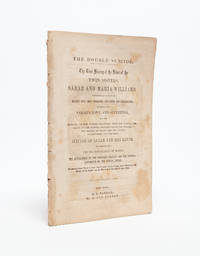
18555437New York: H.H. Randall 1855. First edition. Printed self wraps stitched at spine. Measuring 220 x 140mm and complete in 64 pages. Some rubbing along spine and scattered foxing to preliminary and terminal leaves; toned throughout else clean. A scarce piece sensationalizing the tragic affairs and subsequent suicides of Sarah and Maria Williams OCLC reports fewer than twenty copies with libraries with this being the only example on the market.<br /> <br /> We've been unable to determine whether the tragic story of the Williams twins is in fact historically true. What is clear whether the narrative is fiction or non-fiction is that the damage caused to women and their lives as a result of their social positions and sex had a wide audience and attracted a variety of readers -- some who hoped to judge the parties involved some who sought the experience of empathy and catharsis some with prurient fantasies and some who simply wanted a thrill. According to this story Sarah and Maria Williams were firstborn daughters to a loving and prosperous middle-class New York family and that like any "perfect victims" they combined "sincerity kindness and judgement" with "the bloom of loveliness grace and innocence." Chaste and well behaved in their boarding-school days their lives took a turn at twenty. During their father's extended absence on business Maria began receiving visits from Mr. Knight an insidious but well-recommended brother of an old schoolmate. Seduced by him into a fraudulent marriage Maria is ultimately separated from her family and forced into sex work for his profit.<br /> <br /> Rising eventually to "a high position among those of her kind.as a prostitute of superior grade" Maria operated on her own and refused to return to the Williams household despite Sarah's urgining; being degraded by her old neighbors and parents when she could be respected by her own was too much to bear. Sarah's insistence on maintaining a relationship with her twin and visiting her disreputable home led to her own reputation being cast into doubt. And when Sarah's intended eventually fell for engaged in keeping and ultimately got pregnant Maria all participants in the affair ended their own lives. <br /> <br /> In many ways the sensationalized stories of these twins reveal how no woman is safe and how no woman can rely on her chastity to protect her socially. Though Maria and Sarah were identical and took opposite paths their violent ends wind up being identical and equally scandalous. H.H. Randall unknown
3 vols., 8vo., First English Edition; red cloth, backstrips lettered in silver, coloured endpapers (pale blue/dark blue/green respectively), a fine set in unclipped dustwrapper. Complete sets of the original English edition are already elusive in this condition.
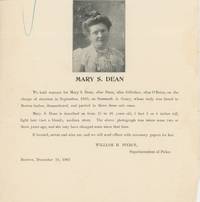
1905List2839Boston Massachusetts 1905. Single 8.5 x 8.5 inch sheet cut from a larger whole; likely missing a portion. Marks at upper left side some folding. Otherwise excellent to near fine. Wanted poster for Mary S. Dean dated December 16 1905. Three months prior a young woman’s torso had been found in a suitcase floating in Boston Harbor. A month later a suitcase containing her limbs was found and she was identified as Susanna Geary. In September Geary had gone to the medical practice on Tremont Street where Dean worked as a nurse and Dean had performed an abortion for her - at the time an illegal procedure in Massachusetts. Geary developed sepsis from the surgery; when she died Dean and three men one a doctor conspired to dismember Geary and dispose of her body in the ocean.1 The doctor was acquitted and the two men pleaded guilty but Mary S. Dean was never found.<br /> <br /> 1 “Says McLeod Made Plans: Crawford Testifies in Suit Case Trial†The Boston Globe November 28 1905. unknown
8vo., First Edition, page edges tanned as usual; cloth, a near fine copy in unclipped dustwrapper. The first Inspector Morse novel and a landmark in twentieth century detective fiction. Tragically, due to the poor quality of the paper employed, it seems virtually impossible to find a copy without the browning. VERY SCARCE IN THIS CONDITION
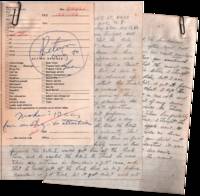
496045S.n. S.l. 1940 3 documents originaux de ou sur le Docteur Marcel PETIOT présentés dans un cadre sous-verre à fond pourpre, entourage bois noir et doré ( 620 X 420 mm ).- Ordonnance médicale gynécologique originale signée du Docteur Marcel PETIOT et datée du 10 mars 1940 au format 200 X 170 mm, trés lisible et en bel état.- 1 photographie originale de Marcel PETIOT à son procès ( avec en fond les tristement célèbres valises... ) de format 225 X 145 mm.- 1 photographie originale signée de Michel SERRAULT dans son rôle au cinéma du Docteur PETIOT de format 200 X 120 mm. L'ensemble de toute rareté est en trés bon état et agréablement présenté.
First edition, folio (295 x 190 mm), 4pp., drop-head title, a well margined copy with just slight signs of a water stain, sewn in recent marbled wrappers, preserved in a custom-made folding cloth case, leather spine label lettered in gilt. Sexual abuse of a nine year old girl by an Irish priest. The second part of the pamphlet contains "a very foul case" of sexual abuse of a nine year girl by an Irish Catholic priest of the name of Dowdel. The girl, named Bishop, swore in court that the previous August she used to visit Dowdel, then a prisoner in the Gate-house where she had first made his acquaintance when her mother was also a prisoner there. According to her testimony: "he used to kiss her, to take her upon his knee, and to give her sugared beer, some time put his tongue into her mouth, and his hands up her coats; that he hurt her once with his finger, which made her cry; and then to please her, gave her two groats: and that a week after he took her in like manner upon his knee, and after he had kissed her a while, he threw her upon his bed (having made his Door fast with a stick) fell upon her, pull'd up her Coats, and hurt her with something..." When the matter came out the girl's father, being drunk, told Dowdel that for forty pounds he could see to it that everything would be hushed up. Dowdel thought forty pounds too much and offered ten. At his trial Dowdel shamelessly confessed his misdemeanour with a frankness which later earned some leniency from the court. He speaks in what appears to be the writer's attempt to imitate his Irish accent. "Being asked if he would challenge any of the jury, he answered like an Irish St. Omer, Me like dem well, they be all honest men. Being asked, if he used to kiss the Girl and set her upon his knee ; he answered Yes my Lor the chile be so pretty and do twenty pretty tings make me laugh a hundred times. Being asked if he ever gave her money, he said, My Lord that be my Charitee, when her Mother bee in Prison, I tooke her to eat half my dinner, and I say this bee pretty Shile, I had love for the Shile and gave her any ting I had : she used to come often for my Charitee. But amongst the rest of his discourse he owned the matter in effect in these words, which happened about entering her body, he said, Me enter her dis far, pointing his finger to the Court." Wing, F 2337.
Paperback No expedite shipping. Pls. allow 4 - 6 weeks delivery being a newly release book from publishers. Ships from publishers directly.
Hardcover Like New. Ships directly from publishers being a new release book . Pls. allow a minimum of 25 business days delivery time.
1781302787In Venezia ed in Torino: Per il Giuliano 1781. 4 pp. 8vo. Later drab boards. Some foxing and staining to text paper repair to lower corner of second leaf. 4 pp. 8vo. An apparently unrecorded work on the grisly murder of Francis Cestonaro in 1779 by his wife Veneranda Porta and her lover Stefano Fantini. Cestonaro's body was cut up and the various parts dumped in the Venice canals. The murderers were hanged and Fantini was fittingly drawn and quartered. The story has passed into Venetian legend - William Dean Howells recounts it in Venetian Life as one of the three quintessential Venetian tragic legends that every gondolier has at the ready to recount. Not in OCLC Per il Giuliano unknown
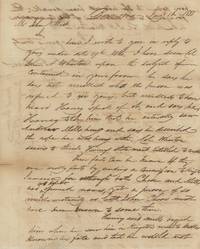
1838List2426Republic of Texas 1838. Stampless letter folded with red two-line handstamp of Steam Packet Columbia on January 16 1838 from Brazoria Tex. to New Orleans. Fine condition. Fine. An intriguing letter written by Edmund Andrews a judge in Brazoria Texas who had arrived in Stephen Austin’s colony eight years before he penned this in 1830. The letter is written to John K. West the New Orleans attorney who was an original member of the notorious “New Orleans Associates.†Andrews discusses a conversation he had on behalf of West with John Austin Wharton who would die later in 1838 relating that Andrews had a conversation with Wharton on West’s behalf. The conversation with Wharton revolved around a man with the last name Chase and Andrew Mills who had both left Texas presumably and traveled to Kingston Jamaica where Mills was hanged for an undisclosed crime. Andrews writes that Wharton related that that Mills told him he “would not have done it if he had not been drunk†presumably talking about the crime for which he was hanged. Overall a very intriguing letter relating to crime exile and misdeeds in the Republic of Texas which should be of interest to scholars of the Republic. <br /> <br /> Full text follows:<br /> <br /> Brazoria Jan'y 16 1838<br /> <br /> Mr. John K. West<br /> Sir <br /> <br /> Since I wrote to you in reply to yours under date 19th ulto. I have seen Col. John A. Wharton upon the subject contained in your favor. He says he does not recollect who the person was referred to in yours but recollects to have heard Haney speak of it and says he Haney told him that he actually saw Andrew Mills hung and says he described the rope he was hung with. Col. Wharton seems to think Haney's statement entitled to credit. <br /> <br /> These facts can be known if they are really facts by sending a commission to Kingston Jamaica for although both Chase and Mills had no doubt assumed names yet a person of so much notoriety as Capt. John Chase must have been known to some there.<br /> <br /> Haney said Mills begged him when he saw him in Kingston never to make known his fate and that he would not have done it if he had not been drunk. The foregoing is the substance of the conversation held with Col. J. A. Wharton. <br /> <br /> I am yours truly <br /> Edmund Andrews. unknown
173327715Namur Belgium 1733. Ephemera. Very good condition. An unusual survival of an 18th century swindle and subsequent execution. The manuscript letter is written by Mme de Douglas to an unknown "Monsieur" from Namur Belgium dated early January 1733. Mme Douglas was the widow of one of two brothers who inherited their fathers' rich estate from the East Indies. Upon the brothers' death in order to prevent the estate being distributed to the daughter of her brother in law she paid a wet nurse and others to falsify testimony implying that the daughter was illegitimate. The daughter was imprisoned but later found to be not guilty and the courts in Holland Belgium indicted Mme Douglas. Ultimately "The verdict was that she be hanged and that her 80 year old father be brought onto the scaffoled in order to watch the execution; and her 300000 florin fortune is not sufficient to save her from her fate." Translation of an article in "Kurz-gefaßter historischer Nachrichten zum Behuf der neuern Europäischen Begebenheiten auf das Jahr 1735" vol. 45 November p. 893.<br /> <br /> Written in unaccomplished French bifold 7 1/4 x 6" 4pp. <br /> Translation from French:<br /> From Namur the 1st of Jan 1733<br /> As I learned a few days ago that you also took possession of all the property of your father-in-law by agreement with your brother-in-law I have the honor to write you these lines to know if your intention to lodge with me was false as you assured me of demonstrating the desire if it were up to you and I assured Monsieur Questand also agreeable that you appeared to me that we could easily arrange for your interests and mine. If you come to Namur it would require us to confer together. I am lodging at the moment with Mr Canon Paradis near St. Aubain I shall await a response to this letter my compliments if you please to Madame your wife and I wish you both all good wishes in this year that we are beginning according to your desires having the honor to be <br /> with a perfect esteem Sir your very humble and very obedient Countess<br /> of Douglas<br /> <br /> In 1717 Veselovsky one of Peter the Great's entourage on his second visit to the Low Countries lodged in Namur 'chez M. le chanoine Paradis.' See Charles Maroy 'Les voyages de Pierre le Grand' L'Expansion Belge 6/4 1913: 209 199-211. <br /> <br /> Further reference to this case is made in a European history published in Nurnberg in 1744 summarizing important events in European history from 1734 to 1744 Ref. below.<br /> <br /> 'How sharply dishonesty is treated in Holland is illustrated by an example in the person of Madame Douglas. There were two Douglas brothers both married who received a rich inheritance from the East Indies. One questioned the legitimacy of the inheritance the other accepted it. The two were so hostile towards each other that guardians had to be appointed. After awhile both brothers died one of whom was survived by a daughter. Because however the other widow wanted the entire fortune for herself and her children she corrupted a wet-nurse and other witnesses who finally testified that the child presumably of the dead brother was illegitimate. The mother of the child was put in jail and the sister-in-law received the entire inheritance. After further investigation the imprisoned woman was found not guilty and the lying of the widow and her false witnesses was exposed. She the widow was prepared to pay 300000 guilders for her life but Madame Douglas ended up having to pay far more. Her 80 year old father was forced to watch the execution of her daughter on the scaffold because he had given his daughter the offending attorney Streich. Nine of the false witnesses were beaten with a broom and seven were branded.' Translation of a passage on pp. 638-639 in Andreas Lazarus von Imhof Des Neu-eröffneten historischen Bilder-Saals Zehender Theil. Nürnberg 1744. unknown