273 résultats
19622105130149Alfred Knopf 1962-01-01. 3rd. Hardcover. Like New. 9x6x1. Hardcover and dust jacket. Good binding and cover. Clean unmarked pages. 630 xxiii pages : illustrations maps ; 25 cm. Alfred Knopf hardcover
1946511744Yale University Press 1946. First Edition. Hardcover with Dust Jacket. NEAR FINE/Very Good. Hans Morgenthau's copy with his stationary cards turn and used as bookmarks with his occasional pencil marks in the margins. First Printing. xii 303pp. 8vo gray cloth b/w frontispiece portrait. Cassirer's final work published posthumously. Morgenthau reviewed the book favorably in Ethics Jan. 1947 Vol. 57 No. 2: 'This volume is indeed a great event in political philosophy. I say advisedly 'political philosophy' and not 'history of political philosophy' for it was the unique gift of Cassirer to inspire and deepen philosophic thought by illuminating its history. There never was a less antiquarian historian than Cassirer. In truth he was not a historian of philosophy but a philosopher who used history as a vehicle for philosophic thought as others have used the aphorism or the system for the same purpose.'. Yale University Press hardcover
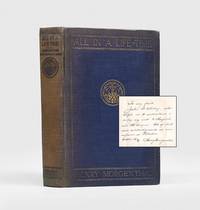
192924244Doubleday Doran & Company Inc 1929. Stated First Edition. Hard Cover. Good/No Jacket. Signed by Author. Signed by Author Signed by Author Good Plus condition no dust jacket inscribed and signed by Morgenthau on first page in black ink thus: "To my friends Mr. & Mrs. Henry M. Wise as a souvenir of our delightful companionship on our trip from Bermuda. Henry Morgenthau Nov 16/31"; the interior of this book is very good not musty age toning light and uniform binding tight clean and unmarked pages the red boards show shelf and edgewear with light fraying at top of spine and the lettering fading on spine and on front cover. Doubleday, Doran & Company, Inc hardcover
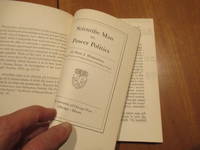
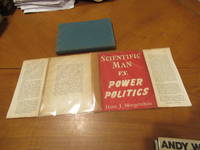
1946053691Chicago: University Of Chicago Press 1946. 1st Edition 1st Printing. Green Cloth. Very Good/No Jacket. Ix 245 Pp. Green Cloth Gilt. First Printing 1946. Unusually Direct And Somewhat Acidic Commentary On The Title Subject By A Leading Professor Of Political Science At The University Of Chicago. Book With Wear Spine Gilt Worn But Nearly Complete Except For Loss Of Most Of Publisher's Logo And Name Small Ink "K" In Corner Of Front Pastedown. Per Wikipedia Morgenthau's Scientific Man Versus Power Politics 1946 Argued Against An Overreliance On Science And Technology As Solutions To Political And Social Problems. The Book Presented A "Pessimistic View Of Human Nature" Centered On A Universal Lust For Power And The Inevitability Of Selfishness. Hans Joachim Morgenthau 1904 - 1980 Was A German-American Jurist And Political Scientist Who Was One Of The Major 20Th-Century Figures In The Study Of International Relations. Morgenthau's Works Belong To The Tradition Of Realism In International Relations Theory; He Is Usually Considered Among The Most Influential Realists Of The Post-World War Ii Period. Morgenthau Made Landmark Contributions To International Relations Theory And The Study Of International Law. In 1933 Morgenthau Published A Second Book In French La Notion Du "Politique" Which Was Translated Into English And Published In 2012 As The Concept Of The Political. In This Book Morgenthau Seeks To Articulate The Difference Between Legal Disputes Between Nations And Political Disputes Between Nations Or Other Litigants. The Questions Driving The Inquiry Are: I Who Holds Legal Power Over The Objects Or Concerns Being Disputed Ii In What Manner Can The Holder Of This Legal Power Be Changed Or Held Accountable Iii How Can A Dispute The Object Of Which Concerns A Legal Power Be Resolved And Iv In What Manner Will The Holder Of The Legal Power Be Protected In The Course Of Exercising That Power For Morgenthau The End Goal Of Any Legal System In This Context Is To "Ensure Justice And Peace". In His Work In The 1920S And 1930S Morgenthau Sought A "Functional Jurisprudence" An Alternative To Mainstream International Law. He Borrowed Ideas From Sigmund Freud Max Weber Roscoe Pound And Others. In 1940 Morgenthau Set Out A Research Program For Legal Functionalism In The Article "Positivism Functionalism And International Law". Francis Boyle Has Written That Morgenthau's Post-War Writings Perhaps Contributed To A "Break Between International Political Science And International Legal Studies."30 However Politics Among Nations Contains A Chapter On International Law And Morgenthau Remained An Active Contributor To The Subject Of The Relationship Between International Politics And International Law Until The End Of His Career.His Politics Among Nations First Published In 1948 Went Through Five Editions During His Lifetime And Was Widely Adopted As A Textbook In U.S. Universities. While Morgenthau Emphasized The Centrality Of Power And "The National Interest" The Subtitle Of Politics Among Nations-"The Struggle For Power And Peace"-Indicates His Concern Not Only With The Struggle For Power But Also With The Ways In Which It Is Limited By Ethical And Legal Norms. In Addition To His Books Morgenthau Wrote Widely About International Politics And U.S. Foreign Policy For General-Circulation Publications Such As The New Leader Commentary Worldview The New York Review Of Books And The New Republic. He Knew And Corresponded With Many Of The Leading Intellectuals And Writers Of His Era Such As Reinhold Niebuhr George F. Kennan Carl Schmitt And Hannah Arendt. At One Point In The Early Cold War Morgenthau Was A Consultant To The U.S. Department Of State When Kennan Headed Its Policy Planning Staff As Well As A Second Time During The Kennedy And Johnson Administrations Until He Was Dismissed By Johnson When He Began To Publicly Criticize American Policy In Vietnam. For Most Of His Career However Morgenthau Was Esteemed As An Academic Interpreter Of U.S. Foreign Policy. <br/> <br/> University Of Chicago Press hardcover
1945131134105New York: Harper & Brothers 1945. First Edition. Hardcover. Very Good. 7x4x0. First edition. Near Fine slight crease to map at middle in a Fair dust jacket. Jacket chipped along edges largest piece missing at tail red bracketing to margins of rear panel. Harper & Brothers hardcover
1926187504New York: Doubleday Page & Company 1926. Hardcover. Very Good in a Good clipped dust jacket. All 4 flap corners clipped price remains. Open tearing along panel edges.; Personalized by author on FEP.; Signed by Author. Doubleday, Page & Company hardcover
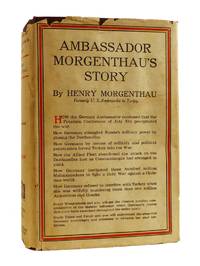
1922178738Garden City New York: Doubleday Page & Company 1922. First edition presentation copy inscribed by the author on the front free endpaper "To my friend John D. Whiting who helped me to understand & enjoy my visits to Machpelah and Mt Gerizim - both of which were outstanding events in our sojourn in Palestine October 15/29 Henry Morgenthau". Whiting 1882-1951 was the leader of the American Colony in Jerusalem a Christian utopian community. Henry Morgenthau Sr. served as US Ambassador to the Ottoman Empire from 1913 to 1916 during which he became one of the most prominent critics of the Armenian Genocide. He resigned in protest and returned to America to raise public awareness and funds for Armenian relief. His memoir charts his emigration from Germany to New York as a Jewish child his rise in business and politics and his experience as ambassador. Octavo. Original blue cloth spine and front cover lettered in gilt. Portrait of Morgenthau mounted to the front pastedown later notation to front free endpaper. Extremities and inner hinges neatly repaired spine sunned. A good copy. hardcover
1925510267Duncker & Humboldt 1925. Hardcover with Dust Jacket. VERY GOOD. Personal copy of political theorist Hans Morgenthau with his neat marginal pencilling and newsprint placemarkers. 8vo half black cloth over green marbled boards gilt stamped spine lettering and printer's device to front cover. With publisher's original plain brown dust jacket quite brittle and tattered; original plain slipcase present in a tattered state as well. Provenance: From Hans Morgenthau's daughter Susanna Morgenthau. The penciling matches that of the dozens of other books we have cataloged from his library. The Catholic jurist and political philosopher Carl Schmitt was one of the most influential political thinkers of the 20th Century in no small part for his role in establishing the ideological underpinnings of the Third Reich. He was unavoidably a key interlocutor for all German political scholars of the Weimar Era including Hans Morgenthau who would go on to become one of the most influential political thinkers of the 20th century in his own right from a much different but related vantage point.William Scheuerman writes 'the young Hans Morgenthau was involved in an intense 'hidden dialogue' with Carl Schmitt twentieth-century Germany’s most significant right-wing authoritarian political thinker.' 'Although committed to a sociologically minded analysis of international law shaped by left-wing Weimar legal thought the young Morgenthau turned early on to the work of the right-wing authoritarian thinker Carl Schmitt in order to develop his realistic or sociological approach. Morgenthau's precocious fascination with Schmitt though at first glance surprising is by no means difficult to fathom. Other members of the Sinzheimer School - including Ernst Frankel and Franz Neumann - similarly pursued a close and at times surprisingly sympathetic examination of Schmitt's work during the 1930s. Like Morgenthau they vociferously criticized his extreme right-wing political preferences while acknowledging that Schmitt offered the outlines of a realistic i.e. power-oriented vision of politics too often missing from mainstream jurisprudence and legal positivism. Morgenthau's early writings highlighted deep flaws in Schmitt's thinking not only denouncing his political choices but ultimately describing his theory as fundamentally unsound. Yet he credited Schmitt with acknowledging the need for precisely that realistic account of power relations in the international arena which legal orthodoxy had failed to deliver. Like Morgenthau Schmitt had long been skeptical of mainstream international law which he analogously interpreted as veiling the brutal realities of inequality at the international level. Morgenthau initially appears to have identified Schmitt's theory despite its weaknesses and troublesome political orientation as a potentially useful source of insights for his own alternative theory of international law. Morgenthau's first mention of Schmitt in 1929 . offered a critical response to a widely read 1927 essay by Schmitt in which the right-wing theorist had defined the political as constituting a fundamentally distinct and independent sphere of activity existing alongside alternative modes of human activity. In Schmitt's initial formulation morality concerned the problem of good and bad aesthetics was occupied with the distinction between beautiful and ugly economics was preoccupied with profitability and unprofitability whereas only politics concerned the contrast between what Schmitt famously described as friend and foe. The young Morgenthau astutely diagnosed the Achilles' heel of this position: Schmitt's exposition misleadingly implied that political activity was limited to a pre-given set of objects or concerns thereby obscuring the possibility that any conceivable sphere of activity could take on political qualities. In its stead Morgenthau proposed that politics be described as 'a characteristic quality or coloration which any substance can take on' IRWG 67. The distinctive attribute of political activity was captured best by focusing on the degree of intensity of the conflict at hand. Although drawing their substantive concerns from any of a host of moral aesthetic and economic arenas of human activity identifiably political concerns were those in which a high degree of intensity of conflict had surfaced IRWG 69. Even though he admitted the difficulty of determining at what specific juncture a particular conflict had become intense and thus authentically political Morgenthau insisted that his alternative model of intensity offered a superior way of capturing the distinctive traits of political life. In his view politics was never an either/or state of affairs but always a matter of degree necessarily depending on how intense - and potentially violent - a conflict had become. Schmitt apparently agreed. As Morgenthau noted in his 1978 autobiographical reflections Schmitt subsequently 'changed the second 1932 edition of the Concept of the Political in the light of the new propositions of my thesis without lifting the veil of anonymity from their author.'47 In fact Schmitt's 1932 study dropped the misleading imagery of politics as a distinct or separate sphere instead following Morgenthau's conceptualization of politics as concerning conflicts characterized by intense enmity. Yet Schmitt never bothered to acknowledge his debts to the young left-leaning Jewish Morgenthau. For a politically upwardly mobile right-wing thinker busy cultivating influence with Germany's rising authoritarian political groupings such an admission would have been incon-venient. In his 1978 comments Morgenthau went so far as to accuse Schmitt of having engaged in mean-spirited plagiarism. He recounted a humiliating 1929 meeting with Schmitt in which Morgenthau hoped to discuss their shared interest in the political only to encounter a calculating mean-spirited careerist: 'when I walked down the stairs from Schmitt's apartment I stopped on the landing between his and the next floor and said to myself: 'Now I have met the most evil man alive.' Schmitt's subsequent kowtowing to the Nazis apparently did not take Morgenthau by surprise.' Morgenthau: Key Contemporary Thinkers 32-34. Duncker & Humboldt hardcover
1945070617New York: Harper & Brothers 1945. 2nd Edition . Hardcover. Very Good/Good. Very good clean tight condition. Second edition. Edge worn jacket in mylar cover. Texts free of marks. Professional book dealer since 1999. All orders are processed promptly and carefully packaged. <br/> <br/> Harper & Brothers hardcover
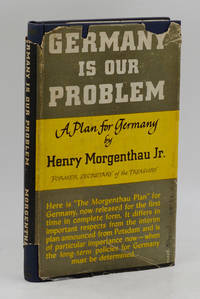
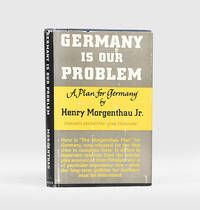
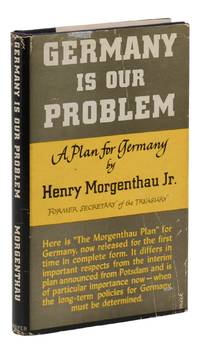
72760E-197. Very Good. Hardcover. 8vo. Published by Harper & Brothers Publishers New York 1945. Xiii 239 pgs. First Edition/First Printing. DJ has shelf-wear present to the DJ extremities DJ is chipped at the crown of the DJ and at the top edge of the rear panel of the DJ. Bound in cloth boards with titles present to the spine. Boards have light shelf-wear present to the extremities. No ownership marks present. Text is clean and free of marks. Binding tight and solid. This work written by Henry Morgenthau Jr. 1891-1967 while serving as the Secretary of the Treasury for President Franklin D. Roosevelt details his plan for the occupation of Germany after World War II. His proposal sought to eliminate the war-making potential of Germany for all time through territorial dismemberment and deindustrialization. The Morgenthau Plan guided the early German occupation but was scrapped in favor of the Marshall Plan. Historians believe that full-scale deindustrialization of Germany would have resulted in the starvation of 25 million German citizens. When word of this ominous plan leaked to Goebbels in the latter stages of WWII he exploited it to stiffen German resistance thus extending the war and adding to the American casualty count. ; 8vo 8" - 9" tall . hardcover
1945054777NY: HARPER & BROTHERS. UNCLIPPED DJ NICE COLLECTABLE COPY. ALSO INCLUDED IS A BROADSIDE FROM THE SOCIETY FOR THE PREVENTION OF WORLD EAR III PROMOTING THE BOOK. . Very Good. Hardcover. 1st Edition. 1945. HARPER & BROTHERS hardcover
1945140941614New York: Harper & Brothers Publishers 1945. First Edition. First edition first printing. xiii iii 239 pp. fold-out map. Publisher's navy cloth spine lettered in gilt. Near Fine with typical toning to pages with age sticker wear to front free endpaper in Good original dust jacket with closed tear to head and long fore edge creasing along top of front panel small triangular chip to top of that panel as well small archival mending tissue repair to verso dampstaining visible from verso unclipped $2.00. Rare.<br /> <br /> <p>The controversial plan for Germany post-WWII first announced by US Secretary of the Treasury Henry Morgenthau in 1944 which called for the immediate total deindustrialization of the country with a focus on extracting reparations for its wrongdoings during the war as well as its forced political and economic decentralization and transformation into a pastoral society. President Franklin Delano Roosevelt OK'd it only to regret it when the plan was vigorously decried at home and abroad. The Marshall Plan was adopted instead under Truman and efforts to deindustrialize and decartelize the Germany economy were limited. Harper & Brothers, Publishers unknown
119353Rare complete stamp block commemorating the 300th anniversary of the settlement of <span class="match">Rhode</span> <span class="match">Island</span> signed by President <span class="match">Franklin</span> D. <span class="match">Roosevelt and U.S. Secretary of the Treasury Henry Morgenthau Jr. One page the block consists of 50 3-cent Rhode Island Tercentenary violet stamps depicting colonial founder Roger Williams. Franklin Delano Roosevelt had an extensive stamp collection and due to his keen interest in stamp collecting some 200 U.S. commemorative stamps were released during his presidency. In fine condition. </span> American statesman and political leader Franklin Delano Roosevelt served as the President of the United States from 1933 to 1945. A Democrat he won a record four presidential elections and dominated his party after 1932 as a central figure in world events during the mid-20th century leading the United States during a time of worldwide economic depression and war. unknown books
1945426j0048New York: Harper & Brothers Publishers. Good. 1945. First Edition. Hardcover. "The infamous Morgenthau Plan charted a course for Germany post WWII intended to revert it to a pastoral state. Senator Henrick Shipstead denounced it as "America's eternal monument of shame for the destruction of the German people." - Congressional Record Senate May 15 1946 p.5039. Morgenthau's "punishment policy deeply betrayed the will of the American people against indiscriminate vengeance which had been demonstrated in the nationwide condemnation of the Morgenthau Plan." - James Bacque on page 158 of 'Other Losses'. "The Morgenthau Plan would wipe out everything in Germany except land and the Germans would have to live on the land. Thus only 60 percent of the population could support themselves and the other 40 percent would die." - The Memoirs of Cordell Hull p.1617. xiii 3 239 pages. Index. Appendices. Four-page reproduction of a photographic copy of the memorandum summarizing "The Morgenthau Plan" which President Roosevelt took to the historic Quebec conference in September of 1944. Fold-out two-color map entitled "Proposal for Post-War German Boundaries". When word of this ominous plan leaked to Goebbels in the latter stages of WWII he exploited it to stiffen German resistance thus extending the war and adding to the American casualty count. Considerable criticism was thus brought to bear upon Morgenthau. Clean with moderate wear to navy blue cloth. Several markings to front endpaper. Small ink stamp to title page. Binding sound. Includes new replica dust jacket preserved in archival-grade Brodart. A quality copy of this historic work.; Sm 8vo; Germany is Our Problem - A Plan for Germany Suggested Post-Surrender Program for Germany WWII history Politics Harry Dexter White Harsh Peace Morgenthau Plan Starvation Germany Must Perish Theodore Kaufman Genocide . Harper & Brothers Publishers hardcover
1946059751Chicago: University Of Chicago Press 1946. 1st Edition 1st Printing. Hardcover. Good/No Jacket. Ix 245 Pp. Green Cloth Gilt. First Printing 1946. Book With Much Wear Spine Gilt Mostly Worn Away Some Dampstaining To Covers Mostly To Rear Cover. Ownership Name "G. Meyer" University Of Chicago Professor Gerhard Meyer And With His Prolific Marginalia Through P. 61. Per Wikipedia Morgenthau's Scientific Man Versus Power Politics 1946 Argued Against An Overreliance On Science And Technology As Solutions To Political And Social Problems. The Book Presented A "Pessimistic View Of Human Nature" Centered On A Universal Lust For Power And The Inevitability Of Selfishness. Hans Joachim Morgenthau 1904 - 1980 Was A German-American Jurist And Political Scientist Who Was One Of The Major 20Th-Century Figures In The Study Of International Relations. Morgenthau's Works Belong To The Tradition Of Realism In International Relations Theory; He Is Usually Considered Among The Most Influential Realists Of The Post-World War Ii Period. Morgenthau Made Landmark Contributions To International Relations Theory And The Study Of International Law. In 1933 Morgenthau Published A Second Book In French La Notion Du "Politique" Which Was Translated Into English And Published In 2012 As The Concept Of The Political. In This Book Morgenthau Seeks To Articulate The Difference Between Legal Disputes Between Nations And Political Disputes Between Nations Or Other Litigants: I Who Holds Legal Power Over The Objects Or Concerns Being Disputed Ii In What Manner Can The Holder Of This Legal Power Be Changed Or Held Accountable Iii How Can A Dispute The Object Of Which Concerns A Legal Power Be Resolved And Iv In What Manner Will The Holder Of The Legal Power Be Protected In The Course Of Exercising That Power For Morgenthau The End Goal Of Any Legal System In This Context Is To "Ensure Justice And Peace". In His Work In The 1920S And 1930S Morgenthau Sought A "Functional Jurisprudence" An Alternative To Mainstream International Law. He Borrowed Ideas From Sigmund Freud Max Weber Roscoe Pound And Others. In 1940 Morgenthau Set Out A Research Program For Legal Functionalism In The Article "Positivism Functionalism And International Law". Francis Boyle Has Written That Morgenthau's Post-War Writings Perhaps Contributed To A "Break Between International Political Science And International Legal Studies." However Politics Among Nations Contains A Chapter On International Law And Morgenthau Remained An Active Contributor To The Subject Of The Relationship Between International Politics And International Law Until The End Of His Career. His Politics Among Nations First Published In 1948 Went Through Five Editions During His Lifetime And Was Widely Adopted As A Textbook In U.S. Universities. While Morgenthau Emphasized The Centrality Of Power And "The National Interest" The Subtitle Of Politics Among Nations-"The Struggle For Power And Peace"-Indicates His Concern Not Only With The Struggle For Power But Also With The Ways In Which It Is Limited By Ethical And Legal Norms. In Addition To His Books Morgenthau Wrote Widely About International Politics And U.S. Foreign Policy For General-Circulation Publications Such As The New Leader Commentary Worldview The New York Review Of Books And The New Republic. He Knew And Corresponded With Many Of The Leading Intellectuals And Writers Of His Era Such As Reinhold Niebuhr George F. Kennan Carl Schmitt And Hannah Arendt.At One Point In The Early Cold War Morgenthau Was A Consultant To The U.S. Department Of State When Kennan Headed Its Policy Planning Staff As Well As A Second Time During The Kennedy And Johnson Administrations Until He Was Dismissed By Johnson When He Began To Publicly Criticize American Policy In Vietnam. For Most Of His Career However Morgenthau Was Esteemed As An Academic Interpreter Of U.S. Foreign Policy. <br/> <br/> University Of Chicago Press hardcover
1946054900Chicago: University Of Chicago Press 1946. 1st Edition 1st Printing. Hardcover. Very Good/Good. Ix 245 Pp. Green Cloth Gilt. First Printing 1946. Unusually Direct And Somewhat Acidic Commentary On The Title Subject By A Leading Professor Of Political Science At The University Of Chicago. Book With Slight Wear Spine Gilt Bright. Dust Jacket Priced $3.00 Wear Losses At Corners 2" Tear At Bottom Of Rear Panel Spine ;Panel Completely Browned With No Trace Of Lettering Remaining. Per Wikipedia Morgenthau's Scientific Man Versus Power Politics 1946 Argued Against An Over Reliance On Science And Technology As Solutions To Political And Social Problems. The Book Presented A "Pessimistic View Of Human Nature" Centered On A Universal Lust For Power And The Inevitability Of Selfishness. Hans Joachim Morgenthau 1904 - 1980 Was A German-American Jurist And Political Scientist Who Was One Of The Major 20Th-Century Figures In The Study Of International Relations. Morgenthau's Works Belong To The Tradition Of Realism In International Relations Theory; He Is Usually Considered Among The Most Influential Realists Of The Post-World War Ii Period. Morgenthau Made Landmark Contributions To International Relations Theory And The Study Of International Law. In 1933 Morgenthau Published A Second Book In French La Notion Du "Politique" Which Was Translated Into English And Published In 2012 As The Concept Of The Political. In This Book Morgenthau Seeks To Articulate The Difference Between Legal Disputes Between Nations And Political Disputes Between Nations Or Other Litigants. The Questions Driving The Inquiry Are: I Who Holds Legal Power Over The Objects Or Concerns Being Disputed Ii In What Manner Can The Holder Of This Legal Power Be Changed Or Held Accountable Iii How Can A Dispute The Object Of Which Concerns A Legal Power Be Resolved And Iv In What Manner Will The Holder Of The Legal Power Be Protected In The Course Of Exercising That Power For Morgenthau The End Goal Of Any Legal System In This Context Is To "Ensure Justice And Peace". In His Work In The 1920S And 1930S Morgenthau Sought A "Functional Jurisprudence" An Alternative To Mainstream International Law. He Borrowed Ideas From Sigmund Freud Max Weber Roscoe Pound And Others. In 1940 Morgenthau Set Out A Research Program For Legal Functionalism In The Article "Positivism Functionalism And International Law". Francis Boyle Has Written That Morgenthau's Post-War Writings Perhaps Contributed To A "Break Between International Political Science And International Legal Studies."30 However Politics Among Nations Contains A Chapter On International Law And Morgenthau Remained An Active Contributor To The Subject Of The Relationship Between International Politics And International Law Until The End Of His Career.His Politics Among Nations First Published In 1948 Went Through Five Editions During His Lifetime And Was Widely Adopted As A Textbook In U.S. Universities. While Morgenthau Emphasized The Centrality Of Power And "The National Interest" The Subtitle Of Politics Among Nations-"The Struggle For Power And Peace"-Indicates His Concern Not Only With The Struggle For Power But Also With The Ways In Which It Is Limited By Ethical And Legal Norms. In Addition To His Books Morgenthau Wrote Widely About International Politics And U.S. Foreign Policy For General-Circulation Publications Such As The New Leader Commentary Worldview The New York Review Of Books And The New Republic. He Knew And Corresponded With Many Of The Leading Intellectuals And Writers Of His Era Such As Reinhold Niebuhr George F. Kennan Carl Schmitt And Hannah Arendt.At One Point Morgenthau Was A Consultant To The U.S. Department Of State When Kennan Headed Its Policy Planning Staff As Well As A Second Time During The Kennedy And Johnson Administrations Until He Was Dismissed By Johnson When He Began To Publicly Criticize American Policy In Vietnam. For Most Of His Career However Morgenthau Was Esteemed As An Academic Interpreter Of U.S. Foreign Policy. <br/> <br/> University Of Chicago Press hardcover
1945187482New York and London: Harper & Brothers Publishers 1945. The Morgenthau Plan First edition of the Morgenthau Plan the proposed de-industrialization and partition of Germany turning it into a pastoral divided nation forever unable to wage war. Morgenthau the US Treasury Secretary submitted the plan in 1944 as an internal memorandum. It proposed demilitarizing Germany dismantling its industrial base and dividing its territory among France Poland an international zone and two German states. Roosevelt and Churchill provisionally accepted elements of the plan at the Quebec Conference in September 1944 which prompted international controversy. Goebbels used it as propaganda to claim Germany faced national destruction and George Marshall argued it was stiffening German resistance. Roosevelt disowned the plan but allowed Morgenthau to publish it. Issued in October 1945 the book comprises a facsimile of the original document followed by Morgenthau's extended commentary and rationale. Morgenthau still hoped it would still serve as the framework for governing post-war Germany and Eisenhower arranged for 1000 copies to be distributed to military officials but it was not implemented. The US instead pursued rebuilding Germany through the Marshall Plan as a counter to Soviet power. Octavo. Folding map diagrams in text. Original blue cloth spine lettered in gilt. With dust jacket. Neat contemporary ownership signature to front free endpaper and their irate inked annotations to the text fervently disagreeing with Morgenthau. Endpapers toned; unclipped jacket slightly sunned and rubbed with minor nicking: a very good copy in very good jacket. hardcover
1945140947693New York and London: Harper & Brothers 1945. First Edition. Near Fine/Near Fine. First edition first printing. viii 4 ix - xiii iii 239 pp. foldout map. Bound in publisher's navy cloth with gilt lettering to spine. Near Fine with light toning to contents and bookplate to front pastedown. In a Near Fine unclipped dust jacket with moderate toning and light edgewear and soiling. Several scratches to front panel 3 archival tape repairs to chipping at upper edge and small hole at lower right of front panel. <p>Henry Morgenthau's controversial plan for postwar Germany. The U.S. Secretary of the Treasury called for the defeated enemy's total deindustrialization decentralization and transformation into a pastoral society. President Franklin Delano Roosevelt regretted his initial support for Morgenthau's plan after it was vigorously decried at home and abroad and his successor favored the less vengeful and more pragmatic Marshall Plan. Harper & Brothers unknown
1945140949192Cambridge MA: Harvard University Press 1945. First edition. First edition first printing. Association copy from the library of Hans Morgenthau his card laid in. xxxiii 1 516 pp. Bound in publisher's red cloth lettered in gilt on spine. Near Fine with light wear to extremities and dulling to spine gilt light soiling to upper textblock edge. In a Good unclipped dust jacket with light soiling and appreciable wear including two small holes to rear flap fold and 1.75" split and evidence of label removal to spine panel.<br /> <br /> <p>A treatise on jurisprudence by the eminent Austrian-American legal theorist Hans Kelsen who wrote the text in German while teaching at the University of California Berkeley. It was translated by the Swedish philosopher Anders Wedberg who had studied at Harvard. Kelsen was a good friend of his fellow jurist and political refugee Hans Morgenthau. He had promoted the younger man's career before the two arrived in the United States and Morgenthau dedicated his 1970 book Truth and Power to Kelsen. Harvard University Press unknown
1945140941614New York: Harper & Brothers Publishers 1945. First Edition. Near Fine/Good. First edition first printing. xiii iii 239 pp. fold-out map. Publisher's navy cloth spine lettered in gilt. Near Fine with typical toning to pages with age sticker wear to front free endpaper in Good original dust jacket with closed tear to head and long fore edge creasing along top of front panel small triangular chip to top of that panel as well small archival mending tissue repair to verso dampstaining visible from verso unclipped $2.00. Rare.<br /> <br /> <p>The controversial plan for Germany post-WWII first announced by US Secretary of the Treasury Henry Morgenthau in 1944 which called for the immediate total deindustrialization of the country with a focus on extracting reparations for its wrongdoings during the war as well as its forced political and economic decentralization and transformation into a pastoral society. President Franklin Delano Roosevelt OK'd it only to regret it when the plan was vigorously decried at home and abroad. The Marshall Plan was adopted instead under Truman and efforts to deindustrialize and decartelize the Germany economy were limited. Harper & Brothers, Publishers unknown books
1946059794Chicago: University Of Chicago Press 1946. 1st Edition 1st Printing. Hardcover. Very Good/Good. Ix 245 Pp. Green Cloth Gilt. First Printing. Book With Wear Spine Gilt Bright. Inscribed By Morgenthau "With Kindest Regards" To Yves René Marie Simon 1903 - 1961. Simon Studied Under Jacques Maritain At The Institut Catholique De Paris. He Taught At The Institut Catholique De Lille From 1930 To 1938. In 1938 He Went To The University Of Notre Dame Where He Remained Until 1958. He Is Best Known For His Work In Moral And Political Philosophy.Dust Jacket Priced $3.00 Wear Short Edge Tears And Small Losses Somewhat Crushed Spine Panel Completely Pinked . Per Wikipedia Morgenthau's Scientific Man Versus Power Politics 1946 Argued Against An Over Reliance On Science And Technology As Solutions To Political And Social Problems. The Book Presented A "Pessimistic View Of Human Nature" Centered On A Universal Lust For Power And The Inevitability Of Selfishness. Hans Joachim Morgenthau 1904 - 1980 Was A German-American Jurist And Political Scientist Who Was One Of The Major 20Th-Century Figures In The Study Of International Relations. Morgenthau Is Usually Considered Among The Most Influential Realists Of The Post-World War Ii Period. Morgenthau Made Landmark Contributions To International Relations Theory And The Study Of International Law. In 1933 Morgenthau Published A Second Book In French La Notion Du "Politique" Which Was Translated Into English And Published In 2012 As The Concept Of The Political. In This Book Morgenthau Seeks To Articulate The Difference Between Legal Disputes Between Nations And Political Disputes Between Nations Or Other Litigants. The Questions Driving The Inquiry Are: I Who Holds Legal Power Over The Objects Or Concerns Being Disputed Ii In What Manner Can The Holder Of This Legal Power Be Changed Or Held Accountable Iii How Can A Dispute The Object Of Which Concerns A Legal Power Be Resolved And Iv In What Manner Will The Holder Of The Legal Power Be Protected In The Course Of Exercising That Power For Morgenthau The End Goal Of Any Legal System In This Context Is To "Ensure Justice And Peace". In His Work In The 1920S And 1930S Morgenthau Sought A "Functional Jurisprudence" An Alternative To Mainstream International Law. He Borrowed Ideas From Sigmund Freud Max Weber Roscoe Pound And Others. In 1940 Morgenthau Set Out A Research Program For Legal Functionalism In The Article "Positivism Functionalism And International Law". Francis Boyle Has Written That Morgenthau's Post-War Writings Perhaps Contributed To A "Break Between International Political Science And International Legal Studies." However Politics Among Nations Contains A Chapter On International Law And Morgenthau Remained An Active Contributor To The Subject Of The Relationship Between International Politics And International Law Until The End Of His Career. His Politics Among Nations First Published In 1948 Went Through Five Editions During His Lifetime And Was Widely Adopted As A Textbook In U.S. Universities. While Morgenthau Emphasized The Centrality Of Power And "The National Interest" The Subtitle Of Politics Among Nations-"The Struggle For Power And Peace"-Indicates His Concern Not Only With The Struggle For Power But Also With The Ways In Which It Is Limited By Ethical And Legal Norms. In Addition To His Books Morgenthau Wrote Widely About International Politics And U.S. Foreign Policy For General-Circulation Publications Such As The New Leader Commentary Worldview The New York Review Of Books And The New Republic. He Knew And Corresponded With Many Of The Leading Intellectuals And Writers Of His Era Such As Reinhold Niebuhr George F. Kennan Carl Schmitt And Hannah Arendt. Morgenthau Was A Consultant To The U.S. Department Of State When Kennan Headed Its Policy Planning Staff And During The Kennedy And Johnson Administrations Until He Was Dismissed By Johnson After He Began To Publicly Criticize American Policy In Vietnam. <br/> <br/> University Of Chicago Press hardcover
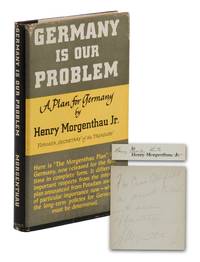
1945140948892New York and London: Harper & Brothers 1945. First Edition. Near Fine/Near Fine. First edition first printing. A remarkable association copy not only signed by author Henry Morgenthau on the front free endpaper and inscribed to the then-President of the book's publisher known for picking Pulitzer Prize winners: "For Cass Canfield a swell Publisher with sincere affection." Additionally it is signed in pencil on the book's title page by one its primary ghostwriters government official Harry Dexter White with Morgenthau's name suggestively crossed-out. As White's biographer David Rees put it "White was now to supervise the writing of a book by Treasury staff explaining the Morgenthau Plan eventually published a year later under Morgenthau's name as Germany is Our Problem." Morgenthau himself acknowledged White's role in the signed copy he gave White in 1945 cited in James Boughton's Harry White and the American Creed. <p>In 1948 a handwritten note by White to Whittaker Chambers would embroil him in a covert hunt for Soviet moles within the U.S. government. He died that year but five years later his face would grace newspapers all over the world as he was accused of being a spy for the Soviet Union connected to the network of Nathan Silvermaster. His degree of culpability remains debated to this day although release of the Venona decrypts provided damning evidence. The posthumous nature of White's notoriety has meant that his signature is extremely rare especially on books rather than documents.<br /> <p>viii 4 ix - xiii iii 239 pp. foldout map printed on speckled wartime paper. Bound in publisher's navy cloth with gilt lettering to spine. Near Fine light rubbing to extremities dulled gilt and dust jacket clipping tipped to front pastedown. In a Near Fine unclipped dust jacket with lightly worn with a few small tape repairs to verso. Uncommon especially in such nice shape.<br /> <br /> <p>The book outlines what would become known as The Morgenthau Plan for postwar Germany. The U.S. Secretary of the Treasury called for the defeated enemy's radical total deindustrialization decentralization and transformation into a pastoral society. President Franklin Delano Roosevelt regretted his initial support for Morgenthau's plan after it was vigorously decried at home and abroad and his successor favored the less vengeful and more pragmatic Marshall Plan. White's role in formulating the plan that would bear his superior at the Treasury Department's name remains little-known as it itself has fallen into obscurity since the early Cold War. Less controversial was White's role in co-founding both the International Monetary Fund and World Bank. Harper & Brothers unknown
1945134H4082New York: Harper & Brothers Publishers. Good in Fair dust jacket. 1945. First Edition. Hardcover. Signed and inscribed by author FDR's Secretary of the Treasury Henry Morgenthau Jr. 1891-1967 to his first cousin once removed James Frank Jr. The infamous Morgenthau Plan charted a course for Germany post WWII intended to revert it to a pastoral state. Senator Henrick Shipstead denounced it as "America's eternal monument of shame for the destruction of the German people." - Congressional Record Senate May 15 1946 p.5039. "The punishment policy deeply betrayed the will of the American people against indiscriminate vengeance which had been demonstrated in the nationwide condemnation of the Morgenthau Plan." - James Bacque Other Losses p.158. "The Morgenthau Plan would wipe out everything in Germany except land and the Germans would have to live on the land. Thus only 60 percent of the population could support themselves and the other 40 percent would die." - The Memoirs of Cordell Hull p.1617. When word of the plan leaked to Goebbels he exploited it to stiffen German resistance thus extending the war - and bringing considerable criticism upon Morgenthau. Unmarked with moderate wear to navy blue cloth. Binding sound. Above-average wear to dust jacket now preserved in archival-grade Brodart. An important and controversial piece of WWII political history.; Germany is Our Problem - A Plan for Germany Suggested Post-Surrender Program for Germany WWII history Politics Harry Dexter White Harsh Peace Morgenthau Plan Starvation Germany Must Perish Theodore Kaufman; Signed by Authors . Harper & Brothers Publishers hardcover