1 436 résultats
Fine English Paperback. Roy. 8vo. (24 x 17 cm). In Turkish. 352 p. Türk -Iran iliskileri. Türk - Iran iliskileri.
Very Good French Original b/w photograph of Mehmed Münir Ertegün Bey taken in 1932 in Paris. London News and Pieppe Dupuy & Cie.'s stamped on verso. [Photograph of Mehmed Münir [Ertegün] Bey]. Photograph by Pieppe Dupuy & Cie. Münir Bey was a Turkish legal counsel in international law to the "Sublime Porte" (imperial government) of the late Ottoman Empire and a diplomat of the Republic of Turkey during its early years. Ertegun married Emine Hayrünnisa Rüstem in 1917 and the couple had three children, two of whom were Nesuhi and Ahmet Ertegun, the brothers who founded Atlantic Records and became iconic figures in the American music industry. Born in Constantinople to a civil servant father, Mehmet Cemil Bey, and a mother Ayse Hamide Hanim, who was a daughter of Sufi shaykh Ibrahim Edhem Efendi, he studied law at Istanbul University and graduated in 1908. He was a legal counsel for the Ottoman Ministry of Foreign Affairs, when he saw the birth of his first son, Nesuhi, on 26 November 1917, in Constantinople (now Istanbul), during the First World War. Taking part in an Ottoman delegation with a mission to search reconciliation with the Nationalists in Ankara, by the end of 1920, changed his destiny. While the two Ottoman Ministers heading the delegation returned to Istanbul after not achieving an understanding with the revolutionaries led by Mustafa Kemal Pasha he chose to join the National Struggle and remained in Ankara, leaving behind his young wife and three-year-old son, Nesuhi. He became an aide to Mustafa Kemal during the Turkish War of Independence and the chief legal counsel of the Turkish delegation to the resulting Treaty of Lausanne in 1923. After the Western powers recognized the newly founded Republic of Turkey in 1923, he was sent to Geneva to the League of Nations as an observer for the Turkish Republic. During this assignment, he frequently went to Paris for the Ottoman public debt negotiations. Following this posting to the League of Nations, he was appointed ambassador to Switzerland (1925-1930), France (1930-1932), the United Kingdom (1932-1934) and the United States (1934-1944). As the Republic's ambassador to Washington, Ertegun opened his embassy's parlors to African American jazz musicians, who gathered there to play freely in a socio-historical context which was deeply divided by racial segregation at the time. Ambassador Ertegun became the Dean of the Diplomatic Corps in May 1944. He held this last post until he died in Washington, D.C., of a heart attack in November of the same year. In April 1946, a year after World War II had ended, his body was carried back to Istanbul by the USS Missouri and buried in the garden of Sufi tekke, Özbekler Tekkesi in Sultantepe, Üsküdar near his shaykh grandfather Ibrahim Edhem Efendi, who was once the head of the Tekke. (His two sons Nesuhi and Ahmet Ertegun also rest there.). When Ertegun died, there was not yet a mosque in Washington, D.C., at which his funeral could be held. The Islamic Center of Washington was built as a result.
303pp.met stamboom en plan, 22cm., mooie staat
1999N64191Amsterdam, Bert Bakker 1999 303pp. met stamboom en plan, 22cm., mooie staat, N64191
280pp., 20cm., mooie staat
A clean, unmarked book with a tight binding. Full brown cloth boards. 8"w x 10 3/4"h. 162 pages. Black and white photos and illustrations. "Drawing upon a lifetime's knowledge, Patterns of Stylistic Change in Islamic Architecture presents Michael Meinecke's unique view of the evolution and development of Islamic architecture. Departing from conventional method which groups buildings and monuments according to dynasties and defines national characteristics based on the ethnic origins of Arabic, Persian, or Turkish patrons, Meinecke emphasizes the similarities which resulted from interrelations among neighboring or far-away areas. He argues that transformations in the development of Islamic architecture can be explained by the movements of skilled craftsmen who traveled extensively in their search for challenging work, allowing for their influence to be felt across a broad region. Meinecke's unique approach to Islamic architecture will no doubt inspire others to emulate his approach in studying other regions or areas. Few, however, will be able to attain the consummate mastery of the subject which enlivens these essays." [publisher]
in-8°, 263 pages, ill. in-t., broche, couverture illustree plast. Bel exemplaire [CA29-5][NAN-3][MA-1]
New English Paperback. Pbo. Demy 8vo. (21 x 14 cm). In English. 208 p. The most influential figure among the opponents to Sultan Abdülhamid was undoubtedly, Prince Sabahattin, the sultan's nephew and ardent opponent, who also inspired other Comittee of Union and Progress opponents. The aim of this study is to analyze Sabahattin, always a subject of political polarization in Turkish political literature, objectively, to determine the intellectual foundations of his opposition and to interrogate the scientific basis and applicability of the social reforms he defended. Other opponent parties discussed in connection with Sabahattin's views has helped us determine the liberal positioning in that period.
19822092902141203358Guangxi people 1982. Soft Cover. Fine. Volume: 1 Guangxi people paperback
19822092902141201769Guangxi people 1982. Soft Cover. Fine. The book is in fine condition. Guangxi people paperback
200349216ABBindlach, Gondrom, 2003. 31 cm, 1428 gr.. 240 S. : zahlr. Ill., graph. Darst. Pp. Neuwertig.
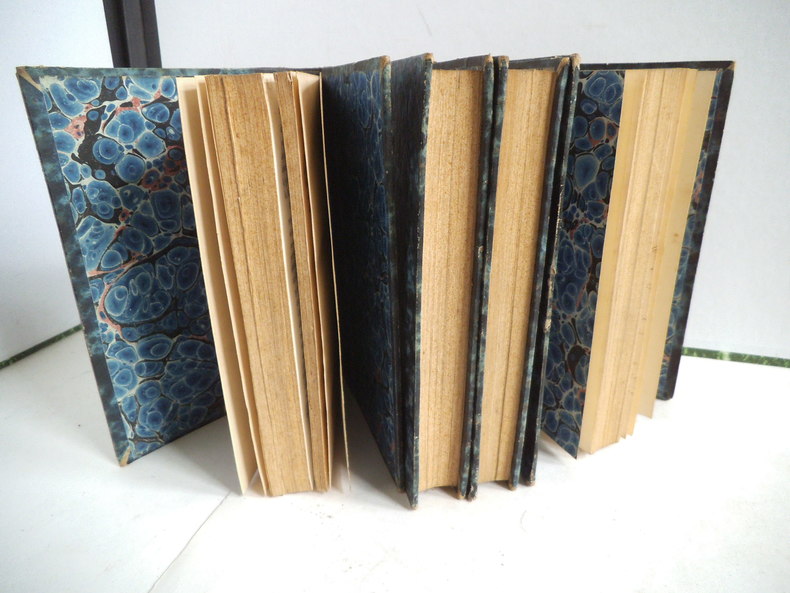
10160depuis la fondation de la Monarchie.Dédiée aux pères de famille.4 tomes en 4 volumes in 12 demi cuir vert, titre, tomaison, fers en long, filets en encadrement, dorés. Tome 1 faux-titre, titre VIII-330 pages, 1 page de table, 6 pages manuscrites qui détaillent la page de table. Tome 2 : faux-titre, titre, 371 pages. Tome 3 : fax-titre, titre, 398 pages. Tome 4 : faux-titre, titre, 386 pages. A Paris aux bureaux du Plutarque Français 1840 Quelques rousseurs éparses. Bon ensemble
20062090502113717058Not Available 2006. Soft Cover. Fine. The book is in fine condition. Not Available paperback
in-8°, 181 pp., broche, couverture illustree. Tres bel exemplaire. [SO-5]
490pp., br.orig., 21cm., dans la série "Fiction et Cie", bel état
1995B64028Paris, Seuil 1995 490pp., br.orig., 21cm., dans la série "Fiction et Cie", bel état
128pp.richement ill., br.orig., 30cm., bel état
1978B63990Bruxelles, Collet 1978 128pp.richement ill., br.orig., 30cm., bel état
9729, Paris, Calmann - Levy, 1968., Broche, couverture d' editeur illustre n/b., 14x21cm, 319pp, illustre n/b.
in-12, 397 pages, ill. hors texte N&B, tabl. geneal., rel. pl. cuir armoriE ed. Bon état [CA-9]
196931314Editions Rencontre, Lausannes, 1969. 524 Seiten, einige Abbildungen; 8° , ca. 20 x 14 cm, Kunstleder-Einband
New English Paperback. Cr. 8vo. (20 x 14 cm). In Turkish. 283 p., b/w ills. Hanedan skandallari. Scandals in dynasties. A compilation. SOCIAL HISTORY Dynasty Scandal.
500347199Le Livre de Poche Sans date.
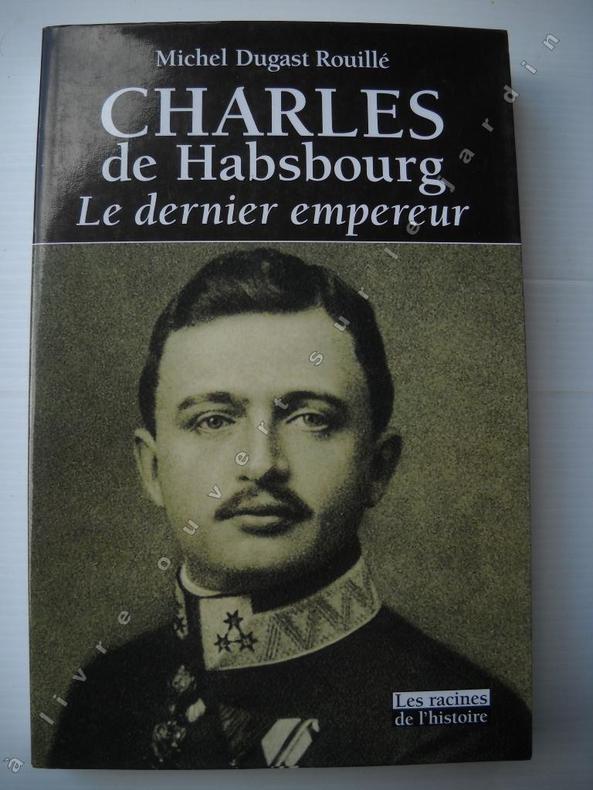
1523169661523 Broché - 15 x 23 - 284 pp - année 2003 - Editions Les Racines de l'Histoire -
19685908Editions rencontre Lausanne 1968 422 pages in8. 1968. broché. 422 pages. Ce livre retrace l'histoire de la famille noble des Orange-Nassau depuis ses origines en 1020 jusqu'en 1966 en mettant l'accent sur sa longue ascension vers le pouvoir. Il évoque notamment l'empereur Adolphe de Nassau (1292) et la branche aînée Weilburg qui règne sur le Luxembourg au moment de la publication