1 436 résultats
20222081502111906615Guangxi Normal University 2022. Soft Cover. Fine. The book is in fine condition. Guangxi Normal University paperback
8663Trans. by Xuanzang 玄奘 in 650 CE. 70 pages six columns per page 30 columns per sheet 17 characters per column. 14 sheets average sheet length: 570 mm. five pages per sheet. Accordion format 305 x 7980 mm. print surface from top border to bottom border: 245–250 mm. Single woodcut borders at top & bottom of text. Orig. sutra binding of semi-stiff paper wrappers. Woodblocks carved by Ge Fang & Ma Qing & others in Sixi present day Huzhou printed between 1110s/40s–1276.<br /> <BR> <BR> This fascicle in its original sutra binding was printed in the 12th or 13th century in northern Zhejiang China as part of an extremely rare edition of the Buddhist canon variously known as the Yuanjue Canon Zifu Canon or Sixi Canon. Examples very rarely appear on the market. This edition of the Buddhist canon was for a long time largely unknown in China until the famous Chinese book collector and scholar Yang Shoujing 1839-1915 brought a set back from Japan in the late 19th century. Now in a Chinese library this is the only near-complete set as far as we know the rest being single sutras.<br /> <BR> <BR> Yuanjue Zifu or Sixi Canon: The three names refer to some or all of the imprints of the Chinese Tripitaka made from a set of blocks that were carved in a place called Sixi present-day Huzhou in what was then Songting township Guian county Hu prefecture part of the Circuit of the eastern and western Zhe of the Southern Song.<br /> <BR> <BR> Sixi one of the names retrospectively used for this edition was the location of Yuanjue Meditation Hall founded in 1119-25 where the printing blocks were housed and perhaps carved. Sometime after 1239 the hall’s name may have changed to Fabao Zifu lit. “Dharma jewel supplying happiness†Meditation Temple whence Zifu Canon.<br /> <BR> <BR> Bibliographic scholarship has dated certain imprints of this canon to either the period of Yuanjue Meditation Hall or that of Fabao Zifu Meditation Temple calling imprints dating from the earlier period Yuanjue Canon or “first Sixi canon†qian Sixi jing and imprints from the later period Zifu Canon or “second Sixi canon†hou Sixi jing. On the basis of a comparison of two catalogues of the canon — one claiming to be of the Yuanjue Canon and one of the Zifu Canon — it was believed that a substantial amount of re-carving had taken place between the Yuanjue and Zifu canons. However the catalogue purportedly of the Zifu Canon has been shown in fact to have been based not on an inventory of a set of the Zifu Canon but on another unrelated catalogue. Thus there is no reason to assume that a substantial amount of re-carving of the blocks took place after the temple changed its name and ipso facto there is no reason to posit the existence of two Sixi canons. Printings ascribed to the Yuanjue and Zifu canons belong to the same edition of the Chinese Tripitaka printed at various times during a period that stretched over a century. Blocks were repaired and replaced during this period but not to the extent that would justify calling them two editions.<br /> <BR> <BR> The Timing of Carving and Printing: The sources are ambiguous as to when carving of the blocks began. Li Fuhua and He Mei state that the carving began in 1126 whereas Wang Chonglong says it began before 1110 and thus not at the Yuanjue Hall which had not yet been founded and agrees with others that it likely had finished in 1132. It has also been proposed however that carving only began in 1132. Finally 1140 has been proposed as another completion date. Therefore we can say with confidence that the initial set of blocks was carved sometime between the 1110s and 1140s.<br /> <BR> <BR> Once the blocks were carved they were used for printing for a long time. Some printings can be dated because they contain colophons. <br /> <BR> <BR> Liu Yuantang has documented three instances of blocks being mended buban: in 1238 1248 and 1250. The blocks were burned by the invading Mongols in 1276 which is thus the terminus ante quem for prints from the Yuanjue Canon.<br /> <BR> <BR> Our Copy and the Yuanjue / Zifu Canon: Benshi jing is marked with the ordinal character shen 甚 in five editions of the Chinese Tripitaka. Of these five only the Yuanjue Canon also known as the Zifu or Sixi Canon is a possible candidate. More precisely our copy appears to be from a late printing of the Zifu Canon dating from sometime in the latter portion of the period 1110s/1140s-1276. The vast majority of extant sutras from this edition of the canon are late printings. They have the following characteristics:<br /> <BR> <BR> 1. Sheets folded into five pages with six columns per page 30 per sheet and 17 characters per column.<br /> <BR> <BR> 2. Glosses appended to the end of the volume.<br /> <BR> <BR> 3. Single woodcut borders at top and bottom of text. For earlier printings of this edition one source specifies that the borders go around on all four sides but for the later printings the same source simply says “single-lined margin frame†danxian biankuang 單線邊框. This would appear to suggest borders also at the beginning and the end of each sheet.<br /> <BR> <BR> 4. No empty column before the beginning of the text on the first page.<br /> <BR> <BR> 5. Small-script numerals marking the number of the sheet are printed at the beginning of every sheet as opposed to in the crease between pages for example except for the first sheet.<br /> <BR> <BR> 6. Printed area of roughly 570 mm. long and 250 mm. wide.<br /> <BR> <BR> The sutra has a total of seven fascicles juan of which we have fascicle six. The upper cover and the first line of the first page both have the character shen in manuscript on the cover which is here used as an ordinal drawn from Qianzi wen åƒå—æ–‡ The Thousand Character Essay to arrange the sutras of the Chinese Tripitaka.<br /> <BR> <BR> Layout and Appearance of Our Copy: Unsurprisingly for a very large printing project that took many years not all the sutras of the Yuanjue Canon have the same appearance. Yet the dimensions of our copy agree with other known copies: five pages per woodblock six columns per page 17 characters per column. Other non-official Song editions of the Buddhist canon Chongning and Pilu have six pages per block but the same number of columns per page and characters per column.<br /> <BR> <BR> The measurements of our copy accord with copies of other sutras from the same edition of the canon held by the Gansu Provincial Library in Lanzhou the National Palace Museum in Taipei and the Gotoh Museum outside of Tokyo. The layout of our copy accords with that of a different sutra from the same canon that has been reprinted in facsimile in unknown
18772091202133204253Red Anzu Sanbo 1877. Soft Cover. Fine. Number of books: 80 books in total Red Anzu Sanbo paperback
19292091202133201489Otsuka Kogeisha 1929. Soft Cover. Fine. Number of books: 2 books in total Otsuka Kogeisha paperback
19222091202133212997Not Available 1922. Soft Cover. Fine. Number of books: 10 books in total Not Available paperback
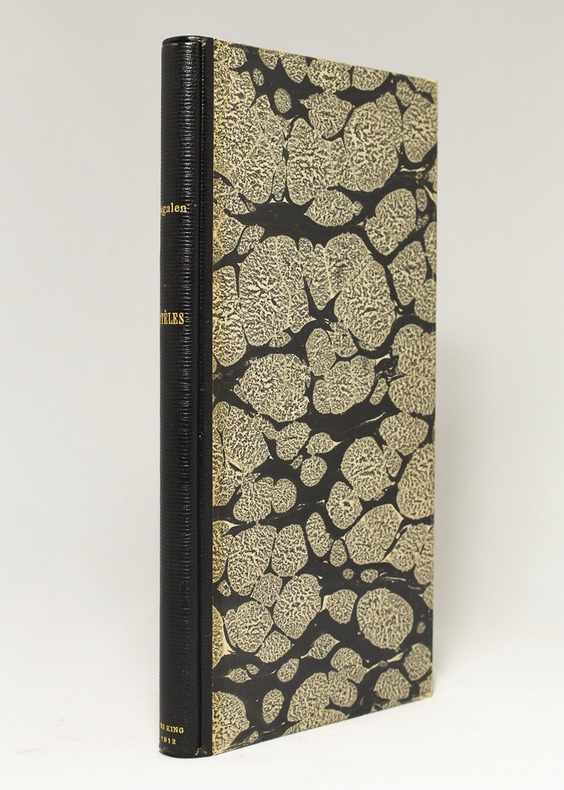
191215968Pei-King, des presses de Pei-T'ang, 1912. In-4 étroit, imprimé d'un seul côté sur des feuilles pliées formant 102 pages, couverture de papier grise muette. Chemise au dos rond de maroquin noir à grains longs, plats de papier marbré noir et gris, étui de même. La chemise-étui est signée Lavaux.The folder-case is signed by Lavaux.
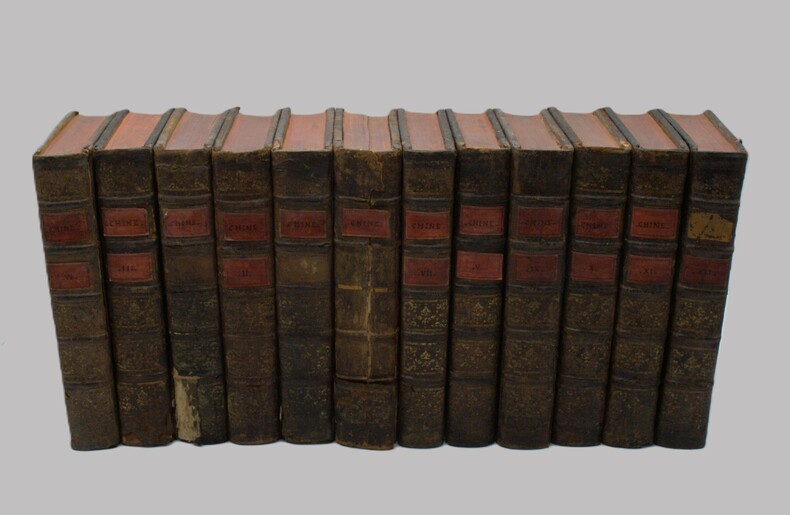
1777PHO-2396Paris : chez Ph. -D. Pierres & Clousier, imprimeur-libraire, rue saint-Jacques, 1777-1785. 12 volumes in-4 (260x200mm), relié demi basane, dos à nerfs avec titre et tomaison. Page de titre du tome 8 détachée, plats frottés, quelques coiffes accidentées, petits manques aux dos (t4 &10), coins émoussés, quelques rousseurs en début et fin de volume. Illustré de 16 planches (complet) et 3 cartes dépliantes par Brion d’après le P. de Mailla et 5 tableaux dépliants.
1986250012London, Philip Wilson, 1986. 3 vols. 1381 pp. with numerous illustrations, partly coloured. 2°, Folio, original cloth binding, top edges gilt, dust jackets, slipcases
18032091202133201466Not Available 1803. Soft Cover. Fine. Number of books: 4 Not Available paperback
Very Good Turkish, Ottoman (1500-1928) Original autograph letter signed (ALS) by Ottoman prince (Sehzâde) Yusuf Izzeddin to his brother, probably Mehmed Seyfeddin Efendi, (1867-1899). 27x17 cm. In Ottoman script. 1 p. 11 lines. Used a pencil. Full. Written on a "Toneywood Linen" watermarked paper. Sehzâde Yusuf Izzeddin was an Ottoman prince, the son of Sultan Abdülaziz and his first wife Dürrünev Kadin. Sehzade Yusuf Izzeddin was born on 29 September 1857 in the Dolmabahçe Palace. His father was Sultan Abdülaziz, who was then a prince, and his mother was Dürrünev Kadin, eldest daughter of Prince Mahmud Dziaps-lpa and his wife Princess Halime Çikotua. He had a full sister, Saliha Sultan, five years younger than him. He was brought up concealed in the villa of Kadir Bey, molla of Mecca, located in Eyüp. His birth was kept a secret until his father ascended the throne in 1861. Izzeddin's early education took place in the Prince's School, Dolmabahçe Palace. His tutors were Miralay Süleyman Bey, Ömer Efendi, Tophane Müfti Ömer Lutfi Efendi, Gazi Ahmed Muhtar Pasha, and Gürcü Serif Efendi. He took his French lessons from the Sultan's head doctor Marko Pasha and Sakizli Ohannes Pasha's son-in-law Sarl. In 1871, at the age of fourteen, Izzeddin was commander of the Fourth Army (Anatolian Army) with the rank of Marshal, and soon after was appointed commander of the First Army, the Imperial Army. After his accession to the throne, Prince Murad (future Sultan Murad V), became heir to the throne. However, Abdülaziz began considering changing the rule of succession in favor of Izzeddin. For this purpose, Abdülaziz set out to mollify different pressure groups and have his son gain popularity among them. During the 1867 visit to Europe, rumors spread that contrary to the rules of protocol Abdülaziz arranged Izzeddin's reception in Paris and London before the official heir, Prince Murad. Izzeddin's father, Abdülaziz was deposed by his ministers on 30 May 1876, and his nephew Murad became the Sultan. He was transferred to Feriye Palace the next day. On 4 June 1876, Abdülaziz died under mysterious circumstances. As both of Emine Sultan, Izzeddin's half-sister, parents died in the summer of 1876, when she was not yet two years old, Izzeddin raised her in his household. Izzeddin's cousin Sultan Abdul Hamid II was suspicious of him, and for this reason, had a police station built opposite his country house. Izzeddin and Prince Vahideddin (future Mehmed VI) had a rivalry with each other. Though, coldly polite to each other, they refused to share the same carriage even for the ceremonies of the state. Vahideddin especially insisted on being considered the second heir apparent. Yusuf Izzeddin suffered from his role and lived his later years in a kind of paranoia, until he committed suicide (his cause of death is still under debate: murder or suicide?) on 1 February 1916 in his villa at Zincirlikuyu, Istanbul.
1777PHO-1678Paris : chez Ph.-D. Pierres & Clousier, imprimeur-libraire, rue saint-Jacques, 1777-1785. 12 volumes in-4 (260x200mm), relié veau époque , dos à nerfs orné avec titre et tomaison, dos frottés , illustré de 14 planches (sur 16) et 2 cartes dépliantes contours en couleurs par Brion d’après le P. de Mailla (sur 3), relié plein veau marbré époque, dos à nerfs orné, tranches rouges, dos cassé au tome 1, frottements, quelques charnières fendues, coins et coiffes usés, manque au dos tome 8, trace de vieille humidité au tome 8, manque les pièces de tomaison (tome 1,4,8) et pièce de titre tome 12,quelques brunissures et taches.
16272111902160200309Not Available 1627. Soft Cover. Fine. Size: 27.5cmx16.5cm Number of books: 8 Not Available paperback
51-6331Chez l'auteur . et Croullebois . A Paris 1792. 2 volumes in 8°. 12 x 19cm.Pleine reliure de l'époque en basane. Dos à nerfs orné de fers et de fleurons dorés. Le dos du premier tome légèrement insolé. Défauts à la coiffe du tome 2. Tome I : 14 pages Avertissement et Lettre de M. Fournier de Varennes Commandant à MM. les Administrateurs généraux de Saint Domingue 4 p. n. ch. pour la Table des matières et 460 pages. Mors un peu faible. Tome II : 478 pages et 4 pp. n. ch. Approbation et privilège. Réédition de cet ouvrage paru pour la première fois. en 1776. Jean Barthélemy DAZILLE Médecin du Roi à Saint Domingue Pensionnaire de Sa Majesté Ancien chirurgien - Major des Troupes de Cayenne des Hôpitaux de l'Isle de France etc .Peu fréquent. Provenance : Collection BOUCHARD-GUIARD—PIERRET-THERRE dynastie de médecins et chirurgiens militaires et civils de la fin du XVIIIème à la fin du XXè.OCLC Number / Unique Identifier:1503228295.The book is organized topically by disease and provides concrete recommendations including specific recipes for remedies. In general Dazille counseled better food especially more varied diets; better hospitals equipped with proper beds and a good deal of clean bedding; and better clothing designed to protect from the massive temperature swings that could be common in certain locales. The text shows how ideas of racial difference were hardening in the late 18th century but were not yet set. Within the chapters Dazille shifted readily from general discussions of diseases and bodies to the particular conditions of slavery which is to say not biological difference that resulted in the poor health of enslaved Africans. But at the same time he did make references to Africans’ “libertinage†“loose morals†which could potentially make them ill because they would “exhaust†themselves in seeking out their romantic partners even across long distances after a grueling day of work. This not only speaks to Dazille’s assumption that Africans had certain fixed characteristics but also his refusal to see them as fully human; as much recent scholarship on slavery has shown it was precisely these intimate relationships that enabled the enslaved to hold on to their humanity to forge affective ties that mattered enormously to them.13 But it is not just recent scholarship—many in the 18th century considered a highly affective family life to be one of life’s greatest consolations and indeed a fundamental driving force uniting human society. That Dazille did not consider the emotional needs of the enslaved when writing of their intimate relationships only underscores the limits of his own empathy. Chez l'auteur ... et Croullebois ..., A Paris, 1792 hardcover
191054257ABEvreux, Imprimerie Charles Herissey, Paul Hérissey Sr, 1910. 4° (26x17), 369 p., avec 3 (+1) portraits, reliure d'editeur en maroquin bleu, plats ornes d'un encadrement de trois filets dores, au centre 3 fleurs de lile couronne de fleurs, une couronne dessus, dos a nerfs orne, soie moiree bleu doree interieure, tranches dorees sur tete, deux cotes non-rogne, [8 Warenabbildungen] tres bel exemplaire relie et signe par 'A. Günther, Wien',
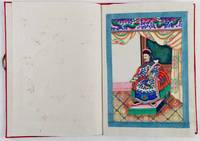
1900221586No date. Circa1900. Twelve very bright colour gouache paintings on pith paper showing a series of Qing dynasty figures arranged by rank blue paper border red silk covered album with contrasting green ties. Images approximately 17.5 x 12cm. Album 22.5 x 15.5cm. All twelve paintings in very good condition. This finely painted gouache album opens with portraits of the Chinese Emperor and Empress followed by the Prime Minister and his wife. The remaining eight leaves depict officials of various ranks with their spouses. A vivid and beautifully executed series the colours standing out with exceptional clarity. . unknown
20202081502111906644National Library Publishing Company 2020. Soft Cover. Fine. The book is in fine condition. National Library Publishing Company paperback
16412092902143300304Hayashi jin'uemon 1641. Soft Cover. Fine. Number of pages: 7 books Size: 27.7x18.8cm Hayashi jin'uemon paperback
49595Section historique du Maroc.Geuthner.1939.5 vols.in-4 demi-reliés.Portrait.Documents.Index.TBE.
18872091202133212828Not Available 1887. Soft Cover. Fine. Number of books: 5 books in total Not Available paperback
49596Section historique du Maroc.Ernest Leroux.1922. et Geuthner,1954.4 vols.in-4 demi-reliés.Le Tome IV est la Bibliographie et l'Index Alphabétique Des Tomes de I à V.Documents.BE.QQues piqûres sans gravité.
New New English Original bdg. Dust wrapper. Folio. (43 x 30 cm). In Persian and English. [i-xxxvii] pp. text in English, [8], 264 p. text in Persian, richly illustrated. After a large historical background, the presented book has old views, city plans and maps of Iranian cities including Russian, Iranian, Arabian and Western cartographers in the Qajar dynasty (1794-1925). A very comprehensive large and heavy book on Iran in the 19th century cartographic material.
Very Good English Original color photograph, hand-colored. 4to. (26 x 20 cm). A portrait. Signed and inscribed as 'To my dear uncle and mother, Fatma Sultana, New York, August 1940'. Sabia Sultan was born on 2 April 1894 in her father's palace in Ortaköy. Her mother was Nazikeda Kadin, daughter of Hasan Marshan and Fatma Horecan Aredba. She was the third daughter born to her father and mother. She had two sisters, Fenire Sultan, six years elder than her, and Ulviye Sultan, one year elder than her. When her father asecended the throne in 1918, Sabiha was still unmarried, but had several admirers. Those who knew her always said that she was not like the other women of the Ottoman family. "Sabiha Sultan was different", said the Turkish poet Yahya Kemal. Her first suiter is thought to be Rauf Orbay. He was followed by Mahmud Kemal Pasha. Another was Fuad Bey of the Babanzade clan. Captain Safvet Arikan, Lieutinant Suphi Bey from Damascus were other suitors, but none of them were accepted. Her betrothal to Ahmad Shah Qajar, the last ruling member of the Qajar dynasty and Mustafa Kemal Atatürk was forfeited in favor of her second cousin Sehzade Ömer Faruk thus missing her chance of becoming the first "First Lady" of the nascent Turkish Republic. Sabiha and Sehzade Ömer Faruk, the son of Abdulmejid II, the last Caliph of the Ottoman Caliphate and Sehsuvar Hanim, were in love with each other. When Abdulmejid asked Sabiha's hand in marriage for his son, Mehmed flatly refused as there was no such thing as a marriage between cousins. Sehsuvar Hanim, the prince's mother called on Nazikeda, and succeeded in convincing her. The marriage took place on 5 December 1919, in the pavilion of the sacred relics, Topkapi Palace. The marriage was performed by Seyhülislam Hayrizade Ibrahim Efendi. Sabiha Sultan's deputy was Baskatip Ali Fuad Bey, and Ömer Faruk's deputy was Ömer Yaver Pasha. The wedding reception took place four months later on 29 April 1920 at the Yildiz Palace. The couple were given the Nisantasi Palace as their residence. Fatma Neslisah Osmanoglu was a granddaughter of the last Ottoman Caliph Abdulmejid II and his first wife, Sehsuvar Hanim and granddaughter of the last Ottoman Sultan Mehmed VI and his first wife, Nazikeda Kadin. She was the daughter of Sehzade Ömer Faruk (1898-1969/1971) and his first wife and cousin Sabiha Sultan (1894-1971). Extremely rare.
Very Good Turkish, Ottoman (1500-1928) Paperback. Chipped on margins. Some owner notes. Otherwise a good copy. Roy. 8vo. (24 x 18 cm). In Ottoman script. 32 p. This rare book includes the royal travel of Sultan Abdülmecid in 1262 AH [1846 AD] to Roumelia. From Edirne, Abdülmecid proceeded to Eski Zagra (Stara Zagora), Kizanlik (Kazanluk), Gabrova (Gabrovo), Tirnova (Turnovo), Rusçuk (Ruse), Silistre (Silistra), and Varna. The route of the 1846 tour followed closely, except in reverse order, Mahmud II's tour of 1837. According to witness accounts, along the way, the sultan was greeted everywhere with poetic recitations and songs of praise and prayer, both in Ottoman and Bulgarian. The pride of place among welcoming parties invariably fell on students, of all creeds, most clad in white uniforms, some in solemn church-going attire, with flowers and green branches in their hands. At every stop, ceremonial cannon salvos were fired during the day and elaborate firework illuminations were performed at night. In the town of Kizanlik, known then as now for the most fragrant roses and the best rose oil, the sultan's visit coincided, possibly by design, with the rose harvesting season. So the locals sprinkled rose water and poured rose oil before the sultan's cavalcade. According to Hristo Stambolski, in the three days of the sultan's stay in town, no rose harvesting was done so that the whole area would be exquisitely scented in his honor. For his part, the sultan had doctors vaccinate all children against smallpox in public before sending each one off with a small gift of money. Even people with rare diseases were, on occasion, summoned to the sultan's presence so his doctors could cure them. The sublime visit caused the locals, who were unaccustomed to direct contact with the center of power, quite a stir. The most detailed account, albeit from a hostile source, relates the sultan's visit to Rusçuk, which, at four days, may have also been the longest. According to Nayden Gerov, the greeting ceremonies proceeded on a communal basis, with the Jews being placed closest to the town walls, next to them the Armenians, then the Bulgarians, and finally, the Muslims, situated the farthest from town, yet being the first to see and welcome the sultan. As the sultan approached, each group of youngsters would in turn sing for him, everyone else bowing profusely. Based on Gerov's description, it seems that Abdülmecid was dressed in a slightly more luxurious fashion than during state ceremonies in Istanbul. ((Source: Sultan Abdülmecid's Tour of Rumelia and the Trope of Love by Stephanov). The sultan began to travel by the way of the gate of Yedikule in Istanbul in May 6, 1846. He followed the way of Ayastefanos, Silivri, Çorlu, Burgaz, Edirne, Zagra-i Atik, Kizanli, Trnova, Rusçuk, Silistre, Rusçuk, Shumnu, and Varna and came back to Istanbul by way of the sea on June 14, 1846. During this travel, the Sultan listened to people's problems and ordered the authorities to be solved with those problems. He received successful military and administrative authorities in settlements on the way of travel and rewarded them. He also received the governors of Serbia, Eflak and Bogdan, and the representatives of foreign states. With this travel, the Sultan aimed to strengthen the connection to the center of people and administrators in provinces. Özege 17910. First Edition.
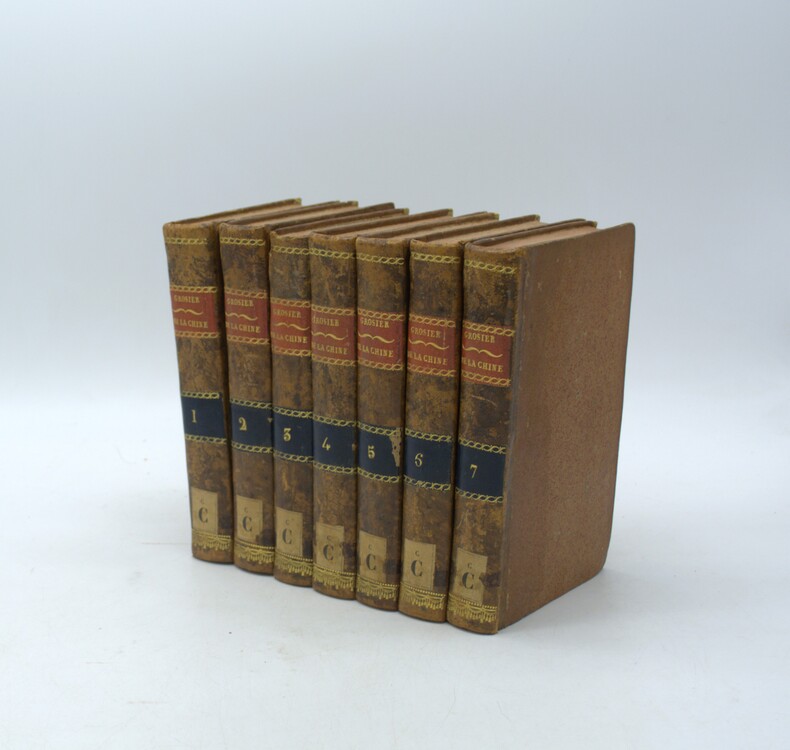
1818PHO-2140Paris, chez Pillet, 1818-1820. 7 vol. in-8, demi-basane époque, dos lisse avec pièces d’auteur et titre cerise et tomaison noire, tranches mouchetées, étiquette de bibliothèque en pied, quelques frottements et épidermures aux dos, petit accroc (tome 3)
18952091202133206193Not Available 1895. Soft Cover. Fine. Number of books: 16 books in total Not Available paperback