1 436 résultats
New English Paperback. Pbo. Oblong 4to. (27 x 28 cm). In English and Turkish. 219 p., ills. The Ottoman Empire, which, for centuries, had successfully ruled nations and communities of diverse ethnic origins and religious denominations under the same administrative system, was entering an irrevocable process of disintegration at the turn of the 20th century. Struggling to take precautionary steps against the pressures of the "New Nation States" that originated from the Balkans, which were openly supported by Russia, England, Austria and Greece, Sultan Abdulhamid II announced -out of despair and the fait accomplihe faced- the proclamation of the Second Constitution on 24 July 1908 to protect his throne, for he justifiably believed this to be the only solution to prevent, or at least delay the complete disintegration of the Empire. Sultan Abdulhamid II, who by then was nearing the 32nd year of his reign, was convinced that this was the sole measure to be taken to keep under control the power "Young Turk" movement, which increasingly evolved into a stronger force under the auspices of the "Committee of Union and Progress", had over the large masses. It was, on the other hand, impossible for the restoration of the 1876 Constitution and the implementation of a Constitutional regime based on a newly established parliament by way of elections, to provide viable solutions to the grander problems of the Empire. The upheaval instigated by the Islamic faction waging war against the Committee of Union and Progress and the counter- revolution attempt, which has come to be known as the "31 March Incident", ended when the Third Army stationed in Salonica arrived in Istanbul and seized control of the govemment. The deposition of Sultan Abdulhamid II on 27 April 1909 and the subsequent enthronement of the 65-year-old Sultan Mehmed Resad V meant, evidently, that the government of the Empire was now in the hands of the leaders of the Committee of Union and Progress. In the ensuing years, the rigours of the Balkan War and World War I compelled the Committee members, who adopted "Liberty - Justice - Fraternity and Equality" ideals as their slogan, to relinquish their pluralistic and democratic stance and pursue a nationalistic discourse, which, in turn, accelerated the run towards the inevitable end. The purpose of the catalogue and the exhibition we designed in commemoration of "The 400th Anniversary of the Restoration ofthe Constitution" is to draw attention to a tumultuous period that had significant repercussions on the Republic years. It is rather intriguing how, from books and posters to memorabilia, and even quotidian objects, masses of diverse religions and races expressed their yearning for and expectations from a more democratic regime. I would like to extend my sincere thanks to Sinan Kuneralp, Prof. Edhem Eldem, Dr. Sacit Kutlu, David Barchard, Paul Bessemer and Sukru Ilicak, who all contributed to the exhibition catalogue with their valuable articles; to Mehmet Akgul, Atom Damali, Oktar Kubat, Ugur Yegin, Ugur Goktasli, Orlando Kalumeno, Roni Margulies and Ekrem Gocay, who made it possible for the works in their private archives and collections to be published in the catalogue and displayed in the exhibition; to Sadberk Hamin Museum Director Hulya Bilgi and her team; and to project coordinator Bahattin Oztuncay, with whom we collaborated on the selection of items included in the exhibition and the catalogue.
Very Good German Paperback. Roy. 8vo. (24 x 17 cm). In German. 20 p., iv numerous b/w plates (Tafeln). Ein Weiteres Sultansbild von Gentile Bellini aus russischem Besitz. A study on Gentile Bellini, (1430-1507), was an Italian painter of the school of Venice. He came from Venice's leading family of painters, and at least in the early part of his career was more highly regarded than his younger brother Giovanni Bellini, the reverse of the case today. From 1474 he was the official portrait artist for the Doges of Venice, and as well as his portraits he painted a number of very large subjects with multitudes of figures, especially for the Scuole Grandi of Venice, wealthy confraternities that were very important in Venetian patrician social life. In 1479 he was sent to Constantinople by the Venetian government when the Ottoman Sultan Mehmed II requested an artist; he returned the next year. Thereafter a number of his subjects were set in the East, and he is one of the founders of the Orientalist tradition in Western painting. His portrait of the Sultan was also copied in paintings and prints and became known all over Europe.
Very Good Persian Paperback. Roy. 8vo. (24 x 17 cm). Text in Persian; with bilingual title on cover in English and Persian. 144 p. History of Iran since Islam to the raise of Tâhirids. [PERSIAN EDITION].
New English Paperback. Pbo. Roy. 8vo. (24 x 17 cm). In French. 228 p. Les souvenirs d'une désenchantée. Être femme dans l'Empire Ottoman finissant. Préface par Feriha Balcik-Tan Première partie: Hamide Hanim, Deuxième partie: Les carnets de Saibe, Index. OTTOMANIA Ottoman Palace Dynasty Women Memoirs Ottoman society.
Fine English Paperback. Pbo. 4to. (30 x 24 cm). In English and Turkish. 67, [2] p., color and b/w ills. The Artist, The Sultan and his portrait: Mehmed the Conqueror according to Gentile Bellini.= Ressam, Sultan ve portresi: Gentile Bellini'ye göre Fatih Sultan Mehmet. [Exhition catalogue]. Edited by Münevver Eminoglu. Consultant: Günsel Renda. This exhibition consists of a single painting: the famous portrait that the Ottoman Sultan Mehmed the Conqueror had painted by the Italian artist Gentile Bellini about five hundred years ago and is now in the collection of the National Gallery of London. The painting is a magnificent souvenir of a brief 'golden age' in a reminder that, as early as the Renaissance and under the leadership of a strong and foresighted ruler, Ottoman society, which always looked wetward, hd the chance to grasp universal civilization.
200794538Graz, Stocker 2007. 200 Seiten. 4°, Hardcover/Pappeinband
197935583gsMünchen, Beck, 1979. Leinen, Titelschild am oberen Rücken, ca. DinA 5, 316 Seiten, 10 sw-Abbildungen auf Tafeln und 2 Karten im Text, bebilderter Originalumschlag / Schutzumschlag / OU (randgebräunt und leicht randrissig/gebogen), Einband mit minimalen Gebrauchsspuren, Schnitt und Seiten papierbedingt gering gebräunt, abgesehen vom Umschlag (sehr) gut erhalten / (sehr) guter Zustand [4 Warenabbildungen]
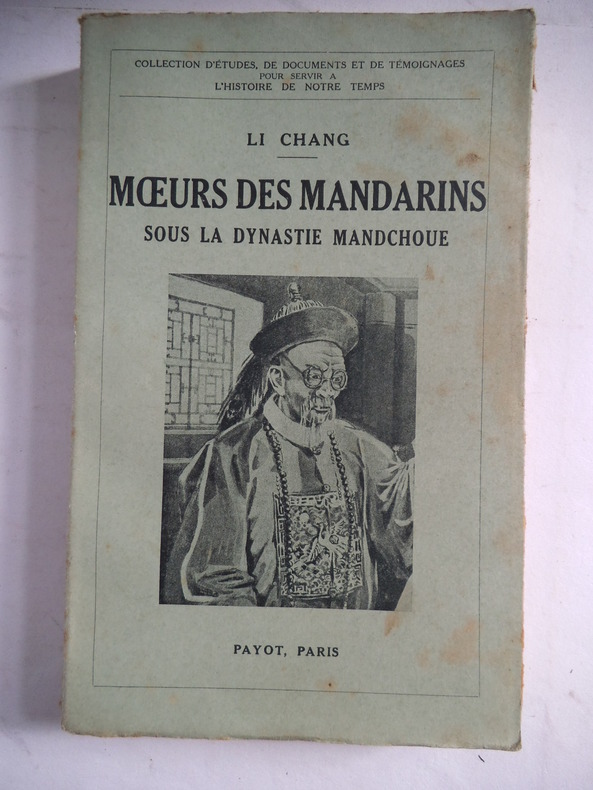
9008In 8 broché, couverture illustrée, faux-titre, titre, 230 pages, 7 pages de catalogue Payot Paris 1935. Traduction par Eva MEYEROVITCH
201039905Stuttgart : Theiss 2010. 29 cm, 800 Seiten mit ca 900 Abb. Pp., gebundene Ausgabe, Hardcover/Pappeinband, im Schuber, Exemplare in gutem Erhaltungszustand
br. Il tramonto dell'impero asburgico è coinciso con la fine di un lungo equilibrio europeo e con il venir meno della funzione egemonica su scala mondiale ricoperta fino ad allora dal vecchio continente. Partendo dalla Rivoluzione del 1848 e dall'ascesa al trono di Francesco Giuseppe d'Asburgo, il volume ripercorre i sessantotto anni di regno dell'imperatore austriaco servendosi di materiale inedito o comunque poco conosciuto. Senza nascondere i grossi errori di una politica spesso miope, Edward Crankshaw racconta le disgrazie famigliari, le disfatte sui campi di battaglia, le rivolte dei popoli e la rivalità degli alleati, inserendosi così a pieno titolo nella cosiddetta corrente revisionistica della storia asburgica: solo conoscendo a fondo ciò che fece la monarchia degli Asburgo è possibile comprenderne successi e passi falsi.
fort volume grand in-8, 104 + 100 + 104 pages, illustrations dans le texte, reliure plein simili bordeaux, decor doré aux Armes de la Belgique. Bel exemplaire. [TX-23]
20031070468Berlin : Lukas, 2003. 463 S. Fadengehefteter Originalpappband.
2014142206Petersberg : Imhof, 2014. 235 S. : zahlr. Ill. 4°, Hardcover/Pappeinband in original Folie eingeschweißt
199332943Freiburg [Breisgau], Herder, 1993. 2. Aufl. 349 S. mit Ill. 25 x 19 cm, Broschur [3 Warenabbildungen]
in-8, 150 pp., illustrations en noir, broché. Bel exemplaire. [P-32]
39200Göppingen, Gesellschaft für Staufische Geschichte e.V., [2016]. 191 Seiten mit Illustrationen 25 x 17 cm, Pappband ohne Schutzumschlag [2 Warenabbildungen]
in-4° oblong, 120 pp., nombreuses illustrations en noir et en couleurs, broché. Très bel exemplaire. [P-8] Publié dans le cadre du Festival Europalia.brasil.
190995078Gotha, Verlag Justus Perthes 1909. Mit Frontispiz von Victoria, Königin von Schweden und weiteren Bildnissen., XXIV, 1236 Seiten., Kl.-8°. goldgeprägte rote OLeinwand.,
1 Vol. In-4 pag. XXXII-477 4 ill.f.t.e una tav. genealogica PROG 23251 CATT_ATT 34
2003LYONNNN01160116Perrin, 2003, 16 x 24,5, 830 pages sous reliure souple éditeur illustrée. Avec XVI pages d'illustrations - hors texte - en noir & blanc.
128pp. avec quelques illustrations dans et hors texte, 24cm., br.orig., ex.bibl. (qqs. cachets et 3 petites étiquettes sur la couv.), texte en très bon état, [Contient e.a.: Le véritable blason funéraire de Rubens (par Louis Robyns de Schneidauer, pp.61-80) & Héraldique de la Maison Royale de Belgique (par Roger Harmignies, pp.81-102)], B93308
1956B93308Bruxelles, Editions 'Tradition et Vie' 1956 128pp. avec quelques illustrations dans et hors texte, 24cm., br.orig., ex.bibl. (qqs. cachets et 3 petites étiquettes sur la couv.), texte en très bon état, [Contient e.a.: Le véritable blason funéraire de Rubens (par Louis Robyns de Schneidauer, pp.61-80) & Héraldique de la Maison Royale de Belgique (par Roger Harmignies, pp.81-102)], B93308
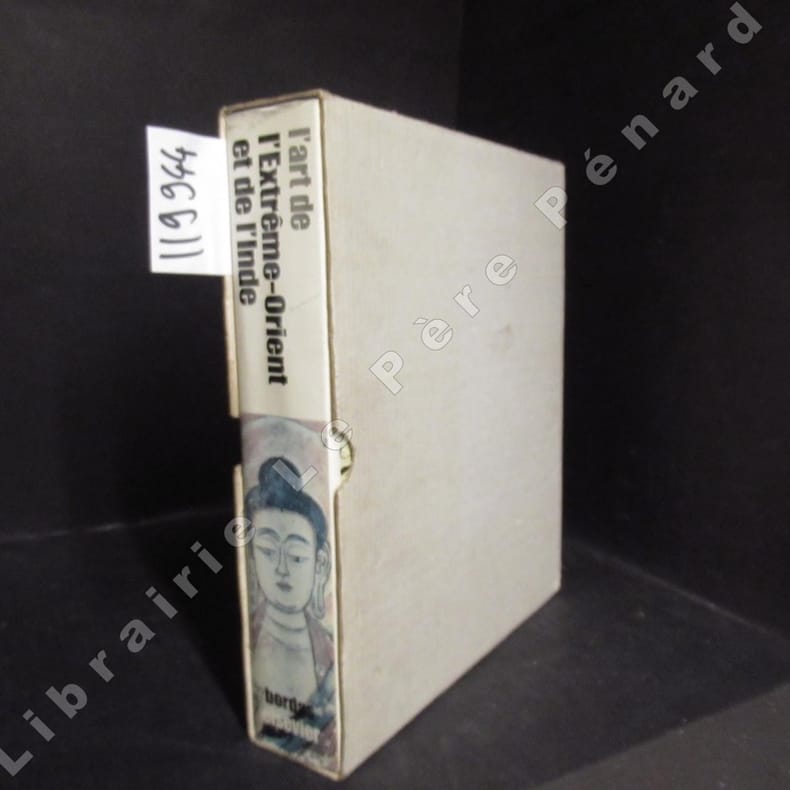
19801199441980 Editions Bordas / Elsevier Séquoia, collection "L'art du monde" - 1980 - Fort in-8, cartonné sous jaquette illustrée de l'éditeur, dans son emboitage - 458 pages - Très riche iconographie (illustrations et reproductions photographiques) en couleurs et en N&B in et hors texte
1905B117417Bruxelles, Weissenbruch 1905 54 + [1] pp., 26cm., reliure cart., titre doré au dos, bon état, B117417
(Filosofie islamiche esoteriche - Islam sciita - Ismailismo - Nizariti - Dinastia dei Fatimidi - Il Vecchio della Montagna - Storia delle religioni - Orientalismo) In 8°, brossura editoriale verde oliva con titoli in nero al dorso ed al piatto anteriore, pp. (10),352,(4), con due cartine nel testo. Volume stampato nella Tipografia Poggi di Milano. Prima edizione. Ottimo stato di conservazione.