301 résultats
20222081502111906615Guangxi Normal University 2022. Soft Cover. Fine. The book is in fine condition. Guangxi Normal University paperback
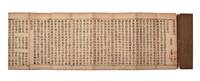
8663Trans. by Xuanzang 玄奘 in 650 CE. 70 pages six columns per page 30 columns per sheet 17 characters per column. 14 sheets average sheet length: 570 mm. five pages per sheet. Accordion format 305 x 7980 mm. print surface from top border to bottom border: 245–250 mm. Single woodcut borders at top & bottom of text. Orig. sutra binding of semi-stiff paper wrappers. Woodblocks carved by Ge Fang & Ma Qing & others in Sixi present day Huzhou printed between 1110s/40s–1276.<br /> <BR> <BR> This fascicle in its original sutra binding was printed in the 12th or 13th century in northern Zhejiang China as part of an extremely rare edition of the Buddhist canon variously known as the Yuanjue Canon Zifu Canon or Sixi Canon. Examples very rarely appear on the market. This edition of the Buddhist canon was for a long time largely unknown in China until the famous Chinese book collector and scholar Yang Shoujing 1839-1915 brought a set back from Japan in the late 19th century. Now in a Chinese library this is the only near-complete set as far as we know the rest being single sutras.<br /> <BR> <BR> Yuanjue Zifu or Sixi Canon: The three names refer to some or all of the imprints of the Chinese Tripitaka made from a set of blocks that were carved in a place called Sixi present-day Huzhou in what was then Songting township Guian county Hu prefecture part of the Circuit of the eastern and western Zhe of the Southern Song.<br /> <BR> <BR> Sixi one of the names retrospectively used for this edition was the location of Yuanjue Meditation Hall founded in 1119-25 where the printing blocks were housed and perhaps carved. Sometime after 1239 the hall’s name may have changed to Fabao Zifu lit. “Dharma jewel supplying happiness†Meditation Temple whence Zifu Canon.<br /> <BR> <BR> Bibliographic scholarship has dated certain imprints of this canon to either the period of Yuanjue Meditation Hall or that of Fabao Zifu Meditation Temple calling imprints dating from the earlier period Yuanjue Canon or “first Sixi canon†qian Sixi jing and imprints from the later period Zifu Canon or “second Sixi canon†hou Sixi jing. On the basis of a comparison of two catalogues of the canon — one claiming to be of the Yuanjue Canon and one of the Zifu Canon — it was believed that a substantial amount of re-carving had taken place between the Yuanjue and Zifu canons. However the catalogue purportedly of the Zifu Canon has been shown in fact to have been based not on an inventory of a set of the Zifu Canon but on another unrelated catalogue. Thus there is no reason to assume that a substantial amount of re-carving of the blocks took place after the temple changed its name and ipso facto there is no reason to posit the existence of two Sixi canons. Printings ascribed to the Yuanjue and Zifu canons belong to the same edition of the Chinese Tripitaka printed at various times during a period that stretched over a century. Blocks were repaired and replaced during this period but not to the extent that would justify calling them two editions.<br /> <BR> <BR> The Timing of Carving and Printing: The sources are ambiguous as to when carving of the blocks began. Li Fuhua and He Mei state that the carving began in 1126 whereas Wang Chonglong says it began before 1110 and thus not at the Yuanjue Hall which had not yet been founded and agrees with others that it likely had finished in 1132. It has also been proposed however that carving only began in 1132. Finally 1140 has been proposed as another completion date. Therefore we can say with confidence that the initial set of blocks was carved sometime between the 1110s and 1140s.<br /> <BR> <BR> Once the blocks were carved they were used for printing for a long time. Some printings can be dated because they contain colophons. <br /> <BR> <BR> Liu Yuantang has documented three instances of blocks being mended buban: in 1238 1248 and 1250. The blocks were burned by the invading Mongols in 1276 which is thus the terminus ante quem for prints from the Yuanjue Canon.<br /> <BR> <BR> Our Copy and the Yuanjue / Zifu Canon: Benshi jing is marked with the ordinal character shen 甚 in five editions of the Chinese Tripitaka. Of these five only the Yuanjue Canon also known as the Zifu or Sixi Canon is a possible candidate. More precisely our copy appears to be from a late printing of the Zifu Canon dating from sometime in the latter portion of the period 1110s/1140s-1276. The vast majority of extant sutras from this edition of the canon are late printings. They have the following characteristics:<br /> <BR> <BR> 1. Sheets folded into five pages with six columns per page 30 per sheet and 17 characters per column.<br /> <BR> <BR> 2. Glosses appended to the end of the volume.<br /> <BR> <BR> 3. Single woodcut borders at top and bottom of text. For earlier printings of this edition one source specifies that the borders go around on all four sides but for the later printings the same source simply says “single-lined margin frame†danxian biankuang 單線邊框. This would appear to suggest borders also at the beginning and the end of each sheet.<br /> <BR> <BR> 4. No empty column before the beginning of the text on the first page.<br /> <BR> <BR> 5. Small-script numerals marking the number of the sheet are printed at the beginning of every sheet as opposed to in the crease between pages for example except for the first sheet.<br /> <BR> <BR> 6. Printed area of roughly 570 mm. long and 250 mm. wide.<br /> <BR> <BR> The sutra has a total of seven fascicles juan of which we have fascicle six. The upper cover and the first line of the first page both have the character shen in manuscript on the cover which is here used as an ordinal drawn from Qianzi wen åƒå—æ–‡ The Thousand Character Essay to arrange the sutras of the Chinese Tripitaka.<br /> <BR> <BR> Layout and Appearance of Our Copy: Unsurprisingly for a very large printing project that took many years not all the sutras of the Yuanjue Canon have the same appearance. Yet the dimensions of our copy agree with other known copies: five pages per woodblock six columns per page 17 characters per column. Other non-official Song editions of the Buddhist canon Chongning and Pilu have six pages per block but the same number of columns per page and characters per column.<br /> <BR> <BR> The measurements of our copy accord with copies of other sutras from the same edition of the canon held by the Gansu Provincial Library in Lanzhou the National Palace Museum in Taipei and the Gotoh Museum outside of Tokyo. The layout of our copy accords with that of a different sutra from the same canon that has been reprinted in facsimile in unknown
18772091202133204253Red Anzu Sanbo 1877. Soft Cover. Fine. Number of books: 80 books in total Red Anzu Sanbo paperback
19292091202133201489Otsuka Kogeisha 1929. Soft Cover. Fine. Number of books: 2 books in total Otsuka Kogeisha paperback
19222091202133212997Not Available 1922. Soft Cover. Fine. Number of books: 10 books in total Not Available paperback
18032091202133201466Not Available 1803. Soft Cover. Fine. Number of books: 4 Not Available paperback
16272111902160200309Not Available 1627. Soft Cover. Fine. Size: 27.5cmx16.5cm Number of books: 8 Not Available paperback
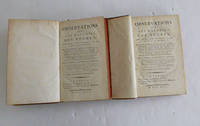
51-6331Chez l'auteur . et Croullebois . A Paris 1792. 2 volumes in 8°. 12 x 19cm.Pleine reliure de l'époque en basane. Dos à nerfs orné de fers et de fleurons dorés. Le dos du premier tome légèrement insolé. Défauts à la coiffe du tome 2. Tome I : 14 pages Avertissement et Lettre de M. Fournier de Varennes Commandant à MM. les Administrateurs généraux de Saint Domingue 4 p. n. ch. pour la Table des matières et 460 pages. Mors un peu faible. Tome II : 478 pages et 4 pp. n. ch. Approbation et privilège. Réédition de cet ouvrage paru pour la première fois. en 1776. Jean Barthélemy DAZILLE Médecin du Roi à Saint Domingue Pensionnaire de Sa Majesté Ancien chirurgien - Major des Troupes de Cayenne des Hôpitaux de l'Isle de France etc .Peu fréquent. Provenance : Collection BOUCHARD-GUIARD—PIERRET-THERRE dynastie de médecins et chirurgiens militaires et civils de la fin du XVIIIème à la fin du XXè.OCLC Number / Unique Identifier:1503228295.The book is organized topically by disease and provides concrete recommendations including specific recipes for remedies. In general Dazille counseled better food especially more varied diets; better hospitals equipped with proper beds and a good deal of clean bedding; and better clothing designed to protect from the massive temperature swings that could be common in certain locales. The text shows how ideas of racial difference were hardening in the late 18th century but were not yet set. Within the chapters Dazille shifted readily from general discussions of diseases and bodies to the particular conditions of slavery which is to say not biological difference that resulted in the poor health of enslaved Africans. But at the same time he did make references to Africans’ “libertinage†“loose morals†which could potentially make them ill because they would “exhaust†themselves in seeking out their romantic partners even across long distances after a grueling day of work. This not only speaks to Dazille’s assumption that Africans had certain fixed characteristics but also his refusal to see them as fully human; as much recent scholarship on slavery has shown it was precisely these intimate relationships that enabled the enslaved to hold on to their humanity to forge affective ties that mattered enormously to them.13 But it is not just recent scholarship—many in the 18th century considered a highly affective family life to be one of life’s greatest consolations and indeed a fundamental driving force uniting human society. That Dazille did not consider the emotional needs of the enslaved when writing of their intimate relationships only underscores the limits of his own empathy. Chez l'auteur ... et Croullebois ..., A Paris, 1792 hardcover
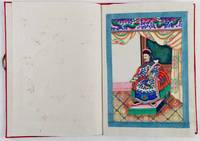
1900221586No date. Circa1900. Twelve very bright colour gouache paintings on pith paper showing a series of Qing dynasty figures arranged by rank blue paper border red silk covered album with contrasting green ties. Images approximately 17.5 x 12cm. Album 22.5 x 15.5cm. All twelve paintings in very good condition. This finely painted gouache album opens with portraits of the Chinese Emperor and Empress followed by the Prime Minister and his wife. The remaining eight leaves depict officials of various ranks with their spouses. A vivid and beautifully executed series the colours standing out with exceptional clarity. . unknown
20202081502111906644National Library Publishing Company 2020. Soft Cover. Fine. The book is in fine condition. National Library Publishing Company paperback
16412092902143300304Hayashi jin'uemon 1641. Soft Cover. Fine. Number of pages: 7 books Size: 27.7x18.8cm Hayashi jin'uemon paperback
18872091202133212828Not Available 1887. Soft Cover. Fine. Number of books: 5 books in total Not Available paperback
18952091202133206193Not Available 1895. Soft Cover. Fine. Number of books: 16 books in total Not Available paperback
1870055223Kostantiniyye Constantinople - Istanbul: Matbaa-yi Âmire. AH 1287 1870. 1st Edition . Hardcover. Very Good. 8vo - over 7¾ - 9¾" tall. Contemporary cloth bdg. marbled boards. Cr. 8vo. 19 x 14 cm. In Ottoman script Old Turkish with Arabic letters. 2 130 p. Exceedingly rare first edition of the most comprehensive biographical book of the Crimean Khans and Khanate including 44 biographies starting from the founder of the khanate Hadji Geray 1397-1466 each khan period has been handled separately including narrations of the wars with Tsarist Russia and other important events. In the beginning the genealogy of the Crimean khans dating back to Genghis Khan is also given. In the book the dates of the expeditions of these rulers of Crimea their reigns and wars were tried to be determined meticulously. Some important events are mentioned albeit briefly like the Fire of Moscow occurred on May 24 1571 when the Crimean and Ottoman armies led by the khan of Crimea Devlet I Giray bypassed the Serpukhov defensive fortifications on the Oka River crossed the Ugra River and rounded the flank of the 60000-man Russian army. The last biography in the work was the author's father and Baht Geray Han d. 1801. Özege 6373.; TBTK 12314. <br/> <br/> Matbaa-yi Âmire., [AH 1287] hardcover
2091202133209320Macao New Book Office N.A. Soft Cover. Fine. Number of books: 4 books in total Macao New Book Office paperback
19622091202133202844Chinese book office 1962. Soft Cover. Fine. Number of books: 5 books in total Chinese book office paperback
20182081502111907741Shanghai Ancient Book Publishing House 2018. Soft Cover. Fine. Number of pages: 1908 pages Size: 16 open Soft Cover Shanghai Ancient Book Publishing House paperback
17472111902160200334Toto Bookstore Subundo Maekawa Rokuzaemon 1747. Soft Cover. Fine. Size: 26.7cmx17.8cm Number of books: 4 Toto Bookstore Subundo Maekawa Rokuzaemon paperback
20212081502111904825old books in shanghai 2021. Soft Cover. Fine. The book is in fine condition. old books in shanghai paperback
2091202133213251Wen Zuiro N.A. Soft Cover. Fine. Number of books: 9 books in total Wen Zuiro paperback
20172081502111908049National Library Publishing Company 2017. Soft Cover. Fine. The book is in fine condition. National Library Publishing Company paperback
20012091202133211546Peking Library Publishing House 2001. Soft Cover. Fine. Number of books: 4 books in total Peking Library Publishing House paperback
20182081502111904905National Library Publishing Company 2018. Soft Cover. Fine. The book is in fine condition. National Library Publishing Company paperback
20182081502111907303Chinese book office 2018. Soft Cover. Fine. Number of books: 4 Chinese book office paperback
20172081502111905466Hoo shubbansha 2017. Soft Cover. Fine. The book is in fine condition. Hoo shubbansha paperback