27 résultats
1700ABC_50128Spain 1700. Contemporary elaborately gold-tooled red morocco sewn on six supports with the corresponding raised bands on the spine the gold-tooling is built up from numerous impressions of small pointillé tools creating a large intricate centrepiece within two detailed frames gold-tooled board edges and turn-ins marbled pastedowns and gilt edges. Folio. With an elaborately decorated letterpress title page the letters of the title are highlighted in blue red gold and silver and are surrounded by a contemporary hand-drawn hand-coloured and highlighted in gold and silver floral frame in the same style as the other floral borders in this work including equally decorated arms of the Echeniques y Aguirres family. All text is set within woodcut borders incorporating the familys coat of arms the borders show two different floral designs which are repeated throughout the work. All borders are vividly coloured by a contemporary hand and highlighted in gold and silver. Rare ejecutorias de hidalguía of the Echeniques y Aguirres family. The work is beautifully bound in contemporary richly gold-tooled morocco and it is handsomely decorated throughout with contemporary hand-coloured borders which are highlighted in gold and silver. Among the most impressive legal artefacts produced in early modern Spain are the ejecutorias de hidalguía royal documents issued when a family had successfully proven its noble status before the highest courts of the kingdom. These richly ornamented works are far more than dry legal records: they preserve genealogies heraldic descriptions testimonies of limpieza de sangre purity of blood and the voices of neighbours and officials who vouched for a familys lineage. They were the final seal that converted a favourable verdict into a binding hereditary right. The present work is dated 24 July 1664 and comprising 233 pages. It opens with a hand-painted title page bearing the family arms and every leaf is bordered with coloured decoration. The Echenique y Aguirre family originated in Erratzu a village in the Baztan Valley of Navarre. Martín de Echenique and María de Aguirre both natives of the valley were the parents of five sons Lorenzo Juan the elder Juan Pedro and another Juan whose activities spread across the Iberian Peninsula. From their home region the brothers established themselves in Madrid Pamplona Seville and elsewhere forming part of the thriving network of Basque and Navarrese merchants.In 1659 the brothers petitioned for their heraldic rights to be formally confirmed. The Rey de Armas Bernardo de Fonseca y Pinto issued an official grant later certified by herald Rodrigo Méndez Silva combining elements from the Errazuriz Echenique and Aguirre lineages. The resulting arms featured the iconic black-and-white chequered pattern of the Baztan Valley enhanced with chevrons gold fields and coloured bands. Although later heraldists noted that this composition was more elaborate than the traditional local arms such embellishment was typical of mid-17th-century grants where royal heralds often produced grander shields at the clients request. By royal order the five brothers were authorised to use these arms freely on seals rings chapels tombs and household objects in this work the arms are displayed on every leaf.It records the full proceedings of the lengthy trial brought before the kingdoms senior judiciary. It opens with the royal heading of King Philip IV followed by the legal narrative of the case heard first by the mayors of the High Court then by the Regents and the Royal Council.The opposing party was none other than the municipal authorities of the Tierra y Valle de Baztán who challenged the brothers claim. The result preserved in this volume was a firm royal recognition of the Echenique y Aguirre lineage as noble in perpetuity.The present work is bound in sumptuous contemporary red morocco its boards covered with intricate gold tooling arranged in the refined pointillé and a petit fers French-inspired style of the second half of the 17th-century. The tooling is reminiscent of the work of celebrated French and Dutch binders like le Gascon only known by this nickname Florimond Badier and Albert Magnus.With a later pencil annotation on the first flyleaf providing a brief bibliographical or descriptive note about the content and significance of the work and stating the year 1657. Pages 232-233 bear the date 24 July 1664 along with the signatures of the royal authorities and members of the Echeniques y Aguirres family page 233 includes a large royal blind stampits verso is covered by a separate piece of paper with a manuscript note presumably by the official issuing the stamp signed by a certain Juan. The front hinge is slightly damaged at the foot of the spine some browning and staining throughout. Otherwise in good condition.l Google Arts & Culture Las ejecutorías de hidalguía; Il congreso de estudios vascos 324; Máximo Diago Hernando "Los hombres de negocios navarros en el Madrid de mediados del siglo xvii: los Echenique del valle de Baztan" Principe de Viana 274 May-August 2019 pp. 925-950. hardcover
16265681Lima 1626. Still very good. 62 i.e. 61 leaves. Folio. Limp vellum ruled and lettered in ink; edges sprinkled red and black. Some creasing and staining to vellum. Small tissue repair to first leaf of text. Occasional dampstaining and foxing. Accomplished in a highly legible hand. An outstanding and minutely-detailed colonial Spanish patent of nobility accomplished in Lima in the early part of the 17th century and illustrated with two full-page coats of arms. This patent was commissioned by one Cristóbal de Villalobos y Lara corregidor or mayor of the Province of Yampares a province in Bolivia in the Department of Chuquisaca. The office of corregidor was a municipal position although the office holder was also required to assist the army in times of war. Among the many duties of this position were to promote and to carry out all manner of public works maintain health standards and the police force verify weights and measures avoid contraband and prohibited merchandise and in general observe and impose commercial standards. The patent of nobility was a highly formal official document which not only confirmed the noble rank of the recipient but also could grant certain privileges commensurate with rank. As a result the form was highly stylized structured and often quite lengthy -- the text of the present example runs to nearly 120 pages and traces the lineage of Villalobos y Lara for generations generously assessing his claims to nobility. The outstanding features of the document are the two full-page illustrations of the new nobles' coats of arms on the initial two leaves accomplished in gouache and gilt. Each shield features differing emblems in four quarters lies on a folial background and is headed by a knight's helmet. The second illustration also features a depiction of St. Sebastian and a knight on horseback who is trampling what appear to be smiling peasants. Patents of nobility from colonial Spanish America from this early date are very rare on the market and the present example has survived in fine condition. unknown
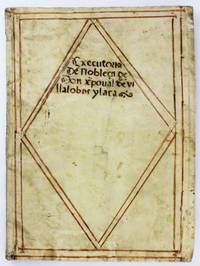
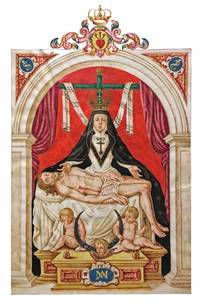
1726LL 878<p><em>"Ejecutoria de Hidalguía ganada por los Caballeros hijosdalgo de los Señores Don Nicolás Antonio de Arjona y Don Zoilo Alfonso de Arjona".</em></p><p>4to. 33 x 23 cm. Contemporary silk binding. Three manuscript pages vellum folio containing a beautifully rendered depiction of the spiritual state of Solitude with a figure of a recumbent Christ with two cherubim at his feet and angels with a Virgin Mary illuminated vellum folio with coat of arms of nobility of the Arjona Family with colored helmet two vellum pages with a genealogical tree cover five blank folios 211 folios.</p><p><strong>RICHLY ILLUMINATED SPANISH "CARTA DE HIDALGUIA</strong>. According to seventeenth century writer Bernabé Moreno de Vargas a patent of nobility hidalguía consists of a transcription of a favorable outcome of a lawsuit filed before the Chancellories of Ciudad Real Granada and Valladolid. on behalf of individuals families and often of entire lineages recognizing the plaintiff's or plaintiffs' noble status.</p><p>After January 20 1703 the competencies for determining noble status would fall exclusively on the Chancellories of Valladolid and Granada in order to protect the impoverished Royal treasury from tax evasion. </p><p>This patent of nobility or hidalguía concerns the families of Don Nicolás Antonio de Arjona and Don Zoilo Alfonso de Arjona in 1726.</p><p><em>Artfully decorated the depiction of the family's noble coat of arms is especially worthy of mention. The document examines the two genealogical trees and stands as a good example of the heraldic literature of the time</em></p>
9819Early nineteenth-century. 4to 3 pp. Bifolium. Neatly and closely written. Text clear and complete. Fair on aged paper. Evaluations of the conduct of more than thirty families from a staunchly Bourbon point of view. First entry: 'Lorraine. Des sentiments trés pur. Ils quitterent ce Pais et furent trouver l'Empereur qui les Emploie dans ses Armées.' Some families come in for criticism: 'Bethune. Cette maison si illustre s'est couverte d'ignomenie un seul Bethune d'Artois a Emigrée.' Longest entry twenty lines on the Durfort Boissier family. [Early nineteenth-century.] unknown
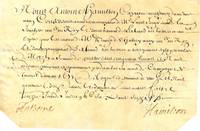
21172France. 1675. The context is explained in Hamilton's entry in the Oxford DNB: 'Anthony Hamilton joined his brother George in France in 1667 and was given a captain's commission in the French army. In 1671 he and his younger brother Richard joined a regiment of foot which George raised in Ireland for the service of Louis XIV. They served in the Franco-Dutch War of 1672–8.' On 12 x 19 cm piece of vellum. In good condition with spike hole and bottom corners snipped. Entire document in French. The main text consists of ten lines of text in a stylized secretarial hand with Hamilton's split signature at the bottom: the word 'Anthoine' being at the bottom left and the word 'Hamilton' at bottom right. Autograph description by Hamilton on the reverse: 'Pour servir de quittance de la somme de quatre cens cinquante livures pour mes appointements de cappitaine au Regimant D'Hamilton pandant les six mois de campagne de lannée 1675'. See Image. [France. 1675.] hardcover
211712 February 1676. 1p 8vo. On bifolium endorsed in two hands on reverse of second leaf one reading: 'Papier d'antoine Joignar anglois recu Le 29e. Fever. 1676'. In good condition lightly aged and worn with stub from mount adhering. Beneath Hamilton's signature at the foot of the document is a fair impression of his seal in red wax. The document reads: 'Nous le Sieur d'Hamilton Capn. Comandant du Regiment de Monsieur le Comt d'Hamilton Certifions que le porteur de ce present Antoin Joinar nous a bien et fidellement Servie en tous les occasions qui se sont presentes estant apresent agé et incapable de plus Servire apres avoir esté blaisé au dite Service nous luy avons donné le present Certificat pour se retirer a l'hostel des Invalides en foys de quoy nous avons Signé le presente'. Image on request. 2 February 1676. unknown
1998x-3540762582Springer-Verlag 1998. Paperback. New. 346 pages. 9.50x6.25x1.00 inches. Springer-Verlag paperback
1956500041802Madrid: Ediciones Hidalguía 1956. First Edition. . Paperback. Good. 4 volume set <br/> <br/> Ediciones Hidalguía, paperback
19981311280PN. New. 1998. Soft Cover. Date is original print. This is a reprint edition . PN paperback
19981309572PN. New. 1998. Soft Cover. Date is original print. This is a reprint edition . PN paperback
1988788755PN. New. 1988. Soft Cover. Date is original print. This is a reprint edition. . PN paperback
20001325378PN. New. 2000. Soft Cover. Date is original print. This is a reprint edition . PN paperback
20001325379PN. New. 2000. Soft Cover. Date is original print. This is a reprint edition . PN paperback
0331898233.Ghardcover. Good. Access codes and supplements are not guaranteed with used items. May be an ex-library book. hardcover
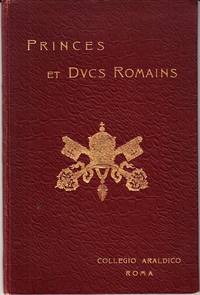
116954Rome Collège Héraldique 1906. 8vo. 43pp. With 6 full page plates in the pagination. Publ. dark red embossed paper boards gilt front board with front wrapper preserved. Front fly-leaf loose. The plates with the heraldic arms of the families. Roman nobility from d’Archery to Veralli. hardcover
1390700631.Gpaperback. Good. Access codes and supplements are not guaranteed with used items. May be an ex-library book. paperback
0428942822.Ghardcover. Good. Access codes and supplements are not guaranteed with used items. May be an ex-library book. hardcover
0548567204.Gpaperback. Good. Access codes and supplements are not guaranteed with used items. May be an ex-library book. paperback
0428881378.Ghardcover. Good. Access codes and supplements are not guaranteed with used items. May be an ex-library book. hardcover
0282944826.Gpaperback. Good. Access codes and supplements are not guaranteed with used items. May be an ex-library book. paperback
0259264717.Gpaperback. Good. Access codes and supplements are not guaranteed with used items. May be an ex-library book. paperback
0282529853.Gpaperback. Good. Access codes and supplements are not guaranteed with used items. May be an ex-library book. paperback
1390639819.Gpaperback. Good. Access codes and supplements are not guaranteed with used items. May be an ex-library book. paperback
1163913952.Gpaperback. Good. Access codes and supplements are not guaranteed with used items. May be an ex-library book. paperback
0428285627.Gpaperback. Good. Access codes and supplements are not guaranteed with used items. May be an ex-library book. paperback