2 770 résultats
New Turkish Paperback. 4to. (28 x 20 cm). Papers in Turkish (with various Turkic / Turkish dialects in Latin and Cyrillic script). 1086 p., b/w ills. 8. Uluslararasi Türk Dünyasi Sosyal Bilmler Kongresi: Türk dünyasinda muhtemel is birligi alanlari. 9-13 Haziran 2010, Celalabat-Kirgizistan. Sempozyum tebligleri. Many proceedings under these main chapters: Geography, religion, education, law, economics, art history, history, linguistics and philology.
National Jewish Monthly, No Date (1941? ) Paper Wrappers, 8vo, 3 pages. Holocaust era. "Reprinted from the National Jewish monthly. " OCLC lists only one copy worldwide (Yale) . Very good condition. (P-2)
Very Good Turkish, Ottoman (1500-1928) Paperback. 12mo. (16 x 12 cm). In Ottoman script. 39 p. Ev hanimlarina mahsûs alafranga pastacilik. Therein no definite information about born and death dates of Rabiha Hanim. Her grandfather was Kani Pasha (One of Tanzimat period pashas) grandmother was Russian. Her father Rifat bey who was a diplomat Kani Pasazade Ahmet Rifat bey, (1844-1891), was one the Young Turks according to Mithat Cemal Kuntay (Avrupa'da dokuz Türk ihtilalcisi). Rabiha Hanim's first articles and writings about cookery and recipes appeared in 'Türk hayati' periodical in 1925-26 which published by Selanikli Fazli Necip. She wrote in this periodical for a short time, for the chapter under the title 'Sofra hayati' [i.e. Cuisine life]. This book by her includes 41 recipes of cake and dessert. It's not cataloged in any bibliography related to Ottoman cookery or other. Additionally, she wrote a French edition of this book in 1925 under the title of 'La bonne cuisine Turque, Facile et economique des Mets les plus Usites et Renommesdu Pays (107 recettes)'. Only one copy located in OCLC: 949551637 (Bogaziçi University Library).; Not in Özege.; Kut 34.; Özege Bagis Kitaplari Kat. 3601. First Edition. Extremely rare. This rare book includes 41 pastry recipes with their French names as well as add to their Turkish names. Rabia wrote a cookbook in French printed in 1925 titled 'La Bonne Cuisine Turque' in Istanbul according to Kut.
5761In folio, relié d'ép. pl. peau, rel à 5 nerfs, deux pièces de titre, un filet d'encadrement sur les plats, fleuron central repoussé sur chaque plat, coiffes bonnes, mors solides. Ouvrage peu manié, bien conservé, intérieur trés frais. 32 pp ; Impression du dictionnaire sur 2 col. (1 à 1624) ; Notes de David Hoeschel : 2 col. : 1 à 104 ; Index Rerum... 23 pp ; 2 p
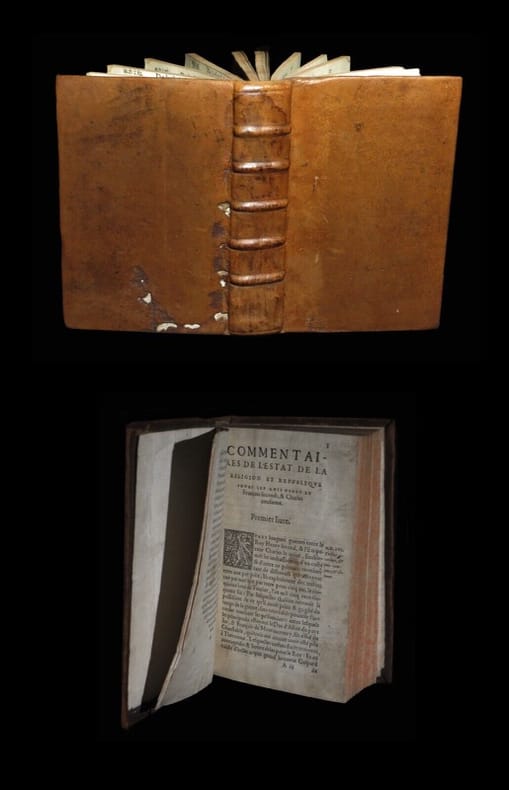
156525771[Page de titre absente] - S.l., s.é., 1565. Un vol. au format gd in-12 (171 x 115 mm) de 1 f. n.fol., 310 (x 2) pp. Reliure postérieure de pleine basane mouchetée blonde, plats jansénistes, dos à nerfs orné de filets à froid, tranches mouchetées.
Very Good Turkish, Ottoman (1500-1928) Original 1/4 leather bdg. Cr. 8vo. (20 x 14 cm). In Ottoman script. [5], [3], 357 p. Subhi Pasha who was the implementer of the reforms and a typical highbrow bureaucrat, appeared in various positions of the Ottoman bureaucracy. He was also father of Hamdullah Subhi Tanriöver, (1885-1966) and first Turkish numismatist. He is also known for his special interest in books and antiquities. Sanayi-i Nefise School (Fine Arts Faculty) and the Müze-yi Humayun (Istanbul Archeology Museum) were established as a result of his efforts. He is brother of Samipasazade Sezai who was the author of the first Turkish novel as well. (Wikipedia). This book is the first volume of the early history of Islam, running from Mohammad to the death of 'Alî; the second volume, which was to continue up to the year 82 AH, has never been published. All published. Özege 6620.; GOW 369. First Edition.
Very Good Turkish, Ottoman (1500-1928) Original autograph letter signed by Lawyer Usmanbas sent to his daughter Fetânet Hanim who was sister of Turkish musician Ilhan Usmanbas, (1921-). 22x14 cm. In Ottoman script. 1 p. Full. Dated 26-7-[1]946. He mentions a lawsuit in detail.
Very Good Turkish, Ottoman (1500-1928) Original color manuscript calendar prepared on a fine special paper with 'ahar'. 36x22,5 cm. In Ottoman script (Turkish with Arabic letters). 2 p. Several ink stains on paper, chipped on extremities. A very good manuscript. It shows astronomic situations, locations of planets and stars, and climates in 1324 [AD 1908]. It starts with high praise to Sultan Abdülhamid II with an old style of color moon & crescent icon. Sealed by Mehmed Pasazâde A. Ihsan. On the verso of paper, can be seen detailed calendar and details of 'ruzname'. Written on 'printed' down of the paper, probably it's prepared for the printing, therefore it's understood that Ihsan and Refet were thinking to print this 'taqwim'. Prepared in the year of the Second Constitutional Regime (II. Mesrutiyet) which was Abdul Hamid II's fall came as a result of the 1908 Young Turk Revolution, and the Young Turks put the 1876 Constitution back into effect. It seems, it's prepared before fall of the Sultan, and for the present to the Sultan. The Second Constitutional Period spanned from 1908 until after World War I when the Ottoman Empire was dissolved. "The starting year of the Hijrî calendar (al-taqwim al-hijri), the fundamental Islamic lunar calendar still in use among Muslims until today, is 622 CE. Its beginning corresponds to the Hijra or emigration of Prophet Muhammed and his followers from Mecca to Medina. It is based on the revolution of the moon around the Earth and consists of twelve months of 29 or 30 days: Muharram (30), Safar (29), Rabî' al-awwal (30), Rabi' al-thani (29), Jumâda al-awwal (30), Jumâda al-thani (29), Rajab (30), Sha'ban (29), Ramadhan (30), Shawwal (29), Dhul-'l-qi'da (30) and Dhul-hijja (29 or 30). The lunar year consists of 354 days, which is 11 days less than the solar year, and every 33 years it falls one year behind the Gregorian calendar. The discrepancy with the solar year, which follows the seasons, meant that Muslim countries also used the solar calendar, and some calendars drawn up by astronomers include the dates according to the European Gregorian calendar named after Pope Gregory XIII in 1582. Ottoman Turkey used both the Islamic lunar calendar and a solar calendar known as the Rumî or Roman calendar, which was based on the Julian calendar introduced since the times of Julius Caesar in 46 BC. The Roman calendar was inherited from the Byzantines and was used by the Ottomans for the taxation of agricultural revenues. The year according to the Rumî or Julian calendar began on 1 March, and the Ottomans took the starting year to be that of the Hijra. To make up for the gain of 11 days made by the solar Rumî calendar over the Islamic calendar, a leap year was deducted from the Rumî calendar every 33 years. A rûzname is a set of tables giving the first days of the months in both the Islamic and Rumî calendars, the date on which the sun enters each sign of the zodiac, and eclipses of the sun and moon. Also known as takvîm-i dâimî (perpetual calendar) or takvîm-i devr-i dâim (calendar of perpetual motion), the ruzname were permanently valid whatever the year. There is no evidence that such calendars were produced in pre-Ottoman times, and they may, therefore, be regarded as a type unique to Ottoman Turkey.". (Source: Glances on Calendars and Almanacs in the Islamic Civilisation by Salim Ayduz).
Very Good Turkish, Ottoman (1500-1928) Handsome fine contemporary brown half-leather bindings. Six raised bands to spine, title, and issue numbers gilt lettered, floral decorations in compartments. 4to. (30 x 24 cm). In Ottoman script (Old Turkish with Arabic letters) and French. All pages with illustrations in text or full-page illustrations, all numbers with an Islamic numbering system, reversed collation, with two title pages: Ottoman recto and in French verso, numbers 35, 41, 44, 45 with title pages in color. Rare poster is coming with the set inside the volumes as a supplement to the magazine. Extremely rare togetherness of the complete set of 130 issues of the Ottoman Turkish-French satirical magazine "Kalem", richly illustrated with thousands of attractive illustrations and cartoons, started its publication life with the end of Sultan Abdulhamid II's repression regime in 1908. The collection provides an invaluable resource, reflecting the changes in society after the Second Constitutional Revolution in New Ottoman State. The magazine was published weekly in 130 numbers between 21 August 1324 (3 September 1908) and 16 June 1327 (29 June 1911), starting immediately after the Second Ottoman Constitutional Revolution. The magazine was a mixture of satire and a saloon magazine, focusing on politics, social life, and revolution. The only continuously running part of the magazine was Haftalik Dedikodu (Weekly Gossip). The founders of the magazine were Salah (Selah) Cimcoz (1875-1947), a Turkish politician, lawyer, and owner of Kalem Newspaper, and Celal Esat Arseven (1876-1971) a Turkish painter, writer, and parliamentarian. He was the first to introduce the history of art and urbanistic architecture to Turkey. Duman 1080.; Only one complete copy survive in institutions worldwide in OCLC 472569754 (Bibliothèque nationale de France, BnF). (Source: References: Tobias Heinzelmann, Die Balkankrise in der osmanischen Karikatur).
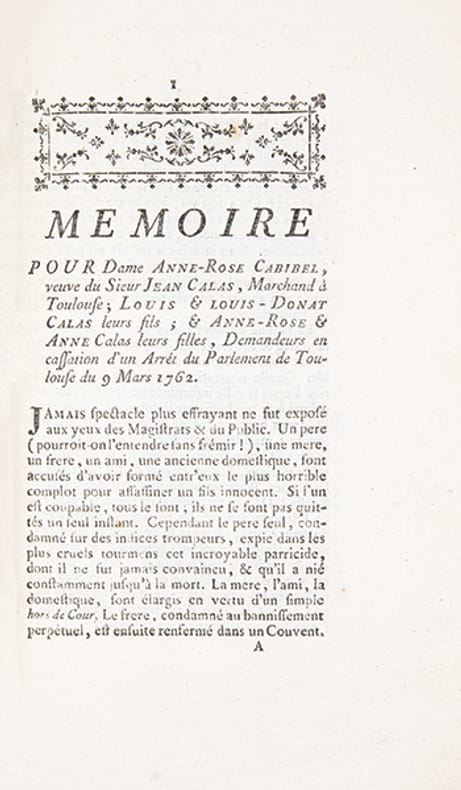
87638A Nancy, chez Valleyre pere, 1763, ensemble de textes reliés dans 1 volume in-8 de 125x200 mm environ, (1) f., 15, 43, 8, 16, 32, 32, 56 pages, (1) f. Reliure plein veau marbré fauve, dos à 5 nerfs portant titres dorés sur pièces de titre en maroquin bordeaux, orné de caissons à fleurons et motifs dorés, coupes dorées, gardes marbrées, tranches rouges, un ex-libris sur le premier contreplat. Quelques rousseurs et pages brunies, coins émoussés, petit manque de cuir sur un mors, sinon bon état.
38812Ensemble de 7 pièces reliées en un volume in-8 (214 x 134 mm), demi-veau marbré, dos à cinq nerfs filetés or richement orné de compartiments fleuronnés et cloisonnés, palettes en tête et pied, pièce de titre de maroquin bordeaux (reliure moderne signée Laurenchet, dans le goût de l'époque).
Very Good Russian Original sheet music. Folio. (33 x 26 cm). In Russian and German. 17 p. Musical scores with fine illustrated cover. Tape on spine. Water stains on pages. Otherwise a good copy. [SHEET MUSIC] Geisha [= Die Geisha]. Muz. Sidney Djonsa (Sidney Jones). (Selection). The Geisha, a story of a tea house is an Edwardian musical comedy in two acts. The score was composed by Sidney Jones to a libretto by Owen Hall, with lyrics by Harry Greenbank. Additional songs were written by Lionel Monckton and James Philp. The Geisha opened in 1896 at Daly's Theatre in London's West End, produced by George Edwardes. The original production had the second longest run of any musical up to that time. The cast starred Marie Tempest and C. Hayden Coffin, with dancer Letty Lind and comic Huntley Wright. The show was an immediate success abroad, with an 1896 production in New York and numerous tours and productions in Europe and beyond. It continued to be popular until World War II and even beyond to some degree. The most famous song from the show is "The Amorous Goldfish". Stmped by A. Comendinger who was a legendary musical publisher in Constantinople in 19th and 20th century. This is a rare Russian Edition. This "selected" edition is not in OCLC.
Very Good Turkish, Ottoman (1500-1928) Original sheet music. Folio. (35 x 25 cm). In Ottoman script. [4] p., scores. [SHEET MUSIC] Muhayyer Naksî Agir Semâî - Muhayyer Naksî Yürük Semâî. Darü'l-Elhan Külliyati No.3 [The House of Melodies Collected Works No. 3]. [With original stamp of Samli Iskender -Kudmanizâde-]. Darülelhan (The House of Melodies) is not a real publishinghouse but a music school established at 10 January 1917, in Istanbul. The principle aim in the establishment of this school was to follow a scientific way in the education and teaching of musical arts, and introduce the old pieces by printing them. Some courses on Turkish and Western music should be given in a course of four years. This school closed in the days of Independence War and reopened by the attempts of Haydar Beg the mayor of Istanbul in 1923. On this publications, it's written usually "Our establishment started to publish the beautiful pieces inhereted from the most famous Turkish composers in order to conserve them. These publications are checked by a scientifically responsible council and found ass quite correct. Up to now, the pieces contining Setarabân, Mâye, Evç-ârâ, Acem Asirân, Müste'ar, Nevâ, Gulizâr, Beyâti, Mâhur, Ferâhfezâ, Ferâhnâk, Nev-eser, Nühüft and Arazbâr Buselik tones, havng the number 72 have already been put on sale for 5 Kurus at the magazine of Samli Iskender in Bayezid Square". (Source: Music publications from Ottoman Empire up to today, 1876-1986.; ALANER, BÜLENT). First Semâîs' composer is unknown, second one is by Eyyûbî Bekir Aga. He was an early classical Turkish composers. Ahmed Hamdi Tanpinar's devoted his book 'Mahur Beste' to Eyyûbî Efendi and inspired by him. Darülelhan published 121 scores before 1928, this is the third one. Özege 3585. Not in OCLC. Extremely rare.
Very Good Turkish, Ottoman (1500-1928) Original sheet music. Folio. (35 x 25 cm). In Ottoman script. [4] p., scores. [SHEET MUSIC] Muhayyer Remel. Darü'l-Elhan Külliyati No. 7 [The House of Melodies Collected Works No. 7]. [With original personal stamp of Samli Iskender -Kudmanizâde-]. Darülelhan (The House of Melodies) is not a real publishinghouse but a music school established at 10 January 1917, in Istanbul. The principle aim in the establishment of this school was to follow a scientific way in the education and teaching of musical arts, and introduce the old pieces by printing them. Some courses on Turkish and Western music should be given in a course of four years. This school closed in the days of Independence War and reopened by the attempts of Haydar Beg the mayor of Istanbul in 1923. On this publications, it's written usually "Our establishment started to publish the beautiful pieces inhereted from the most famous Turkish composers in order to conserve them. These publications are checked by a scientifically responsible council and found ass quite correct. Up to now, the pieces contining Setarabân, Mâye, Evç-ârâ, Acem Asirân, Müste'ar, Nevâ, Gulizâr, Beyâti, Mâhur, Ferâhfezâ, Ferâhnâk, Nev-eser, Nühüft and Arazbâr Buselik tones, havng the number 72 have already been put on sale for 5 Kurus at the magazine of Samli Iskender in Bayezid Square". (Source: Music publications from Ottoman Empire up to today, 1876-1986.; ALANER, BÜLENT). Almost known nothing for the life of Halil Efendi. There are four compositions with their lyrics up to now. Darülelhan published 121 scores before 1928, this is the seventh one. Özege 3585. Not in OCLC. Extremely rare.
Very Good Turkish, Ottoman (1500-1928) Original sheet music. Folio. (35 x 25 cm). In Ottoman script. [4] p., scores. [SHEET MUSIC] Sedarabân Mürebb' Zincir ikâ'inda. Darü'l-Elhan Külliyati No. 1. Darülelhan (The House of Melodies) is not a real publishinghouse but a music school established at 10 January 1917, in Istanbul. The principle aim in the establishment of this school was to follow a scientific way in the education and teaching of musical arts, and introduce the old pieces by printing them. Some courses on Turkish and Western music should be given in a course of four years. This school closed in the days of Independence War and reopened by the attempts of Haydar Beg the mayor of Istanbul in 1923. On this publications, it's written usually "Our establishment started to publish the beautiful pieces inhereted from the most famous Turkish composers in order to conserve them. These publications are checked by a scientifically responsible council and found ass quite correct. Up to now, the pieces contining Setarabân, Mâye, Evç-ârâ, Acem Asirân, Müste'ar, Nevâ, Gulizâr, Beyâti, Mâhur, Ferâhfezâ, Ferâhnâk, Nev-eser, Nühüft and Arazbâr Buselik tones, havng the number 72 have already been put on sale for 5 Kurus at the magazine of Samli Iskender in Bayezid Square". (Source: Music publications from Ottoman Empire up to today, 1876-1986.; ALANER, BÜLENT). Haci Sadullah Aga was a composer and performer. He was the son of Hafiz Kerim Efendi, one of the muezzins of Fatih Mosque, and was one of the greatest composers of the reign of Sultan Selim III. In some sources, the information regarding his life have been jumbled together with other namesake composers of his era. Some of his works may have been confused with those of other namesake composers. Therefore, information regarding his life is not precise. As far as it is known, after his first education, he was accepted to Enderun Mektebi (The Palace School in which the devshirmeh [T.N. selected for the army] children were educated) and he was educated in literature and history and gained skill in javelin, Indian club and horse riding. He had served in the Russo-Turkish War in 1767. It is said that he received great attention from Selim III because he had a beautiful voice and he was a master singer (vocalist) and that he was the head of the fasil committee of the sultan for some time. Sadullah Aga, who is accepted as the most powerful composer of the school of Selim III, was also the 'musahib' (talk friend) of the sultan and later he became the head 'musahib'. He was an eloquent and cheerful person with a nice personality. He served as a music teacher at Enderun and served at the Palace during the reign of Mahmud II. Sadullah Agha followed the footsteps of Itrî and under the influence of Itrî he had integrated lyricism to his compositions, which are considered to be among the greatest pieces of the classical repertoire. He developed a style that is pertinent to classical rules but is more lyrical. His influence on all composers of his period can be seen. Around thirty works of Haci Sadullah Aga, who had composed hundreds of works, has reached the present day. Compositions and 'semaî' are dominant among these works. All of these works are secular and mostly literal works. His works contain a high level of lyricism and musicality. Especially all of his works that formed the 'Bayati-Araban' set are among the most beautiful examples of the classical music repertoire. Sadullah Aga, who is among the elite composers of Classical Turkish music, lived his last years by secluding to the residence given to him seven years before his death by the sultan and died at the age of seventy eight. He has many great songs in various tones. Darülelhan published 121 scores before 1928, this is the first one. Özege 3585. Not in OCLC. Extremely rare.
Very Good Turkish, Ottoman (1500-1928) Extremely rare and first and only edition of this Cairo imprint book that suggested a uniform Hegira calendar for all Muslim nations. It's work on chronology as well, including a fine guide to converting Hijri and Gregorian calendars. Ahmed Muhtar was born on 1 November 1839 to a Turkish family in Bursa in the Ottoman Empire and was educated in the Ottoman Military College in Istanbul. His father was merchant Halil Efendi. He eventually became professor and then governor of the school. In 1856, he served as an adjutant during the Crimean War. In 1862, he was a staff officer in the disastrous Montenegrin campaign. Between 1870 and 1871, he quelled rebellions in Yemen. He gained the titles of Pasha and Marshal and, in 1873, was made commander of the Second Army Corps, holding the position until 1876. During the 1875 uprisings in Bosnia and Herzegovina, he assumed control of the Turkish forces there. On the outbreak of the Russo-Turkish War, 1877-1878, he was sent to take charge of operations in Erzurum. Although the Russians ultimately defeated the Ottomans in the war, Muhtar's victories against them in the eastern front won him the title Gazi ("The Victorious"). In 1879, Ahmed Muhtar Pasha was appointed the commander of the Ottoman Empire's frontier with Greece, before being sent in 1885 to serve as the Ottoman High Commissioner in Egypt. The rare bilingual first edition of work on chronology. It advocates a uniform solar Hejra year from all Muslim nations. The well-known diplomat and scholar Ahmed Muhtar Pasha, first High Commissioner of the Porte in Egypt. Contemporary cloth bdg. with Ottoman lettered gilt on spine. Covers are saved inside, foxing on the front cover and chippings on extremities. Otherwise a good copy. 4to. (28 x 20 cm). In Ottoman script and Arabic. 72 p., 45 tables on 79 p. Özege 8163.; TBTK 1886.; Sarkis 399 & 1950.; Not in GAL.; GOW 378.; Tahir III 300. First Edition.
Full Title: "A BRIEF STATE OF THE PROVINCE OF PENNSYLVANIA In Which The Conduct of Their Assemblies for several Years past is impartially examined,and the true Cause of the continual Encroachments of the French displayed, more especially the secret Design of their late unwarrantable Invasion and Settlement upon the River Ohio. To which is annexed, As easy Plan for restoring Quiet in the public Measures of that Province, and defeating the ambitious Views of the French in time to come. In a Letter from a Gentleman who has resided many years in Pennsylvania to his Friend in London. Second Edition." 45 p. [Bound without the half-title]. Small 8vo. Nice late 19th century half leather pamphlet binder, front board detached. Text in unusually fine condition. An in-depth look into Pennsylvania politics at the time of the French and Indian War, and the relationships between the Quakers, Germans and "Menonists", English, French and Moravians in the young colony. "Smith's Brief State with its laments over the capture by the Quakers of the 'ignorant German vote' through the help of their 'hireling printer' (Christopher Saur), and its demand that the Germans be denied the vote 'till they have sufficient knowledge of our language and constitution.'" Howes S-686; Sabin 84590. **PRICE JUST REDUCED! PA 61 L Stk
410p. 8vo. Original full green cloth binding. Hinges weak. The discussion includes topics such as: awakening = moderation 1785-1826; progression = abstinence 1826-1851; taxation; culmination = prohibi tion; Internal Revenue Act; moral movements since the Civil War; legal and political measures since The War; ground won and ground of conflict; the alleged failures of prohibition; the lessons of expe rience; a temperance constituency; Prohibition Party Movement; Etc. PHREN 2
24020923like new. unknown
24020923-nnew. unknown
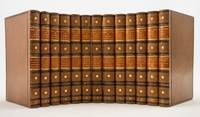
1843ST20896London: William Pickering and John W. Parker and Son 1843-57. Second Edition of volumes I III V VI VIII XI XV XVII. Third Edition of volume II. FIRST EDITIONS of the other 13 volumes. 170 x 103 mm. 6 3/4 x 4 1/8". 22 volumes bound as 13. <br/> Pleasing contemporary calf by Leighton stamp-signed on verso of front flyleaf covers framed with a double blind rule raised bands spine compartments with a single gilt sun tool russet morocco labels lettered in gilt all edges sprinkled. First volume with one plate depicting the brain and one illustration in the text depicting the brains of different animals.<br /> Final volume with an ad for the complete series by John W. Parker. A few light scratches scuffs and spots to leather each volume with offset from ribbon page marker other trivial defects but a fine and attractive set--extraordinarily fresh and clean internally in bindings essentially without wear.<br/> <br/> Containing a rarely seen complete run of 22 separate works in 13 volumes this attractive set represents the joint efforts of a female Victorian polymath and major publisher William Pickering to introduce the general public to a very wide range of subjects partly to contribute to general popular education and partly to alert the public to the need for reform. Caroline Cornwallis 1786-1858 was a writer scholar and feminist activist whose life-long self-directed course of study led her to explore subjects as diverse as mineralogy theology Tuscan law and the Ancient Egyptian language. In 1842 the first work in the "Small Books on Great Subjects" series appeared authored anonymously by Cornwallis she is named only as "A Pariah" and the editorship of the series is credited to "A Few Well-Wishers to Knowledge". Along with initiating and editing the series Cornwallis composed all but four of the books herself the second and third numbers were written by John Barlow #15 by Wilhelm von Humboldt and #16 by David Power. The works cover philosophy psychology chemistry Greek philosophy Christian history and theology biology law grammar geology politics and more and proved to be a great success in Britain and America. Some of the volumes are histories of general interest "A Brief View of Greek Philosophy up to the Age of Pericles" and "Christian Sects in the Nineteenth Century"; others are of significant scientific content "The Connection Between Physiology and Intellectual Philosophy" and "On Man’s Power Over Himself to Prevent or Control Insanity; still others are strongly reformist in thrust "On the Principles of Criminal Law" decrying the harshness of punitive Victorian laws and "On the Philosophy of Ragged Schools" dealing with the pressing issue of educating London's poor. Initially "Small Books on Great Subjects" was published by William Pickering but upon his 1853 bankruptcy John W. Parker took over the series. Stray volumes of this series are readily available but complete sets especially in the condition seen here are much more difficult to find. William Pickering (and John W. Parker and Son) unknown
Paper wrappers, 12mo. 174 pages. OCLC lists ten copies worldwide. Very good conditi on. (PC-1)
0656491647.Ghardcover. Good. Access codes and supplements are not guaranteed with used items. May be an ex-library book. hardcover
1852113934London E. Wilson 1852. 1852 edition. Hardback. A good copy in the original cloth with printed-label to spine. Slight dust-dulling with minor rubbing toning and some light staining. Internally very good. Remains well-preserved overall; tight bright clean and strong. Scans on request. ; 672 pages; Description: 672 p. Subjects: Committee for Reform of the Board of Customs London. London, E. Wilson hardcover
0331224798.Ghardcover. Good. Access codes and supplements are not guaranteed with used items. May be an ex-library book. hardcover