Indigenous laborers; Aztec ruins;Biblio.com
37 résultats
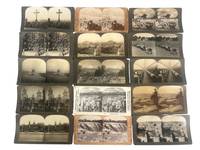
1900221191900. Archive of 15 stereoview photographs of Mexico published by the Keystone View Company around the turn of the twentieth century documenting Mexican urban architecture Indigenous labor archaeological sites and monumental landscapes during a period of modernization and expanding foreign visual interest in the country. Produced for the international stereograph market the images present Mexico through interconnected views of colonial civic grandeur rural labor systems and Indigenous historical sites reflecting contemporary American and European fascination with both modernization and ethnographic spectacle in Latin America. The archive documents visual and commercial systems of early photographic tourism and ethnographic representation through stereographic imagery printed captions and descriptive texts revealing how Mexico was interpreted and circulated to foreign audiences through mass-produced educational photography. At the same time the photographs preserve valuable visual evidence of everyday labor urban space transportation and architecture during the late Porfirian period.<br /> <br /> Archive consists of 15 original stereoview photographs measuring approximately 3.5 x 7 inches primarily silver gelatin prints mounted on curved gray or tan cardstock with printed captions and descriptive text on versos. Subjects include monumental architecture archaeological ruins agricultural labor transportation scenes and volcanic landscapes across Mexico. Several stereographs depict the historic center of Mexico City including views of the Metropolitan Cathedral with its twin bell towers and baroque façade the National Palace and distant perspectives of Chapultepec Castle framed by broad boulevards and landscaped public space. Rural and labor scenes include Indigenous and mestizo workers harvesting maguey plants for pulque production mule teams transporting water and figures posed beside adobe structures in village environments. One stereograph presents the terraces and volcanic slopes of Popocatépetl emphasizing the dramatic topography associated with Mexico's central highlands. Another depicts the pyramid complex at Cholula surmounted by a Catholic church accompanied by printed Keystone commentary interpreting the site as evidence of Christian conquest over Indigenous religion. The versos retain substantial printed explanatory text characteristic of Keystone educational stereographs combining geographic description historical narrative and ethnographic framing for consumers of stereoscopic travel imagery.<br /> <br /> The archive reflects the growing role of stereography in shaping international perceptions of Mexico during the late nineteenth and early twentieth centuries when photographic publishers marketed immersive visual experiences of foreign landscapes and cultures to middle-class audiences in the United States and Europe. Keystone's stereographs frequently combined documentary photography with interpretive narratives emphasizing archaeology modernization colonial history and rural labor contributing to broader visual constructions of Latin America during the Porfirian era. Particularly notable are the images juxtaposing Indigenous life Catholic architecture and pre-Columbian ruins which reveal contemporary tensions between modernization nationalism and colonial historical memory in visual culture. Minor expected wear and occasional toning to mounts; photographs generally sharp and well preserved with captions and versos legible throughout. Overall very good condition. A visually rich archive of early stereographic photography documenting Mexico's landscapes architecture and social life at the turn of the twentieth century. unknown
1821036-I1821. Bleistift, auf cremefarbenem Velin, links unten signiert ?E. Förster?, betitelt und datiert ?Rom 9 Apr. 1858?, rechts oben numeriert ?OHz 821.?. 23,4:28,7 cm. Auf Untersatz montiert. Provenienz: Mit Stempel der Münchner Künstlergesellschaft, nicht bei Lugt.
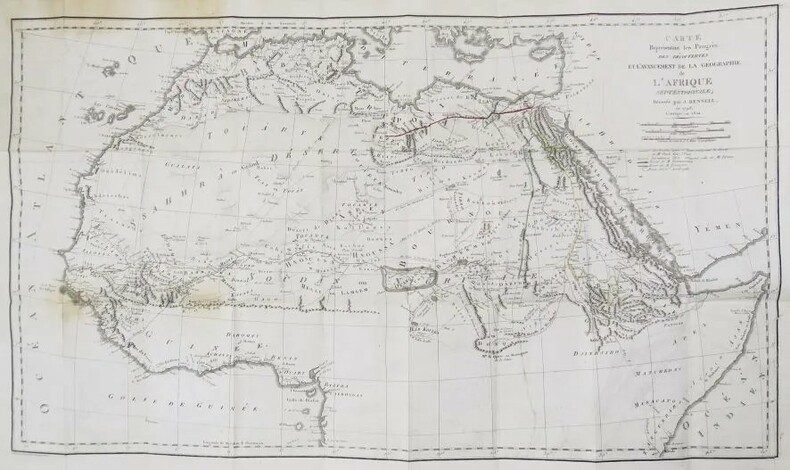
1803PHO-1651Paris, Dentu, An XI (1803). 2 parties (pagination continue) en un vol. in-8, basane fauve marbrée, dos lisse orné, p. de titre rouge, tr. rouges (reliure de l'époque). Reliure restaurée, illustré de 2 grandes cartes dépliantes.
1819037-I1819. Bleistift, auf cremefarbenem Velin, links unten signiert ?E. Förster?, betitelt und datiert ?15 Apr. 58?, rechts oben numeriert ?OHz 819.?. 23,4:28,7 cm. Auf Untersatz montiert. Provenienz: Mit Stempel der Münchner Künstlergesellschaft, nicht bei Lugt.
1817035-I1817. Bleistift, auf cremefarbenem Velin, links unten signiert ?E. Förster?, betitelt und datiert ?Rom 21 Apr. 1858?, rechts oben numeriert ?OHz 817.?. 23,4:28,7 cm. Papier vergilbt. Provenienz: Mit Stempel der Münchner Künstlergesellschaft, nicht bei Lugt.
19002111902160201130Book Moon Lake 1900. Soft Cover. Fine. Number of books: 2 Book Moon Lake paperback
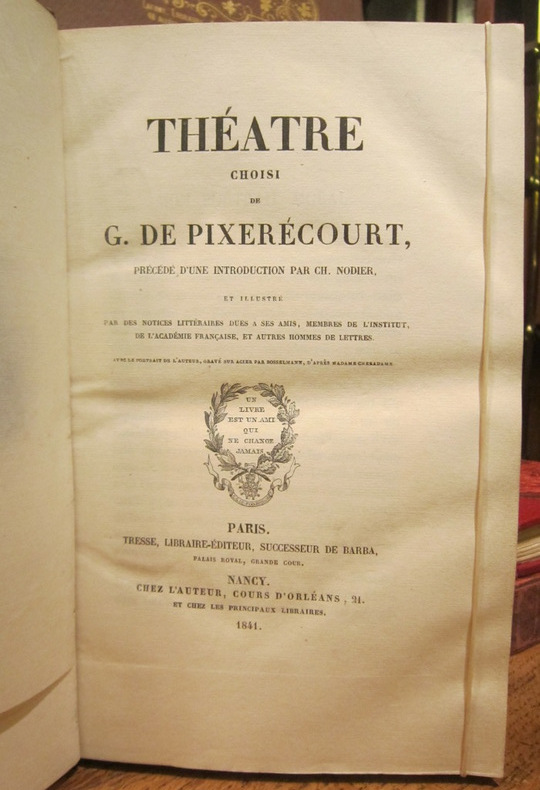
1841002830Paris et Nancy, Tresse, et Chez Lauteur, 1841
1822031-I1822. Bleistift, auf Bütten mit Wasserzeichen: H Collande, links unten bezeichnet, signiert und datiert ?Baja Wolfensberger Baja I. 6 December 1822?. 21,2:32 cm.
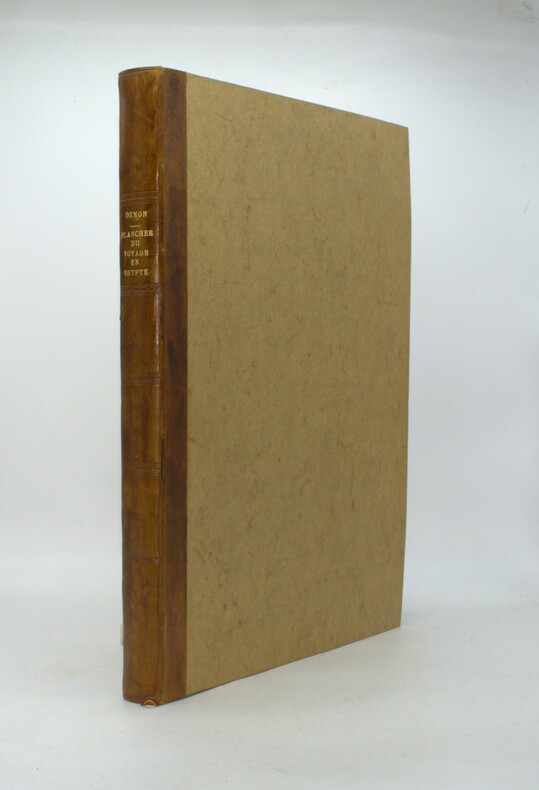
1802PHO-2073S.L (Paris), sd (1802), un volume folio (565x410mm) comprenant 131 planches (143, manque les pl. 10-14-24-27-33-41-54 bis -76-81-84-90-91). Demi basane fauve, auteur et titre au dos (reliure moderne), réparations sur les bordures de 3 planches. Quelques rousseurs
1830049-I1830. Bleistift, mit unregelmäßiger Bleistiftlinie umrandet, auf Velin, rechts unten bezeichnet und datiert ?Rom 1830?. 15:22,2 cm.
1829PHO-1464Paris, Henri Gaugain et Cie -Caillou., 1829. 2 volumes de texte in-8, et un atlas grand in-folio (440x600),illustré du portrait de Vivant Denon en frontispice gravé par Garnier d'après R. Lefèvre et de 143 planches dont deux cartes., relié demi-veau époque , dos lisse avec titre et tomaison , coins usés ,frottements aux plats , frottements, coiffes usées et traces de réparations (atlas) , peu de rousseurs dans le texte .
181214240PARIS divers editeurs 1812 in-folio demi-vélin un volume, reliure d'époque demi-vélin vert pomme in-folio à coins (half binding green vellum in-folio with corners) (25 x 33 cm), dos long muet (spine without raised band and without title) , coiffes supérieure et inférieure légèrement défraîchies (head and tail of the spine lightly faded), 1er plat marqués par l'humidité (cover with humidity mark) et insolé en marge, papier fantaisie vert gauffré aux plats (cover with imagination paper), orné d'une étiquette (pièce de titre) ex-libris rouge en forme de part de gateau avec l'arrondi vers le bas cerné d'un pointillé, d'un filet et d'une roulette dorée, ex-libris : "Melle SIFFAIT" doré (gilt title) au centre de l'étiquette, coins émoussés (corners blunt), tête lisse (top edge smooth), toutes tranches lisses (all smooth edges), livre de partitions pour le Piano Forte par divers Auteurs, 15 + 13+ 13 + 8 + 19 + 15 + 9 + 7 + 12 + 7 pages , sans date (1812 environ) Paris chez divers Editeurs,