1 821 résultats
198132769Paris Presses de la Cité 1981 in-8°
Presses de la Cité 1976, fort In-8 cartonnage éditeur sous jaquette, 494 pages. Très bon état
50030587410/18 Sans date. Pièce de théâtre en sept tableaux écrite par Jean-Paul Sartre en 1948 qui explore les dilemmes moraux et politiques d'un jeune intellectuel révolutionnaire Hugo confronté au compromis et à la violence dans un contexte de lutte politique. L'œuvre interroge la pureté des idéaux face aux nécessités de l'action et la relation entre moyens et fins dans l'engagement politique
194140531New York Editions de la Maison Française, s.d. [1941] 1 vol. broché brochure in-4 de (2) + 49 feuillets dactylographiés au recto sous couverture brune muette. Rare version dactylographiée dont il est difficile de déterminer si elle précède ou suit l'édition imprimée en 1941 par les Editions de la Maison Française à New York. On sait que ce texte célèbre, où Jacques Maritain analyse les causes de la défaite française de 1940, commença de circuler dans les milieux francophiles américains sous cette forme dactylographiée. Et c'est également ainsi qu'elle fut reproduite en France et en Suisse, l'édition réalisée en novembre 1942 par les Editions de Minuit n'ayant été pour ainsi dire pas diffusée. Notre exemplaire porte le cachet d'une collection privée à Genève. La B.N.F. possède un autre specimen de dactylographie, mais de 48 feuillets.
24483Paris, Plon, 1945. In-8 (190x120mm) broché, 246 p. Bon état général.
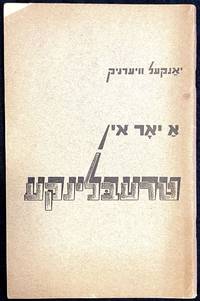
194443339Nyu-York: Farlag 1944. 1st American Edition. Paper Wrappers 8vo 61 pages. Includes illustrations. 22 cm. In Yiddish. Title translates as "A Year in Treblinka." Translation of Rok w Treblince. <br> <br> Jankiel Yankel Yaakov or Jacob Wiernik 1889-1972 was a "Polish-Jewish Holocaust survivor who was an influential figure in the Treblinka extermination camp resistance. He had been forced to work as a Sonderkommando slave worker there where an estimated 700000-900000 people mostly Jews were murdered. After his escape during the uprising of 2 August 1943 Wiernik reached Warsaw and joined the resistance. He also wrote a clandestine account of the camp's operation A Year in Treblinka which was copied and translated for printing in London and the US in English and Yiddish.<br> Following World War II Wiernik testified at Ludwig Fischer's trial in 1947. He left Poland emigrating first to Sweden and then to the new state of Israel. In 1961 he testified at Adolf Eichmann's trial in Jerusalem. He returned to Poland in 1964 to attend the opening of the Treblinka Memorial. Wiernik died in Israel in 1972 at the age of 83.<br> On his arrival at Treblinka aboard the Holocaust train from Warsaw Wiernik was selected to work as a Sonderkommando; otherwise he would have been immediately gassed and killed that day. Wiernik's first job with the Sonderkommando required him to drag corpses from the gas chambers to mass graves. He was traumatized by his experiences and later wrote in his book: 'It often happened that an arm or a leg fell off when we tied straps around them in order to drag the bodies away.'<br> He remembered the horrors of the enormous pyres where '10000 to 12000 corpses were cremated at one time.'<br> He was also encouraged by occasional scenes of brave resistance. In chapter 8 he describes seeing a naked woman escape the clutches of the guards and leap over a three-metre high barbed wire fence unscathed. When accosted by a Ukrainian guard Trawniki on the other side she wrestled his machine gun out of his grasp killed the guard and shot another guard before being killed herself.<br> When the SS recognized that Wiernik was a professional carpenter they put him to work constructing various camp structures including additional gas chambers. Given his skills Wiernik was not subjected to the same treatment as others and no longer had to handle dead bodies. He attributed his survival to being able to build structures needed in the camp. Given the shortage of skilled construction workers accustomed to the killing process Wiernik moved between the two divisions of the camp frequently. As a result he became an important contact between the camp zones when the revolt was being planned.<br> Wiernik escaped Treblinka during the revolt of the prisoners on 'a sizzling hot day' of August 2 1943. A shot fired into the air signaled that the revolt was on. Wiernik wrote that he 'grabbed some guns' and after spotting an opportunity to make a break for the woods an axe. A camp guard in pursuit shot Wiernik with a pistol but the bullet did not penetrate his skin. Wiernik said he turned around and killed his pursuer with the axe. Wiernik continued to Warsaw hiding in a freight train.<br> Wiernik assumed the name of Jan Smarzynski. He made contact with members of the Jewish underground working in the 'Aryan' part of Warsaw. They realized he was a valuable eyewitness of the extermination process in Treblinka. He was persuaded in late 1943 to write A Year in Treblinka in spite of his initial reluctance Wiernik had little education and was not a skilled writer.<br> He took part in the 1944 Warsaw Uprising fighting in the Armia Ludowa. After the end of World War II Wiernik initially remained in Poland in 1947 he testified in the trial of Ludwig Fischer. He emigrated to Sweden and afterwards to the newly founded state of Israel.<br> There in the 1950s Wiernik built a model of the Treblinka camp. It is displayed in the Ghetto Fighters' House museum in Israel. In 1961 Wiernik testified in the Eichmann trial in Israel.<br> Jankiel Wiernik published Rok w Treblince A Year in Treblinka in 1944 as a clandestine booklet. It was printed through the efforts of the Jewish National Committee Zydowski Komitet Narodowy ZKN Bund underground organizations of the remnants of Polish Jews and the Polish Council to Aid Jews Zegota by means of an underground printer organized by Ferdynand Arczynski. The circulation was estimated by Wladyslaw Bartoszewski as 2000 copies. It was sent through Polish underground channels to London and translated into English and Yiddish. It was also printed in the US by American representatives of the General Jewish Workers Union of Poland ie. this copy. The book recounts his experiences in the Treblinka extermination camp between 1942 and 1943" Wikipedia.<br> SUBJECTS: Holocaust Jewish 1939-1945 -- Poland. Jews -- Poland -- Biography. OCLC: 12246244. Some toning touch or corner wear to covers otherwise Very Good Condition. Nice copy of this very important contemporary account of Treblinka. B HOLO2-50-20A-XXLE-IMMBBE@-'gg. Nyu-York: Farlag unknown
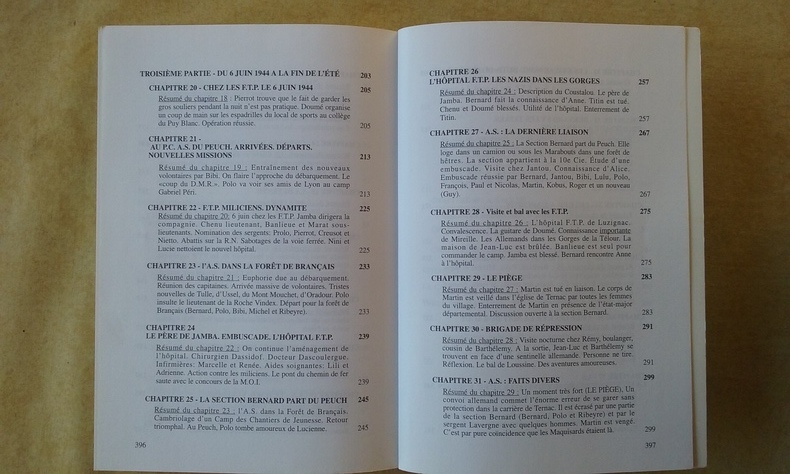
QWA-5830Riorges, (42), chez l'auteur, 1996, 399 p., in-8 br., illustrations photos, dessins, bon état (on joint une carte de visite manuscrite de l'auteur)
1949184357Amiot Dumont Amiot Dumont 1949, In-8 broché de 206 pages. Sous jaquette illustrée. Traduit de l'allemand par René BREIZ. Peu courant. Bon exemplaire
Amiot Dumont 1949, In-8 broché, couvertuire illustrée, 206 pages. Traduit de l'allemand par René BREIZ. Peu courant. Bon exemplaire
19711241164(Selbstverlag M. Brahms), 1971. 122 Seiten; Illustr.; 22 cm; fadengeh., illustr. Broschur.
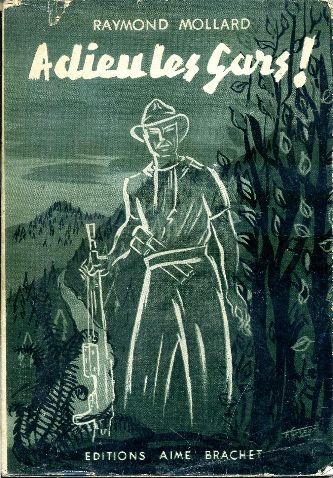
11493Editions Aimé Brachet (1954) - In-8 broché de 222 pages - Jaquette en couleurs illustrée par F. Crozat - Exemplaire en très bon état non coupé
149930871X.Gpaperback. Good. Access codes and supplements are not guaranteed with used items. May be an ex-library book. paperback
8vo., First Edition, with photographs in the text; red cloth, gilt back, a near fine copy in unclipped dustwrapper.
19321227551932 Descours et Cabaud, produits métallurgiques, S.A. capital 100 millions, Lyon - 1932 - In-8, cartonnage kaki avec titre en doré sur le 1er plat - 24 pages + 436 planches + LXXV planches
2015156223Gallimard Gallimard folio 2015. In-12 broché de 1144 pages. Très bon état
2009157310Gallimard Gallimard 2009. Très fort In-8 broché DE 931 pages. Rares passages discrètement soulignés au crayon de papier sinon Très bon état
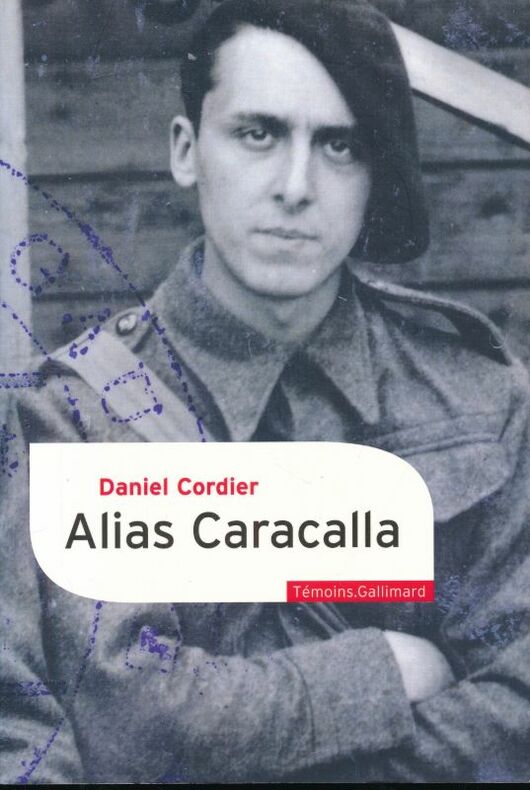
200998263Gallimard, coll. « Témoins » 2009 In-8 broché 22 cm sur 15. 931 pages. Pages écornées sinon bon état d’occasion.
Gallimard folio 2015. In-12 broché de 1144 pages. Très bon état
Gallimard 2009. Très fort In-8 broché, 931 pages. Rares passages discrètement soulignés au crayon de papier sinon Très bon état
2020LFA-126745674Un ouvrage de 1144 pages, format 110 x 180 mm, broché, publié en 2020, Editins Gallimard, collection "Folio", bon état
2009115940Gallimard Témoins 2009 Gallimard, Coll. Témoins, 2009, 931 p., broché, coins des plats un peu cornés, bon état pour le reste et intérieur bien propre.
2010116841Gallimard Témoins 2010 Gallimard, Coll. Témoins, 2010, 931 p., broché, coins des plats et haut du dos légèrement émoussés, bon état pour le reste et intérieur bien propre.
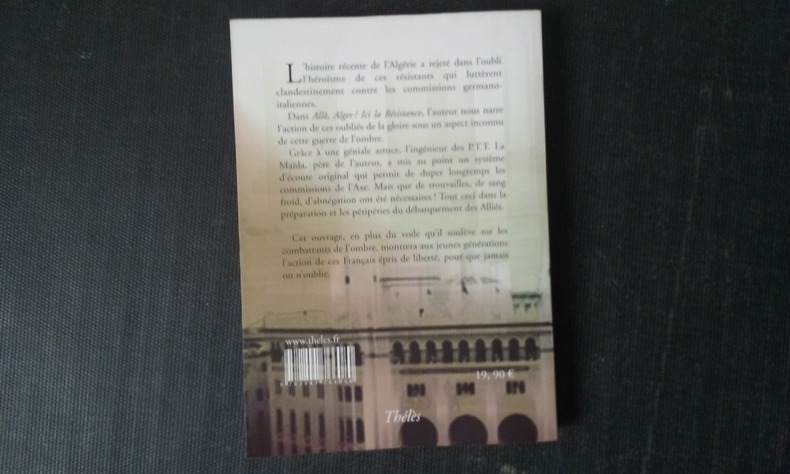
QWA-13181Thélès, 2006, in-8 br. (21 x 15), 309 p., illustrations photos, fac-similés, bon état.
31Publié par le Comité National des Ecrivains. "Achevé d'imprimer à Paris, sous l'occupation nazie, en mars 1944". In-8° broché. 93 pp. E.O.