2 100 résultats
36956Constantinople. J. Ludwigsohn, Sans date (vers 1920). In-12 oblong (17/25 cm) Broché. Couverture éditeur imprimée.
1913055948Rodosto & Constantinopoli: Manuscript & Typescript 3-9 October 1913. 1913. No Binding. Very Good. 8vo - over 7¾ - 9¾" tall. A one-page typed letter with autograph marginal notes and a two-page manuscript report in black ink. Both are written on bifolia papers with "Renage's Mill" watermark One is "Banknote Paper" the other is "Extra Strong". "Agenzia Consolare d'Italia Rodosto" & "Consolato Generale d'Italia in Constantinopoli" letterheads. 27x21 cm. The letter is in Italian report is in French. 1 p.; 2 p. Signed. Except for the horizontal centre-fold in very clean condition. A letter written by the Italian Consul General in Constantinople to the Italian chargé d'affaires accompanied by a historically significant report from the Consular Agent in Rodosto provides valuable first-hand information about the outbreak of epidemic diseases such as cholera and typhus among humans and anthrax and bubonic plague among animals in the Ottoman Empire in 1913. It also sheds light on the authorities' failure to address these public health crises while offering significant insights into the Muslim immigrants arriving in convoys to the region during the ongoing Balkan Wars. This is an invaluable firsthand account of the Sixth Cholera Pandemic in the Ottoman Empire "a time when the Empire's foundations were shaken by the Balkan War military defeats territorial losses the plight of refugees and immigrants and the dreadful calamity of the cholera epidemic between 1911 and 1913 during which no reliable official records exist regarding the exact number of cholera cases and deaths". Unat. The manuscript report opens by stating the number of direct death cases as rendered in the translation: "I believe it is my duty to inform you that on the 27th a case of cholera followed by death was reported in the town. The day before yesterday there were four other cases two of them fatal; yesterday four new ones two of which were fatal; today another case. So out of ten cases there have been five deaths." The letter goes on: "The other municipality requested a credit of 1000 piastres from Constantinople to take the measures required by the circumstances. Unfortunately no reply has been given and our local officials do not know to which authority they should turn." "Cholera is present in Kirklareli Quarante Églises Baba-Eski Babaeski à Vise Vize à Bounar-Hissar Pinarhisar à Luli Bourgaz Lüleburgaz à Ouzun Keupiru Uzunköprü and aound Krichan Kirikhan. In Tchorlou Çorlu typhus is wreaking havoc and smallpox is present here. Our entire region is devastated by an epizootic outbreak: smallpox and foot-and-mouth disease among the sheep anthrax and bubonic plague among the oxen and buffaloes. Money and serum have been requested from the Ministry of Agriculture but there has been no response. The chief veterinarian I spoke with assured me that it would be impossible to do anything until he has serum to treat the livestock and that if the epidemic disease continues to spread like this the livestock will be completely wiped out in our region." The Royal Consular Agent states that during and after the war between the Turks and Bulgarians also known as the Battle of Kirkkilise which was part of the Balkan Wars Muslim immigrants who continually flocked to Kirklareli and the surrounding areas brought cholera and other epidemic diseases to the region. "Regularly there are convoys of migrants who had left their villages in the surrounding areas of Adrianople Quarante Églises Lüleburgaz etc. before the Turco-Bulgarian War arriving from Anatolia by steamships. They are the ones who brought us cholera and the epidemic disease." He ended his manuscript report by stating there is no way to convince the authorities to have them disembark elsewhere outside the city or to prevent the arrival of these immigrants who are being directed utilizing forced requisitions to areas where cholera is spreading. This report was presented to the Italian chargé d'affaires with this letter additionally as below: "Healt <br/> <br/> Manuscript & Typescript, 3-9 October 1913. unknown
New English Paperback. Pbo. 4to. (29 x 23 cm). In German and Turkish. 155 p. Color and b/w ills. Auf der Suche nach Verscwundenen Zeiten: Die Ausgrabungen des Deutschen Archaelogischen Instituts in der Türkei.= Kayip zamanlarin pesinde: Alman Arkeoloji Enstitüsü Anadolu kazilari. [Exhibition catalogue]. Design by Samih Rifat. Scientific advisor: Harald Hauptmann. Anatolian excavations of German Archaeology Institute. ARCHEOLOGY Anatolian civilizations Excavations Corporate history German Archaeological Institute Hittites.
New New Turkish Original bdg. Dust wrapper. Roy. 8vo. (24 x 17 cm). In Turkish. 350 p., color and b/w ills., and 1 CD. History of the English Schools in Istanbul.
New English Original bdg. Atlas folio. (47 x 33 cm). Turkish text with figure captions in Turkish, German and English. 23, 128 p., 205 p. of plts., b/w ills. A very detailed and comprehensive survey of Constantinople's architecture, concentrating mainly on the religious. 150 copies were printed.
New English Paperback. Pbo. Mint. Cr. 8vo. (20 x 14 cm). With a CD. 102 p. B/w ills. This book refutes the thesis of Samuel Huntington's Clash of Civilizations. Instead, it supports the Alliance of Civilizations supervised by the United Nations. It describes religious-historical and cultural monuments in the region including Istanbul Cibali-Fener-Balat-Ayvansaray where three monotheistic religions live together under the peaceful conditions and they practice their religions. The thesis of Alliance of Civilizations has been examined theoretically within the context of the book. We hope that thesis of the Alliance of Civilizations, co-chaired by Prime Minister Recep Tayyip Erdogan and Spanish Prime Minister Zapatero under the umbrella of the United Nations, will make considerable contribution to the world peace.
Romanesque architecture. 320 pages. Illustrated. Table des Gravures and Table des Matières. Wear down joints of spine and cover extremities. Browning to page margins.
186068692Accurante J.P. Migne, 1 vol. in-4 reliure de l'époque demi-chagrin vert, dos à 4 nerfs dorés, Apud J.P. Migne, Petit-Montrouge, 1860, 2020 colonnes - Rappel du titre complet : Sancti Patris Nostri Joannis Scholastici, vulgo Climaci, Abbatis Montis Sina, Opera Omnia, Accedunt Cosmae Indicopleustae, necnon Constantini Diaconi CP., Agathiae Myrinaei, S. Dorothei, etc... Scripta quae exstant (1 Tome - Complet). Patrologiae Cursus completus. Series Graeca. Tomus LXXXVIII [ Patrologia Graeca Tome 88 - Cosmas Indicopleustès, Constantin le Diacre, Jean Climaque, Agathias de Myrina, Grégoire d'Antioche, Jean IV le Jeûneur, Dorothée l'Archimandrite ; Cosmas Indicopleustes, Constantine the Deacon, Joannes Climacus, Agathias Myrinæ, Gregory Bishop of Antioch, Joannes Jejunator (Patriarch John IV of Constantinople), Dorotheus the Archimandrite ]
Narrating the development and disappearance of the world's first war machine, this book reminds readers that much of the power of ancient empires was two-wheeled and horse-driven. Harnessed to other historians' broad-spectrum research on the causes of the end of the Bronze Age, Cotterell argues that, much like the later introduction of the stirrup, chariot technology dramatically recast battlefield strategy across the ancient world. Egyptians employed chariots as all-purpose fighting machines, while Roman chariots were more ceremonial, and Indian troops used theirs as archery platforms; Chinese engineers developed more efficient harnesses, permitting heavier cars. The author's comparative approach broadens the appeal of what would otherwise seem a narrow topic, but this account nevertheless behaves as a detailed military history. Particularly interesting for such scholarship, the author also discusses the chariot as a vehicle for modern popular culture; it aims to dispel the notion that chariots were simply horse-pulled tanks. Scholarly yet accessible, ; 344 pages
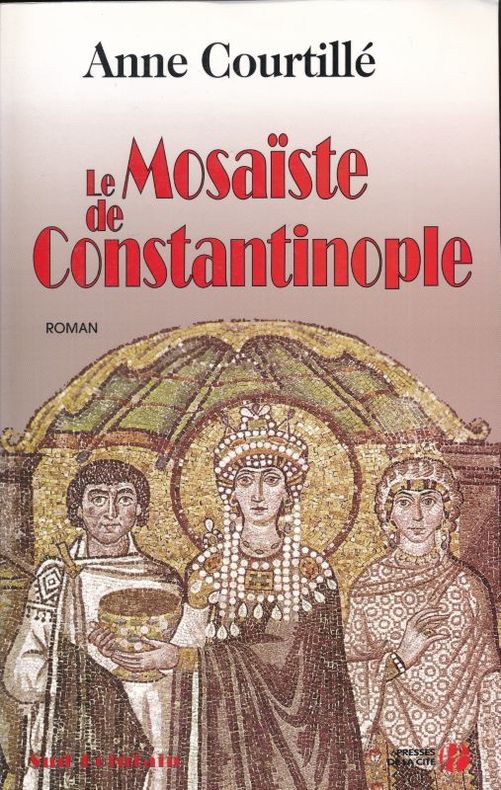
2004134080Presses de la cité Paris, Presses de la cité 2004. Fort in-8 broché de 438 pages. Très bon état
Paris, Presses de la cité 2004. Fort in-8 broché de 438 pages. Très bon état
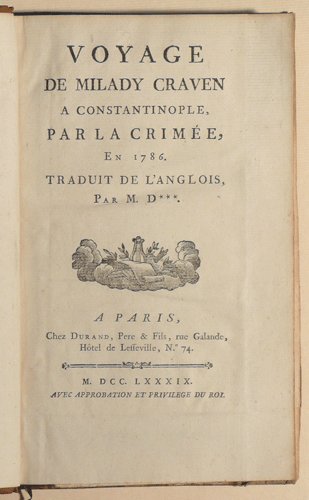
17890033301789 Paris, Durand, Père & Fils, 1789. In-8 (129 X 205 mm) demi-veau fauve marbré à petits coins de vélin ivoire, dos lisse orné d'un double filet doré en place des nerfs, caissons dorés, titre doré, tranches mouchetées en rouge (reliure de l'époque) ; faux-titre, titre, carte dépliante, 306 pages, (1) f. de privilège, 6 planches dépliantes.
1947vh3067Editions du Genet Broché 1947 In-12 (11,7 x 18 cm), broché, 282 pages, 1 des 980 exemplaires sur beau papier, texte rare, bien complet de la carte et du portrait ; petits incidents sur les bords des plats, légères pliures au dos, par ailleurs très bel exemplaire. Livraison a domicile (La Poste) ou en Mondial Relay sur simple demande.
New Italian Paperback. Roy. 8vo. (24 x 17 cm). In Italian. 198 p. Il reporter meravigliato: Le 'Memorie Meditérranée' di Edmondo De Amicis tra reportage, esotimo e narrativa. Prefazione Introduzione I. La letteratura italiana di viaggio tra XVIII e XIX secolo Il viaggio: alcune considerazioni preliminari La letteratura di viaggio tra immaginazione, storia e romanzo La letteratura per viaggiatori: le guide turistiche tra XVIII e XIX secolo Produzione e circolazione dei testi odeporici Elementi essenziali della letteratura di viaggio italiana tra Settecento e Otto-cento II. Edmondo De Amicis romanziere e reporter De Amicis: uno scrittore dal "multiforme ingegno" La scuola nei romanzi di De Amicis e l'impegno socialista De Amicis viaggiatore e reporter Stile e fortuna editoriale dei libri di viaggio deamicisiani III. Spagna Dalle lettere per «La Nazione» al libro Barcellona Madrid L'Andalusia: primo esempio deamicisiano di resoconto esotico IV. Marocco e Costantinopoli De Amicis e l'Orientalismo Il Marocco di De Amicis Un italiano a Tangeri Costantinopoli: un'introduzione L'arrivo a Costantinopoli e il ponte di Galata Immagine di femminilità turca Lo sguardo degli illustratori: Stefano Ussi e Cesare Biseo V. Ricordi d'un viag-gio in Sicilia Introduzione Un precedente: L'esercito italiano durante il cole-ra del 1867 Caratteristiche generali di Ricordi d'un viaggio in Sicilia Conclu-sioni Antologia Testi tratti da Spagna Testi tratti da Marocco Testi tratti da Costantinopoli Testi tratti da Ricordi d'un viaggio in Sicilia Illustrazioni Bi-bliografia Glossario.
New English Paperback. Pbo. Mint. Large 8vo. (22 x 22 cm). In Turkish. Color ills. [46], [1] p. Cumhur Koraltürk. Vapurlar ve Istanbul. [Exhibition catalogue]. 17-24 Mart 2008, IDO (Sirketi Hayriye) Sanat Galerisi.
Fine English Paperback. Folio. (33 x 23 cm). In English, German, and Turkish. 135 p., color and b/w ills. 3000 copies were printed. Istanbul. The city where faiths meet; all together and side by side.= Istanbul. Eine Stadt der Glaubensbegegnungen; Gemeinsam und miteinander.= Istanbul. Inançlarin bulustugu kent; birlikte ve yanyana. [Exhibiton catalogue and symposium papers]. Photos by Ara Güler, Ani Çelik Arevyan, Kamil Firat, Manuel Çitak, Murat Germen, Orhan Cem Çetin. Texts by Afife Batur, Murat Ural.
New English Paperback. Folio. (33 x 23 cm). In English, German, and Turkish. 135 p., color and b/w ills. 3000 copies were printed. Istanbul. The city where faiths meet; all together and side by side.= Istanbul. Eine Stadt der Glaubensbegegnungen; Gemeinsam und miteinander.= Istanbul. Inançlarin bulustugu kent; birlikte ve yanyana. [Exhibiton catalogue and symposium papers]. Photos by Ara Güler, Ani Çelik Arevyan, Kamil Firat, Manuel Çitak, Murat Germen, Orhan Cem Çetin. Texts by Afife Batur, Murat Ural.
New English Paperback. 4to. (29 x 25 cm). In English and Turkish. [200] p., color and b/w ills. Dervishes and their belongings: Exhibit of Dervish Convent Objects Among Turkish Community, Maryland USA 2015.= Dervisler ve esyalari: Türk Dünyasi Tekke Objeleri Sergisi. [Exhibition catalogue].
New English Paperback. 4to. (29 x 24 cm). In English and Turkish. 650 p., color and b/w ills. Beyond looking at various moments in the city?s life from 1800 to 1955, the exhibition also considers the dynamic of Istanbul as a center of gravity attracting the monetary and intellectual wealth of empires to further knowledge of Byzantium, ultimately resulting in the emergence of Byzantine studies as a discipline. The accompanying volume brings together thirteen scholarly papers by Beatrice Daskas, Ceren Abi, Firuzan Melike Sumertas, Mertkan Karaca, Philipp Niewohner, Edhem Eldem, Pinar Aykac, Kerim Altug, Jean-Michel Spieser, Elena N. Boeck, Jonathan Bardill, Barbara Bessac and Remi Labrusse, focusing on archaeology, history, art history, architectural history, urbanism, museology, cultural heritage, as well as an explanatory introduction by the exhibition curator Brigitte Pitarakis.
New English Paperback. 4to. (29 x 24 cm). In English and Turkish. 384 p., color and b/w ills. The famous aphorism of Hippocrates-'life is short, art long'-stands at the heart of this exhibition, which examines the art and practice of healing in Byzantium from Roman times to the late Byzantine period. It traces the concurrent methods of healing-faith, magic, and rational medicine-from the foundations laid by Apollo and Asklepios, healers of antiquity, as well as Hippocrates and Dioscorides, the founders of rational medicine. The fascinating coexistence of a belief in demons as the primary cause of illness and a rational perception of disease, grounded in Hippocratic teachings, come together in the protagonists of the "art of healing"-the physicians, druggists, saints, holy men, and magicians who healed the sick. The daily rituals involved in maintaining and pursuing well-being, protecting against demons, purifying the body and soul offer a glimpse into the daily life of the Byzantines. The exhibition catalogue illustrates the influence of Byzantium's ancient cultural heritage on religious and rational thought as well as contemporary scientific developments and innovations from around the Mediterranean. The catalogue is one of the most updated and extensive publication on the history and art of healing in Byzantium with essays written by the acclaimed academics and with various works, some of them being published for the first time. Contents; Preface; Dream Healing: From Asklepios to the Physician Saints, Vincent Déroche; Healing Miracles of Christ and the Saints, Nancy P. Sevcenko; Light, Water, and Wondrous Creatures: Supernatural Forces for Healing, Brigitte Pitarakis; Water and Healing in Constantinople Reading the Architectural Remains, Robert G. Ousterhout; Constantinople: City of Miraculous Healings, Alice-Mary Talbot; Medical Arts, Erudition, and Practice in the Byzantine Capital, Marie-Hélène Congourdeau; Contextualizing the Art of Healing by Byzantine Physicians, Petros Bouras-Vallianatos; Between the Past and the East Symeon Seth's Nutritional Advice to Michael VII Doukas, Frederick Lauritzen; The Manuscript Tradition of Dioscorides' De Materia Medica from Byzantium to the Arabs, Marie Cronier; Dioscorides and Beyond Imported Medicinal Plants in the Byzantine Empire, Koray Durak; Empowering Healing: Substances, Senses, and Rituals Brigitte Pitarakis; The Embodied Self in Byzantine Culture, Christos Merantzas; Catalogue; Bibliography; Photographic Credits; Map. ISBN: 9786054642427. BYZANTIUM History of medicine History of art Christianity Healing.
New English Paperback. 4to. (28 x 22 cm). In Turkish. 119 p., color ills. Kemankes. Türk Okçulugu Sergisi. [Exhibition catalogue]. Traditional Turkish archery exhibition.
New Turkish Paperback. 4to. (28 x 22 cm). In Turkish and Bosnian. 103, [1] p., color ills. Kemankes. Türk Okçulugu Sergisi.= Izlozba Turskog Strelicarstva. [Exhibition catalogue]. Zemaljski Bosne i Hercegovine, Sarajevo 2017.
New English Paperback. Pbo. 4to. (27 x 24 cm). In English. 311 p., color ills. Museum, and showed how the Ottoman-European relationships and political events has reflected in Arts, a theme common with the previously held exhibition entitled From the Medicis to the Savoias, Ottoman Splendour in Florentine Collections. Along with being a rich art collection for the museums, the large number of portraits where the foreigners pose in Turkish costumes in their homeland after fighting with the Turks, showing how "Fear from the Turks" converted into a fascination, and the goods from the Ottomans that are either gained from wars, received as presents or bought, and the important role that they played in the European social life have always been interesting subjects for historians and other social researchers. In the exhibition, 92 oil paintings, landscapes and engravings, coming from different Museums in Central Europe (especially Slovenia) and private collections from England and Turkey, were displayed. The exhibition was made possible with the contributions of Credit Suisse. Contents: Vasko Simoniti, On the 'Turqueries'; Ales Arih, Foreword; Nazan Ölçer, Foreword; Hans-Ulrich Doering, Foreword; Christoph K. Neumann - Petr Stepanek, Ottoman-Habsburg relations in the 17th century; Stefan Yerasimos, Styrian dragomans in Istanbul; Gunsel Renda, The Ottoman Empire and Europe in the 17th century: Changing images; EdvilijoGardina, Alla Turca': The Tarsia Family of Koper in service for la Serenissima; Maximilian Grothaus "At the crossing of Orient and Occident: The Turquerie of Ptuj"; Polana Vidmar, Courage, power, beauty and luxury: The Vurberk gallery of 17th century paintings; Catalogue; Bibliography.
New English Paperback. Pbo. Large demy 8vo. (21 x 16 cm). In Turkish and Greek. 67, [6], 71 p., color and b/w ills. 20 dolar 20 kilo. Cumhuriyet tarihinin en büyük sürgün hikayelerinden biri.= 20 dolarya 20 kila. Mia ap tis megaliteres istories eksorias stin istoria tis Turkikis dimokratias. [Exhibition catalogue]. Catalogue of the exhibition covering the 1964 expulsion of Greeks nationals living in Turkey to Greece. SOCIAL HISTORY Greek Non-Muslim minority Exile Turkish nationalism Greeks of Turkey Karaman Istanbul Constantinople. First Edition.