2 100 résultats
New English Paperback. Demy 8vo. (21 x 15 cm). In English. 140 p. The construction of female citizenship through etiquette books: Turkey, 1930-1943. This book is an investigation into how the etiquette books of the early Republican period attempted to shape society in terms of class and gender issues. The analysis of the books, which are important tools to "civilize" society in both the public and private domains, is important because of their effects on the different dimensions of the period's discourse around citizenship. Through etiquette codes, the ideal citizen who would constitute the new privileged class of the Republic was to be constructed in accordance with the discourse of Westernization, but conspicuously adapted to local circumstances. Accordingly, not only the citizen's dress and deportment, but also the citizen's body and sexual life were to be completely renewed. On the other hand, while the books were defining the "acceptable" citizen, women were taken as an important measure of compliance. Thus, as the symbols of the new and modern life, women's appearance, manners, and all feminine pursuits became signifiers of the social status of modern Turkish men. Consequently, this book reveals that the class and gender dimensions of etiquette books are not independent of each other, but intersect and support one another.
New English Paperback. Pbo. Roy. 8vo. (24 x 17 cm). In French. 196 p., b/w plts. Istanbul slave: Slaves d'Istanbul de Byzance a nos jours. Introduction 1914 1915 1916 1917 1918 Index Fronts Les Détroits Caucase et la mer Noire Perse Irak Péninsule arabique Sinaï, Palestine et Syrie Afrique Côtes et îles méditerranéennes Fronts européens Index anthroponymique Index des unités navales Index thématique. Introduction générale Istanbul slave ? Première partie Byzance du Ve siècle à 1453 1. Bulgares à Byzance 1. Premiers contacts. Alliés, ennemis, réfugiés, ambassadeurs et négociants avant 863. 2. Le baptême de Boris (863). 3. Bulgares à Byzance après 863. 2. Serbes, Croates, Bosniaques et Russes à Byzance 1. Serbes. 2. Croates. 3. Bosniaques. 4. Russes. 3. Topographie slave de Byzance. 1. Tsarigrad, l¿inaccessible proie. Sièges et dévastations. 2. Géographie slave de Byzance. Deuxième partie Sujets du Sultan de 1453 à 1924. 4. L¿invisible presence (De 1453 au début du XIXe siècle) 1. Slaves d¿Istanbul 2. les témoignages des voyageurs. 3. Le regard des peintres. 5. Les Slaves ottomans et la question d¿Orient (1774-1878) 1. La crise d¿Orient et l¿éveil des Slaves. 2. La lente marche vers les indépendances. 3. Constantinople, première capitale bulgare.6. Slaves de Constantinople au XIXe siècle 1. Les Bulgares2. Polonais et Russes. 7. Entre tradition et modernité : sociabilités bulgares constantinopolitaines au XIXe siècle 1. Sociabilités traditionnelles. 2. Sociabilités nouvelles. 3. Modernité. 8. Slaves de Constantinople à la fin de l¿Empire ottoman (1878-1924) 1. Le congrès de Berlin et la naissance des Etats nationaux. 2. Slaves de Constantinople après 1878. 3. La crise macédonienne. 4. Guerres Balkaniques. 5. Première guerre mondiale. 6. Russes blancs, Russes rouges. 9. Topographie constantinopolitaine slave du XIXe siècle à 1924 1. Bulgares 2. Russes 3. Serbes et Monténégrins 4. Polonais Conclusion : Istanbul slave aujourd¿hui Bibliographie SelectiveIndex
New French Paperback. Pbo. Roy. 8vo. (24 x 17 cm). In French. 356 p. Lieux slaves d'Istanbul: Guide historique de 200 lieux sslaves de Byzance à nos jours réunis en 11 promenades. Sommaire Translittération et valeurs phonétiques Pourquoi un guide slave d'Istanbul ? Les Slaves d'Istanbul. Bref rappel historique I. Byzance Première promenade : Byzance slave II. Les Slaves du Sultan Deuxième promenade : Les lieux du pouvoir. Le sérail et le quartier de l'hippodrome Troisième promenade : Négociants, artisans et imprimeurs. Autour de Balkapan et de Tahtakale Quatrième promenade : Artisans et petit peuple. En allant vers le grand bazar Cinquième promenade : Religion, église et identité. Cibali et le Phanar Sixième promenade :Habiter et travailler. D'Ayvansaray à Kumkapi. Septième promenade : La tentation occidentale. Pera-Galata-Beyoglu. Huitième promenade : Pêcheurs, dignitaires et collèges. Le Bosphore. Neuvième promenade : Tisserands, séminaristes et réfugiés polonais. Üsküdar et Polonezköy. Dixième promenade : Haute bourgeoisie, écoles supérieures et exilés. Les îles des princes. III. Le temps des nationalités Onzième promenade : Des indépendances à 1924. Russes Les débuts de la Bulgarie indépendante. Polonais Serbes, Monténégrins, Dalmates, Croates, Tchèques Bibliographie Liste des cartes Index des lieux.
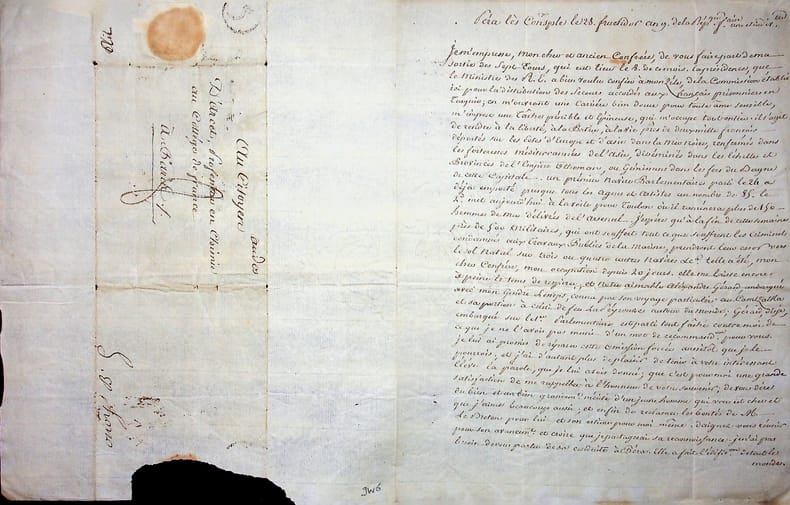
020002Pierre Ruffin (1742-1824), diplomate, consul de France à Constantinople, interprète des langues orientales. L.A.S., Péra [Constantinople], 28 fructidor an 9 [15 septembre 1801], 1p 1/2 in-4. Longue et importante lettre au chimiste Jean d'Arcet (1724-1801) dont il ne savait pas la mort (12 février 1801). Il n'y a aucun doute pour le destinataire car c'est adressé au professeur au collège de France. Très belle lettre au moment où les Français, prisonniers depuis 2 ou 3 ans, sont enfin libérés. « Je m'empresse, mon cher et ancien confrère, de vous faire part de ma sortie des Sept-Tours, qui eut lieu le 8 de ce mois. La présidence, que le ministre des R.E. a bien voulu confier à mon zèle, de la commission établie ici pour la distribution des secours accordés aux français prisonniers en Turquie ; en m'ouvrant une carrière bien douce pour une âme sensible, m'impose une tâche pénible et épineuse, qui m'occupe tout entier. Il s'agit de rendre à la liberté, à la Patrie, à la vie près de deux mille français déportés sur les côtes d'Europe et d'Asie dans la mer noire, renfermés dans les forteresses méditerranées de l'Asie, disséminés dans les échelles et Provinces de l'Empire Ottoman, ou gémissant dans les fers du Beyne de cette capitale. Un premier navire parlementaire parti le 24 a déjà emporté presque tous les agents et artistes au nombre de 85. Le 2e met aujourd'hui à la voile pour Toulon, où il ramènera plus de 150 hommes de mes délivrés de l'Arsenal. J'espère qu'à la fin de cette semaine près de 500 militaires, qui ont souffert tout ce que souffrent les criminels condamnés aux travaux publics de la Marine, prendront leur essor vers le sol natal sur trois ou quatre autres navires etc. Telle a été, mon cher confrère, mon occupation depuis 20 jours. Elle me laisse encore à peine le temps de respirer et notre aimable Alexandre Gérard, embarqué avec mon gendre [Barthélémy de] Lesseps, connu par son voyage particulier au Kamtchatka et sa portion à celui de feu La Peyrouse autour du monde ; Gérard, dis-je, embarqué sur le 1er parlementaire est parti tout fâché contre moi de ce que je ne l'avais pas muni d'un mot de recommandation pour vous. je lui ai promis de réparer cette omission forcée aussitôt que je le pourrais et j'ai d'autant plus de plaisir de tenir à votre intéressant élève la parole que je lui avais donné ; que c'est pour moi une grande satisfaction de me rappeler à l'honneur de votre souvenir ; de vous dire du bien et un bien grandement mérité d'un jeune homme qui vous est cher et que j'aime beaucoup aussi ; et enfin de réclamer les bontés de M. Le Breton pour lui et son estime pour moi-même. Daignez vous réunir pour son avancement et croire que je partagerai sa reconnaissance. Je n'ai pas besoin de vous parler de sa conduite à Péra. Elle a fait l'édification de tout le monde. Permettez-moi de placer ici mes très humbles remerciements à M. Le Breton, du bon accueil qu'il a fait à mon fils et de tous les services qu'il a bien voulu lui rendre. Vous apprendrez volontiers, mon cher confrère, la délivrance que j'ai été assez heureux pour obtenir, du citoyen Beauchamp, qui, après avoir couru les plus grands dangers, avait été détenu au château de Fanaraki à l'embouchure de la mer noire. Malheureusement, à ma sortie des Sept Tours, le citoyen Beauchamp se trouvait attaqué d'une maladie très grave. Je l'ai fait transporter à Péra accompagné de deux chirurgiens et d'un médecin français. Il n'est pas encore hors d'affaire, mais on espère beaucoup qu'il soutiendra les cruels assauts de la vomique, qu'il expertore depuis 15 jours ; et j'aime à me flatter que j'aurai le bonheur de me conserver à moi-même cet ami de 30 ans, et aux sciences un homme précieux à tous égards. Ne m'oubliez point, je vous en supplie, auprès de la famille et des amis du jeune Gérard, et soyez persuadé de la sincérité, de l'estime et de l'attachement avec lesquels je serai toute ma vie votre confrère et ami P. Ruffin ». La lettre mentionne donc Bart
New French Paperback. Pbo. Cr. 8vo. (20 x 14 cm). In French. 55 p., many b/w ills. Constantinople en 1890.
New English Paperback. Pbo. Oblong Roy. 8vo. (24 x 17 cm). In French. [viii], 51 p., 25 b/w photos. Constantinople en 1890. Texte présenté et annoté par Jacques Huré et illustré de photographies d'époque.
New English Paperback. Pbo. Demy 8vo. (21 x 15 cm). In French. 91, [1] p., b/w ills. Constantinople. Fin de siecle et la Mosquee verte a Brousse.
Fine English Paperback. Pbo. Roy. 8vo. (24 x 17 cm). In English. 93 p. Constantinople: The way it was and the Green Mosque at Bursa.
New English Original bdg. HC. 4to. (32 x 23 cm). In Turkish and French. 239, [1] p. 2000 copies were printed. Lettres pour la Turquie.= Türkiye için mektuplar. Translator: Prof. Dr. Sevim Sönmez. Prep. by Fikret N. Üçcan. 2000 copies were printed.
As New As New English Original bdg. with original dust wrapper. 157, [3] p. In English and Turkish. Fully color photos. Mint. Color photos of panoramic views, buildings, mosques, historical places and buildings, passages etc. in Beyoglu (Pera - Istanbul). Beyoglu Municipality.= Beyoglu Belediyesi. [Album of photographs]. Art consultant: Beste Gürsu.
New English Original cloth bdg. Oblong 4to. (28 x 31 cm). In English and Turkish. 131 p., color photos. 1000 copies were printed and all copies are numbered. This copy is 0845. (0845 / 1000). Signed and inscribed by Günes.
New English Original bdg. HC. 4to. (33 x 24 cm). In German and Turkish. B/w photos. 123 p. Mannheim sieht Beyoglu, Beyoglu sieht Mannheim.= Mannheim gözüyle Beyoglu, Beyoglu gözüyle Mannheim. [Exhibition catalogue]. PHOTOGRAPHY Istanbul Beyoglu Pera German relations.
New New Turkish Original bdg. Dust wrapper. 4to (29 x 24 cm). In Turkish. 479 p., color ills. Topkapi Sarayi. Preface by Filiz Çagman. Texts by Hülya Tezcan et alli.
Very Good French Original sepia-toned photograph printed in a period photograph paper. 19x25 cm. Descriptive text in French. Chipped and tear on margins. Iranian was born in 1890 in Constantinople, Istanbul. It is known that he established his studio in 1891 in Pera district of Constantinople - the center of Armenian cultural and political life. In 1895 he enters into partnership with another photographer by the name of Gugasyan. By 1900s the business seems to have wound down as the images marked with his studio signature don't exhibit any over elements of the new century. Of all the major Armenian studios from Istanbul, Iranian's photographs are the rarest, and less than 300 are known to have survived. Iranian's primary subject was the city of Constantinople, its picturesque landscape, architectural heritage, and the many types of artisans and workers that populated its streets. Using the latest photography techniques, which allowed for very rapid exposures, Iranian captured the bustle of the city streets with remarkable clarity. Teeming with life and movement these images have a remarkable immediacy and documentary veracity quite unlike similar views produced by other photographers of the period. The typical approach for many of Iranian's contemporaries such as Sebah & Joalier or Guillame Berggren was to achieve as clear a picture as possible with perfectly balanced compositions and highly visible details - the hallmark of a 'good' commercial photographer. In contrast, Iranian's street views are full of photographic 'ruptures' - blurred figures in movement, surprised glances of people caught unawares - which give his works the viscerality of snapshots. But above all, Iranian was a master at capturing the mood of a place. Catching the Ottoman capital on the brink of rapid transformation, the photographer aimed to record many of its ancient streets and quarters disappear or change the appearance. Thus, like the Parisian street photography of Atget, Iranian's images are 'nostalgic for the present' that is irrevocably slipping into the past. In his studio, the clientele had the choice of a large range of costumes and props through which the modern urbanite could slip into the role of some long-gone ethnic or street type and become a part of history. It is this sense of melancholy that gives Iranian's photographs their subtle emotional power. This is also perhaps the reason why he was ultimately not as successful as a commercial photographer. Modernity had captured the imagination of the people and the wistful romanticism of Iranian's markedly less spectacular images was fast going out of fashion. The small legacy he has left behind is nevertheless of significance in the history of Near-Easter photography. He was one of the rare Ottoman photographers with an individual and subjective approach, which deserves a proper evaluation.
1910053167Istanbul: Mihran Iranian. c. 1910 1910. No Binding. Very Good. 8vo - over 7¾ - 9¾" tall. Original sepia-toned photograph printed in a period photograph paper. 19x25 cm. Descriptive text in French. Chipped and tear on margins. Iranian was born in 1890 in Constantinople Istanbul. It is known that he established his studio in 1891 in Pera district of Constantinople - the center of Armenian cultural and political life. In 1895 he enters into partnership with another photographer by the name of Gugasyan. By 1900s the business seems to have wound down as the images marked with his studio signature don't exhibit any over elements of the new century. Of all the major Armenian studios from Istanbul Iranian's photographs are the rarest and less than 300 are known to have survived. Iranian's primary subject was the city of Constantinople its picturesque landscape architectural heritage and the many types of artisans and workers that populated its streets. Using the latest photography techniques which allowed for very rapid exposures Iranian captured the bustle of the city streets with remarkable clarity. Teeming with life and movement these images have a remarkable immediacy and documentary veracity quite unlike similar views produced by other photographers of the period. The typical approach for many of Iranian's contemporaries such as Sebah & Joalier or Guillame Berggren was to achieve as clear a picture as possible with perfectly balanced compositions and highly visible details - the hallmark of a 'good' commercial photographer. In contrast Iranian's street views are full of photographic 'ruptures' - blurred figures in movement surprised glances of people caught unawares - which give his works the viscerality of snapshots. But above all Iranian was a master at capturing the mood of a place. Catching the Ottoman capital on the brink of rapid transformation the photographer aimed to record many of its ancient streets and quarters disappear or change the appearance. Thus like the Parisian street photography of Atget Iranian's images are 'nostalgic for the present' that is irrevocably slipping into the past. In his studio the clientele had the choice of a large range of costumes and props through which the modern urbanite could slip into the role of some long-gone ethnic or street type and become a part of history. It is this sense of melancholy that gives Iranian's photographs their subtle emotional power. This is also perhaps the reason why he was ultimately not as successful as a commercial photographer. Modernity had captured the imagination of the people and the wistful romanticism of Iranian's markedly less spectacular images was fast going out of fashion. The small legacy he has left behind is nevertheless of significance in the history of Near-Easter photography. He was one of the rare Ottoman photographers with an individual and subjective approach which deserves a proper evaluation. <br/> <br/> Mihran Iranian., [c. 1910] unknown
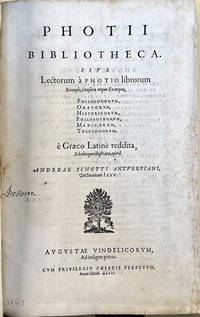
43456Augsburg: Christoph Mang. <p>Photius I Saint Patriarch of Constantinople ca. 810 - 893. Bibliotheca; sive lectorum a Photio librorum recensio censura atque excerpta. Latin translation with notes by Andreas Schott S.J. 28 555 37 pages including final blank. Augsburg: Christoph Mang 1606. 312 x 201 mm. Vellum ca. 1606 spine ends restored inner hinges cracking vellum over covers wrinkled. Infrequent light marginal dampstaining but very good. Booklabel of Frederic Huidekoper on rear pastedown. </p> <p> First Edition in Latin of the chief work by this 9th-century Byzantine scholar and Eastern Orthodox church leader consisting of a critical account of 280 works read by him many of which are now lost. The Greek original text was first published in 1600. "To Photios we are indebted for almost all we possess of Ctesias Memnon of Heraclea Conon the lost books of Diodorus Siculus and the lost writings of Arrian. Theology and ecclesiastical history are also very fully represented but poetry and ancient philosophy are almost entirely ignored. It seems that he did not think it necessary to deal with those authors with whom every well-educated man would naturally be familiar. The literary criticisms generally distinguished by keen and independent judgment and the excerpts vary considerably in length. The numerous biographical notes are probably taken from the work of Hesychius of Miletus" Wikipedia article on Photius. Hoffmann III 91; Sarton I 594. </p> . Christoph Mang unknown
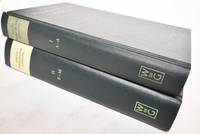
1998186332Berlin: De Gruyter 1998. Hardcover. VG Covers have very minor wear. Greek Text. Volumes I & II. Green cloth boards with light green lettering. Includes bibliographical references. De Gruyter hardcover
200036167<p>Contains the original text in medieval-Byzantine Greek polytonic script and translation plus comments and introduction in modern Greek. Soft cover 21 cm 512 pp.; net weight 625 gr.</p><p><i>Το πλÎον σημαντικό από τα ÎÏγα που συνÎγÏαψε ο λόγιος πατÏιάÏχης είναι η "Βιβλιοθήκη" συλλογή πεÏιλήψεων-σημειώσεων από βιβλία του ÎµÎ¸Î½Î¹ÎºÎ¿Ï ÎºÎ±Î¹ χÏÎ¹ÏƒÏ„Î¹Î±Î½Î¹ÎºÎ¿Ï Ï€Î±Ïελθόντος. Οι πεÏιλήψεις αυτÎÏ‚ φÎÏονται να γÏάφτηκαν για Îναν και μόνο αποδÎκτη σε κλίμα συγκινησιακά φοÏτισμÎνο. Î ÏοσφÎÏονται στον ΤαÏάσιο τον αγαπημÎνο αδελφό του Φωτίου ως χαÏιστήÏιο ενθÏμιο λίγο Ï€Ïιν από το διπλωματικό ταξίδι του συγγÏαφÎα στους ΑσσυÏίους. ΠαÏά τον εσωστÏεφή και Ï€Ïοσωπικό χαÏακτήÏα η "Βιβλιοθήκη" γνώÏισε ευÏεία διάδοση.</i></p><p><br /></p><p><b><i><b>IMPORTANT: The shipping cost is an important parameter of this order; it is NOT included in the price and depends on the actual weight and destination; you will have to approve it after the confirmation of the order. You may ask for an estimate before placing the order at: dem.siatras@gmail.com</i></b><br /></p> Kanakis paperback
103727<p>Facsimile reprint of the Leiden edition 1864. Two volumes. Edited by S. A. Naber. Hard cover 24 cm 458986 pp. ISBN: 978-960-400-377-8 set.</p><p>.</p><p>.</p><p>================================================</p><p><b>IMPORTANT: The shipping cost in not included in the price. You will have to approve it at confirmation of the order.</b></p> hardcover
198545063B. G. Teubner. 1985. Hardcover. Very Good in No Dust Jacket dust jacket. Scholar's name to ffep A. R. Littlewood. Foxing/dustsoiling to top of textblock.; Bibliotheca Scriptorum Graecorum Et Romanorum Teubneriana TEUBNER; 3; 182 pages . B. G. Teubner hardcover
198445062B. G. Teubner. 1984. Hardcover. Very Good in No Dust Jacket dust jacket. Scholar's name to ffep A. R. Littlewood. Light Foxing/dustsoiling to top of textblock.; Bibliotheca Scriptorum Graecorum Et Romanorum Teubneriana TEUBNER; 2; 253 pages . B. G. Teubner hardcover
198645064B. G. Teubner. 1986. Hardcover. Very Good in No Dust Jacket dust jacket. Scholar's name to ffep A. R. Littlewood. Foxing/dustsoiling to top of textblock.; Bibliotheca Scriptorum Graecorum Et Romanorum Teubneriana TEUBNER; 4; 190 pages . 3322002772 . B. G. Teubner hardcover
198345061B. G. Teubner. 1983. Hardcover. Very Good in No Dust Jacket dust jacket. Scholar's name to ffep A. R. Littlewood. Light Foxing/dustsoiling to top of textblock.; Bibliotheca Scriptorum Graecorum Et Romanorum Teubneriana TEUBNER; 1; 197 pages . B. G. Teubner hardcover
198745066B. G. Teubner. 1987. Hardcover. Very Good in No Dust Jacket dust jacket. Scholar's name to ffep A. R. Littlewood. Foxing/dustsoiling to top of textblock.; Bibliotheca Scriptorum Graecorum Et Romanorum Teubneriana TEUBNER; 6.1; 138 pages . 3322003612 . B. G. Teubner hardcover
198645065B. G. Teubner. 1986. Hardcover. Very Good in No Dust Jacket dust jacket. Scholar's name to ffep A. R. Littlewood. Foxing/dustsoiling to top of textblock.; Bibliotheca Scriptorum Graecorum Et Romanorum Teubneriana TEUBNER; 5; 265 pages . 3322003337 . B. G. Teubner hardcover