2 100 résultats
New English Paperback. Cr. 8vo. (20 x 14 cm). In Turkish. 304 p. Bizans'a yolculuk. [= Sailing through Byzantium]. TURKISH LITERATURE Memoirs Constantinople - Istanbul Byzantium.
Fine Turkish Paperback. Cr. 8vo. (20 x 14 cm). In Turkish. 287 p., ills. Bizans'ta günlük yasam: Konstantinopolis Bizans'in mücevheri. [= Everyday life in Byantium]. Translated by Bilgi Altinok. Ills. by Helen Nixon Fairfield.
Very Good Turkish Paperback. Roy. 8vo. (24 x 17 cm). In Turkish. 39 p. Bizde tarih haritaciligi ve kaynaklari üzerine bir arastirma. VIII. T.T.K. Kongresinde okunan bildiri. A fine source on Turkish / Islamic maps and mapmakers.
New Turkish Original bdg. HC. 4to. (28 x 21 cm). In Turkish. 223 p., color and b/w ills. Bize belediye baksin: Belediye hizmetlerinin karikatürlerle 100 yili, (1872-1972).
New English Original bdg. HC. 4to. (33 x 24 cm). In Turkish. 2 volumes set (255 p.; 165 p.), color ills. Bogazin incileri: Yalilar. 2 volumes set. Vol. 1: Asya yakasi Bogaz yalilari. Vol. 2: Avrupa yakasi Bogaz yalilari.
New Turkish Paperback. Roy. 8vo. (24 x 17 cm). In Turkish. 1 map, 118 p. Bogaziçi ve Istanbul (19. yüzyil sonu). [= Der Bosphor und Constantinopel]. Translated by Ümit Öztürk. Introduction: Semavi Eyice.
Fine English Paperback. Demy 8vo. (21 x 15 cm). In Turkish. 406, [2] p. Bogaziçi'nde tarih.
Very Good English Modern dark black cloth bdg. Cr. 8vo. (20 x 14 cm). In Armenian. 479, [1] p. Bolsagan Georki truakner. Yeruant Srmakeskhanlean. [= Notes from Istanbul life].
New New English Original bdg. Dust wrapper. 4to. (32 x 24 cm). In English. 188 p. Color and b/w ills. Book of buildings: Tezkiretü'l-bünyan and Tezkiretü'l-ebniye. Memoirs of Sinan the Architect. Book of Buildings is the complete critical edition of two important texts, Tezkeritü-‘l-Bünyan and Tezkeritü-‘l-Ebniye, based on Sinan’s own accounts of his life and works. The text is accompanied by scores of full color photographs of Sinan’s monuments, miniatures illustrating his works, and facsimiles of the original scripts. For the Ottoman Empire it is works of architecture across the extensive lands which it ruled for over six centuries that mark its cultural identity most indelibly. Today from Bosnia to Yemen, from Iraq to Algeria, and throughout nearly every part of the eastern Mediterranean we find mosques, hans, hamams, bridges, and other buildings representing the achievements of Ottoman civilization and keeping its memory alive. Astonishingly, the majority of these landscapes are the work of A single creative genius, the great master architect of the Ottoman golden age: Sinan. In a lifetime of nearly a century one man created the most outstanding masterpieces of Ottoman architecture, and no other eminent architect left even a fraction of his legacy in terms of sheer numbers. Cover Illustration: The only portrait of Mimar Sinan. Detail from a miniature in Tarih-I Sultan Süleyman, f.115b; Chester Beatty Library, MS413. 1579-1580. "I hope that those of pure heart who look upon my works from now until the end of time and doomsday will regard me kindly, and when they see the earnestness of my endeavour and dedication remember me in their prayers. May God’s will be done." Sinan.
Fine English Paperback. Roy. 8vo. (24 x 17 cm). In English. [vi], 86 p., unnumbered b/w plates. Bosphorus through the ages.
Very Good English Paperback. Pbo. Demy 8vo. (21 x 14 cm). In English. [80] p., color ills. Bosphorus thru the eyes of a tour guide.
New English Paperback. Cr. 8vov (20 x 14 cm). In English. 348 p., color ills. Bosphorus. The ultimate guide. This book is among the most accurate and elaborative work about the Bosphorus. Alongside the exclusive, unseen photos from the most famous waterside mansions, it provides up-to-date information about the Bosphorus from one side to another. Asian and European sides being the two main chapters of the book, it takes you on a step by step Bosphorus tour that covers not only the touristic spots, but also the hidden treasures of the city only known by the locals. The 348 page guidebook written by Saffet Emre Tonguc and Pat Yale after months of preparation is an excellent work devoted to the Bosphorus with the unforgettable stories of the historical buildings, the photos of the monuments bearing the glamour of the Bosphorus and the authentic, magical sight-seeing routes.
New Turkish Original bdg. HC. 4to. (31 x 22 cm). In Turkish. 278, [1] p., color and b/w ills. Buharli vapurlardan deniz otobüslerine Istanbul'da deniz ulasimi.
Fine English Paperback. Cr. 8vo. (19 x 13 cm). In Turkish. 30 p., b/w ills. First Edition. BulgarIstanbul: Filibe'den Sishane'ye. Bulgarian minorities in Istanbul - Constantinople in the period of Ottoman Empire. BALKANS Social history Bulgarians Non-Muslim minorities Ottoman history Istanbul - Constantinople Bulgaria.
Very Good Turkish Paperback. Cr. 8vo. (19 x 13 cm). In Turkish. 30 p., ills. BulgarIstanbul: Filibe'den Sishane'ye. ISBN: 9759664402. Bulgarian Istanbul with photos of architectural works.
1998LFA-126712785Publication trimestrielle de "La Diana", Société Historique et Archéologique du Forez : 94 pages, format 170 x 250 mm, brochée, illustrée
New English Paperback. Pbo. Demy 8vo. (21 x 14 cm). In English. 112 p., ills. By the mouth of Evliya Çelebi; Hagia Sophia. One of them is, of course, the world's biggest traveller Evliya Çelebi (1611-1682) The other one is the symbol of the conquest of Istanbul, the Hagia Sophia, which this traveller desciribed in his Seyahatname (the book of Travel) as "the Mecca of Christians". Both are full of mysteries; both have been researched a lot, written a lot and told a lot. And there is also that Evliya Celebi tells about Hagia Sophia in a more different way than anyone else has done. To read Seyyah-i Alem's (The Traveller of the World) Seyahatname means to ben friends with our great traveller prior to 400 years, to make a journey to that and previosu period.
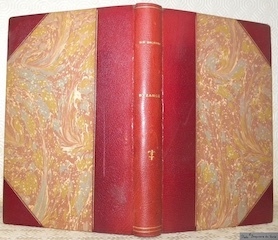
61352Paris, Payot 1937, 220x140mm, 333pages, demi-percaline. Plats papier marbré. Auteur et titre dorés au dos. Bel exemplaire.
93715Payot, Payot 1949, 225x150mm, 325Seiten, reliure demi-maroquin à coins. Auteur, titre, fleuron et filets dorés au dos. Plats papier marbré avec 3 filets dorés. Couvertures et dos conservés. Belle reliure. Sehr schönes Exemplar.
Pbk. 40p. plates (some col.) Book
Chapters include: Byzantium-the Historical Background; The Geographical Basis of Byzantine Culture; The Origins of Byzantine Art; The Architectural Background; Byzantine Mosaics; Byzantine Wall-paintings; Panel Painting and Iconography; Byzantine Book Illumination; Major Sculpture; Minor Sculpture; Metal Work and Enamels; Textiles; Ceramics, Glass, and Incrustation; Byzantium and the East; Byzantium and the Slavonic World; Byzantium and the West. xiii, 255p + 45 plates, illus. maps index. Sun fading on green cloth covers, especially on spine, else near fine Book
New New English Original bdg. Dust wrapper. 4to. (28 x 20 cm). In English. [xxxii], 568 p., ills. Defining Byzantine Culture 1; Diether Roderich Reinsch; Byzantium as the New Rome; BYZANTINE LITERARY AND ART CULTURE BY PERIOD. The Literature of Sixth-Century Byzantium; Roger Scott (University of Melbourne); L'art à l'époque de Justinien; Jean-Michel Spieser (Université de Fribourg); Dark-Age Literature; John Haldon (Princeton University); Early Frescoed Icons: a Case of Cultural Divergence between East and West; Beat Brenk (University of Basel); Prolégomènes à la littérature byzantine du IXe et du Xe siècle; Paolo Odorico (École des Hautes Études en Sciences Sociales); L'art byzantin aux Xe-XIe siècles : témoin des traditions et des relations culturelles au Proche-Orient; Marielle Martiniani-Reber (Musée d'art et d'histoire de Genève); Komnenian Literature; Ingela Nilsson (Uppsala University); Komnenian Art; Robin Cormack (University of Cambridge); The Literature of Palaiologan Byzantium; Staffan Wahlgren (Norwegian University of Science and Technology); La peinture paléologue de Constantinople - « au Royaume des Ombres »; Mauro della Valle (Université de Milan).; BYZANTIUM'S INPUT INTO OTHER CULTURAL TRADITIONS. L'influence byzantine sur la Perse sassanide; Geoffrey Greatrex (Université d'Ottawa); Byzantium and the Arabs: Cultural Contributions and Intercultural Transmission; Ahmad Shboul (University of Sydney); Byzantine Cultural Influence on the West; Dion Smythe (Queen's University Belfast); Byzantine Culture and the Crusader States; David Jacoby (Hebrew University of Jerusalem); Byzantium and the Slavs; Sergey Ivanov (National Research University Higher School of Economics); Caucasia and Byzantine Culture; Stephen H. Rapp Jr. (Sam Houston State University); Byzantinisch-Jüdische Interaktion im Östlichen Mittelmeerraum; Johannes Niehoff-Panagiotidis (Freie Universität Berlin); Byzantine Culture in Late-Mediaeval Greek States; Alkmeni Stavridou-Zafraka (Aristotle University of Thessaloniki); Au tournant du millénaire: la présence de Byzance dans la société grecque d'aujourd'hui; Paris Gounaridis (Université de Thessalie); Byzantine and Turkish Heritages; Rudi Paul Lindner (University of Michigan); Architectural Transformations in Mediaeval Anatolia (with Special Reference to Central Asia); Ali Uzay Peker (Middle East Technical University); Ottoman Architecture in the Light of Byzantine Examples; Jale Erzen (Middle East Technical University); Le droit byzantin essai d'introduction; Constantin G. Pitsakis (Université Démocrite de Thrace); La diplomatie byzantine; Jean-Claude Cheynet (Université Paris-Sorbonne); Byzantine Court Culture; Michael Jeffreys (University of London); Monastic Culture in the Middle Byzantine Empire; Margaret Mullett (Dumbarton Oaks Research Library and Collection); La science byzantine : entre Anciens et Modernes; Anne Tihon (Université catholique de Louvain); Eulogie und Panegyrik in Byzanz; Michael Grünbart (Westfälische Wilhelms-Universität Münster); Byzantine Writing in the Vernacular; Ulrich Moennig (University of Hamburg); Mainstream Texts, Viral Media and Hidden Agendas in the Tradition of Patria Texts; John Burke (University of Melbourne); Centres de copie de la « Ville » et des provinces à Byzance; Paul Canart (Bibliothèque apostolique vaticane); La decoration des manuscrits à l'époque des Paléologues: le Tétraévangile; Vlorë 10 et la production du Monastère des Hodèges à Constantinople; Axinia Dzurova (Université Saint-Clément d'Ohrid de Sofia); Cuisine and Dining in Byzantium; Johannes Koder (University of Vienna); Attire and Personal Appearance in Byzantium; Bente Kiilerich (University of Bergen); Mariage et rapports entre les sexes à Byzance : aspects généraux; Charis Messis (École des Hautes Études en Sciences Sociales); Illustrations; Bibliographical Abbreviations.
New English Paperback. Pbo. Large roy. 8vo. (23 x 19 cm). In English. [iii], [1], [iv], 196 p., color and b/w ills. Byzantine Istanbul. A self-guided tour. For over on thousand years, Constantinople thrived as the 'New Rome, 'the capital of the Byzantine empire. During this time, the wealth of the empire was used to create masterpieces of architecture and art, many of which still remain in Istanbul to this day. Let this collection of pleasant walks show you the splendid legacy of the Byzantines. From year-old Theodosian land walls, from the exquisite mosaics of the Chora Church to the Greek Orthodox churches of the Bosphorus and Fener, take this opportunity to explore some of the finest treasures Istanbul has to offer. Against a stunning backdrop of monuments, churches, palaces and sacred springs, the history, culture, art and religion of the Byzantines are presented and explained. Entertaining and fascinatig annecdotes will introduce you to the figures and events that shaped the Byzantine ere. Complete with full color photos and maps of the sites, Byzantine Istanbul: A Self-Guided Tour is the most comprehensive guide to Byzantine Istanbul available.
New English Original bdg. HC. Oblong 4to. (22 x 30 cm). In English and Romanian. 115, [140] p., fully color ills. Byzantine manuscripts in Bucharest's collections.= Manuscrise bizantine în colectii bucurestene. Project coordinator: Ileana Stanculescu. From the first article: "From the photographs taken over time, we chose those which best capture a special artistic quality with their strictly documentary value. This selection of manuscripts ends before the dawn of the 16th century, given the common view that after the fall of Constantinople (1453) we can no longer speak of a truly Byzantine culture, but only of a Byzantine style, albeit one which continued to shine. The selection of images was also intended to emphasize not only the aesthetics of the illuminated folios, but also those details that are significant for the codices as a whole, things which would dryly translate today as typeface font type, page layout and binding. Far from the sight of all interested parties, the Byzantine manuscripts in the Bucharest repositories are still full of mysteries waiting to be discovered and explained by researchers. We present these images here to provide a platform for a wider discussion of the significance of the Byzantine legacy for Romanian pre-modern culture. For the identification and description of the items chosen we used several catalogues, either manuscript or in print, which we then compared with the corresponding labels used by the repositories. The bibliography at the end of the volume indicates the various catalogues used for each collection. We found a wealth of details pertaining to the manuscript collections of the Romanian Patriarchy in the album published by the archimandrite Policarp. This is an excellent occasion to thank the specialists involved in the inventory of the collection for the additional information they supplied. We extend our warmest gratitude to them.Here and there we updated and corrected the information found in the aforementioned sources in the light of recent research: the dating of ms. sl. II 280, from the Library of the Holy Synod of the Romanian Orthodox Church at the Antim Monastery. We thank Mrs Tatiana Popova (University of St. Petersburg in Severodvinsk), for the observation that we are dealing with a direct copy, made at the end of the 14th century, of the Russian metropolitan Kyprian's reworking (dated 1385) of the Ladder of John Climax. Ms. sl. II 280 belongs to a group of manuscripts kept at Antim Monastery, but originates from a collection in Slava Rusa, a settlement in Dobrogea and a known...".
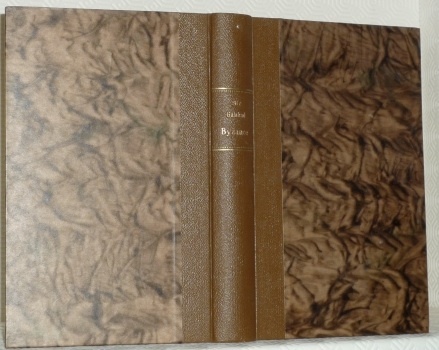
Bumping to top and bottom of spine; 41 papers, 650 pages including 105 illustrations. CONTENTS: Narrative in Historians, Chronicles & Fiction: Margaret Mullett Novelisation in Byzantium: Narrative after the Revival of Fiction; Roger Scott Narrating Justinian: From Malalas to Manasses; Ingela Nilsson To Narrate the Events of the Past: On Byzantine Historians, and Historians on Byzantium; Brian Croke Tradition and Originality in Photius' Historical Reading; Bronwen Neil Narrating the Trials and Death in Exile of Pope Martin I and Maximus the Confessor; Elizabeth McCartney The Use of Metaphor in Michael Psellos' Chronographia; Penelope Buckley War and Peace in the Alexiad; Theoni Sklavos Moralising History: The Synopsis Historiarum of John Skylitzes; Emma Strugnell The Representation of Augustae in John Skylitzes' Synopsis Historiarum; John Burke The Madrid Skylitzes as an Audio-Visual Experiment; Andrew Gillett The Goths and the Bees in Jordanes: A Narrative of No Return; Eamon H. R. Kelly From 'Fallen Woman' to Theotokos: Music, Women's Voices and Byzantine Narratives of Gender Identity; Nick Nicholas How the Entertaining Tale of Quadrupeds became a Tale: Grafting Narrative; Vicky Panayotopoulou-Doulavera Lamenting the Fall or Disguising a Manifesto? The Poem Conquest of Constantinople; Dean Sakel A Probable Solution to the Problem of the Chronicle of the Turkish Sultans. NARRATIVE IN BYZANTINE ART: Felicity Harley The Narration of Christ's Passion in Early Christian Art; Matthew Martin Observations on the Paintings of the Exodus Chapel, Bagawat Necropolis, Kharga Oasis, Egypt; Julia Kelly The Column of Arcadius: Reflections of a Roman Narrative Tradition; Debbie Del Frate Biblical Narrative in the Mosaics of Bishop Theodore's Cathedral, Aquileia; Balsa Djuric Plato, Plutarch and the Sibyl in the Fresco Decoration of the Episcopal Church of the Virgin Ljeviska in Prizren; Nira Stone Narrativity in Armenian Manuscript Illustration; Joan Barclay Lloyd Sources for the Story of the Creation in the Mosaics of Sicily and Venice; Ursula Betka Icon and Narrative: Memorializing Saint Francis in Assisi; Margaret Manion Authentication, Theology and Narrative in the Gospel Book of Theophanes; Nancy P. Sevcenko Spiritual Progression in the Canon Tables of the Melbourne Gospels. CHRISTIAN NARRATIVE AND ESCHATOLOGY: Eric Osborn Clement of Alexandria - From Prophecy to Plato; John Wortley The 'Sacred Remains' of Constantine and Helena; Bill Leadbetter A Byzantine Narrative of the Future and the Antecedents of the Last World Emperor; Michael Champion Kosmas Indikopleustes and Narratives in Sixth-century Liturgy and History; Annamma Varghese Kaiserkritik in Two Kontakia of Romanos; Andrei Timotin Byzantine Visionary Accounts of the Other World: A Reconsideration; Peter A. L. Hill A Ninth Century Passion Harmony. ARCHITECTURE, ARCHAEOLOGY, ECONOMY AND TA EXOTIKA: Geoffrey Nathan 'Pothos tes Philoktistou': Anicia Juliana's Architectural Narratology; Nigel Westbrook Spoliation and Imitation: Continuity and Radical Disjunction in Byzantine Palatine Architecture; Hartmut Ziche Historians and the Economy: Zosimos and Prokopios on Fifth- and Sixth- Century Economic Development; Tamara Lewit Stories in the Ground: Settlement Remains and Archaeology as Narrative in the Fourth- to Sixth-century Eastern Mediterranean; Timothy E. Gregory Narrative of the Byzantine Landscape; Jialing Xu Narratives of the Roman-Byzantine World in Ancient Chinese Sources Chen Zhi-Qiang Narrative Materials about the Byzantines in Chinese Sources; Robert Mihajlovski Three Byzantine Lead Seals from Devolgrad (Ancient Audaristos) near Stobi; Bob Priestley The Varangian Guard; Australian Association for Byzantine Studies. Byzantina Australiensia 16; 650 pages