130 résultats
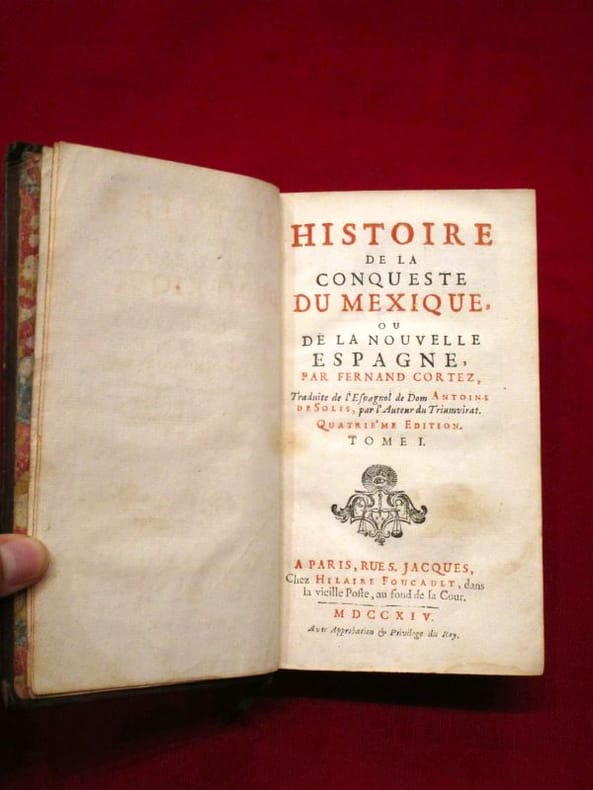
1714117802Hilaire Foucault 1714 A Paris, Chez Hilaire Foucault, 1714, 2 volumes petit in-8 de 95x170 mm environ, tome I : (17) ff., 537 pages, (9) ff. - tome II : (7) ff., 494 pages, (9) ff. Pleine reliure d'époque, dos à nerfs portant titres et tomaisons dorés sur maroquin bordeaux, filet d'encadrement à froid sur les plats, roulette dorées sur les coupes, tranches rouges, gardes marbrées. Avec 14 cartes, planches dépliantes et figures à pleine page. Coiffes manquantes, coins frottés, petits manques de cuir, rares rousseurs, taches marginales tout au long du tome II, état satisfaisant.
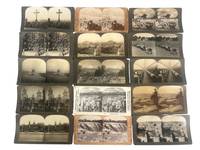
1900221191900. Archive of 15 stereoview photographs of Mexico published by the Keystone View Company around the turn of the twentieth century documenting Mexican urban architecture Indigenous labor archaeological sites and monumental landscapes during a period of modernization and expanding foreign visual interest in the country. Produced for the international stereograph market the images present Mexico through interconnected views of colonial civic grandeur rural labor systems and Indigenous historical sites reflecting contemporary American and European fascination with both modernization and ethnographic spectacle in Latin America. The archive documents visual and commercial systems of early photographic tourism and ethnographic representation through stereographic imagery printed captions and descriptive texts revealing how Mexico was interpreted and circulated to foreign audiences through mass-produced educational photography. At the same time the photographs preserve valuable visual evidence of everyday labor urban space transportation and architecture during the late Porfirian period.<br /> <br /> Archive consists of 15 original stereoview photographs measuring approximately 3.5 x 7 inches primarily silver gelatin prints mounted on curved gray or tan cardstock with printed captions and descriptive text on versos. Subjects include monumental architecture archaeological ruins agricultural labor transportation scenes and volcanic landscapes across Mexico. Several stereographs depict the historic center of Mexico City including views of the Metropolitan Cathedral with its twin bell towers and baroque façade the National Palace and distant perspectives of Chapultepec Castle framed by broad boulevards and landscaped public space. Rural and labor scenes include Indigenous and mestizo workers harvesting maguey plants for pulque production mule teams transporting water and figures posed beside adobe structures in village environments. One stereograph presents the terraces and volcanic slopes of Popocatépetl emphasizing the dramatic topography associated with Mexico's central highlands. Another depicts the pyramid complex at Cholula surmounted by a Catholic church accompanied by printed Keystone commentary interpreting the site as evidence of Christian conquest over Indigenous religion. The versos retain substantial printed explanatory text characteristic of Keystone educational stereographs combining geographic description historical narrative and ethnographic framing for consumers of stereoscopic travel imagery.<br /> <br /> The archive reflects the growing role of stereography in shaping international perceptions of Mexico during the late nineteenth and early twentieth centuries when photographic publishers marketed immersive visual experiences of foreign landscapes and cultures to middle-class audiences in the United States and Europe. Keystone's stereographs frequently combined documentary photography with interpretive narratives emphasizing archaeology modernization colonial history and rural labor contributing to broader visual constructions of Latin America during the Porfirian era. Particularly notable are the images juxtaposing Indigenous life Catholic architecture and pre-Columbian ruins which reveal contemporary tensions between modernization nationalism and colonial historical memory in visual culture. Minor expected wear and occasional toning to mounts; photographs generally sharp and well preserved with captions and versos legible throughout. Overall very good condition. A visually rich archive of early stereographic photography documenting Mexico's landscapes architecture and social life at the turn of the twentieth century. unknown
1940JG7121Baltimore: The Johns Hopkins Press 1940. Foreword by Henry E. Sigerist; Taupe cloth gold spine title on burgundy printed label gold cover device & facsimile manuscript pages with lovely color botanical drawings; A near fine copy with garden club bookplate inside front cover in a good or so orange dust jacket with small Dewey label on moderately sunned spine; 341 pages. 9.25"x12". The Johns Hopkins Press hardcover
(4) ff., VIII-135-[46]-(1)-136 à 192 pp., (38) ff pour les observations météorologiques, (2) ff d'errata Veau marbré, dos à nerfs ornè, pièce de titre rouge, tranches rouges (Reliure de l'époque) 1763, 1763, in-4, (4) ff, VIII-135-[46]-(1)-136 à 192 pp, (38) ff pour les observations météorologiques, (2) ff d'errata, Veau marbré, dos à nerfs ornè, pièce de titre rouge, tranches rouges (Reliure de l'époque), Édition originale, ornée d'une carte dépliante de la Martinique de cette relation rédigée par le botaniste natif de la Martinique, Thibault de Chanvalon (1723-1788). Membre du conseil supérieur de l'île, il fut chargé d'en dresser la statistique. L'ouvrage renferme des renseignements sur la population, dont une étonnante description des "américains", l'économie, l'esclavage, la géographie, la faune et la flore, le climat, etc. L'année même de la publication de ce volume, Chanvalon sera nommé intendant de la nouvelle colonie de Guyane, là où le royaume plaçait ses espoirs après la perte du Canada ; l'expédition sera un véritable désastre, à la fois sur le plan humain et financier, entraînant la perte de milliers de colons et de plusieurs millions de livres. Bel exemplaire, malgré une trace d'eau sur le plat supérieur et une mouillure peu prononcée dans l'angle inf. des premiers et des derniers cahiers. Provenance : Cachet ancien de la Bibliothèque de Leugny. Chadenat, n°1067. ? Leclerc, n°311. ? Sabin, n°11936
17013Paris, Librairie Arcanes, 1952. In-8, non paginé, en feuilles, couverture originale illustrée, étui de carton rose (légères insolation et décharges).