The State Jewish Museum in Prague - Markéta PetrásováAntiquariat.de

138 résultats
1983617256The State Jewish Museum in Prague, Prag 1983. 23,8 x 17 cm. White, illustrated original booklet, outside stained a bit. (52) pages with introduction by Markéta Petrásová, texts, short biographies and b/w illustrations, many full-page. Inside clean copy in good condition.
199010952London, Aneks, 1990. Broschiert, 8°, 139 S.; -Einband leicht berieben, gutes Exemplar.
1950007299Paris O.L.B. 1950 In-4 Broché, couverture illustrée Edition originale
1979305887ABBerlin, Basis Verlag, 1979. 8°. 164 S. mit Fotos. Klappenbroschur. (guter Zustand).
199323951CBBerlin, Schwarze-Risse-Verlag, 1993. 228 S. mit einer Karte und 32 Tafelseiten mit s/w-Abbildungen, farbig illustr. original Kartonage (Paperback), deutsche Erstausgabe gutes, sauberes Exemplar
19461239786Verlag J. H. W. Dietz Nf.; Berlin, 1946. 212 Seiten; 20,5 cm; fadengeh. Broschur.
196825075BLondon:, Poetow i Malarzy., 1968. 86, (1) p. Original boards (softcover) with title to spine and illustrated title to cover. Boards with some browning and staining, insight slightly worn and in good condition.
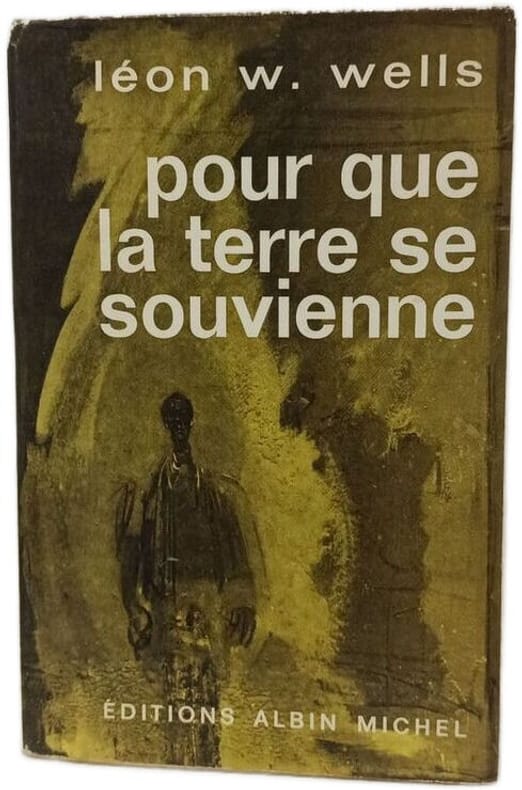
1962100153093ÉDITIONS ALBIN MICHEL 1962 in8. 1962. Broché. Léon Weliczker Wells né à Lwow en 1925 livre un témoignage éprouvant de son expérience en tant que prisonnier du ghetto de Lwow en 1941 du camp de Janowska en 1942 et membre de 'l'opération 1005' en 1943 décrivant l'épouvante qu'il a traversée pendant la Shoah
19417842ALitzmannstadt, 1941. [2 Warenabbildungen]
194032897Litzmannstadt [um 1940], (Buchhandlung S. Seipelt). Gefaltete Karte. 99 x 68 cm. Wenige Bruchstellen an den Falzen. Gering gebräunt. Guter Zustand.
199116587CBHanau, Geschichtsvereins 1844 e.V., 1991 - 1992. 8°, 68 S. und 80 S, mit zahlreichen s/w-Abbildungen, illustr. original Hefte, Erstausgaben zwei schöne, saubere Exemplare.
198651405Berlin, Union (1986). 1.Aufl. Übers. a.d. Polnischen v. Karin Wolff. 285 S. OLwd. m. illustr. OSchutzumschl. (i.d. Gestaltung v. Horst Albrecht m. e. jüdischen Motiv). Enth. 26 Erzählungen.
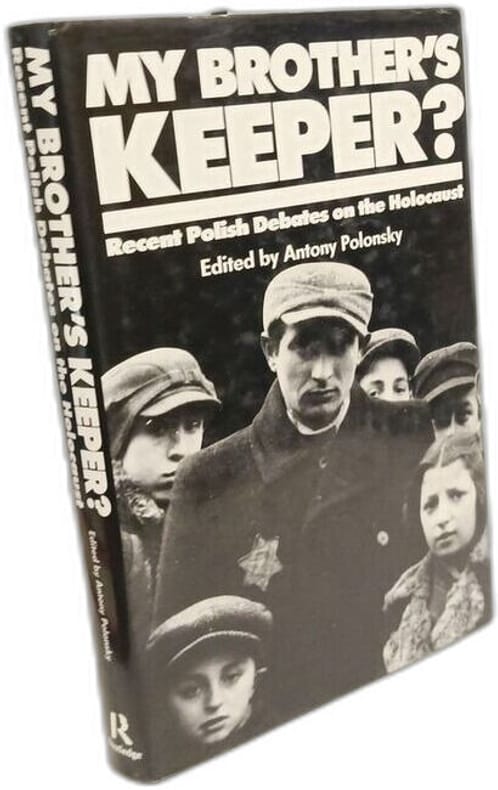
1990100136419Taylor & Francis Ltd 1990 256 pages 14 2x2 4x22 2cm. 1990. Cartonné jaquette. 256 pages.
196235362juMünchen, Kindler, 1962. Leinen, mit Schrift-Deckelprägung, ca. DinA 5, 780 Seiten, 1 sw-Skizze im Anhang, farbig illustrierter Originalumschlag / Schutzumschlag / OU (randrissig, berieben und bestoßen), Einband mit geringen Gebrauchsspuren, Rücken an den Enden mit leichten Gebrauchsspuren, gering berieben und bestoßen, Schnitt und Seiten papierbedingt gebräunt, Kuli-Namen und Datum auf dem Titelblatt, abgesehen vom Umschlag insgesamt gut erhalten / insgesamt guter Zustand [4 Warenabbildungen]
1961100659Paris, Robert Laffont 1961 Reliure demi-basane fauve maroquinée, dos lisse, couvertures conservées, 683 pp., table des matières.Exemplaire en bon état.
199017235München : Roman Kovar, 1990. Der Holocaust mit den Augen eines Malers gesehen 77 S.; 24x24 cm Pappband mit Umschlag / gebundene Ausgabe
1946MMRM1658Varsovie:: American Joint Distribution Committee 1946. 1946. 8vo. 264 4 pp. 11 black and white photographic plates 50 tables charts index. Original printed wrappers; scotch tape along spine front and rear covers age-darkened first 3 pages including half title and last three blank end-papers are loose. Main body of work remains bound and in good condition. Loose pages have some slight area of extremities missing. Some fading and foxing to pages. Thus wrappers poor but text good to good plus. First edition. SEMINAL WORK IN MEDICAL CLINICAL RESEARCH & A CRITICAL ARTIFACT OF THE WARSAW GHETTO AND HOLOCAUST. Copies of the book are uncommon in part because of the fragile nature of the paper used to publish the report. In the immediate aftermath of World War II paper ink and binding facilities in Europe were scarce. The published report was done with economy in mind and with a rushed sense of needing to reveal to the world what happened. / Six articles report on the clinical research by 28 Jewish physicians and a student intern the 1946 book only records the names of 21 physicians and the student – subsequent research in the 1960s revealed the additional names who conducted the studies on adults and children at the two Jewish hospitals in the Ghetto. Abbreviated biographies of the physicians can be found in The Uses of Adversity: Studies of Starvation in the Warsaw Ghetto by Leonard Tushnet published in 1966. The physicians hoped to study these patients to somehow benefit humanity perhaps in the spirit of the Jewish concept of tikkun olam - to repair the world. The studies were conducted in secret since any scientific research in the Ghetto was prohibited by the Nazi overseers. It is also quite possible that many if not all the clinical physicians believed that granting children and others the status of being a patient would protect them by preventing their transport out of the ghetto to death camps. Theories also suggest that the physicians wanted to preserve a record of the atrocities being committed as well as advance medical research. The studies remain the most comprehensive research of the effects and progression of starvation in part because any contemporary studies would largely be blunted by existing ethical guidelines for informed consent and subject welfare. Contemporary debates about the ethical wisdom of conducting these studies remains contentious. / The Warsaw Ghetto occupied approximately 1.3 square miles 3.4km2 and its population was as much as 500000 men women and children. The Ghetto was a staging area for transporting Polish and Eastern European Jews to the death camps and a locale for starving to death Jews prior to transport. The average daily caloric intake of a resident of the Ghetto was 600 to 800 calories of low-protein food for adults. This amount was calculated by Adolf Eichmann to starve-to-death most of the residents in approximately nine months. The physicians performing the research were no exception to the plan. All were starving as they performed their studies. Equipment for clinical research was smuggled into the hospitals. / Each article in the book is devoted to specific results of these studies. Chapter V offers autopsy results on 710 patients; 492 died of starvation and 218 died of complications of secondary conditions. Chapter VI offers clinical observations of one-hundred adults who died from starvation. Chapter VII offers clinical observations of 40 children who died of starvation. Chapter VIII examines the effects of starvation on the cardiovascular system in adults and children. Chapter IX discusses changes in peripheral blood and bone marrow. Ophthalmic responses to starvation are discussed in Chapter X. Only one doctor engaged in the research Emil Apfelbaum survived the war. He arranged to have the studies smuggled out of the Ghetto to a Polish professor of medicine who released the reports after the liberation of Warsaw. After the war Apfelbaum edited the report for publication by the Joint Distribution Committee. He died a week before the book was published. / Research was performed at the two hospitals in the Ghetto from late February to July 22 1942. On July 22 the hospitals were closed and any patients unable to be transported were summarily executed regardless of age. The attending and clinical physicians were fully aware of the fate awaiting transported patients and in many instances they performed euthanasia on elderly and child patients who were scheduled for transport. Some of the physicians committed suicide rather than face transport. Other physicians accompanied their patients to the death camps providing whatever aid they could. / The studies were smuggled out of the ghetto in a manner befitting a Ken Follet thriller. A Jewish physician Henryk Fenigstein played a crucial role. "Before the war Henryk was a stamp collector. In fact he had one of the largest collections of Polish stamps in the country. One day two SS members arrived at the hospital and told Henryk to come with them to Gestapo headquarters. Of course he was terrified. Jews taken to Gestapo headquarters did not return. On arrival he was taken to the office of a senior officer who told him that he himself was an avid stamp collector. He took out a list and handed it to Henryk. He wondered if Henryk had these stamps and if not if he knew where to procure them. Henryk told him that he had many of the stamps including some of the very rare ones. He told him that he thought he could procure the rest. In order to do this he would need a pass to get out of the ghetto for a few hours each week. And of course the SS officer was welcome to those that he had. The officer agreed and even gave Henryk his phone number in case he needed any help. Thus Henryk Fenigstein a key member of the study team was able to leave the ghetto" 2005 lecture Myron Winick. During such an outing Fenigstein arranged for the smuggling of the reports. A pregnant woman reportedly was used to hide the documents and transport them out of the ghetto. / The supervising physician of the project Israel Milejkowski wrote in his Introduction to the studies that each author refused to allow the Nazis to destroy their work and that through the research and the publication of that research "Nous avons termine nos Recherches et nous les conserverons bien comme c'etait Ton desir. Les paroles immortelles que Tu a jetees "Non omnius Moriar" doivent etre en premier lieu appliquees a Toi! Gloire eternelle a Ta Memoire !" / The research as well as results from the Minnesota Semi-Starvation studies of 1944-1945 continues to benefit the millions of persons facing starvation each year. The participants in the Minnesota study lost an average of 25% of pre-test body weight and the final phase of the study included recovery techniques and methods. The Warsaw studies measured effects until death. This artifact of scientific integrity individual bravery and resistance to oppression is a rare opportunity to truly own a small piece of history illuminating the courage of physicians determined to use their craft to help the world and advance the memory of atrocities. American Joint Distribution Committee, 1946. unknown books
199440959Frankfurt am Main. Suhrkamp. 1994. OPapp., OSchu., 8°, 223 S., Zustand sehr gut.
194643329Warszawa; Lódz: Zaklady Graficzne WINW: Centralna Zydowska Komisja Historyczna 1946. 1st Edition. Original Paper Wrappers 8vo 40 pages. 21 cm. In Polish. Title translates as "The Liquidation of the Vilna Ghetto." Includes bibliographical references. <br> Personal eyewitness account by Mendel Balberyszski 1894–1966 a prominent Vilna Jewish leader and later Holocaust survivor detailing life in the Vilna Ghetto and its destruction under German occupation. Balberyszski served on the Advisory Council of the “small ghetto†opposing Judenrat collaborationist policies. He survived both the liquidation of the ghetto and the Holocaust. <br> Balberyszski a Lithuanian-Polish Jewish politician and journalist was prewar editor at Vilna’s Der Tog and active in the Folkspartei and later the Polish Democratic Party. After the war he emigrated to Melbourne where he became a leading communal figure. His memoir was later republished in English as Stronger than Iron: The Destruction of Vilna Jewry 1941–1945 2010.<br> Pages 38-40 detail a list of 35 titles issued 1945–46 by the Historical Commission documenting early postwar Jewish testimony efforts.<br> SUBJECTS : Holocaust Jewish 1939-1945 Lithuania Vilnius. Jewish ghettos Lithuania Vilnius. World War 19391945 Lithuania Vilnius Atrocities. Jews Lithuania Vilnius. OCLC: 13911170. Very Good Condition overall. B H2-3-5-VLGGAMPCCFE-XBB. Warszawa; Lódz: Zaklady Graficzne WINW: Centralna Zydowska Komisja Historyczna unknown
196466113Couverture souple. Broché. 212 pages.
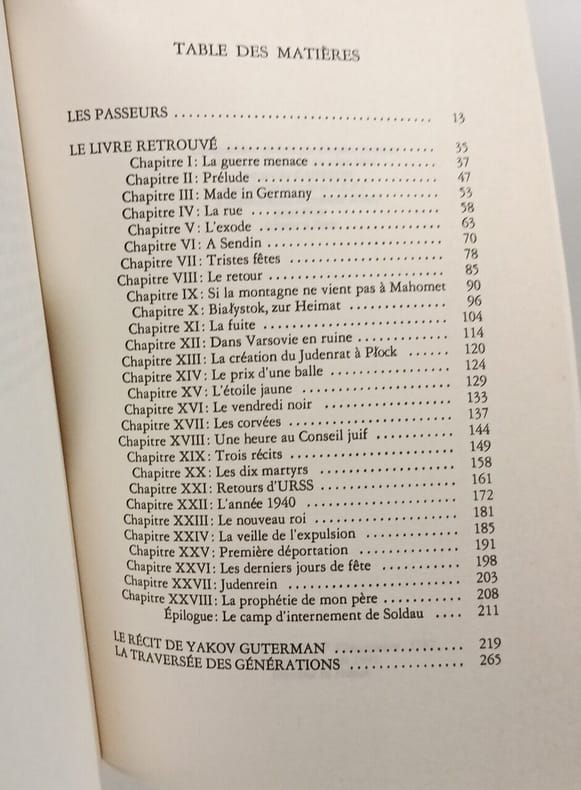
1991100147167Plon 1991 278 pages in8. 1991. Broché. 278 pages. Le Livre retrouvé est le témoignage de Simha Guterman écrit clandestinement en 1942 en Pologne et caché dans une bouteille où il relate le calvaire des Juifs de Plock entre septembre 1939 et mars 1941. Découvert en 1978 ce récit constitue un acte ultime de résistance contre l'oubli mêlant émotion colère et dérision pour donner du sens à l'existence au cœur de l'horreur
19721170691972 Editions Fayard - 1972 - In-8, broché - 222 pages
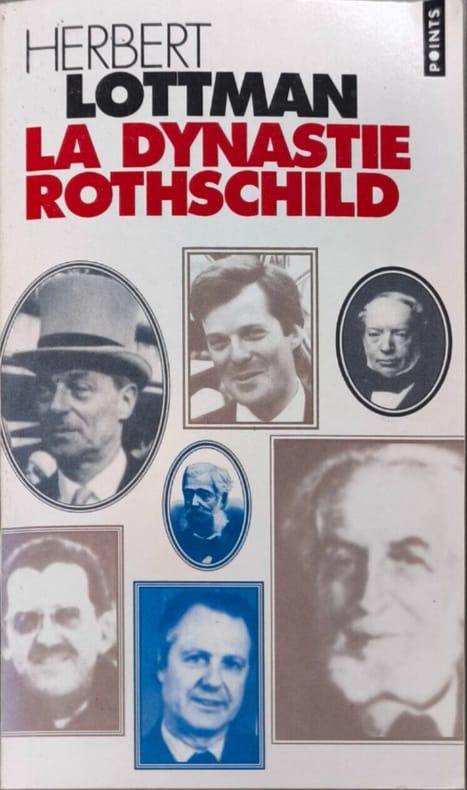
199613245Seuil 1996 516 pages 10 8x2 4x17 2cm. 1996. broché. 516 pages. Ce livre retrace l'histoire de la famille Rothschild de ses débuts modestes dans le ghetto juif de Francfort au XIXe siècle à son ascension en tant que l'une des familles les plus influentes et riches d'Europe. Il raconte comment les descendants d'un juif du ghetto de Francfort sont devenus les Rothschild un nom synonyme de richesse et de puissance
1989POLOGNE620816Paris, Robert Laffont, "Pavillons - Domaine de l'Est", 1989, 13,5 x 21,5, 296 pages cousues sous couverture illustrée. Roman traduit du polonais par Véronique Patte. Préface d'Henri Raczymow.
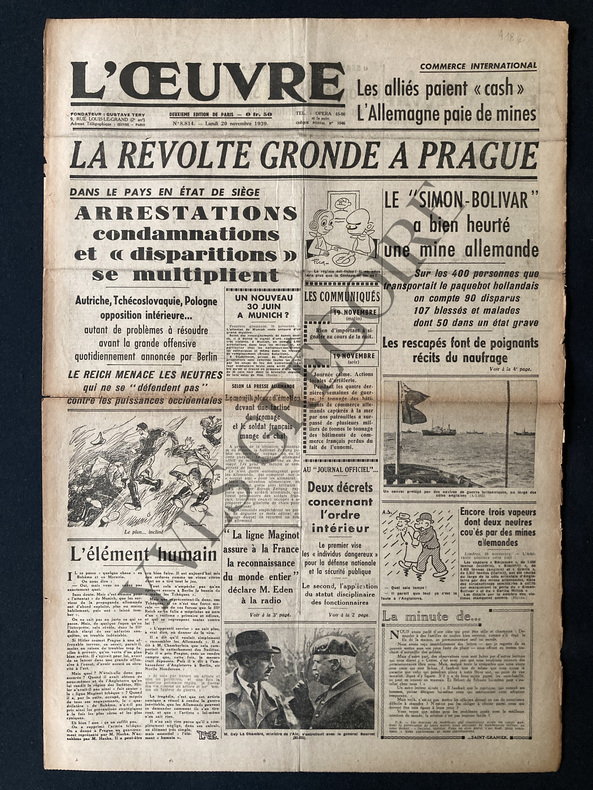
1939ABE-169737136494 PAGES 37,5 CM X 54 CM-LA REVOLUTION GRONDE A PRAGUE DANS LE PAYS EN ETAT DE SIEGE ARRESTATIONS CONDAMNATIONS ET "DISPARITIONS" SE MULTIPLIENT-LE "SIMON-BOLIVAR" A BIEN HEURTE UNE MINE ALLEMANDE, SUITE P4-"LA LIGNE MAGINOT ASSURE A LA FRANCE LA RECONNAISSANCE DU MONDE ENTIER" DECLARE M.EDEN A LA RADIO, SUITE P3-DESSIN DE HAUTOT "LE PLAN.INCLINE", HITLER-P2: "SERVICE DE L'HUMANITE" UN APPEL DE LORD SNELL AU PARLEMENT BRITANNIQUE-P3: LE FUHRER VOULAIT MOBILISER UN MILLION DE TCHEQUES LE PRESIDENT HACHA N'A PAS VOULU-LE GHETTO DE VARSOVIE EST SEPARE DE LA CAPITALE PAR DES BARRICADES-P4: UN INCENDIE AU MUSEE DE QUIMPER