1 193 résultats
1999117938La Fontaine de Siloé 1999 La Fontaine de Siloé, 351p, 1999, in-4 cartonnage éditeur avec jaquette. Bon état général.
199739029ABDornach, Geering, 1997. 8°, 431 S., illustr. original Kartonage (Paperback), Erstausgabe schönes, sauberes Exemplar
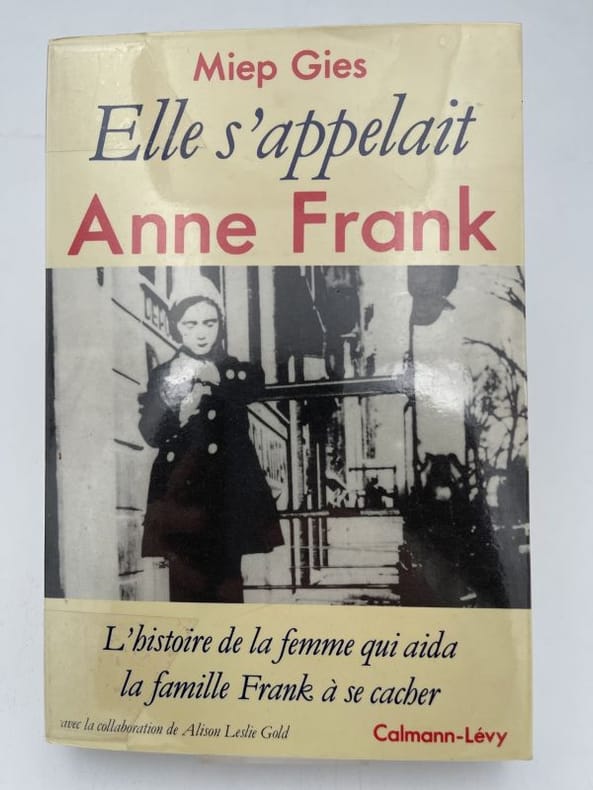
1987189283Calmann Lévy Calmann Lévy 1987, In-8 cartonnage éditeur sous jaquette illustée. . 313 pages photos. Trés bon état.
in-8, 272 pp., illustrations, broché, couverture illustree. Bel exemplaire DEDICACE par l'auteur. [CA30-5] L'évadé des camps nazis raymond gilon raconte…
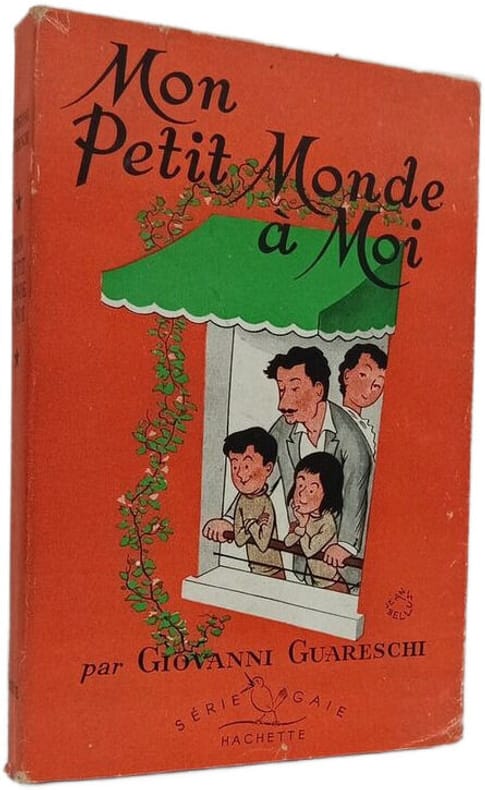
1952100148691Hachette 1952 in12. 1952. Broché. L'auteur de Don Camillo Giovanni Guareschi parle de lui-même et de son monde personnel utilisant un ton décalé et drôle pour évoquer des événements sombres comme la montée du fascisme en Italie et sa déportation en Pologne. Le livre présente un univers tout aussi romanesque que ses personnages de fiction
Editions Peuple libre & Notre temps, 1999, 480 pp., broché, bon état.
2002116843L'Harmattan 2002 In-8 broché 21,5 cm sur 13,5. Bon état d’occasion.
Broch?. 114 pages.
20023BpVandoeuvre Les Nancy La Dragonne 2002 14x21cm 95 pages - broché - tres bon etat
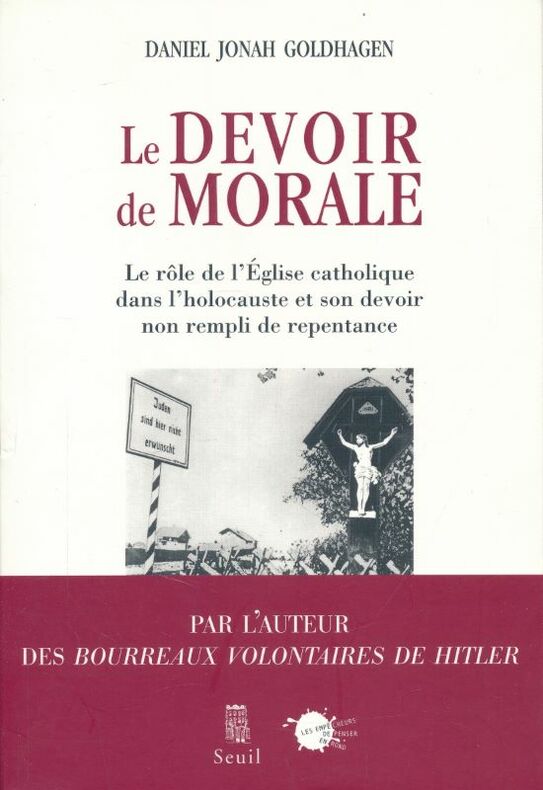
2004160390Seuil Seuil, 2004. In-8 broché de 488 pages illustrées. Quelques passages discrètement soulignés au crayon de papier sinon bon état.
Seuil, 2004. In-8 broché de 488 pages illustrées. Quelques passages discrètement soulignés au crayon de papier sinon Très bon état
2003190576In Press 22,4 x 14 x 2,1 cm. Broché 361 pp, In-Press, 2003. In-8 broché de 361 pages. La 4ème de couverture indique : "La Shoah et la création de l'Etat d'Israël sont devenus deux symboles, deux concepts étroitement liés dans la mémoire collective. Cet ouvrage analyse le rapport complexe qui lie ces deux symboles et la part qu'ils ont prise dans l'élaboration de l'identité et de la conscience du peuple juif depuis la Seconde Guerre mondiale. Comment ces deux symboles se sont-ils inscrits dans les discours public, politique, théologique, intellectuel... ? Cette expérience historique n'est-elle qu'un élément du destin singulier d'un peuple ou bien est-elle avant tout porteuse d'un message universel ? A l'heure où l'héritage d'Auschwitz semble partagé par le plus grand nombre, où semble se relativiser la centralité de l'Etat d'Israël, comment le peuple juif peut-il continuer à vivre sa singularité en Israël comme en diaspora ?" Bon état
2001192188Kimé Editions Kilé, 2001. In-8 broché, 170 pages. Très bon état
1976184272Editions Princesse Paris, Editions Princesse, 1976. In-4 cartonnage éditeur de 120 pages. Nombreuses photos. Bon état.
199221BwParis Firesias 1992 14x21cm 216 pages - broché - bon etat
1970183313Editions Mato Grosso Fontenay-aux-Roses, Editions Mato Grosso, sans date, vers 1970. In-12 broché de 94 pages. Illustrations dans le texte en noir et blanc. Carte volante en noir et blanc. Bon état.
Paris, Editions Princesse, 1976. In-4 cartonnage éditeur de 120 pages. Nombreuses photos. Bon état.
199340368Reinbek bei Hamburg : Rowohlt 1993. 512 S. : Ill. ; 22 cm kart., Softcover/Paperback, schwarzer Strich (Filzstift) am unteren Schnitt, sonst Exemplar in gutem Erhaltungszustand
1947133159Stern Verlag. Wien 1947. 165, (2) Seiten. Zweifarbige Originalbroschur. (Einband etwas berieben. Vortitelblatt lose u. teils beschädigt). 19x13 cm
Broch?. 210 pages.
Very Good Armenian Original fine red cloth bdg. with decorative gilt on board. Spine is repaired masterfully. Large roy. 8vo. (25 x 18 cm). In Armenian. [24], 429 p., 1 folded Armenian map of Turkey (map size: 24x33 cm), 29 unnumbered full-page b/w plates (one is folded). Armenian Golgotha is a memoir written by Grigoris Balakian about his eyewitness account of the Armenian Events. The memoir was released in two volumes. Volume 1, about his life prior to and during the Armenian Deportation, was released in 1922. Volume 2, about his life as a fugitive after the Deportation, was released in 1959. Originally published in Armenian, the memoir was later published in various languages including an English translation by Peter Balakian, Balakian's great-nephew, with Aris Sevag. Grigoris Balakian [or, Palakean, Palakian, Balakean], was a bishop of the Armenian Apostolic Church, in addition to being a survivor and memoirist of the Armenian Events in the Ottoman Empire. Grigoris Balakian was born in Tokat in the Ottoman Empire and graduated from the Sanasarian College in Erzurum. He had been studying architecture in Germany for two years and got a degree in civil engineering. He became a celibate priest ordained under the monastic name Grigoris Balakian. On 24 April 1915, he was among the group of 250 leading Armenian figures of Constantinople who were arrested and deported. One group was deported to Ayas. Balakian was deported to Çankiri, north-east of Ankara with the rest of the 190 other deportees from the capital. Only 16 of them would survive. He marched with 48 deportees from Çankiri in the direction of Deir Al-Zor in the Syrian desert. On the way, Balakian won the confidence of captain of constabulary Shukri Bey and learned about the Ottoman government's plan to exterminate the whole Armenian population. Balakian was able to flee toward Islahie. He joined a group of workers on the Bagdad-railway where Turkish deserters did forced labor alongside Armenian refugees. While Armenian workers between Marash and Bartche were being slain, Balakian fled to another construction site on the Bagdad railway. He was helped by German engineers and finally succeeded - disguised as Herr Bernstein - in escaping from Constantinople to Paris. At the 1921 trial in Berlin against Soghomon Tehlirian, the murderer of Talât Pasha, Balakian appeared as a witness for the defendant together with Johannes Lepsius. Soghomon Tehlirian was ultimately acquitted. Balakian became prelate of Manchester, London, and finally bishop of Marseille. Two churches were built under his guidance in Marseille and Nice (St. Mary, 1928) as well as a number of chapels and schools. He died in Marseille. Balakian is the granduncle of Anna Balakian, an expert on symbolism and surrealism who chaired New York University's Department of Comparative Literature, and the great-granduncle of Peter Balakian, an Armenian-American writer and winner of the 2016 Pulitzer Prize for Poetry. Balakian's memoirs in Armenian Golgotha are an important eyewitness account of the Armenian Events. He describes his experiences during the deportation. Balakian was one of the few surviving leaders of the Armenian community who gave an account of the deportation. Komitas (Gomitas) Vartapet belonged to the same group of detainees as Balakian. His information about the traumatization of the famous composer and founder of modern Armenian classical music is of eminent importance. OCLC: 1137218025. First Armenian Edition. Rare.
2290relié avec jacquette - 21x26 - 111 pp - 1979 - publié par BEIT LOHAMEI HAGHETTAOT; Imprimé en ISRAËL.version française de Miriam STERENZY.
238835München : Prestel, 2016. 242 Seiten : Illustrationen, 24 cm. Gewebe, gebundene Ausgabe.