2 488 résultats
Hardcover, 8vo, x, 98 pages, folded map, 22 cm. SUBJECT (S) : Jews -- Politics and government. Jews -- Social conditions. Jews -- Restoration. Printed in Great Britain. Reprinted with alterations and considerable additions from Zionism and anti-Semitism contributed to the Quarterly review, April 1902.--Pref. Bibliography: p. 89-98. OCLC lists 13 copies worldwide. Lightly soiled covers. Lightly yellowed pages. Very good condition. (HOLO2-86-18)
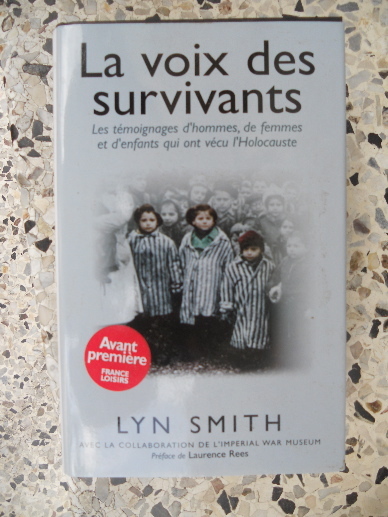
24638France Loisirs, 2007. Format 13x21 cm, broche, 227 pages.Tres bon etat.
1st edition, 8vo, original paper wrappers, 48 pages. In German. Title translates as, Where can the Refugees Go? Published by the Swiss Zionist Federation. Calls on Palestine to be opened for the Jewish survivors of Europe. Series: Schriftenreihe des schweizerischen Zionistenverbandes, nr. 5-6. Contents: Vortitel: Wohin können die Flüchtlinge gehen? ; Enthält: Palästinas Aufnahmefähigkeit, by Abraham Revusky; Palästinas Aussichten und der Jordantal-Plan, by Walter Clay Lowdermilk. SUBJECT (S) : Flüchtlinge. Palästina / Israel. Technik. Nationalsozialismus. Fürsorge. Auswanderung und Einwanderung. Alija. OCLC lists 12 copies worldwide, most in Switzerland and only 1 in the Western Hemisphere (YIVO) . OCLC: 600594156. Very Good Condition. (HOLO2-138-23).
Original Wrappers. 8vo. 129 171 (ie. 42) pages. 24 cm. Offprint. Reprinted from Names Vol. 6, No. 3, Sept. 1958. Study of cultural integration among Jewish immigrants from Germany and Austria. Using survey data and research sourced from previous studies, Maass constructs a comprehensive description of motivations leading to name changes for immigrants to the United States and the individual and cultural impacts of these changes. The name changers acted in the belief that a new cognomen would enhance their adjustment. Their actions showed that in their image of America and their role in the new country there existed certain tensions, difficulties, conflicts and also hopes of overcoming them. (Page 171) OCLC lists 3 copies worldwide. (HUC, NYU, Natl. Libr. Of Israel) Subjects: Names, Personal - Jewish. Jews - United States. Spine rebacked. Small library stamp and minimal library markings. Light shelf wear. Very good + condition. (HOLO2-109-38)
1st Edition. Original Paper Wrappers. 8vo. 235 pages ; 19 cm. In Hungarian. Title translates roughly into English as, German Prophecy: 100 years of Nazism. SUBJECT (S) : National socialism. Includes bibliographical references and index. Included in the US Holocaust Museum Rare Book Collection. SUBJECT(S) : National socialism. Germany -- Politics and government -- 1871-1945. OCLC lists 13 copies worldwide. Paper Wrapper is torn in corner with the Title effected on the spine. Overall in good condition. (HOLO2-130-21)
199534547ABParis, Édition du Minuit (= Collection Critique), 1995. 8°, 233 S., Text: französisch, original Kartonage (Paperback), insg. minimal nachgedunkelt, sonst ein schönes, textsauberes Exemplar (re04)
Paper wrappers, 8vo, 112 pages, in Hungarian, No. 4 in a vol. Entitled: Magyar Golgota. Budapest. 1945. Title translates: Laszlo Endre, At the Head of the List of Hungarian War Criminals. Lévai, Jenö (1892? ) , Hungarian journalist who pursued research on the Holocaust of Hungarian Jewry. Lévai was born in Budapest and studied engineering, but even in his youth was attracted to journalism. Between the two World Wars he waged a fierce struggle in the press against Antisemitism in Hungary, particularly against László Endre, who later cooperated with Adolf Eichmann. After World War II he was commissioned by the new government of Hungary to collect material on the persecution of the Jews under the previous regime. From that time he devoted himself entirely to this subject, publishing books and articles which revealed new information on the anti-Jewish activities of the Hungarian and German Nazis, his research taking him to different countries of Europe. (jewishvirtuallibrary, 2012) . OCLC lists 14 copies worldwide. Covers worn and spine repaired with tape, repair on first page with tape, pages tanned, otherwise good + condition. Scarce and important (HOLO2-89-78)
EINAUDI 1971 414 PP. FONDO DI MAGAZZINO: PRESSOCHé PERFETTO.
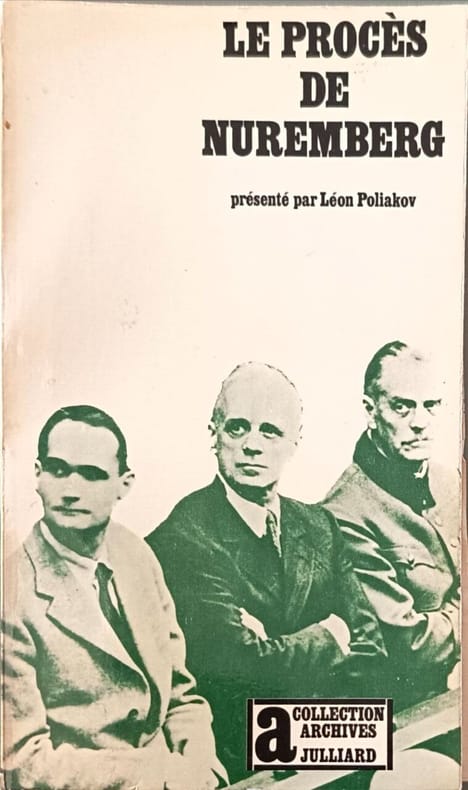
197115843Julliard 1971 289 pages collection Collection Archives. in8. 1971. broché. 289 pages. Cet ouvrage de Léon Poliakov présente le procès de Nuremberg (1945-1946) en s'appuyant sur des documents officiels et des extraits du procès. L'auteur historien et expert de la délégation française au tribunal analyse la genèse le déroulement et les sentences du procès des grands criminels de guerre nazis
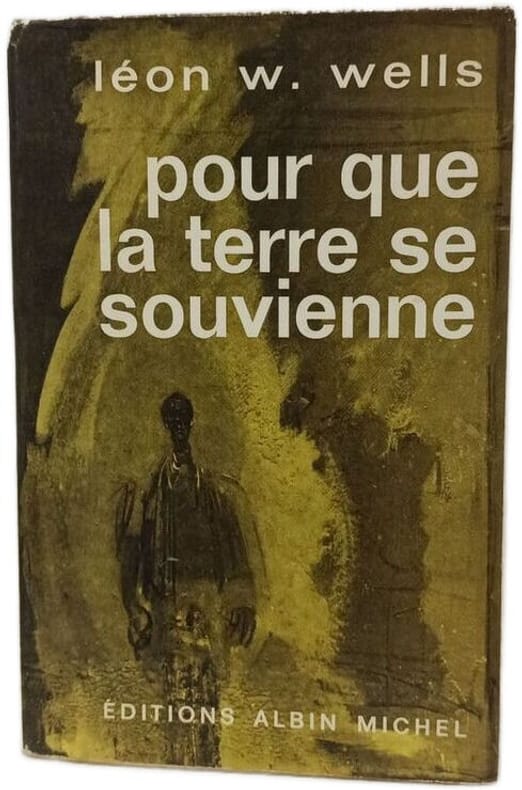
1962100153093ÉDITIONS ALBIN MICHEL 1962 in8. 1962. Broché. Léon Weliczker Wells né à Lwow en 1925 livre un témoignage éprouvant de son expérience en tant que prisonnier du ghetto de Lwow en 1941 du camp de Janowska en 1942 et membre de 'l'opération 1005' en 1943 décrivant l'épouvante qu'il a traversée pendant la Shoah
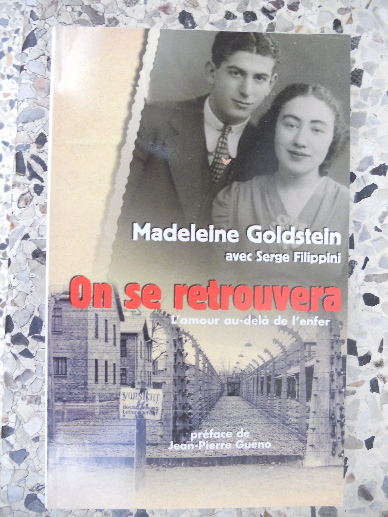
24633France Loisirs, 2007. Format 13x21 cm, reliure editeur sous jaquette illustree, 574 pages. Jaquette abimee.Bon etat, traces d'usage sur un livre d'occasion.
Original Wraps. 8vo. 23 pages. 21 cm. First edition. In French. Frontispiece portrait of Leon Bramson. 'Leon Bramson and the ORT Union. ' Published on the seventieth anniversary of the World Ort Union, in memory of Leon Bramson, founder of the ORT in France. A history of the French ORT, and the life and work of Leon Bramson (Leonty; 18691941) , communal worker and writer. Born in Kovno, Bramson graduated in law from Moscow University, then settled in St. Petersburg, where he practiced, and was active in the Society for the Promotion of Culture Among the Jews . He was also director of the central committee of the Jewish Colonization Association from 1899 to 1906. Under his direction a statistical study was carried out on the economic situation of the Jews in Russia (published in Russian in 1904 and in French in 19068) . He was one of the compilers of the Sistematicheskiy ukazatel literatury o yevreyakh na russkom yazyke ('Systematic Guide to Russian Literature About Jews, ' 1892) , and contributed many articles to Voskhod and other periodicals on problems of Jewish education, emigration, and colonization. Active in Jewish political life, Bramson was one of the founders of the 'Jewish Democratic Group. ' In 1906 he was elected to the First Duma as a deputy for Kovno province, joining the Labor faction ('Trudoviki') . During World War I, the Revolution, and the Civil War, Bramson was an organizer of the Central Committee for the Relief of Jewish War Sufferers (YEKOPO) . When he left Russia in 1920, he continued to work in Western Europe on behalf of ORT (with which he had been associated in Russia from 1909) , serving as its president from 1923 until his death. (EJ 2008) . The author, Dr David Lvovitch (1882-1950) studied law and economics in St Petersburg and later studied engineering in Munich. An early Zionist from a wealthy family, he visited the USA, spending the First World War years there. He returned to Russia and was elected to the short-lived 1918 Constituent Assembly. An industrialist, he was interested in ORT's agricultural and co-operative projects. Elected as a founder member of the World ORT Union Council in 1921, he was central in developing ORT into a world organisation. Lvovitch travelled abroad with Leon Bramson to find financial support for needy Russian Jews after the First World War. He worked successfully in the USA, cultivating support among the Russian emigre community. On Bramson's death Lvovitch and Aaron Syngalowski, as co-chairmen of the ORT Executive, shared the running of World ORT throughout the Second World War and after. Lvovitch, based in Paris, was in charge of ORT's remarkable programmes assisting and retraining displaced persons in Europe. When he died, the ORT Lvovitch School in Netanya was named in his memory. Subjects: Bramson, Leontii Moiseevich, 1869-1941. World ORT Union OCLC lists 3 copies (Yale, Biblio Natl France, Biblio Sainte-Genevieve) . Wraps previously folded down center, with crease line throughout; light soiling to wraps, with minor pen marks, otherwise fresh and clean. Good condition. (HOLO2-113-14)
1st edition. Original paper wrappers. 8vo. 26, 6 pages. 25 cm. In Hebrew and German. Title translates to Leaves of Agudist Yough. Nazi-era Newspaper of the Noar Agudati religious-nationalist youth movement. The group was founded in 1935 as a coalition of youth from Brit Ha-halutzim, Ezra, and Agudat Israel. They sought to encourage aliya to Israel in order to work the land and instill a spiritual element to settlement (EZRA, 2018) . SUBJECTS: Zionism. Orthodox Judaism. OCLC lists 2 copies worldwide (YIVO, TAU) . Wrappers are loose. Small chips to edges of wrapper. Pages browning. Overall very good. Rare and very displayable (YID-32-6)
Hardcover, 8vo, 206 pages, 21 cm. Contents: The return -- Rose Street -- The children -- Moral education -- Stephen and Anne -- Blue flames -- Hope. Short stories. Lustig (19262011) , was a Czech writer, screenwriter, and journalist. Born in Prague, Lustig was deported to the Theresienstadt concentration camp in 1942 and later to a number of others, including Auschwitz and Buchenwald. At the end of the war he managed to escape from the death train and reach Prague, where he later graduated from the School of Political and Social Sciences. Lustigs work is based mainly on his tragic experiences in concentration camps and postwar life in his homeland. He made his literary debut with the collection of stories Night and Hope (1958) filmed as Z. Brynychs A Transport from Paradise (1962) . Much of Lustigs fiction has been translated into several languages. In 2004 he was awarded the Vladislav Vancura Prize. From 2004 Lustig lived in Prague (Dagan and Pojar in EJ 2010) . Dust jacket in excellent condition. Light wear to binding. Excellent condition. Beautiful copy. (Holo2-71-8A)
Publishers cloth. 8vo. 206 pages. 21 cm. Second Edition. Contents: The return - Rose Street - The children - Moral education - Stephen and Anne - Blue flames - Hope. Short stories. Arnold Lustig (19262011) , was a Czech writer, screenwriter, and journalist. Born in Prague, Lustig was deported to the Theresienstadt concentration camp in 1942 and later to a number of others, including Auschwitz and Buchenwald. At the end of the war he managed to escape from the death train and reach Prague, where he later graduated from the School of Political and Social Sciences. Lustigs work is based mainly on his tragic experiences in concentration camps and postwar life in his homeland. He made his literary debut with the collection of stories Night and Hope (1958) filmed as Z. Brynychs A Transport from Paradise (1962) . Much of Lustigs fiction has been translated into several languages. In 2004 he was awarded the Vladislav Vancura Prize. From 2004 Lustig lived in Prague. (Dagan and Pojar in EJ 2010) . Dust jacket in excellent condition. Beautiful copy. (HOLO2-102-17)
Portfolio with Paper Dustjacket. 20 black and white sketches and 10 watercolors. With accompanying text by Esther Lurie; introd. Moshe Sharett ; foreword Eugene Kolb, Esther Lurie [1913-1998] was born in Liepaja, Latvia, to a religious Jewish family. From 1931-1934 she learned theatrical set design at the Institut des Arts Décoratifs in Brussels, and afterwards studied drawing at the Académie Royal des Beaux-Arts in Antwerp. In 1934 Lurie migrated to Palestine with most of her family and worked at various artistic activities. In 1939 she travelled to Europe to further her studies. World War II had begun while she was in Lithuania and during the Nazi occupation (1941-44) she was imprisoned in the Kovno ghetto along with the other Jews. As soon as she entered the ghetto, in mid-1941, Lurie began to sketch views of her new world. She has left behind a detailed written testimony of her life and work during World War II. This combination of literary and visual testimony make up a "living witness". Lurie drew everywhere in the ghetto, including the various workshops. Including a pottery workshop. During her visits there, Lurie got the idea of asking theJewish potters to prepare a number of jars for her. She would use these to conceal her art works if the situation worsened. After the deportation of 26 October 1943, in which 3,000 ghetto inmates were removed to forced labor camps in Estonia, Lurie hid her artcollection, approximately 200 drawings and watercolors, in the large jars she had prepared in advance. In July 1944, as the Red Army approached Lithuania, the ghetto was liquidated and those remaining were transferred to concentration camps and forced labor camps in Germany. The ghetto was set on fire and the buildings were blown up and burnt to prevent those hiding from escaping. Esther Lurie was sentto Stutthof concentration camp, leaving her hidden works behind. After the war some of her drawings were recovered, surviving with the Ältestenrat's archive. Avraham Tory succeeded in rescuing 11 sketches and watercolors and 20 of the photographs of her works. During the Eichmann trial, which took place in Jerusalem in 1961, Lurie's SecondWorld War works were exhibited as part of the testimony - giving an "official authorization" from Israel's Supreme Court to the rich documentary value of her sketches and watercolors. This is in addition to their aesthetic value as objects of art. SUBJECT(S): World War, 1939-1945 -- Pictorial works. Jews -- Lithuania -- Kaunas -- Holocaust, Jewish (1939-1945) -- Guerre mondiale, 1939-1945 -- Ouvrages illustre´s. Juifs -- Lituanie -- Kaunas -- Holocauste, 1939-1945 -- Ethnic relations. OCLC: 848164. Light edgewear & stain to portfolio & dustjacket, text and plates remain very clean and dramatic. Overall very good condition. (HOLO2-98-15C)
Portfolio with Paper Dustjacket. 20 black and white sketches and 10 watercolors. With accompanying text by Esther Lurie; introd. Moshe Sharett ; foreword Eugene Kolb, Esther Lurie [1913-1998] was born in Liepaja, Latvia, to a religious Jewish family. From 1931-1934 she learned theatrical set design at the Institut des Arts Décoratifs in Brussels, and afterwards studied drawing at the Académie Royal des Beaux-Arts in Antwerp. In 1934 Lurie migrated to Palestine with most of her family and worked at various artistic activities. In 1939 she travelled to Europe to further her studies. World War II had begun while she was in Lithuania and during the Nazi occupation (1941-44) she was imprisoned in the Kovno ghetto along with the other Jews. As soon as she entered the ghetto, in mid-1941, Lurie began to sketch views of her new world. She has left behind a detailed written testimony of her life and work during World War II. This combination of literary and visual testimony make up a "living witness". Lurie drew everywhere in the ghetto, including the various workshops. Including a pottery workshop. During her visits there, Lurie got the idea of asking theJewish potters to prepare a number of jars for her. She would use these to conceal her art works if the situation worsened. After the deportation of 26 October 1943, in which 3,000 ghetto inmates were removed to forced labor camps in Estonia, Lurie hid her artcollection, approximately 200 drawings and watercolors, in the large jars she had prepared in advance. In July 1944, as the Red Army approached Lithuania, the ghetto was liquidated and those remaining were transferred to concentration camps and forced labor camps in Germany. The ghetto was set on fire and the buildings were blown up and burnt to prevent those hiding from escaping. Esther Lurie was sentto Stutthof concentration camp, leaving her hidden works behind. After the war some of her drawings were recovered, surviving with the Ältestenrat's archive. Avraham Tory succeeded in rescuing 11 sketches and watercolors and 20 of the photographs of her works. During the Eichmann trial, which took place in Jerusalem in 1961, Lurie's SecondWorld War works were exhibited as part of the testimony - giving an "official authorization" from Israel's Supreme Court to the rich documentary value of her sketches and watercolors. This is in addition to their aesthetic value as objects of art. SUBJECT(S): World War, 1939-1945 -- Pictorial works. Jews -- Lithuania -- Kaunas -- Holocaust, Jewish (1939-1945) -- Guerre mondiale, 1939-1945 -- Ouvrages illustre´s. Juifs -- Lituanie -- Kaunas -- Holocauste, 1939-1945 -- Ethnic relations. OCLC: 848164. Wear and stains to portfolio & dustjacket, lacks rear panel of dustjacket, text and plates remain very clean and dramatic. Good condition thus. (HOLO2-98-15D)
First edition. Original illustrated wrappers, 12mo, 43, 10 pages. Text in English and Hebrew. 13 drawings made by a Jewish woman of her fellow inmates while in the concentration camp at Leibitsch which consisted of 1200 Jewish women who had been deported from the Kaunas Ghetto in East Prussia. Lurie was liberated by the Red Army on 21 January 1945. In March 1945 she reached a camp in Italy, where she met Jewish soldiers from Palestine who were serving in the British army. One of them, the artist Menahem Shemi, organized an exhibition of drawings from the camps, which resulted in the publication of a booklet Jewesses in Slavery. This contained drawings by Lurie from Stutthof and Leibitz and was published by the Jewish Soldiers' Club of Rome in 1945. Lurie also created stage sets for the military song and dance group in the camp, which was founded by Eliahu Goldberg and Mordechai Zeira. Lurie reached Israel (Palestine) in July 1945 and was received with great excitement. Her stories were published in the press and her drawings were exhibited in exhibitions. In 1946 she was again awarded the Dizengoff Prize for a sketch Girl with Yellow Badge, which she had made in the Kovno ghetto (World ORT and Beit Lohamei Haghetaot, 2001) . SUBJECT(S) : World War, 1939-1945 -- Personal narratives, Jewish. Women in art. OCLC Worldcat lists 18 copies worldwide. Ex-library copy with small pocket and stamps in Hebrew, wrappers slightly toned with a couple of tiny stains, otherwise Very Good Condition. (holo2-125-38A)
(FT) Hardcover, folio, 172 pages. In Hebrew. Published shortly before the Nazi invasion the following year. SUBJECT(S) : Title Subject: Talmud Bavli. Shevuot -- Commentaries. OCLC lists 1 copy worldwide (National Library of Israel) . Light wear to binding. Yellowing of pages. Good condition. (Heb-33-8)
Cloth. 12mo. 16 pages. [36] leaves of plates. 74 ill. 20 cm. In German. Series: Schaubücher 2. Collection of iconic images from Russian Revolution-era films including Ivan the Terrible and Battleship Potemkin. Includes many films by Sergie Eisenstein and other modernist Soviet Jewish filmakers. "Anatoly Vasilievich Lunacharsky, Lenin's commissar for culture, believed that "aristocratic" arts such as ballet were the rightful heritage of the workers. He fought hard against the "revolutionaries" who insisted that ballet give way to physical culture, gymnastics, and folk dance. For the Bolshoi, this was disastrous" (Plisetskaya, 2001). SUBJECT (S) : Motion pictures -- Soviet Union -- Pictorial works. "Zu den Bildern, " by Leo Hirsch: pages 13-16. Pages are slightly stained, but all text is clear. Good condition. (HOLO2-39-29)
DISPONIBILITÀ GARANTITA AL 99%; SPEDIZIONE ENTRO 12 ORE DALL'ORDINE. OTTIME CONDIZIONI GENERALI, LIEVI SEGNI DEL TEMPO, QUALCHE MACCHIETTA/FIORITURA. Luce d'Eramo, pseudonimo di Lucette Mangione (Reims, 17 giugno 1925, Roma, 6 marzo 2001), è stata una scrittrice italiana. Il viaggio volontario di una giovane, cresciuta nei miti del fascismo, nell'inferno della Germania nazista e dei campi di sterminio. Un viaggio che segnerà nella sua vita una deviazione decisiva e senza ritorno. Diciannove anni, evasa dei Lager nazisti, Lucia piomba nel mondo parallelo della clandestinità che brulica attorno ai campi. Una successione d'incontri e di fughe solitarie s'interrompe brutalmente a Magonza. Ferita gravemente sotto un bombardamento, Lucia si ritrova in ospedale a lottare per sopravvivere. Chi è? Cosa l'aveva spinta a fuggire da casa, ad andare volontariamente in un Lager, a lavorare in una fabbrica tedesca? Sono solo alcune delle domande che si presentano spontanee seguendo le vicende di Lucia nel coatto universo hitleriano, e che la protagonista stessa si pone a trent'anni di distanza quando, dice, non ha più mondi di riserva in cui comporsi. “A volte quando si tocca il fondo di uno sviamento, si sbuca infine dall'altra parte.” Luce d'Eramo/Lucia è una giovane donna di origini borghesi, figlia di un sottosegretario della Repubblica di Salò, che è vissuta in Francia e ha alimentato, attraverso la lontananza, i miti del fascismo dentro i quali è cresciuta. Non solo, ora è convinta che fra le menzogne sul nazifascismo ci siano anche le crudeltà dei campi di lavoro. Decide di verificare in prima persona e si reca, come volontaria, nei Lager, sicura di poter smentire quelle che ritiene calunnie sulle modalità di trattamento dei lavoratori da parte del grande Reich di Hitler. È allora che comincia una discesa agli inferi, complessa, violenta, che legge l'orrore, lo assume in sé e sembra addirittura scontarlo. Luce d'Eramo ripercorre con Lucia un tracciato di formazione che è stato il suo, un tracciato che tuttora, soprattutto ora (accecati da ogni sorta di revisionismo), suona come avventura della coscienza, testimonianza e grido di allarme. Deviazione è una storia che guarda in faccia il Male e l'orrore, e che disegna, attraverso una struttura e una lingua saldamente governate, un destino non ancora concluso, tutto ancora confitto nella violenza liberatoria di ogni possibile deviazione. Uscito nel 1979, Deviazione ha conosciuto subito un grandissimo successo ed è stato pubblicato in tutto il mondo. Descrizione bibliografica Titolo: Deviazione Autore: Luce D'Eramo Introduzione di: Mario Spinella Editore: Milano: Biblioteca Universale Rizzoli, Maggio 1990 Lunghezza: 363 pagine; 20 cm ISBN: 8817137731, 9788817137737; 8817114855, 9788817114851; 8817865648, 9788817865647; 8858809319, 9788858809310; 8807888912, 9788807888915 Collana: Volume 773 di BUR Rizzoli narrativa Soggetti: Letteratura italiana, Narrativa concentrazionaria, Autobiografie, Memorie, Romanzo autobiografico, Romanzi storici, Scrittrici, Esperienze, Nazismo, Campi di concentramento, Antisemitisimo, Ebrei, Persecuzioni razziali, Razzismo, Ebraismo, Sterminio, Olocausto, Shoah, Germania, Campi di lavoro, Deportati, Sopravvissuti, Sopravvivenza, Orrore, Volontariato, Volontari, Borghesia, Fascismo, Hitler, Industria tedesca, Operaie, Fabbriche, Sfruttamento, Storie vere, Testimonianze, Deviation: A Novel, Der Umweg, Desviación, Le detour: recit, Male, Successi editoriali, Bestsellers, Storia contemporanea, Giallo della memoria, Novecento italiano, Racconti quasi di guerra, Cronache, Libri Vintage Fuori catalogo, Classici, Auschwitz, Dachau, Mauthausen, Belsen, Seconda Guerra Mondiale, Camere a gas, Forni crematori, Monaco di Baviera, Lavoratori stranieri, Prigionieri politici, Rastrellamenti, Durchgangslager, Comportamento, Psicologia, Morte, Violenza, Kapò, Burocrazia, Farbenindustrie, Frankfurt-Hoechst, Varsavia, Ghetti, Francoforte, Sciopero, Rivolte, Dinamiche, Organizzazione, Siemens, Magonza, Viaggio, Fuga, Thomasbrau, Donauworth, Arbeit, Italian literature, Concentrationary fiction, Autobiographies, Memories, Autobiographical novel, Historical novels, Writers, Experiences, Nazism, Concentration camps, Anti-Semitism, Jews, Racial persecutions, Racism, Judaism, Extermination, Holocaust, Germany, Labor camps, Deported, Survivors, Survival, Horror, Volunteering, Volunteers, Bourgeoisie, Fascism, German industry, Workers, Factories, Exploitation, True stories, Testimonials, Evil, Editorial successes, Contemporary history, Memories mystery, Italian twentieth century, Almost war stories, Chronicles, Out of print books, Classics, World War II, Gas chambers, Crematorium ovens, Munich, Foreign workers, Political prisoners, Roundups, Behavior, Psychology, Death, Violence, Kapo, Bureaucracy, Warsaw, Ghetti, Frankfurt, Strike, Revolts, Dynamics, Organization, Siemens, Mainz, Travel, Escape Parole e frasi comuni addosso ospedale baracca camminare carrozzina compagni acqua Dachau Dario Bellezza IG Farben deportati guerra donna donne fabbrica faccia fascista francesi gambe Germania Giorgio Parisi giorno occhi grida Grùscenka guerra Höchst Farben Ignazio Silone in piedi Jeanine Johann K-Lager amore aria indomani occhio operaia ultima Lager Lagerführer testa voce lavoro bombe mani letto Louis Lulù Magonza mangiare mano Martine nazisti notte pagliericcio passato pensare piedi polacco prigionieri racconto ragazza ricordo ride rimpatriata russi Schwester sciopero settimane soldati stranieri tedeschi Terzo Reich Thomasbräu tornare viso volontaria
Publishers cloth. 8vo. 335 pages. 22 cm. First edition. "The exciting and dramatic story of an English mother and daughter trapped in Nazi Germany from 1938 to 1944". Concerns the story of an Englishwoman living in Germany with her small child after her German violinist husband is liquidated by the Nazis. She is assisted by the resistance to rescue her child and later heroically dies obtaining information concerning the V2 missiles. Subjects: Germany - History - 1933-1945 - Fiction. Very good condition in very good jacket. (HOLO2-95-9)
200034608AZürich, München, Pendo, 2000. 8°. 407 Seiten. Original-Pappband mit Original-Umschlag. (Sehr gutes Exemplar).
Grand Livre du Mois, 2014. In-8 broché de 349 pages illustrées. Rares passages discrètement soulignés au crayon de papier en marge sinon Très bon état.
Publishers cloth. 8vo. 199, 29 pages. 24 cm. First edition. In German. Published under the auspices of the Council of Jews from Germany. Title translates as Suspended Destruction; Commerative Book. A commemoration book for German-Jewish rabbis, community leaders, scholars, and writers, with 29 pages of photographs. Subjects: Jews - Germany - Biography. World War, 1939-1945 - Jews. Great condition in fair jacket. (HOLO2-103-19)