2 490 résultats
Hardcover, 270 pages, illustrated, 4to, 28 cm. SUBJECT (S) : Jews -- Hungary -- Biography. Jewish youth -- Hungary -- Biography. Zionism -- Hungary -- History -- 20th century. World War, 1939-1945 -- Jewish resistance -- Hungary. Jews, Hungarian -- Israel -- Biography. Holocaust survivors -- Israel -- Biography. Ondergrondse organisaties. Joden. Zionisten. Hongarije. Note(s) : "Copyright (c) The Society for the Research of the History of the Zionist Yorth Movement in Hungary. "-Title page verso. Includes bibliography (p. 261-264) and index. Wear to corners and binding. Otherwise, good condition. (Holo2-16-23)
Hardcover, 270 pages, illustrated, 4to, 28 cm. SUBJECT (S) : Jews -- Hungary -- Biography. Jewish youth -- Hungary -- Biography. Zionism -- Hungary -- History -- 20th century. World War, 1939-1945 -- Jewish resistance -- Hungary. Jews, Hungarian -- Israel -- Biography. Holocaust survivors -- Israel -- Biography. Ondergrondse organisaties. Joden. Zionisten. Hongarije. Note(s) : "Copyright (c) The Society for the Research of the History of the Zionist Yorth Movement in Hungary. "-Title page verso. Includes bibliography (p. 261-264) and index. Very good condition. (Holo2-16-23A)
1995139226Ffm., Jüdischer Verlag im Suhrkamp Verlag, 1995. 142, (1) S., Or.Pbd. mit Schutzumschlag, 8°. Die Frage nach der Authentizität der in diesem Buch beschriebenen und der eigenen Biographie zugeordneten Ereignisse entfachte bei Erscheinen eine heftige Diskussion und veranlasste den Verlag, das Buch "zurückzuziehen". Beigelegt Artikel von Andreas Breitenstein und von Wolf Gebhardt aus der NZZ von 1998 und 1999. Hardcover Schönes Exemplar.
Mm 210x260 Catalogo della Mostra di Trieste, Civico Museo Revoltella, 23 novembre 2000 - 27 gennaio 2001. Brossura originale con bandelle, copertina illustrata a colori, 254 pagine con numerose illustrazioni in nero e a colori comprese nel testo. Volume in perfette condizioni di nuovo, spedizione in 24 ore dalla conferma dell'ordine.
1st edition. Later Cloth with covers bound in, Oblong 4to, Aproximately 100 leaves, mostly photographic plates. Includes 175 photographic illustrations. Introductory text and captions (many of Biblical origin) in English, Hebrew and Yiddish. This album seeks to present a picture of the wanderings of the 'remnants' of European Jewry - wanderings that began at the conclusion of the last war and still continue (From the introduction) . A collection of 175 black and white photographs documenting the Bericha - - the 'illegal' underground flight of surviving European Jews into Palestine immediately following the Holocaust. This was the great exodus of European Jews following the holocaust, who illegally crossed the borders of Soviet-occupied lands and made their way as illegal immigrants to the shores of Palestine. Special sections of this album are dedicated to children and orphans who took part in this immigration effort, and another section documents the famous journey of the ship Exodus. Compiled by Ephraim Dekel, a high-ranking Haganah officer and architect of the Bericha escape-route. SUBJECT(S) : Jewish refugees. Emigration and immigration. Jewish refugees. Berih? Ah (Organization) Israel -- Emigration and immigration -- Pictorial works. Staining to first 10 leaves, heavy wear to original cover, which is bound in, but photographic and text pages are very good--clear, solid, and powerful. A Good Copy. (holo2-125-10)
1979sa979Hachette Classiques Broché 1979 In-8 (13,6 x 21 cm), broché, 60 pages, photos en noir et blanc ; couverture brunie, dos frotté, quelques rousseurs et traces de décoloration sur les plats et gardes, tampon 'specimen' sur la page de titre, par ailleurs intérieur frais, assez bon état général. Livraison a domicile (La Poste) ou en Mondial Relay sur simple demande.
19601260331960 Kongress-Verlag, Berlin - 1960 - 187 pages - Nombreuses reproductions photographiques en N&B, in et hors texte, dans l'ouvrage - Texte en français, russe et allemand
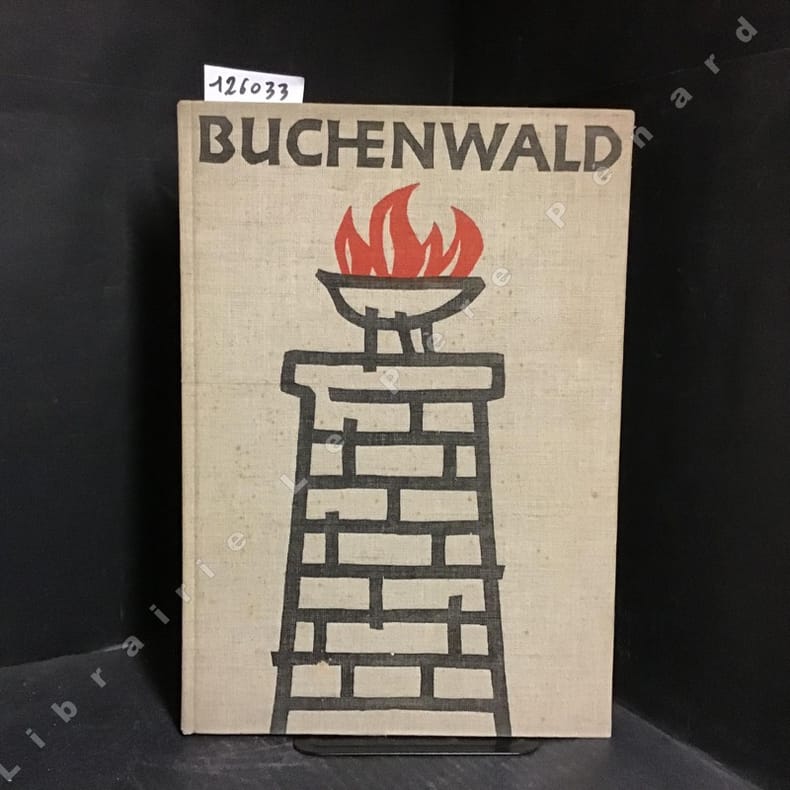
Original Cloth. Folio (large) . 187, [4] pages. 34 cm. First edition. In German, Russian, French and English. Attractively printed and bound multilingual dedication book for the Buchenwald Memorial; includes preface, speeches, and text by Herbert Sandberg; pages 65-159 illustrated, detailing the history of Buchenwald, photographs of the liberation, post-war memorial ceremonies, opening of the Buchenwald Memorial, extensive photographs of various portions of the Memorial; last pages contain the Buchenwald Oath and Pledge. Contains list of sculptors, architects, workers, artists, etc. Who worked on the Buchenwald Memorial. Published by the Komitee der Antifaschistischen Widerstandskämpfer (KdAW) [Committee of Anti-Fascist Resistance Fighters]. Subjects: Buchenwald (Concentration camp) . Memorial. OCLC lists 20 copies. Light wear to cloth, otherwise very fresh and clean. Very good condition. (HOLO2-117-20)
122725Imprimerie Artistique en couleurs, Lyon - 1946 - In-folio, chemise broché avec papier cristal, couverture illustrée, feuillets détachés, dans une chemise cartonnée, dans un emboitage gris neutre - 78 planches illustrées hors-texte en N&B - Exemplaire numéroté sur Vélin pur fil Lafuma, Ex N°274/1200.
Original Paper Wrappers. 21 pages. Illus. 20 cm. In German. Title translates to English as, Buchenwald: A Guide Through the Memorial. Includes maps, significant dates. SUBJECT (S) : Buchenwald (Concentration camp) . Wrappers worn but solid. Internal pages are tanned, but not fragile. Good Condition. (HOLO2-93-17)
1st edition. Original color paper wrappers. 8vo, 47 pages. Black and white photographs throughout. Holocaust-era imprint calling on American's to reject racism, bigotry, and Antisemitism. "Christian young people are increasingly aware of the implications of religious and racial antagonisms, and are determined to make concrete their religious professions of love and brotherhood. To help them in the human engineering problem of bridging the gulfs between men is the purpose of this booklet. " (from foreword by author) Describes different religions and includes questions to discuss and things to do for each one. Table of Contents: Who are we Americans? , Roman Catholics, The Jewish People, Protestants, Our Racial Minorities, Cooperating for Common Ends. SUBJECT(S) : Minorities -- United States. Prejudices. Minorities. Race relations. OCLC: 638880464, OCLC lists 4 copies worldwide. (HEBREW UNION COL; TRINITY UNIV, COATES LIBR; WISCONSIN HISTL SOC LIBR; TEL AVIV UNIV) Blue cover with illustration of bridge. Few pencil notes on cover, previous owner's stamp on title page, light wear to front and back cover, else clean copy. Very Good Condition overall. Scarce. (HOLO2-159-1-2) xx
Softbound periodical. 12mo. 144 pages. 21 cm. Trimestrial bulletin Nr. 11, March 1986. In French and Dutch. One of three thousand copies printed. With essays in French and Dutch theorizing fascism, the European parliament, a contemporary NYC exposition on the holocaust, an essay by Elie Wiesel on Auschwitz, a tract denouncing revisionist literature in California, poems, information, book reviews and letters. Subjects: Holocaust, Jewish (1939-1945) - Belgium - Periodicals. Jews - Persecutions - Belgium - Periodicals. Auschwitz (Concentration camp) - Periodicals. Belgium - Ethnic relations - Periodicals. OCLC lists 33 copies worldwide. Faded pencil marks on top left of cover, light stains to backstrip and back of cover, very clean. Near fine condition. (HOLO2-80-2)
Softbound periodical. 12mo. 116 pages. 21 cm. Trimestrial bulletin Nr. 8, April-June 1985. In French and Dutch. One of fifteen hundred copies printed. With essays commemorating the opening of the Library of the Auschwitz foundation, commemoration of fourty years since the liberation, a lengthy correspondence between Albert Einstein and Sigmund Freud in 1932, poems, book reviews, letters, and more. Subjects: Holocaust, Jewish (1939-1945) - Belgium - Periodicals. Jews - Persecutions - Belgium - Periodicals. Auschwitz (Concentration camp) - Periodicals. Belgium - Ethnic relations - Periodicals. OCLC lists 33 copies worldwide. Very light pencil markings and stains on cover, pages fresh. Near fine condition. (HOLO2-80-3)
(FT) Original Paper Wrappers. 4to. 65, 15 pages. Illus. 26 cm. In English and Yiddish. Cover Subtitles: Israels 36th Anniversary Year, 1948-1984, Dedicated to 20 Years Monument, 1964-1984. SUBJECT(S) : Jews -- Pennsylvania -- Philadelphia -- Periodicals. Jewish refugees -- Pennsylvania -- Philadelphia -- Periodicals. Holocaust survivors -- Pennsylvania -- Philadelphia -- Periodicals. Association of Jewish Holocaust Survivors (Philadelphia, Pa. ) -- Periodicals. OCLC lists two copies worldwide (University of Southern California, US Holocaust Memorial Museum) . Covers stained, slightly wavy from water, but still solid. Internal pages are clean. Good condition. (HOLO2-64-16)
Publishers cloth. 8vo. 252 pages. 22 cm. First edition. With 18 black and white plates. Subtitle: On the work of Sue Ryder on behalf of displaced persons in Germany. With plates, including portraits. A biography and history of the relief work done by Sue Ryder for Displaced Persons and Holocaust Suvivors. Born in Yorkshire in 1924, Sue Ryder served with the Special Operations Executive (SOE) during the Second World War. Established by Winston Churchill in 1940, the SOE promoted and coordinated resistance activity in German occupied Europe. Her life's mission became clear after World War II. During the post-war reconstruction in Europe, she worked as a volunteer amongst displaced and stateless refugees. During this time she opened her first home, St Christopher's in Germany. It was designed as a haven for refugees, many of whom were survivors of concentration camps. On her return to England, she established the Sue Ryder Foundation with the aim to provide care where it is needed most. Sue Ryder was married for many years to war hero and fellow charity founder the late Leonard Cheshire VC, who died in 1992. Lady Ryder was made a life peer in 1978 and was a Companion of the Order of St Michael and St George in 1975. She also received the Order of the British Empire (OBE) in 1957. (Sue Ryder Foundation) Subjects: Refugees. Britain. Biographies. Ryder. Social issues. Refugees. Organizations S. I. R. World War 1939-1945. German camps and prisons. Britain. Biographies. Ryder. Social issues. Refugees. Organizations S. I. R..World War 1939-1945. German camps and prisons. Outer edges lightly soiled, light wear to cloth. Without jacket. Very good condition. (HOLO2-100-15) XX
Hardcover, xiii, 262 pages, 8vo, 24 cm. SUBJECT (S) : Holocaust, Jewish (1939-1945) , in literature. Literature, Modern -- 20th century -- History and criticism. Jewish literature -- History and criticism. Holocauste, 1939-1945. Litterature -- 20e siècle -- Histoire et critique. Litterature juive -- Histoire et critique. Letterkunde. Holocaust. Bibliography on pages 245-252. Includes index. In jacket, very good condition. (mx-32-3)
Original Wrappers. 4to. 39 pages. 30 cm. First Edition. In Polish. Title translates as, There Were More Deaths, Than Bread: Jednodniowka Released On the Occasion of the Exhibition Oswiecim accuses. " Jednodniowka publications are typically journals or pamphlets issued by organizations with no regular publications, but may also be published quarterly or on a semi-regular basis. Contains period advertisements. Journal containing poetry, prose and articles related to the conditions of Polish concentration camps. The Polski Zwiazek Bylych Wiezniów Politycznych Hitlerowskich Wiezien I Obozów Koncentracyjnych, (translates to Polish Association of Former Political Prisoners of Nazi Concentration Camps and Prisons) was formed in 1946, and existed until 1949. Later reformed in the 1990s the organization focuses on youth outreach and Holocaust education. Subjects: Holocaust. Concentration camps. Auschwitz-Birkenau. OCLC lists 2 copies worldwide. (Natl. Libr. Of Poland, Central Connecticut State University) Light soiling and age toning. Dramatic color cover illustration. Very good + condition. (HOLO-114-15)
1st edition, original cloth, 4to, xix+ 288+ (2) pages. On title page: Brzezin memorial book. Illustrations throughout. Yiddish, with English introduction. There once was a town of Jewish tailors Brzezin. From early dawn until late at night one could hear the music of the Singer sewing machines. It was the music of hard work, of intense anxiety, of a hard life, but also of noisy youth, semi-intellectuals, observant Jews, Hasidim who lived and had aspirations in the small Jewish town Brzezin. The Nazi savages extinguished this life forever, transformed it into ashes. Only a few Jews from the tailoring town Brzezin, by some miracle, remain, scattered over the entire world, individuals who were witnesses to the German cannibalism. May these words, frail in print, but inscribed not with ink but with blood, be a modest contribution to the matseve [gravestone] for my native town, Brzezin. Brzezin was one of the oldest and most popular Jewish communities in Poland. When this community was established, it carried the name Krakowek [Little Krakow]. At that time, the community extended from the Strykower highway to beyond the Jewish besoylem [cemetery] to the surrounding hills. The Polish noblewoman, Anna Lasocka, had brought the first weavers from afar into this community. Then the community developed even further and began to broaden its borders. At that time, the town already carried the name Brzezin. Jewish tailors came to Brzezin from many places, and after several generations, the town developed its own type of tailoring industry, by which it was known all over the world. A cottage industry was the main occupation here. As early as 1772, Brzezin was famous for its mass production in tailoring. Until 1914 the great Czarist Russia was flooded with the inexpensive products of Brzeziner tailors. In the years between the two world wars, the export of Brzezin industry was spread over many lands in Europe and into other parts of the world. In this, the great Jewish magaziners [owners of clothing enterprises] exporters such as Frankensztejn, Tuszynski, Sulkowicz, and others played a great role. The Jews in Brzezin did not only work, they also participated actively in the socio-political and cultural life of the town, had their representatives on the town council in town hall, and had their religious and secular educational, cultural, and social organizations. Materially, it was a life of Jewish poverty, but spiritually, socially, and culturally, it was rich. (translated from book) SUBJECT(S) : Holocaust, Jewish (1939-1945) -- Poland -- Brzeziny (Lo´dz´) ; Jews. OCLC: 19306453. Light wear on cover, some wear on spine. Good Condition Overall. (YIZ-16-6A)
1st edition, original cloth, 4to, xix+ 288+ (2) pages. Illustrations throughout. Yiddish, with English introduction. There once was a town of Jewish tailors Brzezin. From early dawn until late at night one could hear the music of the Singer sewing machines. It was the music of hard work, of intense anxiety, of a hard life, but also of noisy youth, semi-intellectuals, observant Jews, Hasidim who lived and had aspirations in the small Jewish town Brzezin. The Nazi savages extinguished this life forever, transformed it into ashes. Only a few Jews from the tailoring town Brzezin, by some miracle, remain, scattered over the entire world, individuals who were witnesses to the German cannibalism. May these words, frail in print, but inscribed not with ink but with blood, be a modest contribution to the matseve [gravestone] for my native town, Brzezin. Brzezin was one of the oldest and most popular Jewish communities in Poland. When this community was established, it carried the name Krakowek [Little Krakow]. At that time, the community extended from the Strykower highway to beyond the Jewish besoylem [cemetery] to the surrounding hills. The Polish noblewoman, Anna Lasocka, had brought the first weavers from afar into this community. Then the community developed even further and began to broaden its borders. At that time, the town already carried the name Brzezin. Jewish tailors came to Brzezin from many places, and after several generations, the town developed its own type of tailoring industry, by which it was known all over the world. A cottage industry was the main occupation here. As early as 1772, Brzezin was famous for its mass production in tailoring. Until 1914 the great Czarist Russia was flooded with the inexpensive products of Brzeziner tailors. In the years between the two world wars, the export of Brzezin industry was spread over many lands in Europe and into other parts of the world. In this, the great Jewish magaziners [owners of clothing enterprises] exporters such as Frankensztejn, Tuszynski, Sulkowicz, and others played a great role. The Jews in Brzezin did not only work, they also participated actively in the socio-political and cultural life of the town, had their representatives on the town council in town hall, and had their religious and secular educational, cultural, and social organizations. Materially, it was a life of Jewish poverty, but spiritually, socially, and culturally, it was rich. (translated from book) SUBJECT(S) : Holocaust, Jewish (1939-1945) -- Poland -- Brzeziny (Lo´dz´) ; Jews. OCLC: 19306453. Light wear on cover, Good Condition Overall. (YIZ-16-6)
Later Cloth. 8vo. 292 pages. 21 cm. First Portuguese edition. Translated from the Russian, this documentary in the form of a novel details the massacre at Babi Yar, a large ravine outside the city of Kiev where 100, 000 Jews, Gypsies, and Communists were mass murdered in 1941. Subjects: Babi Yar Massacre, Ukraine, 1941 - Fiction. War stories. Russian fiction - Translations into Portuguese. Historical fiction. Soviet Union - History - German occupation, 1941-1944 - Fiction. OCLC lists four copies worldwide (Biblio Senado Federal; Gratz Col; Univ Pittsburgh; Boston Pub Libr) . Previous owners signature on endpage; otherwise clean and fresh. Good + condition. (HOLO2-99-19)
2003155995Le cherche midi Le Cherche Midi 2003. Fort In-8 broché de, 463 pages. Photos hors texte en noir et blanc. Très bon état
Original Cloth. 4to. IX, 118 pages. 29 cm. First edition. Inscribed by Valeria Furth, 1991, on titlepage. Contains memories and dozens of color reproductions of the paintings of Valeria Jakober Furth (1926-2011) ; born in Munkacs, Czechoslovakia. Deported to Auschwitz in 1944, she was liberated in April 1945. She emigrated to New York in 1948 and married her devoted Frank in 1949. They were together for 52 years. Valerie studied with Louise Nevelson and became an accomplished painter and sculptor. In the mid-1970s she began a series of paintings and sculptures from her Holocaust experiences. She then published a book, Cabbages and Geraniums, and told her story in schools and communities. Valerie and Frank were Benefactors of the Museum of Jewish Heritage. - NY Times Obituary, March 24, 2011. Subjects: Jews - Ukraine - Mukacheve - Biography. Holocaust, Jewish (1939-1945) - Ukraine - Mukacheve - Personal narratives. Holocaust, Jewish (1939-1945) , in art. Judenverfolgung Erlebnisbericht Bildband Autobiographie Judenvernichtung Furth, Valerie Jakober. Furth, Valerie Jakober Auschwitz (Concentration camp) Mukacheve (Ukraine) Biography. Light wear to jacket, otherwise clean and fresh. Very good + condition. (HOLO2-117-33)
Stiff paper wrappers. 8vo. 77, [5], 24 pages. 25 cm. Serial Publication. The Center for Research and Studies on the History of the Second World War was founded on 13 December 1967. Its task was to take all necessary measures to collect, preserve and study documents or archives relating to the Second World War in Belgium, its antecedents, background and consequences [Moniteur Belge (Belgian law gazette) ], 10 February 1968, n° 29, p. 1259-1260) . Originally, the Center was attached to the General Archives and was placed under the direction of the Department of National Education. This issue of the Journal of the Center, Number 10, October 1980, contains the dossiers and expositions of the various committees at the Center, new additions to the Archives and Collections, Recent Publications and Conferences of the Center, A Chronicle on Resistance during the Second World War, Notes from over a dozen lectures at the Center, and a bibliography of recent publications related to Belgium in the Second World War. Includes 4 pages of photographic plates. Subjects: World War, 1939-1945 - Periodicals. World War, 1939-1945 - Belgium - Periodicals. Covers lightly soiled, with bumped outer edges. Clean and fresh. Good condition. (HOLO2-100-6)
Stiff paper wrappers. 8vo. 54, 52 pages. 25 cm. Serial publication. The Center for Research and Studies on the History of the Second World War was founded on 13 December 1967. Its task was to take all necessary measures to collect, preserve and study documents or archives relating to the Second World War in Belgium, its antecedents, background and consequences [Moniteur Belge (Belgian law gazette) ], 10 February 1968, n° 29, p. 1259-1260) . Originally, the Center was attached to the General Archives and was placed under the direction of the Department of National Education. This issue of the Journal of the Center, Number 11, December 1981, contains the dossiers and expositions of the various committees at the Center, new additions to the Archives and Collections, Recent Publications and Conferences of the Center, A brief biography of the anti-nazi Cardinal Van Roey, Notes from over a dozen lectures at the Center, and a bibliography of recent publications related to Belgium in the Second World War. Subjects: World War, 1939-1945 - Periodicals. World War, 1939-1945 - Belgium - Periodicals. Light wear to covers. Good + condition. (HOLO2-100-7)
Original Publishers Cloth. 8vo. 314 pages. 22 cm. First American Edition. Fiction. On the morning of the Allied victory in Europe at the end of the Second World War, the Polish inmates of a slave labor camp at Papenburg, near the Dutch border of Germany, exultantly throw off their shackles. The Camp of All Saints becomes, overnight, an island of victors in the ocean of defeated Germany. This is their last victory. Wild rejoicing is followed by a saturnalia of reprisals when by rape, plunder, torture and murder the Poles exact vengeance from their former captors. Then the victors relapse into the quiescent servility of the stateless, to wait vainly for visas to a new life. And the Germans, technically defeated, flourish while the DPs at the camp despair. jacket. Translated by Norbert Guterman. Very Good Condition in like jacket. A beautiful copy. (HOLO2-93-10)