Friedländer, SaulAntiquariat.de

2 489 résultats
200677699München, Deutscher Taschenbuch Verlag, 2006. 8°; 1317 Seiten; Orig.-Broschur kaum Gebrauchsspuren
Laminated wraps. 8vo. 136 pages. 21 cm. First edition. In German. The End of the Jewish rural community: Nonnenweier in Baden 1933-1945. Family register of the Nonnenweier community, pages 96-136. With 18 illustrations. A history of the small Jewish community (approximately 70 people in 1933) of Nonnenweier in west Baden during the nazi period; the community, as with most Baden Jews, were deported to the Gurs concentration camp in France in 1940. Hard lamination over original wraps. Subjects: Jews - Germany - Nonnenweier. Holocaust, Jewish (1939-1945) - Germany - Nonnenweier. Judenverfolgung Geschichte (1933-1945) Nonnenweier (Germany) - History. Nonnenweier Juden Institutional stamps on endpages, otherwise fresh and clean. Very good condition. (HOLO2-104-34)
Softcover. 8vo. 26 pages. 21 cm. In German. Philosemitic treatise, denouncing Antisemitism. Reprinted from, "Es werde Licht! Monatsblätter zur Förderung der Humanität, Jahrg. XI (1880) , Februarheft, a monthly magazine published by Scholl to espouse free religious beliefs and speak out against anti-Semitism. Title translates to English as, Judaism and Its World Mission. For more on Scholl, see Dagmar Herzogs fascinating article, Carl scholl, Gustav Struve, and the problematics of philosemitism in 1840s Germany: Radical Christian dissent and the reform Jewish response, ( in JEWISH HISTORY Volume 9, Number 2, 53-72). SUBJECT(S): Judaism. Religion. Judentum. OCLC lists 10 copies worldwide. "Surplus - Duplicate" stamp on cover, book plate on front end page. Internal pages are darkened with some damp stains but still nice. Margin notes on one page. All text is clear. Good condition. Important imprint from the Judenfrage debates of 19th Century Germany. (HOLO2-49-17).
1st edition. Original illustrated paper wrappers, 8vo, 83 pages. In German. Nazi-era imprint. Title translates as, The Colonial Problem of Germany. The Need for the Redistribution of the Worlds Sources of Raw Materials. Facts and Arguments for the Return of the German Colonies. A Publication of Current International Voices. Includes maps on cover, as well as color maps showing the colonies of the great world powers. Very Good Condition. (HOLO2-138-15)
198613191CBFrankfurt am Main, Waldemar Kramer Verlag, 1986. gr.8°, 273 S., mit einigen Dokumentenabb., original Kartonagen (Paperback), Erstausgabe schönes, sauberes Exemplar (2ho)
19817685CBFrankfurt am Main, Röderbeg-Verlag, 1981. gr.8°, 264 S. mit Frontispiz, englische Broschur, 3. Auflage Schutzumschlagskanten und Gelenke zum Teil beschabt und angerändert, Schutzumschlag leicht berieben, untere Ecke der Schutzumschlagrückens bestoßen, drei zarte Längsfalten auf Buchrücken, Vorsatzseite stellenweise leicht nachgedunkelt und oben mit kleinem
1981108134ABFrankfurt/M, Röderberg, 1981. 8°. 264 S. Original-Karton.
First edition. Original illustrated blue glossy paper wrappers with black-and-white photograph of men toiling in a concentration camp and two color facsimiles of an illustration and a painting of Nazis violence. 8vo. 170 pages; 21 cm. Written in German. Title translates to The System of Concentration Camp Camps: War, Slave Labor, and Mass Violence. Divided into several chapters. Includes many charts as well as a black-and-white headshot of the author at the back. Marc Buggeln is a Holocaust scholar and has written several books on slave labor and the concentration camps. SUBJECT (S) : Concentration Camps, WWII, Forced Labor, German History. Very minimal markings. Very good + condition. (Holo2-134-1)
195816629CBHeidelberg, Lambert Schneider, 1958. 8°, VII, 273 S. mit einer s/w-Abbildung, Farbkopfschnitt, original Leineneinband (Hardcover) mit montiertem Rückenschildchen, 5. Auflage minimal schief, Widmung auf Vorsatzseite, das untere linke Eckchen des Rückenschildes fehlt, sonst schönes, sauberes Exemplar.
198614668AFrankfurt am Main: S. Fischer, 1986. 8°. 139 (2) Seiten. Mit Abbildungen auf Tafeln. Original-Leinen mit Original-Umschlag und der Bauchbinde. (Schutzumschlag etwas berieben).
1968106601ABWarschau, Interpress, 1968. 8°. 87 S. mit Abb. Original-Karton.
Mm 140x205 Brossura originale, 79 pagine. Libro in buone condizioni, solo leggere tracce del tempo esterne. Spedizione in 24 ore dalla conferma dell'ordine.
8vo. 292 pages. Illustrated. First English edition. SUBJECT (S) : Holocaust, Jewish (1939-1945) - Germany - personal narratives; Jews - Germany - history - 1933-1945; Jews - Germany - persecution - 1918-1945 - biography. CONTENTS: Boyhood in Heilbronn; The Brown-uniformed world; 'Dad, everyone's emigrating! '; Exciting Berlin; Preparing for Palestine; Schulze's tree nursery; Creeping despair; Underground in Berlin; The shoemaker; refuge among the reptiles; Festival of freedom. ISBN: 0854962220. Has dust jacket. Near fine condition. (Holo2-12-5)
8vo. 292 pages. Illustrated. First English edition. SUBJECT (S) : Holocaust, Jewish (1939-1945) - Germany - personal narratives; Jews - Germany - history - 1933-1945; Jews - Germany - persecution - 1918-1945 - biography. CONTENTS: Boyhood in Heilbronn; The Brown-uniformed world; 'Dad, everyone's emigrating! '; Exciting Berlin; Preparing for Palestine; Schulze's tree nursery; Creeping despair; Underground in Berlin; The shoemaker; refuge among the reptiles; Festival of freedom. ISBN: 0854962220. Has dust jacket. Near fine condition. (Holo2-12-5)
David Grossman David Grossman. Vedi alla voce: Amore. Milano, Mondadori 1988 - I italiano, cm 22,5 x 14,5 534 L'opera affronta il tema della memoria della shoah dapprima dal punto di vista di un bambino israeliano di prima generazione, quindi attraverso la narrazione fantastica di quello stesso bambino, una volta cresciuto e divenuto adulto e scrittore.
Original boards with dust jacket. 8vo. 89 pages. 21 cm. In English. This is the second part of the Night trilogy written and signed by the nobel prize laureate and leading voice of the Holocaust survivor generation. SUBJECTS: Holocaust. Very Good Condition in Very Good Jacket. (HOLO2-18-11A)
Softcover, folio, xii, 280 pages, illustrations, 28 cm. Contents: Planning guide accompanied by February, 1992 draft of lesson plans. SUBJECT (S) : Descriptor: Holocaust, Jewish (1939-1945) . Holocaust Remembrance Day -- United States -- Handbooks, manuals, etc. Cover title: Fifty years ago: in the depths of darkness: 1992 days of remembrance: Sunday, April 26 through Sunday, May 3, 1992. Includes bibliographical references (pages 197-253) . Filmography: pages 255-265. Ex-library stick on front cover. Lightly bumped corners. Good condition. (Holo2-71-13)
Softcover. 4to. Xiii, 448 pages. Ill. Map. 28 cm. A survey of the history of the Holocaust, including maps; facsimiles of original documents and articles; and chronology of events. Also includes planning aids for memorial services. SUBJECT (S) : Holocaust, Jewish (1939-1945) Holocaust Remembrance Day -- United States -- Handbooks, manuals, etc. Cover title: Fifty Years Ago, Darkness Before Dawn: 1994 Days of Remembrance: Sunday, April 3 through Sunday, April 10. Includes bibliographical references. Some bumping to edges of cover with small tear where front cover meets spine. Nice, clean copy. Very good condition. (HOLO2-45-24) .
2008500284517Robert laffont 2008 306 pages in8. 2008. Broché. 306 pages.
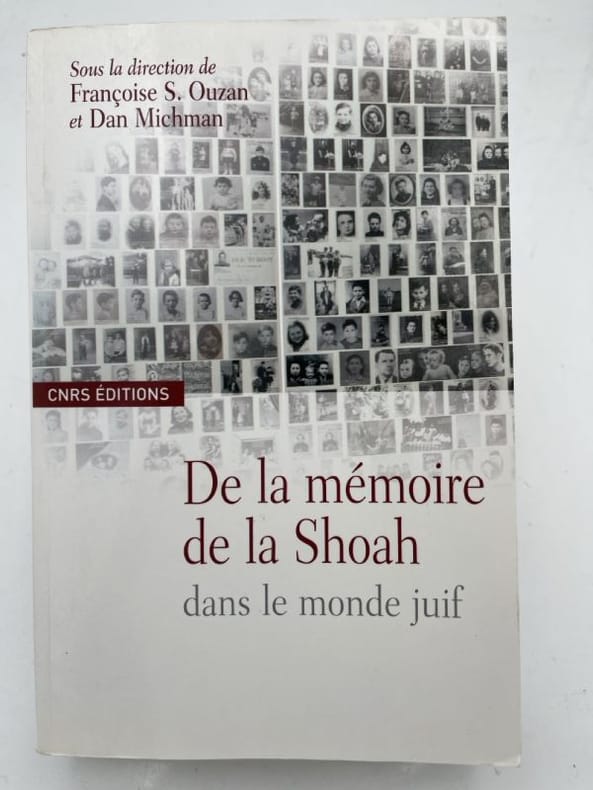
2008192097CNRS Editions CNRS Editions, 2008. Fort In-8 broché, 502 pages. Très bon état
Paper Wraps. 8vo. 75 pages. 21 cm. In Dutch . Series: Rijksinstituut voor Oorlogsdocumentatie. Kleine serie geschriften, ; nr. 1. Title translates to English as, German Occupation of the Netherlands and the Financial Development of the Country During the Years of Occupation. Series is overseen by the Dutch Royal Institute for War Documentation. SUBJECT (S) : Finance, Public Netherlands. Financiële ontwikkeling. Bezettingen. Tweede Wereldoorlog. Slight discoloration at edges of cover and on title page. Otherwise nice, clean copy with tight binding. Very good condition. (HOLO2-35-8)
Publishers cloth. 4to. 223 pages. 26 cm. First Dutch edition. Translated from the German. The Yellow Star: The Persecution of the Jews in Europe, 1933-1945. With 196 photographs. Originally published in 1960 in German as Der Gelbe Stern, this landmark book was one of the first comprehensive photographic accounts of the Holocaust. During the 1950s, researchers in Washington, D. C. And London pored over more than 1, 500 tons of photographs and documents seized after World War II. In 1960 Gerhard Schoenberner gathered some 200 photographs from the newly uncovered material, most of them taken by Nazis to chronicle their war against the Jews. Schoenberner named the book after the yellow badge that the Nazis forced the persecuted Jews to wear. With its comprehensive, authoritative presentation of visual and textual evidence, much of which had not yet not been seen before, The Yellow Star shocked the German population and introduced the world to many haunting images. The book endures as one of the most important documentary accounts of the Holocaust, reprinted in many German editions and published in eight languages. The photographs are accompanied by extracts from Nazi and German documents-laws, decrees, and other Reich memoranda, field reports from SS officers and concentration camp directors, newspaper editorials, and other writings. Schoenberner also provides detailed captions to the photographs. Organized chronologically, the book follows the growing scope and terror of the Holocaust, from the first anti-Jewish laws and Kristallnacht to ghetto uprisings and the Final Solution, culminating in the liberation of the death camps. (Publishers description to English edition) . Subjects: Holocaust. Antisemitisme. Europa (geografie) . OCLC lists 14 copies. Light tear to top of backstrip; no DJ; otherwise fresh and clean. Very good condition. (HOLO2-108-31)
1st edition. Original photographic Yellow paper wrappers, 12mo, 47 pages. Includes illustrations (portrait, facsimiles) . 21 cm. In the original Flemish. Ehri (2014) writes that This is an eyewitness account by a Jewish survivor who escaped from a deportation train after departure from this transit camp.....The Belgian army barracks named Dossin de Saint-Georges, built in the town of Malines in 1756, were transformed into a Sammellager (Assembly Camp) on July 25, 1942. The first Jews who had received call-up orders arrived two days later, and the first train to Auschwitz left on August 4. This building was chosen for two reasons. It was right next to a railroad and Malines is located between Brussels and Antwerp, where 90% of the Jews in Belgium lived. After the roundups started, the Jews were taken by trucks to the inner square inside the barracks where armed SS were awaiting them. After being registered and stripped of their identity papers and last personal possessions, the prisoners had to wear a card around their neck with their number for the next deportation train. There were various categories of prisoners, the biggest of which were those marked for direct deportation. The barracks could house 1, 000 persons, but at times more than 1, 700 were crammed into them, with about 100 people on bunk beds in dormitories only about 21 to 7 meters wide. Later, they had to sleep on straw bags on the floor. The guard duty on the perimeter was done by Flemish SS members, supervised by German Security Police. SUBJECT(S) : World War, 1939-1945 -- Underground movements -- Belgium. Personal narratives, Belgian. Tweede Wereldoorlog. Verzet. OCLC lists 5 copies. Scarce and Important. Very Good+ Condition. A Beautiful copy. (Holo2-126-1) xx
1st Edition. Original photographic Yellow paper wrappers, 12mo, 47 pages. Includes illustrations (portrait, facsimiles) . 21 cm. In the original Flemish. Inscribed by Hakker in 1945 on the first page. Ehri (2014) writes that This is an eyewitness account by a Jewish survivor who escaped from a deportation train after departure from this transit camp.....The Belgian army barracks named Dossin de Saint-Georges, built in the town of Malines in 1756, were transformed into a Sammellager (Assembly Camp) on July 25, 1942. The first Jews who had received call-up orders arrived two days later, and the first train to Auschwitz left on August 4. This building was chosen for two reasons. It was right next to a railroad and Malines is located between Brussels and Antwerp, where 90% of the Jews in Belgium lived. After the roundups started, the Jews were taken by trucks to the inner square inside the barracks where armed SS were awaiting them. After being registered and stripped of their identity papers and last personal possessions, the prisoners had to wear a card around their neck with their number for the next deportation train. There were various categories of prisoners, the biggest of which were those marked for direct deportation. The barracks could house 1, 000 persons, but at times more than 1, 700 were crammed into them, with about 100 people on bunk beds in dormitories only about 21 to 7 meters wide. Later, they had to sleep on straw bags on the floor. The guard duty on the perimeter was done by Flemish SS members, supervised by German Security Police. SUBJECT(S) : World War, 1939-1945 -- Underground movements -- Belgium. Personal narratives, Belgian. Tweede Wereldoorlog. Verzet. OCLC lists 5 copies worldwide. Scarce and Important. Small smudge on page 15 with 1 word effected. Overall Very Good Condition. (Holo2-126-1a)
1st Edition. Original photographic Yellow paper wrappers, 12mo, 47 pages. Includes illustrations (portrait, facsimiles) . 21 cm. In the original Flemish. Inscribed by Hakker in 1945 on the first page. Also issued in French translation as La lutte heroique du maquis; leur vie, leurs souffrances, leur travail; and in English as "The mysterious Dossin Barracks in Mechlin: the deportation camp pf the Jews. " Ehri (2014) writes that This is an eyewitness account by a Jewish survivor who escaped from a deportation train after departure from this transit camp.....The Belgian army barracks named Dossin de Saint-Georges, built in the town of Malines in 1756, were transformed into a Sammellager (Assembly Camp) on July 25, 1942. The first Jews who had received call-up orders arrived two days later, and the first train to Auschwitz left on August 4. This building was chosen for two reasons. It was right next to a railroad and Malines is located between Brussels and Antwerp, where 90% of the Jews in Belgium lived. After the roundups started, the Jews were taken by trucks to the inner square inside the barracks where armed SS were awaiting them. After being registered and stripped of their identity papers and last personal possessions, the prisoners had to wear a card around their neck with their number for the next deportation train. There were various categories of prisoners, the biggest of which were those marked for direct deportation. The barracks could house 1, 000 persons, but at times more than 1, 700 were crammed into them, with about 100 people on bunk beds in dormitories only about 21 to 7 meters wide. Later, they had to sleep on straw bags on the floor. The guard duty on the perimeter was done by Flemish SS members, supervised by German Security Police. SUBJECT(S) : World War, 1939-1945 -- Underground movements -- Belgium. Personal narratives, Belgian. Tweede Wereldoorlog. Verzet. OCLC lists 8 copies worldwide, with only 4 of them in the US (Hoover, San Jose State, LOC, Wichita State). Scarce and Important.Some wear and stains to cover, worming to one margin (no text affected), Overall Good+ Condition. (Holo2-126-1B)