Shumeyko, Stephen. Ed.MareMagnum

5 326 résultats
Original Wrappers. 4to. 28 pages. 28cm. First Edition. Community bulletin containing wartime information regarding Ukraine and Ukrainian American immigrants. Featuring an article titled "The Ukrainian Struggle for Freedom" by noted American historian William Henry Chamberlin. "The Ukrainian Congress Committee of America (UCCA) was founded in 1940 to provide authoritative information about the plight of Ukrainians, as well as to represent the interests of the Ukrainian American community. [...]Throughout its history, the UCCA has raised U. S. Awareness of Ukraine as well as represented the interests of Ukrainian Americans before the government. Of its many achievements over the years, some highlights include: its work for the enactment of the law admitting displaced persons from Europe to America, which was adopted by Congress in 1948 and resulted in 110, 000 Ukrainians being admitted into the United States; its support for the establishment of Ukrainian language services at the Voice of America and Radio Free Liberty; and its initiative of a Public Law within the House and Senate to erect a monument to Taras Shevchenko, the bard of Ukraine, in Washington, D. C. , which was unveiled in 1964 by former U. S. President Dwight D. Eisenhower." (ucca.org) Subjects: Ukrainians in the United States -- Periodicals. World War II. OCLC lists 1 copy worldwide. (NYPL) Light soiling, previous owner marking on wrappers. Very good + condition. Scarce (UKR-1-7) xx
41888Amsterdam, Scheltens en Giltay, z.d. Gebonden, similileder, papieromslag geillustreerd z/w, 13,5 x 20cm., 232pp.
155X235 mm. 70 pages. Softcover. Cover corners slightly wrinkled. Else in good condition.
8vo; 110 pages. Good example of work by American jewry to get the word out. Powerful graphs show "racial feeding" levels. Written by Shub "on the basis of research by Z. Warhaftig". Wolff I# 677. Robinson & Friedman # 541a. Important. (HOLO2-34-72)
IN YIDDISH AND HEBREW. RARE Yizkor book (memorial book) commemorating the Jewish community of Falenica annihilated in the Holocaust. Falenica is a part of Wawer, one of districts of Warsaw on the right bank of the Vistula, in the far southeastern corner of the city (until 1951 a separate village, afterwards became part of Warsaw). Falenica is located along the main rail line, which connects Warsaw with Lublin. During World War II the Germans opened a Jewish ghetto there, called Falenica-Miedzeszyn Ghetto. All of its inhabitants were transported to Treblinka in August 1942. Contains many b&w photographs. 280x220mm. 478 pages. Black cloth Hardcover with gilt front cover and spine. Cover dirty and slightly scratched. Front cover upper corner and spine edges bumped. Rear endpaper upper edge/corner slightly peeling. Rear whitepage bottom corner creased/wrinkled. Pages slightly yellowing. [SUMMARY]: This extremely rare Yizkor book commemorating the exterminated Jewish community of Falenica is in good condition. PLEASE NOTE: This item is overweight. We may ask for extra shipping costs.
IN HEBREW AND YIDDISH. 1.7 kg. Contains b&w plates. 240x175 mm. 795 pages. Gilt hardcover and spine. Cover dirty. Spine loose. Spine edges bumped and worn. Ex-library copy with usual marks. Pages yellowing. Else in good condition.
Heavy brown stain to front cover & edges and extending into the text of the introductory material and up to page 20 (but easy to read through). Otherwise Good Solid Condition. ; 8vo; 107, 110 pages; 23 cm. In English & Yiddish. This publication offers "The most comprehensive survey of Germany's treatment of Jews and other minorities within Germany, including conditions in concentration camps. " Produced by the Great BritainForeign Office. Contains documents concerning German-Polish relations and the outbreak of hostilities between Great Britain and Germany on September 3, 1939., & the final report by the Right Honourable Sir Nevile Henderson. G. C. M. G. , on the circumstances leading to the termination of his mission to Berlin, September 20, 1939. SUBJECT(S) Geographic: Germany -- Foreign relations -- Poland. Poland -- Foreign relations -- Germany. Great Britain -- Foreign relations -- Germany. Germany -- Foreign relations -- Great Britain. (H-42-6)
8vo; 107, 110 pages; Original Paper Wrappers. Large 8vo. 107, 110 pages. 23 cm. In English & Yiddish. This publication offers "The most comprehensive survey of Germany's treatment of Jews and other minorities within Germany, including conditions in concentration camps. " Produced by the Great Britain Foreign Office. Contains documents concerning German-Polish relations and the outbreak of hostilities between Great Britain and Germany on September 3, 1939., & the final report by the Right Honourable Sir Nevile Henderson. G. C. M. G., on the circumstances leading to the termination of his mission to Berlin, September 20, 1939. SUBJECT(S) Geographic: Germany -- Foreign relations -- Poland. Poland -- Foreign relations -- Germany. Great Britain -- Foreign relations -- Germany. Germany -- Foreign relations -- Great Britain. Ex-library copy. Ink-stain on the edges, pages are clean. Shelf-wear to outer boards. (HOLO2-98-13)
In period Spring Binder. 4to. [Various paginations]. 30 cm. First edition. Report detailing and classifying the professions of Jewish workers in New York City. Includes many German-Jewish refugees. Data is estimated and sourced from census and trade union records, and for use in connection with Jewish economic services in New York City. In 1933, Abraham Shohan a former overseas field executive of the Joint Distribution Committee, [was] appointed national field director of the B'nai B'rith Wider Scope Fund. ("Shohan Named Head of Wider Scope Fund. " Jewish Telegraphic Agency 23 Aug 1933.) Subjects: Jews -- New York (State) -- New York Metropolitan Area -- Economic conditions -- Statistics. Jews -- New York (State) -- New York Metropolitan Area -- Social conditions -- Statistics. Jews -- Employment -- New York (State) -- New York. OCLC lists 1 copy worldwide. (Harvard) In period Spring Binder. Some edge wear. Light age toning and minimal library markings. Very good + condition. (HOLO2-109-58)
Very faint scratches else fine. ; Analysis of Greek, German, Christian and Jewish components in western civilization in a comprehensive attempt to explain the perpetrators and the victims of the Holocaust of World War II. Author uses all the social sciences in an interdisciplinary study of the Nazis as a gang of thieves and murderers whose success and ideology was grounded in the sources of western civilization. ; 459 pages
Cloth, 8vo, 200 pages. Includes illustrations, facsimiles, fold-out map, portraits, etc. 22 cm. In Hebrew. Memoir of Warsaw Ghetto Uprising. SUBJECT(S): World War, 1939-1945 -- Underground movements -- Jews. Geographic: Warsaw (Poland) -- History -- Warsaw Ghetto Uprising, 1943. Very Good Condition. (H-40-7)
IN HEBREW. 23.5x17 cm. 280 pages. Hardcover. Cover slightly dirty. Else in good condition.
22x16 cm. 8+21+12+16+24+13+17+20+13+20 pages. Ten booklets in plastic box. As new.
(FT) Softbound. 8vo. 99 pages. 21 cm. First edition. In Yiddish. Polish title on verso title page: Spo´z´niona Wiosna. Title translates as: Belated Springtime. Holocaust-themed Yiddish poetry. Moshe Shklar, born in inter-war Poland, resident of Warsaw and longtime editor of the Yiddish newspaper Folks-Shtime: published in Poland from April 1945 until December 1991. Folks-shtime (Voice of the People) was the main newspaper of Polish Jews after World War II. It began in Lódz and from October 1949 it came out in Warsaw. Until 8 December 1956 it was published under the auspices of the Polish United Workers Party. Thereafter it became the organ of the Social and Cultural Association of Jews in Poland. In its last period, from 1989 to 1991, the Ministry of Culture and Art financed its publication. Beginning in 1969, the newspaper added a section in Polish. From 1950 to 1968 Folks-shtime appeared four times a week; from 1968 to 1991 it was issued weekly. In Yiddish, it used standard rather than Soviet orthography. (Yivo Encyclopedia) . Moshe Sklar later relocated to Los Angeles, and for twenty years was the editor of the esteemed Yiddish literary journal Heshbon. Subjects: Yiddish Poetry. OCLC lists 18 copies worldwide Institutional stamp on endpage. Light wear to covers. Fresh and clean. Good + condition. (HOLO2-99-45)
2012009106Horn-Wien, Berger, 2012. 218 S. Großformatiger Orig.-Pappband. Ein schönes, gut erhaltenes Exemplar mit nur leichten Gebrauchsspuren (Buchhandelspreis neu Euro 29,90).
2002008891Berlin, Jüdische Verlagsanstalt, 2002. 125 S. Orig.-Pappband mit Schutzumschlag. Ein schönes, neuwertiges Exemplar in einwandfreiem Zustand.
(FT) Softcover, 21 cm. , 68 pages. Introductions by Rabbis Reuven Hammer, David Golinkin and Philip S. Scheim in English; liturgy in Hebrew and English on facing pages; Hebrew by Shinan, translated by Harlow. In six chapters, presents the historical background to the Holocaust, the testimony of a Christian witness to the Warsaw Ghetto, the story of a Jewish woman in a labor camp, theological questions raised by forced labor in a concentration camp, the impact of the loss of Jewish communities on the Jewish world, and words of hope. Includes three songs appropriate to the service. SUBJECT(S) : Holocaust Remembrance Day -- Prayer-books and devotions. OCLC lists 7 copies in libraries worldwide. ISBN: 9657105137. Unused, in mint condition. (Holo2-36-7) xx
210x140 mm. 68 pages. Softcover. Cover slightly rubbed. Else in good condition.
210x140 mm. 68 pages. Softcover. In good condition.
24x15.5cm. XIII+279 pages. Hardcover. In good condition.
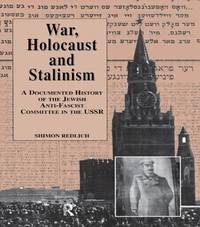
199525360Luxembourg: Harwood Academic Publishers 1995. hardcover illustrated boards. minor bits of superficial wear to exterior around spine. no other flaws or wear. clean. no markings. no bumps tears. strong binding.; english text.; author's signed gift inscription to front free endpaper.; xxix-504pp. 12 b/w illustrations and over 180 documents. exhaustive reference. First Edition. Hardcover. Near Fine/No Jacket as Issued. 8vo - over 7¾" - 9¾" tall. Harwood Academic Publishers Hardcover
Wrappers; 8vo. 108 pages. Illustrated. Early curriculum material with articles essays and instruction. Ex-library copy. Cover soiled; spine chipping; inside in very good condition. (H-30-6)
240X170 mm. 115 pages. Soft cover. Cover slightly rubbed. Else in good condition.
An extended sequence of 65 poems responding to the story of Wallenberg, the Swedish diplomat who saved thousands of Hungarian Jews from the Holocaust.96p. Bookplate of previous owner,else as new. Book
Original Wrappers. 8vo. 99 pages. 21 cm. First edition. In Russian. A history of the Baranovichi Ghetto and the Koldychevo Camp. On the eve of the Holocaust, 12, 000 Jews lived in Baranovichi. Under Soviet rule (193941) , Jewish community organizations were disbanded and any kind of political or youth activity was forbidden. Some youth groups organized flight to Vilna, which was then part of Lithuania, and from there reached Palestine. The Hebrew Tarbut school became a Russian institution. A Jewish high school did continue to function, however. In the summer of 1940 Jewish refugees from western Poland who had found refuge in Baranovichi after September 1939 were deported to the Soviet interior. When Germans captured the city on June 27, 1941, 400 Jews were kidnapped, leaving no trace. A Judenrat was set up, headed by Joshua Izikzon. The community was forced to pay a fine of five kg. Of gold, ten kg. Of silver, and 1, 000, 000 rubles. The ghetto was fenced off from the outside on Dec. 12, 1941. The ghetto inhabitants suffered great hardship that winter, although efforts were made to alleviate the hunger. The Jewish doctors and their assistants fought to contain the epidemics. On March 4, 1942, the ghetto was surrounded. In a Selektion carried out by the Nazis to separate the "productive" from the "nonproductive", over 3, 000 elderly persons, widows, orphans, etc. , were taken to trenches prepared in advance and murdered. Resistance groups, organized in the ghetto as early as the spring of 1942, collected arms and sabotaged their places of work. Plans for rebellion were laid, but the uprising never came to pass, partly due to German subterfuge. In the second German Aktion on Sept. 22, 1942, about 3, 000 persons were murdered. On Dec. 17, 1942, another Aktion was carried out, in which more than 3, 000 persons were killed near Grabowce. Baranovichi was now declared judenrein . At the end of 1942 Jews were already fighting in groups among the partisans. A few survivors from the ghetto were still in some of the forced labor camps in the district, but most of them were liquidated in 1943. On July 8, 1944, when the city was taken by the Soviet forces, about 150 Jews reappeared from hiding in the forests. Later a few score more returned from the U. S. S. R. (EJ 2007) Koldychevo Camp (Koldyczewo) , forced labor camp in Belorussia, located 11 miles from Baranovichi, established by the Germans in late 1941. In November 1942 a crematorium was constructed in which some 600 people were incinerated. It later became an extermination camp in which Russians and Polish underground members were interned along with the Jews transferred from the surrounding ghettos of Baranovichi, Nowogrodek, Slonim , and others. Jews were separated from the other prisoners and the camp in the stables of what had once been a farm. Prior to the camp's liquidation on June 29, 1944, more than 22, 000 inmates were murdered and buried in 38 mass graves in and around the camp. A prisoner, Dr. Zelik Levinbrook, supplied medicine to the partisans with the help of a former patient. An active Jewish resistance, headed by Shlomo Kushnir, a former shoemaker, existed in Koldychevo. Its arms supply was meager: two guns, four grenades, and some acid. On the night of March 17, 1944, it succeeded in leading almost all the Jewish inmates out of the camp after killing ten Nazi guards and poisoning the guard dogs. Kushnir committed suicide when he was caught with 25 others. Seventy five prisoners survived. The rest joined the partisans in the forest. (EJ 2007) . Subjects: Holocaust, Jewish (1939-1945) -- Belarus -- Baranavichy. Jewish ghettos -- Belarus -- Baranavichy. Concentration camps -- Belarus -- Koldychevo. World War, 1939-1945 -- Atrocities. Condition. (HOLO2-107-39)