HOLOCAUST - THE NETHERLANDSBiblio.com
188 résultats
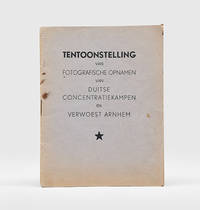
1945174825Amsterdam: United States Information Service 1945. Nazi crimes publicly revealed First edition first printing of the catalogue of one of the earliest Holocaust exhibitions held in the Netherlands soon after the war. The exhibition and catalogue were funded by the United States Information Service which supported exhibitions of photographs across Europe to show what had been done by the Nazis and build support for the coming war crimes trials. It includes one of the defining images of the Holocaust - the future Nobel laureate Elie Wiesel among other prisoners on the barracks at Buchenwald. Sextodecimo. With 25 half-tone photographs. Original grey wrappers printed in black. Short split at head of spine and 50 mm split at foot a little soiling to wrappers wrappers and contents slightly toned. A very good copy. unknown
194434835Tel Aviv: Haaretz Printing House 1944. First Edition with annotations in Hebrew. Illustrated with 17 full-page Zinco engravings created by Zincographies Ltd. Oblong folio 34 x 25 cm publisher's original linen backed boards the upper cover printed in Hebrew. 4 text and 17 plates pp. A very good copy well preserved with minor evidence of age or use. RARE EARLY ILLUSTRATED WORK ON THE HORRORS OF THE HOLOCAUST. The evocative illustrations include Jews being rounded up for transport to the camps a depiction of the "death wagons" used for transport the rebellion in the ghetto partisans Treblinka the "monster" Nazi the Underground resistence and more. The album of illustrations was prepared and published during the most intense years of the Holocaust.<br> Lea Grundig 1906 – 1977 was a German painter and graphic artist. In the mid-1930s her work reflected themes of the new Nazi age with her cycles "Harzburger Front" "Unterm Hakenkreuz" 1936 "Der Jude ist schuld!" 1935–38 "Krieg droht!"1935–37 "Im Tal des Todes" 1942/43 and "Ghetto".<br> In 1935 a ban was imposed on exhibits of her work and in May 1936 she was arrested. Later in 1936 she traveled to Switzerland but she then returned to her home city and it was in Dresden that in May 1938 she was again arrested. In March 1939 she was found guilty of "Preparing to commit High Treason" »Vorbereitung zum Hochverrat« as a result of her Communist activities and/or her Jewish provenance and was sentenced to four months imprisonment. She served her sentence which in the event lasted till November/December 1939 in a prison in Dresden. However on her release she was granted an emigration permit. She emigrated to Bratislava then the capital of the still notionally independent Slovak Republic Slovakia. In 1940 she reached a refugee camp in Slovakia from where she moved as an exile to Palestine. Here she survived in a British internment camp at Atlit till 1942. On release she remained till the end of 1948 in Palestine living successively in Haifa and Tel Aviv. She was again able to show her work legally: exhibitions of her work took place not just in Palestine where she was living but also in the USA France South Africa and Great Britain. Haaretz Printing House hardcover
199136935Pittsburgh PA: Pittsburgh. New. 1991. Paperback. FREE UPGRADE to Courier/Priority Shipping Upon Request IN STOCK AND IMMEDIATELY AVAILABLE FOR SHIPMENT - FLAWLESS COPY BRAND NEW PRISTINE NEVER OPENED 13 pages; 4 black and white illustrations. -- with a bonus offer-- . Pittsburgh paperback
199838769Bloomington Indiana U.S.A.: Indiana Univ Pr. New. 1998. Paperback. 0253211875 . FREE UPGRADE to Courier/Priority Shipping Upon Request IN STOCK AND IMMEDIATELY AVAILABLE FOR SHIPMENT - FLAWLESS COPY BRAND NEW PRISTINE NEVER OPENED -- with a bonus offer-- . Indiana Univ Pr paperback
199829144Bloomington Indiana U.S.A.: Indiana Univ Pr. New. 1998. Paperback. 025320884X . FREE UPGRADE to Courier/Priority Shipping Upon Request - IN STOCK AND IMMEDIATELY AVAILABLE FOR SHIPMENT - FLAWLESS COPY BRAND NEW PRISTINE NEVER OPENED -- with a bonus offer-- . Indiana Univ Pr paperback
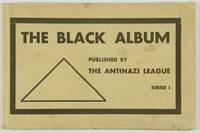
194054535Tel Aviv: The Antinazi League/ The Anti-Nazi League 1940. First edition. Softcover. g- to vg. Oblong 32mo. 8 text leaves 10 postcards. Unpaginated. Illustrated tan wrappers with black lettering on the covers. The work is a collection of 10 illustrated Anti-Nazi postcards issued by the Anti-Nazi League in Tel Aviv. <br /> <br /> This scarce collection of postcards contains some of the earliest photo-documentations visual depictions and statements on Nazi atrocities and oppression during the Holocaust some of which interestingly utilize photomontage techniques. Scenes depict hangings murders forced labor starvation displacement and cremations of Nazi victims. The text captions underneath each of the images are in English. Most of the text of the printed pages is bilingual including covers foreword publisher's statements and publication information in both Hebrew and English. There are two printed lists of images one in Hebrew and one in French. Each of the postcards have a perforated edge where they attach to the album. Only the first card is still attached. The rest are loose but unused. Each of the postcards measure approx. 5.4x4".<br /> <br /> As stated by the publisher the organization had "been established in Palestine with the object of promoting the foundation of a mass organization for propaganda against Nazism and racial hatred". They further state that the "publishing of the Black Album and sending the cards contained therein to friends all over the world are first steps to making the public participate in our struggle for truth against Nazi barbarism."<br /> <br /> Wrappers age toned with some staining and water spots to the English cover. Corners lightly rubbed. Interior with light foxing to the first text leaf.<br /> <br /> Other than some expected age toning the cards themselves and images are clean and in very good shape overall. 4 postcards #3-6 have been detached from the perforated edge but are present. Complete with all cards present. Wrappers in good- interior in very good- condition overall. Quite scarce. Hebrew title: ×”××œ×‘×•× ×”×©×—×•×¨. The Antinazi League/ The Anti-Nazi League unknown
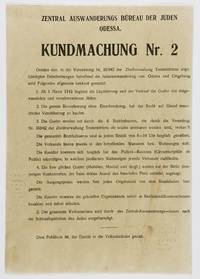
194251752Odessa: Zentral Auswanderungs Büreau 1942. Original document. Loose leaf. Very good condition. Quarto. Original loose leaf with black lettering. Announcement based on ordinance no. 35/942 of the civil government of Transnistria relating to the emigration of Jews in Odessa and surrounding areas. <br /> <br /> The text printed biligually in German and Ukrainian is organized into five statements. The annoucement concerns the liquidation and sale of goods of emigrated or vanished Jews beginning on March 1 1942 with the whole population without limitations given the right to buy these items based on oral agreements. Furthermore the announcement regulates details and procedures of the sale and at the end announces that after the sale proceeds will by handed to the Jews by the Central Emigration Office.<br /> <br /> "The rapid development of Odessa began after the Russian conquest 1789. Its Jewish population also grew quickly and in the late nineteenth and early twentieth centuries it was the most important Jewish literary community after Warsaw. In 1926 there were 153194 Jews in Odessa 36.4 percent of the total population and by 1939 their numbers reached 180000." Encyclopedia of the Holocaust Vol. 3 page 1080.<br /> <br /> When Romanians and Germans laid siege to the city on August 5 1941 many Jews in Odessa managed to leave and eighty to ninety thousand Jews remained in the city. Odessa fell on October 16 and the German Einsatzkommando 11b and the Romanian intelligence service immediately slaughtered over eight thousand residents mainly Jews and Odessa was established as the capital of the Transnistria region. On October 22 the Romanian military headquarters were blown up killing sixty-six officers and the military governor. In reprisal the Romanian ruler Ion Antonescu ordered devastating retaliation including the arrest of one member of each Jewish family. By October 1941 some 40000 Jews were assembled in the ghetto of the nearby city of Slobodka and their valuables confiscated. Deportations of some 20000 Jews began in January of 1942. When Odessa was liberated on April 10 1944 authorities reported that about 99000 Jews had been killed. Odessa again became an important Jewish center with 102000 Jews living there according to a 1959 census.<br /> <br /> Considering the context of "Kundmachung Nr. 2 the Odessa massacre of October 22-24 1941 and the murder of Jews living between the rivers Dniester and Bug during the Romanian and German occupation this succinct notice including its misspellings and mistakes in the German language is a chilling mirror image of the attitude shown by the occupying powers towards the Jews. Approximately 30000 Jews were killed in Odessa and more than 100000 in Transnistria. <br /> <br /> The text is printed in German on one side and Ukrainian on the verso. Minor wear and smudging. Protected in modern mylar. Zentral Auswanderungs Büreau unknown
69182New York: Raw Books & Graphics 1986. Very Good. Slim folio 36 cm Saddle-stitched illustrated wraps. Wraps lightly rubbed. Moderate soiling to rear wraps of numbers 1 and 3.<br /> <br /> Volume 1 Number 1 Fall 1980. "Two-Fisted Painters" by Art Spiegelman booklet.<br /> <br /> Volume 1 Number 3. 1981. "Maus Chapter Two The Honeymoon" booklet.<br /> <br /> Volume 1 Number 4. 1982. Vinyl record "Reagan speaks for himself" detached and laid in. "Maus Chapter Three Prisoner of War" booklet.<br /> <br /> Volume 1 Number 5. 1983. Couple by Art Spiegelman. "Maus Chapter Four The Noose Tightens" booklet. Stapled in a little loosely.<br /> <br /> Volume 1 Number 6. 1984. "Maus Chapter Five Mouse Tales" booklet.<br /> <br /> Volume 1 Number 7. 1985. "Maus Chapter Six Mouse Trap" booklet. "Red Flowers" booklet by Yoshiharu Tsuge. Deliberately issued by the publisher with a torn front wrap.<br /> <br /> Volume 1 Number 8. 1986. Jimbo by Gary Panter. "Maus Chapter Seven Mauschwitz" booklet. The first number along with six other issues of RAW Magazine Volume 1. Number 2 is not present. <br /> <br /> A very colorful and bold comics and graphics anthology edited by Art Spiegelman and Françoise Mouly a husband and wife team which highlighted artists from around the world and was published in the United States from 1980 to 1991. In addition to the work of Spiegelman and Mouly RAW featured cutting-edge comic artists such as Robert Crumb Gary Panter Charles Burns Kim Deitch Sue Coe Jerry Moriarty Richard Sala and Ever Meulen among many others. In these issues of RAW one will find Gary Panter's best-known comic protagonist "Jimbo" a burly punk and existential adventurer as well as "The Voice of Walking Flesh" by Charles Burns "Love's Savage Fury" by Mark Newgarden and a centerfold by Ever Meulen captioned "Use the Mood of the Past to Rewire Your Brain for the Future." Of significant importance is the fact that Art Spiegelman's seminal graphic work "Maus: A Survivor's Tale" made it's first appearance in this magazine chapters 2-7 are present here as stapled-in booklets. Spiegelman's unrivaled Holocaust narrative "Maus" was awarded the 1992 Pulitzer Prize it was the first graphic novel to win the Pulitzer Prize and he was the first-ever cartoonist to receive the prestigious Edward MacDowell Medal a medal awarded annually since 1960 to artists who have made an outstanding contribution to American culture.<br /> <br /> A nearly consecutive run of volume 1 of this trailblazing magazine with original serialized chapters of "Maus." "The Graphix Magazine for Your Bomb Shelter's Coffee Table." Number 4 front cover caption. Raw Books & Graphics unknown
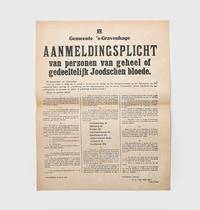
1941167943The Hague: City Legislative Board 31 January 1941. Laying the groundwork for the Holocaust in the Netherlands A significant step in the implementation of the Holocaust in the Netherlands - a broadside ordering all Jews in The Hague to register with the authorities. The broadside was issued in the name of The Hague mayor Cornelis Lodewijk van der Bilt on the order of the Reich Commissariat for the Occupied Dutch Territories. Similar orders were made by municipal bodies across the Netherlands. Headed in Dutch "Obligation to register persons of wholly or partly Jewish blood" it states that anyone with one Jewish grandparent must register by 21 February 1941. Each person will be issued with a certificate which must be shown to authorities on request. Those who do not register are liable to a five-year prison term and confiscation of assets. The move was part of an ongoing campaign against the Jews in the Netherlands that began shortly after the Nazi invasion in May 1940. Registration was with the mayor's office - the poster attests to the co-operation forced or otherwise of existing political structures. Almost all Dutch Jews did comply with the order. Deportations from the Netherlands began in Summer 1942 and was effectively completed by September 1944; less than a quarter of Dutch Jewry who fled the country or hid with supporters survived the Holocaust "The Netherlands" Holocaust Encyclopedia accessible online. Poster 280 x 229 mm printed in black verso blank. A couple of minor creases else very good. unknown
10095Antwerpen1985 t/m 1992 diverse formaten geniet of gebrocheerd gelezen staat naam vorige eigenaar - unknown
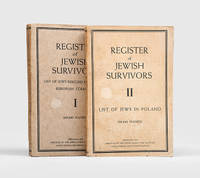
1945193462Jerusalem: Published by the Jewish Agency for Palestine / Search Bureau for Missing Relatives 1945. The search for the living First edition of the first major attempt to reunite Jewish families after the Holocaust listing 118000 survivors and their locations. Almost immediately after the war localized lists were published recording survivors from particular camps ghettos and countries. The Jewish Agency for Palestine established the Search Bureau for Missing Relatives to draw these efforts into a comprehensive register. The introduction notes it was published to "facilitate the re-establishment of contact between the remnants of Jewry in Europe and their relations in the Land of Israel and overseas. The Register contains the names of 60000 Jews of various countries saved from the camps and the ghettos who have been registered wherever they were were found following the liberation of Europe from Nazi servitude". It nevertheless cautions readers not to give up hope if a name is absent given the difficulty of compilation amid the chaos of postwar Europe. Lists also appeared in the weekly bulletin Lakarov Ulerahok while search requests were broadcast on Kol Yerushalayim in Jerusalem. Despite the suggestion of "forthcoming volumes" no further were produced. During its years of operation 1945 to 2002 the Bureau handled more than a million enquiries. The volumes are scarce on the market with most surviving copies held institutionally. They remain important reference works for those tracing relatives. 2 vols octavo. Original brown wrappers lettered in black. Contemporary Hebrew library stamps to title page of the Search Bureau for Missing Relatives; residue of removed labels to front covers. A little toned with minor wear remnants of the paper ties as issued to title pages wrappers of vol. I a little loose with some gatherings shaken. A good set of a fragile publication. unknown
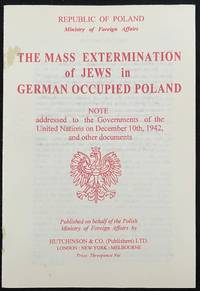
194343453London New York; Published on Behalf of the Polish Ministry of Foreign Affairs by Hutchinson & Co 1943. 1st edition. Original illustrated red and white paper wrappers. 8vo. 16 pages. 22 cm. National Government Publication. Printed in red and black ink. Includes a note by Polish Foreign Minister Edward Raczynski and speeches by Deputy Prime Minister Stanislaw Mikolajczyk.<br> The official 16-page diplomatic publication from December 1942 by the Polish Government-in-Exile in London marking a turning point in international understanding of the Nazi destruction of the Jews of Europe. <br> Jan Karski a courier for the Polish Underground had smuggled microfilmed evidence and intelligence out of occupied Poland to London. This raw intelligence gathered from his time secretly inside the Warsaw Ghetto and the Izbica transit camp formed the core of the facts published in the booklet.<br> <br> "In October 1942 at the height of the destruction of Polish Jewry Jan Karski born Jan Kozielewski was ordered to clandestinely go to the West and deliver a report on the situation of occupied Poland to the Polish government-in-exile in London. The situation of the Jews in Poland was to be one section of that report. Since the government in exile was concerned with the internal politics of Poland's underground parties Karski held meetings with the different factions including the Jewish Zionist and the Jewish Socialist Bund movements. <br> Thus shortly before his departure Karski met with two Jewish leaders who asked him to inform the world's statesmen of the desperate plight of Polish Jewry and of the hopelessness of their situation. Their message was: 'Our entire people will be destroyed.'<br> The Jewish leaders' appeals touched Karski and he decided to see things with his own eyes in order to make his report. With great risk to his life he was smuggled into the Warsaw ghetto and into a camp in the Lublin area. The horrors he witnessed marked him deeply and propelled him to become not only the messenger of the Polish underground but to concentrate on giving voice to the suffering of the dying Jews.<br> In November 1942 Karski reached London delivered the report to the Polish government-in-exile and set out to meet Winston Churchill other politicians journalists and public figures. Upon completing his mission Karski went on to the United States where he met with President Roosevelt and other dignitaries and tried in vain to stir up public opinion against the massacre of the Jews. In 1944 while in the United States Karski wrote a book on the Polish Underground Story of a Secret State with a long chapter on the Jewish Holocaust in Poland.<br> After the war Karski stayed in the United States where he was later appointed Professor at Georgetown University Washington DC.<br> On 2 June 1982 Yad Vashem recognized Jan Karski as Righteous Among the Nations" Yad Vashem. <br> <br> Leading Holocaust scholar Lucy Dawidowicz cites the booklet in her now classic work "The Holocaust and the Historians" Harvard 1983 p. 167; the report could not be more explicit in its description of the horrors nor in its plea for help: <br> "The new methods of mass slaughter applied during the last few months confirm the fact that the German authorities aim with systematic deliberation at the total extermination of the Jewish population of Poland and of the many thousands of Jews whom the German authorities have departed to Poland from Western and Central European countries and from the German Reich itself. The Polish Government considers it their duty to bring to the knowledge of the Governments of all civilised countries the following fully authenticated information received from Poland during recent weeks which indicates all too plainly the new methods of extermination adopted by the German authorities." <br> The report elaborates: "The actual process of deportation was carried out with appalling brutality. At the appointed hour on each day the German police cordoned off a block of houses selected for clearance entered the back yard and fired their guns at random as a signal for all to leave their homes and assemble in the yard. Anyone attempting to escape or to hide was killed on the spot. No attempt was made by the Germans to keep families together. Wives were torn from their husbands and children from their parents. Those who appeared frail or infirm were carried straight to the Jewish cemetery to be killed and buried there. <br> On the average 50-100 people were disposed of in this way daily. After the contingent was assembled the people were packed forcibly into cattle trucks to the number of 120 in each truck which had room for forty. The trucks were then locked and sealed. The Jews were suffocating for lack of air. The floors of the trucks were covered with quicklime and chlorine. As far as is known the trains were dispatched to three localities - Treblinka Belzec and Sobibor to what the reports describe as 'Extermination camps.' <br> The very method of transport was deliberately calculated to cause the largest possible number of casualties among the condemned Jews. It is reported that on arrival in camp the survivors were stripped naked and killed by various means including poison gas and electrocution. The dead were interred in mass graves dug by machinery." <br> <br> Read more about the singular importance of this publication at <br> en.wikipedia.org/wiki/The_Mass_Extermination_of_Jews_in_German_Occupied_Poland# . <br> In 2020 Polish Postal authorities chose this very publication to illustrate their official first day cover honoring righteous Poles who had saved Jews during the Holocaust see illustration. <br> <br> Subjects: World War 1939-1945 - Jews - Poland. World War 1939-1945 - Poland - Atrocities. Holocaust Jewish 1939-1945 - Poland. Jews - Poland. OCLC: 234118765. <br> Touch of staining at staples without the rust almost always seen in other surviving copies. Very Good condition. A copy with rust stains sold in 2018 at auction for over £6000. Rare and very important. BHOLO2-97-48-MMXRLADFACC. London, New York; Published on Behalf of the Polish Ministry of Foreign Affairs by Hutchinson & Co unknown
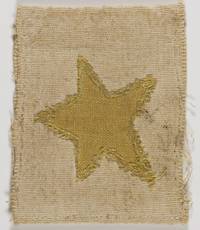
194353630Tunisia 1943. Nearly Fine. Five-pointed yellow cloth star sewn onto plain beige cloth 7.3 by 9 cm. Yellow dye somewhat faded else in fine state of preservation.<br /> <br /> Specimen of the yellow star imposed on the Jewish population of Tunisia in March 1943 as a mark of the slave laboror. Tunisia was the only Islamic country to come under Nazi rule at first indirectly through the Vichy regime in France between 1940 and its liberation by Allied forces on May 7 1943. In response to the Allied invasion of Algeria and Morocco German and Italian forces invaded Tunisia on November 9 1942. By the end of November the Germans took the first anti-Jewish move by arresting four of the community leaders including Moïse Borgel the president of the Jewish congregation. "In addition to the governor-general's sympathetic attitude -- and in some degree to the pro-Jewish attitude of Bey Sidi Mohammed al-Mounsaf -- the Italians also in practice interfered with the application of the anti-Jewish laws" E.H. The dignitaries were released after a week following the intervention of the mayor of Tunis and the Italian consul. Because of objections by the Italians the edict to wear the star does not appear to have been generally enforced with rigor and was only formally imposed in two cities Sfax and Tunis. While 5000 Jews had originally been put on forced labor in thirty locations and camps along the front line "at the time of the collapse and surrenter in early May 1943 only sixteen hundred Jews were employed on forced labor" E.H. Given the relatively small labor force and the lack of zeal in imposing the anti-Jewish ordinances it is clear why so few of these yellow badges have survived. References: I. Gutman ed. Encyclopedia of the Holocaust vol. 4 pp. 1521-23. unknown