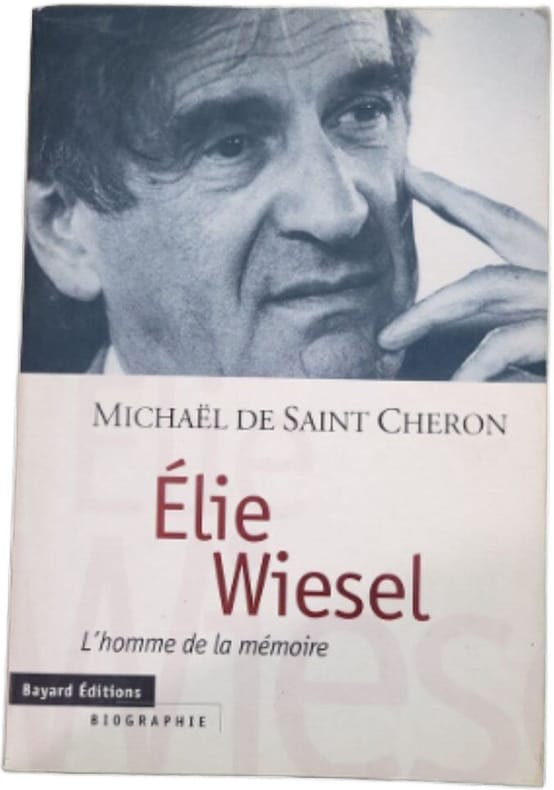
Michaël De Saint CheronLivre Rare Book
167 résultats
19983074Bayard Editions 1998 400 pages 22x15x3cm. 1998. Broché. 400 pages.
2002B73693Brussel, Studie- en Documentatiecentrum 2002 255pp., 24cm., in het tijdschrift "Driemaandelijks tijdschrift van de Stichting Auschwitz" nummer 76-77, goede staat, [bijdragen in het Nederlands en het Frans], B73693
1990G73716Baarn, Ambo 1990 203pp., 21cm., luttele onderlijningen, goed, G73716
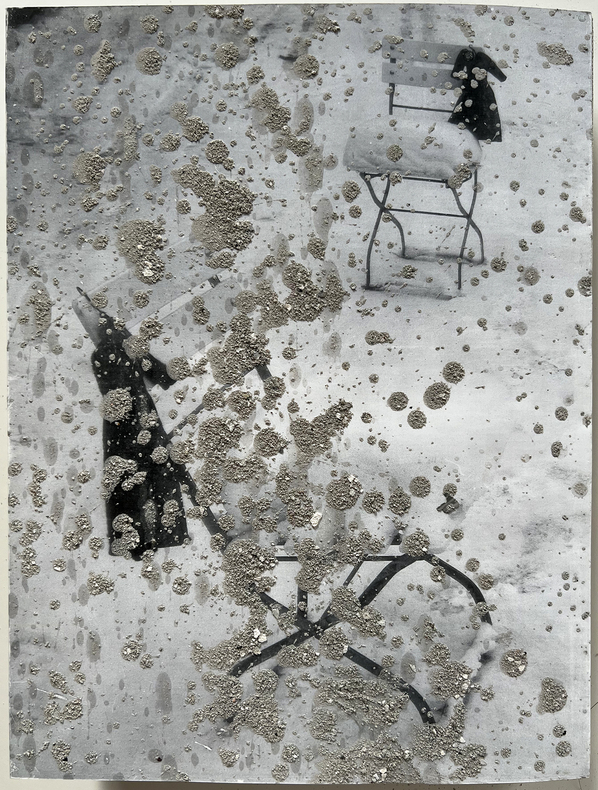
20022124Paris, Yvon Lambert, Coll. « Une rêverie émanée de mes loisirs, VIII », 2002. Un vol. in-4 (30,5 x 23 cm), broché, couverture illustrée, dos toilé titré, boîte d’acier brossé de l'éditeur. ÉDITION ORIGINALE. Collages de cendres et de plomb sur 18 photographies numériques par Anselm Kiefer. Chaque exemplaire composé à la main est sensiblement différent l’un de l’autre. Tirage à 150 exemplaires (N° 48/108 justifié et signé au crayon par l'artiste. Note : Les livres ne se contentent pas d'accompagner la création d'Anselm Kiefer, comme une production secondaire ou un commentaire. Ils y occupent une place centrale en constituant à la fois un lieu d'entrecroisement pour ses autres réalisations (installations et performances, sculptures et gravures, etc.), le creuset d'œuvres à venir ou l'aboutissement de réalisations antérieures. En tant que tels, ils sont un élément essentiel de son travail, un des plus significatifs et des plus fascinants. Bibliographie : Arasse, Anselm Kiefer, p. 47 ; […], Anselm Kiefer. L’alchimie du livre, BNF, 2015. Exemplaire bien signé à l’état de neuf, aucun défaut, les collages de cet exemplaire nominatif sont particulièrement soignés. — (ENGLISH DESCRIPTION) DIE UNGEBORENEN. (Paris, Yvon Lambert 2002). Anselm Kiefer's photographic book / multiple 'Die Ungeborenen': the complete illustrated portfolio of eighteen digital prints with ash and lead collage. Self-wrappered leporello with grey cloth spine, preserved in the original metal box prepared by Christian Chopinaud, with the colophon leaf mounted to the interior of the lid (as issued). Anselm Kiefer's photographic book / multiple 'Die Ungeborenen'. Edition: 150 ex. numbered and signed in pencil by Anselm Kiefer (with a further 20 hors commerce numbered I-XX, ten artist copies numbered 48/108 and signed with pencil by the artist, ten unnumbered nominatives copies, and ten copies from an édition de tête). Justification sheet is pasted to interior of lid. 305 x 230 mm. Printer: Eric Seydoux, Paris (Colophon) Fabricator: Emmanuel Ardant, Paris, Christian Chopinaud (Fabricator of Metal Case). - About the work: 'Die Ungeborenen' (The Unborn) has been a motif in Kiefer's work since the 1970s. Encompassing all of the artist's oeuvre, from painting to sculpture to books (as here), Kiefer has explored the idea of potential in all its forms: potential, i.e. unborn, people, ideas and creative possibilities. To this end, Kiefer has explored a vast mythos including German folklore, philosophy, literature, Jewish myth, Lilith, the first woman, characterised by patriarchy as a demoness and so on. As so often in Kiefer's work, he makes use of lead and ash in this book, applying them directly to his photographs. 'It’s the other aspect of the unborn, the desire of not wanting to be born. Cry of the prophets, the revolt of Job. It would have been better if you had never been born! Everything happens as if it would have been preferable to not be born. The retrograde movement of creation. Theodicy, the accident of creation, God’s regret to have fathered this ungrateful being, this outlaw, who does not abide to the contract.' (Anselm Kiefer). - About the artist: Anselm Kiefer (born in 1945) has established himself as one of the most important post-war German artists. In his works, paintings, sculptures, and installations Kiefer draws from German culture, making more or less explicit references to recent history, literature, philosophy and art. Kiefer’s Die Ungeborenen combines figurative motives with an abstract background. The artist uses narrative elements—the dresses, numbers, and branches—to evocate the demon Lilith, a figure from Jewish folklore, who was believed to kidnap newborn children. The dresses without bodies, and the adjacent numbers, are also a reminder of the Holocaust. In his work, Kiefer frequently offers a reading of recent history through mythological or classic figures, in this case Lilith. He uses the abstraction of the background not per se, but to demonstrate the universality of his approach; the unborn and the ones who lost their lives are like stars in the infinite sky, countless, yet always on our mind. (Literature: Daniel Arasse, Anselm Kiefer (New York: Harry N. Abrams, Inc., 2001), 16-17, 19, ill). More pictures on request.
1958G73688Brussel, Studie- en Documentatiecentrum 1958 160pp., 24cm., in het tijdschrift "Driemaandelijks tijdschrift van de Stichting Auschwitz" bijzonder nummer 58, goede staat, [bijdragen in verschillende talen], G73688
1996G73689Brussel, Studie- en Documentatiecentrum 1996 240pp., 24cm., in het tijdschrift "Driemaandelijks tijdschrift van de Stichting Auschwitz" bijzonder nummer 52-53, goede staat, [bijdragen in verschillende talen], G73689
1993G73691Brussel, Studie- en Documentatiecentrum 1993 235pp.geïll., 24cm., in het tijdschrift "Driemaandelijks tijdschrift van de Stichting Auschwitz" bijzonder nummer 36-37, goede staat, [bijdragen in verschillende talen], G73691
1995G73692Brussel, Studie- en Documentatiecentrum 1995 235pp., 24cm., in het tijdschrift "Driemaandelijks tijdschrift van de Stichting Auschwitz" bijzonder nummer 49, goede staat, [bijdragen in verschillende talen], G73692
1994G78110Berchem, Vrij Historisch Onderzoek V.Z.W. 1994 164pp., 21cm., in de reeks Revisionistische bibliotheek" nr.12 (zomer 1994), mooie staat, zeldzaam, G78110
2011B84660Antwerpen, De Bezige Bij 2011 331pp., gecart., 22cm., goede staat, B84660
1997G73714Mechelen, Joods Museum van Deportatie en Verzet 1997 80pp., 21cm., goede staat, G73714
L14606New York. Museum of Jewish Heritage, 2008. In-4 br. Texte en anglais. Plusieurs contributions. Importante iconographie sur la Résistance juive durant la seconde guerre mondiale.
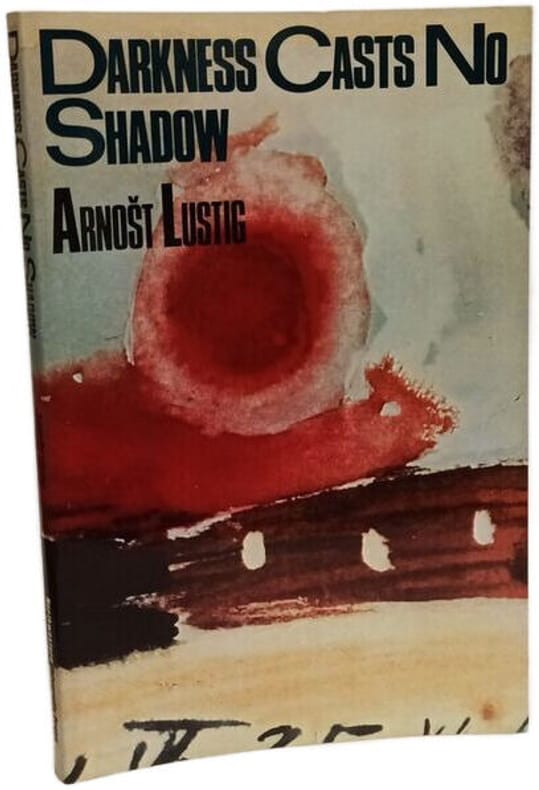
1985100147173Northwestern University Press 1985 173 pages 21 4x1x14cm. 1985. Broché. 173 pages. Darkness Casts No Shadow est un récit largement autobiographique d'Arnošt Lustig qui raconte l'évasion de deux jeunes garçons Manny et Danny d'un train de transport les menant vers un camp de la mort allemand en 1945. L'histoire mêle l'action présente de leur fuite à des souvenirs du passé allant des activités familiales aux horreurs de la vie dans les camps de concentration
12348, Haarlem, H.J.W. Becht, 1992., Gebrocheerd, originele geillustreerde (foto) uitgeversomslag z/w., 14,5x21,5cm, 301pp, register.
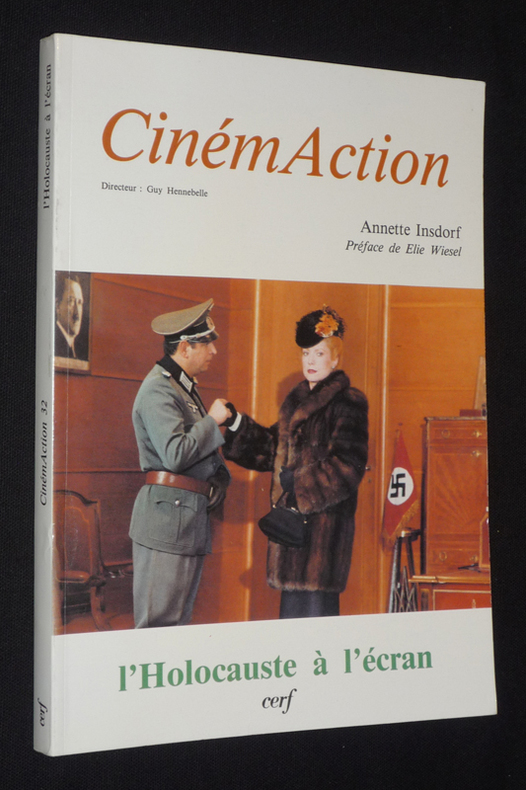
19862124Cerf, cinémaction, 1986. 1 volume broché in-8 ; 255 pages. Photographies. Bon état.
1985yd1075Editions du Cerf Revue 1985 In-8 (17 x 24 cm), broché, 189 pages ; très bon état. Livraison a domicile (La Poste) ou en Mondial Relay sur simple demande.
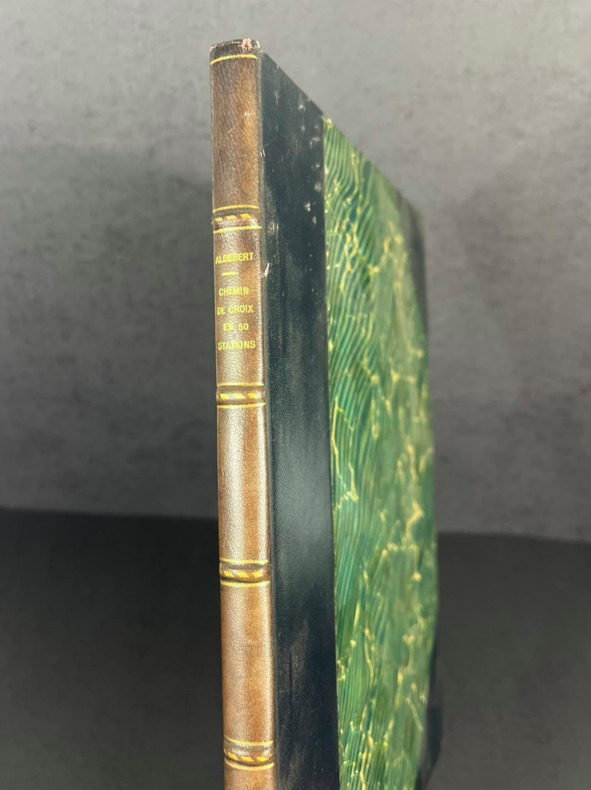
1946563Paris, Arthème Fayard, 1946. Édition originale. Grand album de 22 x 28 cm, 112 (2) pp. Relié demi-cuir noir à coins, dos à 5 nerfs ornés de pointillés et traits dorés, nom d'auteur et titre en doré. Plats marbrés. Couverture originale conservée. Tranchefile. Ouvrage illustré d'une cinquantaine de dessins en noir et blanc de l'auteur. Cet ouvrage est un puissant récit autobiographique illustré de l'artiste français Jean Bernard-Aldebert (connu sous le nom de Bernard-Aldebert, 1909-1974), relatant sa captivité dans cinq camps de concentration nazis différents entre 1944 et 1945. Après avoir bâti une carrière d'illustrateur, de caricaturiste et de satiriste, l'artiste voit son destin basculer tragiquement en novembre 1943. Pour avoir caricaturé Hitler sous les traits d'un chimpanzé dans le numéro du 1er août de l'hebdomadaire humoristique français *Ric et Rac*, Bernard-Aldebert est arrêté par la Gestapo. Il est ensuite transféré en janvier 1944 au camp d'internement de Royallieu-Compiègne, puis successivement à Buchenwald, Mauthausen, Gusen I et enfin Gusen II, où il demeure jusqu'à sa libération le 5 mai 1945. Le texte et les illustrations de l'auteur dévoilent les horreurs subies par les prisonniers dans ces camps : travaux forcés brutaux, famine, tortures sadiques et violences diverses. Si Bernard-Aldebert était surtout connu pour des caricatures au style léger et de charme, les images présentées ici versent dans un tout autre registre. Elles rappellent son style habituel, mais se révèlent bien plus dépouillées, sombres et austères, comme un reflet des émotions des personnages qui y apparaissent. Le texte est accompagné, presque systématiquement sur la page en regard, d'une reproduction en noir et blanc d'un dessin original de l'artiste, pour un total de 50 images. Celles-ci sont issues d'une série de croquis dessinés par Bernard-Aldebert peu après sa libération ; ils offrent, encore aujourd'hui, un témoignage visuel et émotionnel inestimable.
71570Arles, Actes Sud, 2002. 14 x 24, 320 pp., quelques illustrations en N/B, broché, bon état.
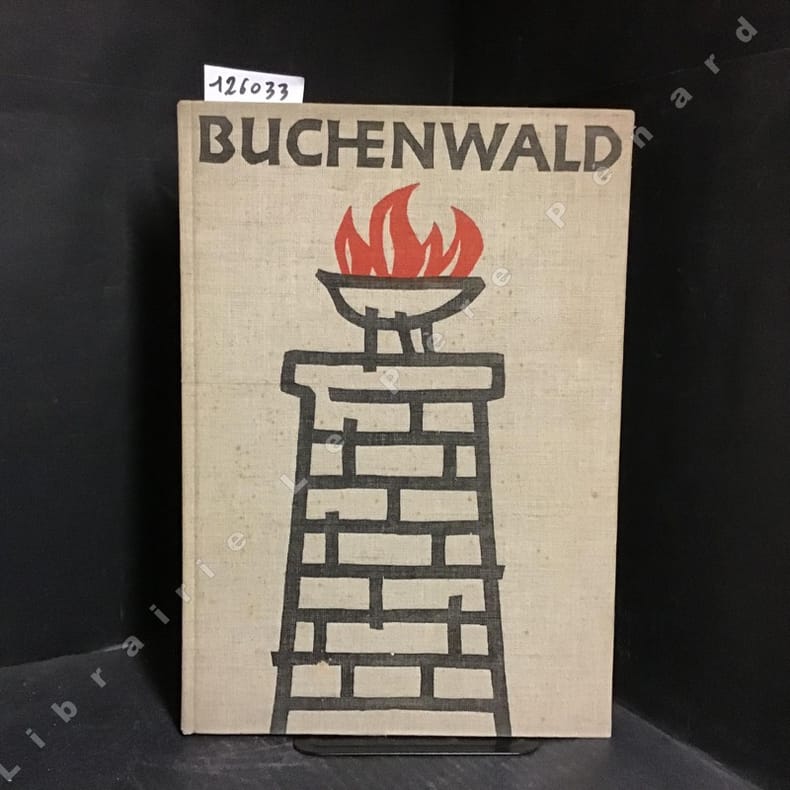
19601260331960 Kongress-Verlag, Berlin - 1960 - 187 pages - Nombreuses reproductions photographiques en N&B, in et hors texte, dans l'ouvrage - Texte en français, russe et allemand
122725Imprimerie Artistique en couleurs, Lyon - 1946 - In-folio, chemise broché avec papier cristal, couverture illustrée, feuillets détachés, dans une chemise cartonnée, dans un emboitage gris neutre - 78 planches illustrées hors-texte en N&B - Exemplaire numéroté sur Vélin pur fil Lafuma, Ex N°274/1200.
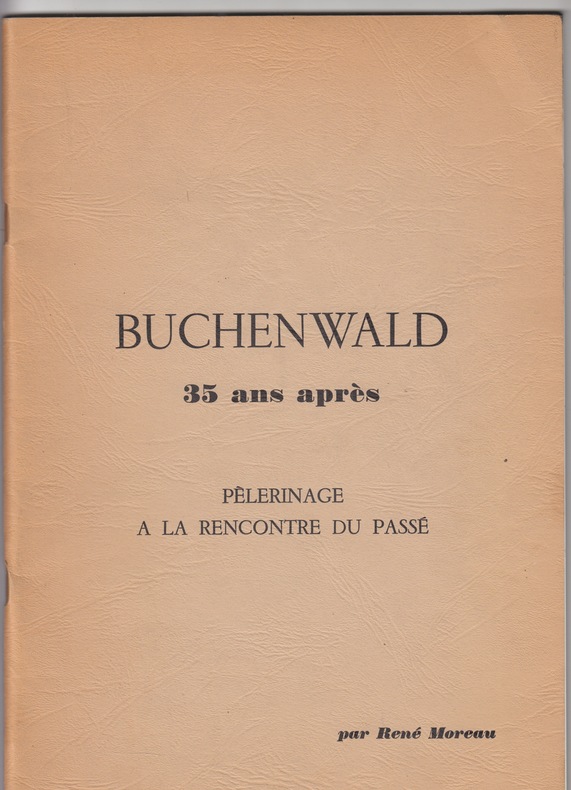
1980228541980 Editeur: R. Moreau (1980),IN4,Broché: 67 pages,illustrations,bon etat
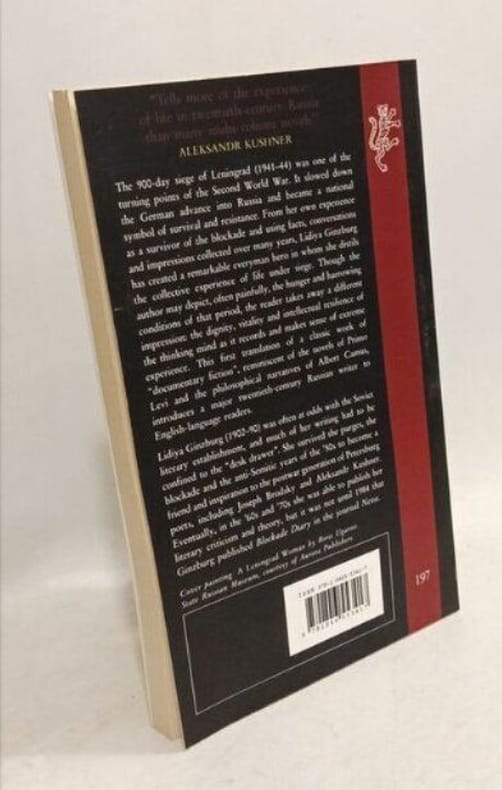
1999100136542The Harvill Press 1999 130 pages 13 2x1 8x21 2cm. 1999. Broché. 130 pages.
200025176Castle Books 2000 295 pages in-8. 2000. Cartonné/Jaquette. 295 pages. Illustrations en noir
1982R67635Baarn, Ten Have 1982 212pp., 21cm., twee stempeltjes
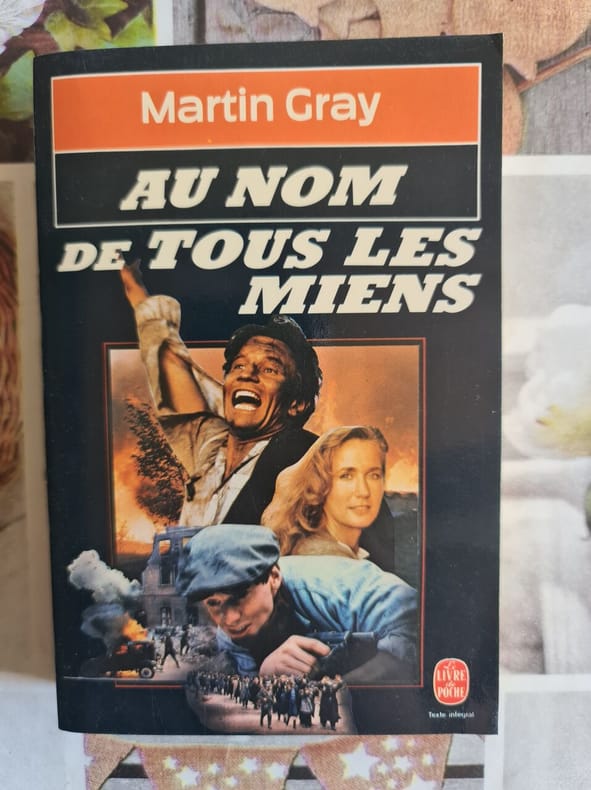
500321752Livre de Poche Sans date.