[CINEMA & FILM -- RACISM]. DIXON, ThomasBiblio.com
Kalhan SavitaLivre Rare Book
The Girl in the Broken Mirror
2018500066903Troika Books 2018 288 pages 13x19 6x2 8cm. 2018. Broché. 288 pages.

Démons et Merveilles · Joinville, France5,00 €
924 résultats
191563112New York: Grosset & Dunlap ca. 1915. 8vo. 8 374 pp. Photo frontisp. 7 photo illust. Red cloth white lettering minor shelfwear faint tidemark wicked into fore-edges of plates at the very fore-edge w/ d.j. cover art with KKK rider on horseback next to heroine minor chipping head & foot of spine minor closed tears edgewear still G/VG- copy. First Photoplay edition of the notorious movie starring Lilian Gish Henry B. Walthall Mae Marsh Miriam Cooper Ralph Lewis George Siemann and others which steeped in the Confederacy’s Lost Cause mythos which had heavily influenced the misguided Dunning School’s interpretation of Reconstruction and significantly influenced Dixon and Woodrow Wilson. Directed by D.W. Griffith the movie was very successful but the racist overtones and blatant support of the Ku Klux Klan triggered widespread protests and it was banned in several cities. Very much like 21st-Century media Birth of a Nation’s portrayal of African-Americans created a justification for prejudice and discrimination which undermined Civil Rights for decades and reactivated the largely quiescent Ku Klux Klan movement and was the first film ever screened at the White House for President Wilson. See: Petaja Photoplay Edition p. 53; The Influence of “The Birth of a Nation†Facing History & Ourselves March 14 2016. Grosset & Dunlap, hardcover
191032506Government Printing Office, Washington , Smithsonian Malicorne sur Sarthe, 72, Pays de la Loire, France 1910 Book condition, Etat : Très Bon paperback, original wrappers In-8 1 vol. - 21 pages
2018500066903Troika Books 2018 288 pages 13x19 6x2 8cm. 2018. Broché. 288 pages.
2018500077401Troika Books 2018 288 pages 13x19 6x2 8cm. 2018. Broché. 288 pages.
No marks or inscriptions. A very clean very tight copy with bright unmarked boards, foxing to page edges and no bumping to corners. Dust jacket not price clipped or marked or creased with very small tear to upper front corner, slight rubbing to corners and very minor traces of storage. 611pp. An in-depth study of the politics and economics and the unavelling of the Versailles settlement after 1918. The author considers economics, political ideologies and racism that led us from one world war to the next and explains, for the first time why the world economic and political systems simultaneously broke down between the wars.
8vo; 222 pages; The story of the Original Hebrew Israelite Nation, a group of African-American Jews which sees white Jews as impostors. Gerber spoke with members in Chicago, Liberia and Israel. Very Good Condition (amr-30-51)
8vo; First Edition. Original Printed Green Cloth. 12mo. 235 pages. 19 cm. These articles appeared from May 22 to October 2, 1920in Ford's paper, "The Dearborn Independent." "Why discuss the Jewish Question? Because it is here, and because its emergence into American thought should contribute to its solution, and not to a continuance of those bad conditions which surround the Question in other countries." Chapters: 1. The Jew in Character and Business 2. Germany's Reaction Against the Jew 3. Jewish History in the United States 4. The Jewish QuestionFact or Fancy? 5. Anti-SemitismWill It Appear in the U.S.? 6. Jewish Question Breaks Into the Magazines 7. Arthur Brisbane Leaps to the Help of Jewry 8. Does a Definite Jewish World Program Exist? 9. The Historic Basis of Jewish Imperialism 10. An Introduction to the "Jewish Protocols" 11. "Jewish" Estimate of Gentile Human Nature 12. "Jewish Protocols" Claim Partial Fulfillment 13. "Jewish" Plan to Split Society by "Ideas" 14. Did the Jews Foresee the World War? 15. Is the Jewish "Kahal" the Modern "Soviet"? 16. How the "Jewish Question" Touches the Farm 17. Does Jewish Power Control the World Press? 18. Does This Explain Jewish Political Power? 19. The All-Jewish Mark on "Red Russia" 20. Jewish Testimony in Favor of Bolshevism. Original single volume as originally issued; later joined by vols 2,3 & 4. Henry Ford, a noted anti-semite, had a close association with Dearborn, MI. Ford did not write the articles. He expressed his opinions verbally to his executive secretary, Ernest Liebold, and to William J. Cameron. Cameron had the main responsibility for expanding these opinions into article form. Liebold was responsible for collecting more material to support the articles. The Dearborn Independent, also known as The Ford International Weekly, was a weekly newspaper established in 1901, and published by Henry Ford from 1919 through 1927. The paper reached a circulation of 900,000 by 1925, second only to the New York Daily News, largely due to a quota system for promotion imposed on Ford dealers. Lawsuits regarding antisemitic material published in the paper caused Ford to close it, and the last issue was published in December 1927. The publication's title was derived from the Detroit suburb of Dearborn, Michigan. Derived largely from information found posted on line: Convinced that "bankers" and "the Jews" were responsible for a whole range of things he didn't like, from the world war to short skirts to jazz music, Henry Ford used his newspaper, the Dearborn Independent, to carry on an active anti-Semitic campaign. Between 1920 and 1922 a series of articles denounced all things Jewish. While officially apologizing for the articles in 1927, Ford's anti-Jewish sentiments ran deep. In January 1919, Henry Ford began publication of the Dearborn Independent, a small community weekly he had purchased the previous year. Carrying the subtitle, The Chronicler of the Neglected Truth, the paper primarily served as a forum for Henry Ford's views. Each issue of the Independent carried "Mr. Ford's Own Page," an editorial expressing his opinions, written by William J. Cameron. The Ford Motor Company pressured car dealers to buy multiple subscriptions and hand out copies to customers. The newspaper was popular, and circulation reached 900,000 in 1926. The Dearborn Independent would, most likely, have remained a sidebar in Ford's biography were it not for a controversial series that began on May 22, 1920 and lasted for several years. Appearing on the front page every week, "The International Jew: The World's Problem" examined a purported conspiracy launched by Jewish groups to achieve world domination. The basis for the articles was a notorious forgery, The Protocols of the Elders of Zion, an anti-Semitic hoax, first published in Russia in 1903. Many have accused Ford's personal secretary, Ernest Liebold, of being the source of the campaign, and Liebold's anti-Semitic views are well documented. William Cameron, editor of the Independent, was an enthusiastic supporter of the publication of the anti-Semitic diatribes. However, Ford's own attitudes towards Jews were the major reason for the publication of "The International Jew." His anti-Semitic beliefs formed along several strands from his upbringing, attitudes, and personal beliefs. A common stereotype at the time led some people to assume that Jews controlled the international banking system; that belief may have fed his anti-Jewish feelings. The publication of "The International Jew" caused an uproar. In some quarters, such as anti-immigrant and nativist groups, the series confirmed their own beliefs. Others were appalled by the series, published demands for a retraction, removed the paper from public libraries, and promoted a boycott of Ford automobiles. Some Ford dealers refused to carry the paper. Responding to this pressure, Ford halted publication of the anti-Jewish series in January 1922, only to start it up again less than a year later. Previous owner's name, pocket on rear blank endpaper, no other markings, an excellent copy Very Good Condition. (HOLO2-63-21D)
8vo; First Edition. Original Printed Green Cloth. 12mo. 235 pages. 19 cm. These articles appeared from May 22 to October 2, 1920in Ford's paper, "The Dearborn Independent." "Why discuss the Jewish Question? Because it is here, and because its emergence into American thought should contribute to its solution, and not to a continuance of those bad conditions which surround the Question in other countries." Chapters: 1. The Jew in Character and Business 2. Germany's Reaction Against the Jew 3. Jewish History in the United States 4. The Jewish QuestionFact or Fancy? 5. Anti-SemitismWill It Appear in the U.S.? 6. Jewish Question Breaks Into the Magazines 7. Arthur Brisbane Leaps to the Help of Jewry 8. Does a Definite Jewish World Program Exist? 9. The Historic Basis of Jewish Imperialism 10. An Introduction to the "Jewish Protocols" 11. "Jewish" Estimate of Gentile Human Nature 12. "Jewish Protocols" Claim Partial Fulfillment 13. "Jewish" Plan to Split Society by "Ideas" 14. Did the Jews Foresee the World War? 15. Is the Jewish "Kahal" the Modern "Soviet"? 16. How the "Jewish Question" Touches the Farm 17. Does Jewish Power Control the World Press? 18. Does This Explain Jewish Political Power? 19. The All-Jewish Mark on "Red Russia" 20. Jewish Testimony in Favor of Bolshevism. Original single volume as originally issued; later joined by vols 2,3 & 4. Henry Ford, a noted anti-semite, had a close association with Dearborn, MI. Ford did not write the articles. He expressed his opinions verbally to his executive secretary, Ernest Liebold, and to William J. Cameron. Cameron had the main responsibility for expanding these opinions into article form. Liebold was responsible for collecting more material to support the articles. The Dearborn Independent, also known as The Ford International Weekly, was a weekly newspaper established in 1901, and published by Henry Ford from 1919 through 1927. The paper reached a circulation of 900,000 by 1925, second only to the New York Daily News, largely due to a quota system for promotion imposed on Ford dealers. Lawsuits regarding antisemitic material published in the paper caused Ford to close it, and the last issue was published in December 1927. The publication's title was derived from the Detroit suburb of Dearborn, Michigan. Derived largely from information found posted on line: Convinced that "bankers" and "the Jews" were responsible for a whole range of things he didn't like, from the world war to short skirts to jazz music, Henry Ford used his newspaper, the Dearborn Independent, to carry on an active anti-Semitic campaign. Between 1920 and 1922 a series of articles denounced all things Jewish. While officially apologizing for the articles in 1927, Ford's anti-Jewish sentiments ran deep. In January 1919, Henry Ford began publication of the Dearborn Independent, a small community weekly he had purchased the previous year. Carrying the subtitle, The Chronicler of the Neglected Truth, the paper primarily served as a forum for Henry Ford's views. Each issue of the Independent carried "Mr. Ford's Own Page," an editorial expressing his opinions, written by William J. Cameron. The Ford Motor Company pressured car dealers to buy multiple subscriptions and hand out copies to customers. The newspaper was popular, and circulation reached 900,000 in 1926. The Dearborn Independent would, most likely, have remained a sidebar in Ford's biography were it not for a controversial series that began on May 22, 1920 and lasted for several years. Appearing on the front page every week, "The International Jew: The World's Problem" examined a purported conspiracy launched by Jewish groups to achieve world domination. The basis for the articles was a notorious forgery, The Protocols of the Elders of Zion, an anti-Semitic hoax, first published in Russia in 1903. Many have accused Ford's personal secretary, Ernest Liebold, of being the source of the campaign, and Liebold's anti-Semitic views are well documented. William Cameron, editor of the Independent, was an enthusiastic supporter of the publication of the anti-Semitic diatribes. However, Ford's own attitudes towards Jews were the major reason for the publication of "The International Jew." His anti-Semitic beliefs formed along several strands from his upbringing, attitudes, and personal beliefs. A common stereotype at the time led some people to assume that Jews controlled the international banking system; that belief may have fed his anti-Jewish feelings. The publication of "The International Jew" caused an uproar. In some quarters, such as anti-immigrant and nativist groups, the series confirmed their own beliefs. Others were appalled by the series, published demands for a retraction, removed the paper from public libraries, and promoted a boycott of Ford automobiles. Some Ford dealers refused to carry the paper. Responding to this pressure, Ford halted publication of the anti-Jewish series in January 1922, only to start it up again less than a year later. Previous owner's name, pocket on rear blank endpaper, no other markings, an excellent copy Very Good Condition. (HOLO2-63-21E)
8vo; First Edition. Original Paper Wrappers. 12mo. 235 pages. 19 cm. These articles appeared from May 22 to October 2, 1920in Ford's paper, "The Dearborn Independent." "Why discuss the Jewish Question? Because it is here, and because its emergence into American thought should contribute to its solution, and not to a continuance of those bad conditions which surround the Question in other countries." Chapters: 1. The Jew in Character and Business 2. Germany's Reaction Against the Jew 3. Jewish History in the United States 4. The Jewish QuestionFact or Fancy? 5. Anti-SemitismWill It Appear in the U.S.? 6. Jewish Question Breaks Into the Magazines 7. Arthur Brisbane Leaps to the Help of Jewry 8. Does a Definite Jewish World Program Exist? 9. The Historic Basis of Jewish Imperialism 10. An Introduction to the "Jewish Protocols" 11. "Jewish" Estimate of Gentile Human Nature 12. "Jewish Protocols" Claim Partial Fulfillment 13. "Jewish" Plan to Split Society by "Ideas" 14. Did the Jews Foresee the World War? 15. Is the Jewish "Kahal" the Modern "Soviet"? 16. How the "Jewish Question" Touches the Farm 17. Does Jewish Power Control the World Press? 18. Does This Explain Jewish Political Power? 19. The All-Jewish Mark on "Red Russia" 20. Jewish Testimony in Favor of Bolshevism. Original single volume as originally issued; later joined by vols 2,3 & 4. Henry Ford, a noted anti-semite, had a close association with Dearborn, MI. Ford did not write the articles. He expressed his opinions verbally to his executive secretary, Ernest Liebold, and to William J. Cameron. Cameron had the main responsibility for expanding these opinions into article form. Liebold was responsible for collecting more material to support the articles. The Dearborn Independent, also known as The Ford International Weekly, was a weekly newspaper established in 1901, and published by Henry Ford from 1919 through 1927. The paper reached a circulation of 900,000 by 1925, second only to the New York Daily News, largely due to a quota system for promotion imposed on Ford dealers. Lawsuits regarding antisemitic material published in the paper caused Ford to close it, and the last issue was published in December 1927. The publication's title was derived from the Detroit suburb of Dearborn, Michigan. Derived largely from information found posted on line: Convinced that "bankers" and "the Jews" were responsible for a whole range of things he didn't like, from the world war to short skirts to jazz music, Henry Ford used his newspaper, the Dearborn Independent, to carry on an active anti-Semitic campaign. Between 1920 and 1922 a series of articles denounced all things Jewish. While officially apologizing for the articles in 1927, Ford's anti-Jewish sentiments ran deep. In January 1919, Henry Ford began publication of the Dearborn Independent, a small community weekly he had purchased the previous year. Carrying the subtitle, The Chronicler of the Neglected Truth, the paper primarily served as a forum for Henry Ford's views. Each issue of the Independent carried "Mr. Ford's Own Page," an editorial expressing his opinions, written by William J. Cameron. The Ford Motor Company pressured car dealers to buy multiple subscriptions and hand out copies to customers. The newspaper was popular, and circulation reached 900,000 in 1926. The Dearborn Independent would, most likely, have remained a sidebar in Ford's biography were it not for a controversial series that began on May 22, 1920 and lasted for several years. Appearing on the front page every week, "The International Jew: The World's Problem" examined a purported conspiracy launched by Jewish groups to achieve world domination. The basis for the articles was a notorious forgery, The Protocols of the Elders of Zion, an anti-Semitic hoax, first published in Russia in 1903. Many have accused Ford's personal secretary, Ernest Liebold, of being the source of the campaign, and Liebold's anti-Semitic views are well documented. William Cameron, editor of the Independent, was an enthusiastic supporter of the publication of the anti-Semitic diatribes. However, Ford's own attitudes towards Jews were the major reason for the publication of "The International Jew." His anti-Semitic beliefs formed along several strands from his upbringing, attitudes, and personal beliefs. A common stereotype at the time led some people to assume that Jews controlled the international banking system; that belief may have fed his anti-Jewish feelings. The publication of "The International Jew" caused an uproar. In some quarters, such as anti-immigrant and nativist groups, the series confirmed their own beliefs. Others were appalled by the series, published demands for a retraction, removed the paper from public libraries, and promoted a boycott of Ford automobiles. Some Ford dealers refused to carry the paper. Responding to this pressure, Ford halted publication of the anti-Jewish series in January 1922, only to start it up again less than a year later. Touch of wear at foot and crown of spine, little bit of residue on front cover, Very Good Condition. (HOLO2-63-21)
pp. 548, vi [Contents]. Includes 12 page subscribers list with their addresses. Some bottom margins torn. Old green ink stain on bottom edges. Dampstaining on fore edge and margins. Lacks rear fly leaves. 215mm. Original full green cloth binding, rubbed and worn. Green ink stain on front board and bottom edge. In a long 90-page introductory dissertation, the author presents his ideas of racial development (esp. Celtic) and debunks evolutionary theory (especially "Huxley, Darwin and their associates"), then builds from a "firm Biblical foundation to the manifest supremacy of the Aryan race, as best exemplified by the Irish politicians of California". Howell 50:727; Cowan p.505; Rocq 17112. VERIA BX 2
1st Edition. Original Paper Wrappers. 8vo. 3 pages ; 22cm. Sermon preached by Rudolph Grossman, November 10th, 1923 at Temple Rodeph Shalom on the Corner of 63rd Street and Lexington Avenue, New York, on Saturday, November 10th 1923. The Klu Klux Klan has grown to be a serious menace against which the manhood and the womanhood of America must raise its voice in outspoken and vehement protest , Grossman preached in 1923, It is not the Catholic, the Negro, and the Jew alone who are involved in what has come to be a national shame. The honor of Christendom is at stake. Grossman was born in Vienna. He was the son of Rabbi Ignatz Grossman and Nettie Rosenbaum Grossman, and was brought to this country in his childhood. In 1889 he was graduated at the head of his class from the Hebrew Union College in Cincinnati, Ohio After his graduation Dr. Grossman came to New York as associate rabbi of Temple Beth-El. He remained at Temple Beth-El for eight years, and went to Temple Rodeph Sholom in response to a unanimous call Dr. Grossman was president of the Jewish Religious School Union of New York and of the Board of Jewish Ministers and a member of the Commission on Jewish Religious Literature. He had served as vice-president and later as president of the Association of Reform Rabbis of New York. (JTA, 1927) Congregation Rodeph Sholom is a Reform synagogue in New York City. Founded in 1842 by immigrants from the German lands, it is one of the oldest synagogues in the United States. (Wikipedia, 2016) OCLC lists just 1 copy worldwide (HUC). Hole punched with protective material around holes with no text loss. Creased. Some edgewear. Overall good+ condition. (AMR-49-28)
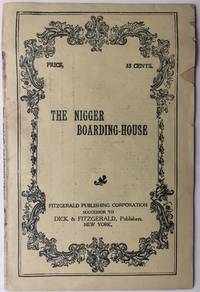
1898H13069New York: Fitzgerald Publishing Corporation 1898. Paperback. Good. Original yellow printed wraps good small triangular chip to edge of front cover light wear pages tanning 24 pp. Uncommon in the original edition. Fitzgerald Publishing Corporation paperback
194716118New York, Current Books, 1947, in-8°, viii-392 pp, index, reliure percaline bordeaux de l'éditeur, dos lisse avec titres dorés, jaquette illustrée (pt mque à la jaquette), bon état. Texte en anglais
Small 8vo; 48 pages; Good overview of Blacks in the anti-slavery movement by the period's most noted writer on Black history (MX14-3)
Features: If Ho Chih Minh's Army Moves South in Force...; William F. Buckley seeks the Mayor's job in New York; The Wonder is There have been So Few Riots - American Racism; The Way it Was in the London Blitz - Londoners look back with nostalgia; Saga of Greta Lovisa Gustafsson (Garbot); TV Shows for the new season - Eagle in a Cage with Trevor Howard, The Steve Lawrence Show, I Spy with Bill Cosby and Robert Culp, Henry Moore - Man of Form, Trials of O'Brien - Peter Falk, and Jimmy Durante meets the Lively Arts; Feliciano Bejar's Special Niche in Mexico. Unmarked. Average wear. A sound copy. Book
1985100147099Oxford University Press 1985 320 pages 13 335x20 32x1 8542cm. 1985. Cartonné. 320 pages. L'ouvrage de John G. Gager propose une lecture révisionniste des origines de l'antisémitisme en remettant en cause l'idée d'une hostilité universelle envers le judaïsme dans la littérature païenne et chrétienne antique. Il suggère que les perceptions négatives découlaient souvent de préoccupations concernant l'influence du judaïsme plutôt que d'une animosité envers la foi elle-même offrant ainsi une image plus riche et variée des Juifs et des Chrétiens de l'Antiquité
190733029Government Printing Office, Washington , Smithsonian Malicorne sur Sarthe, 72, Pays de la Loire, France 1907 Book condition, Etat : Très Bon paperback, original wrappers In-8 1 vol. - 23 pages
193032752Government Printing Office, Washington , Smithsonian Malicorne sur Sarthe, 72, Pays de la Loire, France 1930 Book condition, Etat : Très Bon paperback, original wrappers In-8 1 vol. - 20 pages
171962577Erie PA: Erie Litho & Printing Co. March 17 1923. Large double atlas folio dual-sided broadside printed on newsprint sized 9.25 x 42 in. photo & woodcut engraving illustrations recto & verso toning to paper some chipping & edgewear paper repairs to closed tears still a G- copy. First edition thus of this advertising broadside for Erickson’s “J.W. Johnson’s Old Reliable Virginia Minstrels World’s best colored show. . . “ which touts their supposed 15 year history and appear to have either been reformed from the “Alabama Minstrels†show which played throughout the West and Midwest from 1905-1914 or simply taken over some of their acts. The contortionist fire king Hi Henry Hunt who appears in this broadside regularly performed with the “Alabama Minstrels†from 1905-1913. The silver voiced tenor A.J. McFarland and Grace Arniot Royal Entertainer depicted on the broadside also appear to have been African-American rather than black face performers. The name appears to have been drawn from the 19th-Century original “Virginia Minstrels†or the “Melodious Ethiopian Band†which featured Billy Whitlokc Dick Pelham Frank Brower and Dan Emmett performing in New York’s Bowery Amphitheater in 1843 and launched the minstrelsy form of entertainment. Emmett is perhaps best remembered as the author of “Dixie†which ironically would become the Confederate States unofficial anthem. Assorted versions dating 1920-1924 with different content & sizing appear in 6 libraries Harvard DLC 3 versions Middle Tenn. State Lib. of VA; See: Dr. Karl Koenig The History & Music of the Minstrels Rue Basin Source for Historical Jazz 2024. Erie Litho & Printing Co., unknown
195211817Unesco , Race Question in Modern Science Malicorne sur Sarthe, 72, Pays de la Loire, France 1952 Book condition, Etat : Bon broché brochure 1 vol. - 48 pages
Dark spill to edge of last ten or so pages. Wear on cover. Small format: 4 1/4" x 5 5/8"h. Red cover. No date - reprint circa 1990's. Super cute bright colorful illustrations.
This issue titled Private Lives and their public enemies: journalism, the law, television, medicine, secret police, etc. Contributors include J. B. Priestley, Paul Getty, Adam Faith and Brigitte Bardot. 176 pages. Covers have some creases and browning.
Looks like new, but is printed on age-toned paper. 158 pages.
218629Birmingham AL: MARK 198-. Two 8.5x11 inch handbills and a bumpersticker good to very good. The group publicized far-right activities of Joe Coors calling the beer maker a fascist. In the mid-1980s the Coors company sued MARK; one of these flyers seeks donations to help fund its legal battle. MARK unknown books
500346014Le Livre de Poche Sans date.