VAUBAN, (S.L. de).Livre Rare Book
237 résultats
56183Berlin, Haude und Spener, 4to. Cont. full calf. Raised bands. Blindtooled compartments. Titlelabel with lettering. A paperlabel pasted on lower part of spine. Stamp on title-page. (20),172,(4),12 (8),137,(3) pp. Engraved frontisp. and 47 folded engraved plates (numb. 1-33 + 3 bis and 1-11). A few leaves with light browning, a few plates with light toning, otherwise clean and fine.
17075005<p>Contemporary printed paper covered boards; early twentieth century paper spine.Thirty-two sur blanc full-page plates.; Squarish Octavo; 164 x 203 mm. Early owner's name expunged from title; intermittent foxing otherwise a handsome copy. Additional images and further information provided upon request.</p> Ludwig Bourgeat hardcover
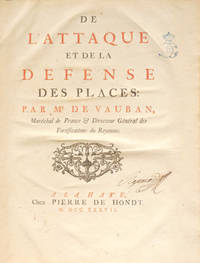
2305SB038<p>PAR MR. DE VAUBAN Maréchal de France & Directeur Général des Fortifications du Royaume. A LA HAYE Chez PIERRE DE HONDT. M. DCC. XXXVII. M. DCC. XLII. 1737 1742.</p>_x000d_<p>2 Volumes encadernados em um de 285x235 cm. Com xx 216; xvi 180 i.e. 188 xxxiv ii br. págs. Encadernação da época inteira de pele com nervos ferros a ouro em casas fechadas e ferros a seco em esquadria nas pastas.</p>_x000d_<p>Ilustrado com 44 gravuras desdobráveis em água-forte: 33 na primeira parte numeradas de I a XXXIII dividindo-se as 14 18 e 19 em duas folhas; e 11 na segunda numeradas de I a XI. A última parte do segundo volume não é ilustrada. Algumas fazem-se acompanhar de legenda.</p>_x000d_<p>Rosto impresso a preto e vermelho com um florão decorativo. Texto em caracteres itálicos no rosto dedicatória alguns subtítulos e nas primeiras letras das entradas do índice de assuntos que se dispõe em duas colunas. Inclui iniciais ornamentadas cabeções constituídos por vinhetas tipográficas e florões de remate.</p>_x000d_<p>Exemplar com falhas de pele e danos nas charneiras coifas e cantos das pastas. Tem carimbo oleográfico de posse do rei D. Carlos I com monograma «DC» e assinatura de posse de «Rapozo» na folha de rosto ex-libris na capa anterior do rei D. Manuel II com o mote «Depois de Vós Nós» carimbo oleográfico de cota «27057» na última folha do último caderno.</p>_x000d_<p>Apresenta uma gralha na página 209 do primeiro volume constando na numeração 109 ao invés. No segundo volume o caderno que contém as páginas 3340 e sucedido por outro que duplica a paginação com um asterisco ou seja com as páginas 33-40.</p>_x000d_<p>Primeiras páginas não numeradas do primeiro volume com dedicatória do editor Pierre de Hondt ao príncipe da Prússia Frederico II prefácio e índice de capítulos. As do segundo volume com prefácio que inclui um discurso do autor e índice de capítulos. Últimas páginas não numeradas do mesmo com índice de assuntos de ambos os volumes anúncio comercial e catálogo do editor.</p>_x000d_<p>O segundo volume apresenta folha de rosto própria onde se lê: «Par monsieur LE MARECHAL DE VAUBAN: Tome Second. Contenant UN TRAITÉ PRATIQUE DES MINES par le même; et un autre DE LA GUERRE EN GENERAL Par un Officier de Distinction. A LA HAYE. Chez PIERRE DE HONDT. M. DCC. XLII. ».</p>_x000d_<p>Primeira edição completa e autorizada dos tratados de Vauban em estratégia militar de cerco.</p>_x000d_<p>O primeiro volume contém um tratado sobre o ataque a fortalezas intitulado «De lAttaque des Places» até à página 188. Foi ampliado pelo editor com uma segunda parte sobre a defesa de fortalezas «De la Defense des Places» atribuída a Vauban mas que na realidade reproduz essencialmente o «Discours sur la défense des places présenté à Louis XIV en 1675» de Guillaume de La Fon de Boisguérin seigneur Deshoulières 16211693.</p>_x000d_<p>O segundo volume complementa a obra um tratado sobre a forma de minar fortificações «Traité Pratique des Mines» até à página 48 e com um tratado geral de guerra «Traité de la Guerre en General» de autoria anónima. De acordo com Pierre Alexandre Joseph Allent em «Histoire du Corps impérial du génie» nenhuma destas obras é da autoria de Vauban mas sim apenas o discurso que consta do prefácio deste volume.</p>_x000d_<p>Vauban terá escrito os segredos do seu sucesso na construção e captura de fortalezas entre 1669 e 1704. A sua superioridade estratégica apenas prevaleceria se estes textos fossem mantidos em segredo e circulassem entre um número muito estrito de pessoas mas após a sua morte acabaram por ser divulgados de forma legal. Segundo Henry Guerlac de todos os livros dos séculos XVII e XVIII sobre estratégia militar nenhuma obra teve maior influência ou gozou de maior prestígio do que as de Vauban. Joan DeJean afirma ainda que os primeiros leitores de Vauban deviam crer estar na posse de segredos militares incríveis com o poder de tornar as nações invencíveis; que nenhum outro tratado de cerco tinha sido rodeado de tanto secretismo.</p>_x000d_<p>Sébastien Le Prestre de Vauban Saint-Léger-Vauban 1633 Paris 1707 foi um grande engenheiro militar do reinado de Luís XIV e um dos principais conselheiros do rei. Especialista em estratégia de cerco foi responsável pela concepção e modernização de cerca de uma centena de fortalezas que dotaram a França de uma força que a tornou inexpugnável durante todo o reinado de Luís XIV com excepção da cidadela de Lille que foi capturada uma vez até ao final do século XVIII quando as fortalezas se tornaram obsoletas devido aos progressos da artilharia. Doze destas fortalezas que constituem um grupo de construções em toda a extensão das fronteiras francesas foram classificadas como Património Mundial da UNESCO em 7 de Julho de 2008.</p>_x000d_<p>EN 2 Volumes bound in one. 28.5x23.5 cm. xx 216; xvi 180 i.e. 188 xxxiv ii br. pp. Contemporary full leather binding with raised bands and gilt tools on spine and dry tooling framing the boards.</p>_x000d_<p>Illustrated with 44 folding engravings: 33 in the first part numbered I to XXXIII with 14 18 and 19 divided into two leaves; and 11 in the second numbered I to XI. The last part of the second volume is not illustrated. Some engravings have a caption.</p>_x000d_<p>Title page printed in black and red with a decorative <em>fleuron</em>. Text in italics on the title page dedication some subtitles and in the first letters of the entries in the subject index which is arranged in two columns. Includes decorated initials headpieces made up of typographical vignettes and finishing <em>fleurons.</em></p>_x000d_<p>Copy with some leather flaws and damage in the hinges spine caps and corners of the boards. Oleographic ownership stamp from King Carlos I with monogram "DC" and handwritten ownership title from "Rapozo" on the title page ex-libris from King Manuel II on the front cover with the motto "Depois de Vós Nós" library location oleographic stamp with "27057" on the last leaf of the last quire.</p>_x000d_<p>Typo on page 209 of the first volume numbering 109 instead. In the second volume the quire containing pages 33-40 is succeeded by another which duplicates the pagination with an asterisk i.e. with pages 33-40.</p>_x000d_<p>First unnumbered pages of first volume with dedication by editor Pierre de Hondt to Prince Frederick II of Prussia preface and chapter index. Those of the second volume with preface including a speech by the author and index of chapters. Last unnumbered pages of the same volume with subject index of both volumes commercial advertisement and publisher's catalogue.</p>_x000d_<p>The second volume has its own title page which reads: "Par monsieur LE MARECHAL DE VAUBAN: Tome Second. Contenant UN TRAITÉ PRATIQUE DES MINES par le même; et un autre DE LA GUERRE EN GENERAL Par un Officier de Distinction. A LA HAYE. With PIERRE DE HONDT. M. DCC. XLII.".</p>_x000d_<p>First complete and authorized edition of Vauban's treatises on military siege strategy.</p>_x000d_<p>The first volume contains a treatise on the attack of fortresses entitled "De l'Attaque des Places" up to page 188. It was expanded by the publisher with a second part on the defence of fortresses "De la Defense des Places" attributed to Vauban but which in reality essentially reproduces the "Discours sur la défense des places présenté à Louis XIV en 1675" by Guillaume de La Fon de Boisguérin seigneur Deshoulières 1621-1693.</p>_x000d_<p>The second volume complements the work with a treatise on how to mine fortifications "Traité Pratique des Mines" up to page 48 and with a general treatise on war "Traité de la Guerre en General" anonymously authored. According to Pierre Alexandre Joseph Allent in "Histoire du Corps impérial du génie" none of these works is by Vauban but only the speech that appears in the preface to this volume.</p>_x000d_<p>Vauban is said to have written down the secrets of his success in building and capturing fortresses between 1669 and 1704. His strategic superiority would only have prevailed if these texts were kept secret and circulated among a very strict number of people but after his death they were eventually made public in a legal way. According to Henry Guerlac of all the 17th- and 18th-century books on military strategy no work has had greater influence or enjoyed greater prestige than Vauban's. He also states that Vauban's work was more influential than his own. Joan DeJean further states that Vauban's first readers must have believed themselves to be in possession of incredible military secrets with the power to make nations invincible; that no other treatise on siege had been surrounded by so much secrecy.</p>_x000d_<p>Sébastien Le Prestre de Vauban Saint-Léger-Vauban 1633 - Paris 1707 was a great military engineer of the reign of Louis XIV and one of the king's chief advisers. A specialist in siege strategy he was responsible for designing and modernising around a hundred fortresses which provided France with a force that made it impregnable throughout Louis XIV's reign - with the exception of the citadel of Lille which was captured once - until the end of the 18th century when the fortresses became obsolete due to advances in artillery. Twelve of these fortresses which make up a group of constructions along the entire length of the French borders were listed as UNESCO World Heritage Sites on 7 July 2008.</p>_x000d_<p>Referências/References:</p>_x000d_<p>BNF: ark:/12148/cb315477793</p> M-17-B-23 hardcover
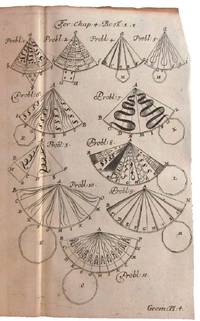
1691177262London: Abell Swall 1691. Pp. 1680last blank104 engraved pictorial title page and 32 folding plates; cr. 8vo; contemporary calf the spine with handwritten paper title label between raised bands boards with single rule border and corner ornaments in blind lightly worn; all edges sprinkled red; book label of David Levine Sydney on the upper pastedown with the earlier inked signature of the antiquary Sir Daniel Fleming on the upper free endpaper the signature of his son George Fleming on the blank preliminary and two tiny annotations 'Fortz' - referencing the subject or shelf arrangement in his library hinges tender a couple of the plates slightly creased at edges; Abel Swall London 1691. First edition in English. Wing L1116; ESTC R15758. The work is in two parts the first entitled A New Treatise of Geometry containing 8 plates numbered 1-8. The second part A New Treatise of Fortification contains 22 plates lettered A-I K-T V W X. Sebastien le Prestre de Vauban 1633-1707 revolutionized the art of siege craft and defensive fortification and is regarded as the greatest military engineer of his time. The translation from the French is by the bookseller Abel Swall. Sir Daniel Fleming 1633-1701 amassed a library of at least 1500 volumes many of which were annotated often by his son Sir George 1667-1747 the Bishop of Carlisle who probably hand wrote the spine label. Abell Swall unknown
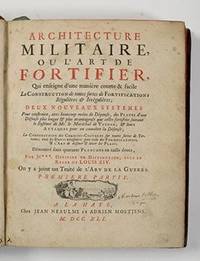
51-5913La Haye: chez Jean Neaulme et Adrien Moetjens 1741. 4to. 22 x 28 cm. Contemporary calf restored by Patrick Minos Courbevoie; complete with 40 folding engraved plates.OCLC Number / Unique Identifier:1439797832: Physical Description:3 part. 1 vol. 2 III-V 1 139 5 ; ill. 4to 2 148 16 ; 8 99 1 p. 40 pl.Notes:Sig. p1 2-3 A-S4 ; p1 A-S4 T2 V-X4 ; 4 A-M4 N2. – Très bel exemplaire de l’édition originale de ce rare ouvrage d’architecture qui sera plagié par la suite en très grande partie par Bardet de Villeneuve. Cet ouvrage enseigne d’une manière courte et facile la construction de toutes sortes de fortifications régulières et irrégulières ; deux nouveaux systèmes pour construire avec beaucoup moins de dépense des places d’une défense plus longue et plus avantageuse que celles fortifiées suivant le système de M. le Maréchal de Vauban ; et leurs attaques pour en connaître la défense. La construction des chemins-couverts sur toutes sortes de terrains ; avec les devis nécessaires pour celle des fortifications ; et l’art de dessiner et laver les plans. Bien complet des 40 planches dépliantes en taille douce joint un traité de l’art de la guerre. Reliure d’époque en plein cuir veau dos à cinq nerfs et caissons ornés pièce de titre de maroquin rouge. La reliure a subi d’habiles restaurations aux nerfs à certains caissons et aux coins. Barbier N°1272 2ème édition Provenance : Librairie de Leiber rue de Seine 13 à Paris avec étiquette au contreplat. La Haye,: chez Jean Neaulme et Adrien Moetjens, 1741 unknown
65379E-315. Very Good. Leather. Leather. Large 8vo. Published by Pierre de Hondt La Haye The Hague Netherlands. 1737. 216 pgs. 36 folidng plates. First Edition/First Printing. Bound in ruled leather boards with titles present to the spine and front board. Boards have shelf-wear present to the extremities large chip present to the crown of the spine stain present to the front board. No ownership marks present. Text is clean and free of marks. Several plates have been misfolded. Binding tight and solid. First edition of Vauban's massive posthumous volume De l Attaque et de la la Défense des Places the "standard work for students of fortifications and siegecraft until the second half of the 19th century" with 36 engraved plates by this powerfully influential military strategist whose legacy was so esteemed by Napoleon that he ordered Vauban s heart be placed under the dome of the Invalides in Paris. Sébastien Le Prestre de Vauban Seigneur de Vauban later Marquis de Vauban baptised 15 May 1633 30 March 1707 commonly referred to as Vauban was a French military engineer who worked under Louis XIV. He is generally considered the greatest engineer of his time and one of the most important in European military history. EB; 8vo 8" - 9" tall . hardcover
1942103566Chez Pierre de Hondt 1942. Hardcover. Very good/No jacket. leather 17. Two volumes bound in one book both first editions. V.1 published in 1737 v.2 in 1742. Bound in leather with decorative endpapers. Many foldout charts and diagrams. Covers worn with a bare spot at the bottom of the spine. Possibly some water damage but not too bad.<br /> <br /> These are the first editions of Vauban's treatises on siegecraft and military mining. One othe most influential works on miltary technology in the 18th century. Volume one is complete with 36 plates. Most of this information was kept secret passed by hand in manuscript until his death when it was then published. Chez Pierre de Hondt hardcover
179650081796 Paris, Magimel, 1796 (an 3 de la République), 13x20cm. Ouvrage complet en trois volumes. Reliures en pleine basane. Dos lisses, pièce de titre sur maroquin rouge, tomaison en chiffres dorés. Illustré de 59 planches dépliantes, placées à la fin de chaque volume. Quérard dit de cet ouvrage "On ne peut même donner qu'une idée imparfaite du travail de l'éditeur, en signalant les rectifications, additions, développements, notes et tables de matières, dont il a enrichi cette édition" (Quérard, X, 70). Édition peu courante, très rarement complète en reliures d'époque assorties. Quelques rousseurs et frottements, une planche débrochée mais présente. Envoi de photographies sur demande.
0032-18La Haye Chez Pierre de Hondt 1737/1742. 2 vols. gr.-4°. Tit. in Rot u. Schwarz 10 Bll. 216 S. ; 8 Bll. 180 S. 17 Bll. Mit insges. 54 dav. 38 gefalt Kupfertaf. - Bd. 1 enth. 32 Taf. Taf. XI fehlt. Taf. XIV XVIII u. XIX sind doppelt. num. Bd. 2 enth. 19 gefalt. Taf. I-X u. XXVI-XXXIII. Insgesamt 54 Taf. so man Taf. Nr./ 1. u. 2 jeweils extra zählt Ln. d. Zt. Mit Rückensch. Kanten berieb. Tit. u. Taf. vers. gestemp. k. k. technische Militär-Akademie. Unserem Exemplar fehlt im 1. Bd. 1 Taf XI für den 2. Bd. schwanken die Kollationen. zwischen 11 Kat. KA und 19 Taf. vorl. Expl. müßten aber laut Numerierung 33 Taf. sein. In Bibliothekskatalogen liegen die Zählungen der Taf. in beiden Bänden bei maximal 47 Taf. während hier 54 vorhanden sind. EA Graesse VI 266; Jähns II 1453; KAt. KA 1/" 841 - Erste Ausgabe dieses klassischen Fortifikationswerkes. Der 2. Band erschien 5 Jahre später und enthält: 'Traite pratique des mines' von Vauban und 'de la guerre en general' par un officier de distinction. - Sébastien Le Prestre Seigneur de Vauban 1633-1707 war ein französischer General Festungsbaumeister Ludwigs XIV. und Marschall von Frankreich. Dieses Werk ist eine posthume Veröffentlichung nach Vaubans Tod erschienen unter Benutzung seiner Handschriften. La Haye, Chez Pierre de Hondt 1737/1742. unknown
1737I4B9D9Y219J4The Hague: Pieter de Hondt 1737. Contemporary mottled calf richly gold-tooled spine. Large 4to 26.5 x 20.5 cm. Ad 1 with 36 folding engraved plates and ad 2 with 11 folding engraved plates. 2 works in 1 volume. With: 2 VAUBAN Sébastien le Prestre de. De l'attaque et de la defense des places. tome second. Contenant un traité pratique des mines. et une autre de la guerre en general.The Hague Pieter de Hondt 1742. First edition of Vauban's treatises on siegecraft and military mining. Of all the 17th- and 18th-century books "on military technology no works had greater influence or enjoyed greater prestige than those of Sebastien Le Prestre de Vauban the great military engineer of the reign of Louis XIV" Guerlac. Although a highly practical man and not a theoretician Vauban had written down the secrets of his success in the building and capturing of fortresses between 1669 and 1704. Vauban's strategic superiority could only remain if this information was kept secret so his texts circulated only within a very select circle. After Vauban's death they were leaked. "By the time the treatises became available Vauban's early readers must have been ready to believe that the text finally being made public did in fact contain incredible military secrets and have the power to make nations invincible. No other treatise of siegecraft had been surrounded by such secrecy" DeJean. The first volume contained Vauban's treatise on the attack of fortified places but the added part on defence was actually written by a colleague seigneur Deshoulières 1621-1693. A second volume published in 1742 contained Vauban's treatise on military mining and a general treatise on war.With library stamps. Binding slightly worn. Water stained throughout with some spots and a few small tears; otherwise still a good copy.l Dejean Literary fortifications pp. 34-36; Jähns pp. 1419-1420 1426-1429; Sloos Warfare 03045; STCN vol. 1: 4 copies; vol. 2: 5 copies; cf. Guerlac "Vauban" in: Paret ed. Makers of modern strategy pp. 64-90. Pieter de Hondt, unknown
171818531circa 1718. Un volume in-folio, plein veau brun, dos à nerfs orné de filets et fleurons dorés. [135] feuillets et 32 planches dépliantes.
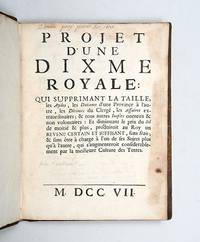
1707152921Rouen: no printer but for the author 1707. A CLASSIC OF PUBLIC FINANCE Very rare first edition first issue with B4 in uncancelled state: on p. 16 a setier is given as weighing 170 rather than 240 pounds of "an erudite economic work much in advance of its time and distinguished both by accuracy of method and breadth of view" Palgrave "creditable alike to the heart and the head of its illustrious author" McCulloch. Carpenter lists six other printings dated 1707 all in smaller format and eight subsequent editions before 1710 including the English translation A Project for a Royal Tythe 1708; reissued in 1710 as An Essay for a General Tax. "Though the book was published anonymously and only a few copies issued for circulation among friends Vauban had to submit to the mortification of seeing it 'pilloried' by the parliament while he himself incurred the displeasure of the king Louis XIV. A few weeks later he died" Palgrave. Although the renowned soldier-engineer Vauban 1633-1707 wrote on a very wide variety of subjects apart from economics - fortifications war naval matters religion agriculture population and colonization - the Projet d'une Dixme royale is an outstanding work in the field of public finance. Its two most notable features are its understanding of the central role of fiscal policy in economic reform - the result of an exceptionally comprehensive grasp of the economic process - and its use of detailed numerical data to substantiate conclusions. Schumpeter pronounced the work "unsurpassed before or after in the neatness and cogency of the argument. Purposeful marshalling of all the available data was the essence of his analysis. Nobody ever understood better the true relation between facts and argument. It is this that makes him an economic classic in the eulogistic sense of the word and a forerunner of modern tendencies" Schumpeter History of Economic Analysis p. 204. According to Boislisle the first edition was printed in Rouen in 1706 at the initiative of the Abbé de Beaumont who is credited with the authorship of the work by Boisguilbert. Vauban had the sheets bound by the widow of a certain Fétil and took great pains that the book had no public circulation. It was prohibited on 14 February 1707 but apparently the police could only seize two copies. To the police the binder declared she had had 264 copies in total 12 bound in morocco the rest in calf. The two copies seized at the Abbé de Beaumont's were described as in "veau fauve" and marbled parchment. See Arthur Michel de Boislisle "La Proscription du projet de Dime Royale et la mort de Vauban" Mémoire lu à l'Académie des sciences morales et politiques Paris 1875. In the Society of Jesus a professed house was a residence where - in a spirit of radical poverty - no member had a stable income. The Jesuit priests who lived there all of whom have made the profession of the four vows undertake their spiritual and pastoral ministry completely for free. With no revenues these houses were dependent on the generosity of benefactors even for their daily needs. Quarto 245 x 185 mm. Large folding table "Formulaire qui peut servir pour tout un pays" at page 192 additional tables in text woodcut vignettes and initials. Contemporary sprinkled calf spine ruled and decorated gilt in compartments red morocco label red edges. Spine ends and corners professionally repaired covers with a couple of small stains and slight surface abrasions. Ownership inscription of the Professed house of the Society of Jesus of Paris to head of title. Edges of first few leaves lightly tanned from turn-ins occasional spotting and the odd rust mark; a very good copy. Carpenter X 1; En français dans le texte 134; Goldsmiths' 4431; Kress 2583; McCulloch p. 342f; Masui p. 396; this edition not in Einaudi Hollander INED Massie or Sraffa. unknown