275 résultats
19712091502133905031Kaiho shubbansha 1971. Soft Cover. Fine. Volume: 1 Kaiho shubbansha paperback
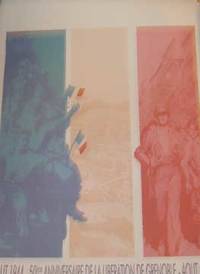
73-4915Grenoble: Expo 50ème Anniversaire de la Liberation de Grenoble 1994. 40x29 cm. Very Good. Color poster. Text in French. Grenoble: Expo 50ème Anniversaire de la Liberation de Grenoble, 1994 unknown
19822081002109000652Kaiho shubbansha 1982. Soft Cover. Fine. Number of pages: 254p Size: 29cm Kaiho shubbansha paperback
19822111902160301382Kaiho shubbansha 1982. Soft Cover. Fine. Number of pages: 255 pages Size: A4 size Kaiho shubbansha paperback
19922090202118105869National Buraku Liberation Movement Association Zenkairen Books 7 younger sister 1992. Soft Cover. Fine. The book is in fine condition. National Buraku Liberation Movement Association Zenkairen Books 7 (younger sister) paperback
2493844009.Gpaperback. Good. Access codes and supplements are not guaranteed with used items. May be an ex-library book. paperback
19922090202120809391Akashishoten 1992. Soft Cover. Fine. Volume: 1 Akashishoten paperback
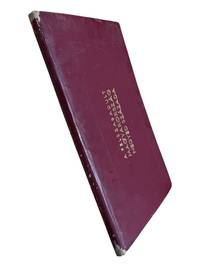
19709177Budapest 1970. First edition. 28x39cm 19 leaves laid loose in red padded leather portfolio. Table of contents introduction by Simon Peter and 17 etchings each signed in pencil by the respective artist. Tissue guards present plates in very bright near fine condition contents leaf and inner portfolio with some foxing. Rubbing to edges of folder otherwise a near fine set. <br /> <br /> Translated as "A Quarter Century of Liberated Hungary" this portfolio was issued in 1970 to commemorate 25 years since the end of World War II. The images in the Socialist-Realist style depict scenes such as the Provisional National Assembly in Debrecen cleaning rubble from the streets of Budapest following the war the birth of the Forint the working class voting during the 1947 parliamentary election in Borsod County factory nationalization and others. Artists include Gyula Hincz 1904-1986 Adam Würtz 1927-1994 Pásztor Gábor 1933–2012 Raszler Károly 1925–2005 and others. <br /> <br /> A scarce complete Cold War-era Hungarian graphic art portfolio with striking images from Nationalist artists. unknown
19902082402113505444Kaiho shubbansha 1990. Soft Cover. Fine. Volume: 1 Kaiho shubbansha paperback
19752090502130200762Publishing company 1975. Soft Cover. Fine. Number of pages: 240p Size: 19cm Number of books: 1 Publishing company paperback
20082091502133903568Kaiho shubbansha 2008. Soft Cover. Fine. Volume: 1 Kaiho shubbansha paperback
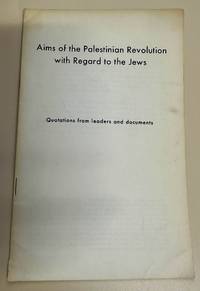
19707379New York: Palestine Liberation Organization New York Office 1970. Staple bound pamphlet 14 pages. Very good. Minor soiling and age toning to cover. Previous owner initials marked out in pen to verso of front cover. Pages crisp and clean in very nice shape. Palestine Liberation Organization, New York Office unknown
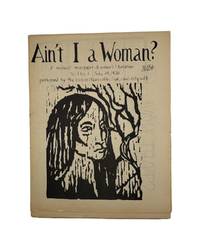
19702360iowa city: aiaw publications collective 1970. fifteen consecutive editions 1970-71. scarce.<br /> <br /> includes editions 3 though 17<br /> <br /> a collection of the famed midwestern lesbian-feminist newspaper published from 1970–74 in the shared home of a collective from the iowa city women’s liberation front. includes articles poetry cartoons and graphic art offering a midwestern perspective on women’s liberation sexual harassment gender roles gay and lesbian rights abortion access and workplace and campus organizing.<br /> <br /> further reading: "power to the printers: the alternative press in iowa city 1965-1985†the university of iowa libraries 2017. exhibition catalog.<br /> <br /> iowa city: aiaw publications collective. 11.85 x 9 inches. newspaper. unbound folded newsprint. all editions: toning with a few closed tears. very good. aiaw publications collective unknown
19932091502133901386Kaiho shubbansha 1993. Soft Cover. Fine. Volume: 1 Kaiho shubbansha paperback
19882092902137702514Amagasaki Dowa Issue Enlightenment Promotion Association 1988. Soft Cover. Fine. The book is in fine condition. Amagasaki Dowa Issue Enlightenment Promotion Association paperback
19882091502135200704Amagasaki Dowa Issue Enlightenment Promotion Association 1988. Soft Cover. Fine. Size: 22cm Number of books: 1 Amagasaki Dowa Issue Enlightenment Promotion Association paperback
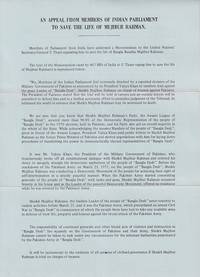
1971215937Canberra.: Information Service of India High Commission of India. 1971. Double-sided sheet neatly folded into thirds. A very good copy of this scarce publication. 30 x 21.5cm. A sympathetic appeal from members of the Indian Parliament to UN Secretary-General U Thant outlining their concerns regarding the ongoing Bangladesh Liberation War the harsh detainment of Sheikh Mujibur Rahman the risk of his execution and the genocide perpetrated by the military junta of Yahya Khan. <br> <br>A telling portent of the decisive Indian intervention in the conflict this open letter was presumably issued shortly after the 1971 Indian general election which returned Indira Gandhi to the premiership with an overwhelming majority in the Lok Sabha at the head of her reorganised Indian National Congress R. . Information Service of India, High Commission of India. unknown
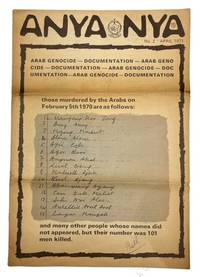
95089Good. 8 pages in each issue consisting of two thin folded leaves. 34-35 cm. High acid paper so these issues are browned and fragile but intact. Information about this organization and this short-lived periodical seems sketchy. Our best guess is that only six issues of Anya Nya were published. unknown
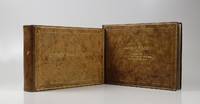
77190Paris Citroën 1915-1916. In two volumes. Oblong folio 31.5 x 43.7 cm. 71 original photographs 22.0 x 28.5-35.5 cm mounted on grey cardboard with printed captions 60; 11. Uniform full mottled calf. Boards with double gilt-rolled ornamental borders and gilt title. = A very rare set both volumes dealing with the Parisian factory founded by André-Gustave Citroën 1878-1935 renowned for its technologically advanced cars but also for its contributions to the French war industry during WWI and in particular the contributions women made as factory workers in the mass production of artillery shells. The first volume is entirely devoted to this subject showing the female munitions-workers at work. André Citroën played an essential part in French women's emancipation: once the women had left their traditional singular role as homemakers replacing the men who fought in the trenches there was no looking back and after the war their participation in the country's workforce became permanent. "World War I radically changed women's role in society as they stepped into the boots of men gone to fight for their countries. In cities across Europe women took on traditionally 'male' jobs - waiting on tables delivering the mail teaching in boys' schools or handling cash as bank clerks. 'Women rapidly became indispensable not only in the nursing and welfare services but in offices and factories and agriculture changing the whole balance of society in the process' says historian Michael Howard. As soon as war broke out in 1914 France's prime minister Rene Viviani called on women to 'replace in the workplace those who are on the battlefield'. . From 1915 onwards Europe's industry - devoted to the war effort - relied massively on the female workforce as did that of the United States from 1917. 'Without women victory will tarry' warned Britain's soon-to-be prime minister David Lloyd George in 1915. Some 400000 women were toiling in France's war factories by 1918 - a quarter of the workforce - handling some 2500 shells per exhausting 11-hour shifts" AFP. The second volume records the building and operational start of the factory itself. It shows the evolution of the works starting with a photo of the still-vacant lot save for gardens and sheds followed chronologically by views of all building developments including one with the famous Eiffel Tower in the distance. Groundwork started in March 1915 and by the 28 September the largely female workforce had already become fully active. The final photo shows the official ceremonial opening of the factory on 24 June 1916 revealing decorations given by General Gilinski on behalf of the Russian emperor. "As soon as war was declared in August 1914 André Citroën was mobilized as a lieutenant then as captain in the 2nd Grenoble Artillery Regiment. On the eastern front he was able to witness France's lack of artillery and ammunition to counter the German forces. Following the death of his brother Bernard on the front André Citroën was determined not only to do his duty but also to repel the enemy as far as possible. In January 1915 he proposed to General Louis Baquet director of artillery at the Ministry of War which was sorely lacking in ammunition to apply Fordism in a factory built in three months and capable of producing 5000 to 10000 artillery shells of Type 75 per day. Thanks to his savings those of his right-hand man Georges-Marie Haardt and especially financing from a rich diamond dealer of Armenian origin Atanik Eknayan who had already saved his fragile Mors 12 car business Citroën erected a huge ultramodern factory on 15 hectares of vacant land and vegetable gardens on the Quai de Javel. With some 13000 workers the factory produced 23 million shells at a rate of 10000 per day an unprecedented rate at the time. 'You have to produce quickly well and economically to put the products manufactured within the reach of the greatest possible number of consumers he said. The pace the factories imposed on workers was tiring and as a result André Citroën was sometimes considered a despot. Nevertheless he was one of the first manufacturers concerned about the well-being of his workers and avoided imposing repetitive tasks. André Citroën's ammunition business quickly gained a reputation and became a model of organization efficiency and social responsibility. Major personalities both civil and military visited the factory. Between 1917 and 1918 the government also charged Citroën with reorganizing supplies for the armaments industry the military postal services and with the distribution of bread ration tickets in the Paris region. When the war was over André Citroën decided to convert his factory on the Quai de Javel into a car manufacturing plan" taken from French Wikipedia. Boards a bit rubbed; a skilful repair to one joint one photograph with a brown spot in the top left corner; otherwise in an excellent state. hardcover
19872090202118204795Kaiho shubbansha 1987. Soft Cover. Fine. The book is in fine condition. Kaiho shubbansha paperback
0878670173New. paperback. New. Satisfaction Guaranteed or your money back. paperback
19832092902140313637Kaiho shubbansha 1983. Soft Cover. Fine. Number of books: 1 Kaiho shubbansha paperback
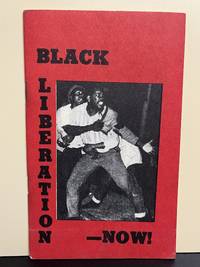
19678016Harlem New York: Black Liberation Commission Of The Progressive Labor Party 1967. Saddle Stitch unpaginated. Very Good. Rare. Light soiling around staples on front and back covers. Very light sight of wear. Rubbed bottom left front cover. Foxing and age wear to text block. Staining throughout pages. Black Liberation Commission Of The Progressive Labor Party unknown
1970228751970. Lester Julius. Some Revolutionary Notes 1970 presents a critical intervention in Black liberation thought at the transition from the Civil Rights Movement to the era of Black Power and New Left fragmentation. Issued by the Institute for the Study of Nonviolence in Palo Alto the work supports research into African American political thought nonviolent philosophy and internal debates over strategy within late 1960s and early 1970s radical movements. Written in the aftermath of major political ruptures including the rise of the Black Panther Party and the killings of Fred Hampton and Mark Clark the essays examine the limits of both nonviolence and armed resistance within the struggle for Black liberation.<br /> <br /> Lester Julius. Some Revolutionary Notes. Palo Alto: Institute for the Study of Nonviolence 1970. First separate printing. Quarto. Side-stapled self-wrappers printed in black on white stock. The 13-page pamphlet compiles a series of essays originally published in Liberation magazine between late 1969 and early 1970. Opening with "To Recapture the Dream" Lester traces the trajectory of the Movement from the Montgomery bus boycott through the emergence of militant Black activism identifying generational and ideological divisions within the struggle. Subsequent essays dated January through March 1970 address the limitations of the anti-Vietnam War Moratorium the political implications of the deaths of Hampton and Clark and the philosophical tension between nonviolence and revolutionary violence. The text incorporates references to Gandhian principles of satyagraha arguing for a form of political transformation grounded in ethical and human development rather than retaliatory force. Graphic patterned borders frame each essay reinforcing the pamphlet's visual identity within radical print culture. Light handling wear with faint toning along edges and a small crease to lower front corner; otherwise clean and well preserved; overall near fine condition. Produced within a network of West Coast pacifist activism associated with figures such as Ira Sandperl and Joan Baez the pamphlet provides direct evidence of ideological reassessment within Black and multiracial movements offering a concise and historically grounded articulation of nonviolence as a contested but persistent framework in post-Civil Rights era political thought. unknown
197148779Bloomington IN: Bloomington Women's Liberation Front 1971. First Edition. Five quarto issues 28cm; mimeographed sheets printed in colors and stapled at upper left corner; ca.8-12pp per issue. Light wear to extremities else very Near Fine. A nearly complete run lacking only the first one or possibly two issues of this ephemeral Indiana women's underground publication. OCLC cataloging incorrectly states that publication "began and ceased with Oct 13 1971" and noting physical holdings at 4 locations. Bloomington Women's Liberation Front unknown