MareMagnum

170 résultats
Testi: Earisman Delbert L.. F.to: 11x18; pagg. 144; rileg. brossura. Editore: Fortress Press, Philadelphia, 1968.
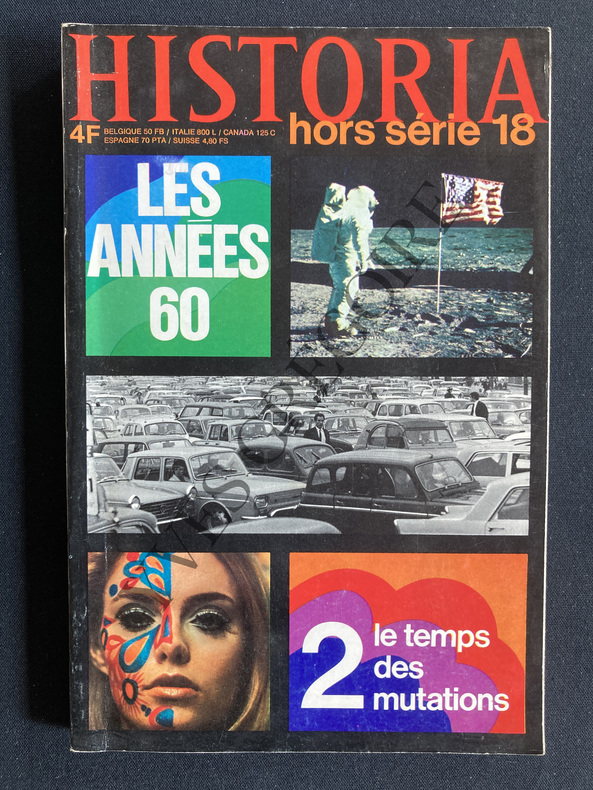
1970ABE-1475096530109226 PAGES-16 CM X 24 CM-LE PROGRES EN QUESTION, PAR MICHEL DRANCOURT, 8P-LES CERVEAUX AU POUVOIR, PAR FRANCOIS DE CLOSETS, 10P-UN TOUR DE TERRE EN 108 MN, PAR MARIE-JEANNE VIEL, 12P-UN BOND DE GEANT POUR L'HUMANITE, PAR FRANCOIS D'ORCIVAL, 12P-LA NUIT FANTASTIQUE DU PROFESSEUR BARNARD, PAR CHARLES DAUZARS, 12P-LA GRANDE INVASION DES ORDINATEURS, PAR PIERRE ROUSSEAU, 12P-LA MAREE NOIRE, PAR ROBERT DE LA CROIX, 9P-LA TERRE EMPOISONNEE, 7P-LA BATAILLE DU VERRE, PAR GERARD VIDALENCHE, 12P-LA VAGUE EROTIQUE, PAR JEAN CAU, 8P-LA CONTESTATION, PAR DOMINIQUE JAMET, 16P-EN MARGE DE LA LOI, PAR ROGER DELORME, 18P-QUATRE GARCONS DANS LE VENT, PAR PIERRE D'IZARN, 10P-LES HIPPIES, PAR JACQUES ARNAUD PENENT, 16P-LA TELEVISION, PAR FRANCOIS DE VIVIE, 20P-UNE PILULE CONTROVERSEE, PAR DIANE WINAVER, 6P-LA FEMME DES ANNEES 60, PAR CATHERINE GUERARD, 11P-LES GRANDS TOURNANTS DE LA MODE, 5P-DES CHEVEUX QUI ONT FAIT PARLER, 2P-CHRONOLOGIE DES EVENEMENTS-(CA)
Testi: Di Prima Diane. pagg. 12; BN; rileg. Punto metallico. Editore: New York City Poets Press, New York, 1968.
Testi: Shortney Joan R.. F.to: 10,5x17,5; pagg. 338; rileg. brossura. Editore: Pocket Books, New York, 1971.
Testi: Esam John. pagg. 80; COL e BN; rileg. Punto metallico. Editore: Ian Duncan, London, 1968.
Edited by Linn House, managing editor: Peter Weinberg. Contributing editors: Peter Stafford, Ira Einhorn. Staff artist: Linda Jarvis. Issues of 24-32 pages, printed in offset in vartious colours, fully illustrated. Part of the Underground Press Syndicate. Number 5 is the "American Indian Issue" and contains a letter referring to issue no. 4. Contains articles and reports on drugs, be-ins, etc. with correspondents in San Francisco, Los Angeles, Beirut, Berkeley, Nashville, later also Bombay, Amsterdam, Cleveland, etc. — Testi: House Linn, Weinberg Peter. F.to: 27x28,5; pagg. 32; rileg. Punto metallico. Editore: InnerSpace, New York, 1967.
Testi: Simmons J. L., Winograd Barry. pagg. 180; rileg. brossura. Editore: Marc Laird Publications, Santa Barbara, 1967.
Testi: Lancelot Michel. pagg. 256; BN; rileg. brossura. Editore: Albin Michel, Paris, 1968.
"Se di un happening si può tenere un diario, questo libro è un diario. Il diario di una farsa tragica in un atto che copre l'arco di due anni. Do it!/Fallo, il precedente libro di Jerry Rubin, era la sceneggiatura della rivoluzione. Con Siamo tanti assistiamo alla rappresentazione di questa sceneggiatura. Il prologo dell'azione sono i fatti dell'agosto 1968 durante i quali Chicago, amministrata dal brutale e tirannico sindaco Daley, viene messa a soqquadro da cinque giorni di combattimenti al Lincoln Park e attorno all'Hilton, l'albergo dei delegati della Convenzione democratica. Ne seguì, nel settembre del '69, un processo famoso che durò cinque mesi e mezzo. L'aula del tribunale divenne teatro: gli accusati, i Sette, ai quali va aggiunto Bobby Seale, "ospite d'onore" di questo drammatico ed incredibile play, assistono o partecipano all'azione scenica; fra essi primeggia Jerry che chiama sul palcoscenico i vari personaggi: gli Weatherman, le White Panther, le Pantere Bianche, e il loro "capo", John Sinclair, e poi Timothy Leary, evaso e ricercato dalla polizia, Allen Ginsberg che renderà una testimonianza che è anche un insegnamento. Contro di essi muovo il Sistema dell'ingiustizia, l'FBI, la CIA, il Grande Capitale, le Polizie Parallele, mentre allo scontro assistono i media, servi di due padroni. Nell'epilogo, la scena si sposta in Europa: dall'Olanda con i Kabouters, agli yippie londinesi, ai Provisionals di Belfast. E quando le luci si spengono, quando anche l'ultima azione svanisce, resta l'amarezza di un silenzio che da allora ancora nessuno ha rotto." — Testi: Rubin Jerry, Quadri Franco. F.to: 14x20; pagg. 204; COL; rileg. brossura. Editore: Arcana Editrice, Roma, 1973.
Testi: Lombard Anne. pagg. 204; rileg. brossura. Editore: Casterman, Tournai, 1972.
Testi: Kunzle David, Nizza Enzo. F.to: 19,5x26; BN; rileg. brossura. Editore: Edizioni la Pietra, Milano, 1970.
In 1966 she synthesized the essence of the Free Speech Movement and the nascent Hippie Movement/Love One Another vibe that was to grow into 1967's Summer of Love, writing and publishing this incendiary erotic masterpiece of modern poetry. The Love Book's four poems celebrate the divine nature of sexuality, offering a potent and eloquent testament to physical, sexual love, succinct and full of explicit language. That explicit language led to the book being confiscated by San Francisco police in November 1966, with raids on City Lights Bookstore and the Haight-Ashbury District's Psychedelic Shop which led to the arrest of three booksellers. The obscenity trial that followed was at the time the longest running trial in San Francisco history. That court's guilty verdict was appealed all the way to the California Supreme Court, which upheld the obscenity ruling in 1967. That conviction was overturned by a Federal District Court in 1974. — Testi: Kandel Lenore. pagg. 16; rileg. Punto metallico. Editore: Stolen Paper Review, San Francisco, 1966.
<p>"There's no denying that the stoned rovers were present at the beginning of a cataclysmic period in history, whose legacy "Magic Bus" describes in exquisite detail."--The New York Times Book Review <br> "MacLean's ardent eye for detail is lovely, as is the way he sets his more visually descriptive prose against the sturdier explanations of the names and places in his travels....His prose is guided by an informed curiosity about what the trail must have been like 40 years ago and how a Western presence there has contributed to its present state."--Boston Globe <br> "Most impressively, MacLean has a genuine understanding of the mystical and spiritual elements at play. His engaging traveler's voice and descriptive gifts offer a wholly different view of the tortured region from what is currently available via the mainstream media."--Foreword Magazine <br> "MacLean does a fine job finding journalists and local people who remember<br>the hippies and their impact on both the economy and the sensibility of the places they passed through...Travelers of all kinds, including the armchair variety, will relish the work and love MacLean has put into his latest."--Publisher's Weekly <p>"MacLean's vivid writing shows how much the Hippie Trail changed not only the way we travel, but also the places it passed through and the people who traveled on it."--Utne <p>"A magic journey--lyrical, sympathetic, but gently skeptical."--Colin Thubron <br>"An exciting and lively account of how the ideals of Kerouac metamorphosed into <br>back-packer travel: organized by Lonely Planet guides, fed with banana pancakes, and connected by hotmail from Peru to Phnom Penh."--Rory Stewart <br>In the 1960s and 1970s, hundreds of thousands of young westerners in search of enlightenment blazed the "hippie trail" that ran through Turkey, Iran, Afghanistan, Pakistan, India, and Nepal. Forty years later, Rory MacLean revisits the trail, where he encounters the tie-dyed veterans who never made it home, meets locals reaping the rewards and regrets of westernization, and crashes up against Taliban fighters and Islamic extremism, which has turned the hippie trail into a path of dust and danger. <p><br> — Testi: MacLean Rory. pagg. 280; rileg. brossura. Editore: Penguin Books, New York, 2007.
pagg. 136; rileg. brossura. Editore: Becker Versand, Nürnberg, 1970.
Testi: Kluver Heinrich. F.to: 13,5x20,5; pagg. 108; rileg. brossura. Editore: Phoenix Books, Chicago, 1966.
Testi: Kleps Art. pagg. 356; rileg. brossura. Editore: Bench Press, Oakland, 1977.
Testi: Copeland Alan, Arai Nikki. BN; rileg. brossura. Editore: Ballantine Books, New York, 1969.
Testi: Neville Richard. pagg. 324; rileg. brossura. Editore: Milano Libri Edizioni, Milano, 1971.
Testi: Metzner Ralph, Leary Timothy. F.to: 20x20; pagg. 96; BN; rileg. brossura. Editore: Psychedelic Review, New York, 1967.
Testi: Beckett Samuel, Ginsberg Allen et al. F.to: 12,5x20; pagg. 160; BN; rileg. brossura. Editore: De Bezige Bij, Amsterdam, 1961.
F.to: 12,5x20; pagg. 240; BN; rileg. brossura. Editore: De Bezige Bij, Amsterdam, .
F.to: 12,5x20; pagg. 160; BN; rileg. brossura. Editore: De Bezige Bij, Amsterdam, 1963.
Testi: Hoffman Abbie. F.to: 13x20; pagg. 232; BN; rileg. brossura. Editore: The Dial Press, New York, 1968.
An Illustrated Romp Through the Golden Age of Heterosexuality The 1970s was a time saturated with sex: singles' bars, nudism, porn theatres, hot tubs, couple-swapping, swingers' retreats, compliant stewardesses and mass-market titillation. All this and more can be found between the pages of this lavishly illustrated history of this charmingly naive but sex-crazed period. — pagg. 248; rileg. brossura. Editore: Feral House, Port Townsend, 1997.
Testi: Albin Michel. F.to: 20x27; pagg. 360; 860 ills; rileg. brossura. Editore: Albin Michel, Paris, 1967.